Video summary
Sebastian Mallaby opens his discussion with a powerful metaphorical billboard bearing the message "Prepare Your Mind," citing Louis Pasteur's famous adage that chance favors those who are ready for opportunity. He illustrates this concept through diverse examples, noting how venture capital firms like Accel Capital use scenario planning to anticipate new technologies before entrepreneurs even pitch their ideas. Similarly, he recounts Ilya Sutskever's immediate recognition of the Transformer architecture after a decade of theoretical preparation, and references an NFL interception where a defender successfully predicted a play based on extensive study. These stories collectively demonstrate that being mentally prepared allows individuals to seize fleeting opportunities with speed and confidence in high-stakes environments ranging from finance to sports.
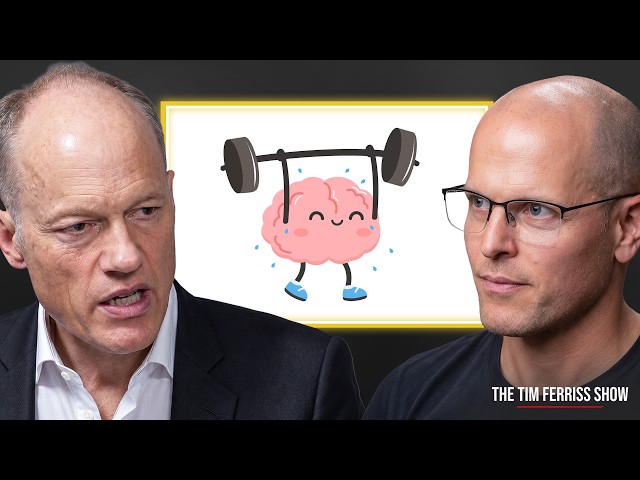
The core argument presented is that while artificial intelligence offers significant tools for efficiency, there is a genuine risk of intellectual laziness if people rely too heavily on machines to think for them. Mallaby warns against offloading all cognitive tasks, suggesting instead that AI should be used strategically to free up mental energy for work that provides deeper satisfaction and meaning. He draws an analogy between physical exercise at the gym and the maintenance of one's intellect; just as some find lifting weights enjoyable while others do it out of necessity, knowledge workers must actively cultivate their own thinking processes to avoid becoming impotent in a world dominated by tools like Google Maps or generative AI. The goal is not to stop using technology but to ensure that humans remain the primary drivers of critical thought and creativity.
Mallaby clarifies his personal approach to AI usage, distinguishing between tasks suitable for automation and those essential to human identity. He readily employs large language models to synthesize vast amounts of scientific literature before interviews, allowing him to learn faster without sacrificing depth, as he can always cross-check the information with the actual scientist later. However, he firmly refuses to let AI write long-form content or engage in his creative thinking process, noting that current models struggle beyond short emails and that writing is how he clarifies what he believes and understands. He acknowledges experiments where even professional editors could not distinguish between human-written columns and those generated by AI, highlighting the rapidly blurring line but maintaining a stubborn commitment to preserving one's unique voice and sense of self-worth against the tide of automation.
Ultimately, Mallaby concludes that entering the age of artificial intelligence requires a conscious effort to maintain rigorous mental discipline rather than succumbing to convenience. He emphasizes that happiness and fulfillment come from doing the hard work of preparing our minds, echoing Descartes' "I think therefore I am" in this new technological context. As AI capabilities continue to improve and potentially surpass human output even on complex tasks like witty journalism or long chapters, he insists on clinging to the very things that make us individuals: our ability to ask difficult questions, engage in deep reflection, and derive meaning from our own intellectual struggles. By establishing guardrails for how we use these powerful tools, society can ensure that technology serves as a catalyst for human potential rather than an eroder of our identity and agency.
Read the full video transcript
If you could put anything on a
billboard, metaphorically speaking, for
millions, billions of people to see,
could be anything, image, quote,
question,
preferably
not commercial.
What would it be? What might it be?
>> So, a billboard which lots of people are
going to see, I would put
prepare your mind.
>> Mhm.
>> This is a saying which is originally
Louis Pasteur, I think, the scientist
who said, "Chance favors the prepared
mind."
If you're ready for things, you can make
the most of the opportunity that comes
your way.
And the amazing thing about this saying
is that it's come up randomly in
different contexts, in different books
I've done.
So, when I was writing about venture
capital, Accel Capital
>> Mhm.
>> and one of the founders, Arthur
Patterson, used this phrase as a
description of how he wanted Accel to
invest. That they would run these kind
of scenario exercises where they would
think, "Okay, there's a new technology
coming down the pike.
What kind of company needs to be built
to make the most of that new platform?
What type of entrepreneur is going to
fit this opportunity? What should we be
expecting so that when the person walks
into the office, into the conference
room, and pitches to us, we already know
90% of what he says because we've
prepared our minds. And that way we can
make a good judgment, and a fast
judgment, if it's good in a competitive
situation." So, I kind of wrote about
the prepared mind in the context of
venture capital. And then I'm doing the
Infinity Machine, and I'm interviewing
Ilya Sutskever from OpenAI, and I'm
asking him, "Why was it you who
understood the significance of the
Transformer architecture when it came
out? Immediately, like on the day it was
up on the website, you read it, you ran
down the corridor, you went to see your
collaborator, Alec Radford, and you
said, "We're going to build a language
model on top of this architecture."
>> Well, not only that, he said, "Stop
everything you're doing."
>> Right, right, right.
>> this.
>> Yeah, this vision of the kind of, you
know, over-caffeinated charismatic
seizing on the engineer and saying,
"Drop it, whatever you're doing."
>> [laughter]
>> And, you know, his answer was prepared
mind, that he'd been thinking about how
you model sequential data
ever since his PhD in Canada.
And when he saw the solution, this is
what he'd been waiting for for like a
decade.
And so, he could jump on it. And then
when you start thinking about prepared
mind, you know, you would probably
remember this better than I do, but
wasn't there a um Seattle Seahawks Super
Bowl final against the New England
Patriots where the New England
quarterback
like does an interception in the last
second of play and clinches the victory.
And when he's asked after the play,
"How did you know to make that run?
Where did you How did you know where the
quarterback was going to throw the
ball?"
The answer was prepared mind. Basically,
he didn't use that phrase, but you know,
in training,
they had studied
the play that the Seattle Seahawks were
going to make, and they knew that if
given a certain formation,
when the ball was snapped back, there
was a certain pass that was coming. So,
the guy just takes off, and he runs
right into where the ball comes, and he
catches it and intercepts, and New
England wins.
And so, that's a prepared mind in
sports.
>> Mhm.
>> And the other reason, last thing,
>> Yeah.
>> I would put on the billboard prepare
your mind is that for the age of
artificial intelligence,
this is what we need to hear. And this
is a serious point, right?
The risk with large language models is
that we just get lazy, and whenever we
need to know something, we just get it
to tell us what to think.
That is not the route to happiness or
satisfaction
or anything.
We need to continue to do the hard work
of preparing our minds
because that's what makes us people.
You know, I think therefore I am.
And so I think prepare your mind is
entering a time when it becomes a more
important slogan than ever.
>> Mhm.
How do you do that for yourself? What
guardrails or policies have you
established for your own use of AI?
And it makes me also think of going to
the gym, lifting weights, getting in
cardio. You don't have to do that, but
it is beneficial for you on a lot of
levels and people some people will find
it quite enjoyable, right? And hence
they do that. And I'm wondering
what the equivalent is for knowledge
workers or people who are preparing
their minds and
don't want to become sort of impotent in
the way that people with directions have
mostly become impotent because of Google
Maps and other tools like that, right?
And so what do you what do you do for
yourself
personally or how are you thinking about
that?
>> The first thing I think is that the
Google Maps analogy
is the wrong one in the sense that it's
fine to offload a very specific mental
task, which to most people is a pain in
the neck.
>> Mhm.
>> And let the machine do that for you.
It's not fine to offload all thinking.
Right? [laughter]
The point of offloading something should
be you get to focus your mental energy
more on the other stuff that you really
get satisfaction and meaning from.
And so for me what that means is that
I'm very happy to use
large language models to learn about
the scientific output of somebody I'm
going to interview next week.
>> Mhm.
>> All of these AI papers are on archive
and the model has ingested all of them
and the model is extremely good at
telling me, "Okay, the scientist you're
seeing next week has these three papers
and the progression between the three
papers is this and this and this and the
comparison with the person you saw 2
weeks ago is this and this and this. And
you know, you learn a lot from the
system. It like really bootstraps you to
learn faster. So, that's helping me to
think more.
Not to think less.
>> Mhm.
>> It's cutting out the time it would take
me to go find all the papers by myself
and then labor through them. It's
cutting to the chase and nourishing me
intellectually.
>> Mhm.
>> And by the way, I'm not worried about
hallucination because I'm going to
interview the human scientist anyway.
So, I get to cross-check it all.
>> Mhm.
>> What I would never do is get the AI to
write.
Because frankly, it's not very good at
long-form. In fact, it really sucks.
It's fine for writing an email.
Although I don't do that either because
I like writing.
But it really is I've tried it once.
It's terrible for anything
longer than about 800 words.
But even if it could do it, I don't
think I would ever outsource that
because that's me.
>> Mhm.
>> Right. This is what I do. This is the
thinking process. I think through my
writing.
I come to understand what I understand
and think what I think and believe what
I believe through writing.
And I'm not going to give that up.
>> I'm letting out a pensive exhale because
I was thinking of this A friend said to
me, well, I'll give him credit, Kevin
Rose.
At one point, I was
I wouldn't say complaining, observing
that AI couldn't do X or wasn't very
good at Y.
>> Mhm.
>> He said, when was the last time you
tried that? I was like, 6 months ago.
And he's like,
try it again. And so, [laughter]
the rules will become really important
as also the power of these things
increases. And there I I want to say it
was the New Yorker. There was a piece in
the New Yorker. It might have been the
New York Times with some very famous, I
want to say novelist. Could have been
Pulitzer Prize winner in literature.
Somebody at the top. And they took three
or four pieces of their own writing, had
AI generate three or four pieces of
writing in their voice and gave it to
professional readers,
editors, and so on.
And it wasn't clear. People couldn't
figure out. They claimed that what he or
she wrote was AI.
>> How long was the piece of writing?
>> I knew that was the question you're
going to ask and I and I don't recall.
So, I want to go back and look at that
piece to see.
>> So, there was a story precisely like
that from an economist writer who's very
funny and also does podcasts.
>> Mhm.
>> And he ran that experiment and it was
just as you said, you know, his friends
who were professional economist
journalists couldn't tell which was the
witty column that he'd written versus
the equally witty ones
>> [laughter]
>> which the LLM had generated and he was
very pissed off with this.
And I, look, I take your point. I mean,
for now, I can be
all complacent and say, "Yeah, it only
works for 800 words. It doesn't work for
a whole chapter which is 20 pages long."
But no doubt it'll get better and
better, but I still think I'm going to
cling on to the thing that makes me me.
>> For sure. 100% and I think
doing the thinking,
preparing your mind,
in part asking
that question, which is not an easy
question. Perhaps there's a different
way to phrase it, but like, what what
are
the things that make me me?
So, you don't accidentally make
sacrifices that start to
erode your sense of self, [snorts] but
also sense of self-worth.