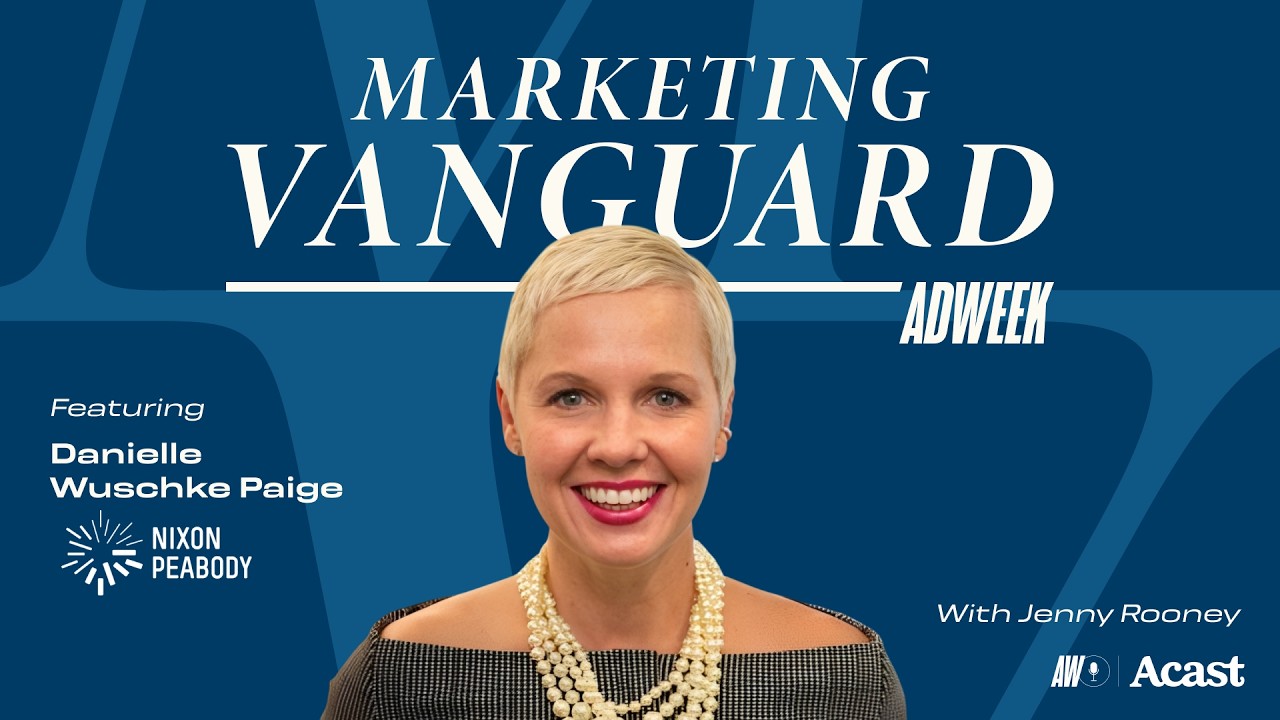
Video summary
Danielle Wuschke Paige, the Chief Marketing and Growth Officer at Nixon Peabody, shares her unique journey from the technology sector to leading marketing in the legal industry. Her career began in sales during the late 1990s, where she learned that building trusted client relationships was more critical than simply selling products. This philosophy guided her through roles in consulting and major advertising agencies before she took on her first CMO position at a top-tier law firm just before the pandemic. She found the opportunity exciting because the legal marketing function was traditionally antiquated, often focusing on basic execution like golf events rather than strategic brand management, presenting a clear need for modernization and leadership that could bridge the gap between complex business needs and traditional practices.
The primary challenges in modernizing marketing within the legal sector revolve around managing immense complexity while maintaining absolute trust. Danielle highlights that her firm serves a diverse range of clients, from high-stakes litigation to affordable housing, requiring tailored strategies for each practice area. A key insight from their 2024 client engagement survey revealed that General Counsels wanted to hear from the firm three times more than they were actually receiving communication, specifically seeking timely content and guidance on evolving regulations. Consequently, the marketing team focuses heavily on earned media and thought leadership rather than traditional advertising, ensuring that every piece of content is accurate, relevant, and delivered at the speed required by the fast-paced business environment their clients navigate.
Danielle emphasizes that legal marketing is not a creative industry in the conventional sense but is deeply rooted in intellectual rigor and reputation building. The firm utilizes social media primarily to showcase community impact and case wins rather than for casual engagement, as buyers do not seek legal advice on platforms like TikTok or Reddit. To support this specialized approach, she has built an internal "mini-agency" structure with dedicated teams for brand, client engagement, and industry strategy, allowing attorneys to focus on servicing clients while the marketing team handles profile management and business development. Furthermore, the firm is carefully integrating AI as a tool for efficiency and analysis rather than for generating legal advice, acknowledging that while technology disrupts workflows, the core value of skilled human attorneys providing perspective remains indispensable.
Looking toward the future, Danielle sees significant potential in the next wave of marketing leaders emerging from large agencies following recent industry mergers. She predicts that many strategic marketers will transition into in-house roles across various sectors, bringing fresh creativity and innovative thinking to industries that may seem traditional or "boring" on the surface. As an example of this evolution, she praises Dara Treseder, the new CMO at Autodesk, for successfully revitalizing a major brand through brilliant strategic moves. Ultimately, her story illustrates that while specific industries like law have unique constraints and demands, the fundamental principles of client-centric marketing, trust-building, and strategic adaptation remain universal across all sectors.
Read the full video transcript
we do a
client engagement survey annually and
one of the most interesting findings
from the our 2024 results was that our
clients wanted to hear from us three
times more than we actually communicated
with them directly. So, the GCs are
hungry for
us to help them navigate everything
that's happening at the speed at which
it's happening for them.
>> Hi everyone and welcome to the Marketing
Vanguard podcast. I'm Jenny Rooney with
Adweek [music] and I'm thrilled today to
be joined by Danielle Wushke Page. She
is the Chief Marketing and Growth
Officer at Nixon Peabody. Danielle,
welcome.
>> Thank you so much for having me, Jenny.
It's uh great to be on today.
>> Well, it's great to have you on. I know
you and I have caught up before and it's
been a pleasure getting to know you and
I'm excited to learn more about you in
this conversation.
You know, as you may know with the
Marketing Vanguard podcast, it's a real
chance for for me to get to know and
expand frankly my universe of the CMO
community and and get to know new
people, new ways of thinking,
uh new ways of thinking about the
practice of marketing, new ways of
thinking about the CMO role and what
marketing leadership needs to look like.
Um certainly as we
as we think about 2026 and and all the
dramatic changes that continue to
happen. But, um you know, what I'm
really excited about is you come from a
sector that I haven't spent a lot of
time in and that is legal, the legal
profession.
>> I feel like you know, neither did I.
>> I think that's what we're going to get
into and I think that for our listeners,
I think they'll find your personal
career journey very, very fascinating.
So,
um let's start there. You know, why
don't you tell us a little bit about you
and and what brought you to this place?
>> Yeah, sure. Absolutely. Um so, I am a
born and raised um Massachusetts girl
anchored in this market but always
everywhere else.
I think for a while my parents would say
like do you still have an apartment here
or you know, do you still live here? But
you know, a ton of time in New York and
San Francisco. I really have always
spent time where my clients are. I spent
the early part of my career
actually started my career in Texas
to age myself. So coming out of
undergrad, you know, I had sort of
grandiose ideas of being an academic um
not so sexy in the late 90s so um
you know, I looked around the
environment at that time and technology
companies were hiring people with the
you know, sort of a wide variety of
skills and for me technology in the late
90s felt like this hyper exciting
place to learn something new. Um it felt
really like a new language, a new set of
skills that I would have to learn. Um
and I went in through the avenue of
sales and you know, sort of preliminary
my sort of first foray into marketing
but I spent that my time in the late 90s
really starting to understand how
important customer relationships are,
how building relationships based on
trust and expectations can really shape
your career. Um I say to some of our you
know,
younger folks as they're joining you
know, my team now spend the time
learning those fundamental skills that
make great leaders, sales people,
marketers the best and that is really
about putting client at the center
taking this sort of
you know, approach or philosophy always
that is less about what you sell and
more about satisfying a need and
understanding where people are and I
think
that kind of point in time in tech
there was tremendous innovation. People
were, you know, still really reliant on
trusted relationships. So, as much as I
was learning tech at the time, my
clients [snorts] were, you know, in the
same boat learning the same and
you know, serve helped me grow up and
you know, learn my first
you know, sort of new language of
business. Um, after that I went to a
consulting firm. Um, so it was really an
outsourcer.
Um, and I
in that um, you know, role it was a
strategic marketing. So, I was taking
complex technology
specs or information and making those
palatable for our sales people at that
time for um field marketers. Um, I just
had this capacity to take complex
information and kind of translate that.
So, spent a couple of years in that role
and then was lured over to the big bad
agency world
that I really, you know, I cut my teeth
there but fell in love with
you know, that community. I worked at
Fleishman Hillard for about 11 years.
So, in the Omnicom world and then went
MSL for another call it five, six years.
Um, so both of those experiences
allowed me to take that sort of
fundamental learning from my early
career in tech and in sales and say,
"How do I apply these sort of
fundamentals in a client environment?"
And
I think a through line throughout my
career has always been this real
orientation toward clients and client
needs and sort of building a great
experience for clients. Um
So, spent a few years there.
Um I joined Nixon Peabody
6 months before the pandemic in my first
CMO role
in an industry I had never been in
although I did have one legal client for
about 6 months a million years before.
Um and what was exciting or the most one
of the most exciting things about the
opportunity to join Nixon
yes, it was a new industry, but
it's an industry at that time that was
really poised for change in marketing.
Um the function itself had been pretty
antiquated and I you know, I think I had
an ungenerous description that it was
always 10 years behind everybody else.
Um it it was in some ways. It needed to
find its
momentum in the you know, in in the
legal industry marketing did
and that opportunity for me felt super
super exciting. It felt like
I could be at the forefront of
continuing to evolve marketing as a
discipline and do it in a space that
you know, sort of needed a leader that
spoke both languages. So
>> So, let me make sure I'm clear. It was
your first CMO role. Was it the first
CMO role for the firm as well?
>> No, it was not. They had had previous.
So, typically so Nixon Peabody is an
American Lawyer 100 firm, which means
it's in the top 100 law firms in the
world or in the United States
and that is by size and revenue amount
of lawyers etc. And typically in the Am
Law 100, there is a CMO and there will
be a fairly robust marketing team.
Traditionally, a lot of those marketers
were
you know,
planning golf events and making name
tags and not doing a lot of business
strategy. It was a lot more of that like
old school fundamental
marketing execution, you know,
does the attorney have a pitch deck that
looked right?
Um, you know, there's there was not a
tremendous amount of real strategic
brand management. Um, typically not a
lot of um, sophisticated advertising,
nothing in that really in the paid
space. It was like comms plus um,
and really, really basic. Um,
if you, you know, you think about it,
lawyers
don't advertise themselves so much of
the way that they build their own
portfolios and then their practices and
you know, their firms it it is through
reputation building. Um, so traditional
earned media, a lot of sort of front
foot content marketing is what has
helped them raise their profile. I think
the legal community understands now the
real importance of that kind of omni
channel approach, looking across
what the business wants to achieve and
by the business I mean the firm at large
and then you break that down to practice
specific growth, industry specific
growth and then attorney specific
growth. Um, so it's um,
from a business planning perspective,
it's really layered and I I think
working at a law firm
and leading a function like this
requires me to always think about all of
the business components of how this
machine works together versus,
you know, I rarely get that like broad
brush opportunity um, because
so many of those things interplay with
one another.
>> Yeah, I know, it's so interesting. It's
such a different animal, right? That a
CPG or an automotive marketer or a
travel company or anything else that you
can possibly think of. And remind me,
the clients that you worked on at the
agency side were in what categories?
>> Sure, I was always B2B or technology.
So, at Fleishman Hillard, I came in to
work on a handful of tech accounts. That
was my, you know, industry orientation
when I joined.
Um spent time, you know, sort of doing
that professional services B2B
consulting work. So, always in that
space. Um
I did take a few, you know, right or
left turns trying to do a little
consumer marketing, completely not for
me. I was always the one like, if a
cookie is just a cookie, let's call it a
cookie. No one laughed at that.
>> [laughter]
>> Funny.
>> Yeah. It just like it I couldn't do it.
Um but then give me some like really
complex new regulation that's coming out
of the federal government and have me
talk about how it's going to impact
businesses in the next 5 years.
Suddenly, I'm like, you know, that feels
like nirvana for me, but people were
like,
get out of the, you know, the cookie
pitch, not for you.
>> Well, it I mean, it begs the question,
it's not for everybody, right? So,
>> 100%
and I think as these big agency changes
have happened and are happening, as we
know,
um you know, a a ton of former
colleagues have reached out and said,
"How did you make this switch to legal
and what do you think now?"
I think I
First, let me start by saying,
being at Nixon and being a CMO in
this firm at this time in legal has
absolutely been a career highlight. And
that is because of the sort of openness
of my firm to let me lead as a, you
know, the marketer that I am, but also
the change in the industry.
But what I have said to colleagues,
former colleagues who have reached out,
like this is
it it is a beast. and by that I mean it
is complicated. It is emotionally
demanding, intellectually challenging.
The personalities within a law firm are,
you know, highly intellectual.
Often times, you know, confident and you
know, lawyers have reputations like
adding people, whatever. You know, that
they are really tough and because they
are on the forefront of
you know,
of creating laws, people in marketing in
a law firm have to have that same sort
of intellectual capacity to absorb
what's happening in real time, be able
to translate that, be able to connect
that with our current client portfolios
so that we can say we are building
expertise in you know, X practice of the
law and we're really close to this sort
of industry where our clients live.
And I think having
the orientation to do that is not for
everybody. This is not like, yay, fun,
you know, New Year's Eve party kind of
marketing. Not to say we don't have
parties, but um, we're not doing that
sort of thing. It's uh it's just a
different kind of beast.
>> What um do you consider yourself a B2B
marketer?
>> Certainly not a B2C marketer, so.
>> Yeah, I'm a B2B marketer at heart, for
sure, for sure.
>> How do the how are the
I talk I spend a lot of time with B2C
marketers. I just spend a lot of time
with
um you know, marketers who have who are
selling the cookies, for example. Um
there is they quickly go to, you know,
there's a lot of challenges around
creative. There's a lot of challenges
around um you know, speed, efficiency.
There's a lot of challenges around
platforms, optimization, you know, and
how how would you best characterize like
the you know, three biggest challenges,
marketing challenges or
um demands that you would that a law
firm faces. Um
>> God, that's such a great question and
and I think
complex um in that
So, Nixon is really a sort of a
quote-unquote full-service law firm in
that we serve um a broad spectrum of
clients. Um for sort of big bet
litigation,
um
that's government investigations, that's
complex commercial disputes, uh labor
and employment, cyber, things like that.
Um and then we have a full transactional
practice, which is like your private
equity, VC, or your healthcare
transactions, anything that's happening
in that business suite. We have uh um
you know, one of the leading affordable
housing practices in the US. So, a
really
a large and well-respected
um real estate, infrastructure,
um you know, sort of set of practices.
So, just within that that within itself
poses unique challenges from a marketing
standpoint. Each of our practices
their reputations are raised, the
awareness of those attorneys, their
reputations are raised and managed in a
different way dependent depending on
what their practice is and what
industries they serve. So, we are
constantly thinking about how to create
yes, campaigns, but marketing strategies
that are supportive of that particular
individual, the strength of the
practice, and awareness of that practice
at a particular time, and then also
managing Nixon Peabody at the brand
level. You know, we want to show up
consistently as a law firm. Um
everything that we do and all attorneys
do really kind of starts and stops with
this idea of trust. So, it is paramount
for us to always be putting that
sort of
core of trust in everything that we do.
Um so, from a marketing
standpoint, the challenge is that
complex mix of the variety of different
things that we serve at all times. Um we
are really a content-first,
I would say, kind of industry. Um people
trust us if we are at the cutting edge
of new, you know, regulation or new law
that's coming out or have a perspective
or a point of view on what can be
happening and what businesses and
individuals can expect from, you know,
federal, state, and local, you know,
laws and how those are sort of playing
out in real time. So, they want our
up-to-date guidance on that. Um and just
a
a little aside story, um we do a
client engagement survey um annually,
and one of the most interesting findings
from the our 2024 results was that our
clients wanted to hear from us three
times more than we actually communicated
with them directly. And they wanted to
hear from us
through content. And whether that was,
you know, some sort of cutting-edge
alert or, you know, up-to-date alert on
a topic that was really relevant of that
day, they wanted guidance on the, you
know, complexities of their own
industries and business, and they wanted
our partners to be,
you know, really feel like another,
you know, executive in their mix. So,
the GCs are hungry for
us to help them navigate everything
that's happening at the speed at which
it's happening for them. Right? They're
dealing with all the complexity of their
own environment, never mind the legal
environment that that it that sort of
lives in. So, I would say complexity
it you know,
around managing
a tremendous amount of content that we
have to be sure is
always accurate, always on time, always
to the right eyes.
Um and then
you know, I would say third,
it's not a hugely creative industry,
right? So, if you looked at all of the
websites and the brand when I first
arrived, you know, it's it's really
tired and I used to make a joke that
like the the all the decks and the
website, I was like I took a time
machine back to 1995
and we're still using old fonts and you
know, and to lawyers, they're like,
"What are you talking about?" Going
through a brand transformation
was not something that they wanted to
celebrate and that they were excited
about until they really understood
how that could potentially impact the
success of our firm and how we perform
and how we're perceived in the market.
Um so,
in the 6 years I've been here,
I feel like I have done a lot of
educating um to open minds absolutely. I
think they want to understand always the
why we're doing it, how it could impact
their own practice, our firm's
reputation, you know, what the client
think of of us as a firm um over time.
So, it's kind of a word story, but I
think the context matters. You're not on
TikTok, you know, from a platform
standpoint. You're not
>> [laughter]
>> You're not thinking about Reddit forums.
Like this is not the places that you So,
what it what does the suite of tools, so
to speak, look like for you?
>> It is limited. Um, you know, I mean, we
will we have active Instagram and and
Facebook pages. Those are more, I would
say,
it allows us to have a persona within
our communities. Um, for us, our brand
is about delivering positive impact, and
we we mean that very truly through
our people, through the communities that
we serve, through our clients, and the
positive impact that we have within our
firm, and how that acts in the
community. So, I think we use social
platforms like Instagram and Facebook to
show up in that way, right? To
demonstrate social giving, talk about
case wins, talk about some accolades.
Um, but we are really always focused on
that content delivery, and it's not
through
platforms like you're describing. Um,
because it's not where our buyers are
consuming legal, you know, they're not
looking for legal advice through that.
So, it is also a ton of earned media.
Um, we do a lot of content creation like
this, a lot of podcasting. We create a
lot of own content, um, that we share
with, you know,
all of our clients, anybody who
subscribes, and we try to think about
experiential,
and not so much just our in-person
panels that we host or client forums,
but how do we then turn that content
into alerts and,
you know,
pieces of content that that people
beyond who are there want want to see.
>> Sure. Do you think of your lawyers as
thought leaders? And are you trying to,
um, stand them up as individual brands?
>> I think that is a primary in legal
marketing. I think the reputation of the
individual attorney is always it sort of
wins the day. Um yes, people hire the
firm and the firm brand certainly has
equity.
Um it's why the rankings are important
Chambers and all you know, sort of all
of the
Am Law. I think at the end of the day
when you have a
you know, a certain persona or certain
group of partners that are really
well-known in specific industries, their
brand carries a lot of business and that
ripple effect brings their practices and
their teams up and
you know, um so yeah, I think we lead
with a lot of that partner first
reputation building.
>> Do you work with outside creative
agencies of any kind or digital agencies
or
>> Yeah, we work with Weber Shandwick.
For for earned, for creative, we're
doing a a few interesting sort of AI
pilots with them um from a marketing
standpoint. Um we work with Berkeer uh
for our SEO um and some of our search
engine you know, related stuff we work
with One North on our website and
creative. Let's see, who else is in our
mix right now?
Um
we're not working with
uh just a digital only marketing agency.
Weber has a lot of capabilities and
they're you know, sort of reach so I use
them for comms and creative and because
I'm a big agency girl at heart, I I love
to have an agency and let them bring
their resources to me. Um so I'll I will
honestly come with a problem or say,
"God, you guys must be hearing about a
lot of things that I am not exposed to.
Tell me what I'm missing." Um so I
really value that and that big agency,
you know, kind of relationship.
>> Tell me about your marketing or of your
marketing team. How many people are on
it? How how what kind of capabilities do
you have in house?
>> Yeah, um, so today we have 68
internally, um, and just to give you a
sense of perspective, we have about
1,300, 1,400 employees at Nixon,
um,
650 plus lawyers and, you know, the
balance of that are professional staff.
Um, that's a about a normal mix for an
Am Law firm, um, and our team is
fairly,
you know, sized correctly. I would say
we're a little light, um,
that is a product of the fact that
during COVID, I took the team down
during a transformation and rebuilt
really, really carefully around
marketing disciplines, um, versus saying
like, "Okay, we have a need, let's just
put another body there."
So, um, you know, just under 70 people,
um,
in the,
you know, sort of the in my marketing
organization, it's, um, marketing and
business development, which I'll explain
that's really like practice support, um,
communications, and you can think of all
of the, um, sort of facets of comms in
there, social and digital, um,
all of design reports into me also, um,
so we have a full team of designers, um,
our comms team is, uh, internal,
external, social media, um, a lot of
they spend a lot of time helping to
build attorney and practice specific
platforms, and then they're promoting
those, you know, within the industry
through earned media, etc. Um, and also,
they, you know, we have a robust, you
know, PR team that Nick Brody leads,
actually, who you met.
Um, so that's from the comms
perspective. On the marketing side, I
essentially have what I call my board of
directors and those are a layer of
senior marketers that are focused in on
the core marketing discipline. So, we
sort of built a mini internal agency.
So, we have um someone in charge of
brand.
Um we have someone in charge of client
engagement and each of these people have
their own teams. Um
so, brand, client engagement, um what we
call strategic pursuit. So, that is in
the legal profession, it's dealing with
the really large complex RFPs, RFIs, and
panel. And under that is also pricing
and competitive intelligence.
Um so, anything that's in that sort of
higher order magnitude of pursuits.
Um
I mentioned uh
design and coms, I mentioned social on
my board. Um
I have a senior director of industry.
So,
um when we refreshed our strategic plan
of several years back, we um added a
sort of layer of that that is really an
industry focused layer. So, with that
comes a ton of
you know, sort of marketing strategy and
support that's needed and I brought
someone over from agency to help me do
that. So, he leads that and then I have
three directors that are really focused
in on department and practice support.
So, that is the day-to-day delivery of
attorney development um and sort of
managing their profile, um helping them
to target and grow their client base.
It's a lot of that kind of
um traditional inside
business development activities. So, it
allows the attorneys to be out servicing
clients and billing time. Um so,
anything else that that attorney might
need so they can be focused on growth,
our team really takes um the beginning
of every year we're doing
a individual business planning for
partners, then we are doing strategy
planning for a practice group. So,
you know, what are our growth goals? How
are we going to build marketing plans to
execute against that? What does that
look like relative to growing our
existing clients, you know, building on
um a portfolio that we have. So, those
three directors all have teams under
them that are servicing that sort of
level of
of client work.
>> It's super interesting. I need to ask
you this question and typically I'm
going to I I ask the question in context
of marketing, you know, how is AI
disrupting marketing, but I'm going to
ask you, how is AI disrupting the legal
profession? And you know, if you could
just speak to that from a high level and
and how does that also then
reverberate for you and honestly what
you're what you're marketing?
>> Yeah, yeah, absolutely. I think like
every industry, you know, AI put
everybody back on their heels and
everybody thought everybody else was
further along than they are.
Um I I think what is unique for legal um
and and, you know, any industry that is,
you know, highly regulated is we have to
be extraordinary extraordinarily careful
about what AI is used for. Um we cannot
allow, obviously,
the industry does not allow attorneys to
provide any legal advice or legal
services through the use of AI. And
people get can have the potential to get
themselves in trouble by, you know, at
the beginning it was asking AI some
perspective on something and, you know,
there's funny cases now about how, you
know, an attorney submitted a brief that
they thought they got the right, you
know, precedents from AI and it was all
made up cases and, you You those judges
were sanctioning those attorneys at you
know, sort of at the
you know, beginning of this kind of
moving forward. That said, I think all
of the Am Law 100 firms
to some degree are using AI internally
to really help with workflow and case
analysis.
Um, it has really become sort of like
that second team member. Um, and for
many of us including Nixon, we build our
own sort of proprietary versions of it
so that we can put our own internal
client data information, do some
analysis on firm performance, on you
know, certain trends in the market. So
we're using it in a way that obviously
is within the law, um, is within you
know, what the industry demands, but
it has opened up a a new pathway for, I
would say, innovation, for efficiency of
running our business, for um,
deeper layer of understanding
what our clients' challenges might be
and how we can serve those in a better
way. Um, and from a marketing
standpoint, you know, frankly, we're
like a safe place to experiment with it.
So we're thinking about it in every sort
of component of what we do. How do we
use AI to enhance this, to help our
folks
not just move more quickly, but you
know,
think in an expanded way. Um, and I will
fully admit, confession time, that I was
like, I don't want my junior people
using AI because they will not know how
to, you know, craft an original,
you know, thesis because they won't be
writing and you need to write in order
to be good at it. It is a tool. You
know, it is a way you have to work. And
I still feel like that, but what, you
know, we've really come to understand is
it has helped that layer of people at
the beginning of their career right with
a different kind of context in the same
way probably you and I were when
you know, social media was being used in
marketing. We were like, we're not going
to use that. Our brain didn't work that
way, but you know, this generation today
has an incredible ability to adapt to
new technology and if they understand
that
there are core disciplines in writing
and communications or creative design
that come from the human,
um you know, it's important for us that
as leaders that we're showing them that
they can
learn both things to succeed. And they
have to, frankly. Um so I think yeah, it
it's disrupting our industry um in a way
that will probably make legal look
different in 10 years and 5 years. Um
the the delivery of legal services. Um
but there's never going to be a day
where you don't need that really skilled
experienced attorney to
you know, provide that perspective. Like
there it's just not going to happen. And
from my you know, all my wisdom.
>> Of which there's many. No, I appreciate
that tremendously and it and it makes
sense.
Um the last quick question and before I
have you answer that uh or answer answer
it, I'll preface by saying you know,
I've loved talking to you because I
think you're a great example and you
probably are you know, for many people
listening
you are a representative of the wealth
of opportunities in CMO roles that exist
out there well beyond the bounds of your
traditional go-to categories. And so I
think there's something really
interesting about that. Not to say to
our earlier point that it's for
everybody because not just anybody can
kind of um be in in a role that is or in
a category that's so nuanced, but
all that said, who's next? Who's
somebody that, you know, I should have
on the show and it maybe it's somebody
you know really well or maybe it's a CMO
of a category that you've heard about or
that you'd love to learn more about. Who
should I bring on the show next? That's
that's my final question to you.
>> Yeah, so
this is a funny one because Autodesk was
my client for
I don't know, 10 years.
Um they their new CMO and I can see her
face and because um Dara Yeah, Dara,
thank you. I was going to
I'm so glad you said that. She is I
follow her you know, on LinkedIn. I've
been watching the performance of
Autodesk. I can't help it cuz they were
a former client, but I think that she
has taken that brand to a new place and
it was sort of there in the years that
we worked on it on the com side, but to
see it come to life so spectacularly.
I mean, for me
everything she does seems like
brilliant, like the next thing, like
she's one step ahead. Um
she's I and I don't know if you've had
her on, but she's she's really
tremendous.
>> No, she is tremendous and Dara Treseder,
if you're listening, uh your
or not, your ears are burning right now
and um I've had her show in a live
context at an event. I would love to
have her back on the show cuz she really
is
you know, such an incredible example of
of what's possible.
>> Absolutely. Um she's magnificent. Uh
and I want to give a a plug to the folks
who will who are coming out of those big
agencies following the mergers. I
you know, I spent the better part of my
career with some of the smartest,
most strategic folks in agency and
I think we're going to have this wave of
so many of them going in-house and
finding CMO or leadership roles in
industries that might be a surprise to
them and we're going to see this new
wave of sort of excitement and creative
thinking and real strategic leadership.
Um, you know,
the agencies are so hierarchical and
there's not a ton of opportunity for
them to get visibility, but I do I I do
I think the silver lining is going to be
some really awesome marketing in the
next few years.
>> Mic drop. Love that. Fabulous. Great
place to land and and so interesting and
provocative, Danielle. Thank you so so
much for for joining me. Um, you know, I
think this has been certainly an
education for me and an education for
our our listeners and I look forward to
continuing the conversation with you.
So, thank you so much.
>> as well and happy to talk anytime about
legal or B2B or all the boring stuff
that no one ever wants to talk about.
Have a great holiday.
>> Thank you so much. Take care.
>> Thank you for listening to Marketing
Vanguard, part of the Adweek Podcast
Network and Acast Creator Network. You
can listen and subscribe to all of
Adweek's podcasts by visiting
adweek.com/podcasts.
Stay updated on all things Adweek
Podcast Network by following us on
Twitter at Adweek Podcast and if you
have a question or suggestion for the
show, send us an email at
podcast@adweek.com.
Thanks for listening.