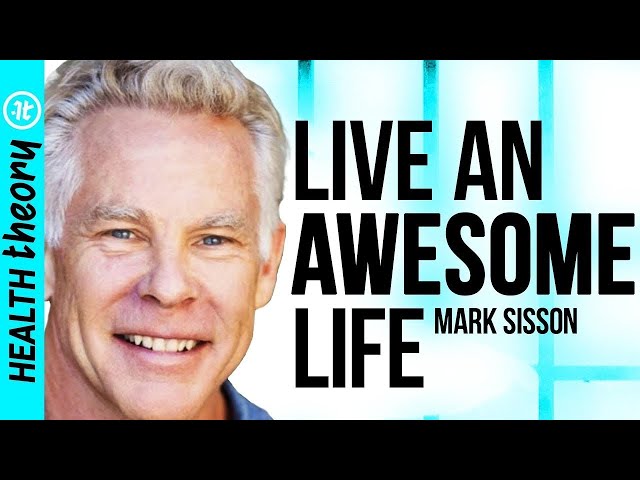
How To MELT YOUR FAT & Get In The BEST SHAPE Of Your Life! | Mark Sisson
Watch on YouTubeVideo summary
In this follow-up episode of Health Theory, Mark Sisson and Tom Bilyeu explore the concept of living an "awesome life," defined not by financial success but by pain-free movement, enjoyment in every moment, and a deep sense of fulfillment derived from contributing to others. While acknowledging his Type A drive for achievement, Sisson argues that true fulfillment is often elusive because it involves overcoming self-judgment rather than just chasing external rewards like money or records. He posits that financial wealth does not equate to personal satisfaction; instead, the most profound sense of purpose comes from helping people in unique ways using skills honed through hard work and suffering. This perspective shifts the focus from merely crossing finish lines to maintaining a sincere pursuit of excellence, emphasizing gratitude for past accomplishments while continuing to chase future contributions without becoming stagnant or complacent. To achieve this state of living well, Sisson prescribes optimizing physical health as a foundational weapon against fatigue and cognitive decline, centering his philosophy on "metabolic flexibility." This concept allows the body to efficiently extract energy from any available substrate—whether stored fat, dietary carbohydrates, glucose, glycogen, or ketones. He explains that modern humans have become carbohydrate-dependent due to constant access to food and the cultural mandate of eating three meals a day, which tricks the evolutionary biology designed for survival into hoarding calories rather than burning them. By retraining through strategies like time-restricted feeding (e.g., 18–20 hour fasting windows) and reducing carb intake, individuals can stimulate mitochondrial biogenesis, increasing the number and efficiency of mitochondria to burn fat effectively. This process eliminates hunger cravings and provides a steady state of energy throughout the day, fueling muscles with fat while ketones power the brain. The discussion delves deeply into nutrition specifics, particularly the superiority of animal protein over plant-based options for tissue repair due to its complete amino acid profile. Sisson illustrates this with his personal story of curing severe Achilles tendinosis by consuming high doses of collagen peptides, which provided the specific raw materials needed to rebuild connective tissues that lack significant blood flow and rely on fluid dynamics for nutrient uptake. He contrasts modern athletes who suffer from injuries due to a diet lacking in nose-to-tail nutrients like bone broth against historical humans who consumed whole animals. Furthermore, he addresses the debate between carnivore and vegan diets by highlighting human resilience; while the body can adapt to various dietary inputs over time, long-term deficiencies often manifest as reduced performance or structural breakdowns before becoming apparent, suggesting that identical twins in a controlled diet experiment would likely show divergent outcomes based on genetic individuality. Sisson concludes with his personal philosophy regarding quality of life versus longevity hacks, stating he prefers maximizing enjoyment and presence in the moment over sacrificing immediate pleasure for an uncertain extension of lifespan. He admits to enjoying red wine and energy drinks like Monster occasionally because they enhance his current experience without causing fatigue or inflammation when managed correctly (e.g., drinking early with hydration), though he warns against regular use of such substances that might eventually harm adrenal function, similar to the historical abuse of ephedra. Ultimately, Sisson promotes a balanced approach where one enjoys every bite of food while maintaining metabolic health through flexibility and movement. He also introduces his Primal Health Coach Institute as an educational resource for those seeking deep dives into this science-based lifestyle, aiming to empower others with the tools to build their own practices and achieve optimal well-being without unnecessary suffering or deprivation.
Read the full video transcript
Mark Sison, welcome to Health Theory.
This is round two for us. Thank you,
man, for coming back.
It's such a pleasure, Tom. It's been a
while.
It has. I was re-watching the first
episode that we did, which I had a great
time doing. And one of the things that
we talked on or touched on that I wish
we had gone deeper was your whole
concept of living awesome. And I thought
that would be a good place to pick up. I
want to give people something that's
that's really prescriptive. I know that
you shy away from judging people. Uh
I'll be in full judgment mode in terms
of I'll make the assumption that people
want to um they want to be healthy, they
want to be painfree, they don't want to
be starving all the time. Um and
anything that moves them towards that
goal makes sense to me. Anything that
moves away, I will be highly judgmental
of just because they're, you know,
putting themselves in a in a position of
punishment I had done to myself for a
very long time. Uh so in wanting to help
them get there. So, let's touch on do
you have sort of tenants of an awesome
life that you think are relatively
universal?
Well, yeah. I mean, um the I I guess the
basic structure here is um I want to
extract the greatest amount of
enjoyment, fulfillment, contentment,
pleasure, uh out of every possible
moment. Now, look, sometimes that's
just, you know, not going to be feasible
or not going to be possible, but but to
the extent that you can do it as much as
possible throughout the day, that's what
I'm looking for. So, I want people to
be, as you said, painfree. I want people
to be able to move around. I want people
to be able to enjoy playing uh with
their friends, with their loved ones,
with their kids. Uh I want people to
enjoy every single bite of food they
ever eat. Uh you know, these are these
are the basic tenants. And so my uh
designing of my own life has been kind
of structured around how do I create
these opportunities uh to get that sense
of satisfaction, contentment,
fulfillment.
Talk about fulfillment. Can you define
fulfillment? You've been a pretty hard
pushing um you said at one point you
considered yourself type A. I don't know
if you still do, but as somebody who has
successfully built and sold a company,
obviously you're you're very driven, a
marathon runner, very driven. Um what do
you think fulfillment actually is?
Let me tell you, um when I when I
discover what it is, I will let you
know. Uh this is probably the the
essence of a type A personality. So when
I say I'm looking for contentment,
satisfaction, enjoyment, those are all
sort of hedonistic
um aspects of uh like real time uh
results, right? And I can talk to you
about enjoying every bite of food. I can
talk to you about the pleasure uh you
know of a great relationship or sex or
um you know even a even a good workout.
Fulfillment however starts to get into
this uh realm of self- judgment and you
open this with with the concept of
judging. Uh, and that's one of the areas
that I'm really hardest on myself. So, I
feel fulfilled uh when I when I feel
like I've I've u made a contribution to
someone's life. So, I've been an
educator for as long as I've been in
business, 354 years. I've been writing
books. I've been doing seminars. Um,
I've been doing a lot of podcasts. And
nothing ever is more fulfilling to me
than when someone comes up to me out of
the blue and says, "Hey, Mark, I can't
believe it's you. you've changed my
life. That's fulfillment to me. Uh and I
get that, you know, I'm I'm I'm u I
guess I'm I'm I'm lucky enough to have
that happen to me uh on on many
occasions throughout my life. Uh so
that's sort of a short-term fulfillment.
The long-term fulfillment thing, as I
say, it's really kind of a self-judgment
thing. Like what is it going to take for
me to just say, "Mark, you're done." You
know, you've you've done it. You've done
enough. Uh
do you think it'll ever feel that way?
Like wouldn't wouldn't that almost worry
you?
No, that's the point. It it's like so
the fulfillment is now sort of a just a
carrot on a stick in front of me, you
know, for the rest of my life. And I
think that's fabulous. I mean, I'm I'm
chasing that high of fulfillment. And as
I say, I get it in in brief moments, but
but at the end of the day, as with all
of this, it comes down to you. Like, are
you able to recognize the
accomplishments? Are you able to have
the gratitude for what you've done and
who you are and and and everything about
your life? You know, are you able to
congratulate yourself for the
accomplishments and forgive the
mistakes? That's really the essence of
that sort of fulfillment and and it is
in my mind an ongoing process. So, as I
said, I'm I'm I'm still I think chasing
it. And I I agree with you. It's like
will it ever will it ever happen? I say,
you know, check that box off. Probably
not.
Yeah. that to me fulfillment is the one
to to really focus on because what what
I always equate to people so I get a lot
of people that follow me or whatever
because I've had financial success and
my thing is look that that's the wrong
reason to look at my life and and think
there's anything interesting because the
money didn't change how I felt about
myself and so all of the insecurities or
or struggles that I had I still had when
I had the money and so you know the
question I always ask people is how many
billionaires have to commit suicide
before you realize that money is not the
issue. And my thing is fulfillment is
often born out of suffering. And it
really feeds into the only notion that I
think is interesting, which is how do
you feel about yourself when you're by
yourself? There's nobody hyping you up.
There's nobody trying to tear you down.
Just like what do you think about
yourself? What do you point about
accomplishment? Like, you know, have you
served somebody else? Have you done
something rad for other people? And I'll
even push it a little bit farther and
say the thing that I find most
fulfilling is when I've helped somebody
in a unique way that was born of a skill
set that I acquired through doing really
hard [ __ ] And if the things had come
too easily to me, I will discount
whatever impact they have on people. Um,
if I'm only able to help myself, I would
discount it. So, you know, it's this
weird thing like you're talking about of
it's a carrot that's sort of forever in
the distance. You might feel it when
somebody comes up and says, "Hey, you
impacted my life." But then the next day
you you want to live up to that again.
You want to keep pushing yourself. And
it's the sincere pursuit of that that I
find interesting even more than getting
something or you know crossing a finish
line or winning a record or something
like that. It's just am I really going
after it?
I mean that's exactly uh the concept and
it's and it's difficult to explain uh to
some people. Um and and your you know
your uh your notion of crossing a finish
line you know the number of times that
I've won a race or set a record um and
then and the fulfillment lasted
literally 10 minutes you know or a half
an hour and then the mind immediately
goes to okay you did that what's next.
So there's a lot of this what's next
thing. Um, again to your point, I sold
my company and I think the last time I
cried was when I hung up the phone from
the closing call, right, which if you if
you've done that is basically a couple
of lawyers saying, "Are you ready? Are
you ready? Okay, wire the money." Uh,
and and you know, I I'd been working on
it for a long time. I I sobbed and then
all of a sudden nothing changed. I just
had a lot of money in my bank account,
but I was still the same guy. And and
it's almost like now you have to go,
"Okay, you did that. Now what?" because
you got a lot of life ahead of you and
you know then this the sort of the
questions you ask are do I need to top
that to to you know to keep that carrot
out there or can I pivot somehow
laterally and still have you know the
same sense of accomplishment but it's
really interesting how how you know
those I guess those of us type A's are
kind of always chasing that high that we
might label as fulfillment so it's um
it's It's it's really quite interesting
that it just it just comes back to who
are you when you're alone with yourself.
I love that
for sure. So when you begin to break out
some of the other elements of living the
awesome life and I think about
when I try to back into how did I have
the energy to you know build the last
company or the energy to build this
company and to really see things
through. I always want the answer to be
just mindset. Mindset's hugely
important, but diet and exercise have
been these like massive weapons that
I've wielded. So, as you think about
optim because and and the reason for me
is energy production, right? Just
breaking things down to ATP, the ability
to generate at a cellular level the
energy that I need to do something is
critically important. um as you begin to
think about the role that diet and
exercise play like so going back to
wanting this to be super prescriptive
for somebody right now who's taking
notes and like I'm going to live an
awesome life and so here are the things
okay fulfillment we understand that the
money isn't going to be the thing um how
do how should they begin to think about
optimizing at at a physical level
so at a physical level um you know you
still need to be present in the moment
and you still need to have you know
strong cognition you need to be uh you
know have your thoughts about you. You
need to have the energy as you described
to get throughout the day. Uh you
certainly don't want to lose downtime to
being sick or feeling just, you know,
crappy because of uh you know, a bad
diet or a bad night's sleep. So, I think
that a lot of entrepreneurs now
recognizing that this health element of
of entrepreneurship is a key component
and it's not just some side thought that
you have uh you know, after the fact. Uh
I did a um I did a podcast with a an
entrepreneurial coach yesterday and you
know he spends two hours in the gym
every day and he's focusing on his diet
and that's part of his his thing and and
I and I said look it might be 2 hours is
a little bit too much uh and you may be
you know over overdoing that there's a
critical mass necessary to achieve good
health but absolutely um you know my my
focus throughout my entire career has
been on my health and my my ability to
be present whether it's for my family
whether it's for my employees whether
it's just to be present at the desk on
the job. Uh and and this comes back to a
basic prescription
uh you know of diet and exercise which
everybody sort of knows you know kind of
intellectually I I need to eat better
and I need to work out a little bit
more. So the focus of my efforts over
the last 2530 years have been how do I
really tap into optimizing uh all
aspects of my health and for me in the
last even in the last 2 years uh my
shift has come down to this concept of
what I call metabolic flexibility. So
you know I was I was a high carb athlete
high performance athlete in the 70s and
80s and part of the '90s. Then I sort of
got my my act together and I was a I I
created the primal blueprint which
looked at just natural foods uh and and
getting rid of the sugars and pies and
cakes and candies. And then I was a keto
athlete which is even the highest level
of that where you you get rid of a lot
of carbs and you really train your body
to become good at at burning fat. But
what I realized about a couple years ago
is that really what we're all after in
terms of the like holy grail of health
is this concept of metabolic
flexibility. It's this metabolic health
that allows you to extract energy from
any substrate that's available uh in
your body at any one time. Whether it's
the fat on your in your in your fat
stores, you know, on your thighs, your
hips, your belly, whether it's the fat
on your plate of food, the carbohydrate
on your plate of food, the glucose in
your bloodstream, the glycogen in your
muscles, the ketones that your liver
makes in the absence of glucose and all
of these different uh energy substrates
are available and we are wired to take
to take advantage of them, but we have
to train our bodies to do that. And so
many of us have become carbohydrate
dependent over the years that we've lost
this ability to become metabolically
flexible and metabolically efficient.
And
we're going to give people the the
recipe on how to do that. Um restriction
of carbs, some restriction of protein, I
would imagine, um reasonable amounts of
healthy fats, timerestricted feeding,
like what are the what are the key
ingredient?
There you go.
There you you you said what I was going
to say. No, it's basically those are the
elements. And the the other is a
recognition that um you don't need as
many calories as you thought you needed
to thrive.
So why why do people get the belief is
because I I will say it's probably
driven by what you're taught breakfast
is most important meal that kind of
[ __ ] But then it's also at a
physiological level people have eaten so
ridiculously their entire lives they
actually have the cravings. They wake up
and they're hungry as hell. Um so how do
you is it just that? Is there more than
that? How do you see people getting
beyond?
No, it's well, you get beyond that first
of all by retraining, you know, by
building the metabolic machinery to be
really good at burning fat by increasing
the number of mitochondria by increasing
the efficiency and effectiveness of
those mitochondria where the fat burns.
Can you do that just through diet or do
you have to bust ass in the gym?
You can do it just through diet. Now, it
helps to do it in the gym, but I would
say 80 to 90% of all you're going to
achieve uh in that realm of of sort of
reconfiguring your energy production
comes from your dietary choices. And not
just, by the way, um you know,
macronutrients, how much fat, protein,
carbohydrate, but how much of each of
those you eat at a given meal, how how
often you spend not eating anything for
long periods of time, which then
refineses that mechanism. Yeah, you got
to go to the gym mostly to maintain
muscle mass and to maintain strength and
mobility and you know those other
aspects of health that kind of define a
healthy lifestyle and an awesome
lifestyle. That ability to move through
life and enjoy movement and access to
places and people uh without being in
pain and without being uh you know
bedridden or or in a wheelchair. But but
yeah, 80 to 90% of this.
Do you know what's going on at a
cellular level that makes because I if
if anybody's ever said that to me
before, I don't remember it. I've never
I don't have any memory of anybody
saying that through diet you can
actually increase the number of
mitochondria. Um what changes
specifically in in sort of that quick
list that we went down or if there's
something else, what is it that's
triggering that? And if you know the
cellular mechanism, what is it? So,
first of all, let's let's just be clear
that you said, "Do I has to spend, you
know, hours in the gym grunting and
groaning and and and and sweating and
straining?" You still have to move,
right? You still have to go about your
life um moving throughout the day.
That's one of the sort of main focuses,
if you will, of of this uh awesome
lifestyle. But it does not mean you have
to grind it out in the gym uh to, you
know, to get 80 or 90% of of the
results. But what's happening is um you
know your body is always requiring
energy and if you continue to eat every
couple of hours throughout the day and
much of that is in the form of
carbohydrate even if it's complex
carbohydrate even if it's you know
healthy you know whole grain whatever
breads or things like that your body is
still becoming dependent uh on this
glucose supply and it's basically
telling you're telling it through your
choices is there's we're we're never
really going to have to tap into our fat
supplies. We're not going to have to go
any any period of time and and and use
the reserve fuel that we've been
building up over the years because you
choose to continue to eat whether it's
your learn behavior because you were
told that breakfast was the most
important meal of the day and you got to
eat three square meals and going back to
the 80s and 90s, you know, if you go
more than 3 or four hours without
eating, you'll go into cannibal mode and
you'll cannibalize your muscle tissue.
These are all things, by the way, this
was like acknowledged in the science
community, um, you know, by those who
didn't know any better for the longest
time. Well, it turns out that that, you
know, carbohydrates and glucose, which
is what carbohydrates turn into, uh, is
not the preferred fuel of the body. The
body prefers to burn fat, loves to burn
fat, would like to burn ketones to fuel
the brain, uh, but we just kind of never
give it the chance because of access to
food. And again, these three square
meals a day. So, in order to um affect a
change in the body, you got to kind of
trick the body in some regards because,
you know, we're a we're an organism that
evolved over millions, hundreds of
millions of years uh to conserve energy.
So, conserving energy for this body
means um I don't want to I don't want to
build any structures that um I don't
need, that are unnecessary. Um I don't
want to waste any energy doing stuff
that is going to um you know, not help
me survive. And so, uh, if you are
presented with, uh, copious amounts of
food all the time, the body says
basically, I don't need to tap into the
stored body fats, that's like that's for
that's for later. That's my reserve.
That's my that's my IRA account for the
body, right? I don't want to tap into
that. There'll be great penalties for
doing that. That's what the body thinks
because you're giving it food all the
time. So, how to trick the body into
doing this is you say, "Well, I'm gonna
skip a meal here or there. I'm going to
cut back on carbs. I'm going to tell the
brain there's not going to be a lot of
glucose for the next couple of days and
we're going to have to take advantage of
all of the instructions that are in our
DNA that that provide for this plan B in
the event of a lack of food. So, you
consciously choose not to eat carbs. You
consciously choose to skip meals once in
a while. And by the way, you don't do
this like again struggling and
suffering. I have I've I've spent
decades teaching people how to do this
in a way that's easy and graceful. But
you basically retrain the body to go,
well, if there's not going to be that
much glucose, we're going to have to
build a metabolic machinery to burn fat
more efficiently. And that's this
mitochondrial biogenesis. So, the lack
of glucose, the lack of carbohydrates,
the the in at at times the the timed
eating window where you go 18 or 20
hours without eating. These are all
signals that our bodies, you know, that
the genes within our body um use to say,
okay, we got to build more protein. We
got to build more uh enzymes that take
fats out of storage. We have to we have
to make the mitochondria more efficient.
And within a very like relatively short
period of time, like 3 weeks of doing
this, you can reconfigure your body so
that it becomes very adept at burning
fat, very comfortable at burning fat for
all of your motor activities throughout
the day. your brain becomes very adept
at using ketones for fuel instead of
glucose. And so in the absence of
carbohydrate, in the absence of glucose,
you start to develop this metabolic
flexibility. Now, keto has been like the
big like tool in the toolbox to get
there, right? But you can do it uh
without going full keto. You can do it
with a with a much more aggressive time
restriction. Uh again the body if if you
go 20 hours without eating uh there are
a lot of adaptations that the body will
make recognizing that um and by the way
the body isn't like this is not new
information to the body. This is how
humans lived for millions of years. You
know you got you got one meal once in a
while you were wired to overeat at that
meal because first of all you couldn't
save it. You couldn't refrigerate the
leftovers, right? You couldn't uh there.
So, so we were wired to overeat and then
we have this marvelous mechanism in our
body that takes the extra calories and
converts it to fuel that we carry around
with us conveniently located right above
the center of gravity on our ass and our
and our and our hips and our stomach and
our thighs. And it's it's such an
elegant design. The problem is most of
us retained this ability to store the
extra calories cuz they're available all
the time, but we never developed the
skill to burn off those extra calories
and
the skill metabolically. One thing that
was a huge breakthrough for me um and I
think it it behooves people to really
think about why you and obviously a lot
of other people use the term metabolic
flexibility is your your body is now
able to use different things for fuel.
So, it's got it can use the sugar that
you're intaking with the glucose. It can
use the fat that you have stored in your
body. The big breakthrough for me was
asking the question, why the hell do we
store fat? Like, what what is the
purpose of that? And when you were
saying you can't store the food if you
find it, you actually can, right? You're
storing the energy potential anyway,
you're storing it as fat in your body.
So, if you think of the fat on your body
as sort of a refrigerator that's keeping
that that potential energy safe and in
your body with you whenever the need
might arise. And I remember one day
thinking, "Oh my god, in in Western
society for sure, you have some people
they they could be in their 30s or 40s
and never once have needed to click over
into actually burning their body fat.
They are constantly feeding themselves
and the the the metabolic machinery
doesn't exist. The potential for it is
there and they could still trigger those
genes and kick it into use." And I
thought, "Oh my god, like the thought
that I'm carrying fat with me now that I
may have stored when I was a kid because
I've never put myself into that kind of
deficit to trigger that machinery to
kick in to pull the fat out of um the
the cells and use it for energy." I was
like, "Whoa, this is how people really
get into trouble." And so having that
ability to if you miss a meal or
whatever, fine. You just click over into
grabbing the fat is is profoundly
transformative.
It is. And and in many ways, I mean,
it's certainly going to u make you trend
toward your ideal body composition as
you as you burn more body fat. But as
you become so adept at at deriving
energy from your stored body fat um and
using ketones, uh one of the one of the
biggest benefits of all is hunger,
appetite, and cravings dissipate.
Because get get the fact that now your
body is so good at burning fat, it
doesn't care. It doesn't even know. you
know, your muscles don't even know
whether the fat that they're burning
right now came off the plate of food
that you just ate or off of your butt or
thighs. It doesn't care. It doesn't know
because that skill is is so good. And so
over time, the the the panic sensation
that the brain used to have of, "Holy
crap, it's 1:30 and I haven't had lunch
yet. I'm going to die or I'm going to
get hangry or I'm going to, you know,
I'm going to knock someone's head off."
that that goes away and in its place you
get this steady state of regular energy
throughout the day which again fat is
fueling most of the muscular activity
and ketones are are fueling a lot of the
brain activity and and people get a
little bit you know they a little
freaked out when they hear the term
ketones and they hear about ketosis and
it sounds like a disease and you know
keto acidosis ketones are just this
amazing super fuel it's like a
superpower that everybody has and we
don't most of us never get a chance to
tap into it. As you as you said earlier,
it's it's there. It's available. It's in
the blueprint. Uh we can use it if if
called upon
and to demystify what ketones are, it's
basically a byproduct of fat metabolism,
right? You're pulling the fat out of the
cells, turn it into a ketone, and then
the brain,
send it to the liver, it gets turned
into a ketone, the brain can use it. And
and one of the things that I find like
really fascinating is um the liver has
the capacity to make 750 calories worth
of fuel out of ketones every day. And uh
the brain, you know, you you will hear
people say, well, the brain uses, you
know, 20% of the body's calories. Well,
um if you're, you know, if you're
consuming 2500 calories a day, 20% of
that is is 500 calories. That's about
right. Um and that's that's a glucose
thing. So, we have more than enough uh
of the calories from ketones to fuel the
brain. But really, the the exciting part
to me is this notion that once you
become metabolically flexible uh and
you've used maybe a ketogenic diet to
just manipulate for a couple of weeks to
get there, uh you don't have to stay ke,
you know, keto for the rest of your
life. You just use it as a as a strategy
to develop this flexibility. One of the
things you recognize is that the um uh
you know, if you go to the gym and you
do like a heavy leg day, right, and
you're going to you're doing lots of
massive squats and deadlifts and things
like that, your body's your leg muscles
and the the major muscles in your legs
are going to use 30 or 40 or 50 times as
much fuel to get that work done as they
would at rest. Meanwhile, how much fuel
is the brain using? Just about the same
amount as it was before. So the the fuel
demands of the brain do not vary wildly
throughout the day. It's just a steady
steady state. And
so interesting. I'd be I'd be curious to
know if if that's true. Well, so what's
making me um hit the pause button there
is they were looking at the um caloric
requirements of a grand chess master in
the middle of a chess tournament. It's
something like six 6,500 calories a day,
which is insane. So, I'd be curious to
see like if having a steady state of
caloric consumption by the brain is
actually not ideal. Um, have you looked
at anything that sort of looks at um
cognitive load and its impact?
Yeah, I mean I I would love to see that
study because that just you know you're
you're you're talking about Michael
Phelps type calories to fuel a what it
amounts to is a sedentary albeit
cerebral uh you know contest. Um, no,
the brain the brain's usage of calories
throughout the day does not vary wildly.
And in the event that um, you know,
you've got a uh a chess master who's,
you know, doing multiple uh, games, you
I suppose you could argue that if you
sipping on a Coca-Cola all day, you
know, and and wandering around and and
nervous and building up all of this, uh,
you know, pent up energy.
So, you're calling [ __ ] on here.
Here's the good news. I could definitely
u, it could be a [ __ ] study. Who
knows? Whatever. Um, I'm super curious
to look into that. So, all right. So,
your [ __ ] meter goes off on that
one. I'll have to
dig into just think about that. If that
were the case, where would where would
those 6,500 calories come from? Because
the brain doesn't burn protein and it
doesn't burn fat. It burns glucose and
ketones. Full stop. So, like I said,
you're you're either going to have to
down like, you know, a a case of
CocaCola to get that amount of glucose.
um you know and if the limitations of
the of the liver are 7 only I say only
in a in a in a you know a joking way
only 750 calories a day. Yeah. Well so
so we'll uh Tom we'll we'll we'll handle
this offline. Okay. So but in the
meantime my point is that that the liver
gets um comfortable making ketones at a
steady state. So, in the early stages of
going into ketosis or the early stages
of uh of of um a long fast, for
instance, um the liver tends to
overproduce ketones and those spill out
into the bloodstream and into the breath
and into the urine. And you would see
those as a as high numbers on a ketone
meter on a ketone strip. Uh and you'd
go, "Oh, I'm in ketosis." Because uh the
definition of ketosis is, you know, 0.5
millmer or greater. And some people show
3, four, five millmer. um and they say,
"Hey, I'm in ketosis. It's working. I'm
doing great." But in terms of metabolic
flexibility, that's not great because
that's the body wasting energy. Like I
said, doesn't want to waste energy. And
over time, the body gets used to the the
demands, the workload required of it.
And so, the liver starts to just kind of
trickle out these ketones in a way
that's much more conservative and still
able to feed the brain fully. Uh and and
that's the metabolic efficiency in
addition to the metabolic flexibility
that I talk about. And you know why is
that good? Well, over time you realize
that Jesus, I didn't need to eat three
meals a day. That's just way too much
food. Um and the meals that I do eat
tend not to be as big as they were
before. And the good news is I'm not
even hungry. I mean, I'm hungry. Look, I
love, as I said, every bite of food I
eat, I enjoy and I savor. But I also
with that comes another benefit that not
many people appreciate and that is now
you know when it's time to put the
goddamn fork down and say that's enough.
You know it's it's the so now the
difference between being satiated and
gluttonous it becomes a very uh well-
definfined boundary for most people.
Now let's talk about the quality of the
calories one thing. So, first of all, I
love your um weekly link love for
anybody that's not following Mark's
Daily Apple, Get After It. Um that
that's one of my favorite things that
you put out and going through recently,
you were talking about you were talking
about in an older population, but I'd be
curious to see if you think this applies
everywhere, that animal protein is
superior to plant protein for older
people. Um one, why is that true for
older people? And then does it apply
downstream as you're younger?
Uh so, yeah, it's it it applies across
the board. It just applies more as you
get older because as you get older it's
more and more difficult to to assimilate
and to get that amount of protein in. So
is it the amino acid profile? Like what
is it about?
It's it's it's the amino acid profile,
right? So um you know it it sounds
simplistic to say like for like but if
you want to build muscle you should
probably eat muscle protein. If you want
to build collagen you should probably
consume more collagen. Um you know this
is how the body similarities among
mammals. So, so we consume meat and we
consume mammal mamalian meat or even
fish. It's it's fairly similar in in
amino acid profile to human muscle
tissue. So, that's one of the reasons it
makes it an ideal uh source of animal
protein is an ideal source of protein.
Now, can you come close to it with some
sort of a uh you know, a plant-based
concoction where you're mixing pea
protein and and beans and rice and I
mean, yes, but some of the major um some
of the some of the major amino acids
that are present in meat are not just
you don't find them in any appreciable
quantities.
Can you give me a breakdown on amino
acids? So, one thing that I've always
heard is that the amino acid profile in
plants just is inferior to the amino
acid profile in um meats. But honestly,
I I have never pressed hard enough to
really figure out like what are amino
acids doing exactly like what's their
role?
Well, they're the building blocks of
protein. And so, a lot of protein, you
know, mo most of the human body is
protein. when your genes uh are taking
the information and prompting the
construction of certain uh structures
and and enzymes in the body uh almost
invariably they're using amino acids to
build these these structures. So some of
the structures um don't require you know
a full array of amino acids. We have
this group of of essential amino acids
that we must get uh outside of the diet.
uh the non-essential amino acids the
body can kind of manufacture uh on its
own in the absence of of a dietary
supply of them. But of the eight amino
acids that we must have uh there that's
why we need to to consume um you know
quality sources of protein. So the amino
acids different proteins use different
uh amounts of different amino acids. So
um you know uh arginine, ornithine,
tryptophan u these are these are all
amino acids that um you know muscles uh
require u higher amounts of and if you
don't if you don't get a full complement
of them you're sort of rate limited by
uh whatever the least prevalent of those
ones required was. Hence this this
notion that you can uh you know by
eating animal protein uh you're going to
do yourself the the best possible favor
in being able to build muscle protein,
lean body mass and and repair some of
the tissues. Um
and just really fast just to continue
down that path. So you've got is there a
mechanism in the body where they
essentially know okay these are the
different tissues and I guess I'm
rounding it to tissues. These are the
different tissues that we need to
repair, create, build, whatever. And we
know what the amino acid profile of each
of those tissues is. So if the diet
coming in does not match the amino acid
profiles of the things that we need to
address, then we just have to go, well,
I guess we can't deal with whatever.
Maybe it's connective tissue or we can't
deal with muscle tissue, at least not as
much as we want.
No, that's exactly right. So I'll give
you another example. Um, recently
um bone broth has come on the market,
right? has come on the scene and and
collagen collagen supplementation. Um I
uh had my first really uh bad experience
with that, good experience with that. Um
about six years ago I was I play
ultimate frisbee and I and I played what
exactly I'm sorry.
Well so so um I after years of playing
ultimate frisbee I was and and I'm you
know was in already in my late 50s early
60s I was developing Achilles
tendinosis. So, a thickening of my
Achilles. Um, I wasn't able to
scar tissue essentially.
Like scar tissue essentially. And I went
to a doctor and the doctor said, "Well,
like one of the best, you know,
orthopedic guys in Los Angeles." And he
said, "Well, there's only one one fix
for that and that is we got to take you
in and we got to slit open the back of
your heels and scrape your Achilles down
and pack you in a cast for 3 months and
then do 9 months of rehab and you'll be
back to 80 85%." And I'm like, "Fuck
that. But I I'm you know I went back to
the drawing board and I and I and I I
literally sm
I realized that the Achilles
uh is you know a collaginous material
throughout the body. It's it's it's
largely based on collagen peptides. Um I
haven't been getting any I haven't been
eating animals nose totail which
everyone in human history did until 200
years ago. Uh and so for the last again
for for millennia humans have taken in
the raw material to rebuild tendons,
ligaments, connective tissue, fascia,
cartilage, all this uh all this
cartilagebased
uh protein in the human body. And in the
absence of that raw material, the body
goes, well, you're not you're not giving
me what I need to repair the damage that
you did when you went out and sprinted
and played ultimate frisbee. And so I'm
going to I'm going to go to plan B,
which is I'm going to build some scar
tissue and I'm going to lay put down a
layer of protection because we can't
build it back the way it was. So I
recognized this and I started consuming
30 40 grams of collagen a day in my
actually undo the scarring.
It completely cured what was an
otherwise untenable situation. Within 4
months, I was completely cured. and
knockwood today. My Achilles both are
probably my strong part of the
strongest, you know, they're certainly
not the weakest link, let's put it that
way, in my life.
Did you get an MRI or something that
showed the thickening?
Oh, yeah. Oh, yeah.
It was It was visibly thick to the And,
you know, I couldn't like like if I got
a massage, I would not let the massage
therapist go anywhere near my Achilles.
Even just mildly touching them would
would elicit pain. I was to the point
where if I was, you know, going to jump
off the last stair in a stairwell, I
would think I was going to snap both
both Achilles. It was it was horrible.
So, the point is I I think what we're
seeing now in in in sports across the
board uh is a generation of athletes who
who who
don't eat nose totail. They eat the
choice cuts of meat, but they don't eat
any collagen. Um, at the very least,
when they were growing up, they had
Jell-O. Jell-O was a source of of these
collagen peptides, but now with all of
the, you know, associations with with
Jell-O and sugar and sweeteners and
Cosby, you know, Jell-O kind of fell off
the fell off the uh the radar. And so
we've we've got a generation of athletes
that haven't been feeding themselves the
raw materials they need to repair MCL's,
ACL's, uh you know, meniscus, cartilage,
fascia,
um and and tendons and ligaments. and
it's and it's showing up in these
athletic injuries.
Now, one thing I've heard you talk about
in terms of getting the collagen into
the system, which I've never heard
anybody else speak to, and I I found
this really interesting. Um, so there's
very little blood flow, or so they say,
and it seems to bearing out in the
research, but there's very little blood
flow to tendons and other parts of
connective tissue. Um, so why do you
take collagen before a hard workout? So,
it's there's this one really cool study
done u four years ago, five years ago
now. Uh they labeled collagen peptides
in a in a drink. It was actually a
gelatin drink and gelatin and collagen
are sort of similar. uh and uh and they
did 15 g I think 20 minutes before a
6-minute jump rope workout and they
literally measured the uptake of these
labeled collagen peptides into the
Achilles and it was like more than like
double the uptake uh versus the control
group when when they um you know they
drank the collagen before the workout
and and the theory is that because
there's no blood supply and yet this is
a uh the Achilles tendon is a tendon
like like most of them, while it doesn't
have a blood supply, it's got it's got
water sort of in it. It's got fluids in
it and and as you squeeze it, the fluids
come out and as you relax it, the fluids
come back in. And it was almost by sort
of this like massagy type thing that the
you the peptides had access to the
interior of the matrix of of of the
tendon. So that's
that's really interesting for another
reason as well, which is when you get
injured, people tend to lay off it,
right? to not use it and that can
actually end up creating its own source
of problems which sort of putting that
logic together. Now that makes sense. If
you're not using it, you're not getting
that sort of um um spongy effect of
you know opening it up to let things in.
That's interesting.
No, it's interest. It's I mean again to
further that that notion um physical
therapy over the past decade has changed
a lot. you know, it used to be uh, you
know, rest, ice, compression, elevation,
rice, right? And and now it turns out
ice may not be, you know, beneficial to
most people
because inflammation.
Yeah. Yeah. Other than maybe the first
10 or 15 minutes if it's if there's
massive swelling. Um, and I've never
responded well to ice, for instance.
I've always responded much better with
any sort of an itis or an an injury, a
tenonitis, uh, to warmth, to heat. Um,
and the other concept was using it as
soon as you can, right? Up to the point
of pain. So now people have uh, you
know, knee replacements and hip
replacements and they're like they got
to be up and walking the day they get
the the thing done. Uh so it's it's uh I
you know my mother um you know who
passed away a year ago but she she had a
serious lung cancer issue probably six
you know 6 years prior to that uh and
she had her a lung removed and a breast
removed a cancer and they had her
literally as soon as she woke up they
had her walking around you know with
with her IV stand. So the the the whole
the idea of recovery now has shifted
from bed rest to literally do whatever
you can as much as you can up to the
point of pain to keep that body in
motion and to prompt those healing
mechanisms uh to kick in. Yeah, that's
interesting to me when you think about
the body as having the things that you
already need. I mean this goes back to
metabolic flexibility, right? who have
all of these abilities already in you
and it's about turning those on,
flipping the the genetic switches or
however you want to think of it um to to
jumpstarting that. That's really
interesting. Really interesting. And you
know, when it comes down to injury,
laying off the body, you're giving the
body the signal that hey, I guess we
don't need this anymore. And so you
begin that process of atrophy, um which
is the exact opposite of what you want
to do, which is tell the body, no, no,
no, there's still demands in this.
You're going to need to address it. that
you're going to need. And then if you've
got something like connective tissue
where you need that that squeeze, the
tightening and the release um to
actually get the nutrients into it. And
then of course, this all started talking
about um animal protein versus plant
protein, making sure that you have the
amino acid profiles that you need for
the body to actually utilize those. Um
and and I want to actually go back to
the animal versus plant protein for a
second. So um was it eight essential
amino acids or eight total amino acids?
Um eight eight essential amino acids. So
these are the ones 20 22 some people say
21 but 22 amino acids that the body uses
and and eight of them are essential. You
have to get them from the diet.
Okay. And can we get all 2 like if we're
hardcore about, you know, creating just
the ultimate plant-based diet, can we
get all 22 or are is there actually some
Sure. But you you're going to have to
supplement like crazy. You know, you're
going to have to go down to your
G. I specifically mean without
supplementation.
No. Uh it's you can, but you don't again
you don't get the amounts. you don't get
the ratios and the amounts and so you're
sort of you have this sort of rate
limiting effect. Uh you can and how how
some people overcome it like some of the
uh plant-based bodybuilders for instance
who by the way got most of their size
while they were eating meat and and then
decided they wanted to go plant-based
because someone convinced them that that
was the right thing to do. They just eat
a lot. They just you know overeat like
you know you might get 300 total grams
of protein in in a day. um of which, you
know, only probably 75 uh or 80 grams is
maybe useful for repair and and and
building.
I'm actually pitching a reality show
around called Carnivore Versus Vegan cuz
look, I I don't care what the reality
is. I just want to know what the truth
is. And so what I want to do is lock
identical twins uh in a house separated.
So, you have one identical twin is going
to be a carnivore, one identical twin is
going to be a vegan, and then you put
them through a battery of different
things from uh strength tests,
conditioning, just general, you know,
like you talk about in your book, how do
you feel? Are you hungry? Are you um
agitated? Like where are we at? And then
see like what what ends up happening to
those identical twins? It would be
utterly fascinating and so
controversial. Give me what do you think
is the the um real amount of time?
Really that long? Absolutely. And I'll
tell you why. Um I mean it's not that
long to start to you know parse out or
tease out some small discrepancies in
attitude or you know sleep behavior or
things like that. Um but but here's the
the good news is the human body is is
wickedly resilient. I mean look we
survived horrendous conditions for
millions of years. We happen to be
pretty lucky in in our access to food
and clothing and shelter and warmth and
all the things we want right now. But
we're really resilient. And so, you
know, you go back to the Irish potato
famine when people lived on seaweed and
shoe leather for 6 months at a time, uh,
you know, until they could get some
actual source of calories into them. The
body is is very resilient and and and
the good news in that regard is that if
you are someone who decides, um, I've
eaten animals my whole life, I'm going
to switch to a plant-based diet, you
might get a good sixyear run until stuff
starts happening. Um, and some people,
you know, I'm not going to say
everybody, you know, is going to suffer
from a from a vegan diet, but if you're
really going to go vegan, it's a
full-time job to get that right. And and
uh I see now on the internet on, you
know, you see a lot of these plant
former plant-based bodybuilders who go
back to consuming meat because they're
like, "Okay, I just, you know, I got a
nice run. I was I got some some leeway.
I got some runway, if you will, for a
year or two before I started to notice
that I was not as strong or that, you
know, things were starting to fall
apart. Uh, and that's again the
resilience of a body that spent 20 years
or 25 or 30 years building itself up to
peak performance or a peak level or peak
size at the age of 25 or 30 using animal
products to get there and then kind of,
as I say, coasting on a on a plant-based
diet for a while. So your experiment,
while it would be interesting, would
probably take a year to kind of manifest
itself in uh in in obvious changes, if
at all. I mean, I'm not suggesting that
it would that that that's the way it
would be, but you know, it's a it's a
it's a certainly a good thought
experiment. Yeah. I mean, this is the
kind of thing that um it it part of why
I want to do it is is there's a
religious element to it um that I find
very unuseful. So, it's like there's
there's an answer out there somewhere.
And look, I get it from a a
sustainability standpoint. Um, you know,
we probably need to think about farming
just entirely differently. Uh, certainly
from an animal standpoint. Um, I know
you one of the links that you posted was
about that that, you know, the potential
advantages of smaller farms, getting
room into animals, that kind of thing.
Um, and and you know, look, I I am not
saying that the way things are now is in
any way, shape, or form ideal. I'm just
saying there is an answer. like this is
an empirical question. Um, and and so
there is a breakdown, but human
metabolism is so [ __ ] complicated and
this is why I wanted to have identical
twins because of course different people
react to different things. So it's like,
you know, finding people that are
genetically identical uh and then
running them through. It's interesting.
You're really [ __ ] me up though with
the year thing. Uh that that is going to
be wildly problematic.
Would you think it was going to happen
in six weeks? um not six weeks, but
honestly I thought we would get really
interesting data at three months and I
thought it would be very compelling at
six months. Um I never I originally
pitched it at 6 months. People pushed
back pretty immediately. Uh and I said,
"Okay, we could probably still make this
really interesting at three months." Um
but
there does need to be some element of
real to it otherwise it's it's just
people arguing.
Yeah. Yeah. No, exactly. Um and and I
would say that you know um your your
idea that there's an answer here that
there there is not an answer. I'll just
tell you that right now. There's no
answer. There's no right answer in in in
diet.
What do you define right answer then?
Um the one way that works better than
all other ways, right? Do you think if
we had a supercomputer that could run at
down to every single cell is being
tracked that there would be an answer
and this is just a limitation of human
and computer computation as of today or
there really is for some reason no way
to figure this out?
No, I I say there's no way to figure
this out. We're complex biological
organisms and while we have um you know
similar um processes that happen within
each of us you know we all burn fat the
same way we all build muscle the same
way we all uh you know sequester uh um
pathogens the same way we all deal with
with uh you know immune issues the same
way it's the degree to which we do that
that varies among us and so with that
notion that that there are varying
degrees of of potential outcomes here.
Um, one of the things we would have to
ask ourselves is uh because you and
again as a complex biological system um
does optimum include um satiation,
fulfillment, uh taste better in pleasure
centers uh you know or are we just going
to be relegated to drinking uh um
soilent you know and and saying
I'm open I'm I'm open to two different
answers. Right. So, here's one for the
most hardcore [ __ ] on the
planet, and this is optimized for, let's
say, longevity, which would be my sort
of thing. And then there's here's the
Mark Sison. You're going to love every
bite that you ever take, but it's also,
you know, good for um some amount of
longevity, high performance, that kind
of thing,
right? A and maybe even possibly not
optimal. Um, you know, I I still drink
uh red wine. I love red wine. You know,
ethanol is toxic to the human body.
Although every study read on the dry the
dry wines
dry farm dry farm wines. Yep. Yep. Love
that stuff. Um
you were gonna say every study you read
probably something positive about red
wine.
Yes. Says something positive about red
wine. I'm like I'm looking for the one
that says stop.
It's interesting. One of your links was
lowdosese alcohol seems to be beneficial
to mice. And I thought what?
Yeah.
Now is that a hormis thing or is there
something else? If not if it's an it's
not hormetic if it's a daily thing right
if it's a daily thing it's not hormetic
hormmesis almost by definition is the is
the short you know pulse of a
potentially
um you know acute uh insult if you will
to to the human body that results in a
positive uh outcome a positive
adaptation if you will um so um yeah but
you know so the idea see this is this is
the the generational difference between
the two of Tom. So, so like you know
you're looking for the hacks like what's
the ideal how do I live the longest and
how do I live uh you know and how do I
optimize that and and I have to take
everything together and I say well first
of all I don't care if I live forever I
don't want to live for I don't need to
live forever because what I'm of that
mindset that what defines my enjoyment
of life right now is partly offset by
the knowledge that it ain't going to be
there one day. M so um I'm trying to,
you know, meat out the um the the
pleasure over a finite period of time.
Um again, I talk about like if there's
if somebody said, "Look, you got to eat
this, Mark. It tastes like [ __ ] but
you're going to live 5 years longer and
you're going to have to eat it twice a
day." I'm like, "I'm out. I don't need I
don't need to u to sacrifice the sort of
short-term hedonistic experience
uh that I crave, you know, whether it's
serotonin or dopamine. It's just I want
I'm looking for that. And if you tell me
that it's been proven by science that
it's going to have me live 5 years
longer, I'm probably going to reconsider
whether, you know, it's worth the
sacrifice of the of the of the immediate
experience because, you know, as you get
as we get down to this, we can talk
about what happens in 20 or 50 years
from now, but right now, all that
matters is is this moment. I'm hanging
out with with Tom Billio and we're
having a great conversation. That's all
that matters to me right now. Uh, and I
want to I want to be in that moment as
often as I can. Um, and it takes it
takes work uh for for as long as I can
and not have to make a sacrifice of
whatever today's experience or now's
experience is because somebody did some
research that said, you know, if you do
it differently and and you sacrifice
significantly, um, you'll live longer.
I'm like, well, okay, quality of life
has to factor into the equation. Uh, you
know, you can't just tell me I'm I'm
going to live forever and then say, but
your life's going to suck and and you're
going to some, you know, whatever.
Right. So,
no, I totally get it,
Tom. I'm I'm rambling on here. Sorry
about that.
Not at all. That that's super
interesting to me. I love that people
come at this stuff from different
angles. Um, so to that point, so you
have a very specific way of looking at
the world and and you just laid it out
for us. If you could only have five
ingredients, not five meals, but five
ingredients. So, it could be filet
minan, it could be asparagus, what are
the five things that that you would want
if that was all you could eat for the
rest of time, and you wanted the the
kind of life you have now. So, it's
delicious, but it's also, you know,
cognitively it's great.
On and on.
Well, no. What's interesting is because
um there typically people ask me what
are like what are some of the things
that you wish you could eat every day,
but you can't? And to me, it's peanuts
and beer. Like, I could live the rest of
my life on peanuts and beer, but
that's amazing.
I can't eat I can't I can't eat peanuts
because they're horrible for me. And and
you know, I I I still like beer, but I
I'm limited to like a half a glass once
in a while. Um, no. I mean, my my
favorite food of all is lamb. So, you
know, a lamb lamb chop would be one. Um,
I'd probably pick, if I had to pick a
vegetable, you know, broccoli is
probably my favorite vegetable. Um, if I
had to pick um some sort of a starchy
tuber, uh, don't don't think I'm weird,
but um um like either turnipss or
rudabaggas with butter.
I did not see that coming.
No, nobody does. Um, I like I like the
real bitter aspect of that. Um, but I'm
I'm sort of picking one from from each
of these categories, right? If I had to
pick a fruit,
if I had to pick a fruit, it would be um
like Bing cherries I think are probably,
you know, one of my favorite fruits. Um
and um you know, and red wine and and I
could live the rest of my life on those
on those five things.
Word th those are some fantastic
choices. Respect. Um so we talked about
this the last time we met. I was I did a
rabbit starvation diet, which was
basically 85 or more% of my calories
came from protein. took my fat as low as
I could. My carbohydrates were
essentially zero. My doctor loved me was
telling me I was going to live forever,
but I felt like [ __ ]
And when you talk about steer by how you
feel and not, you know, worry so much
about all the things you can measure, um
that seems while I'm probably more into
measurement than you, uh feeling
certainly trumps everything. And one
last thing I have to ask you about this.
So, thinking of of how you feel. So, um
I almost never drink, but my anniversary
was this. Uh, in fact, it was yesterday.
Um, but on the Friday before, my wife
and I had some drinks to celebrate, and
I mix it with Monster, which is it's a
no calorie drink, but it's of course
pickling me from the inside, there's no
question. But going to how you feel.
So, I I follow a very strict regimen
when I drink. I drink very early so that
I can sober up and I have many, many
hours, probably eight hours before I go
to bed. Um, and I'm I'm hydrating like
crazy. 100%. I I don't [ __ ] with night
drinking. That to me is a total mistake
because you're gonna you're gonna be
hung over and I don't play with
hangovers. So, but when I have it with
Monster, dude, I feel like a million
bucks. So, when when I sober up, I don't
get any fatigue. I don't feel tired
whatsoever. And normally, I'm getting so
tired. Like on a normal day, no
drinking, nothing. Just my normal day by
8:30 I'm like, I'm ready for bed. And by
9:00 it's lights out. And this was I I
didn't feel jittery, nothing. I felt so
good at midnight. I didn't want to go to
bed. And I was like, what what is this?
So, why didn't you do it the next day
and the next day and the next day?
Well, so now I'll answer that question.
So, there is in terms of um fatigue, it
was amazing, but it it made my joints
hurt. So, my hands achd. Uh my knees
started to hurt and so from a it's
clearly pro-inflammatory. So, I'm The
alcohol is pro-inflammatory. The Monster
though keeps me awake. So, I'm super
curious. I would love to isolate like do
and you probably just hate uh energy
drinks so much you're not sure what's in
them and neither am I quite frankly but
I'm wondering if there's a supplement or
something B12 vitamin I don't know that
would give me that same level of like no
energy drop uh you know as I get later
into the evening um just the the crystal
clear focus like when when I speak on
stage about 45 minutes before I go on
stage I'll have a monster because it it
makes me so sharp. No, I mean I suggest
I mean torine is is typically one of the
ingredients there, the torine, a little
bit of caffeine, but um no, I mean I
like if I'm speaking on stage, I'll have
a a ketone supplement. I'll have a beta
beta hydroxybutyrate because I know what
it's going to, you know, it's going to
have a short-term immediate impact on on
my brain, on cognition, um on being
present, on being in the moment. So
yeah, there's a there's an explanation.
There's a reason uh that that works. on
the other hand that might be more again
uh of that hormetic effect that you can
do it once or twice once in a while but
if you did it on a regular basis uh it
would catch up to you. I mean it's you
know the examples are people who used to
to use um ephedra to work out in the gym
right and it just felt amped in the gym
and they could do an extra couple of
reps on everything they did but over
time ephedra is an adrenal uh you know
it just fries your adrenals. So, in the
short term, you get a a mild benefit and
a pump and but but you can't you can't
incorporate it into a regular routine.
Got it. Mark, I always enjoy time with
you and whether it's actually getting
something like this where we're, you
know, sort of face to face or it's just
engaging with your content, dude. It's
amazing. Um, if you would tell people
about your school, it sounds absolutely
astonishing.
Well, so I have a the Primal Health
Coach Institute. It's an online learning
experience. Uh, very robust. We certify
people to become health coaches. Um I
think if there were ever a time in this
world where health coaches were
necessary, it is right now. Uh
especially if we're talking about the
concept of of immunity and shoring up
your immune system. Um so just Google
Primal Health Coach Institute or Primal
Health Coach. Uh it's um you I think we
put like 5,000 people through the
program by now. In addition to deep deep
deep learning and and a real deep dive
into the science behind all of the stuff
that I've talked about for 20 years, uh
we have some build business building
modules if you want to build a practice
or build a coaching uh practice. Uh and
um very in-depth on how to coach, how to
work one-on-one with people. So it's uh
I'm very proud of this. It spent years,
you know, putting it together and uh so
that's kind of the the focus I have now.
Amazing, man. Well, thank you so much
for joining me today, dude. I I could do
this for hours and hours, but I'm super
grateful for the time. Uh, always a lot
of fun. I look forward to when we can
share some physical space again.
Likewise. Thanks, Tom. All right.
You got it. All right, guys. If you
haven't already, be sure to subscribe.
And until next time, my friends, be
legendary. Take care.
Thank you guys so much for watching and
being a part of this community. If you
haven't already, be sure to subscribe.
You're going to get weekly videos on
building a growth mindset, cultivating
grit, and unlocking your full potential.