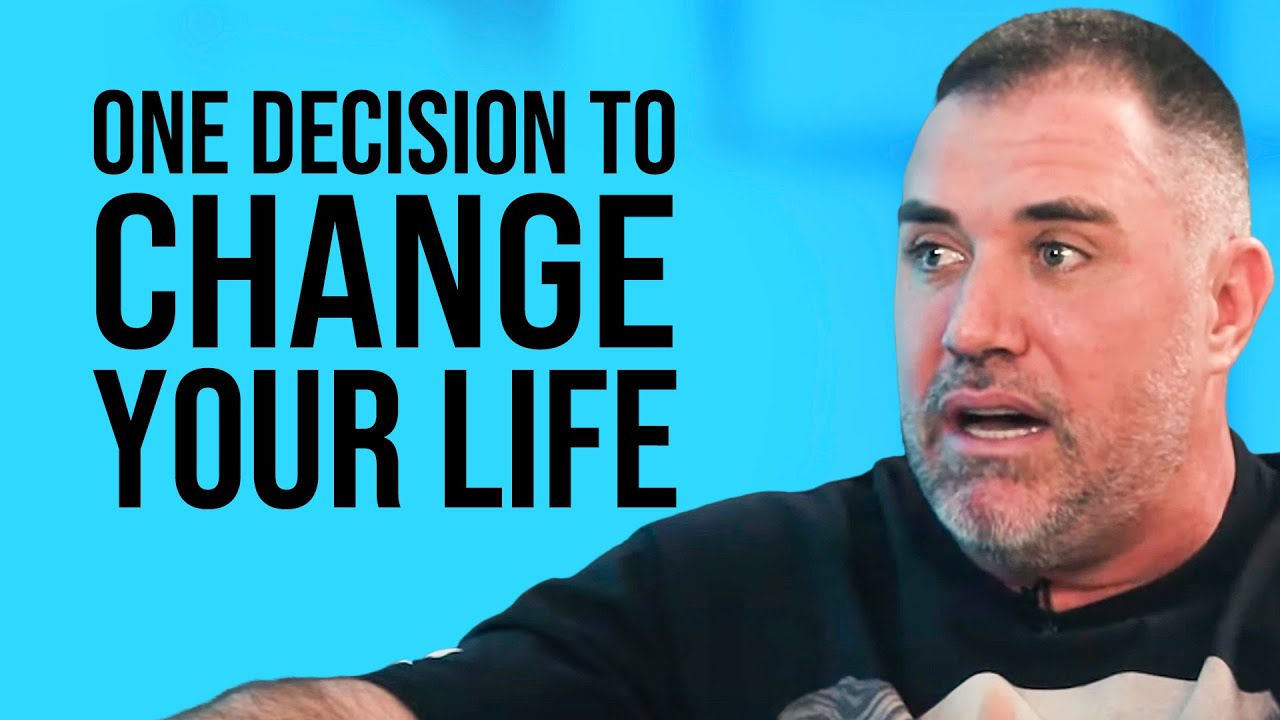
How to Hack Your Mind and Live Your Best Life | Coach Mike Bayer on Impact Theory
Watch on YouTubeVideo summary
In this episode of Impact Theory, host Tom Bilyeu interviews Coach Mike Bayer to explore his new book, *One Decision*, which posits that any significant life change hinges on a single pivotal choice followed by consistent action. Drawing from over 18 years of experience working with drug addicts, alcoholics, and individuals with psychiatric disorders at his own treatment center, Bayer argues that while childhood experiences hardwire about 50% of our perspective, the remaining half is malleable through awareness and willingness to change. He introduces the concept of "the window," a metaphorical opening created by the universe when an individual genuinely desires transformation; this window may not be what one expects or wants, but it represents a moment of spiritual deflation where help becomes accessible if one chooses to step through it rather than ignoring it due to shame or fear. Bayer shares his own story of struggling with addiction and identity issues as a gay man in the late 90s, noting that he ignored early windows for therapy until hitting rock bottom on methamphetamine, at which point he finally surrendered to win by seeking help and committing fully to recovery. Central to Bayer's methodology is identifying one's "Best Self," an avatar or archetype representing who you are at your core when feeling most connected and authentic. For Bayer, this Best Self is a wizard named Merlin, serving as a reminder to remain wise, compassionate, fearless, and in the moment during stressful situations. Conversely, individuals should also define their "Anti-Self" or negative traits that hinder them; for example, Bayer's Anti-Self is a male witch named Angelus who isolates and complains about the world. This framework allows people to recognize when they are acting out of character and consciously choose to align with their Best Self rather than succumbing to old patterns driven by trauma or cognitive distortions. The book emphasizes that authenticity involves stopping the fractured life of hiding secrets, as living a lie prevents true healing regardless of how well one functions on the surface. To help readers navigate these internal shifts, Bayer introduces two key acronyms: FORCE and the Four O's. FORCE stands for Fortune-telling, Overgeneralizing, Rigidity/Right-fighting, Confusion, and Emotional Reasoning (the negative forces) versus Fact-finding, Objective thinking, Relaxed thinking, Clarified purpose, and Evidence-based reasoning (the positive hacks). This matrix serves as a cheat sheet to identify which cognitive distortion is currently derailing one's perspective and provides an immediate tool to shift from the negative letter to its corresponding positive counterpart. Complementing this is the Four O's framework: Obstacle, Opportunity, One Decision, Outcome. Bayer explains that viewing challenges through the lens of opportunity rather than obstacle changes the emotional outcome; if you make a decision based on obstacles, the universe delivers an unhappy result (U for Universe decided), but making decisions from opportunities aligns with your true self and leads to positive outcomes. Bayer illustrates these concepts with real-world examples, including helping a singer paralyzed by cyberbullying who was unable to reinvent his career until he made one decision to accept a television opportunity despite feeling uncool enough; this shift in perspective allowed him to change his social circle, win an award, and relaunch his life. He also discusses his transition from working primarily with celebrities to focusing on everyday people after realizing that the narcissism of entertainment was no longer aligned with his soul's purpose. His work now focuses heavily on underserved communities, such as refugee camps in Kurdistan where he sought to open mental health clinics because publicists and Hollywood figures were unwilling to help those facing extreme trauma like beheadings and sex trafficking. Ultimately, Bayer concludes that lasting change requires full commitment rather than half-measures, urging listeners to find their own windows of healing, define who they truly are, and surrender to a new way of living that honors their authentic self.
Read the full video transcript
I feel like the universe
from my experience creates a window. If
you do want to change, if you do want to
help, a window is created. Now, it may
not be the window you want. And it may
not be this fabulous drapes that you
want to open up, but there'll be a
window. Because all of a sudden your
mindset is believing there's a window.
And it believes that you can change.
I hope you guys enjoyed this episode
brought to you by our sponsors at
Athletic Greens. To receive a free
one-year supply of vitamin D and five
free travel packs with your first
purchase, visit
athleticgreens.com/impacttheory.
Enjoy the episode.
Hey everybody, welcome to another
episode of Impact Theory. I am here with
the incredible Coach Mike Bayer.
Coach Mike, welcome to the show.
Tom, thanks for having me.
Dude, I'm super excited. So first of
all, I was on your show first.
You were.
So we've got some history.
We do.
And now we're going to dive into your
new book One Decision, which I think at
its core has a really powerful tactic
for people to reframe their life.
To get people into what One Decision is
and how they can leverage it, give us
your definition of One Decision.
Sure. So um and my name's Mike Bayer,
but people call me Coach Mike, but when
I came out of the womb, the coach wasn't
there, but you know,
you know, basically One Decision
uh
it all comes down to One Decision to
change our life. That's it.
What all comes down to One Decision?
Any change.
Like your happiness, though?
Um well, so I spent years working with
drug addicts, alcoholics, people with
psychiatric disorders, and years. And I
own a treatment center.
And um why do certain people change and
get well, and why do certain people not
get well?
And really what it comes down to is
making one decision, which is followed
up by a bunch of other decisions. But
everything is kind of one decision away.
Now, it's what decisions matter, what
decisions not matter? There's 35,000
decisions we make a day, so I wanted to
write something this time around that
was all geared around making it really
simple
and not overwhelming for someone. And if
they were to get through the book, that
by the end of it they can just make one
decision that improves their life.
Now, is that in the book you put a
really fine point on sort of what the
big one decision is?
Right.
That you're pushing people to make.
Right.
Is that one big one?
The The big one is figuring out who you
are and being yourself.
You know, in my last book, Best Self, um
my best self's a wizard. So, you know,
it's really identifying who someone is
at their core
and starting from that place. It can be
really confusing
for all of us as we get to unpack and
know ourselves a bit more.
Who we are as individuals.
are.
In your mind, do we design who we are,
or is this a discovery process?
Well, I think everyone's different.
So,
I think it's always a discovery process,
but I think we have to define
moments in our life,
you know, that's kind of a helpful
framework is to figure out what are the
times in our life when we felt
completely connected and in the moment.
When did we feel like we were rooted
in what I would call a spiritual
experience that wasn't outcome-based,
that wasn't based upon making a bunch of
money,
but was based about being in this
beautiful moment and going, "Gosh, I'm
exactly where I need to be and this is
who I am." So, I find it's helpful for
people to first
figure out what are those moments.
And that starts to create a framework
for someone realizing,
"Okay, those moments I can kind of
describe who I am."
Mhm.
So, going through the book, one of the
things I found most interesting is the
blending of this is a process of
discovery
and now you're in the driver seat. Once
you begin to develop that awareness, now
we can begin to sort of shift our force.
Yes.
The uh you are the king of acronyms.
I love an acronym.
Yes, you do. And you use them to very
good effect. And by the way, the force
acronym I think is incredible and makes
up a huge part of what makes the book
work. But before we define force, I just
want to get into this idea of you could
be sort of seeing the world one way. You
talk a lot about perspective and your
perspective is going to define your
life. And I love that idea.
Help people understand that more. How
and what is your perspective or a
perspective and how does it so color our
experience?
Right. So,
any situation or problem in our life
today,
we have a perception of the problem.
And sometimes that perception
has been circling around since we were a
little kid.
It just all kind of goes back. But every
day we have a hint of looking at it
through a certain lens because our
childhood makes up how we feel and look
at through the world today unless we go
back and we go, "Okay, what do I need to
change or shift because it's not
authentically who I am." And so,
that perception that isn't working for
us, we often go, "God, I hate it when I
think that way." Or I wish I wouldn't
have said that. Or
um
"That doesn't feel like me.
And I think it's
incredibly helpful for someone who wants
to improve their life to realize
that how they look at life, I mean it's
the difference is like when I was
writing this book, part of me was like,
"Okay, yeah, you look through
rose-colored glasses. How do you look at
life through a better optic?" But then I
was like, "All right, well, let's take
it a step further and how do we make
decisions from that optic?"
And so
I find that and again, my background is
working with drug addicts and alcoholics
and if you can get those people to
change
who are already way below beneath the
ground,
uh, you can get anyone to change.
So, this idea of your childhood is is
is really determining your present self,
which is something Mike, it freaks me
out at a level that I don't know how to
convey because my
my North Star is, okay, 50% of us is
hardwired, there's
just nothing we can do about that. 50%
is malleable and when I started this, I
really wanted it to be that we're 100%
malleable. And the more you look at the
research, the more you experience your
own life, the more you realize, okay,
that nothing experientially tells me
that we're 100% malleable.
Right.
But I want to believe that we can change
dramatically in any aspect of our life,
hardwiring or not.
And when people talk about childhood
becoming the the single most important
defining element of how you
frame the world, perceive the world,
look at the world, whatever language you
want to use today as an adult, I get
super freaked out. So, one, walk me
through trauma, how it sort of locks
itself in and how do we begin to
untangle that in adulthood?
Well,
I mean, I I think the first step is
awareness
and why are we doing what we're doing or
why we think the way we're thinking
and what's working for us and what's not
working for us.
How do you help people gain that cuz
this is an area you're freakishly good
at?
Well, I love assessments.
I just think unless you know where
you're starting from, you have no idea
where you're going. You know, so
everything I write has assessments in it
because someone needs to assess their
life and they have to be motivated to
change it. I find that I work with a lot
of people who are unhappy with one area
of their life when really it's another
area of their life they need to improve
or they they just don't want to they're
not motivated to change it. So
What are some of the core assessments
you walk people through?
Uh one is the spheres. So it stands for
like social, personal, health,
education, relationships, employment,
and spiritual development and someone
can just rate from 1 to 10
uh how much
how happy or content or whatever it is
for them they are in that area of that
their life and it just assesses a
starting spot and looking at what number
is lowest
um and then going
all right, do I want to change it? Am I
okay with it? You know, because people
will often say oh, I'm so unhappy with
uh
you know, my job.
But really what they may be unhappy with
is their spiritual development.
But they haven't thought of that.
You know, until you ask the question,
people often don't think about it. They
just focus on the problem.
But
you're right. I mean, it can be a bit
overwhelming. I've done so much Listen,
I'm a I'm the guy who's been on probably
every psychiatric medication. I'm a
recovering drug addict. I was a meth
addict. I've worked with all sorts of
different people for the past 18 plus
years and um
and I can tell you that we all have a
story.
And we all have a story we have to
shake. Just like you have a story you
had a story.
You changed your story, the part that
was malleable.
And now here we are
on Impact Theory. Now, if you didn't
change your story,
it would have just taken a different
road, not to say it was so much better
or worse, but it wasn't more in
alignment with who you are.
Awareness is big, and when I think about
people having any sort of breakthrough
in their life, you you need that moment.
Do you think that as a as somebody who
struggled with addiction, did you get a
key insight around awareness and what
you call that window?
Awareness of what? Like
Yeah, like so the window to me hearing
you describe it. In fact, tell people
what the window is, cuz I've never heard
anybody refer to it like that, and I
think it's the single most powerful
insight as to why people don't get help,
even though they've hit rock bottom like
over and over and over. Um tell people
what the window is, and then I'll
Well, we all we all get windows to
change.
There's always opportunities.
Which is the moment of willingness.
The moment of willingness and the moment
of
trusting the universe.
Like you people talk about rock bottom.
I mean, that's just a moment. You know,
like you could always go lower in your
rock bottom. You could lose a limb. You
could Like you're just To me, a rock
bottom is a moment of being spiritually
deflated, defeated,
essentially hating your life. And it can
always go a bit lower, but there's
always a window. I feel like the
universe,
from my experience,
creates a window. If you do want to
change, if you do want to help, a window
is created. Now, it may not be the
window you want, and it may not be this
fabulous straight that you want to open
up, but there'll be a window. Because
all of a sudden your mindset is
believing there's a window, and it
believes that you can change. And I just
think there's always that opening. Now,
that opening may shut.
Talk to me about the window that you
experienced. In fact, one thing I
haven't heard, talk to me about a window
in your drug use period that you
ignored, and then walk us through the
window that you ended up finally going
through.
So, you know, I'm
part of my story is, you know, I'm gay,
and being gay wasn't easy for me.
Like, I didn't know what it was. I
up?
Orange County.
What year? High school graduation,
roughly?
in '99.
I went to Mater Dei High School, which
is a big, like, sets you up for
collegiate basketball. I uh was captain
of the team,
uh won the homecoming queen.
I
uh was student body vice president, you
know, and was popular. And I
uh as I was growing up, I did not know
what
this thing was. Like,
I didn't know what gay was. Honestly,
like, I just didn't know what it was. I
didn't understand it. I thought at a
certain point I would start being turned
on by women.
Mhm.
I I heard of this thing in school called
puberty. So, I thought, okay, well, I
think I hit puberty. I'm growing hair
here.
Like, why is this not happening?
And that creates a story.
A story where you start to feel like
you're not enough. You start to, for me,
beat myself up.
And you start to not be able to regulate
emotions.
And want to find escapes.
And
you know, I
Yeah, I don't think like one just
because of that was why I ended up, you
know, choosing to do drugs, but it was
incredibly difficult, and I had to do a
lot of rewiring and therapy and trauma
work all around that. But, for me, I
look back at you know, I sat down with a
therapist
uh for years, and I could have told him
what was haunting me. I never told him.
Like, I knew this was bothering me. The
window was there for me to communicate
to someone in the safe space, but I was
too scared to step into that window.
How old were you when you first started
in therapy?
Uh 16.
Okay. So, because it was
evident to you or evident to your
parents that something was going on?
Okay.
I was the kid who
uh was, you know, very athletic, like I
said, but I was, you know, going to
raves, lying to my parents, doing
ketamine at 16. You know, I'd go to
raves every weekend um straight after
school.
you were on drugs or
They just Well, I mean, I got caught a
few times with weed or, you know, back
then weed was such a big deal, you know,
like, "Oh my god, he smokes weed." Um or
like selling nitrous oxide balloons, I
got caught.
But
yeah, I started going to therapy um and
the window was there. A lot of people
have shame
or secrets
about how they look at themselves or
life.
And they don't want to tell anyone.
They don't want to tell anyone what
keeps them up at night. They don't want
to tell anyone what's haunting them.
And if you show up in a setting to get
help that is the window. Now, it may not
be the therapist in the long run
because no one's perfect, no one's God.
But I look back at that moment or I look
back when I was going through out pa- I
went to play for to at basketball at
Fordham in the Bronx and like uh when I
got out there, I would go through out
patients and you know, support groups
and
um
and again, like, there's a window to get
help. It's just I wasn't willing to go
to any lengths. I think whenever we make
big changes in our lives, one of the
great steps, first we have to get honest
about our life, about others. We have to
be open to not being God and there's got
to be another way. We have to become
willing.
And then it's focus. And if we're able
to do that, it's kind of surrendering to
win.
And so
Surrendering to win?
Yeah.
What do you mean?
It's surrendering to this idea that what
we believe
or have believed
may not be in our best interest
and surrendering
to a whole new way of life.
Surrendering to if somebody is mentoring
us
and making suggestions
that even though we don't want to do it
and even though we're like, "Oh, that
reminds me of my mom or my dad, I'm just
going to do it."
And
uh
and I think a lot of it is blind faith
whenever you want to make any change in
life.
And I I just call it surrendering to
win, you know.
Fair enough. Okay, so that's the window
that you didn't take. What was the one
that you finally did?
Oh god, I mean this is sounds so crazy.
I mean, look, I was a hot mess, right?
So
I don't even know if I should tell this
version cuz it sounds so crazy. Do you
want the crazy version or do you want it
a little tapered?
I whatever version is most useful to the
person who's watching right now for whom
you are going to be the window. You're
going to give them the permission to to
seek help.
Okay, so I I lost my mind
on meth. I had a sugar mommy
who was a model who like her fantasy was
getting like guys to be with her cuz she
could get into
Specifically guys or gay guys? Okay.
So bad.
So embarrassing looking back. I can't
even believe I was in this spot in my
life, you know? But like
I had been up for like a week cuz you
stay up literally for a week.
Um
and it's crazy when you're when you stay
up for even more than a day, right?
You lose all reality.
Um and you get paranoid. You know,
that's part of why it's called
sketchiness. When we see people who are
aren't getting well good sleep, they're
more emotionally dysregulated and even
if they're not on drugs. And basically
uh
I
Huh, it sounds so weird, but I would I
would go to her house and she would give
me drugs.
Drugs.
And um
I one night I went to her house and all
of her art had devil horns.
Um and all like all the paintings.
And there would be women like naked
women with devil horns. And I just
thought that was weird.
Uh and then she would never let light in
her apartment and she had like three
rows of curtains.
And um
one night we were going to bed and I
went to the bathroom and I noticed that
her window was closed but the leaves
were moving in the bathroom. Uh on the
pot. And I came back and I said, "You
know, I'm I'm kind of tripping out. Like
felt like a weird vibe." And then I
looked I I told her I'm looking at that
artwork and I see the head spinning.
She goes, "Oh, no, that's normal. That's
That's what goes on. You know, it's
normal."
And so I
uh we lay down together in bed
uh to go to sleep. Probably taking a
bunch of Xanax or whatever to get, you
know, cuz you can't sleep really. And I
she leans over and out of her I hear
and this devil voice.
I got so freaked out. I left and I
haven't seen her since. I mean, it was
20 years ago or whatever.
And I literally called everyone I knew.
I I at the time I was transporting meth,
which I'm not proud of. I was a terrible
drug dealer cuz I would give it all
away. And I just was bad. Like I'd bring
it from Orange County in New York.
Um
but I would give it like I literally put
stickers on the plastic bags. It wasn't
like I was like made to be a drug
dealer.
Right.
I just like wanted everyone to party
with me. And um
I went home. I threw away all the drugs
I had and then I made a phone call and
shortly after I went to treatment and I
went to a place in Minnesota and I
thought I was going for a month and then
they recommended I stay for another 4
months. So I stayed another 4 months and
then I went to sober living for 5
months. And then I worked in coffee
shops and the YMCA and my family no
longer was financially supporting me so
I had to get scholarships.
And that was a window at which I was
like I don't know what to do with my
life anymore.
Like I don't know what to do. Someone
else tell me because I'm lost. Like I'm
completely lost and
that's an example of the window. And we
all have windows every day. Some are
big, some are small. But that was a
window that changed my life. And shortly
after that I became a counselor and I
did interventions and
Was there a key thing that you learned
in that window that allowed you to stick
with this? Because like you said, at
some point it just becomes about focus
but you know, recidivism rates for drug
use is so high unless the trauma has
been processed.
Was it that where you just processed it?
And is this centered primarily around
the disconnect of I'm meant to live this
heterosexual life but I'm gay and now
you're coming to terms like
it was? It was um
I mean, for me it's it was God. Good
orderly direction though.
Not some religious stuff.
Good orderly direction. That's
interesting. So good advice.
Yeah, good orderly direction.
Okay.
That's my God.
That's very interesting.
And it's a spiritual experience and I
think because I
I don't know. I never heard that I could
be spiritually fit as a gay dude growing
up. Like it was again a new thing I
learned. It's not like I could at the
time if I was gay show up in some
religion and they're like, "Come on in.
Like let's
you know, let's let's do something
really amazing with
embracing you." Like I never experienced
that. So I kind of
didn't know there was a way to be
spiritually fit. You know, I was young
and
Scott sober at 22, but I've learned that
when you want to change, you have to be
fully committed. And so
um
that's just what I'm willing to do when
I want to change. And I I I've had that
philosophy. I still have mentors in my
life today. I still try to be as
coachable as possible.
Um
but it's it's it's a willingness and
it's an openness. It's really like the
what helps someone make lasting change.
I went through treatment with 24 other
guys
and I think like two of us stayed sober.
Whoa.
Yeah.
That is gnarly.
Yeah. $30,000 a month rehab.
Whoa.
Yeah.
Let's talk about Athletic Greens, the
all-in-one daily drink to support better
health and peak performance. With so
many stressors in life, it's difficult
to maintain effective nutritional habits
and give our bodies the nutrients it
needs to thrive. Busy schedules, poor
sleep, exercise, stress, or simply not
eating enough of the foods that your
body needs. That's where Athletic Greens
can help. Their daily drink is like
nutritional insurance for your body
that's delivered straight to your door.
Developed from a complex blend of 75
vitamins, minerals, and whole food
sourced ingredients, Athletic Greens is
a greens powder engineered to help fill
the nutritional gaps in your diet.
Athletic Greens continues to obsessively
improve this one holistic formula based
on the latest research producing 53
iterations over the last decade and
counting. It's lifestyle friendly
whether you eat keto, paleo, vegan,
dairy-free, or gluten-free and contains
less than 1 g of sugar without
compromising on taste. So many people on
our team at Impact Theory are talking
all about their experiences with
Athletic Greens. They love the taste and
how they can get the micronutrients from
various veggies without having to cook
or buy groceries. So when our marketing
associate Chase is busy and he knows
he's not going to be able to easily eat
any greens, he can bring along Athletic
Greens and make sure that he's still
getting adequate micronutrients from the
powder without having to eat an entire
farm's worth of a salad. So whether
you're looking for peak performance or
better health, covering your bases with
Athletic Greens makes investing in your
energy, immunity, and gut health each
day simple, tasty, and efficient. So
whether you're looking for peak
performance or better health, covering
your bases with Athletic Greens makes
investing in your energy, immunity, and
gut health each day simple, tasty, and
efficient. And right now Athletic Greens
is doubling down on supporting your
immune system during the winter months.
They're offering our audience a free
one-year supply of vitamin D and five
travel packs with your first purchase.
Simply visit
athleticgreens.com/impacttheory.
Again, that's
athleticgreens.com/impacttheory and get
your free one-year supply of vitamin D
and five
free travel packs today. All right,
guys. Give it a shot. Take care and be
legendary.
Okay, so
you develop Was it through good orally
direct good oral direction that you
learned this idea of if you're going to
do it, do it all the way? Or is that uh
the sports training, just your nature?
I think like I don't know. I've I've had
this philosophy in life. I'm like, I'm a
cockroach. You can't get rid of me. You
know, like I'm like and I just have this
spirit to me that for me,
I'm not going to live this life It's
like a It's a conversation with self.
And it's a a willingness to learn. Like
when I was in treatment, I had a notepad
with a pen and I'm taking notes of every
speaker and what they had to say because
if I want to change,
I need to be fully committed. I They
There's a saying
in AA, it's half measures avail nothing.
And it basically means you can't
half-ass something. You can't half-ass
sobriety. And to me, it's kind of a life
or death situation. You They say you
either end up in a jail,
which is, you know, the jails and
prisons are just
the rates of people who where it's drug,
you know,
crimes.
And so,
for me, I was like,
you know, I'm
I'm going to shake this thing up. I'm
not going to I'm not going down, you
know? And the counselors didn't think I
was going to stay sober, you know, but
Did Did they think that because they're
so used to class after class of 24
people reduces down to two? Or was there
actually something in you at that time
that made you more likely to fail?
Uh I think because I'm ambitious and I
think that
And they thought that was a dangerous
I think I find that in treatment and
it's part of the reason I
created my own center was there's a
there's a
it's not a it's not a It's kind of like
you're all you're an addict, you're
always an addict. You have a disease.
You um
get a sober job and then you do the
basics and it's not an environment
that's like yeah, go. You know, the
counselors are underpaid.
You know, they're probably the first job
I got offered as a counselor to move out
outside of Washington was 28,000 a year
for me to go live in some youth rehab.
That's that industry. It's not an
industry where they're like let's get
you sober and let's go freaking make it.
It's not that. And so if you have that
excitement
and that drive,
I think it's just different.
That's really interesting. So having
your own center because I share that
with you, I'm wildly ambitious. Whenever
people bring up like um
you know, trauma, you're a workaholic,
something like that. And I stop and
reflect and like am is this an addictive
behavior in my life? And it does not
strike me as that.
Because I'm very clear on what my
priorities are and I always act in
accordance with my priorities. So if we
use the definition of
an addiction is something that gives you
short-term benefit but long-term damage
and even in the face of the long-term
damage you can't stop, that definitely
is not me.
Well, and and other criteria is like
it's progressive, it all
you know, relationships are affected by
it. Like there's there's several
elements to um
you know, and people throw around terms
you know, nowadays especially with
social media, you know.
And so I bring that up because is is
somebody with your level of ambition, is
there like an element of mania that you
see with the people that come into
treatment where as soon as the mania for
getting better wears off, they're going
to find themselves just going and
needing to numb out again? Or have you
seen there there just is no correlation,
it's a a problem of the way the industry
perceives itself and now that we're
outside that we're good.
Well, so our center will have like
strictly clinical depression or
debilitating anxiety. And so, during
COVID, it went up to about 75%
just primary mental health.
Wow.
Yeah. Whereas before it would have been
like 60% chemical dependency. The drug
addicts during COVID, man, they've had
it I mean, it's unfortunate for them
because families aren't seeing them.
They can get away with it. Checks
coming through. You know, that maybe
they weren't having to show up at work,
you know, not everyone. I'm
generalizing, but like um
But I think um
I think to people who typically are
addicted to drugs or struggling with
depression, they already don't have a
strong belief of themselves.
Um and so, a lot of what
they just want to do is just function.
Um they haven't been seen for years, you
know, and that's why in one decision in
kind of my uh you know, who I wrote the
book to, it's that person who's alone in
their apartment. It's that person who's
scared uh that, you know, they're in
their 40s and like what did I make of my
life?
It's that person that's like just
uh
doesn't realize they can have more.
It's that person who's who lives in an
inner city and is just like
what the hell am I supposed to do now?
You know, my relationships aren't
supporting me in getting to where I want
to get to. So, um those are my people,
you know, I love people that are just
struggling because the the amazing thing
about um mental health and why, you
know, and I and I've worked so much not
in mental health or addiction, you know,
the a lot of the work I've done with
entertainers is about helping them live
in their art and creative and
companies I've worked with like it none
of it has to do with addiction. That's
it evolved. But the thing I love about
people who are struggling
is you can see their light turn on real
quick.
I selfishly love seeing people's lights
turn on.
You cannot see that physically.
You can't see someone physically go to
the gym, suddenly there's a bigger
muscle.
But you can get someone's light to turn
on
who for the past 6 months has been
effing miserable.
And so like my approach adds humor,
creativity,
you know, it's like when you're able to
kind of laugh at yourself
even when you're suffering
it starts to shift.
And so I just that's why I do what I do.
You know, I just love helping people
turn their lights on
and start to navigate life from that. So
like that's like the one decisions how
do I help them turn the light on? It's
very tough with the book. I write it as
if I'm somebody's life coach. I write it
as if I'm working with someone.
Um and I'm very grateful now I get to do
it on Dr. Phil and and everything is
kind of I never thought I would be doing
this type of work in this scale, but
um I'm just I'm grateful.
All right, so let's start putting some
of these pieces together and then we're
going to get into the four O's and force
and and we'll give people the specifics
that they need to make this work. But
okay, so the one decision is
authenticity. You've got to decide that
you're going to be yourself. So you're
not living a sort of fractured life. Um
you're not hiding. This isn't a world of
secrets. Like you're now going to be
able to process through things because
you're not hiding under a bunch of
[ __ ] So
Yep.
Um
that's step one. Two, looking for that
window of healing so that you you have
the willingness and there is a lifeline
of some kind that you're going to be
able to step through to get the help. It
could be reading your book, which you've
turned into essentially an instruction
manual. So for anybody who's like, I
don't have anybody,
they would very easily be able to get
the essentials of what we're talking
about now.
It doesn't have to be rock bottom. It's
a really interesting part of the window
concept. Um perspective, so how you
choose to see the world. One of my
favorite quotes is it doesn't matter
what you look at, it matters what you
see. And your notion that hey, you get
to control what you see. And the first
way you walk people through that is the
notion of best self. So you want to
decide what you look like as your best
self. This there there's a a fascinating
duality that you cover in your book. So
you sort of present how almost
everything has the light side, the dark
side.
Right.
And so making sure that people
understand, hey, you're in this thing
over here and actually may have served
you for a while. The drugs may have
actually given you something for a
while. And now what we're trying to do
is move you out of that. The thing that
you're anxious about, like at first it
was planning, at first it was being
thoughtful about consequences, but now
it's turned into something else. So
you've got the duality which four sort
of really walk people home, but it
starts with that best self. So you've
got the who are you at your worst, who
are you at your best.
Yeah, your best self and your anti-self.
Like everyone I have create their best
self, which is an avatar for their life.
And yours would be
of course. I got wizards on my shoe, I
got wizards on my arm, I got wizards all
over my house. I need the reminder.
But it becomes this really powerful
constructed narrative.
Yes.
Like when I hear you talk about Merlin,
I have an image of who Merlin is in my
mind, right? As a devotee of sci-fi and
fantasy, like I conjure images. And
when I hear you describe it, I'm like,
oh that's interesting, that's not how I
think of wizards.
Mhm.
But it doesn't matter because you've
you've created an icon that becomes the
reminder. You can surround yourself with
it what Um, heard referred to as
self-signaling, which I think is really
powerful.
Right.
Uh, tell us what Merlin means to you.
Yeah, so so our parents give us names
and then uh But I at a spiritual level,
I use spirit as like, you know, the
energy inside of us, the light that
turns on, you know.
Gets us in the moment, gets us fired up,
you know.
Um, it reminds me of like your wife Lisa
when she listens to music and she's
belting it out. Um
And for me it's my best self is wise,
compassionate, fun, in the moment
fearless, driven uh compassionate and
doesn't really get
resentful or bitter or like can always
show up. And the reason why
I created best self uh and my best
self's a wizard named Merlin is
a reminder when I'm going into something
stressful. So, when we aren't our best
selves, besides like getting lack of
sleep or
all of the you know, the basics is
stressful situations.
Uh
event stuff that we need to perform for.
It could be a job interview. Um, it
could be like before I came out here, I
looked in myself in the mirror and I
said, "Be your Be yourself. Be your best
self." I say that to myself. Because I
know that you have a huge reach and I
want to make sure I'm being authentic.
And And what it does is allows one to
let go of the outcome. So, sometimes
I'll hear people going to business
meetings and go, "God, I should have
done this or that." Well, you can let go
of it if you were just showing up
authentically. So, it's a good reminder.
And then I like people that create their
anti-self. That part of them that's
currently getting in the way in their
life.
So, that they'll recognize it more
readily?
Recognize it, have a understanding of
it.
Um
and it's kind of funny.
So, like whereas normally when we think
of the aspects of ourselves that we get
in our own way,
we, you know,
typically can't laugh at them. Like
mine's a male witch named Angelus, and
male witches don't have a lot of
friends, and they isolate, and they
[ __ ] about the world. That's my own own
vision of it. And I'll be like, all
right, how do I get more like Merlin in
this situation, not like Angelus? And
what I love about this is everyone I
work with, they create their own best
self, and they create their own
anti-self. It's completely authentic to
their own life and what they envision.
And
it's a really helpful resource that's
free
that I've found has
worked wonders in other people's lives.
And sometimes I'll work with like
business executives, like companies. I
did this with the Dallas Cowboys,
um all the rookies, you know, I did with
Fidelity, which is a title insurance
company. And people find it really
helpful because
adjectives or descriptions alone
for
me included aren't like enough. It's
like, okay, well, you're angry. Okay,
well, yes, I'm angry.
Okay, you're bitter. Okay, but if I'm
like, you're acting like If my friends
are like, you're acting like Angelus,
it's kind of funny. I'm like, you're
kind of right.
And it just adds a new, you know, I love
characters. I love So,
first step is figuring out who your best
self is.
And then it's taking a look at, all
right, well, what problems, let's assess
your life, and let's look at,
uh what is the kind of thinking that's
driving those problems. So, like you
said, I love acronyms, so I created the
force.
And there's a negative force and a
positive force. Now,
not to say everything in life has to be
like so black and white, right? But it's
it's a framework that's helpful for
people and it comes out of
uh cognitive distortions, which is
cognitive behavioral therapy, which has
been around forever. It's the most
widely used type of therapy and anywhere
in the world. Um and I what I wanted to
do was create a coaching language for it
because it can be pretty complex
and it also takes a very long time to do
a lot of sessions of cognitive
behavioral therapy. So, the force is the
negative force stands for
fortune-telling.
So, F O R C E.
The force, yeah.
Done twice.
Yep.
Okay. So, the positive side Are you
doing positive or negative?
I can do negative first or So, the
negative would be fortune-telling,
overgeneralizing,
re-
rigidity or right-fighting,
um confusion, and emotional reasoning.
Typically, from my experience, one of
those five things is what affects
someone's perception.
It usually falls into one of those
categories.
And the flip side is the hack. So,
whenever one anyone's feeling like
they're in that negative force, they can
go, "All right, where where am I in this
list?" And the positive is fact-finding,
objective thinking,
relaxed or relaxed thinking, clarified
purpose,
and evidence-based
reasoning.
Now, the cool thing about seeing it in
the book that's going to be hard for
people that are just listening to this
is you actually break it out into a
matrix.
Yes.
people like, "Here's the F negative,
here's the F positive, the O negative,
the O positive."
Right.
Um and it really makes it easy to go,
"Okay, wait. Identify, going back to
your point about awareness, identify
what what am I derailing on right now?
What has shifted my perspective that's
pushed me into the negative force?
Right.
Identify which of the letters you're at
and then cool, what's its correlate on
the the side? And much like
the Merlin example of of actually coming
up with an avatar for your best self so
that it contains like you said it's a
shorthand for a whole lot of things so
you know how to sort of step into that I
think so powerful. Uh
they when you have that matrix in your
mind you're able to go okay this is a C
problem boom I'm going to jump from the
negative C to the positive C. Oh man
this is I'm I'm totally in emotional
reasoning I need to move over to
fact-based.
Yeah.
Um evidence-based cuz it's an E.
Yeah.
Uh
it's really useful. This is one of those
times where um I think verbal alone
won't quite get people.
One one one way to look at it is like
uh
we like you've shown up at events we all
have where you're confused and
pre-COVID or you know where
When events still existed.
You're like what am I doing here?
It could be someone's party it could be
at someone's house and it's just
confusing and it's like
what how long am I going to need to stay
or whatever?
Well usually the reason why we feel that
way is we don't know the purpose for
being there.
We're like lost like if we can clarify
the purpose oh it's their birthday and
I'm showing up for them because I love
them. Oh the purpose is for networking.
Because when we're in confusion we just
check out right? And so it's just that's
like a simple example
But giving people the reminder these are
the two Cs so you have confusion is a C
on force negative and then you have
clarity of purpose as the C on the force
positive and so you begin to go man why
am I here? Oh [ __ ] that's confusion I'm
in the C I'm back in force what is the
correlate that will allow me to this
goes back to your very first statement
about perspective shapes your world it's
like the first sentence in your book.
Yeah.
And so it's like okay wait this is about
perspective. I have my moment of
awareness here is my window of
opportunity recognize what C I'm in okay
I'm confused right? Now all I need is
clarity of purpose to understand do I
stay, do I go? Okay, this is about being
a good friend. Okay,
Yes.
rad. Like what how would a friend show
up in this moment? How do I figure that
out? My best self, who in your case is
tattooed on my arm. What would Merlin do
in this situation? Right. And and Merlin
is me.
Right.
And so it's like me at my best, how
would I want to show up? It's such a
cool rubric
I love that.
to just sort of put their finger
somewhere on a chart,
Right.
why I found it so helpful. Like I'm all
about instruction manuals. And I'm about
instruction manuals written by the
people who struggled.
Right.
Because if it came easy to you, I don't
want you writing my instruction manual.
Cuz you're not going to know where I'm
going to get tripped up.
Right.
And it's like I want to know where am I
going to fall?
Yeah.
And so force and you spend a lot of time
in the book walking people through it.
So for anybody who's listening to this
or watching this, know, get the book.
You can see like you take them through
it in several different ways. Stories
about people that were struggling with a
given letter and how you helped them
find, you know, what they needed to
transition to from the negative to the
positive.
Yeah.
You lay it out in the chart. You give
them the definitions. And it becomes
sort of that cheat sheet that I think
people need in the beginning.
Well, and and what I did was I put a a
post out on Facebook. So I had about, I
don't know,
40 strangers showing up at my house
where I said I'm going to help you make
one decision
in 40 minutes.
And so I had I recorded all of them. And
I still have the recordings. I'm like,
ah, I should I turn it into something?
But I basically, whatever I put out, I
want to make sure it works. Like
to the best of its ability with the
widest range of people. So I would have
people show up at my house and then we
would figure out what
force they were getting stuck in. You
know, what was their problem, who their
best self was, what force were they
stuck in, and then what was the one
decision they needed to make
to get into who they truly are and what
they want to live
like you know I so I I test out
everything like I'll throw self-help
dinner parties, you know, just trying to
make sure that it's really bulletproof
and um
and yeah, you're thank you for
articulating this all so great, you
know,
I'm literally spewing what you put in
the book.
No, but you you're actually like you get
it. You know, you actually get where the
framework of where I'm going with it and
you're even saying a lot of it better
than me. So I appreciate it.
Um so I appreciate the kind words, but
it it really is
there.
It's yeah.
The coolest description I heard of the
sort of magic that you do and how you're
able to I've heard you talk about hey,
I'm on the Dr. Phil show which you're on
all the time. Um
I've 2 minutes before the next
commercial break to help this person
have this huge breakthrough.
Uh-huh.
And
Yeah.
I heard somebody like sort of realize in
real time as you did it with them on
their show
and they were like, oh my god, I get
what you're doing. You're not giving me
a new puzzle piece. You're making me
aware of the fact that there are puzzle
pieces and showing me how to rearrange
them.
Mhm.
And I thought, oh my god, that actually
is what you're doing. Like you're
helping people understand f o r c e the
positive, the negative and you should
define the four O's because I keep
making sort of oblique references to it
because that's also useful. But give
people that cuz that's another piece of
the puzzle.
Sure. So the four O's is
And we hear about a lot lately. It's
it's kind of like obstacle or
opportunity, right? Is it every obstacle
is an opportunity in disguise, right?
Like we hear it and then it's kind of
like, okay, well
yes and I also think it's important that
we
I like to write things out like and I
find when I'm working with people when
they write it out, it's it's helpful. So
yes, it's looking at what's the obstacle
which is an O. What's the opportunity,
you know, in that obstacle?
And because you can't move on to
anything else. Because if you So, the
four O's there's obstacle, opportunity,
one decision, outcome.
When we make a decision from an obstacle
mindset,
we aren't going to be aligned with who
we really are. And we're probably at the
end not going to get the outcome that
we're going to be acceptable with
because we may look back and be like,
"Why did I do that? That's not I should
have said it differently."
If we can view it as an opportunity, it
feels better.
It's more in alignment with who we are.
We make the one decision,
and we can let go of the outcome.
And I do something too where I I
basically go like, "Okay, here's the
obstacle. Here's the opportunity.
The nose is one decision. If you make it
from an obstacle, it's unhappy.
Universe decided, unhappy. That's a U.
If you make it from an opportunity
mindset, universe is happier because
it's who you are." I do that more with
like kids and younger people so they can
start to learn.
But um that is the four O's. It's
obstacle, opportunity, one decision,
outcome.
How do you get people to see obstacles
as opportunities?
Depends who it is.
So,
um
It really
me one without saying who they are. But
people love celebrities. Give me one
from a celebrity client you worked with
where was like all they could see was
the obstacle.
Um I worked with someone that was doing
a reinvention. He's a singer, male.
Um and they were bullied so much,
cyberbullied,
in their career, even though they're
incredibly cool.
Yes.
But they were like destroyed to the
point where when they were relaunching,
reinventing their career,
they were paralyzed. Like they couldn't
figure out their fashion, they couldn't
figure out their music. They were
associating with people that weren't
really in alignment with who they were,
but they like looked cool. And they had
an opportunity to be on a television
show, and they weren't going to do it
because they didn't make them look cool
enough. And they were driven by this
optic of people who aren't going to buy
their stuff anyways.
And so, the obstacle was trying to get
them to
realize that uh
the obstacle was them getting in their
own way from
being
destroyed on social media. The
opportunity was them uh
looking at the opportunities in front of
them and realizing what's important to
them and that they were capable and that
they could uh
have a different experience and that the
most important thing was who they are
and the relationships in their life and
long story short, they made one decision
to do the show and they're
social friends changed. Everything got
better and it re-launched their career.
They won a VMA, like everything kind of
rebounded, but
uh and I put that in my first book, Best
Self, and it's every story in any of my
books are real. Like, I'm so committed
that everything has to be real that like
I even will send it to the people who
the stories are about even if I change
their names. And in Best Self, his
character was a Ralph, which was a
squirrel. That was his best self.
And his squirrel got him through.
That's so interesting. God, I want to
know people's like what they define as
our best self. I could never in a
million years equate my best self to a
squirrel. Like, that would so demotivate
me. But the fact and and I love that,
right? That everybody's got their own
frame of reference and and they find
something interesting that I don't. Um
that's really interesting. Why'd you
stop working with celebrities?
Ah, Lord.
Um I spent so much of my life doing it.
And I think that
um
at a certain point
you know, we we we like to do what feeds
our
our soul.
Um
And I traveled the world
from Malaysia to Africa to Brazil and
you know, it's interesting. I
3 years ago, 2 and 1/2 years ago, I went
to
uh my first refugee camp in Kurdistan.
And uh
yeah. And then I started going back
alone.
And working with the government, I was
going to open up a mental health clinic.
end up there?
Well, I went with a client of mine
and the intention was we were going to
try to do some work, you know, sell
merch on their tour. Uh and I wanted to
you know, I was in charge of like
charitable efforts and I thought this
was like let's go to the most
underserved people
on the planet. Like not on the planet,
but it's pretty underserved. I mean,
their husbands have been beheaded,
daughters sold for sex trafficking. Like
it's it's gnarly and so
not the worst, I don't want to meet the
worst. That's freakish.
Yeah, it's freakish and
I went and then I I got really
passionate about it. Like I started
working with
the Barzanis and like going to Kurdistan
and that's the government and I was
going to open up a mental health clinic
uh for uh
where was it? The hook.
And
I was so obsessed with it.
I like when I work with talent, I get
obsessed with working with the talent.
Like I get I'll write and I'll create
and you know, I've helped them create
tour concepts and living in their art
and how they express themselves. I like
I love it, right? I can play that all
day and I went to Kurdistan
and
it was just awful and they have no
therapy.
None. Like there's no therapy. These
women have like been moved from their
homes in Syria. They're now in a refugee
camp
with nothing. With like kids, some of
them aren't with them anymore, husband's
dead. And I was like, God, these people
like how could I create some hope for
them? And
and then I flew back to LA and I thought
that I could rally all my friends and
people I'd worked with to support
mental health clinics in Kurdistan. What
I found is publicists and
a lot of people in Hollywood aren't
really interested in helping people in
Kurdistan, Iraq. And so
I had this moment where I was like
why am I trying to get
famous people
to do what I want to do?
Like how cool would it be if I became
my own vehicle?
And I was the first time I had that
thought. Like
even back like
in like Jennifer Lopez is a good friend
of mine. She like tagged me on
Instagram. I didn't even have Instagram.
Now I'm inside I'm like, oh my god, I
wish I would have Instagram, you know,
cuz like
I don't know. I probably would have you
know, whatever. But like I didn't have
that thought. I didn't understand why
anyone would want to be more well-known
um
unless they were like you just I I got
it with like musicians and stuff, but I
just had worked in Hollywood for so
long. I was like, why would anyone want
to do this?
And um
and so when I came back then I was like,
what if I became the vehicle? And all of
a sudden
such a trip. Like 2 weeks later I was
throwing this charity event on a a music
tour where there was a self-help meeting
in every city.
And in city in LA Dr. Phil spoke.
And uh we connected and we got lunch and
then like a week later and he asked me
to go on a show. I went on a show 2 days
later.
Now I've been on over 40 episodes and he
told me, "Mike, you need to write a
book."
So I wrote a book. Made New York Times.
Then he's like, "You need to write
another book." Wrote another book. Made
New York Times. Then all of a sudden I
started speaking. So this is like like
this is the last 2 and 1/2 years and
why stop working with celebrities? It's
like I can't I can't grow my own brand
and work with
celebrities. I found for myself. Be- I
feel too conflicted.
Like I don't want to them ever to feel
like
"Hey, sorry. I got to go on this
podcast. Love to talk to you about your
relationship." You know, cuz I'm pretty
loose and flexible and I make myself
completely available and I just realized
I could have more impact
if And I have a message like and I've
helped people and
I And I think I also probably was just
over it. Like once you start
I don't I don't sugarcoat and I don't
like want
to like I don't And it's probably, you
know, this manager used to say to me, he
always said, "Mike,
you're not impressed by people."
And
like I'm impressed, but it's not people
aren't
it's a very strange thing like
the the the narcissism of entertainment
at a certain point for me, it's just not
attractive. Like I don't
I don't I'm friends with some people,
but it's it's
I'm more interested in
like
the neighbor. Like I just am more
passionate That's why I love being on
Dr. Phil's. We don't work with
celebrities.
We work with everyday people who are
looking for help and for me that's like
and that lights me up.
Well, speaking of turning people's
lights on, where can they find you?
Uh,
coachmikebear.com
is my
website. Same with like YouTube. I have
a podcast always evolving which you went
on. Um, but yeah, building out the
YouTube page. I'm doing a new series
called one decision try something new
where every week it's me trying
something new to hopefully inspire
others to try something new.
Nice.
Yeah, so I just did ballet.
All right.
Knitting, I'd never knitted before. You
know, but they're kind of fun.
Um, but yeah, social media same
coachmikebear.
Very cool.
Yeah.
All right, guys, trust me when I say
that you're going to want to read the
book. One decision is absolutely
fantastic and speaking of things that
are fantastic, if you haven't already,
be sure to subscribe and until next
time, my friends, be legendary. Take
care.
Change is really hard. Change is like,
oh yeah, just get inspired and change.
Oh, no, no, no.
I mean, there are fields of study
looking at change.
And change has a, you know,
pre-contemplative, contemplative,
execution, and maintenance. The
maintenance of change is what most
people leave out. And most people are
not able to maintain change.