Video summary
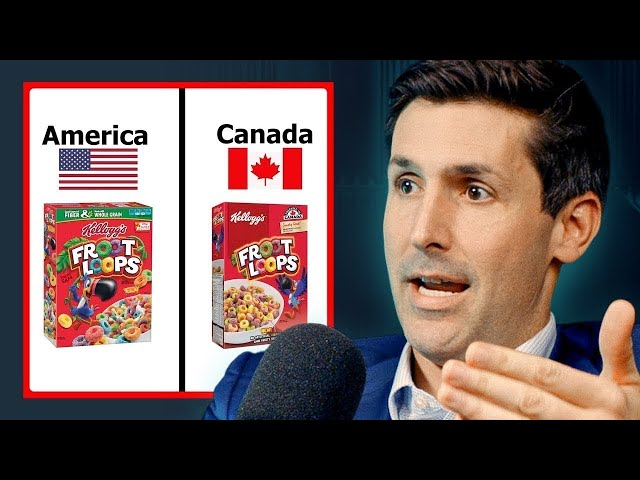
The podcast features Calley Means discussing how American food systems have been fundamentally altered, drawing comparisons to countries like France and Japan where ultra-processed food consumption is significantly lower. She argues that metabolic health in America has deteriorated primarily due to a 70% reliance on ultra-processed foods among children, contrasting this with other developed nations. The core of her argument rests on the assertion that these highly addictive products were not accidental creations but rather "addiction instruments" engineered by former tobacco giants who sought new revenue streams as cigarette sales declined in the late 20th century. Means traces a direct lineage between major food conglomerates and the tobacco industry, noting that Philip Morris and RJ Reynolds were among the world's most valuable companies during the 1980s before shifting their focus to acquiring massive food corporations like Nabisco, Kraft, and US Foods in some of history's largest mergers. She explains that these entities transferred their top scientists from research departments focused on nicotine addiction to food divisions with a specific mandate: to make processed foods more addictive using the same psychological principles previously applied to cigarettes. This strategic pivot allowed them to create cheap calories and "joy-filled" products like cereal and candy, effectively weaponizing American diets through plausible deniability while maintaining high corporate profits. A significant portion of the discussion addresses how these corporations manipulated public health narratives by funding research institutions such as Harvard's nutrition school via the Sugar Research Council (later rebranded). Means highlights that this financial support led to influential reports in the 1980s claiming sugar was essential for children and did not cause obesity, which directly informed the creation of the infamous Food Pyramid. Released in 1992 by the USDA with industry backing, this document placed carbohydrates, processed foods, and sugars at the base of dietary recommendations while relegating fruits and vegetables to a niche status, thereby legitimizing decades of poor nutritional guidance for millions of Americans who believed they were doing right by their families. The speaker also touches upon the cultural shift in American eating habits over recent decades, noting that carbohydrate consumption rose by 20% between 1990 and 2000 following these policy changes. She reflects on a perceived decline in public health since the mid-20th century, citing an eightfold increase in cancer rates per capita despite Surgeon General warnings about smoking arriving too late to prevent widespread damage. While acknowledging that Americans often criticize their own culture compared to European counterparts, Means emphasizes that this cultural degradation is not organic but rather a result of top-down policy rigging and bottom-up manipulation by powerful industry interests. Towards the end of the segment, the conversation pivots to practical solutions for individuals navigating these systemic challenges through AG1, a nutritional supplement described as foundational insurance rather than a meal replacement. The host details how this product has been refined over 52 times since its inception in 2010 to provide essential nutrients that are difficult to obtain from modern diets due to stress and busy lifestyles. The promotion includes an offer of free vitamin D3, K2, travel packs, and a money-back guarantee for new subscribers, framing the supplement as a necessary tool for maintaining health within a compromised food environment created by decades of corporate influence.
Read the full video transcript
You mentioned a couple of times, you've
sort of compared America specifically to
other countries, to France, to Japan.
What is uniquely happening in America?
Is it food and drugs and the quality of
the municipal water, or is it something
else? What's the comparison between
Europe and Europe's food and better
environment environment air quality and
environmental toxins versus everyone
else? Yeah, so so what are the
components of metabolic health? It's
multi-factorial, 100% but food is really
important. Food we 3D print our cells
and 3D print our bodies out of food. So
you've got to start with food and what
is happening to our food? We have a much
higher percentage consumption of
ultra-processed food in America as a
starter than Europe and Japan and every
other developed country. We're at 70%
for kids. And again, like and you have
folks on that I really respect. Come on
and oh, let's not demonize any
particular food and sure, you can get
into nuance. But I go back to what is
ultra-processed food? Ultra-processed
food is addiction instruments created by
the cigarette industry. We all have to
just understand that. So if we're going
to talk about facts, let's just
understand that the cigarette industry
was the largest food producer in the
1990s. Can you create that lineage for
me? Tell me the story.
in the 1980s, Philip Morris and RJ
Reynolds were two of the 10 most
valuable companies in the world.
Cigarette addiction dopamine is really
good business. So it wasn't Google and
Microsoft in the '80s, it was cigarette
companies. So the Surgeon General way
too late had some courage cigarette
smoking is bad for the first time in the
1980s. So they had the largest cash
piles in human history, the history of
capitalism. They had high balance
sheets, high cash piles and as they saw
the writing on the wall that cigarettes
were declining, they started
strategically buying food companies. So
they the biggest M&A deals in the 1980s,
the three biggest M&A deals when you
know, the 1980s Wall Street kind of all
this M&A activity, the three biggest
deals in human history up until 1990
were cigarette companies buying food
companies. It was RJ Reynolds buying
Nabisco and then cra- excuse me, Philip
Morris bought Kraft and US Foods, which
was a big conglomerate.
Just for the people who aren't so
business piled, what's downstream from
some of those big companies, more brands
that people might actually recognize?
Almost every single brand that we know
what has has disaggregated from US
Foods, which is like every brand we you
know, you've got those viral charts
where it shows like four companies
Disney is one of those. Disney Disney
owns Yeah, every
Yeah, yeah.
show that you watch.
So you there's these viral charts going
around where it's like five companies
and like it's like thousands of
sub-brands. Mhm. This is those brands,
those three companies. So they they were
all owned and and and and in the 1990s
by cigarette companies and RJ Reynolds
and Philip Morris were the two largest
food producers in the world. So this
wasn't like some you know, you talked
about don't demonize food. I'm
absolutely demonizing ultra-processed
food. These this food was created by the
cigarette industry literally and what
happened when the cigarette industry
bought these food companies? They
shifted their scientists from the
cigarette department to the food
department. And when I say weaponized,
I'm not being conspiratorial and I'm not
being hyperbolic. They put the world's
highest paid scientists that they had
employed at their companies and asked,
how do we make this food more addictive?
They're not trying to kill people,
right? They're probably going home and
thinking they're doing good things.
They're making palatable great food,
they're creating cheaper calories for
lower income Americans, they're
providing joy, right? They're making
Dunkaroos and all these all these fun
things and cereal that's really fun. So
so so so again, the plausible
deniability but that's what they did.
They weren't trying to make things
healthy. And then they what were they
good at, the cigarette companies? They
were good at the addiction, so they did
that. And then they were good at
lobbying. The 1980s was way too late for
the you know, Surgeon General come out.
They they delayed that 20 years. They
used the same playbook that they're
still using today. They bought off the
USDA and created the food pyramid. The
food pyramid was the deadliest document
I believe in American history, the thing
in 1992 that said that we should have
carbs and basically processed food and
sugar at the base of the pyramid and
that meat was kind of this niche thing
and fruits and vegetables were up here.
It was it was carbs and processed food
and my parents and all the parents in
the '90s grow raising kids thought they
were doing good things for getting their
kids you know, the crackers and low-fat
crap. What's the truth behind the story
of how that food pyramid was created,
who did it, why it happened?
The cigarette industry funded research
at Harvard from the Sugar Research
Council. They they created the Sugar
Research Council and the Sugar Research
Council, they didn't even hide the name.
Sounds like gay research council.
Yeah,
now it's like now it's like at least
they hide it a little bit. It's like the
you know, Health Nutrition Freedom
Council. Now it was the Sugar Research
Council. So the Sugar Research Council
was the chief donor to the Harvard
nutrition school.
So the Harvard the chief nutritionist at
Harvard created reports in the 1980s
saying sugar doesn't cause obesity and
is a key important uh part of a child's
energy balance and that added sugar is
actually a really good thing. So the
foundational research everyone can
Google this. The foundational research
of the food pyramid was research from
Harvard. Look at the report down at the
who's funding it, the Sugar Research
Council funded it. So It's like a human
centipede of
what goes in and what
This is not complicated. I mean, I
worked you know, years later for the
food industry but we know that people
what what what higher what higher level
do we have than a report from Harvard?
Like what higher level do we have than a
report from that I excuse me, that from
the NIH?
So this is something that I was
interested to ask you which is I
understand how the system can be rigged
about how incentives behind the scenes
about profit motives and so on and so
forth.
But it
it seems very much that it's not simply
that ultra-processed food is very
palatable, that there is both a top-down
uh
swaying of the wind but there's also a
bottom-up culture of the way that people
eat beyond this is simply very very
healthy and that's one of the
injections, that's one of the ways that
you can bottom-up rig the culture as
opposed to just rigging the system
through education. Mhm, right.
Incorrect education.
Yeah, I get really sad um about you
know, thinking people kind of decry
American culture and say the Italians
and the French have a better food
culture. I mean
this is where I really
really try to make a clear point which
is that our culture is defined by our
policies often and um you know, we have
completely co-opted our you know,
dietary guidelines to say
ultra-processed food and sugar and carbs
are really good. You know, Americans
listen to that and and you know in the
1990, right? To 2000, you know, the 10
years since the food pyramid, our
consumption of carbs as a percentage of
our diet went up 20%. So I think we
actually did have a relatively good
culture in America in the '70s, '80s.
Like I I joke we'd be healthier if the
cigarette companies went back to making
cigarettes. Like like like like we I
think we were kind of a threat. You look
at like you look at like you know, the
videos from the '70s and the '60s, like
Americans were good-looking people. We
were like we were like really really on
point. I think we I think our culture
was smoking. They didn't have any time
to eat. I mean I mean, I don't think
smoking's great but like you know, there
was something better happening back
then. We didn't have much lower rates of
cancer. Like the Surgeon General report
was all about I'm not endorsing smoking
but like this we got it all wrong. Like
the Surgeon General report came out on
smoking to reduce cancer. Can't like I
tweeted the graph recently. It's like 8x
increase per capita in cancer in the
United States. It's exploding.
So hilarious.
Yeah. Over the span of about a year, I
tried pretty much every greens drink
that I could trying to work out which
one is best and I came across AG1 and
have stuck with it for over 3 years
because it's the best. I know that you
might be skeptical about taking anything
that replaces food. This isn't supposed
to replace food. It's just foundational
nutrition. It's insurance for the days
when you don't actually get what you're
supposed to eat in your diet. No matter
whether it's because you're stressed,
because you're busy, because you're
tired, it's difficult to get everything
we need from our diet no matter how hard
we try and that is why I've used AG1
every single day for over 3 years. Since
2010, they've improved the formula 52
times in the pursuit of making the
highest quality functional nutrition
supplement on the planet. Best of all,
there is a 90-day money-back guarantee.
So if you're not sure, you can buy it
and try it every single day for 3 months
and if you don't like it, they'll give
you your money back. Right now, you can
get a year's free supply vitamin D3 K2,
five free AG1 travel packs and that
90-day money-back guarantee with your
first subscription by going to the link
in the description below or heading to
drinkag1.com/modernwisdom.
That's drinkag1.com.
/modernwisdom.
You probably enjoyed that clip with Cali
if you've got all this way through, so
why not watch the full thing?
Just that.
Go on.