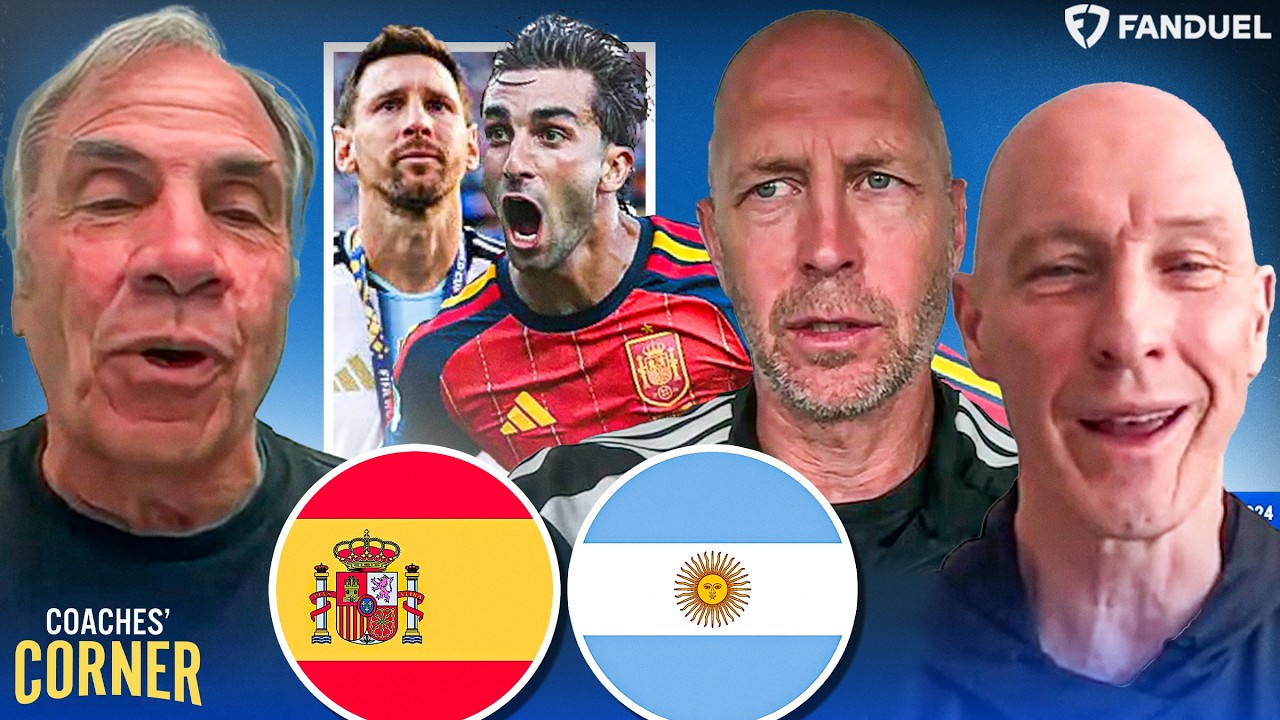
Video summary
Spain's victory in the World Cup final was defined by their remarkable composure and tactical discipline rather than offensive flair, as they successfully neutralized Argentina's star power throughout the match. The Spanish team maintained a calm and poised demeanor despite constant provocation from their opponents, relying on a well-honed system developed over two decades that prioritizes collective effort over individual stardom. This approach was heavily influenced by legendary figures like Johan Cruyff, Pep Guardiola, and La Masia's philosophy, creating a squad where the team itself was the true star. Their defensive solidity was exceptional, conceding only one goal in eight games and recording seven shutouts, which underscores how their model of play effectively suffocated opponents and controlled the game flow without needing to create numerous high-quality chances.
The primary reason for Argentina's defeat lay in Spain's relentless pressing system, which exploited the lack of speed and predictability in the Argentine attack. While Messi was celebrated for his passion and leadership, he could not single-handedly overcome the physical and tactical dominance of a Spanish side that pushed teams deep into their own half and immediately counter-pressed upon losing possession. Argentina struggled to build from the back, often forced into long balls just to regroup, and failed to generate any significant threats until the very end of extra time. The statistical reality was stark, with Argentina registering zero expected goals (xG) for the entire match, highlighting that they were effectively extinguished by a defense that was impossible to break down through traditional attacking means.
Lionel Messi's performance, while dignified, appeared somewhat muted as he remained in his preferred central space rather than engaging in defensive duties or high-intensity pressing, a style that has become characteristic of him at this stage of his career. The absence of Lautaro Martínez from the starting lineup was a significant tactical oversight, as his presence would have provided the necessary pace and physicality to challenge Spain's defense; however, with the team down to ten men, the coaching staff likely prioritized a defensive strategy aimed solely at reaching penalties. Ultimately, Argentina's inability to adapt their game plan to counter Spain's specific strengths, combined with a lack of athletic options to exploit spaces behind the Spanish backline, led to a final that was less about open football and more about survival until the stoppage time free-kick secured the title for Spain.
Read the full video transcript
Greg, let's start with you here. What
what was your big takeaway from from
yesterday's 1-0 win for Spain and they
claimed their second ever World Cup
title?
>> Um you know, it was a tough game, a
tough game on the viewers. Um very
competitive game, not a lot of space,
not a lot of offensive um creativity.
But Spain in the end, what I really love
about them and my big takeaway is just
how calm and how poised they stayed. You
know, there was a lot going on.
Argentina was provoking them all game
and they stayed calm and and eventually
got the breakthrough through. And it
really shows, I think, the work over the
last, you know, 15 20 15 to 20 years
that Spain has done. Um believing in
their game model, believing in a way to
develop their players and I think it's
really good for soccer that Spain won
this this World Cup.
>> I'll follow up on that, certainly.
Um
when we look at Spain, we appreciate the
football.
Um we appreciate the fact that the star
was the team in a World Cup where we we
focus so much on big names. When all is
said and done, um for Spain,
yes, they have many great players, but
it all came out in the collective and
that's a credit to what's been going on
in Spain for a long time and there's so
many names that you could mention that
were part of the development. You can
talk about Aragones, you can talk about
Johan Cruyff. Uh you can move on and
talk about Pep. The we couldn't cover
all the names.
And and in Spain, uh we give credit also
to Barcelona and La Masia, but
the
the Basque clubs and Real Sociedad and
Athletic Club and and just what goes on
in a country where where they love
football and their their culture to
develop players and develop coaches. Uh
it's I think something that we can can
learn from.
>> Well, I'll I'll
I'll continue the conversation there. I
am absolutely amazed at the dominance of
Spain in this tournament. And you know,
at the end of the day, I guess we could
say the second best team was France, but
the the dominance over over both
Argentina and France is very impressive.
If Spain was a little bit better in the
final third of the field and could have
created a few more quality chances, they
could have run away with that game. And
it didn't deserve an overtime
in my opinion, and it would have been a
shame if that game went to penalty
kicks. So, the best team clearly won
this World Cup.
The next best team is a big question
mark at this point, but
outstanding World Cup for Spain and
conceding one goal in eight games is
remarkable. So, give them a lot of
credit.
They're worthy
>> Cup record seven shutouts, Bruce, right?
I mean, they we love to say defense wins
championships in other sports and and it
clearly translated this summer on the
World Cup stage.
>> Right, and I know their goalkeeper was
the the goalkeeper of the tournament,
but I you know, I'm not sure he made a
save yesterday.
>> He didn't do much.
>> Argentina's first shot was in the 117th
minute. Like,
so what what happened? What happened,
Bob? What happened to Argentina
yesterday? Did they just get Spained, if
that's even a way to describe it?
>> Uh 100% Spain is just hard to play
against, and we said it in one of the
earlier shows. They're the easiest team
to analyze and the hardest team to play
against. And what that means is when
they have the ball, they control the
game. And their ability to push another
team back and suffocate them. And
[snorts] their positioning as they're
attacking, rest defense
ideas mean that when they lose the ball,
they can counter press right away and
regain possession. And uh they're a
very, very difficult team to play out
against because of the way they attack.
And they're also a very difficult team
to press. And that would be especially
true for Argentina because with all the
credit we give to Messi, uh the ability
for Argentina to step up higher and
press a little bit is not going to be so
easy
um given that that that's not something
Messi's going to
add to in in many real ways. And so, you
give all the credit to to Spain because
they're so hard to play against. And
then you also just have to say that when
when all is said and done,
we gave a lot of credit to Argentina
throughout the tournament um for the
passion and for the way they play for
Messi, but yesterday was a little bit of
the worst of Argentina. Um there wasn't
a real commitment to attack. Certainly,
as Greg already mentioned, they they
wanted to make the game
uh choppy, they wanted to provoke. Um a
guy like Paredes comes on at halftime
and honestly, I think he had 50 fouls
and three to four yellow/reds.
And it it it it says something that on
the day,
whether it was stated or not, they
didn't think they could beat Spain by
actually playing football. They needed
to think They thought more about hanging
in there and maybe making a play late or
going to penalties, but it didn't make
for a great final.
>> I thought it was always going to be
difficult Yeah, it was always going to
be difficult for for Argentina the way
Spain was pressing and Argentina really
not having a lot of speed. I mean, maybe
Simeone's the only one with with some
pace in the attack. So, that was that
was always going to be difficult. Spain
presses so well with you know, adding a
midfielder to the top players to press.
And then
um you know, I just thought that it was
really surprising that Lautaro didn't
come on at any stage of the game. I
mean, that to me is is shocking. You
would think that you you would get him
on the field somehow.
>> Yeah, I think once Argentina had a
player sent off, they were they were
playing for penalties.
You know, and and
they almost got there.
>> Rob, we got your fav- favorite stat. XG
was 0 0 0. Everything was zero for
Argentina in the game. I was thinking at
one point, like can Argentina win this
game on penalties without having a shot
on goal?
>> I I was thinking yes. I was in the
stadium. I was like, well, that's just
kind of the way it's gone for Argentina.
Like they they've been on that razor's
edge throughout the knockout stage,
right? Goals in the 111th minute, 92nd,
112th, 92nd again getting there. And
you're like, how how much longer can
they sustain living like that? And they
couldn't. They got extinguished
yesterday.
>> Right. What was the
the possession statistic in this game?
It was like probably close to 80%.
It's crazy.
>> Uh let's talk about
let's talk about Lionel Messi.
Go ahead.
>> I'm I'm I just want to make I think
Argentina
would have tried to attack if they could
keep the ball. I I think the the
pressure from Spain was
clearly the difference in the game. I
mean, it's not that Argentina didn't try
to play. They couldn't. And Spain's
pressure pressure was incredible.
>> Rodri and transition, unbelievable.
>> You you know, Bob, you and I were there.
I I remember particularly in the first
half, how many times I saw Argentina
as they tried to quote-unquote build out
of that getting pushed negative
and literally with their back
to their teammates and they felt like
they kept putting
their own players in worse situations.
Again, I think that was credit to Spain,
but Argentina could hardly find a way
out of it and they felt like they just
kept going negative, negative, and then
had to just send a long ball out just to
like icing the puck basically to like
catch a breath and regroup. And then
here comes the next the next attack from
Spain.
>> Um yeah, I would differentiate two
things. Uh again, we've talked a lot
about counter pressing. And so certainly
when Spain has the ball and they push
you deep and then they lose and then
they have so many numbers right around
the ball and they press and react so
fast. Those situations are are so
difficult. But there are other moments
where it's not a counter pressing
situation and and Argentina is or excuse
me, Spain is still going to step up and
press. Greg mentioned one of the
midfielders stepping higher and they've
got their ideas on how they want to
press in some of the set situations. But
I thought Argentina was slow and
predictable. And so whenever you're
preparing a team, certainly the idea
that here's how they're going to press
us and now what are our ideas in terms
of our movements? How do we try to
create some ways that they are not on
top of every play? But if it's slow and
easy to read, then the pressing team
just pushes the other team back and
ultimately wins the ball or forces a
long ball. And that's what we saw most
of the first half.
>> Yeah, really no threats also.
>> Yeah. Let's talk about Lionel Messi.
To me it looked like Greg, he was almost
in a haze for a majority of this game.
And I understand that
we've grown accustomed to
accepting his style of play. And it's
walking and it's viewing. But there were
times, particularly when they went down
a man, where I was saying, "Hey Leo, you
know you guys are only at 10. Can I get
a little
a little defensive effort, a a little
more work. It was
an uncharacteristic messy type
performance that will
most likely be his international curtain
call.
>> I just it's difficult for him to do it
alone at his age, right? I mean
completely alone, right? Anytime he gets
the ball and wants to dribble, there's
two Spanish defenders there and it's
going to be very very difficult for him.
He doesn't have the separation over
distance that he used to have, but you
know, I wasn't there live in the
stadium, but I do remember a play. I
think it was in
in the first half of the game where
Messi's back at the top of his box, you
know, and and cleared a ball or made a
defensive play and that really surprised
me. But I think we just have to get used
to like when they're down a man or
normal in in in defensive shape, he's
not going to do a ton. He's not going to
do a lot of running and that's what he's
been doing all tournament. So to me it
wasn't atypical. It was it was normal
for Messi.
>> So here's the question and then I don't
have a good answer.
You're the coach, Scaloni, and you're
preparing for Spain. Would there ever be
a part of that discussion that includes
that we've been able to get this far,
but for this game, here's what has to
change?
And and could that include the idea that
you're
saying to Messi, come on, in this game,
we've got to make sure that that we're
all working a little bit more when we
lose the ball or when we step up. And
and look, it's easy to say no, it's
Messi. We just we we just let it go, but
it's an interesting thought because on
the day the way they chose to play,
the odds that they could win that game
playing like that were were minimal for
me.
>> Bob, let me ask you this. Who's Who's
the most athletic team in the World Cup?
You'd say France, right?
>> I would say France, yes.
>> And France couldn't get the ball from
Spain. So even if you ask Messi to try
to get the ball, he he's not going to
They're not going to do it. It's
impossible. And and why waste energy
trying? Why waste energy trying?
>> Can you play Messi up
>> There's truth to that, but do you think
No, but hold on. Let's Let's go back to
France.
>> Yeah.
>> Do you think that that when it comes
time to step up on other teams, that's
their strength?
>> I mean, they've they did it at times in
the World Cup, but no, it's not their
strength. Clearly not their strength.
But it wouldn't be it wouldn't be
Argentina's strength, either. That's
That's my point. And to ask Messi to do
that, I think is a futile exercise.
>> Could you stick Messi up the field as a
false nine?
Keep him high and central.
>> That's sort of what they do at times
because
>> what they do. Yeah.
>> Well, he Julian Alvarez ends up coming
back and defending and Messi is the one
that stays up there even when they were
down a man.
>> Exactly.
>> And he hangs out still in the in in his
favorite space on the field.
So,
it's hard for him to even get involved
in the attacking in that game.
And I think in the case of France,
just in the case of France, though, at
least they had the option when they did
win the ball, they had some pace to try
to get behind Spain.
Argentina had none of that.
>> Yeah, I totally agree. Greg made that
point as well, and I think you guys are
spot on. And and again, when you talk
about pressing Spain,
don't mistake me. It's not like any team
can step up and press them on every play
for the whole game. That's impossible.
All right? And it would only be a
decision that you can pick certain
moments
where you can try to balance it out. And
and and certainly when you play against
a team like Spain, it not that anybody
counts on pure possession, but the idea
that you can find ways to balance the
game out a little,
play in their end a little bit more,
make it a little bit harder in certain
situations for them to do exactly what
they want and hope then that you can
still when you get forward threaten them
a little bit. Those are your Those are
your challenges. They're all very
difficult and and and we can go back and
forth for the rest of this call about
whether we want to give all the credit
to Spain because I think all of us agree
they're a great team or if we're also
going to say the opponent has to have
some ways to try to challenge it better
than we saw yesterday.
>> Yeah, can you play more direct against
Spain and and and make them face their
own goal a bit and press them and move
your team, make it harder instead of
playing in front of them all the time?
>> You know, I think with Martinez,
Martinez, Alvarez and Messi up top and
play 4-3-3 and try to try to pack the
middle of the field, right? Have those
guys stay high and counter attack. I
mean, that that could be interesting.
But it's a lot easier for us to sit here
on Monday and say that.
>> Sure, right. Yeah.
Right. Cuz we all have
>> final
>> In a final, it's interesting playing
England in the final anyway, right?
>> That's true. We'll get to that in a
minute, but just to to to end it, in a
final
the first responsibility you have as a
coach is to try to figure out how to
win. We all agree on that.
Uh but there's also a part where there's
a responsibility
in a smaller way for what's the game
going to look like. And
when when you get to a final, we're all
hoping that we see a really good game
where teams test and push push each
other. But there's been many many other
World Cup finals. When Spain won in
2010, it wasn't a great game. When
Argentina lost to Germany in 1990, it
was a terrible game. So, uh this is not
anything that is completely new.
>> Yep.
>> That's true.
>> At any point did you guys think Messi
was going to get subbed off?
>> Never.
>> I never going to
>> happen.
>> Okay.
Should he have been subbed off?
>> No.
>> Greg makes a great point about Lautaro
and and I don't know whether
he was completely healthy. We've not
read anything
uh and whether there was a reason that
he didn't come on, but it it's certainly
made sense yesterday to get him on the
field at some point. Um but when all is
said and done
and it's 1-0, there's two chances that
come late and both of them are starting
with Messi.
And and so the idea that he can still
produce something
and and on the first one
uh Spain on the lateral free kick just
falls asleep and then they create this
advantage and when the ball gets played
across, man, Cubarsi makes an incredible
play.
>> Yeah.
>> and then the other one is is the shot
that Simeone hits over.
Um but when when all is said and done
uh I agree with Greg that if he was
healthy, we needed to see Lautaro come
on the field yesterday.
>> And you think about this game
>> Yeah.
>> How many real quality chances did Spain
have in the game? They had some good
headers, right?
But think about that.
>> point, Bruce, they had a lot of shots,
but how many of them are really
threatening, right? They were so many of
them were right at Emi Martínez, it felt
like.
>> And you have a goalkeeper who can't
catch the ball.
>> Yeah.
>> broken finger.
And it's a
>> Yeah, the Greg's talking about Merino's
header.
>> Yeah, exactly.
>> I I thought he was getting the winner
again. That was a great chance.
>> If you're the coach of Argentina and
you're seeing this whole thing play out
and now you're in the first overtime and
it's still 0-0, like part of you has to
say, I'm we're just trying to get to
penalties. You know, so that's why I can
understand why Lautaro did you know,
probably didn't go on the field. You're
just saying, whatever we can do, let's
just try to get We have 15 more minutes
here, guys, to get it to penalties." I
remember that there was a huddle, right?
Didn't they show the huddle on TV in the
before the second overtime?
And Messi's like the first one in the
huddle, like really paying attention to
what the coach is saying. And I can
imagine it's like we have 15 more
minutes, we may steal this thing. Let's
just go for it. The way the tournament
had played out, the concept of Argentina
stealing it did not feel far-fetched.
>> Exactly.
>> Right. Right. By any By any stretch you
were like they haven't had a shot until
the 117th minute, yet they might win
this game. In fact, before that I was
saying, "They might win a World Cup
without having a shot, period." cuz it
seemed pretty realistic that they
weren't going to get one off at that
point.
>> Yeah, you would think they just parked
the bus and and get the penalty.
>> Yeah.
>> Uh