Video summary
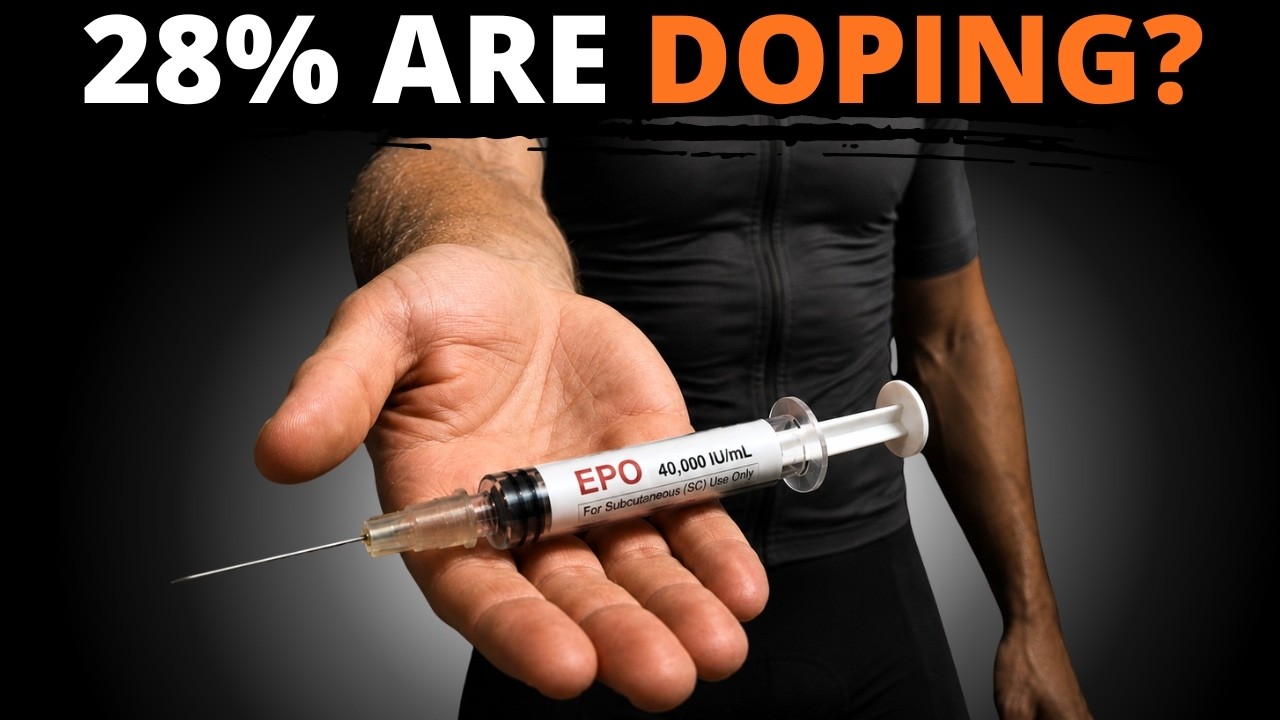
2024 年西班牙的一场业余自行车赛因惊人的退赛率而登上头条,这揭示了兴奋剂问题的一个侧面:当车手得知反兴奋剂官员在场时,182 名选手中仅有 52 人完成了比赛。然而,这一事件并不能直接证明所有弃车者都在使用违禁药物,因为机械故障或突发状况同样可能导致大规模退赛。尽管如此,这确实凸显了一个核心事实:被官方检测并抓获的运动员比例(每年约 1% 至 2%)远远低于实际存在的兴奋剂使用者数量。由于作弊行为具有高度隐蔽性且涉及巨大的声誉风险,研究人员无法通过简单的问卷调查获取真实数据,因此不得不采用“随机响应技术”等复杂方法来估算 prevalence,即让受访者在回答无害问题或敏感问题时进行匿名化处理,从而得出精英运动员中有意使用兴奋剂的估计比例可能在 14% 到 39% 之间。
尽管早期的研究给出了较高的数字,但更新的综合分析显示数据范围波动极大(从 0% 到 73%,多数低于 5%),且不同研究方法、调查对象及时间跨度导致了结果的不一致。例如,关于是否“作弊”的措辞差异会显著影响回答率,而将兴奋剂视为严重问题的高数字研究往往更容易获得关注。此外,运动员生物护照等检测手段虽然有效,但并非无懈可击;微剂量使用 EPO 等技术可以通过制造微小的生理变化来规避系统警报,这意味着现有的监控系统只能发现明显的操纵模式,而无法保证捕捉所有低剂量、精心时机的违规行为。因此,兴奋剂问题不仅存在于职业赛场,也渗透到了业余领域,因为无论奖金多少或是否受薪,运动员对自我认同和地位的追求都可能成为使用违禁药物的动力。
视频最后深入探讨了兴奋剂的心理学影响,指出其最大的风险并非被抓获,而是对个人幸福感和成就感的根本性破坏。心理学家区分了两种幸福感:一种是即时的享乐主义快乐(hedonic well-being),如赢得比赛瞬间的快感;另一种是基于意义和价值观实现的繁荣感(eudemonic well-being)。使用兴奋剂获胜虽然可能带来短暂的满足,但会剥夺运动员对自己成就的所有权,导致长期的自我怀疑和内疚。此外,“享乐适应”现象表明,人类对成功的快乐感受会随着时间推移而迅速消退,新的目标随即出现,因此兴奋剂并不能解决追求幸福的根本需求。相反,它通过让成功变得“不纯粹”,永久地损害了个人的心理健康和道德完整性,使得运动员即使未被外界发现,也会在内心深处无法真正为自己赢得的荣誉感到自豪。
Read the full video transcript
In 2024, a Spanish amateur cycling event
made headlines for all the wrong
reasons. On stage six of the 8-day stage
race, riders were made aware that
Spanish anti-doping authorities were on
site, a fact that the riders did not
know before entering the race. The
result, 182 riders started the stage and
only 52 finished. This means that nearly
three-quarters of the field decided that
they had somewhere better to be once
they heard about the possibility of
getting tested. Now, to be fair, this
does not prove that all of those riders
were doping. This race could have had
the most catastrophic outbreak of flat
tires, freak mechanicals, stomach bugs,
and a sudden loss of any will to
continue in the history of cycling.
>> [snorts]
>> This guy can't go one video without
talking about Unbound. If you've ever
wondered how many cyclists or other
endurance sports athletes, or just
athletes in general, are doping both in
the professional and amateur ranks,
then this video
will not answer that question, at least
not [clears throat] definitively. But,
what it will do is give you a better
idea of what the true number is because,
as it turns out, there is actually
research on this topic. So, today we're
going to dive in and see what it has to
say about the prevalence of doping.
Welcome back to the channel. This video
is fueled by The Feed. I want to make
one thing clear before I get into the
video. I have no agenda here. I am not
trying to convince you that doping is
rampant, nor that it is not a problem at
all in the modern age, and we can just
forget about it. I say this because I
know that, given cycling's history, this
can be a divisive topic. Just look at
the comment section of any social media
post that has anything to do with Lance
Armstrong. I genuinely don't have a
preconceived opinion on this topic, and
whenever somebody has asked me about it
in the past, I usually just say, "I
don't know." Because that's the truth. I
don't know, and I never will. None of us
ever will. But, researchers have done
their best to try to get to the bottom
of this. So, without further ado, let's
jump into it. A good place to start is
by talking about how many professional
athletes who regularly get tested
actually get caught doping every year.
And that number is around 1 to 2%
annually. Now, this should go without
saying, but obviously 1 to 2% is lower
than the actual amount of people that
dope. That's like trying to count how
many people speed by counting speeding
tickets. You're not counting how many
people speed, you're counting how many
people get caught. And I think we all
know that there is a big difference
between those two numbers. Let's not
forget that we are talking about a
behavior that people are actively trying
to hide. If someone is willing to use
banned substances, risk a ban, risk
their reputation, lie to other athletes,
lie to anti-doping officials, and
potentially lie to themselves, it should
not surprise anyone that they are also
pretty motivated to hide it at all
costs. This puts people trying to study
the topic in a tough position, because
doping is something that researchers
refer to as a sensitive behavior,
because there are so many negatives to
being caught. This means that if you
just hand out a questionnaire to
athletes asking, "Have you doped? Check
yes or no." You're probably not going to
come up with any sort of useful data. I
know, shocker. So, researchers have to
be a bit sneaky with how they get this
information out of athletes. This 2014
review article on the prevalence of
doping in elite sport looked at the
different ways researchers have tried to
estimate doping prevalence. Using
questions that have a random response
technique should give us a more accurate
picture of the true number of dopers.
Random response technique adds random
noise into the survey so that those
being surveyed know that their answers
cannot be traced back to them. Just as
an example, subjects could receive two
questions. A harmless question like,
"Does a week have 7 days? Yes or no?"
And a sensitive question like, "Have you
doped before? Yes or no?" They then flip
a coin to determine which question they
have to answer. Heads, they answer the
harmless question and tails, they answer
the sensitive question. The subjects
don't tell anyone whether they flipped
heads or tails, so the researchers will
never know if the question an individual
answered was harmless or sensitive, but
they will see the total number of yeses
and nos and they know that the
probability of heads or tails is 50/50,
so given a large enough sample size,
from that they can estimate the
percentage of subjects that said they
doped even though they will never know
which specific individuals those
actually were. This isn't exactly how
every randomized response technique
works, but it gives you a better idea.
So, when researchers give these kinds of
questionnaires to athletes explaining
the process to them and ensuring them
that there is no way that their answers
can be traced back to them,
what do they find? Well, according to
this review, when data is gathered in
this way, they estimate that the number
of current adult elite athletes who
intentionally dope is somewhere between
14 and 39%.
That is a scary statistic for any
athlete or fan, but while it is one of
the most cited studies on the topic, it
is over 10 years old at this point. A
later 2021 WADA working group evidence
synthesis looked at 105 studies on
doping prevalence in competitive sports.
The range they came up with was massive
at 0 to 73%. However, most studies fell
under 5%. This meta-analysis was
published less than 2 months ago, so you
can't really get more recent than that,
and it puts the percentage more in the
15 to 20% range. That being said, the
rate of non-compliance in these studies
that were being reviewed was closer to
30%.
This could, of course, be because doping
subjects were lying, or it could simply
be because they didn't fully understand
the protocol or some other reason.
If these ranges seem like they're all
over the place, that's because they are.
Keep in mind that these different
studies use different methods and are
also surveying different sports over
different periods of time. It's
important to keep in mind that these
methods are far from foolproof. For
example, with the randomized response
technique, it is still totally possible
for an athlete to lie, even though they
supposedly won't get caught for it. Some
athletes may be skeptical that their
answers could be traced back to them,
and some athletes may be so used to
lying about it at this point, even lying
about it to themselves, that they are
not about to change that just so that a
bunch of nerds, aka researchers, can get
good data. Some of them may even lie to
purposefully skew the data. If research
comes out that doping is a massive
issue, then there may be an even bigger
push to crack down on it, which is bad
news for the dopers. And then, of
course, the questions that the
researchers ask matter, as well. For
example, asking, "Have you cheated
before?" is very accusatory, while
asking, "Do you always comply with the
water rules?" is less so, and therefore
might change the response that you get.
I think the take-home here is not that
everyone is doping, but that the
prevalence of doping is quite a bit
higher than the number of people who get
caught would suggest. And also, we have
to keep in mind that these studies are
not perfect. We should also be aware
that it's often the studies with the
highest numbers that make headlines and
get clicks, but it doesn't necessarily
mean that those are representative. And
it could also be those particular
researchers own interpretation of that
data. For example, this review article
that revisited some doping prevalence
estimates looked at two reports of
admitted doping use. One put the
prevalence at 43.6%
and the other at 57.1%.
These were frequently referenced because
they are frightening and
attention-grabbing. The thought that
half of professional athletes are doping
stops a lot of people in their tracks.
These researchers had a different
estimation when looking at the exact
same data, however, and came up with a
much lower rate of 21.2%
and 10.6%.
Now, obviously, 10 and 20% is still too
high and very concerning, but it is a
long way off of half. As somebody who's
been entrenched in the sport of cycling
for nearly 20 years at this point, man,
that is making me sound so old.
The general consensus amongst racers
when it comes to doping prevalence is
that it was much more of an issue in the
past and modern testing keeps the sport
much cleaner than it used to be. And it
certainly is harder to get away with
doping these days with the introduction
of the biological passport. For those
that don't know, the athlete biological
passport was created to track biological
markers over time. Instead of looking
for a specific substance in a single
sample, it looks for patterns that
suggest manipulation.
That being said, it is not the foolproof
system that it is often made out to be.
In this study on the athlete blood
passport, subjects were given microdoses
of EPO twice per week for up to 12
weeks. Their hemoglobin mass increased
by about 10%, which is a huge deal for
endurance sports performance. It's a
hemoglobin mass equivalent to
approximately two bags of reinfused
blood. And here's the kicker.
The passport software did not flag any
of the subjects while they were
receiving EPO. Now, this study was from
2011, and the passport system has
improved since then. So, I don't want to
pretend that the same vulnerabilities
apply in exactly the same way today, but
the same basic problem has not
disappeared. The passport is trying to
detect the biological fingerprint of
doping, and microdosing is specifically
designed to leave a smaller fingerprint.
Microdosing is designed to do two things
at once: create a performance benefit by
gradually increasing red cell mass, and
avoiding big spikes or crashes in blood
markers that would look obviously
abnormal. So, the right conclusion here
is not that the passport is useless. Far
from it, actually. The right conclusion
would be that it is useful, but it's
limited. It can catch blood
manipulation, trigger targeted testing,
and build a case over time, but it can't
guarantee that every athlete using
low-dose, well-timed EPO will be caught.
Some may say that we simply need to make
these tests more sensitive, but there is
a very real potential consequence of
that, and that is increasing the risk
that you get a false positive and ruin a
clean rider's career. The trade-off is
this: If you make the passport
thresholds more sensitive, then you
catch more suspicious patterns, but you
also increase the risk of a false
positive and legally shaky cases. If you
make the thresholds more conservative,
it protects clean athletes from false
accusations, but it also gives dopers
more room to operate. I've been talking
mostly about doping at the professional
level up to this point, but this issue
has penetrated the amateur ranks as
well. In fact, the example that I gave
at the beginning of the video of that
Spanish race, that was an amateur race.
Many people assume that because amateurs
aren't getting paid, they wouldn't
bother with the expense and risk of
doping just for a gift card to whatever
bar and grill sponsored the race, a pair
of tires no one wants, and bragging
rights amongst the small group of people
that care that often doesn't even
include their own spouse. But, the
reality is that ego exists at every
level of the sport. Everyone wants to
feel like the big fish of their pond, no
matter how small it may be. And the
thing about amateurs is that they rarely
get tested. If an amateur wants to go
down that road, then they can do so
almost worry-free about ever getting
caught. A USA Cycling Race Clean Report
discussed anonymous survey data from Cat
1, Cat 2, and Cat 3 racers and said that
the analysis indicated that as much as
10% of respondents admitted to using
prohibited substances at some point
during their competitive cycling career.
On top of this, they found very little
difference in the prevalence of doping
between category 1, 2, and 3, suggesting
that the competitive level does not
necessarily dictate the prevalence of
doping as some might assume. This study
on doping in triathletes surveyed nearly
3,000 recreational triathletes and found
a 13% prevalence of physical doping and
15% prevalence of cognitive doping. The
uncomfortable point here is that doping
is not confined to the Olympics, the
Tour de France, or professional sport.
It exists whenever performance is tied
to identity, status, and reward. And
reward doesn't always have to be money.
For some people, status is enough. I
want to shift gears here a bit and
finish up this video by digging a little
bit deeper into the psychology of
doping. And from this point forward, I'm
actually speaking directly to people who
either currently dope, are considering
doping, or people who find themselves in
a sporting arena where doping is a real
temptation because I know some of you
are watching. Some of you may even be
looking at these numbers and using it as
a justification for why you need to dope
to compete. Looks like everybody else is
doing it, so I need to do it, too, just
to be successful. To those people, this
is what I want to say.
I actually don't think that the biggest
risk of doping is getting caught.
Let me explain. Let's imagine for a
second that you decide to start doping
and the best outcome happens. You don't
get caught, you never fail a drug test,
you never get exposed, you win races,
you win prize money, and people admire
you for it.
Would you actually be happier? At first
glance, the answer seems obvious. Of
course, you would. That's the whole
reason why people dope in the first
place. They believe that getting a
better result will make them happier.
But when you look at the psychology
literature, things become a lot less
obvious. Psychologists often distinguish
between two different kinds of
well-being. The first is called hedonic
well-being. This is probably what most
people think of when they think of
happiness. This is maximizing pleasure
and excitement. The classic example
people often use are things like eating
highly palatable food or listening to
music that you like, playing video
games, etc. Because those are so
obviously pleasant in the moment. If
you're still watching this video at this
point, then catching up on the latest
Dylan Johnson video is probably a form
of hedonic happiness for you. Don't
flatter yourself, bro. We're all just
here so that we can get some stats about
how everyone is doping so that we can
use that as an excuse when we get
dropped halfway through the Tuesday
night group ride next week. Another
example of this, winning a bike race.
Yes, that moment when you cross the
finish line ahead of all of your
competitors produces this and doping may
even bring you that kind of fleeting
happiness. The second kind of happiness
though is called eudemonic well-being.
This has much less to do with pleasure
in the moment and more to do with having
meaning and purpose in your life, living
in accordance with your values and
becoming the person that you want to
become. Examples of this include raising
a child, working on a demanding but
fulfilling project, or in the case of
sport, putting in hours on the bike to
train for a big race that you have
coming up. These are all things that may
not be pleasurable in the moment, but
upon reflection bring you satisfaction.
It's a subtle but important distinction
from the feeling that you get in the
exact moment when you win the race.
As you can see, sports have the
opportunity to give us both kinds of
well-being. Now imagine two athletes.
One is clean and one doped. They both
win the same race, they both stand on
the same podium, get the same trophy,
get the same congratulations,
but inside they are living two totally
different experiences. One gets to
think, I did that, and the other gets to
think, would I have done that without
the drugs? Maybe the answer is yes,
maybe they were talented enough to do it
without the drugs, but they'll never
actually know. And let's be honest, most
of the time the answer is no and deep
down they know that. From that point on,
every time they get complimented about
that race and every time that result is
referenced, it comes with a little
asterisks. Not publicly, but internally.
You don't just cheat your competitors,
you cheat yourself out of fully owning
your accomplishments. Now maybe you're
thinking, who cares? At least I won."
And that's where another concept from
psychology becomes very interesting.
It's called hedonic adaptation,
sometimes referred to as the hedonic
treadmill. You may recognize that word
hedonic, and yes, this is very much
related. The basic idea is surprisingly
simple. Human beings are incredibly good
at adapting to changes in their life.
For example, you buy your dream bike,
and then months later it just becomes
your bike. You get a raise, and
eventually that just becomes your normal
salary, and then you wish you had even
more money. You finally hit your FTP
goal, and then a week later you're
already thinking about the next one. The
finish line keeps moving up. Researchers
have observed this pattern over and over
and over again across many areas of
life. People tend to return surprisingly
close to their previous levels of
happiness after both positive and
negative life events. The excitement
fades, and the new normal takes over.
Sports are a perfect example of this. If
you've raced long enough, then you have
probably experienced it yourself. You
tell yourself, "I'll be happy when I win
my first race, and then I'll be happy
when I race professionally, and then
I'll be happy when I win nationals, and
then I'll be happy when I podium
worlds." The destination changes the
minute you get there. You may have heard
this called the arrival fallacy, the
belief that happiness permanently exists
on the other side of your next
achievement. But when you arrive, you
don't stay for very long. You simply
create another destination. I think this
is exactly the trap that doping promises
to solve. You think to yourself, "If I
dope and win that race, then I'll
finally be happy." But your psychology
doesn't change. You still want more. No
matter what rung you get to in the
hierarchy of athletes, you will always
wish that you were one rung higher
whether you doped or not. The only
difference is that if you get to
whatever rung you end up at by doping,
you've gotten there in a way that
permanently changes your relationship
with those results. In a way that won't
allow you to look back and be proud of
them and compromises your eudemonic
well-being. This could be why so many
athletes who've been caught doping spend
years trying to justify what they did.
Everyone else was doing it. I was just
leveling the playing field. I had no
choice. Those explanations aren't just
for us, they're for themselves. In
short, the promise of doping isn't
really about a higher power output or
more oxygen transport, it's about
happiness. That if we finally achieve
this result, it will make everything
feel worthwhile. And I don't think
psychology supports that idea. If
anything, I think it suggests the exact
opposite. If the success wasn't entirely
your own, then you'll never fully get to
own it. Even if no one ever knows that
you did it, you'll know. And no one's
opinion of you matters more than the
opinion that you have of yourself.
Oh, uh
sorry, you were getting way too deep
there again.
Uh what did I miss? Thanks for watching.
If you enjoyed this video, be sure to
give it a like, subscribe, and share it
with your cycling friends. I'll see you
on the next one.