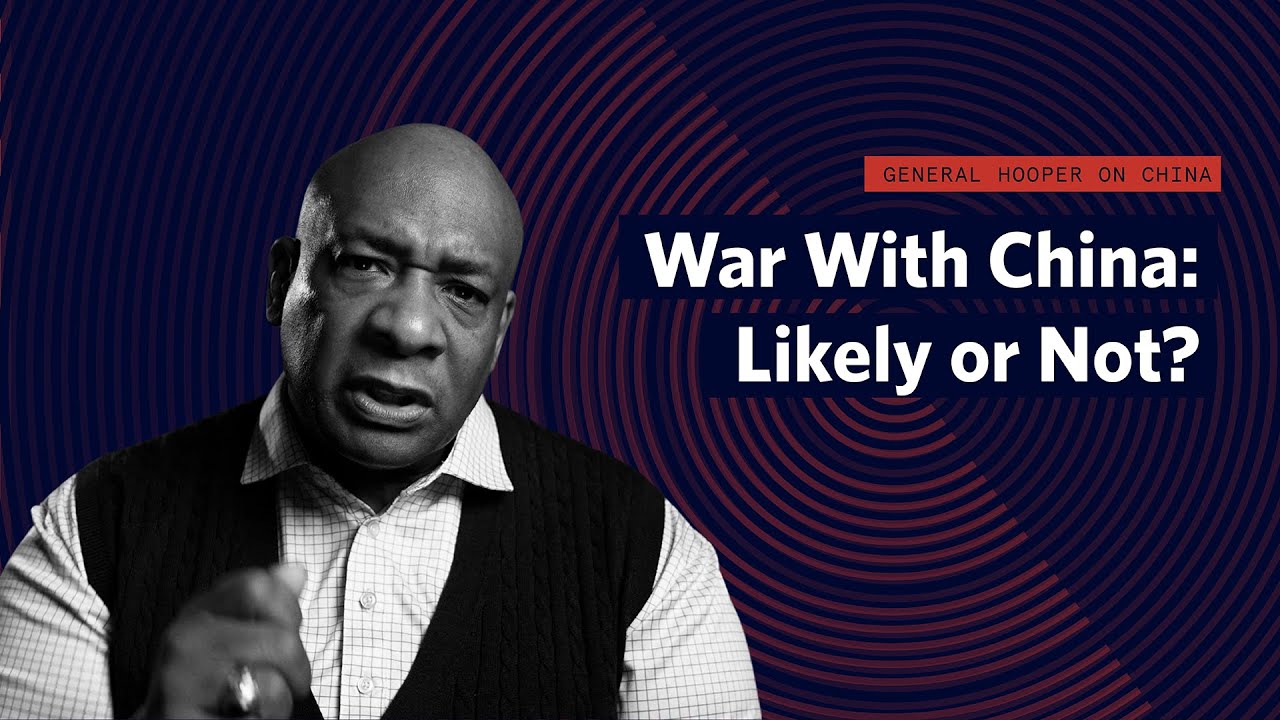
Video summary
Despite ongoing high tensions between the United States, Taiwan, and China involving military buildups and gray zone provocations in regions like the South China Sea and around the Taiwan Straits, domestic economic challenges for both nations are expected to reduce the likelihood of a large-scale conflict in the near term. However, this does not eliminate the risk entirely; unanticipated "black swan" events such as accidental military encounters or collisions could still precipitate war. The situation is particularly volatile given that the South China Sea remains one of the most dangerous flashpoints on Earth due to passive battles between Philippine armed forces and Chinese maritime authorities, where miscommunication alone could escalate into a full-scale confrontation.
Several specific scenarios pose significant risks by drawing in external powers or triggering regional conflicts. A unilateral declaration of independence by Taiwan or its recognition by the United States would rapidly lead toward conflict, while confrontations over disputed islands like the Senkakus between China and Japan could similarly pull the U.S. into a war. Furthermore, an assertive response from the US-South Korea-Japan alliance to North Korean provocations might prompt Beijing to intervene either to defend the status quo or aid Pyongyang. These potential flashpoints highlight that while strategic competition is intense, allies are increasingly under stress and may hesitate to choose sides, leading some nations to hedge their positions rather than fully commit to a conflict between Washington and Beijing.
Underlying these immediate risks is a broader divergence in how the United States and China envision the future global order. Both countries face significant domestic economic issues and security concerns while questioning the relevance of the post-World War II international system established at Bretton Woods, which Chinese generals have described as dead. Although both nations recognize their deep economic interdependence and lack attractive alternatives to maintain stability, they hold fundamentally different views on what should replace the current framework. As the global socio-economic and political landscape evolves rapidly, this clash of visions regarding the future world order suggests that while a hot war may be less probable soon due to internal constraints, the strategic rivalry will continue to shape international relations in unpredictable ways.
Read the full video transcript
Are we going to go to war with China
anytime soon? And I would tell you
China's domestic and economic
challenges, I think over time would
reduce the probability for a large-scale
conflict in the near term. Even though,
and this is an important caveat, the
tensions will continue between the
United States, Taiwan, and China. Those
tensions will continue.
They will remain high. The military
build-up on China's part and on the part
of the United States as as recognizing
China as our military or defense pacing
threat will continue. And the gray zone
provocations in and around China, in and
around China's South China Sea, the
Taiwan Straits, and around the borders
of the maritime borders of Taiwan, all
of that will continue unabated. Okay?
Which leaves us in a position where
there are some black swans in some
instances which might precipitate a
conflict, an unanticipated conflict,
that could come about because of, for
example, a collision or an accident,
accidental military encounter between
the United States and Chinese forces in
the South China Sea. And we've already
seen that and I would argue one of the
most dangerous flashpoints on the planet
is the current
battle going on or or passive battle
going on between the Philippine armed
forces and Chinese maritime authorities
in the South China Sea.
Any miscommunication
over Taiwan status originating in
Taipei, for example, unlikely but
possible that Taiwan would declare
unilateral independence or the United
States would unilaterally recognize
Taiwan's independence. Obviously, those
two factors could lead very quickly
towards a conflict.
We also need to look at islands that
both involved with our allies and
partners. The islands in Korea, the
islands off the coast of Japan, for
example, the Senkaku Islands. And that a
confrontation between
China and Japan over, for example, the
Senkakus could draw the United States
into a conflict. And finally, we have to
always continue
an assertive US, South Korea, Japan
response to North Korean provocation
would prompt China to take some type of
action on their own to either defend the
status quo with respect to North Korea
or come to North Korea's aid. Okay? So,
these are all black swans or things that
could happen that could shape this. Our
alliance structure, as we know, is under
stress
with both the China and the United
States encouraging countries to choose
sides. And as we know, several of our
allies have specifically asked us, "Do
not force us to choose sides, please."
Okay? For example, in Singapore and in
other places. Okay? I think other
countries, and we need to be prepared
for this, might participate in hedging
or bandwagoning. And we cannot assume
that even our closest allies will come
to our aid in the event of a conflict
between the United States and China. So,
let me sum up here. We've talked about a
lot of things. But let me sum up here
where I think we are. Okay? I think we
need to watch this space. Both Watch
this space. Both the United States and
China have significant domestic economic
issues to manage as well as security
issues. Both are concerned about the
extent to which their economies are
dependent on each other, but few see few
attractive alternatives in the wings.
And both have complaints about the
post-World War II international order.
I've had Chinese generals tell me that
Bretton Woods is dead. The conference
held at the end of World War
that set up the post-war economic order
and the post-war security order. They've
told me that Bretton Woods is dead.
I think many of us would agree that
certainly the global socio-economic and
political landscape is evolving rapidly.
The question is what will replace it?
And I would argue that China and the
United States have two very different
views of what the future will bring.