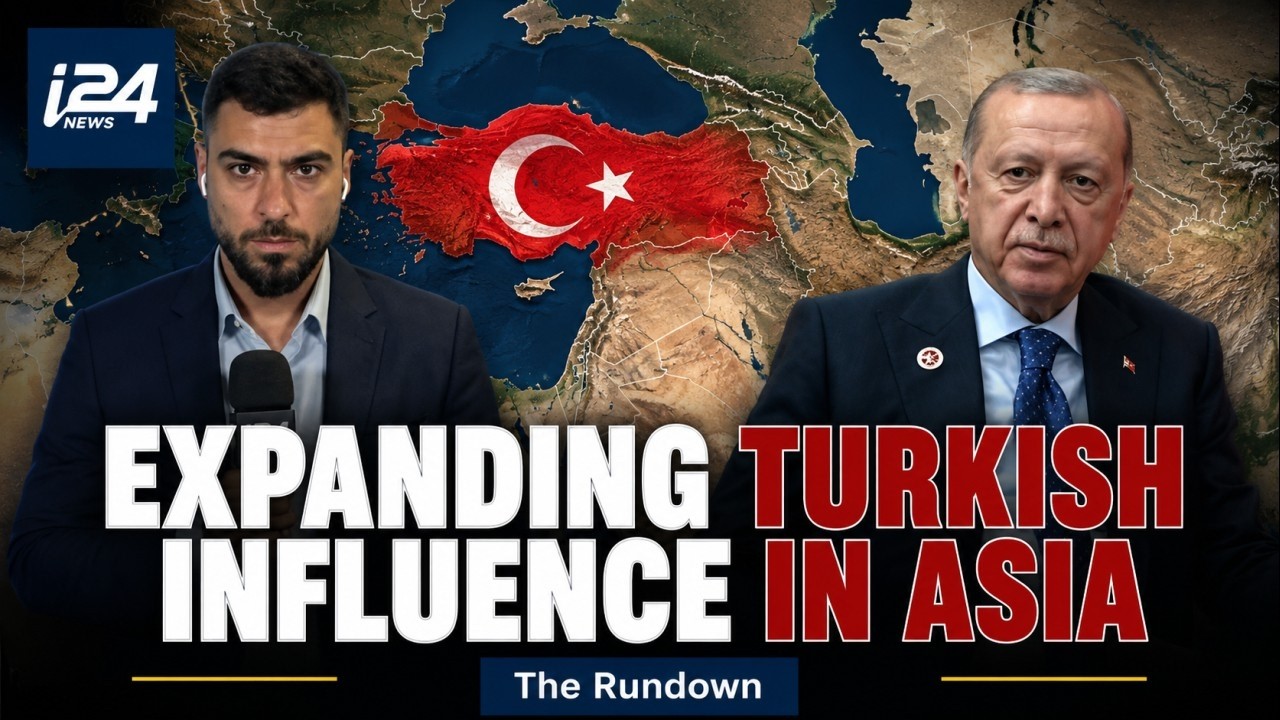
Video summary
President Erdogan continues to pursue a foreign policy strategy aimed at maintaining Turkey's independence from external powers while simultaneously expanding its geopolitical influence across Asia and the Middle East. Although Turkey is not a formal member of the Shanghai Cooperation Organization (SCO), Erdogan recently attended the summit in Beijing as a dialogue partner, signaling his intent to advance his own vision within the bloc. This move reflects his broader goal of positioning Turkey as a crucial bridge between Asia and Europe, a role that aligns with China's Belt and Road Initiative through the development of what he terms the "Middle Corridor." By fostering these economic and strategic ties, Erdogan seeks to ensure that Turkey remains a pivotal player in global trade routes rather than being dependent on or controlled by any single nation.
In addition to his engagement with Asian powers, Erdogan has made significant strides in re-establishing diplomatic relationships with key regional neighbors, most notably Egypt, which he describes as a historic and vital development. His efforts have also extended to strengthening ties with Gulf states, culminating in recent high-level meetings hosted by Ankara involving foreign and defense ministers from Turkey, Pakistan, and Saudi Arabia under the framework of the Mecca Agreement. These diplomatic maneuvers represent a shift from his earlier stance as a rival or adversary to many countries in the region, demonstrating a calculated effort to build a new network of alliances that enhances Turkey's soft power and strategic depth in the Eastern Mediterranean and beyond.
The expansion of Turkish influence is particularly evident in Syria, where dramatic political changes have created opportunities for Ankara to increase its footprint on the ground. This regional consolidation has not gone unnoticed by Israel, which views Erdogan's growing success in uniting diverse nations like Saudi Arabia, Pakistan, and Egypt as a significant strategic challenge. The recent hosting of the first joint meeting among the foreign and defense ministers of these three countries underscores the depth of this new alignment, raising concerns for Tel Aviv about a shifting balance of power in the Middle East. Ultimately, Erdogan's approach combines economic ambition with diplomatic realignment to secure Turkey's position as an indispensable hub connecting East and West.
Read the full video transcript
Exactly, raising eyebrows, and the West
in general, President Erdogan, he
continues with his efforts to not being
in anyone's pocket as he always does.
So, after the you know, being a host of
the NATO summit with Donald Trump
arriving to Ankara just because of him
as he said, now he is attending this
SCO, which he is not or actually Turkey
is not part of, is not a member, it's
only a dialogue partner. And he is
advancing his vision there. He has an
interest, of course, not only in not
being in anyone's pocket, but also some
of the
economical interests, including the
advancement of the middle corridor,
quote unquote, as he calls it, that ties
with the Chinese vision of the road and
belt initiative. He wants Turkey to be
important and connect Asia with Europe.
That's in addition, of course, with his
efforts to do the same thing with the
Gulf countries and definitely with
European countries in general. So, this
is, of course, part of his message, and
this is part of his
recent years efforts after being the
rival or even a foe for many of the
countries in the region. Now, he is
expands his
influence in Syria, of course, because
of the dramatic change there. He
reinstalled the relations with Egypt,
which has been, of course, something
that can be considered very, very
important and historic even. And
definitely the recent developments with
Pakistan and Saudi Arabia with yesterday
Ankara hosting the first meeting for the
foreign and defense ministers of the
three countries on the Mecca agreement.
Definitely raising eyebrows and very
concerning for Israel that sees that
Erdogan is getting more and more
successful in expanding a Turkish
influence.