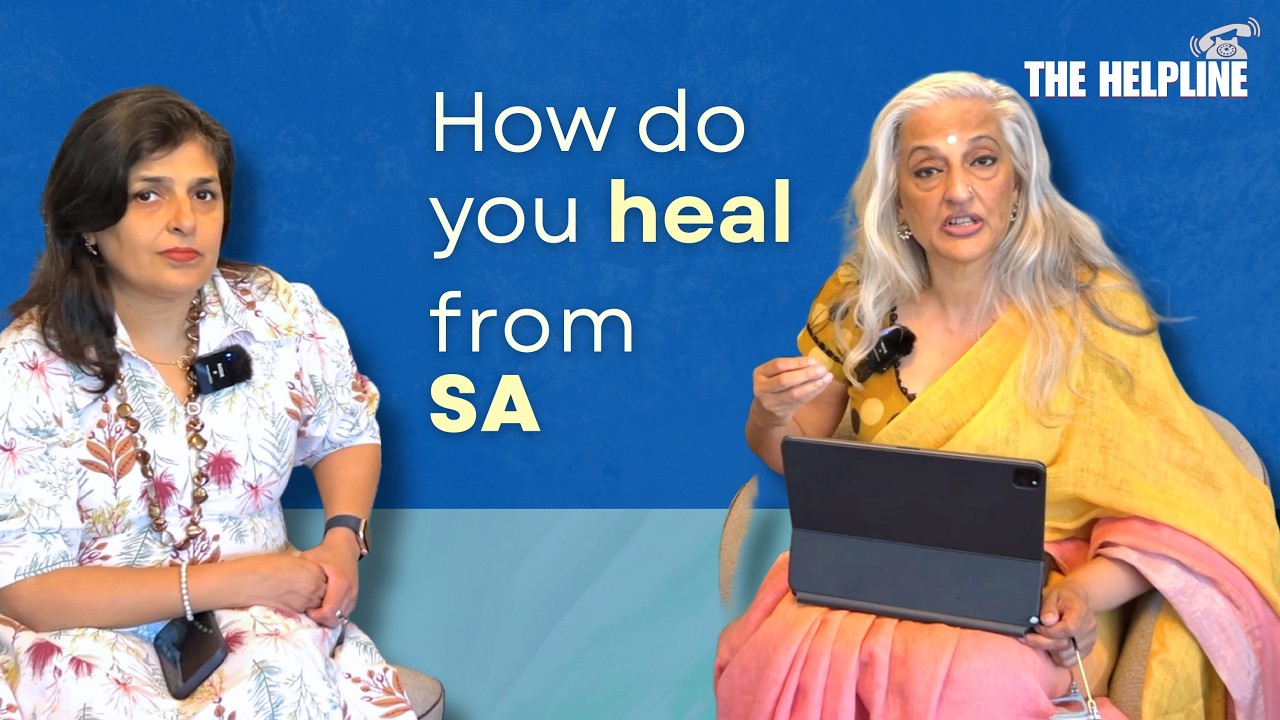
Video summary
Healing from sexual assault is a profound journey that begins with understanding trauma as a continuum ranging from severe rape to unwanted stares and touches, often committed by known individuals rather than strangers. Survivors frequently experience complex physiological and psychological reactions, such as freezing due to age disparities or survival instincts, involuntary arousal during the act which are biological reflexes, dissociation as an out-of-body coping mechanism, and feelings of helplessness that alter their sense of safety. It is crucial to distinguish between merely managing symptoms through techniques like breathing exercises and true trauma healing, which involves restoring one's relationship with oneself and regaining agency rather than simply suppressing emotions or wishing to return to a pre-trauma state.
The path to recovery requires reclaiming bodily autonomy and recognizing the deep connections between past abuse and current physical issues like pelvic pain, sleep difficulties, anxiety, and depression. A significant barrier to healing is internalized self-blame caused by societal pressures in places like India that shame victims for their attire or behavior, leading families to silence them; therefore, survivors must learn to externalize blame toward the perpetrator rather than themselves. Seeking qualified professional help is essential because dismissing a survivor's experience with general therapy can be harmful, and individuals should interview providers beforehand to ensure they have specific training in handling sexual violence instead of just addressing general mental health issues.
Support systems play a vital role but must be approached carefully, as sharing traumatic details without control can lead to retraumatization; survivors are advised to protect themselves by disclosing only what feels safe with truly supportive individuals who validate their experience rather than judging it. Effective therapeutic approaches extend beyond talk therapy to include somatic practices that reconnect the mind and body, non-verbal creative therapies like dance movement or art, sound healing, gardening for nature connection, and emerging possibilities involving psychedelics under professional guidance. Experts emphasize that while silence often leads to complex PTSD due to societal pressure on children not to speak up, talking about trauma in a validated environment allows for necessary processing without the fear of judgment.
Ultimately, true recovery is defined by feeling safe enough to engage in consensual intimacy with a trusted partner rather than simply engaging in sex without full presence or emotional availability. The goal is not just symptom suppression but rebuilding trust and agency within one's own life while avoiding harmful "protection" strategies that reinforce fear of the outside world. By validating the survivor's experience, encouraging safe reintegration into daily activities, and utilizing a combination of specialized therapies like EMDR and creative expression, individuals can move forward from the guilt and shame caused by believing they were at fault to finding peace and healing in their own time.
Read the full video transcript
Hi everyone, welcome back to our podcast
the helpline. I am here again with Dr.
Anita Madan Beel and today uh we are
going to be talking about essay. We're
going to be talking about sexual
assault. So I wanted to start by saying
that if this is a an issue that's going
to bother you, please do listen to the
podcast very carefully with your mental
health in mind. So this is a trigger
warning right at the start to say that
we will be talking about things that are
sensitive and could be distressing to
people.
>> Yeah. You know it is sometimes we really
suppress some memories sometimes we
forget them. So if there are experience
of child sexual abuse or sexual violence
uh then unless you feel that there is
enough support or you can get some
support and help in everything um just
take care of yourself. I think that's
our main thing that it is a trigger
warning just take care of yourself
>> because like Anita said that sometimes
we talk about something it may trigger a
memory or it may trigger a reaction in
you and so you really do need to look
after yourself in this. So please do
make sure that you're looked after. So
um another I realized from the number of
messages coming in sad reality almost
every child suffers some kind of abuse,
trauma, assault,
harassment, whatever.
Most of these kids will never speak up
about it. Most of them it happens to
them again and again because they can't
speak up about it. And more importantly,
they have to face the person who's done
it to them because it's generally an
adult in the house. It's an uncle or an
adult person in the house. Not always a
man. It can sometimes also be a woman.
But the sad thing is that they're there
and these kids have to grow up facing
that. And of course, it's not just
children. Also, when you get older, it
can happen to you. And I think that
there is so little information because
we suppress the subject. So today I want
to talk about the various different
reactions and things that come up. So
I'm going to break this down into
several sections. And I want to start by
saying that when people when people have
go through assault, we tend to only
think of it as rape.
>> Mhm.
>> It's not just that. It's it's anything
from that kind of sexual violence to
somebody who stares at you in a really
bad way where it's every day you go past
a particular road and there's somebody
doing that to you. All sorts of things
can come under this, right?
>> Yeah. And so you know one of the things
like you were saying that we know the
numbers of percentage of sexual violence
and sexual abuse and especially child
sexual abuse in specific in India is
extremely high. Um it is a number that
like you were saying it's most people.
Uh when we used to talk about it in our
uh you know comprehensive sexuality
education we would always say if you
look to your left or you look to the
right one of those peoples would have
experienced sexual abuse. Like it is
every second person you meet. And the
thing is one of the things that we would
teach children is that when we think
sexual violence and what you know we
only think oh it's going to be like rape
or violence or things like that but
actually sexual violence is on a
continuum. It could be a whistle. It
could be a verbal comment. It could be a
stare. It could just be the way somebody
looks at you. But it induces in you,
you know, this level of fear and
discomfort
uh you know, when you're sexualized in
that manner that it's really
uncomfortable and especially when it is,
you know, an adult that you know and
most incidents of sexual violence, it's
a myth that it's a stranger. Actually,
the fact is that it's mostly people
known to you, family members, neighbors,
friends, somebody that you trust. Um,
and and you know, and it's really hard.
It's not only in children. It's really
even hard as an adult to turn around and
say, "I don't like that person. He looks
at me weird." or you know each time that
he crosses me he touches my back in a
certain way that it just feels
uncomfortable
and the problem today is that even when
you'll turn around and say something
like that the fear that people will turn
around and say
>> judge you instead
>> you're imagining it it's it's not like
that don't overthink it
>> or literally almost oh what were you
wearing like even if they don't mean it
they will say it like somebody just
touched touch me on the back. Yeah, my
blouse is cut low at the back. That
doesn't mean he could touch me. But
yeah, this sort of thing happens. So, it
is
>> and it's all part of sexual violence
because why do we call it sexual
violence, right? Because suddenly you
don't want to go into a space that's
safe for you. Suddenly you don't want to
go through the road that you know you
cross every day to get to the house. You
now will take a longest route to come
back. You don't want to go to that
family gathering that is your favorite.
You don't want to go and play with your
friend because uh the father is somebody
who might touch you. So now suddenly you
don't want to go to that friend's house
and everything. suddenly it induces in
you and your body this fear and it takes
away uh and this I'm just saying like
I'm saying if it's a continuum this is
the lower end of the continuum and
imagine what is up for losing when I
talk about something like that we
haven't even touched when the severity
is increased
>> yeah and like you said what it does is
it takes away your agency it takes away
your your confidence to be yourself and
it takes takes away your um your safety
in your own body.
>> Yeah. It and you know and I think many
times you that that burden of pressure
of I know it's wrong but nobody will
believe me that that that complexity of
that idea that nobody will believe you
and that you're alone in this can be
really burdening as well. So from the
number of messages that have been coming
in about people saying that they're
having trouble with their relationship
because oh I was sexually abused at the
age of 11 or I'm having trouble with my
relationship because I was sexually
abused and continuously by somebody when
I was a child and then I had to put up
with that person forever. And the
reaction to this is what I want to start
with because most people think that if
you are touched inappropriately, you
will have an automatic reaction that
there will be this horror, there will be
this disgust, there will be this desire
to fight it off, you know that it's it's
a fight orflight thing that we have as
human beings which is completely not
correct. We go through any number of
weird and horrid reactions which you
don't expect. So I think Anita let's
start with listing out that when you go
through sexual violence what are the
different ways that you your body and
your mind can end up reacting which most
people are not really expecting to
happen. Well if you take the example of
child sexual abuse actually many times
children don't realize they are being
abused. You have to understand that we
don't have any knowledge of our bodies
or we do not have any knowledge about
sex, sexuality, sexual violence at that
time. So when my favorite uncle or
auntie comes and says this is a this is
a special game between the two of us.
You're my favorite child. Don't tell
anybody about it and we're going to play
it. And you know at some level when they
are touching your vagina or your penis
or something and the body biologically
is reacting the child thinks oh it's
actually a fun game you know it's so and
it could continue somewhere. Most
survivors will talk about how I knew
there was something wrong but they said
it was a game. They were my favorite
uncle and auntie. They like knew it.
>> I knew there was something wrong, but I
was getting aroused. So maybe it wasn't
wrong.
>> And I wouldn't even use the word arousal
for a child because for them it's like
the feeling is a good feeling, right?
Like you know so many times like you
would we've spoken about kids rubbing
and everything because the feeling is a
good feeling. They don't even know at
this point that it's arousal. It's only
many times
that they know that, you know, they
understand and sense when they're doing
it, when nobody's looking, you know, and
they'll have memories of I don't like
it. I don't want them to come to my room
in the middle of the night. Is my room
locked or why is why are my parents
going out and leaving me with this
person? You know, and it could be a
grandfather, it could be a grandmother.
And so it's many times it's only when
they hit puberty or as an adult do they
look back and realize that they were
getting abused, you know. So many and
and then obviously like you're saying
that complication of but I never said no
to the game. I never said no to what
they were doing. I thought it was a
game. I was the favorite child. So how
can I say anything now? But then you
know at the same time like you're saying
that uncle or auntie is at their
marriage is at their birthdays is at the
Diwali is at you know everything.
Um and and so it's so complex like this
is a podcast and we're really touching
the surface to let the information
go out and speak up about sexual
violence. But the complexity is just
deeper and deeper.
>> So can we kind of list out a few things
um which people might go through as a
reaction. So I did this uh real the
other day where I was talking about what
I personally went through when I
experienced it and the kind of
selfhatred that it brought me each
feeling. You know that first one where
you don't fight back. I froze. I didn't
fight back and then I hated myself for
not fighting back because I was like if
as human beings we're automatically
supposed to fight back why didn't I do
it did it mean that I didn't want to
protect myself because when something
like this happens you are in such a mess
emotionally [clears throat] you have
lost all faith over yourself you've lost
your safe zone you've become hyper
vigilant about everything it is so
frightening so can we go through a
couple of just the sort of reaction
actions that are likely to happen.
>> Sure. So, we always speak about this
idea because once again the myth out
there is that if you are getting
sexually abused, you would automatically
fight, right? And that you would try and
protect yourself. But what we have to
remind ourselves and when we talk about
trauma and PTSD, there are actually two
responses to it. Um you know we call it
the fight or flight response and it's
basically do you go like do you go into
the fight mode which is like go up or
you go to the flight mode which is where
you freeze or you become numb right um
and many times so it's not necessary
that each time people will land up
fighting or screaming um we also need to
come bring into the consideration like
Like I said one as a child do you know
what's happening do you really know can
you fight this adult do you like do you
know even what to question at that time
right so one is not knowing and only
having this feeling in the stomach that
there's something wrong second is that a
lot of times people feel unsafe they
feel like if they fight the violence
might get be bigger or they might get
into more trouble or it might become
worse And and so the survivor instinct
kicks in where they just feel like let
this pass and let me go get out of it
safely. Uh but what happens with that is
exactly what you're talking about. When
they go into that survivor mode, they
actually then wonder but I didn't fight.
I just let it happen. So then like am I
to be blamed or is the other person to
be blamed? uh but you know when we have
PTSD when we are going through a
traumatic event we could freeze or we
could you know fight or flight or run
away or something. So it's really
important to remember that you could
have different reactions to a traumatic
event. The other one that I spoke about
was that you know um there is an arousal
whether you call it just feel good sort
of thing because your body automatically
reacts but when the body is touched in a
certain way it will have a certain
reaction and
nobody's telling us that that's the
problem. Nobody's explaining that the
body does react in a certain way and so
you are going to feel this arousal and I
remember just thinking I'm despicable.
How can I be feeling excited? I remember
this so vividly.
So this is the most complex thing we
work with survivors. Um because what
happens is many times they come and say
I said no. I did give I did not give my
consent. I did not want it. I screamed.
I said no or I froze but I didn't I had
said before things but when it happened
I became wet or I became erect or I
actually had an orgasm. So if my body
was experiencing these things which are
sexual then how could it Yeah. But then
how could it be rape or sexual violence?
Right. Because even if it was if even if
it was oral or somebody touching or
anything. So if it was so bad then how
could I experience it? And it is and
then they have the feelings of how
disgusting a person am I that I'm
actually enjoying somebody being violent
towards me. Right? And so this is the
hardest hardest thing to work in therapy
with them to say to them that it is a
biological reaction. It's an involuntary
biological reaction. And that's the key
word. You know, if we rub the penis, the
penis will get erupt erect. If we rub
the vagina, the vagina will get wet.
These are involuntary bodily actions.
You could be terrified, scared, not
wanted,
fighting about it, but at the same time
because these are physiological things,
involuntary physiological things, they
might still happen. Um, and that that
idea is revolutionary for survivors. um
that you know that oh so when I had I
when I had an ejaculation or I came in
my rape I wasn't feeling pleasure it was
actually my body just
>> just reacting in the way that bodies are
built to react
>> um the other thing that I found was this
complete disconnect from the body you
know like where you almost you you're so
afraid of the body because that's the
body that gave you that hurt you that's
what where you communicated your pain
from there was that sort of disconnect
with the body where you almost sort of
step back from it and that then either
means that you start to punish your body
or you over sexualize it. So so the word
that we use a lot when we do this
therapy is called dissociation. Um, and
we ask survivors if they feel out of
body experiences because many times what
happens is it's so difficult to be in
our body, you know, that we always feel
like we're outside our body watching it.
Especially because one of the symptoms
of PTSD is getting triggered um and
actually um you know revisiting what had
happened again and again. And at that
point it feels like your body is
experiencing the same thing again and
again like the pain is as much. So
because we can't take it, it's just too
painful. We dissociate from the body.
Like we just we feel like I'm not in
that body. I'm looking at that body. So
So that's the out of body experience
that you're talking about. Um and you're
right. I think the other big thing that
we speak about is one of the main things
about sexual violence is loss of
control. Um and you know people really
feel they lost control. They felt p
powerless in that moment. They didn't
have any control over their destiny.
They didn't have any power in that
moment.
>> The helplessness.
>> The helplessness. And so what and this
you know maybe if we have time we can
come back to but what happens a lot of
times people always wonder
why am I suddenly you know I I I was
raped this person was raped why are they
with every new man every day like what's
going on like if they thought this was a
bad thing and you know then obviously
the ostralization of the victim they are
you know sexual beings that's why this
happened to them. They are lose girls.
This happened to them. But actually a
the way research has helped us
understand it and the way research
seizes it is that uh we're engaging in
atrix behavior or we we're engaging in
overly sexualized behavior to gain
control. We are saying this is our body
and we'll decide who and when we want to
have sex with. And if I want to have sex
with someone every day, it will be my
choice and by my control, not by
somebody violating me. Um, so it's it is
it depending on the person, it could be
gaining control or it could be self
harm. But you know, it is part of the
whole post-traumatic stress disorder and
one of the symptoms of it. It's also
just for us to be able to explain to you
that these are the kind of reactions
that you can get from this because these
are things that certainly nobody ever
talks about. Nobody ever told me. I
didn't know this growing up. Um, and I
think that it's really important that we
understand because the kind of reactions
that we go through after something like
this happens, they're so complex.
They're not what you would text book
imagine will happen. And actually what
you made me realize also is that
actually when we see over sexualized
children many times it is a red flag for
us of how come they have so much
knowledge of sexual ways of being and is
there abuse happening because if you
think about child sexual abuse if they
suddenly know about how do people kiss
where is the penis how do you rub it
where do you put it in or let me wear
something, let me show it somewhere. You
know, so it is a red flag to us that
they've been exposed to something
>> that has made them over sexualized.
>> And also many times, you know, when and
once again, I don't want to touch things
because it's so complex and these are
these are years and years of therapy.
So, I'm touching them. But a lot of
times they children especially are made
to feel special because of being
sexualized right so they grow up
believing that the power lies in being
sexualized and that's why what you were
talking about getting abused again and
again because they think that is the way
people show them love that is what makes
them special that is why somebody would
love them and they land up engaging
engaging in those behaviors thinking
that was the act of love or being
special, not realizing that they were
being abused and then it becomes a
cycle. Um and then obviously as in the
complexity of what you think about
yourself and how you think about
yourself and that can get really
complex.
>> And [clears throat] I think um one other
thing that I I know that almost all of
us go through is that you start wanting
to go back to who you were before this
happened.
>> There's this thing of saying, "God, I
wish I could be that person. I wish I
could feel like I did before this
happened. I wish I could go back to that
time before." And I think this is
something that we're going to touch upon
a little later in the podcast properly,
but the idea going forward is that we
learn through all the um exercises and
stuff that we're going to talk about how
to move forward to be the person that
you're going to be uh who has come back
to being able to trust themselves and
their body after this has happened. You
can't unfortunately go back. But a lot
of times we actually hamper our own
progress by literally getting stuck on
that thing of saying I want to go back
to who I was.
>> So the way I my as in you're making the
point but the way I would put it is that
we were somebody and a traumatic event
happened. we got injured, right? And
similar to when we break a leg, it takes
a long time for us to run. And our run
might look different. Our healing might
look different. Uh we might, you know,
for a long time hop on one leg. Uh then
we might find other ways to run. And so
we keep reminiscing how we ran before,
who we were before the accident, before
what happened. And part of that taking
away the control and the powerlessness
is exactly that. It's not about
part of it is about the violent act. The
other part of it is being feeling
violated. Being part of you being taken
away, how it changed your life. How you
can't do how you can't trust people. How
you can't go places. How you feel scared
all the time. How you're scared that
something wrong will happen to you. It's
taking away your sense of safety.
>> And that is that is the bigger part of
it. And so so many times, you're
absolutely right. People will say, "I
just want to be able to go somewhere and
not look over my shoulder. I just want
to be able to go out of my house and not
feel like I'm unsafe." You know, and
they want to go back to being that
person who can just like meet a person
and, you know, go on a date and fall in
love and not always, you know, like
question them. Um, and and a lot of
times they miss that. And I think I want
to add over here just before we move on
to our next section is that a lot of
[clears throat] times people believe
that if they're not able to cope or if
they're still feeling the fear even
though there's people saying don't
worry, move forward, meditate, do this.
Um you're not being weak. It's not a
weakness. It's not that you're not
strong enough to cope with it. These are
very normal responses.
It is you know and I sometimes
like it's really important to understand
that
your sense of safety and your like it is
not just the act of violence it is all
those things.
>> So it might it might have impacted
really who you are. So if the healing is
slow it's okay. If the healing is fast,
that's also okay. If the healing changes
you, that's also okay. Um, but yeah, it
is it can be very complex.
>> It can be very complex. So, what I want
to move on to now is the myths around
what people think will make everything
better. So unfortunately
there are wonderful things which are
really really valuable to our healing
process but they're not going to
actually heal it. I cannot believe it
but Zoro has just walked out by opening
the door himself. He's actually learned
how to do that himself.
>> Okay. Sorry to come back to this. There
are some things that genuinely
uh help but they won't necessarily cure
the they won't um make things okay. Like
that's not the healing process, but
that's the supporting process. Now,
page 238, right?
>> Yeah.
>> Page 238 in the book actually has a lot
of the exercises that you can go into
and try and things that you should go to
therapist for and so on. So, it's there
in writing so you don't have to make
notes. So, get yourself a copy of the
chapter, but we're going to talk through
it. So I made some notes about the kind
of things that people like I know that
whenever I get really worked up you know
like if the panic from a thought sets in
and people would be like do you meditate
every day sema do you medit and you know
what yes meditation is great but it
doesn't heal you that's not actually
going to work so it actually puts my
back up sometimes people say that so I
just want to mention a couple of things.
Um so yeah, if your partner is really
really loving towards you, hugely
helpful, that's a blessing. Okay. Um if
you have friends and family around you
who are actually saying yes, what
happened was wrong and it was the
abuser's fault, not yours, rather than
having those people saying, "Yeah, but
you know, so we don't want that."
Therapy, of course, is going to be
really useful. Um, all of these things
are wonderful to have in your life, but
they won't necessarily they're not the
cure.
>> So, I think one of the things that we
need to understand in many ways as we
think about it is what is required
immediately after and what is required
later in life. Sorry, when I say also
not the cure, I should really um
identifi I should define what I'm trying
to say because that sounds weird. So,
when we're talking about trauma of any
kind, we're saying that it's taken away
your ability to be yourself. It's taken
away your relationship with yourself.
>> Sure. And what we are trying to say with
this is when we're talking about healing
is allowing you to go back to having a
relationship with your own self where
you feel safe in yourself.
>> So that's what I mean when I talk about
the you know healing or curing.
>> Absolutely. And I think what I learned
when I started working at the rape
crisis center um is the big difference
between symptom management and
processing trauma. And we have to
understand the difference because what
happens is a lot of symptoms of PTSD are
like you were talking about having a
panic attack, not being able to be
intimate, always being hypervigilant,
not being able to look, feeling
dissociated. So the person might be
sitting with in front of you but they
are not there you know and that can be
really scary or it could be really scary
for you because so many clients would
come and say I I'm in my shower and and
suddenly when I realize it's been 2
hours I've been in the in the shower and
the water's been really hot because I
can't feel. A lot of people would talk
about how they can't feel the pain. And
this was this was my big lesson because,
you know, most people when they talk
about cutting or self harm or even using
drugs and everything, everybody thinks,
"Oh, you're doing it, you're doing drugs
for pleasure or you're cutting because
you can't hack it or something like
that." And what we've really learned in
PTSD is that people are managing pain.
They don't know how the pain is so much
that they don't know how to manage it.
So they're finding anything that makes
them feel okay for those 5 minutes, you
know, and so one understanding that the
pain is a lot. So you know, and that's
exactly what you were talking about.
What happens is when the pain is so
much, you're just looking for yourself
that was painfree. that person that was
painfree, that person that was jolly,
that person that you know just was
carefree, you know, so you're looking
for that person. Yeah. So a lot of times
what we've learned is for the symptom
management the panic attacks the anxiety
disorders the the anxiety the depression
the uh the the you know the triggers the
thing all of that eating disorders and
other things um we really need to think
about how we're going to manage it and
funnily enough you know you were talking
about meditating uh the trick that I
learned at the rape crisis center is
that you go and get yourself a bottle of
bubbles because what helps the most with
panic attacks is breathing.
So if you have bubbles or you blow into
Yeah. You basically when you do you when
you blow into it you're forced to
breathe and when you're forced to
breathe in that moment when that panic
attack is happening or you are not
feeling grounded suddenly it brings you
back. There are a lot of grounding
techniques. It's about the five senses,
feeling something, looking at something,
hearing something, touching. So these
are all things that I'm talking about a
symptom management. I think Sema was
talking more about how do we move to a
more holistic life back. And so that is
why I'm just saying there's a difference
between symptom management and wanting
to be yourself that was painfree in many
ways. uh and yes for that it is a slow
process but we need to engage in life
and look for those relationship and
experiences that are supportive that
where we can trust people where people
will not push us you know that we're
with a partner and we are saying to them
I can't do this because it brings back
memories for me and they don't push the
agenda you know they're like it's okay
uh for people who will say, you know,
they won't ask the questions or don't
react and say, "Why were you out at
night? What were you wearing? I told you
you shouldn't do these things." But
they're more like, "It was the
perpetrator's fault. You're not at
fault. You, you know, like so all those
supportive spaces that actually, you
know, make us somewhere because, you
know, guilt and shame come in this
territory.
>> I want to say two things over here. One
is that if you're finding this
overwhelming right now, take a break.
Actually, shut it off. Figure out what
point the time stamp is over here and
come back to it later when you feel
better. Uh don't push yourself to listen
to the whole thing. The other thing is
what Anita was just talking about this
thing of support. You know if you are
the support person for someone who has
gone through this rather than saying to
the person so let's say it's a young
woman oh let's say any age not just a
young woman rather than saying to them
okay no no no you know what I'm trying
to keep you safe just stay home just
stay home don't go out because I can
keep you safe over here instead of
saying that because that actually makes
them feel worse it used to put my back
up But but you know it it made me feel
so angry that I was being told to stay
back and that you're not actually
protecting me. You're protecting the
abuser because
>> but also it's reinforcing to you that
yes the outside world is bad and you
will feel unsafe there. So all those so
rather than you feeling like
>> I I'm strong enough to deal with the
outside world, what was being reinforced
is the outside world is bad. Stay at
home and stay safe.
>> So for me it was also reinforcing that
somehow because I went out I put myself
in that position. So it's that little
bit of the survivor blame
>> but also selflame that I took myself
out.
>> Yes. So you know you are not helping
your survivor by telling them stay in
and then you'll be safe. This is the
point where you are saying to them it
was the other person's fault. Tell me
what you need right now. Do you need me
to accompany you when you go out? Do you
need somebody else over there? Let's put
things into place so that they are uh so
that you feel comfortable going out
knowing that you have somebody to turn
to. I cannot stress this enough how much
of a difference it makes and how
horrible it actually feels when somebody
thinks they're protecting you by keeping
you indoors while your abuser roams
free. Yeah. You know, and we say it all
the time, right, that
victims always are made to do things.
Suddenly they'll dress differently.
Suddenly they'll not do what they're
doing. uh they'll not take up jobs,
they'll not go abroad, they'll not you
know whatever that they had ambitions
for changes whereas nothing changes for
the perpetrator. They still are going to
the places doing things and everything.
Um you know or you know the solution
will be we won't go to that family
gathering because they will be there. So
we will skip the family gathering and in
many ways that you know what you're
saying the intention is one of taking
care but in what in the the result is
not that I can tell you from personal
experience it made me feel like I
clearly had created this situation. It
made me feel horrible. You're not
helping by saying that. I also have had
a video in the past where, you know,
I've been trolled for saying this where
I've had people coming in and saying,
"Parents are just trying to to support
you. They're just trying to protect you.
That's why
I'm telling you this. This is not I'm
not feeling protected. You have to learn
how to change your vocabulary to be able
to protect the person. And so choose
wisely who you share with you know and
although
this happened in one of my work things
you know one of the things that we
promote for is that we should not you
know there shouldn't be any shame we
should have the voice we should have the
agency we should like tell everybody we
have to and yes there might be a time
and phase for it but we have to you have
to understand that when you're hurting
and when you're vulnerable And if you
don't get the right support from the
other person, it can further wound you
or it can it's like saying I have a
wound and I'm showing it to everybody.
Some people say oh I have a cream for
it. I have a band-aid for it. Some other
people say oh show me oh that's wound is
so ugly. Why would you show it to me or
oh that's not really that wound is
nothing. So now the point is the
complexity of your wound has increased.
So be wise of who you're showing the
wound to. Yes, there will be a time for
you if you want to have act, you know,
agency and activism to speak up against
it. There will be a time. But when the
wound is healing, be careful about who
you don't want to get further infected.
I must also tell you that this was, you
know, when I went through this, I wanted
to go and tell everybody
almost as though you're seeking some
form of validation because you want to
tell people. You do because you you want
them to turn around and say that was a
bad thing. It's almost like and you know
half them won't you know half of them
will blame you for it in some way, but
you're still doing it because you can't
stop. I I almost want to burst into
tears just now. So, I'm going to not
>> Thank you. But I just want to say that,
you know, how we react to um sexual
assault is nothing like
how we think textbook
reaction should be. It's nothing like
that. So, yes, unfortunately,
it may not be. See, keeping quiet
also feels like, oh my god, I'm
protecting the abuser.
Speaking up, no, you know that you're
going to get more sort of.
So, the key here is think about there
are multiple aspects here, right?
There's part of it is,
you know, so we will tell every victim
survivor that if they want to press
charges against the perpetrator, if they
want to speak against the perpetrator,
if they want to like make sure as a
child, you're telling your parents or
somebody in authority to like that
they'll protect you and they will like
create a case against them or somebody
else. Absolutely. One is not for one.
This is not about protecting the
perpetrator or not asking you to get
your justice against the perpetrator. So
justice for you is very essential.
However, there is that's got to do with
legality and justice and then there is
part of it is processing your trauma,
right? And a lot of times where you're
processing your trauma becomes very
important because if people are only
going to further traumatize you know
what we call is ostracization of the
victim you know and then you're left
alone where you're kind of distanced
from everybody else. people are pointing
fingers without actually pointing
fingers that you know that
>> but you know that one of the big things
I I hope and pray things have changed
but what we would talk about 25 years
ago 20 years ago I I know it's not
changed completely in India but I feel
like there is an increased understanding
the reason people did not access help or
go and file cases was because the
perpetrator wouldn't get ostracized the
victim would get ostracized
She's a bad girl. She was wearing the
clothes. Why did she have go out at
night with that guy? Why did she not do
this? Why didn't he do this? He could
have done something different. He must
have asked for it. She must have asked
for it. So what happened is and then the
consequences. If you are labeled as
somebody abused then that you will never
have a relationship. You become a dirty
impure person. So nobody will marry you.
Nobody think so the ostracization of the
victim was so hard and so difficult that
actually the families would turn around
and say keep quiet about it because if
we speak about it your life will be
ruined
>> and I want to and I hope to that that's
changed. So I I think that has changed.
So, we're not talking about the ostraciz
speaking for the victim, speaking up as
a victim, as a survivor for justice.
Absolutely, you need to do it. You must
do it. And have supportive people around
you who will support you in that fight
and in that validation that that was
abuse and was wrong to you. What I'm
talking about when I speak about choose
who you show your wounds to is when
you're processing trauma. Because if
somebody is going to ostracize you and
make you feel that shame again and make
you feel traumatized again, they're not
worthy of sharing your pain with.
>> They are not worthy of it.
>> They're not worthy of it. And yeah, you
don't want to be feeling terrible. But
yeah, it is something that is not easy
to control.
um very quickly two or three uh things
that one should do. So we talked about
managing the symptoms but it in the
healing process I mean I know therapy is
really really important somatic
exercises I mean like what would you
recommend? I will you know for the
longest time I could not bear to have a
massage like and I used to say oh I
don't have the patience for it
>> but it's only later on that because
that's what my brain was saying oh we
just don't have the patience for it
couldn't bear to be touched so it took a
long time of letting somebody be able to
touch my body
>> yeah I think many times uh like in your
experience
when we have a traumatic experience and
we've not labeled and and many times we
don't label it as abuse because the day
we label it as abuse we need to live
with the fact that we have been abused
right and that's really painful but if
we label it as
I was too drunk I didn't know I think
there was a misunderstanding
I think I overreacted
It's manageable. It's manageable. But if
I label it as abuse then abuse
>> then suddenly I have to deal with the
pain.
>> I have to deal with the consequences. I
have to deal with it. So um so I think
what happens is many times it's easier
to repress and you know and and bury
those feelings and so unconsciously our
mind creates this thing. I don't like
massages. I'm not a very touchyfey
person. Sex is so yucky. Who wants to
have sex? Men are yucky or women are
yucky. Uh I don't want to really engage
in that. Um, and so
because we also know that subconsciously
that we might be triggered into our
memory, right? So we're really
protecting ourselves. We're really
protecting ourselves because we know
that we might trigger something by
something might happen and triggers are
weird. It could be a red shirt, a red
lipstick, a a clip, a smell, a a taste,
uh uh you know, it could be the weather.
it the trigger and it could come out of
nowhere.
>> Um so so uh so in a weird way mind body
we're all protected because it is very
painful and traumatic. So everything is
protecting you. So we come up with these
things. So sometimes they do say body
therapy or somatics therapy is very
helpful because it reconnects you to
your body. you disconnect because the
pain lies with the body. Um, therapy is
obviously there. They speak about EMDR
to work through memories. Um I think
there could be some spiritual healing
somewhere or a lot of times I've seen
creative ways of therapy where people
have really preferred um you know doing
um uh dance movement therapy or sound
healing or you know things like that
which have been little bit more
holistic. Dance movement therapy I am
told is absolutely brilliant because it
really gives you a chance to reinhabit
your body like you watch your body move
you know you feel it move you feel it
move with happiness and with rhythm and
then suddenly that brings you back to um
>> I think you just express and take out
also right and and what we need to
remember culturally and this is part of
my cultural work that I do we can find
healings that match us and our cultural
ways of being. You know, western
psychotherapy or talk therapy as we say
it as an I practice is I practice it as
and I've worked with survivors and I
think it's very effective. But sometimes
you know survivors will come and say I
don't want to talk about it. I don't
want to I don't want to repeat what
happened. I don't want to talk about it.
So you might want to look at some
non-verbal healing which might be art
therapy or you know creative therapies
or sound baths or you know like like
other indigenous healings that feel more
in sync with you. Nature I think is one
of the best healers with PTSD connecting
with nature. There are a lot of people
that connect with um nature and like
trees and protective factors and
everything, gardening or something.
>> Yeah. They they tend to say that if you
grow a plant and the fact that you see
something growing can be so nourishing
for your P PTSD symptoms that it's
really helpful. Um I want to do research
at some point. I haven't done it
but at some point I know in the future
there will be micro doing through
psychedelics for PTSD. That's how they
were created for the soldiers u to get
over PTSD that's why they were there. Um
I I like if you can find an expert I
know little about it but just to mention
what's currently happening um that is
also
>> being offered therapy. So, like I said,
it's actually page 238 and it does have
certain exercises [clears throat] that
you can try at home. But seriously, I
would suggest that you see a doctor or
you see a therapist and actually work
through um all of this with them because
it is like Amita said, it's really
complex and it's not something that it's
wonderful having friends who can help
you but it as a lay person they are
really not able to tell you just the
complexity the depth of where your
thoughts can take you. So when you are
going to see your doctor, I actually
made a list from our conversation about
the different things that you should
talk to your doctor about when you're
going to see the doctor for um advice on
uh healing from sexual trauma. So the
first thing is don't minimize what
you're experiencing. It's something that
we all tend to do. I was feeling like
this but no no it was actually just you
know it was probably from that and do
not minimize how how you're feeling or
what you're experiencing, talk about it.
So whether it's something small like
flashbacks, nightmares, uh panic
attacks, I always tend to minimize my
panic attacks and you know whether
you're having difficulty uh with
intimacy because there are so many
different things that you could be
feeling. Oh, today I was a bit tired,
that's why I couldn't be intimate. Oh,
you know today the um I knew that I had
to wake up really early tomorrow and I
knew I wouldn't be able to spend enough
time on this. So I it's really important
not
>> also like I think so many when we
actually find connect eating disorders
so many eating disorders are actually
connected to abuse rather than oh I just
like eating or oh I just need to like be
thin or you know um because abuse is so
related to your body. So remember that
connection between the body and the
abuse is really strong.
>> Yeah absolutely. The other one is uh
pelvic pain. You can actually end up
with pelvic pain. Um changes in libido,
difficulty sleeping, anxiety, depression
and um
the fact
that you could go to the doctor and say
all this and if your doctor decides to
sort of brush you aside and say ne this
is not such a big deal. If you feel
minimized or not seen by your doctor,
get a second opinion. There are a lot of
people out there now. There are online
places, the online therapists and
doctors. There are in-person people. But
yeah, remember that this is important
for you and you are not uh you're not
weak or making it up or oh, I'm not
dealing with it so well. It's all very
important. I actually would say when and
that's what I was talking about who you
show your boom to. I would go and
interview them first. Ask them if they
are somebody who's trained to work with
the survivor, if they have knowledge, if
their politics, if their activism, if
their justice is in sync with what
you're looking for. Uh because if
somebody like Cai saying is going to and
and and I can't tell you there are so
many of my colleagues who cannot sit
with sexual violence, right? they get so
uncomfortable that consciously or un
subconsciously they change the topic or
refer on or then so please find somebody
who is an expert find somebody who is
open to talking about this issue and
it's okay not you know somebody might be
great with dealing with a certain kind
of schizophrenia but they're not great
at working with sexual violence so Find
an expert, find somebody um who has done
work in this area. It's not easy to sit
with it. It's you need to be trained
with it. You need to know how to work
with you know with this specific
>> and I also feel like what happens a lot
of times not only with doctors but
friends and family they always want to
say a then what else happened then how
did it happen where and actually that
can be retraumatizing.
So remember like so be protective of
yourself.
Find people you want to share with, you
think they are share you want to share
with and how much you want to share with
them. It's okay. You're not being weak.
You're not uh you know you're not not
being an activist. You're not not
fighting for the cause just because you
don't share every detail. you're
actually protecting yourself. Trauma is
really painful and protecting yourself
is one of the first first things to take
care of. And as you get resourced, as
you process trauma,
you can fight whatever fight you want
to. Um, but it can happen in parallel is
what I'm saying. I think that is such a
valid point and I'm so glad that you
said it that when people go and look for
a doctor, a lot of people will say to
me, "Oh, this person treated me really
badly or who should I go to and where
should so instead of you sort of um
putting yourself in their hands first
interview the doctor to see what is
their background in um sexual trauma and
being able to help people in that
because yes, you're right. Not every
doctor is qualified for that. Not every
therapist is qualified for that. So you
do need somebody who is actually who
really understands the depth of it. And
I think what I want to finish with and
is the distinction between reclaiming
your sexuality, reclaiming your body and
getting back to having sex
>> because there's a big difference.
>> Yeah.
>> Yeah. having the ability to reclaim your
agency, your autonomy over your own body
or simply being able to say, "Okay, I
can grit my teeth and have sex." Now,
>> you know, obviously we have to
understand
with sexual abuse,
sex is directly impacted in some ways.
Uh some people can comp compartmentalize
and say this is a safe person. This is
my partner. Um, and anyway, that's where
we want to get to. We want you to be
able to have your sex life back with
somebody where you have your consent,
where you feel safe, where you know,
somebody you trust and you want to be
intimate with and you want to have the
pleasure. But if that process is taking
longer simply because you're getting
triggered or flashbacks are happening or
you're getting traumatized, it's okay.
It is really painful and they will
understand. But like you're saying,
there's one thing having sex and saying,
"I'm just going to close my eyes and I'm
going to let the person do whatever
they're doing and just like I I'm not
really going to engage with it." Um and
so there is a journey to
you know
people think that if sexual violence
happen nobody can actually come out of
it or be like that and actually
that's rot child speaks it
>> yeah or the other extreme where it's
like if sexual violence happened now
you're with a really loving person now
you don't have to have any fears so you
should just be able to come out of it.
Yeah.
>> Yeah. And so what she says is that
actually if we can
>> sorry who says
>> Babette Rothschild she she's the one who
wrote the body remembers um and she I
might be wrong I'm pretty sure about it
but if I'm wrong about it you can
correct me but she is the expert on u
trauma and everything and she really
says that when people after the act are
able to talk about it and they are
validated and supported and they are
allowed to like talk about the trauma
and speak about the trauma they can
actually process trauma and move towards
normaly what happens a lot of times is
we don't talk about it when children go
to the adult they are told keep quiet
don't talk about it nothing like this
happened I can't what how can I I can't
you know tell your brother, it's my he's
my child, you're lying, my boyfriend
might not have done it. So all those
things happen and actually that leads to
complex PTSD. PTSD is a mental health uh
pro issue which we can work on. Uh but
the complex you know the complexity
increases. Um so you know if you do find
it supportive you can you can connect to
your body you can feel safe again. Uh
you once you start
shedding some of that guilt the shame
the blame the anxiety the depression the
pain um it can all the you know the body
can uh come back to it itself. So
there's hope don't give it up. Uh it's
very much possible.
Well, like we know most of this world is
surviving after being victims. Um so
it's just about how we can do it the
best way possible.
>> To finish, is there one top tip that you
want to leave everybody with? Just
something to keep in mind no matter
which path they decide to pursue. For me
the top tip is is getting rid of that
exercise of self-lame, guilt and shame.
I think for me that is the hardest
because that keeps the trauma alive
because we internalize
the trauma and somewhere feel we could
have stopped it and it's our fault that
it happened and that makes it difficult.
That's what's challenging because then
we've internalized the brain then
externalized the blame. So for me that
is the key.
>> Yeah. Because that's what keeps you from
actually moving forward in your healing
journey because you're constantly just
blaming yourself and saying well what do
you mean I have to heal because really I
was at so that whole sort of thing. So
yeah. self because you can externalize,
blame the other person, be angry at the
person and all of those things. But when
we've internalized the blame, we've
internalized the ga guilt and the shame,
then when we are getting sad, angry,
pissed. We're getting sad, angry, pissed
at ourselves. So for me, um, just it
wasn't your fault. That's what I want to
leave you with. It wasn't your fault.
Nothing. Nothing
>> to make me believe that it was your
fault. So it is not your fault.
>> No part of it. Nothing. Not that you
were somewhere or that you wore this.
Nothing. There is no part of this was
your fault. If you were sexually
assaulted, abused, harassed in any way,
it was not your fault. And I hope that
that's something that they would all
take away with that. Thank you for that.
Um, it's been quite an emotional episode
for me. So, thank you.
>> Yeah. And thank you for being brave, you
know, as in it's not easy. So, thank you
for being brave.
>> It brings back far too many horrible
memories and it's just it's really
awful. But, um, yeah, if you found that
useful and I certainly hope that you
did, I hope that you healed from this.
And as always, of course, like, comment,
subscribe, send us your questions. And
is on.
>> So you can email me on and madan
behel@gmail.com.
If that's complicated, my website is
culture and theapy.co.uk.
So culture and theapy.co.uk.
Just fill out the contact form if you're
looking for therapy or to connect. And
for me, of course, it's
info.sema.gmail.com.
write to us and we will see how we can
help you with your questions. In the
meantime, stay safe.
[music]