Video summary
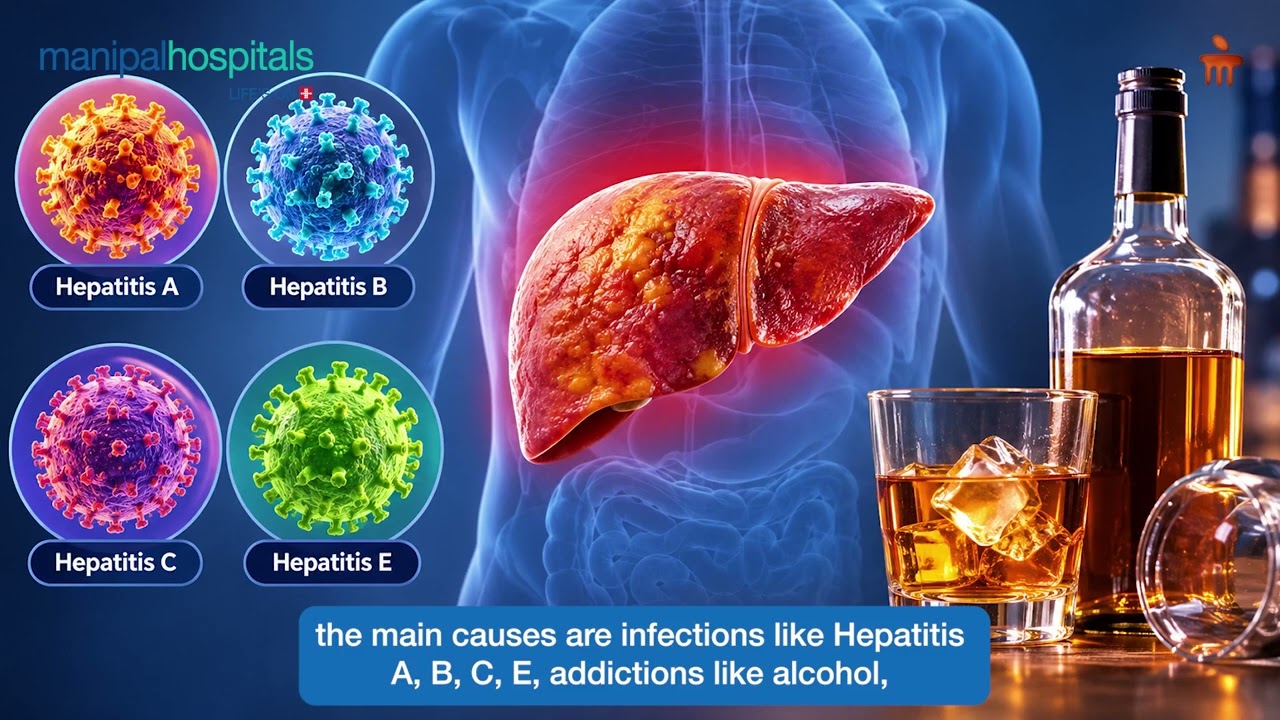
Dr. Mangesh Burkar, a consultant gastroenterologist and hepatologist at Manipal Hospital in Pune, addresses the global issue of hepatitis on World Hepatitis Day by outlining its primary causes, symptoms, prevention strategies, and treatment approaches. He explains that hepatitis is primarily triggered by viral infections such as types A, B, C, and E, which are transmitted through contaminated water or food for types A, E, and sometimes B, while type C often leads to chronic liver damage over a long period. Beyond viruses, the doctor highlights other significant contributors including alcohol addiction, autoimmune disorders, and drug-induced causes that can severely impact liver health.
When discussing how patients typically present with these conditions, Dr. Burkar notes common signs include extreme lethargy, weakness, fatigue, and distinct physical changes like yellowing of the eyes and urine, as well as clay-colored stools. To prevent infection and manage risk effectively, he emphasizes the importance of knowing one's hepatitis status through regular serology checks whenever symptoms appear or even proactively. Simple yet effective preventive measures include maintaining strict hygiene regarding food and water consumption to avoid viral transmission, getting vaccinated against viruses like Hepatitis B which are highly treatable with existing vaccines, and consulting a hepatologist regularly for monitoring.
In addition to medical interventions and vaccinations, the doctor advocates for a holistic lifestyle approach that includes staying well-hydrated, engaging in daily exercise, and consuming a healthy diet rich in antioxidants. These steps not only support overall liver function but also help mitigate the progression of chronic conditions caused by persistent viral infections or other risk factors. By combining awareness of one's health status with practical hygiene habits and medical vigilance, individuals can significantly reduce their vulnerability to hepatitis and its complications. Ultimately, early detection through routine testing allows for timely treatment modalities that can prevent long-term liver damage and improve patient outcomes globally.
Read the full video transcript
[music]
Hello friends, myself Dr. Mangesh
Burkar. I am practicing as a consultant
gastroentertologist and hepatologist at
Manipal Hospital, Karadi, Pune. Today on
occasion of World Hepatitis Day, we are
going to speak about hepatitis. [music]
So the theme for this world hepatitis is
hepatitis. Let's break it down. So I'm
going to break down what are the causes
of hepatitis, what are the signs and
symptoms and what are the necessary
preventive steps so that we can prevent
these hepatitis and what are the
treatment modalities.
So like first we'll come to what are the
causes. The main causes are infections
like uh hepatitis A, B, C, E, addictions
like alcohol, autoimmune causes and
other drug induced causes.
So speaking on uh viral infections which
are very common nowadays. Viruses like
hepatitis B A and E are water and food
born. Other viruses like hepatitis B and
C are chronic which affect our liver
over a long longer period of time. So
what are the signs and symptoms with
which the patient present? Patient
usually presents with lethargy, extreme
weakness, fatigue, yellowish
discoloration of eyes and urine and
sometimes with clay colored stool.
So now what are the preventive steps and
how you can avoid these viruses. First
is you should always know your status.
You should check your cerology. Whenever
you see yellowish discoloration of eyes
and uries, you should get your liver
function test checked.
So the uh simple step to prevent these
viruses are following adequate hygiene
about our food and water. This is a very
simple step which can prevent many of
the infections in a day-to-day life by
doing proper vaccination against viruses
like hepatitis B which are very
effective vaccines. we can prevent these
viruses. And the other preventive steps
are like getting checked by a
hepatologist on a regular basis, staying
hydrated, exercise daily, eat healthy
food which consists of antioxidants and
exercise daily. Thank you.
[music]