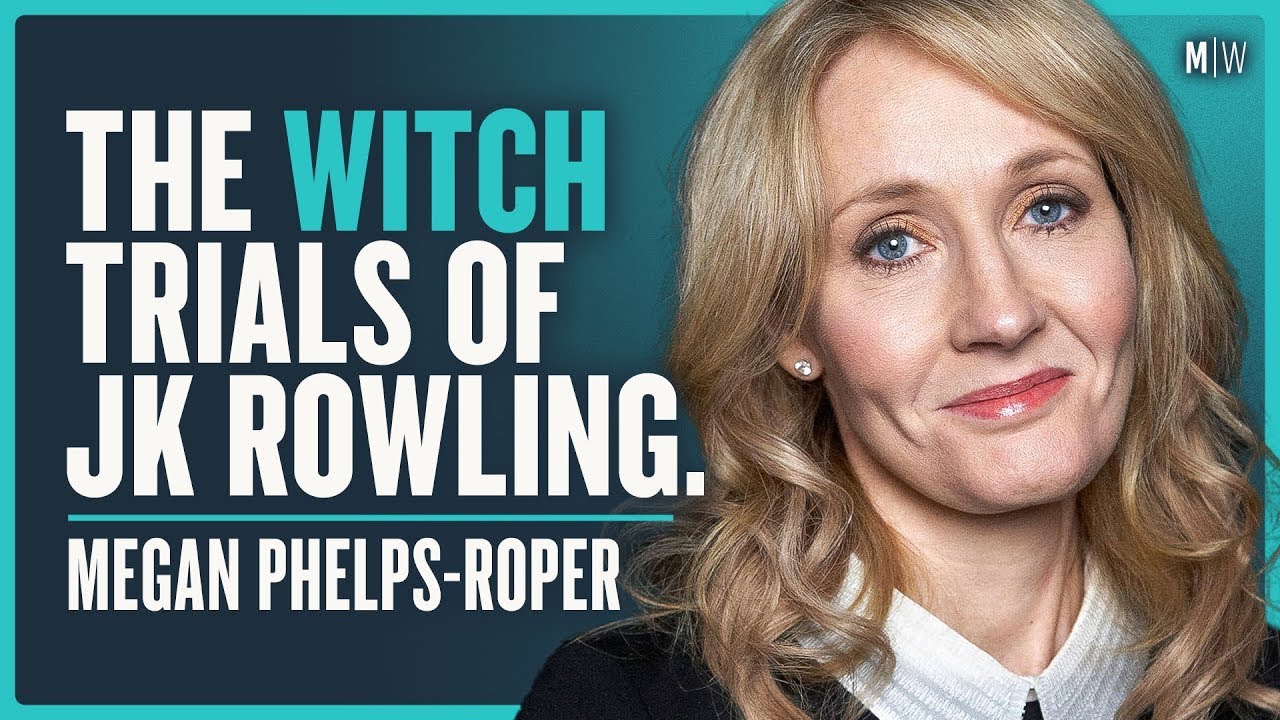
Video summary
The podcast explores the intense controversy surrounding J.K. Rowling, whose views on sex and gender have led to her books being banned in schools and libraries across Europe and North America. Megan Phelps-Roper explains that while initial bans were driven by Christian groups fearing a loss of culture in the 1990s, recent backlash stems from Rowling's June 2020 tweet regarding trans women. Although initially appearing supportive, she was later identified as an "anti-trans radical feminist" who argues for protecting biological females' interests—specifically in sports and youth spaces—from those assigned female at birth but identifying as men. This stance has placed her under siege by activists on the left while simultaneously facing criticism from conservatives who view her as a dangerous influence, creating a polarized environment where she is seen either as a victim of witch hunts or their perpetrator. Phelps-Roper details her journey to understanding this conflict after leaving the Westboro Baptist Church and seeking civil discourse with outsiders. She recounts sitting down for nine hours with Rowling in 2021, finding the author warm and open despite fears that she would be controlling. Through these conversations, Phelps-Roper learned that Rowling is motivated by a desire to protect young girls from medical transition without evidence of safety or efficacy, citing concerns about puberty blockers potentially leading directly to gender-affirming surgery later in life. The discussion highlights how both sides feel embattled; moderate voices have largely retreated due to the toxicity of online echo chambers on platforms like Tumblr and 4chan, leaving only extremists who view language changes as attacks on reality itself rather than accommodations for a small minority. A significant portion of the interview addresses the role of media and internet culture in escalating these tensions. Phelps-Roper critiques how journalists often amplify extreme positions from both sides, creating a feedback loop that drives away moderate participants. She references her own book's epigraph about "reserving judgments" as an infinite hope for human growth, contrasting it with the current public discourse where people define themselves by what they are against rather than who they are for. The conversation also touches on Matt Walsh’s documentary and other media efforts to articulate opposing worldviews, which Phelps-Roper argues should aim for mutual comprehension rather than defeatism or censorship. She notes that while some critics like Natalie Wynn disavowed the series after its release due to perceived bias in how trans voices were handled, she believes engaging with ideas even from opponents is essential for progress in a pluralistic society. Ultimately, Phelps-Roper expresses cautious optimism about the future of this debate despite the high stakes involved for individuals' lives and livelihoods. She acknowledges that while significant changes are needed—such as better research into youth transition protocols and more compassionate public dialogue—the willingness to listen and engage with good faith is increasing among some segments of the population. The episode concludes by reflecting on how language has become a battleground where altering terminology feels like changing reality, yet Phelps-Roper maintains that civil conversation remains the only viable path forward for healing divisions caused by decades of ideological indoctrination and online antagonism.
Read the full video transcript
generally it is the Republicans who are
saying men cannot get pregnant and then
you have somebody generally a Democrat
saying men can definitely get pregnant
nobody in this conversation nobody's
confused but it is females who are
getting pregnant but the Battle Is Over
The Language what we are willing to say
whether we're willing to make these
changes and make these accommodations
for this very small minority of people
and for some people it feels like so
much is at stake on both sides
Harry Potter is one of the most banned
books of the 21st Century why
well
um I mean for a lot of people it was it
was originally Christians there was a
certain and not all Christians but there
was a certain kind of of Christian who
who believed that they were losing the
culture in the 90s
um and I think I think Harry Potter was
it became like it was the biggest target
um but there were many things if you if
you look back we We examined this in our
show um you look back there as Sabrina
the Teenage Witch and the craft and uh
Charmed and just many many
um different examples of Witchcraft in
the culture and and so Harry Potter
became a huge Target because because a
lot of people really loved it
how many Bannings has there been in the
last couple of years has there been any
movement to try and get Harry Potter
itself rebound
there's been some it's not a lot it's
definitely I mean that I think it was it
was a product of that moment in in time
um so it's it's definitely not been
um I don't think the same kind of a
Target in the same way there was in the
90s for sure what got you interested in
the JK Rowling story
well if you I mean you can't you can't
have watched what happened in the summer
of 2020. I mean that for me that was
really the
um you know she tweeted in the summer of
2020 June of 2020 and there was this
massive backlash and I think to a lot of
people who hadn't been really following
the conversation surrounding sex and
gender the the nature of that backlash
the the heated nature of it um it seemed
almost incomprehensible so for me it was
I was coming from a place of of
ignorance and curiosity
um and we're just really wanting to
understand what was going on and the
more I started to look into it the more
I mean the more it seemed like the
nature the fact that the conversation
was happening largely on social media
was not serving anyone
um it was it definitely seemed to me to
be inflaming
um inflaming that conversation to say
the least
um and so I ended up writing this letter
to JK Rowling to try to find a better
way of having that conversation and
really just again to understand what
exactly was going on what the nature of
the controversy was and why it seemed
like everyone involved felt both
embattled
um and and just like like so much was at
stake
what did the Tweet say let's say that
someone isn't as terminally online as me
or you are
um okay so which which tweet um the the
original tweet actually was December of
2019
um and it came across as I mean I think
to a lot of people as as quite innocuous
it was something like dress however your
dress however you please call yourself
whatever you like sleep with any
consenting adult who will have you live
your best life in peace and security
um but
Force women out of their jobs for saying
that sex is real
#i stand with Maya hashtag this is not a
drill so that was actually JK Rowling's
first
um tweet that was stepping into this
publicly stepping into this conversation
around sex and gender and like I said to
a lot of people that that seems like a
really innocuous thing even to many
um and even to many trans people
initially like they read that as as
support but pretty quickly
um that that changed it was it was
How Deeply do you want to get into this
right now tell us tell us what tell us
the Uproar that it could
um so it was it was seen as you know
that she was kind of giving lip service
to supporting trans people but really
she is a you know what is what is called
a Turf a trans-exclusionary radical
feminist
um
right yeah it is it is
um somebody who excludes I mean it's
again it's in the term it is you're
excluding trans women specifically from
your feminism and so you know people
like JK Rowling who were concerned you
know she says that she supports trans
people and then she wants them to be be
free to live their lives as they will
but that there are essentially that
there are places where the interests of
um natal women as she would say people
who are you know biologically or
assigned female at Birth is the term
um
that their interests conflict with the
interests of trans women so and you know
we in in the series we identify we
basically split it up into three
categories
um women's sports women only spaces and
then youth transition those are you know
the concerns of somebody like JK Rowling
um and and part of the reason I mean JK
Rowling herself and her story are
fascinating and they you know that was
um that was it's a big part of the
series but part of the reason that
rolling is interesting too is that and
why it's worth digging into her views is
that uh her views are shared by a lot of
people
um and so it's it's worth wrestling with
those views just for that reason
I can't imagine how many letters JK
Rowling gets whether it be from a very
enthusiastic 11 year old or a very irate
trans activist or a well-meaning
journalist investigative reporter that
wants to find out her views on something
why did she reply to you
um well she said that she had read my
book
um unfollow which kind of Chronicles my
upbringing in the Westboro Baptist
Church
um I I've basically for the it's been a
little over 10 years since I left
Westborough this um very you know it's
seen as kind of a cult
um is is what a lot of people call it
um it's largely my family and and the
short version is I left
um I left the church and there thereby
lost my family a little over 10 years
ago and in that time I've talked about
how
um it was conversations with Outsiders
civil discourse you know people who took
the time to understand where I was
coming from
um and to essentially help me find you
know to sort of build a bridge from
where I was to to where they were
um and to find my way out of that um
that kind of very radical
hard line
um Paradigm ideological Paradigm
um so I you know in spending that time
and I I don't I don't demonize my family
I I very clearly you know I've disavowed
you know the things that we did and
which I think
were very harmful it could be extremely
cruel and destructive
um but I don't demonize them because I I
understand that basically everybody
there was born there they were born into
this and and sort of indoctrinated into
it and so I mean I think I've made a
very you know
um
you know public in a very public way
talked about the nature the the
importance of of that kind of
conversation and and that I was
interested in trying to find that kind
of a space for that kind of conversation
in this public conflict on sex and
gender right so that is what forms the
basis for your passion around this yeah
definitely
it's interesting it's interesting to
consider you know you being a part of a
movement a while ago that would have
seen JK Rowling and perhaps some of her
work as a
dangerous influence on the youth and
there is now a new movement that sees JK
Rowling as a dangerous influence on a
different portion of the youth which is
the Witch Trials of JK Rowling this sort
of
multi-headed sort of
not a joke but a lot of references going
on in one title I suppose okay so yeah
yeah well I was gonna say like there's
another way to read the title as well
because you know that was the I think
the original you know those those
parallels was the original reason for
the title
um and then the more we looked into it
the more we realized oh my God like we
can't call it that you know people are
going to be really angry like this is
it's already the conversation is already
extremely inflamed we don't want to add
to that but then we realized you know
pretty quickly people on all sides of
that conversation use the language of
witch hunts and Witch Trials like they
see themselves so some people see
rolling as the victim of a Witch Hunt
and some people see her as the
prosecutor of one they think that she is
Prosecuting or persecuting this this uh
very small minority of people who are
already the target of a lot of other
people and so how why why would she add
to that essentially so the title is
you're right it's extremely
multi-layered much more complicated I
think than a lot of people give a credit
for
rolling a letter surprisingly she
responds and says come and see me talk
to me about what it's like to go and sit
down with JK Rowling I imagine that the
number of interview requests especially
for this kind of a topic must have gone
through the roof and you are just some
lady who's got a very extraordinary
origin story but in the nicest way
possible like just some lady that wants
to go yeah yeah and have and have a
conversation you know like what what's
the trip to go and see her light what's
she like in person and and what did that
feel like to to actually do it
um it so I actually had never inter
conducted an interview before I sat down
with her a little over a year ago now
um and I was I was really anxious I mean
it like luckily
a few I mean a few things first it was
more akin to a conversation than an
interview which was really helpful for
me personally
um but secondly I think you know she has
a reputation of being extremely you know
kind of you know controlling and like
wants to control the conversation things
like that
um you know there's there's a lot of
stuff in the media about that and I had
read all those things and I had you know
watched um and listened to a lot of
interviews that she'd given
um and I was I was really nervous for a
lot of reasons and I mean I mean I'm
really grateful for the fact that she
was incredibly kind generous warm very
easy to talk to there was nothing there
were no ground rules there wasn't
anything like you know you can't ask
about this and you know when I very
first started asking those you know
questions I I again I had the impression
that she didn't want to go back to the
early days you know the early 90s you
know when she's writing Harry Potter and
um you know she had eluded in her um in
the an essay that she wrote in June of
2020
um to her history as a survivor driver
of domestic abuse and she hadn't really
given details about those things and and
again I just got the impression that she
didn't want to talk about them and but
almost immediately I think I got maybe
half a question out and she just
completely opened up and and you know I
think it just spoke to the fact that she
was really ready to talk about all those
things
um and so yeah I I feel like I got I got
very lucky I mean she she just was a
very easy person to talk to and and very
warm and open with me for sure having
spent a good bit of time with it was it
nine hours in total
yeah so a large chunk of time more than
any of us are going to spend with JK
Rowling what have you come to believe
about what's motivating her to take the
stance that she is about this I mean I
think there's a few things I mean there
are moments in our Series where
um she identifies specific things that
that caused her to speak up one of them
you know some of them are like the
specifics of um the conflict run sex and
gender you know
um you know that she is concerned for
um the fairness you know fairness of um
in women's sports she's concerned about
young people and specifically I mean
particularly young females medically
transitioning as minors
um you know and so there are some very
specific concerns that she has but I
think one of the things that seemed to
be a a big part of her decision to speak
up was the way that other women were
being shut down
um and the fact that there was very
little space
um to be had in the public conversation
um without women having to fear for
their safety or their livelihoods
um or even just like their public
reputations
um and so in other words it's the the no
debate aspect of the conversation and
since she has money she has influence
she has
um you know would she suffer has she
suffered as a result of speaking up on
these issues absolutely but it's it's
suffering that she can withstand so
she's I think she sees herself as you
know she has the privilege if you will
um to do that and so that you know I
think she felt that she had to
it's so hilarious to me and kind of
tragic I suppose that as I was walking
around Universal Studios LA in Harry
Potter World a couple of years ago and
it was just after JK Rowling had been
popped for a lot of this stuff and as I
was walking around I realized that there
was expansions going on and there was
live demonstrations and they were
pretending to do Wizardry and all sorts
of stuff and Organics are you going to
Orlando there's a new ride that's
opening up there in Harry Potter World
over there and it made me realize that
so much of the performative empathy and
virtue signaling that you see especially
from the capitalistic class that own
these kinds of corporations that would
quite happily change the display photo
of their Twitter profile to a rainbow
colored flag during pride month but
won't shut down Harry Potter world
because it makes them money
and fundamentally this is the protection
that JK Rowling is afforded not only
because she is Rich so she has the sort
of monetary resources herself to give
herself security and and safety and not
be able to be canceled quote unquote in
that regard but all of these people need
her all of these people need her to keep
on signing the checks that say yep
that's another Universal Studios Orlando
ride that's been opened up this is part
of the Harry Potter Canon someone some
Harry Potter legal expert that she
probably employs somewhere who's like
this is within the prescribed rules or
whatever it is and yeah it's it's a it
kind of like it does satisfy me in some
regards the fact that you're seeing a
woman retain so much IP and so much
power that she isn't regardless of what
she's saying regardless of what you
think about what she's saying
it's really
cool to see somebody who has
who's unfuck-withable basically
yeah I mean that that Concept in general
is intriguing to me because it I mean
you can kind of see it on both sides you
can see it as like you said unfuck with
a bull like because she has all this
power very different kinds of Power a
lot of different kinds of Power
um and but I think a lot of people who
are in that same situation those are all
things that they can lose and the sense
you know the idea of loss aversion right
it's it's you know kind of central to to
human beings you know we don't want to
lose the status and the influence and
the power that we have and so even
people that you might consider you know
they they might be unfuckwithable
maybe but they're not really willing
because they're not willing to lose that
they're not willingness so much higher
up the mountain is further to fall right
exactly exactly and so it was that's it
is an interesting aspect of this story
for sure because you know and asking her
about that and specifically what was it
that made her take that stand and you
can hear it I mean in in the story that
we tell and we go back and you hear that
she you know suffered in a lot of ways
that a lot of women suffer you know a
lot of women are victims of domestic
violence a lot of women are are
survivors of
um sexual assault and things like that
and so you can hear the ways in which
her past and her history
um influenced her decision to to speak
up on those issues what does she think
about people who say that she's ruined
her Legacy with the stance that she's
taken
well this was something it was it was a
line that really stood out to us you
know she said
um you know you basically you don't
understand me and you never understood
me because I do she said I do not walk
around my house thinking about my legacy
whatever I'll be dead I care about now I
care about the living
so she's not thinking about those things
um she's thinking about how are women
and girls being affected and children
being affected by these um these ideas
in the here and now and and what
responsibility does she have
um to to speak up about it has she got
personal security concerns
oh definitely yeah I mean I think I
think that's been a consistent
um thing for her since Harry Potter
became huge but it's definitely
um been also um you know the last few
years it's been particularly bad I that
was my impression I should say yeah the
one of the most interesting things that
I learned was this um
you could almost say it's a a full
circle that's occurred there was a
landmark case of Harry Potter books
being removed from being out front in a
library and they were kept behind the
librarian's desk for children who were
of the right age to read them but they
had to get parental consent to go and
read them then there was a basically
like a freedom of speech request that
was made and this particular case was
one which meant that
children were allowed to access books
that were of the age that was
appropriate for them and even if you
were worried that they were being
indoctrinated into the the occult it had
to be upfront and they were allowed to
read it and the parents didn't they
didn't need to jump through all of these
extra Hoops however it seems like full
circle looking at some of the concerns
that the right now has around LGBT books
being placed in children's libraries
that some of the same legislation the
tangentials similar parallels can be
drawn between what was happening with
Harry Potter books being permitted
that is now permitting LGBT books to be
in children's libraries there's an odd
odd sort of uh horseshoe going on there
yeah it was it was really interesting um
you know we interviewed these uh lawyers
who on both sides of that case um both
the lawyer who was arguing against those
um you know against those restrictions
and the lawyer who is arguing for it for
them
um and it was really fascinating to hear
them describe how that you know Harry
Potter those Harry Potter cases you know
part of the legacy of those cases was
that they were now protecting LGBT books
especially obviously in this current
moment it it seems a little bit ironic
yeah it's strange so you spent some time
with historians and internet historians
as well what what did you learn there
um we we were you know part of the story
that we were trying to tell is kind of
how how the internet became this you
know kind of much more judgmental cruel
place because you know and I also
interviewed a lot of people you know
those interviews didn't all make it into
the series
um because we we did so many of them and
you know many of them were incredibly
fascinating and but one of the things
that I think
was very sad to me as I was kind of
going through all of this is is how
the kind of Internet that existed you
know in the 2000s
um and that was a place I mean like it
was for me I was again essentially a
member of a of a cult I had been born
and raised into this environment that
was very
um you know we saw is this very Us
Versus Them environment we saw Outsiders
as evil and they were hell-bound and I
couldn't trust them and I was able to
form these communities on on Twitter and
I'm my experience was typical I think of
a lot of people who did not have those
kind of um you know weren't able to make
those kind of Connections in their
physical space
um and it's kind of very sad to see the
way that the internet has changed um
over the past especially the last decade
or so
um so we went through in episode three
of our series
um to kind of track how those changes
took place over time
um and and essentially we ended up
talking about these two we zeroed in on
these two um forums
um fourchan on on the one hand and then
Tumblr on the other and and what you see
I mean Angela Nagel is one of the women
um you know she's one of the internet
historians I spoke with
um and she was basically she used those
two as exemplars
um you know 4chan is more male
um more right-leaning more kind of you
know chaos
um and then Tumblr like
um leans more female you know both young
um and and kind of
I don't know if virtue signaling is
quite the right term there but it's kind
of like very you know trigger warnings
and safe spaces and things like that
like we're we're um kind of ascendant
there
um and you're seeing the the interplay
Within These communities and then also
between them
um you know it's part of uh it partly
explains how those things came to be
um
if that makes sense what role do both of
these play in the story of how we get
here
um so with Tumblr like that was really
the one that JK Rowling described as
being something that she
um she was very interest and she said
she was very interested in the use of
the word identify and Tumblr was a place
where people could go and play with
identity
um and you know as I said you know they
this whole kind of sensitivity culture
where you know you're trying to be very
careful in the way that you talk to and
about
um you know yourself and other people
you can play around with identity so
this is where you know like I think it
was like 70 some different genders or
something
um and you know for a lot of people we
didn't see a lot of those things until
it became like a news a news clip right
talking about the way that Facebook was
was
um uh having those things
so it became this this news clip right
Facebook is introducing you know 70 some
gender identities and you could you
could you know choose whatever you
um and so but but again there were many
aspects of Tumblr like I think one of
the one of the big ones too was there
was this blog called
um or this account called your fave is
problematic and it's kind of it embodies
and exemplifies this this trend that I
think again really took hold about a
decade ago and it's essentially you're
showing your righteousness by pointing
out others unrighteousness so
um somebody you know they're they're
digging through your old tweets they're
looking at all of um all of your
behavior like trying to find the thing
that shows that you are a bad person and
because I you know I I can identify
those things that makes me a good person
um and so you know this there there's
it's so funny because like as I'm
describing some of these phenomena like
this was absolutely representative of my
experience at Westborough we were
constantly scouring during the news and
the media like looking for things that
we that that show that other people were
bad and wrong and going to hell and it
we saw it as our duty like this was this
was again a way to show that we were on
the right side
um and so I I don't you know see any of
these things as you know I'm not trying
to like condemn people for engaging
these kinds of behaviors I think I I
understand and and can see where it's
coming from and even that it's coming
from an attempt to you know be a good
person yourself
um and yet in the prosecution of those
um of those ideas and and trying to tear
down other people you know there's this
amazing line from one of the
contributors to the show Natalie Wynn
where she says
um you're you're trashing people but you
feel like you're crusading and I think
that's very much representative of of
you know this aspect of of Internet
culture that I think has made things so
much uglier and certainly Less Pleasant
that righteous retribution I think JK
Rowling brings up as well that this is a
central theme within some of the books
that some of the most atrocious things
that have been committed throughout all
of human history have been done by
people that were thinking that they were
the good guys very interesting people
actually do bad things in full knowledge
of the fact that they're the baddies
there's that um
famous sketch from a British sketch show
where it's two Nazis and they're talking
to each other and they turn toward the
end and they say hang on
are we the bad guys and it's just that
sort of they realize oh my God maybe
we're on the other side and then they
cast it off and then they realize it's
not okay so and I think I mean to me
that that is a very hopeful thing
because when the the fact that it's like
to my mind I mean I think it's it's
unless you are a literal psychopath or
sociopath most people like really think
that they are doing the right thing and
the fact that their intentions are good
to me
like I said is a hopeful thing because
it means there's something that you can
tap into like if you can help them you
know reframe the situation or introduce
you know the kind of complicating
factors and you know alternate
perspectives there's there's Hope for
Change
and Improvement
how is it that One account on Tumblr and
even Tumblr itself
I don't know how many users were on that
social media platform but I wasn't no
one that I know was much that might be
because I didn't have many girlfriends
like when I was younger
how can that be sufficiently influential
as to move culture a decade later
um so the way that it was described in
the show by the but and it was the
really interesting thing was you know as
we as we were interviewing these people
and all three of them all three of these
internet historians were telling the
exact same story which is you know these
these kind of um Norms were taking hold
on places like Tumblr
um but it was when they migrated from
Tumblr to Twitter which again another
amazing line from Natalie Wynn in that
show
um she says Twitter is politics full
stop and like so it is when you when
when these Norms migrate to a place
where there's a lot more users and a lot
more you know people like influential
people people in the media journalists
politicians
um that's when it really takes off and
becomes kind of ascendant in culture
much more broadly what's the role that
Photon plays
4chan so the way that Angela Nagel
described it she's essentially saying
like when you have these two groups
um so you have there's the interplay
within the group right work that kind of
like pushes people to double down and
become more and more extreme within
their group and then it becomes like um
this feedback cycle between the groups
so in seeing the extreme nature you know
and and especially like so you have
um extreme sensitivity on Tumblr and
extreme anti-sensitivity on 4chan
seeing the what is happening on the
other site and and the extreme nature of
it in your eyes
um it causes you to think that I mean it
helps you kind of pushes you into this
idea that your political it helps
persuade you that your political project
is necessary is how she put it and so
again being among all these people who
are um confirming your values and then
seeing what what's happening on the
other site is is does that make sense
it's like it's
it creates like a recursive antagonistic
feedback loop right exactly and then
when you roll into it trolls who use
pose law to basically ruin the entire
game you know the number of trends that
have come out of Fortune I'm actually
friends with who was he no longer is but
the only guy that was a public moderator
a 4chan and um yeah he's got a few
interesting stories Anna yeah it's just
it's it's such a Hydra head to even try
and get that to work one of the
interesting things that I kept on
thinking about and you touched on it
with how many people became friends and
probably got married because uh they
bonded when they were kids or late
adolescence over the Harry Potter books
there's such a difference between
whatever 25 years ago when the Harry
Potter books came out and the internet
was burgeoning and the story that we're
talking about now which is much more
familiar to everyone that's listening
which is no longer about this sort of
nostalgia for the internet of making
friends but it's the internet of making
enemies now and
um again that trajectory
which I think a lot of people who are
you know Millennials will be able to
feel because they would have remembered
what life was like before then they
would have remembered what life was like
maybe during the you could call it the
brief golden years of the internet and
then the very quick pivot into whatever
the world is that we're in now yeah it's
defining it's like we used to define
ourselves by what we were for and now on
the internet we are defining ourselves
by what we are against and I think
that's Again part of the interplay
between seeing you know each each side
seeing what's happening on the other on
the other platforms you've got this
great quote the language of public life
has lost the character of generosity so
yes
um that's actually it's not my quote I
should say that's my um one of my
favorite authors Marilyn Robinson
um and I just I was reading something
um something of hers and when I saw that
quote I was like that is it's the
understatement of the century but it is
that the loss of the ability to
recognize that other people are human
beings who are also on a journey like we
recognize that about ourselves that you
know our we kind of are able to
recognize that you know we are not who
we were yesterday and the ways that we
screwed up in the past you know we can
we can learn better we can do better we
feel that hope for ourselves
um but again that the language of public
life has lost a character of generosity
like we we feel like we have to judge
people you know based on who they are
right now and the sense that that there
is no hope for them and you know that
like that again to me that that loss is
um
we've lost something real and valuable
and good you know the the epigraph of my
book is this line from The Great Gatsby
that
um goes reserving judgments is a matter
of infinite hope and to me that is just
the encapsulation of this idea of Grace
right that the willingness to see other
people as being on a journey and that
there there's hope for them to grow and
change we have that same hope for
ourselves and and that we can contribute
to their lives and their understanding
of the world in a way that that could
actually
um help them so again the loss of that
generosity I think is part of what leads
to this like incredibly judgmental
condemnatory
um mindset that I recognize so well from
my upbringing continuing to track the
journey or the the um propagation I
suppose of this this world view it seems
like the impositions on language have
really been a flash point for a lot of
this stuff that that moment when
language began uh there were proposals
to change it the accusations that it was
being perverted or it was being
miscarried that seems to have been
something that
why do you think that it why is why is
language being such a important Ground
Zero for this conversation do you mean
specifically in Sex and gender yes
because we're
because it's representing like what how
how we see reality right like that's
that's the whole point like can we talk
in a way can we communicate in a way
that we can I mean so this is why like
just imagine for a second like I think
we've all seen the video clips of
politicians who are fighting over the
idea like whether whether men can get
pregnant
and when these people are having these
public battles you know and you know you
have the generally it is the Republicans
who are saying men cannot get pregnant
and then you have you know some
um somebody generally a Democrat saying
men can definitely get pregnant
nobody in this conversation I think
nobody's confused about whether like
that it is females who are getting
pregnant but the Battle Is Over The
Language right and like what we are
willing to say whether we're willing to
make these changes and make these
accommodations for this very small
minority of people
um and for some people like again it
feels like so much is at stake on both
sides they think we are being asked to
change or to alter our understanding and
our ability to talk about reality like
that's that's almost
excuse me that's almost exactly what
rolling you know is saying in episode
seven when we talk about that this
question
um and and then on the other side again
it feels like
I'm trying to think what like because
maybe a succinct way of putting it is
like one side thinks this is such a
small change that we're asking and it's
not it's not that like why is this a
problem why can't you just alter this
and accommodate these people
um it is just the kind and right thing
to do and the other side is saying we
have to be able to talk about reality we
have to be able to say clearly what is
happening you know and and we shouldn't
alter we shouldn't have to alter
um what we how we understand the truth
and reality and so yeah it it's it's
like it's a very kind of frustrating
place to be I think for people because
one side is saying it's not that big of
a deal just you know like you think
about it like think about like um
misgendering or something like like
misgendering is not that big of a deal
like why why do you take this as such a
huge thing and they're asking it's not
that big of a thing why can't you just
do it do you understand so like they
both are kind of like minimizing the the
negativity like experience by the other
side
um and that's again it's a very it's a
very hard place to be
this has been propagated a lot by
journalists both traditional media and
New Media as well what did the
journalists that you spoke to contribute
to this discussion what did they have to
say about why this had taken hold so
much
um I mean I think one of my really
um most interesting conversations I had
was with his journalist Michelle
Goldberg who's been covering this for a
long time I mean more than a decade I
think at this point
um and you know the way that she
described was essentially that again
everybody everybody can go both sides
both the you know trans people and you
know the quote unquote turfs right like
JK Rowling
um you know feel very embattled these
are people
um who who feel like so much is at stake
right
um and and
again when that is the case like it's
very hard for people to let go of their
pain long enough to hear what the other
side is experiencing
um and because I think a lot of people
have opted out of the conversation
um because of how toxic it is
um what you're left with is kind of the
people who feel the strongest on both
sides um and who have taken kind of the
hardest lines in the most extreme
positions
um that like those are the people who
those are the voices that you hear and
again that feedback cycle is incredibly
destructive it feedback feedback in a
very strange way as well that if
there is an increasing sensitivity on
both sides to anybody who seems to see
ground to the other as being accused of
being whatever or whatever that causes
fewer and fewer people who aren't 100
absolutely Ardent about their view to
wade into the topic Because unless
you're unbelievably compelled to do it
why would you bother to step foot into
this absolute Cesspool which creates an
incentive to push this out only to the
absolute edges it's only the people who
are the most ardently for or the most
aren't your games that are going to step
into this conversation because get
if you think that the moderate
person is going to do it because they're
just going to get caught in a ton of
Crossfire yeah no exactly and that it is
that exact that's absolutely part of the
dynamic that led me to write that letter
to JK Rowling like there there has to be
a way of articulating these things and
and talking to people and hearing what
they actually believe and again not the
most extreme versions of all these
positions because that's you know you
essentially get strong strawman just
over and over again
um and and yeah that you we you hear so
many people articulate that exact thing
why would I step into this when the
stakes are very high it doesn't seem
like it affects me personally and and
there's there is no upside here there is
no upside is it that's that's a good an
interesting question why has this become
such a huge issue that is uh spread
across corporations news commentators
reactionary Talking Heads all of that
stuff when it's only an issue that
affects
if we do one percent of the population
something like that it's a very small
number of people compared with this huge
huge amount of attention that's being
given to it what's going on I mean I
think it's it's because it's become a
moral flash point like it is a discerner
like are you on the right side or are
you on the wrong side
um and when I think when that is the
case and especially you know one of the
um one of the things that's come up a
lot is essentially with LGBT rights you
know when same-sex marriage was one in
in this country
um you know it's like all these
organizations essentially you know that
were that were existing to
um
try to ensure that that we we got that
right one in this country
um
they still exist and it like LGBT so the
T part of it right like the trans rights
essentially was like then the next
frontier people saw it as the next
Frontier like this is just this kind of
besieged minority and we need to take
care of these people
um and so I think because people saw
that as the natural extensions it's the
next uh battle
um you know it it it's it has become the
flashpoint
is the trans Rights Movement any
different to the gay rights movement
well that's I mean this is what people
are having these kind of major battles
over at this point because there are
people who say no absolutely not it is
the same the same kind of persecution
the same kinds of arguments are being
made against trans people as were made
against gay people and and bisexual
people
um and but then you have people on the
other side who are saying No this is
actually fundamentally different and in
fact
this was actually one of the
complicating factors
um that ultimately led me to
um you know take on this project because
you know I'm also not immune to the kind
of um
the fear you know I mean ultimately
um when I first went down this path my
my friend Andy Mills was the one who um
who called me with this idea for this
show a couple years ago and you know I
was really interested I immediately
started you know researching
um and you know sending all these things
like oh my gosh you have to include this
in the show it's it's really fascinating
um and then when he asked me to
um to host uh I definitely I took a
while before I said yes
um and I spent that talking to to trans
people and two
um but also I mean to gay and lesbian
people
um and it was really fascinating to hear
them describe
um I should say not not all of them but
they were they were describing an
element of homophobia in the trans
Rights Movement which is essentially if
you are same-sex attracted
um if you are a lesbian and you are um
excluding trans women from your dating
pool then you are transphobic and that
there there's something wrong with you
um and you know hearing these kinds of
things from gay and lesbian people in my
life and hearing kind of this um anguish
I would say you know essentially saying
they had fought people like my family me
and my family for a very long time
um you know who had been telling them
there's something wrong with you for
being same-sex attracted and now they
were getting it you know very similar
um kinds of criticism from the
progressive left and it was wrong with
you being same-sex attracted there's
still something wrong with you being
same-sex attracted yeah it's what's a
genital fetishists typical fetishes
exactly I mean and it's you know
obviously like not all trans people feel
that way or or try to you know take
those positions but there are you know
some who who are but again that's what
was so fascinating like the series is
you know we have seven episodes it's
it's you know essentially you know about
seven hours of material
um there was so much more there are so
many like it is one of the most
fascinating incredibly Rich topics and
the fact that so many people opt out the
conversation because of
um oh and I I'm not I don't just mean
this from like from a curiosity
perspective I mean like real people's
real lives are affected by by the
answers that we will eventually come to
um you know in these conversations
around sex and gender
um and and it's like yeah we I I'm still
absolutely persuaded that we have to be
able to have these conversations
um as calmly and kindly and civilly as
possible because again people do feel
like so much is at stake so many um
really important aspects of who they are
and the way that they live their lives
what did the clinicians have to say
when it comes to clinicians there's a
lot of different
um you know kinds of opinions
um about it
well I think one thing though that is
clear from everybody that I spoke to um
and that includes people like Dr Mercy
Bowers who's the head of wpath the world
professional association for transgender
Health
um
and you know essentially all of them
agree that we do not have enough
information there is not enough research
um Dr Bowers told me that I think it was
like 80 of the research that has been
done with youth medical transition has
been done in the past 10 years so it's
very recent you know a lot of these
professional associations in other
countries like uh Sweden Norway Finland
um the UK actually just in the past few
days
um you know have really pulled back
um some of these treatments things like
puberty blockers and now they
essentially are not going to be using
them outside of research contexts so a
lot is changing
um but I think the kinds of you know
concerns that a lot of people had
including JK Rowling
um you know
they're not completely unfounded
absolutely not um did you read time to
think by Hannah Barnes I I've read part
of it yes and I've seen a lot of her and
and everything that she talks about that
is exactly the kind of thing that um
that Rowling was worried about and I
think a lot of people who are concerned
about youth gender transition
um I don't know if you've seen um you
know Helen Lewis actually had a um I
interviewed her in the series um she
will actually be in the epilogue that'll
be out
um later this month
um you know she she wrote a thing for
the Atlantic a piece in the Atlantic um
and essentially said neither the
um you know the attempts to compel you
know you know youth transition or to
completely ban it neither of those
things is the answer is essentially
where she comes to um and I think it's a
it's a really fascinating argument
Hannah was on the show and for the
people that didn't see it uh she
basically present I couldn't believe how
carefully she tried which I thought was
very impressive it's super super gentle
anything where she was out over her skis
where there wasn't evidence she was she
was pushing back against
um but she basically said
puberty blockers and that the book's
called time to think because that's what
puberty blockers were advertised as
being that it just puts a pause pause on
puberty you get rid of the blockers and
then puberty will be re-begane and
everything ends up being the same but
it's an ironic title because it doesn't
give you time to think and there is an
unbelievably high percentage of children
who go on puberty blockers who end up
essentially on a set of train tracks
that results in gender reassignment
surgery in their late teens
and you know there is an interesting
question are these young children
mentally disturbed because they're trans
or are they trans because they're
mentally Disturbed how many people that
are suffering with autism spectrum
disorder with obsessive-compulsive
disorder with a number of other issues
uh coping with them especially as a girl
because it's the increase is rapidly
rapidly occurring in F to M as opposed
to M to f I'm now a girl I am being seen
as a sexual object by my peers I wasn't
previously my body's changing this is
scary I don't know what's going on I
have uh more than ever comparative uh
views of what feminine femininity is
supposed to be on the internet whether
that be hypersexualized or whether that
be like inverse or reverse mimises
negative mimesis of being a tomboy and
maybe I don't fit into this and maybe
I've got autism spectrum disorders I'm
already not very ladylike uh maybe I'm
just a boy or maybe I just want to take
time but that time to think isn't time
to think it's time on a set of train
tracks that ends up with you getting
into transitioning and um
yeah it's it's pretty scary and you know
I'm UK anymore but the gender identity
thingy service at the Tavistock Clinic
yeah didn't do a good job yeah I mean
that's Dr Erica Anderson who I also
interviewed for the show you know each
of these things it's a very
individualized like we have to be able
to look at and examine and have each of
these you know young people
um actually be examined and go through
it I think what you call it
um a bio psychosocial profiler I think
that's what she called it
um and places like you know what we're
at the gender identity service at
Tavistock
um were overwhelmed essentially with
patients and not really following those
protocols um I think is is you know one
of the one of the findings of the cast
report so
you know in the absence of those things
well I mean I should say though too I
interviewed this wonderful
um trans boy named Noah who had Top
surgery as a 16 year old
um I interviewed uh him shortly after he
turned 17 and
um he's an incredibly smart emotionally
intelligent like if you listen to that
like you know he is somebody who really
deeply like I I think one he definitely
got care that was
um much better than kind of what was
described at the Tavistock
um but also again just just an
incredibly smart and emotionally
intelligent like you know person who
really wrestled with all of the you know
potential consequences you know you know
thought about like what if I eventually
come to detransition
um and when I asked him about that he
basically said if I eventually you know
decide to detransition
I I will have lived to regret my
transition like he basically was saying
if he had not transitioned he would have
committed suicide so you know it's it's
it's an incredibly complicated
um you know set of circumstances and I I
really feel for the parents who are
trying to figure out like what is what
is the best way forward and it's an you
also hear you know one of the criticisms
we got from people on the show is
um you know why didn't we talk to a d
transitioner but then you also have you
know people who wish we would have
talked to somebody who was not allowed
to transition as a minor who didn't have
the kind of um you know a trans person
who did not have the kind of support
that Noah had from his parents
um and essentially were forced to go
through what they describe as the wrong
puberty so you know a trans girl who was
forced through male puberty because they
didn't get treatment and now as an adult
has to kind of undo all of those things
and you know it's it's like I said it's
it's a really complicated and and
um it's a really complicated thing to
try to figure out from a policy
perspective like what is what is the
right way what is the right thing to do
and even more more complicated from a
publishing perspective on how to say
these things without putting your foot
on some sort of tripwire for one side or
the other ultimately I I think when it
comes to the conversation which is you
know there are a number of different
layers to what you're talking about the
the
um history of where this has come from
the implication for why it is happening
the experience of the people that are
going through it the consequences for
society and for other groups are
infected affected by the people who go
through it the conversation and why
that's become so polarized
you know it doesn't matter how
terminally online you are even if it's
as much as me or you with regards to
this kind of an issue there are so many
unseen Holes in the Floor that you can
just stick your foot through but you did
spend a good bit of time on the show
talking to critics of uh JK Rowling
talking to activists from the LGBT
movement etc etc
what did you learn from spending time
with them because I think at least as
far as I can see
a lot of people are very familiar with
the pushback with the well-meaning
pushback especially uh against these
sorts of policies it is pretty
self-evident why biological men invading
women's spaces whether they be bathrooms
or prisons or
um psych wards or hospitals or whatever
could cause complications downhill uh
what were your eyes open to when you
spoke to critics of JK Rowling
well when I talk to no I mean Natalie
and Noah are the two primary critics we
actually featured in the show
um because I really felt like their um
their description their ability to I
think
um
help people understand where they're
coming from because you again online you
get a lot of this kind of
um very it seems like hyperbolic
overstated
um and you can really hear the pain you
know frankly from from people like
Natalie and Noah
um they don't and again Noah especially
he basically was saying
he didn't want JK Rowling to not express
her
um her opinions her concerns over all
the things that we just described the
youth you know youth medical transition
you know children transitioning too
young before they have a real ability to
um understand the permanent in many
cases changes that they are making to
their bodies
um so it's not that they you know think
that her they basically think that she's
not engaging in good faith that's what
that's what Natalie said
um and then with Noah again basically
saying the story that is told because
she has such a massive platform and
because she has been
um you know the victim of this kind of
again overstated kind of hyperbolic
um
um the threats and things that she has
received have been highly publicized
um and basically she was saying I mean
um sorry basically Noah was saying that
that those things are true and they're
real but they essentially take the focus
off of the fact that trans people people
are highly marginalized they are often
excluded from society they are treated
like outcasts in many situations many
people don't have again Noah's the
support that Noah has from from his
family from his parents you know you
know as you know Natalie was saying
these people are you know cast out by
their families cast out by Society
targeted by the government you know
their their health care being
um banned and and in some cases
criminalized
um that the fact that rolling
essentially takes up so much air in that
conversation
um even though the things that are being
said about her are true
they are essentially giving the a view
of something that is um of the situation
that is false does that make sense
because the because the scale is not is
not fairly
um
does that make sense yeah it does I'm
I'm thinking about how even within that
even within JK Rowling's contribution to
this conversation
even that's multi-layered right so
so
uh
her concern about uh some of the extreme
and very dangerous uh implications of
self-id of men and women's spaces
biological men and women's spaces etc
etc that captures a portion of the
conversation which I'm going to guess
that uh Contra points uh and and Noah
um don't you know a biological man who
hasn't gone through who doesn't have
gender dysphoria who hasn't decided that
they're going to try and make any effort
to transition something tells me that
neither of them would say yes to that
too because that makes their own case
for legitimate trans people weaker or at
least it's not going to be you know
first thing that they're going to charge
out of the gates trying to get they're
going to try and help people that they
think are genuinely suffering and could
do with some treatments that are going
to assist them but because that's what
JK Rowling has kind of captured as part
of the conversation and then the
backlash to JK Rowling which has been
from the more militant part of the LGBT
movement also captures and J AIDS both
sides it Riles up the opposition and
says see that I thought you were
supposed to be for tolerance and
inclusion you this is complete rank
hypocrisy or evidently you evidently
don't care about this thing and then
that bad mouths the people on their own
side because they think no no they don't
represent us and yeah it's the ever
escalating uh Echo chamber incentive
causes people on both sides to
misrepresent both their own and each
other's and it's that sort of recursive
antagonism that ever ever worsens and
escalates yeah I mean and again this is
exactly exactly the kind of situation
that I was seeing when I wrote that
letter to Rowling like there there just
has to be a better way and I I really
think that we you know you described all
the landmines that it's very easy to
step in completely unwittingly just
based on the terminology that you use
and so I mean it's it's it's really wild
actually how much time we spent trying
to get the language so that it is
intelligible right because even for
people like to say trans women a lot of
people even you know like I would say
like Lefty people that I know
um you say trans women and they would
say like oh is that a man who wants to
be a woman or a woman who wants to be a
man like I mean it is it is very hard to
parse a lot of this language because sex
and gender are so kind of central to our
understanding of the world and so so
yeah like trying to figure out exactly
how to speak in such a way that you are
intelligible
um but also not showing that you are you
know have your thumb on the scale for
one side or the other it is it is quite
and this is again one of the many
reasons that many people opt out
entirely
did Contra points do that video with the
same title before or after you spoke to
them after yeah how do you feel about
that video I mean I am really
um I really wish
um I could have talked to Natalie again
because I really really like Natalie um
I watched that video that she made the
Witch Trials of JK Rowling um and I mean
honestly for several weeks beforehand
she was teasing that she was working on
a video and I I was really
um I was like oh God it's gonna be it's
gonna be about us and I you know
I mean I will say though like as I
watched the video there was there were a
lot of things that I was you know I'm
really trying to you know follow
um follow her argument and try to
understand where she's coming from and
and you know obviously I hate the fact
that she regrets talking to us because I
think we we really so many people see
episode six that features her so heavily
um like that was really challenging I
think for a lot of people who thought
they were just you know essentially
unquestioningly on JK rowlingside
um and the kind of um you know she just
I think represented herself really
really well in that conversation I mean
it was really powerful
um but when I was watching the video
that she made after the fact
um you know there were several things
that really stuck out to me and I'll
just like go into one of them maybe
right now
um she just was describing this um
anti-gay activist named Anita Bryant in
the video
and what she said was Anita Bryant like
she's basically attacking my you know my
view that as I was saying earlier that
that having civil conversation open
dialogue with people who think
differently than you like that is the
way forward to my mind and I think it is
the most effective way to change hearts
and minds and find a way forward when we
live in a pluralistic society so that's
that's the idea of mine um that I think
that she's attacking in this part of the
video and one of the things that she
said was JK role I'm sorry she said
Anita Bryant didn't need to be persuaded
she needed to be defeated
and that really stuck with me because I
was thinking like but what does that
mean
what does it mean for Anita Bryant to be
defeated I mean I think what it means is
that her for it's for her ideas to be
defeated right and what does that mean
it means that people are persuaded that
her ideas are wrong so it still comes
down to persuasion we still have to
engage with these ideas particularly
once as I was saying earlier
particularly these ones that are so that
that are so mainstream that so many
people share and if we don't engage with
those ideas I don't know how how will
she win I guess is my question and the
really interesting thing is that Natalie
herself says this in the series
realistically that is the trajectory
like how you know same-sex marriage was
one because gay people came after their
family and friends and said you know we
are not groomers we're not trying to
like you know indoctrinate your children
we're not trying to you know turn them
gay like we're just people who happen to
love people of the same sex so yeah it
was one of the things for me watching
Natalie's videos like I actually don't
think that we are
so much at odds when it comes to
um exactly how in how to move forward
from all of this I wonder whether or how
much of that could have been
uh silenced would have been like
defeated is another way to have said
that would have just been uh not given a
platform at all
um
I don't know the the
I I understand why
she wasn't advocating that in the series
though I mean or sorry she wasn't
navigating that in the video though I
just don't understand how you square the
circle of allowing somebody to speak but
also saying that it was wrong to let
them speak like if defeated means ideas
defeated but you can't hear the ideas
how are you supposed to defeat them
right I mean again in this in her video
she was describing a lot of like
particular things that um gay activist
gay and lesbian activists did in the 70s
and 80s
um you know they put Anita Bryant's face
on toilet paper and they made fun of her
and they you know she kept going back to
this moment where somebody smashed a
banana cream pie into Anita Bryant's
face during this like live TV interview
or whatever and she keeps going to that
moment going back to that moment and I'm
just saying it's like she's saying that
I like my position is never make fun of
people never you know you should never
you know show that you are angry
disgusted I never said any of those
things what I said was that I think that
the most compelling the most effective
way to create change is to engage to
really engage with the ideas right civil
conversation that makes where people
feel like their ideas are being heard
and addressed
um again like this is something that
completely changed the trajectory of my
life and I was absolutely I was so
hardcore I mean I I was raised in it
from the age of five and in spite of
myself and in spite of every intention
that I had of you know preaching this
this message and and certainly it might
I was never going to change my mind
about any of it
um and in spite of all those things the
power of civil conversation again
changed the course of my life and it
meant that I lost my family I mean I I
left you know I left everything that I
and everyone that I knew and loved
as a result of those conversations
um and I don't think that I am unique I
think that when people when you when you
engage with what they actually believe
and actually
um you know treat them like a human
being it it I I don't think that the way
that I responded
was like I said I don't think that was
unique I think I responded in a very
human way to people who treated me like
a human being
I've got a quote from a friend here that
says when punishment for what people say
becomes widespread people stop saying
what they really think and instead say
whatever is needed to thrive in the
social environment thus limits on speech
become limits on sincerity and you know
it's the reason that censorship doesn't
work fundamentally that you don't
actually change people's minds you just
drive those opinions underground and
yeah yeah it's got to the stage now
where
two things perhaps one being that we
must win at any cost whichever side you
are from
suggests that if you can create an
asymmetric Battlefield by censoring the
other side whilst allowing yours that
gives you a particular advantage and the
other one being that there is sort of a
generalized risk aversion at the moment
anyway the three out of ten gen zedders
support the installation of cameras
inside the home to surveil for
wrongdoing that just came out from the
Cato Institute last week which again if
you have got into a routine of giving up
your privacy on the internet in return
for access to Google or YouTube or
whatever then what what really is the
difference between doing that in the
online world and doing that in real life
it's not all that different right the
lines begin to get blurred for the
person that's been natively online since
the age of whenever they can remember
being alive so
I wonder whether protecting people from
Bad opinions protecting people from
dangerous ideas which I'm sure both
sides you know use during this
discussion I wonder whether that
contributes a little bit to you know the
ideas should be defeated uh
it's a strange one I I didn't realize
that you didn't know that that video was
going to come out until after you guys
had spoken and all the rest of it that
must have been yeah difficult yeah I
mean I like I said I really like Natalie
um and I think you know I've watched you
know some of her videos and I mean I
learned I mean her cancel culture video
like she even described like this um
Witch Hunt impulse and I I think there's
a lot of things that she that she says
but you know I I also recognize you know
she she disavowed the series
um even before the video like basically
you know from the very before a single
episode actually had had come out yeah
before the video but also before you had
released anything yes exactly presumably
at that time all that was known about
what you were going to publish was what
you had spoken about during your
conversation
but did you during the conversation did
you think like it had gone badly no I
mean no I mean like it was it was quite
long I mean like this was like I think
it was like a
right shortly before I I gave birth so I
think I was there was a fever dream
you're right yeah
um but no I mean like like I said I I
really like her I thought it was a
really good conversation it was really
interesting and
um and and I was really I was really
grateful and I mean I remain grateful
because I think her Inc the the
inclusion of her voice in the series
um is such a um
it is exactly the kind of thing that I
think is is missing so much like it's a
very thoughtful considered critique not
again this kind of hyperbolic um very
loud or threatening
um and she wasn't you know attempt
attempting to to shut down the
conversation which I think even though
she's disavowed it after it happened
does that change your opinion at all
um I it's really funny because like I I
I'm I've really tried hard to understand
where she's coming from and I think but
I do think part of part of it is the
dynamic that you just described and
actually she described um in the series
you know this this sense of a lot of
trans people you know rely on other
trans people for support and I think I
think she saw that people in her
community saw our show even or you know
even before again even before a single
episode had aired
um as like they knew what the show was
gonna say they were sure that it wasn't
going to be you know what they what they
wanted
um and so it became a Target immediately
and so I think you know maybe in part
she was responding to to that I think in
part she was probably responding to a in
understandable misreading of the title
but again I I really feel like
I actually don't think we are that far
off actually when you know even you know
watching that video
I I
yeah I still really like her I still you
know really disagree with some of the
points that she made there but you know
I I think again we live in a pluralistic
society I'm very glad that she has the
ability to describe her disagreement and
then that I can respond it seems to me
from the conversations I've heard with
you previously and today and the show as
well that you're doing an awful lot of
work almost twisting yourself Inside Out
In A desperate attempt to be as unbiased
as you can to be able to play Both Sides
to be able to do all of these things
despite the fact that nobody
everyone can agree on it's not that easy
to step through this Minefield without
triggering one of the tripwires on
either side right so the amount of
effort that you've had to go through I
don't know the same with Hannah Barnes
Hannah Barnes was like
almost offensively delicate yeah with
the way that she spoke when she came on
the show it was outrageous how Softly
She was treading we the evidence would
suggest it seems that so and so on
so I don't know I mean you know I spent
enough time watching stuff on the
internet to know when somebody has an
ulterior motive and it doesn't seem to
me like you all or her do and um
especially given the background that
you're coming from which is open and
honest communication on the internet
saved you and brought you into a life
which you now very much
appreciate and value
um
and imagine the kind of knots they
taught I mean like Westborough by almost
any view of what we were doing at the
church you know people saw us as
inhumanly cruel and just just absolutely
monsters essentially
and the people who took the time in
spite of all of that sometimes I go back
and look at old videos of myself and you
should see the way I used to communicate
uh I mean this is the kind of just the
condescension and the arrogance and just
the again horribly cruel things that I
would say
the fact that people were able to look
past that and recognize that I was a
human being who was the product of my
upbringing
um and their willingness to you know as
you said tie themselves in knots to try
to
to try to show me that kind of Grace I
mean like I I absolutely feel an
obligation to to do that as much as
possible the show could have been a a
lot of different things but really I
think what it is an attempt to do is to
really understand where people are
coming from in as good faith as possible
because again
unless people really feel heard and
understood
um I don't think the the willingness to
listen is obviously a lot less
um but then also like there's just you
you have to be able to wrestle with the
very best arguments on the other side
um and if you're going to find a way
forward and that's really what I I hope
ultimately this is one step down that
path
how much backlash have you faced since
it's come out
um so um some but honestly much less
than I anticipated like when we started
this two years ago I
I was pretty terrified that how that was
gonna go
um but I mean honestly Natalie's
criticism is is the one that that like I
think Hurts the Most
um because like I said I I we really
really tried to do
um
Justice to her position
um and I I think we succeeded again
based on based on the um the kind of
responses we got from a lot of people
um so it hasn't been that bad actually
um and it's actually been pretty
incredible to hear from a lot of people
including a lot of trans people who who
um who see the series as as a real
attempt at being even-handed a real
attempt at helping people understand
each other
um and I mean honestly like it's one of
the earliest responses I got was from
um an employee at a diversity Center who
was like oh my God like we we need this
conversation so badly like kind of
essentially again seeing it I don't
think
we weren't trying to litigate the issues
in this series I don't think I'm the
person to do that I don't think I'm I
don't think I'm qualified to do that
um but again even even that like the
willingness of people to listen to
really hear the other side and to
wrestle with the the best versions of
their arguments instead of these Straw
Men that seem to come up so much on
social media
um I don't know I I feel a lot of Hope a
lot of Hope
what do you think about what is a woman
Matt Walsh's documentary because they
released that on Twitter a couple weeks
ago and I saw online that that is now
potentially the most watched documentary
in human history because of how much it
got signal boosted in the space of four
days which is insane uh but have you did
you speak to anybody about that have you
you know you're somebody that is
absolutely knee-deep in this
conversation doing something that's not
like a ridiculously dissimilar finding
out what's going on broadly asking
questions although maybe with less of an
agenda than uh Matt Walsh had
what did you learn from people about
that or what what have your Reflections
been on how that contributes to the
conversation
um it's been a while since I saw it I
mean there were definitely some moments
I think some clips that that um were on
this is like a year ago I honestly
haven't been I was um
um but yeah I mean I remember
um I remember seeing those clips about a
year ago I think actually when I was
flying home from that first set of
interviews with JK Rowling
um and you know it I think so it's
really interesting for you know he's
asking them to articulate the world view
and in some ways some of it seems like
it can be pretty incomprehensible for
especially for the uninitiated I think
and you know you can win cheap points
that way but I think
again for me you know we could have done
something like that we could have but
the point isn't to make it harder to
understand it's again to present the
very best versions of their of their
arguments and what they're trying to
achieve and and how they understand the
world and make that comprehensible to
the other side if you're only talking to
people who already agree with you
there will be no progress and so I I
mean I just I understand where he was
coming from I do think he was mostly
talking to his own side
um and you know again I I understand I
think why he would do something like
that but I it's not the kind of thing
that I want to engage in because I I
really do aim for Mutual comprehension
instead of mutual antagonism
what do you think the future of this
discussion has in store you might not
have a crystal ball and Divinity is
apparently some form of a cult
witchcraft in any case
um but yeah what do you think is going
to happen does the volume get turned up
get get turned down
I think it's I I like I said I I do feel
a lot of hope I think I mean even over
the past few months there's been quite a
bit of change there's I think more I
mean I don't think it's going to be like
a straightforward trajectory where
everything suddenly gets better and
people are able to understand each other
and and are you know suddenly you know
willing and able to talk to each other
but I I do see already a change in the
public conversation and the ability to
say more honestly what you actually
think I think fewer people are opting
out I still think it's probably too many
um are self-censoring but I I do hear
more people willing to ask the questions
in good faith
um and to really try to engage
um and again for me that represents hope
because that's I do believe that that is
the way forward have you spoken to JK
since the series came up
um I actually have not but I'm I will be
interested to hear what she thinks I I
do know that she hates the sound of her
own voice so I don't know she might have
skipped all of the episodes
yeah yeah
we'll see Megan Phelps are open ladies
and gentlemen I really appreciate the
work that you've done it's been an
incredibly effortful task to do and
probably one that largely carried an
awful lot of personal risk so I very
much appreciate the fact that you
decided to step into this if people want
to keep up to date and check out my
stuff where should they go and when's
the epilogue out
I think the epilogue should be out in a
couple of weeks um it's taken a little
longer than than I expected because I
did finally take maternity leave after
my my baby was born which is nice
um but yeah I don't know keep up with me
um I'm on Twitter I I I've actually been
what do I even say what do I say Chris
I'm on Twitter at Megan Phelps and on
Instagram at Megan Marie what's
happening people thank you very much for
tuning in if you enjoyed that episode
then press here for a selection of the
best clips from the podcast over the
last few weeks and don't forget to
subscribe
peace