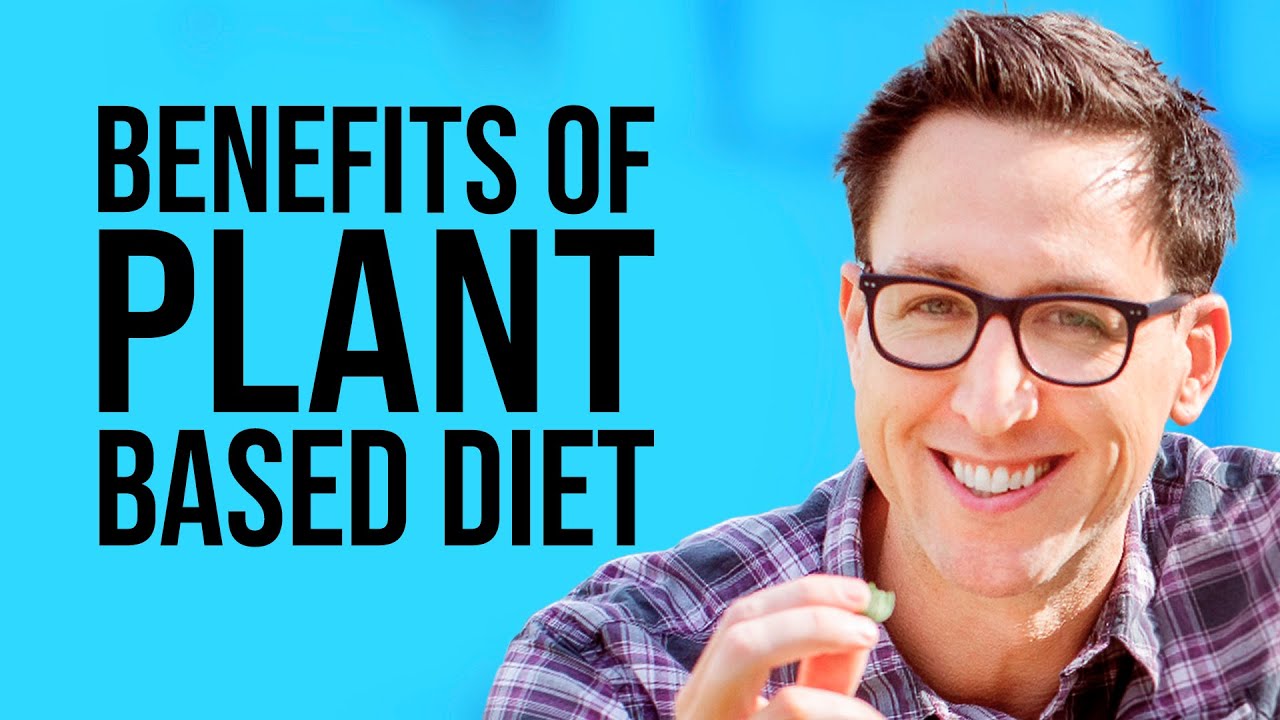
Gut Health Expert on How Fiber Optimizes Your Microbiome | Dr. Will Bulsiewicz on Health Theory
Watch on YouTubeVideo summary
Dr. Will Bulsiewicz, a leading gut health expert and author of *Fiber Fueled*, argues that the single most powerful predictor of a healthy, biodiverse microbiome is the diversity of plants consumed in one's diet. He explains that humans are not autonomous masters but rather co-evolved with trillions of microbes—bacteria, yeasts, archaea, viruses, and parasites—that outnumber our own human cells by 39 trillion to roughly 100 billion. These microbes play a critical role in epigenetics, influencing which genes are turned on or off, while also regulating digestion, immunity (70% of the immune system resides in the gut), metabolism, hormone balance, and brain health. Bulsiewicz emphasizes that just as ecosystems like the Amazon rainforest rely on biodiversity for stability, the human gut requires a wide variety of plant fibers to thrive; every unique type of fiber feeds specific families of microbes, fostering an environment where good bacteria can coexist with bad guys in harmony rather than eliminating one group entirely. The conversation highlights how modern lifestyles have devastated this internal ecosystem through over-sterilization, excessive antibiotic use, and a diet lacking in diversity. Bulsiewicz notes that while his wife Lisa suffered from severe microbiome issues due to a catastrophic event requiring immediate weight gain before reintroducing plants "low and slow," the average person can rebuild their gut by returning to an authentic lifestyle similar to 100 years ago when people consumed locally sourced, unprocessed foods rich in fiber. He clarifies that while humans do not produce enzymes to digest fiber directly—relying entirely on our microbiome's specific digestive enzymes to break it down into short-chain fatty acids—we can still handle fats and proteins via pancreatic enzymes like lipases and proteases. Consequently, restricting vegetables due to fear of intolerance often weakens the gut over time; instead, individuals should view dietary restrictions as a temporary measure akin to knee rehab, slowly reintroducing fiber to strengthen the "muscle" of their digestive system until they can tolerate a diverse diet again without pain or restriction. A significant portion of the discussion addresses saturated fats and specific foods like coconut oil, which Bulsiewicz suggests may induce dysbiosis by increasing bile release that promotes the growth of *Bilophila wadsworthia*, a bacterium linked to inflammatory bowel disease (IBD) and colorectal cancer when it emerges in high numbers. Citing a pivotal 2014 study published in *Nature* led by Warrens David, he demonstrates how switching from an animal-based diet with zero fiber to a plant-based one can enrich beneficial bacteria producing short-chain fatty acids within days, whereas consuming saturated fats shifts the microbiome toward harmful species like *Alistipes putredinis*. Furthermore, Bulsiewicz debunks the notion that probiotic capsules are necessary for fixing gut issues; instead of introducing foreign microbes that often pass through us without sticking, one should focus on feeding existing native bacteria with prebiotic fibers found in whole foods. He also points out that our microbiome turns over a new generation every 20 minutes, meaning dietary choices made today will alter the microbial landscape by tomorrow morning. Beyond diet and fiber intake, Bulsiewicz outlines essential lifestyle factors for gut health, including adequate sleep to avoid blue light exposure at night, regular exercise, and even getting pets or spending time with loved ones to share microbes and increase biodiversity through social connection. However, he stresses that physical healing cannot occur if underlying trauma—whether emotional, psychological, sexual, or physical—is not addressed first; unresolved stress acts as an open wound that festers until the root cause is treated in a clinical setting. For those suffering from conditions like Crohn's disease or ulcerative colitis, while fecal microbiota transplants (FMT) have proven highly effective for curing *C. diff* infections by restoring balance without destroying existing flora, Bulsiewicz cautions that FMT alone will not cure chronic inflammatory diseases unless accompanied by a sustained plant-based diet and lifestyle changes to prevent the old dysbiotic state from returning within weeks. To achieve optimal gut health, Bulsiewicz recommends aiming for approximately 30 different plants per week rather than obsessing over hitting an exact number or relying on fiber supplements like Metamucil as a primary solution. He introduces his "F-GOALS" acronym to guide food choices: Fruit and Fermented foods; Greens and Whole grains (including whole wheat, oats, barley); Omega-3 super seeds like chia, flax, and hemp; Aromatics such as garlic, onions, and shallots; Legumes including sprouted lentils for sensitive guts; Sulforaphane-rich broccoli sprouts which Johns Hopkins studies show can prevent cancer; Shrooms (mushrooms) to boost immune function; Seaweed or sea vegetables offering unique fibers. He acknowledges that while his personal diet is now 60% animal and 40% plant, he advocates for a shift toward being more plant-based because the science supports it as the path forward for most people. Ultimately, whether one follows a vegan lifestyle like Dr. Bulsiewicz or maintains a mixed diet with significant fiber intake, the goal remains to feed the microbiome diversity to restore function and prevent long-term instability in this vital internal ecosystem.
Read the full video transcript
The single most powerful predictor of a
healthy microbiome, of a bio-diverse
microbiome,
was the diversity of plants in your
diet.
Hey everybody, welcome to another
episode of Health Theory. I am here with
somebody that is going to challenge so
much of what I've been thinking, and I'm
excited for you guys to hear this stuff.
It's really powerful. Dr. Will
Bulsiewicz, thank you for joining me
today.
Tom, it's a it's a pleasure to be on the
show with you, my man. And I have to
tell you that for the listeners who are
at home right now,
you said my last name without asking me
how to say it, and you said it
perfectly. And so I have to give you
props right off the bat because in my
entire life, and I'm 40 years old, I
don't think I've ever heard someone say
it with such confidence. That's funny.
And so I have to give it to you there.
Well, thank you, good sir. It's uh I had
to rehearse that like a zillion times. I
have said your name now so many times. I
didn't want to didn't want to mess it
up, so glad I nailed it. And now I want
to dive into So, about six or seven
years ago now, um my wife had just a
catastrophic event, and people that uh
are familiar with the show will have
heard this story, so I'll keep it quick,
but uh went from thinking everything was
fine, and she has a threshold event, and
then now all of a sudden for a year our
lives were completely put on hold from a
microbiome issue. But at the time, I had
probably before that happened, only
maybe six months before that, learned
that there was a thing called the
microbiome. And the punchline, of
course, is that I had to start
researching about the microbiome, and
that was why I ended up doing this show
cuz I was reading so much about the
microbiome.
Uh but where we ended up was like
vegetables are are coming for you. They
are You have to be so careful with
vegetables, but meat meat you can eat
with impunity. And that was like our
first sort of safe place. And it's only
been in the last couple of years that
I've started to go, "Ah, god, like all
or nothing stuff just makes me nervous.
So, let me really try to push the
boundaries and see what the vegan
vegetarian community have to offer." So,
I'll say that I've gone from um really
comfortable with a true um
all meat carnivore diet
and less interested in vegetables to now
probably about 60% of my calories come
from animal products and 40% from
vegetable. And I'm perfectly happy to
take it all the way to 100, but there's
going to be a few things today that I
need to better understand.
So, with that, let us begin with one
simple question.
How do you rebuild a microbiome?
And to answer that, if you can just tell
us first like what is a microbiome for
people that aren't super familiar.
Oh my gosh, Tom. I have so much that
that you have loaded you have loaded me
up here with stuff that I want to talk
about. So, you know, we think of
ourselves and we were raised you and I
are probably pretty similar in age. We
were raised thinking of ourselves as
these powerful autonomous creatures.
We're the humans. We're the masters of
our domain.
And what we have failed to realize and
understand until very recently is that
we're not alone.
Covering us from the top of our head to
the tip of our toes are an innumerable
number of invisible microbes.
And these microbes when I say microbes,
what I'm talking about, I'm talking
about bacteria. Talking about yeasts.
I'm talking about these things called
archaea
that have been on this planet for 4
billion years.
Talking about potentially parasites.
Um and there's a role for viruses, too,
by the way.
So, now they cover all external
structures and the number is
kind of absurd. So, you know, for
example, if you hold up your thumb and
you take a look at it, right there on
your thumb, there are as many microbes
as there are people in the UK.
It's crazy to imagine um because they're
invisible, but they're there and they're
most concentrated inside of our colon,
which is our large intestine.
We have 39 trillion microbes. That's the
equivalent of taking 100 galaxies full
of stars, compacting it down, and
putting it inside your intestine, and
there they are, 39 trillion microbes
outnumbering your human cells. You have
more microbes living in and on you
than you have human cells. So, now this
microbiome, Tom,
they're not just there.
They're not just freeloaders
like leeching off of us.
They are there with a purpose.
They have been there since literally day
one of humanity. So, if we want to talk
about evolution,
forget human evolution. We need to start
talking about coevolution.
Coevolution, which is humans
and their microbes rising and falling
together. And that's what we've done
over 3 million years. And actually the
DNA, Tom, if you think about it, we
cracked the genetic code 20 years ago.
And when we did this, Bill Clinton was
the president, and he actually called a
press conference, and like Tony Blair
was there, and all these famous people
were there because they thought that
they were going to cure cancer and
reverse heart disease by cracking the
human genetic code.
It hasn't worked out. We still have
cancer, and we still have heart disease.
Why?
Because 99.5%
of our genetic code is not ours.
99.5% of our genetic code comes from
these microbes that live inside of us.
Not to mention that our genetic code
that we have, these microbes have the
ability to flip switches
and actually affect which genes get
turned on or get turned off. We call
this epigenetics. People have heard of
this epigenetics, your microbiome plays
a critical role in epigenetics. And Tom,
you know, this evolutionary pattern that
took place,
it's more than just them regulating our
genetics. They're affecting our
digestion, our access to nutrients,
our immune system. 70% of our immune
system lives inside of our gut. That's
like the most concentrated source of the
immune system.
They're affecting our metabolism.
They're affecting our hormone balance,
our brain health, our mood, our
cognition, the way we think. It's like
you take a step back and you just
realize
everything that matters in human health,
these microbes are playing a part in it
because it's talking about ecosystems.
And ecosystems can be massive, right?
Like our planet, we can think of as one
giant ecosystem.
They could be very large things that we
all sort of recognize as the classic
ecosystem, like the Amazon rainforest or
the Great Barrier Reef.
But then like literally living inside of
every single one of us,
this gut microbiome, this this is an
ecosystem.
And the same rules that apply to the
Amazon rainforest or to the Great
Barrier Reef apply to this ecosystem
that lives inside of us,
where it's about balance.
It's about harmony.
It's about biodiversity.
And when you have biodiversity, what
that means is yeah, there's good guys
and yeah, there's bad guys, but guess
what? They all live together in one
balanced harmony and they're all
bringing something that they contribute
to the ecosystem. And when you start
knocking them off and eliminating them,
you contract that biodiversity and what
you find, regardless of what ecosystem
you're talking about, whether it's your
gut, whether it's the Amazon rainforest,
or whether it is planet Earth,
when you lose biodiversity, you you are
creating instability within the
ecosystem. And that unfortunately is
what we're facing in the 21st century
when it comes to the gut microbiome for
a lot of people right now.
Yeah. So, you know, just in going back
to my initial thing that I want to make
sure that we don't wrap this episode
until people know how to rebuild because
so many people right now they've just
battered it through the things you're
talking about now, antibiotics, over
sterilization,
um
terrible diets.
So, what what are the things that we
start doing that will meaningfully
allow us to get that biodiversity and
biodiversity is probably where we should
start.
Assuming someone has
hurt their biodiversity, how do we begin
to build it back?
Well, I think to answer this question
properly for you,
I have to separate out what I want to
say if I were taking care of your wife
Lisa 6 years ago
versus what I want to say to your
audience right now who isn't necessarily
in such a dire situation as she was 6
years ago.
So, um
you know, with regard to the average
person who's listening to this show,
think about how much life has changed in
the last 100 years.
Like literally 100 years ago people were
still had like, you know, horses and
carriages and buggies and, you know,
they were going to their local market.
Everything was locally sourced. There
were no processed foods.
And, you know, we didn't have all these
chemicals that we apply to our skin or
to our hair on a daily basis.
And we didn't, you know, we spent a lot
more time outdoors. We weren't watching
television, watching Netflix 100 years
ago.
And so, we what we need to do is we need
to get back to a more authentic style of
life and that doesn't mean rolling
around in the dirt. I I I kind of find
that idea to be like a little bit silly.
It's more that we need to get back to we
need to exercise.
We need to actually sleep. We need to
get away from blue light late in the
evening.
We need to get away from the foods that
are just like completely filled with
these chemicals that literally these
microbes were not exposed to 100 years
ago and now this is making up the
majority of calories for most Americans.
Talking about the processed foods.
So you you think about what are the
things in our modern lifestyle that are
having a negative consequence
and then you flip your attention to how
do we rebuild it? And I do want to talk
about that in a lot more detail than
what I'm about to say.
But I think one of the major issues and
what I wrote my book about is that we
live in a society that is completely
devoid of fiber consumption.
And fiber is the preferred food of these
gut microbes. This is what they thrive
off of. They grow stronger because of
it. And if we're looking at biodiversity
in the largest study to date to allow us
to correlate dietary choices and
lifestyle choices to the biodiversity
within our gut microbiome
they found they answered this question.
The single most powerful predictor of a
healthy microbiome, of a biodiverse
microbiome
was the diversity of plants in your
diet.
And that's because every single plant
has its own unique way fiber's not just
fiber. Like we've been talking about
fiber since I was a kid as if it's like
it's just Metamucil. You stir the orange
drink so grandma can poop.
And it's
that's not the way it works.
Every plant has its own unique types of
fiber.
Those unique types of fiber feed unique
families of microbes.
These microbes are picky eaters.
Not every microbe wants kale.
And so when we make different dietary
choices in terms of the broad broadening
out the biodiversity within our diet
this leads to more different species of
microbes being fed and it leads to more
biodiversity within our gut microbiome.
And we have a couple of studies to back
that up at this point, Tom.
But you know, transitioning for a moment
over to your wife Lisa and six years ago
let me just say that
if I am taking care of a person, like I
personally
I think you know this about me. I don't
know if your audience knows this about
me until right now.
I personally am vegan.
But I didn't I'm not
teaching the science because I'm vegan.
I'm vegan because the science led me to
where I am today.
And I teach plant-based. Plant-based
meaning fruits, vegetables, whole
grains, seeds, nuts, and legumes.
And you said Tom that you're 40%
plant-based. And that's about 35% more
plant-based than I was 10 years ago.
So, to me, I want to take each
individual person
and I want to move them in the right
direction.
If I were taking care of your wife Lisa
6 years ago,
I wouldn't say to her, "Hey, you need to
go vegan."
That wouldn't be the conversation.
What I would do is I would first try to
get her to gain some weight because
she's in a calorie deficit and that's
why she's losing weight.
And I would
Look, there are going to be some people
that don't like that I'm going to say
this,
but in that setting, I totally get
consuming animal products.
Because it is it is high-calorie.
And in that setting, in a person who's
in a calorie deficit,
they need that.
And we need to get them back to balance
because she is in a catabolic state. But
when we get her back to balance,
my goal
is to start to reintroduce these foods.
By foods, I'm meaning the plants.
My goal is to start to introduce these
gently,
low and slow,
to rehabilitate her gut,
to build it up, and make it stronger.
Because what I want
get super hard on that in a second.
Before we move off the meat thing, I
want to figure out why is it if in and
we may not have the literature, so maybe
this is just a sort of gut instinct, but
why is it that for a lot of people and I
don't know if it's a majority of people,
but there's certainly a contingent of
people for whom it's the whether it's
FODMAP foods or it's fermented food
whatever, there's like vegetables can
trigger something, but I don't often
hear of somebody that's having that's
had a
significant disruption to their
microbiome, I don't hear often times
that they're struggling with um
meat. So, what I'm trying to figure out
is why is the safe thing to to remove
vegetables? Why are vegetables
problematic when you have dysfunction?
Sure. If the reason why is because we
there are an innumerable number of types
of fiber that exist in nature.
And there's extreme complexity to this
fiber.
And so as a result, we actually evolved
to allow our gut microbes
to handle the digestion of fiber for us.
So, they have specific digestive enzymes
that they use. And you know, Tom, we we
actually as humans, we don't have the
innate enzymes
to digest fiber.
If if we were sterile, if we didn't have
a gut microbiome, fiber would literally
go in the mouth and it would come out
the other end.
But, we're not sterile. We have a gut
microbiome and they have these enzymes
that they use to basically break down
the fiber into its components
and and then release it into basically
short-chain fatty acids, which we can
talk about in more detail what those
are, but
we rely on our gut microbiome to break
down fiber and people who suffer with
food intolerances,
it is because they are struggling to
break down the complex carbohydrates in
their diet.
And it's because they lack the enzymes
that they need in that moment
to process the fiber.
Now, if they reduced their fiber intake,
they would be able to tolerate it.
And in that process, they would actually
start to build up the gut microbiome in
a way where over time, like a muscle,
that muscle grows stronger as you train
it.
So, when you start introducing fiber, if
you go low and slow, you start to ramp
it up slowly over the course of time,
that's how you go from having a weak
muscle to over the course of time
eventually building up the strength of
that muscle so that it is more capable
of processing the fiber.
And the end result, the reward for doing
that, is that the dietary restrictions
go away.
And your gut becomes stronger, and you
restore function to the gut. And so,
there's a great reason for us to want to
do this because when we restrict our
diet,
we feel better in the short term,
but we pay the price in the long term
because our gut actually grows weaker as
a result of those choices.
And I would make a quick analogy, I hope
you don't mind, to a person who hurts
their knee.
Right? So, if you hurt your knee,
we all know what we're going to do.
We're going to rehab.
You work your way through rehab, and you
know that there's going to be some pain
during the process of rehab, but you
slowly push yourself a little bit more
every single time you go until you build
that knee back up, and then you're back
to playing basketball again.
We have another choice.
The other choice is to stop walking.
And if you stop walking, you will never
feel pain in that knee for the rest of
your life.
But the problem is your muscles grow
weaker, you start gaining weight, you
get diabetes, you get high blood
pressure, you get heart disease.
We know where that's going, right? So,
we all make the choice to go through
rehab to rebuild the knee, and that's
why I'm saying when it comes to the gut,
rather than contracting our diet, which
makes us feel better short term, but
hurts us in the long run. We need to
instead have a strategy not to hurt
ourselves, but to slowly reintroduce
these foods to build it back up so that
we can restore function and get back to
eating without any restriction.
So,
do we do we need the like so we need the
microbiome to digest fiber? Do we need
the microbiome to digest fats and
protein? Or is that why that is easier
to handle when we have uh dysbiosis?
We don't need the microbiome to to
process fats and protein. Our pancreas
has most of the enzymes that we need to
be able to do that. So, the pancreas is
cranking out enzymes like lipases and
proteases. Lipases for fats, proteases
for proteins. Um our our gallbladder and
our liver is producing bile, which helps
us to absorb the fat. But But make no
mistake that all dietary choices,
no matter what they are,
every single food that you put into your
mouth
will change your microbiome.
And there's a number of different ways
that that takes place. Sometimes it's
the choice that you make that is
enriching certain species because that's
their preferred food.
Sometimes it's the fact that the other
species are not being fed, and so they
grow weaker.
And so, with every single dietary
choice, we are contributing to the
balance that exists within our
microbiome.
Okay, so now So, that's really helpful,
and I can't believe that I didn't know
that. So, thank you for that information
on the meat. Um that makes sense. So,
okay, you've got dysbiosis. You've
uh antibiotics, washing your hands too
much, uh maybe had an eating disorder at
one point. You've you know, even I will
say that unintentionally I had an eating
disorder because I was trying to get
really lean. So, I was just basically
eating chicken breast and broccoli for
like 2 years. It was amazing. I got
shredded. I hated my life, and I was
inflamed everywhere you can possibly
imagine. It sucked, but I got shredded.
It was wonderful. Uh
so, that was unintentional, right? It
wasn't like I was ever out of control
or, you know, binge and purge or
anything, but I would say that sort of
overly restricted would have a very
negative impact on my digestion. Okay,
so you've made poor choices, didn't do
it on purpose. I'm not judging you.
Hopefully, you're not judging yourself.
All the grace in the world, but here we
are. We have a microbiome that's got
issues.
So, I fully understand the hey, you've
got some people the I'm in analogy here,
but you've got some of your bacteria,
um all the things that are supposed to
be there, they're in a weakened state
because you haven't been feeding them
the things that they need, right? Your
vegetable intake is way too limited or
non-existent.
So, the ones that are still there, I get
it. You can make them more robust by
feeding them the things you need to feed
them.
But, I have a base assumption, and maybe
this is incorrect, that some of them
have have been eradicated. And so,
they're not there anymore. And so, now
my question is, can I just eat an apple,
which has its own microbiome? Can I just
eat kale without washing it? Like, how
do I get true How do I reintroduce
diversity?
Yeah. So, this is These are These are
great questions, and to be honest with
you, some of the answers we're still
trying to figure out.
So,
in terms of like adding microbes back,
there was actually a recent paper that
came out where they called into question
whether or not we should have a daily
recommended microbial intake
because our food is hyper-sterilized.
You know, you think about preservatives
that exist in our processed foods. The
way that they preserve our food
is by retarding the microbes, by keeping
the microbes out cuz it's the microbes
that break down and process it.
So, um so, what are the foods that can
introduce microbes back?
Well, uh obviously fermented foods.
But, living foods, like raw foods,
contain a microbiome. All plants, all
life on this planet has a microbiome.
They looked at an apple.
And the apple has 100 million microbes,
and over a thousand species that exist
as a part of the apple. Is it only on
the skin, or is some of it inside the
the meat of the apple?
Actually, the most concentrated place
was the core.
Which is the part that we throw out.
Yeah.
So, I mean, you would think it's on the
skin, but actually the most concentrated
place was on the core. So, so the point
being that when we eat these natural
foods, that if you think about 100 years
ago, this is what people were eating.
When we eat these foods, we are having a
microbial exchange that takes place
between the food, which is our
environment,
and the microbiome inside of us, and
that may be of benefit to us as humans.
All right. So,
if we were going to have a daily
recommended microbial intake, what would
that look like? Or is it your kombucha?
Is it a probiotic tablet? Um,
how do we
intelligently
go about taking in our daily microbial
intake?
You know, I actually,
to be completely honest with you, Tom, I
would actually pivot in a different
direction.
Because we're talking about microbial
daily microbial intake,
which makes us focus and think that we
need probiotics to fix our gut issues,
and that's simply not true.
We have probiotic bacteria, the same
bacteria that you will find in a
capsule,
already living inside of us.
And we just simply need to feed them.
And if we feed them, they will multiply.
And you will have a lot more of them
than you would ever find in a probiotic
capsule.
And they're actually inherently yours,
which means that they'll stick around.
One of the problems with probiotics is
they don't stick. They just run through
us.
So, from my perspective, do I think that
we benefit from consuming raw foods,
from consuming fermented foods? On some
level, I do.
Is that the backbone? Is that the
direction that we need to go with
things? No.
The problem that we have really, Tom, is
that
the average American is eating 17 g of
fiber per day.
Our ancestors ate 100 g or more of fiber
per day.
And the recommended amount is 25 g for
women, 38 for men. 95% of Americans are
not hitting the mark.
And because of our fiber deficiency,
our fiber deficiency is causing us to
suffer consequences because our gut
microbes are not being fed. That's the
issue.
Okay, so
um
my hypothesis, just to like put these
together. So, my very ignorant, very
layman's, like N of 1 wife just
struggling through that thing, but
really know nothing. My hypothesis is
she just killed off some of the species.
And we've had her tested multiple times,
and who knows if the tests were
accurate, but they always come back that
she has very little diversity.
Um
and even though she's been really good
about reintroducing food, she just keeps
hitting limits.
Given how much clinical experience you
have, you colonoscopy people all day,
every day. You work with people in and
out. For you, what you've seen over and
over and over is low and slow. You
reintroduce species, you start radically
increasing the variety, and the microbes
are there. They've just been so underfed
for so long. You're putting the gut
through rehab, and they will come back.
Uh so, generally speaking, yes. I do
believe that to be true.
But let's let's not narrow this down to
like what I do for a living, where
complex people your your wife Lisa comes
into my office 6 years ago.
Is she going to walk out after the first
visit saying, "Doctor B says I need to
reintroduce fiber low and slow." and go
home?
Absolutely not. Like, that would be
ridiculous. There's so much more
complexity to it, and these are people
who are suffering with complex digestive
issues. And sometimes I'm trying to
attack other things, not just doing
dietary intervention.
And sometimes
I'm putting the dietary intervention on
hold
while I work on other parts of what's
happening with their gut. Tom, their
digestive function is more than their
microbiome.
There are aspects that are really
important like motility
or sensitivity of the nerves.
Our gut is completely carpeted with
nerves. We actually have five times more
nerves in our gut than we have in our
spinal cord.
They're constantly feeling and sensing
like literally right now as we speak.
And we know for a fact that people that
have had a damaged gut develop something
called visceral hypersensitivity.
Which means that when they eat food
food that other people wouldn't even
react to, other people would be like,
"Whatever. No big deal."
That person suffers. They feel pain. And
it's because the nerves are not
functioning the way that we need them
to.
And so for me, you know, from a dietary
perspective, is my strategy typically to
introduce plants low and slow, try to
bring them back in, try to restore
diversity to their diet? Absolutely,
yes, it is. But that's that is a
strategy that gets invoked at certain
points on that path, not necessarily
right from the beginning.
Okay. So, obviously fiber, you've been
very clear about that. Not for
everybody, it's got to be timed well,
but I think people understand that one.
Um
what are some other ones? You've
mentioned sleep, you've mentioned
exercise. Like, what what's else what
else is in the basics?
Well, let's start with the basics. The
step number one for every single patient
is always the same. What are we
treating?
So, we need to know what we're treating
if we want to effective at treating it.
Otherwise, we're just throwing mud up
against the wall and seeing what sticks.
So, to me it's stepping it's working
into that diagnostic uh tool bag to try
to identify what it is that exactly is
the root of their problem.
Do you do fecal testing or something
else?
In some cases in some cases, I would
argue that the three most powerful tools
that I have
are upper endoscopy, colonoscopy, and a
CAT scan.
Between those three things, I can
diagnose probably 90 to 95% of the
patients who come to my office. Because
what I'm doing is I'm taking your
history. You tell me your story. Tell me
tell me what's going on. And I'm going
to integrate that with what I'm seeing
in these pictures and try to put the
puzzle pieces together.
And so for me, that's part of the
powerful information is with my own
eyes, you know, whether it's endoscopy,
colonoscopy, or a CAT scan. I'm using my
own eyes and trying to understand based
upon the story that you're telling me in
the clues that I'm hearing, you know,
what what's the scoop here? What could
be potentially causing this?
Let me give a couple quick things that
can be common causes of food sensitivity
for people that are very reversible and
they need to hear this.
Number one,
constipation.
If you have gas and bloating, the number
one cause of gas and bloating in my
clinic is constipation.
You could poop every day
and still be constipated.
You could have diarrhea
How's that possible?
If you don't empty.
If you don't completely empty. Yep. So,
So, constipation is the manifestation of
symptoms when you are incompletely
evacuating
or inadequately evacuating.
So, if you poop, but it's just a little
nugget
and you strain to get it out. There's a
lot of people like this. I see them
every day in my clinic.
And they strain and they poop and
they're like, "Doc, I poop every day."
I'm like, "Yeah, but do you really do
you really feel like it all comes out?"
They go, "No, it just doesn't feel like
it. Sometimes I have to poop again like
30 minutes later.
That person's constipated and they're
backing up. You know, you if you poop
out 70% but you trap 30%
that 30% is going to start compounding
every single day until you have a
serious constipation issue.
And Tom, you could you could literally
have diarrhea.
And there's this thing called overflow
diarrhea
where the cause of diarrhea is actually
constipation.
The solid stuff backs up.
The liquid sneaks through the cracks and
the crevices and explodes out your
bottom as a liquid stool. And you go to
your doctor, you're saying, "I'm having
diarrhea." And they say, "Take Imodium."
And you make the problem worse.
So, constipation
with those patients, get the bowels
moving. That's step one. In fact, I will
not start dietary treatment on a person
who's constipated until I get their
bowels moving. How do you get their
bowels moving without changing the diet?
Many times, uh, magnesium. Magnesium can
be a great first choice.
So, completely natural.
Most Americans actually are low in
magnesium. It's not found very easily in
our diet.
And, um, a magnesium supplement can do,
uh, wonders. Also good good for
headaches, good for depression,
um,
good for sleep.
So, a number of other benefits to
magnesium.
Uh, celiac disease. Celiac disease is
incredibly common.
And the blood test for celiac disease is
often wrong. There's two ways that you
can know whether or not you have celiac
disease. One is to do an endoscopy and
take biopsies.
And the second is to do the genetic
test. But celiac disease, I have
diagnosed I diagnosed celiac disease
three times in one day.
Wow.
Yeah. So, it's way more common than
people realize.
And the third thing is gallbladder. The
gallbladder is incredibly common and it
can cause pain after meals. And it's not
always the classic oh, pain in the right
upper quadrant radiating to your back.
It could be nausea. It could be pain.
One of the key questions for the
gallbladder for me is you wake up in the
middle of the night with pain?
Cuz the gallbladder doesn't sleep. So,
if you wake up in the middle of the
night, that's not irritable bowel
syndrome.
That can be your gallbladder. Mhm. So,
so anyway, you know, to me diagnosis
comes first. We need to know what we're
treating.
And um and then, you know, I mentioned
some of the tips that I or tricks that I
use. One of the other things that I
often do in my clinic, Tom,
is um
So, I talk about fiber. I'm a big
believer in dietary fiber, meaning real
food.
But, I find dietary supplements uh fiber
supplements to actually be very helpful.
For people at the beginning of their
journey, not the guy that's doing 600
different vegetables, I assume.
I take them myself. Really? Why?
I take them myself because uh
So, I guess I am going to be admitting
this very publicly, but like I noticed a
difference in my bowel movements.
Interesting. So, and I eat a very
healthy
be eating more vegetables? Like, I'm
really surprised that given what I
assume your diet is wildly diverse,
obviously 100% plant. So, how is it that
you need more fiber?
It's It's not so much that I need grams
of fiber. It's that what I'm doing is
I'm supplementing the prebiotic. And the
prebiotic is the food that feeds the
microbes inside our gut. And I'm
targeting them. I'm targeting them with
basically what they need, the precursor,
to create short-chain fatty acids. The
um
the kale, for example, is this mix of
soluble and insoluble fiber, and it's
embedded in the plant, and
you know, that's all really good. I love
that. But, when I want to target
specifically the microbiome to create
butyrate, acetate, and propionate,
the prebiotic fiber supplement,
when chosen the right one, it allows me
to do that.
And I see amazing benefits to my
patients who
um
need more fiber. But Tom, I also see
amazing benefits in my patients who are
suffering with digestive issues and are
plant-based or vegan.
And doing this sometimes gives their gut
the support that they need to get over
the top and really improve their diet.
Very interesting.
Okay, so
I'm definitely understanding your
strategy in terms of what the talk it
is, how you're making the assessment of
where somebody's at and what they need
to change. Now, getting into some of the
dietary things that you talked about in
your book or I've heard you talk about
in other interviews that I found
surprising.
Um
talk to me about
um
fat, specifically saturated fat. Like, I
thought for sure you'd at least go to
bat for coconut, but you actually threw
shade at coconut. Like, I've I've heard
anybody throw shade at coconut. Um
what is it about saturated fat that's
problematic?
Well, when it comes to the microbiome
specifically and and you know, let me
say
there's a lot that we're continuing to
learn.
But
I of what I've seen to date when it
comes to saturated fat, I have concerns
about the effect that it has on our gut
microbiome.
And so
I'll give you an example. You know, Tom,
what we look for in research, what I'm
looking for
is not just one study that says
something.
I'm looking for layers of evidence
coming from different perspectives that
are all pointing me in the same
direction.
And when it comes to saturated fat and
the gut microbiome, we have preclinical
studies
and also animal model studies that
suggest that it induces dysbiosis.
And the mechanism that they're pointing
to is that it leads to increased release
of bile.
Bile to help us to process the saturated
fat.
And the bile actually it the dynamic
within the microbiome
to promote the growth of more what are
called biophilic bacteria.
So, an example of one of these is
Bilophila wadsworthia.
Bilophila wadsworthia in these studies
where they look at saturated fat starts
emerging, starts popping out.
And Bilophila wadsworthia has been
associated with increased risk of
inflammatory bowel disease.
There was a study that was done. This
was a study actually that changed the
way that I ate in 2014.
It was published in the journal Nature
and people can Google this. The first
author, his name is Warrens David. First
name Warrens, last name David. So, look
up David Nature 2014, you'll find this
paper.
And basically what they did, Tom, these
guys weren't involved in diet wars.
These are scientists. They're trying to
understand how the microbiome works in
humans.
And what they did was they set up a
group of humans with two polar opposite
diets.
Five days of completely plant-based
versus five days of completely
animal-based. So, eggs, dairy, and meat.
Of course, the animal-based diet, the
fiber content was zero because there is
no fiber in animal products.
And what they saw was that number one,
the microbiome changes in less than 24
hours, whatever dietary choice you make.
So, literally the food that you're
eating today will have an effect on your
microbiome tomorrow.
Can you tell people cuz you give a
really crazy stat in the book about how
fast the microbiome actually um has
generations? I was super shocked by
that.
Yeah, so the microbiome turns over a new
generation every 20 minutes. It's crazy.
So, if you think about it, you know,
three generations of humans, like going
back to your great grandparents,
your microbiome's doing that in an hour.
In 24 hours, if you were to equate, you
know, if you were to equate the
microbiome
uh and how it's evolving so quickly like
this to human evolution,
24 hours for the microbiome would be the
equivalent to going back to the pyramids
for humans. That's so insane.
So, and and this is why these dietary
choices that we make can change things
so quickly because they're folding over
new generations. Boom, boom, boom. Every
20 minutes there's a new one coming.
So, the waves are coming fast.
Um
So, in this study, Lawrence David,
Nature 2014, 5 days of plants versus 5
days of animal products.
And what they saw was on the plant-based
diet, it they enriched the bacteria that
produce short-chain fatty acids.
And no surprise, you eat more fiber, you
eat more plants, you get more
short-chain fatty acids. They saw that.
But on the flip side, what they verified
for the first time in humans, which was
concerning,
was what they were also seeing in the
preclinical studies.
When you consume this
animal-product-based diet, you increase
the bilophila bacteria
like this bilophila wadsworthia that's
been associated with inflammatory bowel
disease in just 5 days.
There was an increase in the bilophila
wadsworthia,
an increase in this one called Alistipes
putredinis, which has been associated
with colorectal cancer,
and an increase in Bacteroides that's
been also associated with both
inflammatory bowel disease and
colorectal cancer.
In 5 days. Now, that doesn't mean that
in 5 days people developed inflammatory
bowel.
It just means that in 5 days of this
diet that is devoid of fiber, you are
shifting towards something that may
predispose someone who has a genetic
predisposition, it may put that person
over the edge, and now they manifest
inflammatory bowel disease. So,
you know, the point from my perspective
is that when we see it in the
preclinical studies and the animal model
studies, and then it carries into human
studies, and we're seeing the same
effect, boom, boom, boom.
That's what has me concerned. And so,
you know, the saturated fat is a much
bigger topic.
It's not just the microbiome.
But if we're going to focus on the
microbiome today, that's my concern when
it comes to saturated fat. Mhm.
Okay, so I want to start putting like
really fine points on things so that
people can walk away knowing what the
ideal lifestyle looks like from your
perspective.
So, microbiome is involved in just
immeasurable number of things in your
life that you probably don't think
about. Um, that you've talked about the
communication back and forth. Uh, you
talked about the fact that your immune
system, 70% I think you said, um, is in
the gut, which is utterly fascinating.
Um,
we need as wide a variety of plant
substances as humanly possible.
You've talked about sleep.
Think you mentioned exercise, but I
don't know that we went too deep into
it. Walk me through, so so we've got
those pieces now. What are some other
key pieces that people should be aware
of, um, other than plant-based, sleep,
fiber?
What are the What are the keys?
Get a pet.
Interesting. Didn't see that coming.
Why? Yeah.
Uh, because they have a microbiome, too,
and we will share microbiome. We will
share microbes with, uh, the people that
we surround ourselves with. So,
um, get a pet, love on your spouse or
significant other, the people that are,
um,
that you share and cohabitate with.
You start to share microbes, and you
start to become more similar in terms of
your microbiome to one another.
So, but, you know, uh, perhaps the most
important thing, Tom,
the people that I see in my clinic,
because I take care of a lot of people
who have failed with other doctors.
They do everything right. They eat, you
know, they eat a diet that anyone would
recommend. They sleep, they exercise,
they meditate, they do yoga. They're
still sick.
If you are suffering from
trauma,
an abuse history,
whether it was physical, sexual,
emotional, psychological,
if you don't directly address that
issue,
you will not heal your microbiome.
The stress that is driven by that
underlying trauma history
is an open wound that persists and it
festers until it is addressed. And so in
my clinic,
when a person feels comfortable enough
with me that they trust me that to share
that kind of information with me,
typically it takes four or five visits,
when they do that,
I always know
this is where we need to go next.
And we focus on working on that
specifically and we get them the support
that they need to heal.
That's interesting. The psychology of it
all is definitely not something that
I would have expected, you know, being
in this now as long as I have. What do
you see as the future of the microbiome?
Is Is it going to be FMTs? Is it just
fixing the diet? Um
what is it?
Okay. Uh
so, let's talk about FMTs if if you
don't mind for 3 minutes. Please. Cuz I
think I think that
people will be very interested in this
topic.
So, FMT, fecal microbiota transplant.
Um basically what that means is that you
are taking someone else's poop
and transferring that into you.
And it sounds completely
How do you get it in?
So, typically what we do is we'll do a
colonoscopy.
And during the colonoscopy, the patient
who's receiving the FMT is completely
asleep,
not aware what's going on. It's a
routine colonoscopy, but during the
exam,
you basically will release the fecal
transplant through a syringe.
Because it's a liquid, it's not like a
solid poop. You're not putting solid
poop into a person.
It's a liquid. You spray the liquid into
their colon
and it sets in and it takes hold.
And the history here is that
this has turned into the go-to treatment
for one specific infection called
Clostridioides difficile, C. diff.
C. diff is a nasty bug, causes diarrhea,
like bloody diarrhea.
And I've had patients who um lost their
colon because of C. diff.
And people have died. People have died
of this infection. In fact, 10 years
ago, there were about 30,000 people per
year dying of C. diff infection.
Because we didn't have a good treatment
10 years ago
until we did the most radical, absurd
thing
and started using fecal transplant.
And when we started doing fecal
transplant
almost every single time
within 24 to 48 hours, that patient is
cured.
And basically what you're doing
is you're restoring a balance to the
microbiome. So, Tom, it gets back to an
earlier point that we made
which is I said we need to get away from
trying to destroy everything
and get back to empowering.
When you do a fecal transplant you're
not destroying you're restoring. You're
giving a microbiome back and then that
microbiome
just naturally suppresses this nasty C.
diff infection.
And so, now it works great for
infections.
We are studying it for a number of
different conditions. There's literally
hundreds of studies ongoing right now
looking at what this is going to do.
Do I believe that it's going to cure
Crohn's disease and ulcerative colitis?
No.
I thought you were going to say yes.
Tell me why.
No, I'm sorry. I don't want to
disappoint you, but
Yeah, I know. So, well, I think the the
problem is this.
If you do a fecal transplant, like for
example, if I get a fecal transplant
but I don't change my diet,
then within three or four weeks, I'll be
back to the old microbiome that I had
before because my microbiome will start
evolving to my normal diet. Right. But
if you did eat the {quote} {unquote}
right way that we've been talking about
this episode,
would somebody with Crohn's, they get
the the reset, they get the FMT, and
then they eat the right diet. Let's just
pretend that they actually stick to it.
Um would that work or is there something
else going on in Crohn's that just makes
it too hard?
Maybe.
It might work. It might work. That's If
if we were to do the study, that's the
way that we would have to do it.
Makes sense. Okay, so when I was
researching you, I started making a list
of all the vegetables that I want to
keep in my house now cuz you inspired me
cuz you you often ask people like, "Hey,
how many vegetables would you say you
eat in a week?" And the honest answer
for me is probably I eat a lot, like 40%
of my calories, but I eat them from six
things.
So, what's the number that people should
be eating and what are some of the cuz
look, your whole thesis is diversity,
diversity, diversity. But now, give me
like give me some of the main players.
Won't be all of them, obviously,
um but you know, what are like that
dozen-ish
that people should really make sure they
have in the fridge?
Okay, so in the study that I referenced
before, which was the American Gut
Project, where they found the single
greatest predictor was the diversity of
plants,
the magic number in that study was 30
different plants per week.
Now, that doesn't mean that 30 is
magically better than 29, and 35 would
be better than 30.
But we want to strive to be up in that
arena, somewhere in the range of 30 per
week, which sounds like a lot, but if
you, you know, if you start doing things
like making smoothie bowls, you could
have like 12 on Monday morning in your
smoothie bowl and you're already halfway
there almost.
So, um with regard to what specific
plants, I actually had an acronym that I
put into the book.
It's called F goals. F goals, like F for
fiber.
So, F stands for fruit and fermented.
G stands for greens
and whole grains.
O stands for omega-3 super seeds. So,
I'm talking about chia, flax, and hemp.
If you ever make a smoothie, put all
three of them in.
A stands for aromatics, meaning like the
flavor foods, like garlic, onions,
shallots.
L stands for legumes. Legumes, great
source of fiber, resistant starches,
prebiotics.
And then S,
I had a couple things with S that I
wanted to do.
Um so, I really made S about
sulforaphane,
which is the phytochemical that is an
absolute cancer crusher
that you will find in broccoli sprouts.
Broccoli sprouts have this very
concentrated source of sulforaphane that
really, really helps to prevent cancer.
Uh Johns Hopkins has an actual center
where this is what they study is
sulforaphane and the effects on human
health.
But beyond sulforaphane with S, I also
believe in mushrooms, so shrooms,
and seaweed or sea vegetables. I you
know, I think that those are
opportunities where uh like sea
vegetables, for example,
most of us don't eat them at all.
They have unique sources of fiber. They
have unique nutrients. And there's
potentially a lot of benefit there. Mhm.
Okay, so now you've given us some
specifics there. Um
I'll tell you what made my list and you
tell me where I'm going right and where
I'm going wrong. So, uh
blueberries, blackberries, carrots, I do
baby carrots specifically.
I don't know if that matters. Uh
broccoli, kale, bok choy, collard
greens,
uh cucumbers, apples.
Those are sort of my There's a few more
Oh, celery. There's a few more that I
have on the list, but, uh, am I missing
any sort of obvious like powerhouses, or
is, you know, baby carrots Are they
going to kill me? Like, what How am I
doing?
Okay, so I First of all, I love all
those foods. I was, you know, as you
were reading them, I got particularly
excited about, um, the collards. I live
in Charleston, South Carolina, so I have
to.
And I like the bok choy. I thought that
was a good one.
Um, you know, what what would be
missing? I mean, I realize that, you
know, given the popular narrative in
nutrition, these might be considered
controversial by some, but I don't
really consider them to be
controversial.
I think whole grains and legumes, to me,
those are foundational foods for the gut
microbiome.
When I hear legumes, I think peanuts.
What else is a legume?
So, peas, lentils, beans, those are all
qualified as a legumes. And for the
person who has a sensitive gut, a great
place to start can be sprouted lentils.
Lentils are a little bit more gentle,
and when you sprout them, they become
even more gentle than that. And it
literally takes two, maybe three days to
sprout them, so it's easy.
But, you know, whole grains and and and,
uh, and legumes, Tom, when we've studied
them, people who consume these foods,
uh, they live longer with less heart
disease and with less cancer.
I mean, I I think that the evidence is
very powerful in that direction.
It would be so interesting to see more
and more studies come out that show
causation versus correlation, cuz I know
a lot of these story A lot of the
studies are correlative. Man, so
interesting. Dude, I never thought that
somebody could make a book about fiber
as interesting as you made your book.
This was great, dude. Um, thank you so
much for coming on. Where can people
connect with you and follow? Cuz one
thing I love about you is if you learn
something new, and you think, hey, I've
updated my thinking, you don't get
dogmatic about it, which I think is
really, really powerful. Um how can
people connect? Uh so if you want to
find me, you can find me on social media
on Instagram and Facebook as the gut
health MD.
Uh I have a website, the
plantfedgut.com, with a newsletter where
like a new study comes out, you want to
hear the breakdown, what does Dr. B have
to say about this new study? Boom, it'll
be in your inbox. That's completely
free.
My book Fiber Fueled,
um
very proud of it. It came out May of
last year. It was a New York Times USA
Today Publishers Weekly Best Seller.
Here we are and it's sold over 120,000
copies. Wow, congratulations, man.
That's extraordinary.
Thank you.
So and um
and finally I have an online course. I
felt like
the book was a great starting point to
connect and initiate some thoughts,
but really what I want is to take people
deeper and help them to fully understand
how to heal their unique self, no matter
who you are. This is not about this is
not about making every single person the
same.
This is about meeting you where you are
and trying to get you pointed in the
right direction so that you can be
better.
And so that's what my course is. My
course is a seven-week course that has
video, audio, case studies, journal
clubs, live sessions with me, live
Q&A's, um private Facebook group,
recipes, I mean just tons of stuff,
very, very immersive, complete
experience.
So and you can find that at my website,
the plantfedgut.com.
Nice. I love it. Dude, thank you so much
for joining me. This was a lot of fun,
it's so interesting. And guys, speaking
of things that are so interesting, if
you haven't already, be sure to
subscribe. And until next time, my
friends, be legendary. Take care.
Thank you guys so much for watching and
being a part of this community. If you
haven't already, be sure to subscribe.
You're going to get weekly videos on
building a growth mindset, cultivating
grit, and unlocking your full potential.