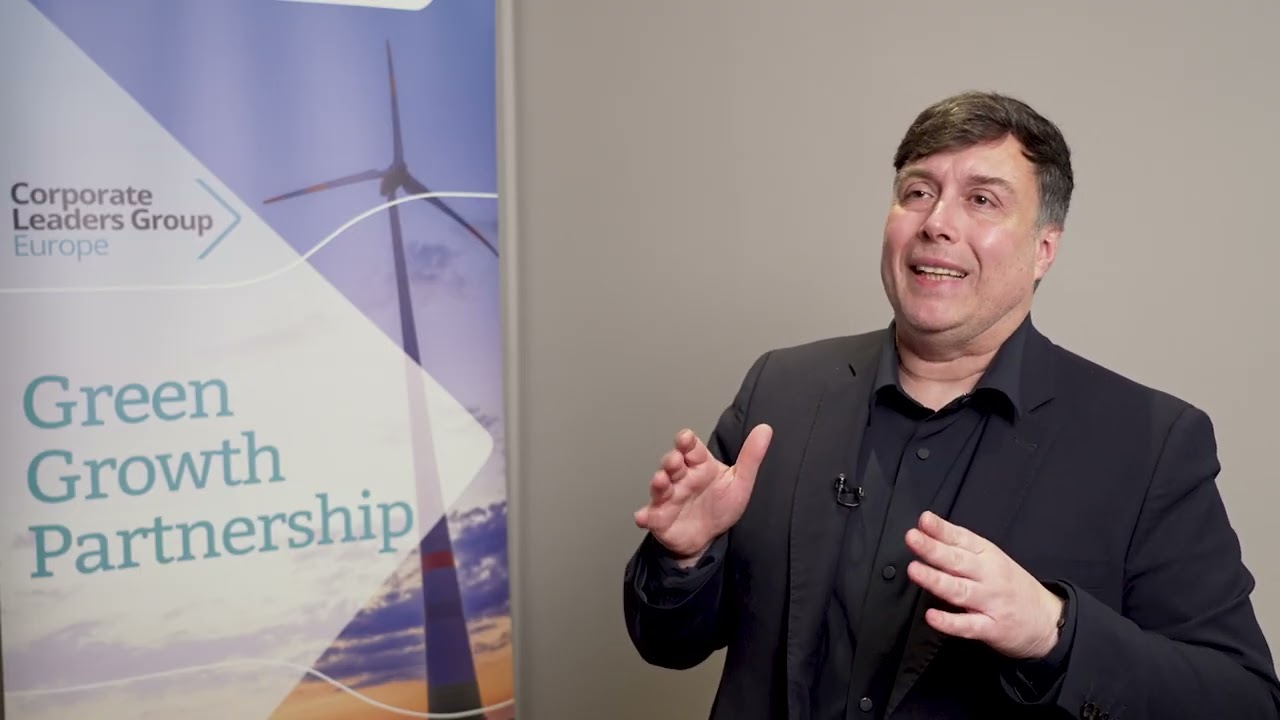
Green Growth Summit 2026: Ramon Arratia, Chief Sustainabilty Officer, Ball Corporation
Watch on YouTubeVideo summary
Electrification and circularity are presented as a powerful dual strategy essential for achieving energy independence, particularly within the context of decarbonizing industrial demand. In the realm of aluminum packaging, significant progress has been made regarding collection rates, with projections indicating that 90% of cans will be collected before 2030 due to efforts aligned with regulations like PPWR. However, maintaining this circularity requires ensuring that aluminum scrap remains within Europe rather than leaving the continent, a goal that may necessitate implementing duties to keep these materials local. This focus on recycling is critical because using recycled aluminum consumes 95% less electricity than producing primary aluminum, demonstrating how circularity inherently delivers substantial efficiency gains even before full electrification of industrial processes is realized.
Transitioning to the electrification of heavy industry presents unique challenges that depend heavily on factors such as temperature and specific material requirements. For instance, plasma burners offer a promising solution for electrifying aluminum remelting, though scaling this approach requires addressing broader economic and infrastructural hurdles. Currently, electricity is taxed more heavily than gas in many regions, which creates a financial disincentive for industries to switch; therefore, removing these taxes is vital to make electrification economically viable. Beyond tax reform, there is an urgent need to accelerate the development of enabling technologies that improve the efficiency of industrial heating and power processes, ensuring that electrification becomes a practical and cost-effective alternative to fossil fuels.
The successful implementation of this electrification agenda also hinges on solving critical issues related to grid access and infrastructure investment. As demand surges from new sectors like artificial intelligence and the transport industry, many regions are already facing difficulties in accessing sufficient electricity to support these needs. To scale up electrification effectively, substantial investments must be made into the power grid, a domain where European technology plays a significant role alongside battery innovations for transport. Since Europe is not an energy-rich region, relying on local resources through circularity and electrification is necessary to reduce the massive dependency on importing over 400 billion euros worth of energy and materials annually. Ultimately, combining these strategies will allow Europe to leverage its own technological strengths in industrial electrification and grid management while minimizing reliance on external imports.
Read the full video transcript
Electrification and circularity are the
double whammy for energy independence
because uh we need to electrify
uh industry demand to decarbonize and uh
also part of that is increasing
circularity of materials. For example,
in aluminum packaging, there has been a
lot of really good work around PPWR. So
that we believe that before 2030, we
will achieve 90% of collection of cans.
Now we need to be careful that uh those
that aluminum scrap is not leaving
Europe. So now uh there is the
possibility of uh playing with a perhaps
a duty to uh maintain uh part of that
scrap in Europe. So u circularity is
really important and then it's about
electrification as well.
Recycled aluminum uses 95%
less electricity than primary. So
already circularity delivers that
efficiency. Now how do we electrify
industrial processes. So it depends
obviously on the temperature. Um it
depends u on on on the different
material and we believe that aluminum
remelting for example has a really good
option um to electrify with with plasma
burners. And of course there's a lot of
different options to make that business
case. There's been a lot of talk um
around taxes. We put more taxes to
electricity than to gas. So uh removing
those those taxes from from electricity
is going to help electrification. But
beyond that also we need to look at the
enabling technologies for each
industrial process because
electrification has to be more
efficient. An electric vehicle is way
more efficient than fossil fuel. That's
why it works. Heat pump more efficient.
We will need to look at those industrial
processes and accelerate the efficiency
so that electrification makes sense. And
then also it's going to be a problem of
access to electricity. So um like
investing in the grid and um because if
you're going to electrify transport
industry and you're going to have the
new demand for AI, there's going to be
problems. We're seeing already into
places where we really want to
electrify. We're having problems to
access the electricity. In order to
scale electrification,
um, we are going to need a big
electrification agenda that really
understands the sectors. So, we're going
to have to take out taxes away from
electricity because now you have more
taxes in electricity that in gas. you're
going to have to uh find uh a good
electricity price for energy intensive
uh industries in order for them to
electrify.
And then also we're going to have to
accelerate and support the actual
enablers, the technology that allows
processes to electrify, which in many
ways are is is European technology. In
transport it might be batteries etc
which will rely a lot on China today but
in industrial electrification we have a
lot of European technologies also the
the grid needs to have uh you know
investments which pretty much is a lot
of European technologies as well Europe
is not an energy rich region so we're
going to have to electrify we're going
to have to have circularity because the
combination of that will reduce
dependency for importing the 400 billion
uh that we that we import on energy plus
lots of uh imports as well on materials.
So then we would rely on local uh
resources.