Video summary
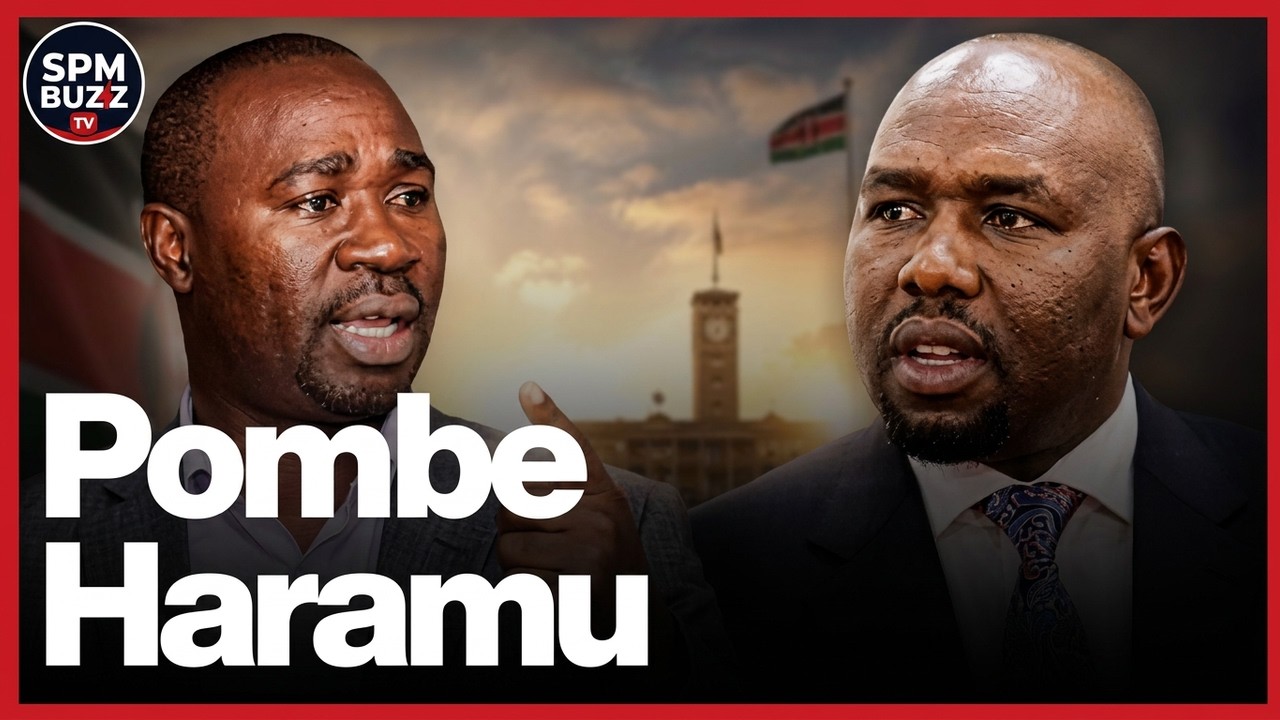
Gitonga Mukunji opens his address by condemning the abduction of journalist Alex Kiproich, emphasizing that the safety of media personnel is fundamental to a functioning democracy. As a victim of abduction himself, he calls for enhanced security guarantees for journalists who often face risks while investigating sensitive issues. He then transitions to the core of his speech, titled "A Nation Under Threat: Illicit Alcohol Crippling Its Own People," where he frames the crisis not merely as an issue of substance abuse but as a threat to the future of Kenya's youth, family dignity, and national strength. Mukunji highlights that with a median age of 19 years and over 80% of the population under 35, this demographic represents the workforce, tax base, and innovators of the nation, making their protection critical for achieving long-term visions like Vision 2030.
The speaker details the devastating human and economic toll of illicit alcohol, noting that these adulterated brews are often laced with dangerous substances that have led to deaths and broken families. He shares a poignant example from his constituency where four young people died in the Kangaro area recently, leaving grieving families and stripping communities of their future doctors, engineers, and leaders. Economically, the crisis is described as a fiscal emergency, with illegal alcohol accounting for nearly 59% of total consumption and costing the state approximately 71 billion shillings annually in lost revenue. This money, which should fund hospitals, schools, and teacher salaries, is instead siphoned by cartels that profit from addiction, while the state bears the burden of healthcare costs for those affected.
Mukunji further exposes a disturbing political dimension where illicit alcohol is used as a tool for voter manipulation, particularly in the Mount Kenya region during recent bi-elections. He cites reports of widespread bribery involving cash and material inducements alongside intimidation at polling stations, arguing that handing voters a bottle instead of a manifesto compromises their constitutional right to make free political choices without coercion. To combat this, he urges parliamentarians to strengthen legislation against illicit production and distribution, increase budgetary allocations for youth rehabilitation and awareness programs, and commit to refusing any form of inducement in political campaigns. He also calls for the Ministry of Interior to intensify enforcement operations, deploy the Directorate of Criminal Investigations to dismantle criminal networks, and work with electoral bodies to create frameworks for monitoring alcohol-related voter manipulation.
In his concluding remarks, Mukunji issues a series of specific directives to county governments and regulatory bodies to revoke licenses for unlicensed dens near schools and residential areas, zone alcohol sales appropriately, and empower enforcement departments to conduct regular inspections. He criticizes the Kenya Revenue Authority and other agencies for failing in their duties, citing instances where counterfeit products bypassed quality checks despite available verification codes. Ultimately, he appeals to the state to treat this crisis with urgency, urging decisive action to protect young lives and preserve the integrity of Kenya's democracy against the threat of an intoxicated electorate.
Read the full video transcript
I first want to join uh the four state
uh with condemning the abduction
uh of Alex Kiproich
uh of the standard media
and I want to condemn it in the
strongest term possible.
I also want to say that it is
unacceptable
for journalists to be harassed in
whatever capacity. And as a victim of
abduction myself,
I want to say that the touch
of the media is the touch of the core of
our democracy and we must condemn it. I
want to join other Kenyans who are
angered by what we saw on video
happening to Alex Kiproich.
And I also want to call upon the
security
of the media personalities to be checked
on. uh you risk a lot by looking at
things that even people don't want us to
see and may you need more security
guarantee as it is enshrined in our
constitution.
Having said that, uh, ladies and
gentlemen,
I want to go directly into the speech
and the statement that I've prepared
and I have titled this as a nation under
threat elicit alcohol crippling its own
people.
Fellow Kenyans,
today I speak not merely about alcohol
but about the future of our young
people, the dignity of our families and
the strength of our nation.
I speak on this matter not only as a
member of parliament for Mata
constituency but as a chairperson of
Kenya Young Parliamentarians Association
and a concerned citizen.
I ask us all to appreciate the scale of
who is at risk. Kenya is one of the
youngest nation on earth. The median age
of our population stands at just 19
years and roughly around 80% of Kenyans
are aged be below 35 years of age.
This is not a marginal demographic.
This is the demographic [snorts]
that is our worker force, our tax base,
our security, our innovators,
our electorate
all rolled out into one. When we speak
of illicit alcohol destroying our youth,
we are speaking about the destruction of
the very engine on which the future of
this republic depends on.
We cannot claim to be planning for 2030
or the vision60
while simultaneously watching the
generation meant to deliver that vision
drinking itself into in incapacity
across our constituencies. Ladies and
gentlemen, from urban informal
settlement to rural centers, our young
people are consuming illicitly brewed
adulterated liquor in alarming
quantities.
These brews are known to be laced with
dangerous substance,
some of which have caused even death.
We are seeing devastating consequences
in our communities. The loss of our
young lives, broken families or no
families at all, addiction,
reduced productivity,
crime and destruction of livelihoods.
In my constituency,
residents are mourning losses of people.
Specifically uh just the other day
Kangaro area we lost four young people
to illicit brew. Four families left
grieving and among them was a son of a
very close friend of mine called Mama.
A young Kenyan whose life should have
been ahead of him. A clear depiction
that behind every statistic is a mother
burying a son, a family stripped of a
bread winner, and a community robbed of
its future doctors, engineers, teachers,
and leaders.
The economic cost of this crisis is a
fiscal emergency in its own right. We
are losing billions in legitimate
revenue when illegal manufacturing and
distribution
of
alcohol evid taxation
and flood our markets with adulterated
products. Every time an illegal industry
is allowed to flourish because of
corruption, weak enforcement
or political political protection,
public trust in government is eroded.
Illicit alcohol now accounts for
estimated close to 59%
of all the alcohol that is being
consumed in Kenya today. And the illegal
economy is estimated to have cost X
checker close to 71 billion in loss of
revenue.
That is annually.
This is money that should be used to
build hospitals,
universities, schools,
give uh youth and young people monies to
start small businesses
and pay teachers
and nurses. Instead, it is being lost to
cartels whose profit from addiction and
death of our young people while the
state is left to absorb the healthare
cost. The loss of tax and loss of
productivity of our generation is also
alarming and it is at full capacity.
Article 43 of our constitution
actually is very clear on the right of a
Kenyan to enjoy quality food and quality
drink.
When what is even more troubling is the
emerging pattern in which illicit
alcohol other inducements are are being
deployed by the political class to
manipulate and undermine the free will
of the voters.
It is clear that this alcohol is
evidently in one area Mount Kenya
region. Recently while we were in Ocala
for a bi-election, we witnessed
a lot of young people intoxicated with
this cheap and illicit liquor. Reports
by election observers and independent
monitors point into widespread voter
bribery, including cash, cooking gas,
other material inducements alongside
intimidation at polling stations. Of
particular concern is the reported use
of alcohol as a tool of political
manipulation to buy loyalty, nump young
people into compliance, or keep them
away from the ballot.
When a voter is handed a bottle instead
of a manifesto, we must ask what kind of
democracy we are building. When young
people are deliberately intoxicated
to influence, manipulate and keep them
away from the ballot, their right to
make a free political choice is
compromised.
And honorable members of the public, we
must protect our right. Article 38 of
our constitution guarantees every Kenyan
the right to make political choices
freely and with without coercion. Given
the scale advant of this crisis, I
therefore call upon number one
parliament and my fellow members of
parliament to support strengthening of
legislation targeting manufacturing,
distribution and sale of illicit
alcohol, including stiffening penalties
for producers and distributors who
target miners and youth. to champion
increment of budgetary allocation to
community- based rehabilitation, youth
empowerment, public awareness programs
in our respective constituencies.
Three, [clears throat] also to commit as
leaders to refuse and publicly reject
use of alcohol or any other inducement
in our campaigns and hold our parties
and agent into the same standard.
support the Kenyang parliamentarian
opposition in rolling out cross country
youth engagement and awareness drive
leveraging in the fact that members
under this assition represent
constituencies
uh home to the bulk of Kenyans of
between and between between 18 and 35
years of age to ensure this fight is led
by the very generation that it seeks to
protect.
I also call upon the Ministry of
Interior and National Administration to
urgently intensify enforcement
operations against illicit manufacturing
dens in every county working closely
with the county administrators, chiefs
and national
police service.
Our weakest link in this fight is our
security forces.
It is evident that whenever there is a
thrift of this business, the police
officers in those areas are complacent.
We call upon deployment of directorate
of criminal investigation to track
dismantle the financing network and
cartels behind illicit alcohol
production and distribution.
Work also is required to be done with
the IEBC and ODP and ESC to develop
joint framework for reporting,
monitoring, investigating and
prosecuting the use of alcohol and
bribery as tool of voter manipulation.
I also call upon the county governments
to revoke existing licenses of village
clubs that are in every village
and the the the the
alcohol dens
and local liquor outlets that initiate
new and initiate new registration with
regular renewal tied to verified
compliance rather than one of ones of
approval. Also, I call upon empowerment
of county alcoholic drinks enforcement
department to inspect the clubs
regularly and punish
and publish an upto-date public register
of [clears throat] licensed outlets in
every word.
Also, county governments must work with
chiefs, Numbakumi clusters and local
administration to shut down unlicensed
den operating near schools, residential
areas and facility reporting channels
for residents to flag illicit outlets
without fear of repraisal.
Also there's a need to zone areas
permitted for sale of alcohol and revoke
licenses of clubs tacked in residential
areas.
Kenya Revenue Authority and Ke
must tighten the monitoring of alcohol
manufacturing and distribution including
stamped exercise compliance,
routine quality inspection and closer
surveillance of counterfeit and licensed
production lines.
One of the experience I've seen is
people scanning the code and it is
showing a tuk tuk whereas they are
scanning a bottle of beer. It is very
very dangerous that we have this license
we have k and kes not doing their work.
They should also run public awareness
campaigns in partnership with county
administration to teach consumers how to
identify counterfeit alcohol where the
report there is a report of suspected
illegal brands. In conclusion, honorable
members, fellow Kenyans, we cannot build
Kenya we aspire to which a generation of
young people whose lives are being lost
to illicit alcohol or whose voices are
being compromised through it. We must
never allow alcohol to become a tool of
buying political loyalty or undermining
our free will to vote. I therefore urge
the state to treat this matter with
urgency it deserves and take decisive
action to protect both the lives of our
young people and integrity of our
democracy and we say no into an
intoxicated democracy. Thank you very
much.