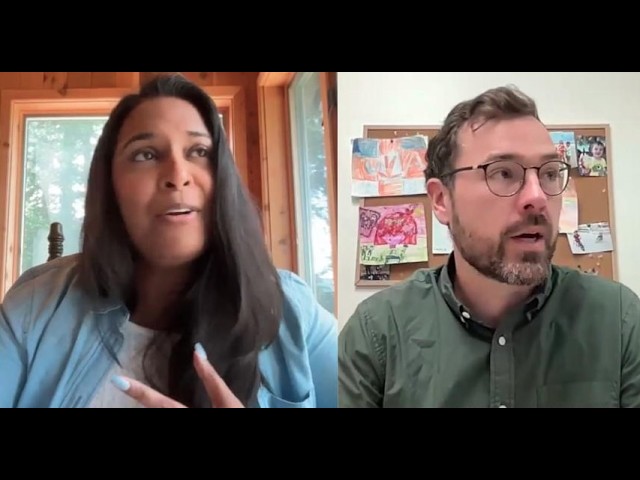
Video summary
The book *Getting Learning Right* presents a methodology grounded in longitudinal interviews that track undergraduate students' journeys from their first to final semesters across diverse physical and digital environments. The authors argue against viewing education merely as an efficient factory model focused on "greasing the skids," instead advocating for student agency where learners can pivot, reflect, and co-design their experiences despite institutional structures. While structured pathways have utility, true learning occurs when classrooms are permeated by real-world connections rather than existing as isolated nominal spaces, requiring support from "learning sponsors" who help students navigate complex ecosystems beyond traditional mentors.
To foster this deeper engagement, the text emphasizes the necessity of reflection and transfer, suggesting that successful learning requires dedicated time to connect disparate experiences across different contexts. Institutions should introduce mid-journey seminars or advising sessions where students articulate continuities in their lives, moving away from simply choosing the easiest pathways toward more valuable ones aligned with personal goals. This approach involves creating low-cost opportunities for reflective pauses through dedicated class moments or digital tools rather than relying exclusively on expensive infrastructure like cooperative programs, ensuring that whether physical, digital, or hybrid, every space serves a specific pedagogical purpose beyond mere connectivity.
Curricular redesign is proposed as another critical step, involving the rethinking of departmental silos and integrating interdisciplinary projects with real community partnerships to maximize impact through public-facing writing rather than solely academic outputs. The authors also recommend expanding writing centers into AI literacy labs to support various communication tools while building networks of opportunity that help students develop self-direction in environments abundant with chances for growth. Ultimately, the future of higher education is envisioned not as a single institutional model but through collaborative partnerships across institutions and communities that create tailored portfolios of project-based learning opportunities which reconnect research with teaching.
The discussion concludes by recommitting universities to serving the common good through flexible collaborations that meet individual student needs, particularly supporting non-traditional learners who require remote access options. By using practical guides like chapter-ending questions for local adaptation and encouraging further engagement on platforms such as LinkedIn, educators are invited to continue developing context-specific solutions. This vision ensures that education remains responsive to diverse learner profiles while maintaining a focus on the common good through adaptable frameworks that honor both individual aspirations and collective societal benefits without predicting one rigid future model for all institutions.
Read the full video transcript
Greetings and welcome to the future
transformum, a weekly conversation about
the future of higher education. My name
is Brian Alexander, the creator of the
future transform. In this recording, we
explored a new concept for improving
undergraduate education. We hosted the
authors of an important new book called
Getting Learning Right: The Promise of
Higher Education from MIT Press. They
include Chris Gallagher, professor of
English at Northeastern University,
Christy Gerdary, associate teaching
professor of English and director of the
writing center at Babson College, and
Kevin Smith, associate professor of
English and co-director of the
University Writing Center at the
University of Virginia. We began by
introducing the book's methodology,
which focused on listening to students
through their undergraduate careers.
Based on these findings, the authors
called for improved pathways through
college, rethinking spaces for learning,
improving transfer between classes, and
involving students in redesigning
post-secary education. The discussion
ranged freely from desire paths to the
use of AI to supporting students through
curricular gaps. There are links in the
show notes below. And as always, the
comment box stands ready for your
thoughts and questions. Well friends, on
the theme of coolness and ancient
history, let us begin this week's
program because it is the top of the
hour. Welcome everybody. Greetings and
welcome to the future trends forum. I'm
so glad to see you all here today. Uh we
are speaking today with the authors of a
fantastic book that I can't recommend
enough and I'm really looking forward to
our conversation. uh we've been covering
since the beginning uh how we can best
improve teaching and learning in higher
education every year uh we've been
focusing on that and approaching it from
different ways. We've tackled everything
from teaching and learning centers to
the role of the library to different
forms of pedagogy grading and ungrading
all kinds of different pedagogies. Now
what I want to do is introduce something
a little different. Uh we have the
authors of a new book and I just put the
book uh in link in the chat from MIT
press which ask asks us to reimagine the
modern university or college if we make
student learning central to it and the
authors take a few different directions
to go through this and we'll talk about
these over the next hour. Um, and one of
the things I find especially delightful
about the book is not only the passion
and deep experience of the three authors
who you'll meet in a second, but also
that they grounded their work in a
series of interviews with Northeastern
University students. And those students
become very powerful characters in the
book, not only as examples of different
ways to progress through post-secary
education, but also to help us think
about how we can co-design higher
education with students as partners. So,
just to get the ball rolling on that,
uh, let me just proceed left to right on
my screen here quite arbitrarily. Uh,
Professor Kevin Smith, greetings, sir.
>> Hi, Brian. Thanks for having us.
>> Oh, I'm really glad to see you. And, uh,
you're at your office at UVA right now.
>> That's right. Charlottesville, Virginia.
>> Excellent. Excellent. Well, we have a
tradition here on the forum um which is
that we ask people not to give us their
academic obituary description, but we
ask them to think about the next year,
what you're going to be working on. So,
I'm curious what projects and what ideas
are going to be uppermost for you.
>> Yeah. So, um this next year I'm
transitioning into a new admin role as
the director of writing across the
curriculum for University of Virginia.
I'm transitioning out of co-directing
the writing center uh and into this uh
wack directorship. Um so I think that's
going to take up most of my time and a
and a lot of that will be
>> um having conversations with faculty
across the disciplines I imagine largely
about AI and writing um but also kind of
how we can help support their students.
Um, I'm also hoping that we can I can
build on some of the work of the book
and think about writing as uh a way into
and a support for experiential learning
across uh across the university. And
then completely unrelated and kind of
fun for me, I've started a project uh
Brian, we were talking a little bit
about cycling uh before folks logged on,
but about um kind of the rhetorical
uh possibilities and limits of cycling
advocacy. uh in a small southern town
where I live. Uh so I'm I'm excited
about that. It's really in its early
phases, so I don't have a lot of
details, but I am excited about it.
>> Well, I'm excited about that, too. I'm I
meant it. Please do follow up. I'd be
glad to maybe between the two of us, we
can achieve some critical mass.
>> [laughter]
>> Um but uh one u uh one just thing in in
the audience to just to draw your
attention to Kevin is we have uh former
university president Elaine Mayan here
who is among other things in her story
career one of the founders of writing
across the curriculum. So u please
please feel free to connect with Elaine.
Um and now I've got you on the stage.
Let me add your co-authors. Uh Professor
Goodary. Hello.
>> Hello.
I'm really glad to see you and um and
you should know a few of the people on
this call have been taking time in the
aderondex as well this summer. So um
what we need to do is we need to rebase
the forum around Lake Placid or
something. I mean I
>> I agree. Yeah, we could do a writing
retreat here. It would be fabulous.
>> I'm I'm ready. I'm ready for that. Just
say the word. Uh so uh what are you
going to be working on for the next year
once you descend from your your perch in
that cabinet? [laughter]
>> Yeah. So you mentioned the longitudinal
interview study with the northeastern
students that informed the book. Um we
actually semi-replicated that study at
Babson College but we had started in
fall 2022. So that means we accidentally
captured our students thinking about AI
in real time.
>> And so the future part is um and I think
something we wished we had done at Nor
Eastern. We actually got IRB approval to
continue with an alumni study. So these
students are entering the workforce.
We'll get to see um how their AI
thinking, usage, knowledge kind of
shapes as they kind of start navigating
all these crazy times. And then um I
guess semi relatedly, I direct the
writing center at Babson. And I know I
see at least one Babson College uh
colleague on the call. So, this is like
brand new news. I haven't announced it
yet to the broader community, but we're
transitioning the writing center to a
writing center and AI literacy lab. So,
WC at all.
>> Yeah. To kind of expand kind of what
we're doing. It's really, you know, it's
a bit of a marketing rebrand. Um, the
model stays the same about kind of
onetoone conversation um with students
with whatever they're thinking about
communicating, writing. Um, but I think
it will hopefully um just signal that,
you know, we're here to support you. How
however you're thinking, whatever tools
you're using. Um, we're a space if
you're refusing, like we'll have those
conversations. So, pretty excited. It's
a a big undertaking, but um I just
announced it to my staff and they seem
on board. So, pretty excited.
>> Well, I'm honored to be part of that
early roll out. Uh, and in in all
seriousness, we do a lot of work here on
the forum on AI and higher education. If
you've got a press release or an article
about that transition, please share. I
would love to share it around. Um
because I people who thinking about AI
and higher red, this would be a really
really useful uh uh experiment and
project to think about.
>> Yeah, I will. Thank you.
>> Well, good luck. Good luck. That's
terrific stuff. Well, now that I've got
Christie and Kevin here, let me bring
your third number on stage, Chris
Gallagher. Hello, Professor Gallagher.
>> Hello, sir. Good to see you. Good to see
everyone on this call. I know a lot of
the names in the chat, so I'm excited
for the conversation.
>> Oh, I'm so glad. I'm so glad. And by the
way, Christie, we have a shout out in
the uh uh in the chat from our friend
Elaine Mannon, who says that Christiey's
done amazing work on the eth edition of
her McGraill textbook um on this eighth
edition of a writer's resource. So,
brilliant, brilliant.
>> Great. And I've never actually met
Elaine, so I hope sometime we meet in
person, [laughter] too. [gasps]
>> Well, you should. You should because
she's amazing. Um Professor Gallagher,
now you're ready. You've had your two
colleagues have take gone first and
answered that this important question.
So you've had time to prepare. What are
you going to be working on for the next
year?
>> Yeah. You know, if you had asked me at
the beginning of the summer, I think I
would have said I was busy recovering
from academic administration, which I've
been doing for a number of years. Uh and
then really recommitting to my faculty
role. Uh but I've been dragged back in
in a minor way. I'm going to be interim
chair of my department
>> uh in the spring actually. So I've got a
little bit of time. So I'm looking
forward to more teaching in fewer
meetings. Um but in addition to
supporting this book, I've got a couple
of other projects going.
One is called institutional literacy, a
learner's guide. I'm working with that
on that with uh Linda Adner Castner. Um,
and that's a book that really aims to
give faculty, staff, administrators, and
grad students tools for reading and
writing their institutions in order to
participate more effectively in them.
Something we think is much needed in
this moment of uh necessary
>> transformational change. And then the
second one is a book I feel like I've
been working on my whole career, which
is basically considering how John
Dwiey's educational philosophy can help
us articulate and teach what I'm calling
the human literacies we need to
reconstruct
>> democracy in the face of rising
authoritarianism and pervasive
artificial intelligence. So yeah, a
little bit going on for me.
>> Quite a bit. Quite a bit. I I just have
a quick a couple of quick follow-ups.
First of all, a request. when your uh
Dewey book is done, let me know so that
we can host you for talking about that.
Dewey has been a leading figure on the
forum uh for our entire lifespan. Um and
there's also a joke in the chat at your
expense, so you're going to have to
explain yourself. Tom Tobin says, "First
time I've heard someone say being
department chair is a minor role." So
you have to say, "What are you
transitioning away from? What were you
before that?"
>> Yes, that's a good point. Thank you for
that. Um, yeah, I've been vice
chancellor or vice provost in various
roles for the past several years. Before
that, I was an associate dean. So, it
feels small, but the small part is
really the interim part, not the
department chair part. Um, I'm going to
try to hold down the the role while our
current chair is away doing her
research, which is great for her.
>> Understood. Understood. Well, I'm I'm
really glad you could make the time and
I I wish you the best in this complex
transition from dean chancellorship down
to department to continuing to write. Uh
these these are important tasks.
>> Uh friends, if you're if you're new to
the forum, uh the way this works is I'm
going to put to our guests a couple of
questions about their work, but then
it's going to be over to all of you. Uh
so based on what you've already heard
and also based on what you're going to
hear over the next few minutes, think
about what questions you would like to
ask, uh what comments, what requests,
and again the chat box is open for you
as is the Q&A box. Um so I whenever I I
see a wonderful complicated book, I I
have so many questions that get from the
meta level to the detailed level. Um but
I wanted to start off with a theme
that's early in the book that I thought
was really really striking and that you
handled with such postcoid nuance uh so
well. Um the book traces different ways
by which students can learn better
through higher education including
through flexible pathways which
sometimes work sometimes don't through
project-based and team-based learning.
But I'm really curious about the sense
of place and the the physical
environment as well as the climate, you
use the term there, of where they learn.
Uh, and you point out that students
learn throughout their different spaces.
They learn the physical classroom as
well as the virtual learning
environment, but they also learn
elsewhere. And at Nor Eastern, because
you have the co-op model and that, you
know, that precisely positioning
students into the workforce that they
learn so much in that transition into
work. So I'm wondering if you could if
you could speak to this for in a way
that all of us could rethink u the
spaces of learning. Uh what have you
learned about how where I should say
where students learn best and how?
>> I could start with that and perhaps my
colleagues can jump in. This is
something like most of the book that
really we came to through listening to
our students. Um, and just very quickly,
we interviewed them every semester for
their undergraduate careers from their
first semester to their final semester,
no matter how long it took them to go
through the system. So, we had some that
got through in three years and some in
five and a half. So, we got to know them
quite well. Um, and I was so glad to
hear you say, Brian, earlier that they
became characters in the uh book because
we really did want to um give them
voice, right, and help you understand
how they think about their learning
because really our insight was to say,
"Hey, these students know things about
learning that we wish many of our
colleagues knew and that perhaps we had
known before as well." So, one of the
things they taught us to get to your
question was just how many learning
spaces they inhabited and moved across.
And so, in the book, we have um we talk
about learning environments. That's the
the framing of the chapter in which we
mostly talk about spaces and places. Um
and we're talking about spaces that are
designed for learning and spaces really
that that not that weren't necessarily
and that students found themselves in.
So we followed them is the way we put
it. We followed them across their
classes across campus and the various
clubs and organizations they
participated in uh in various uh public
spaces. So we were in Boston and so they
were involved in all kinds of things in
the city from volunteering
um to taking part in um various kinds of
forums and going to listen to speakers
and this sort of thing. these were all
all became truly important to them as
part of their learning kind of ecosystem
if you want to think about it that way.
Um and then of course the workspaces
through co-op as you mentioned um many
of our students will go on most will go
on two co-ops and these are six month um
full-time jobs that students participate
in
or projects. They could be with
nonprofit organizations. Um and the idea
is that they will have enough time and
space really to to inhabit the role in a
community of practice, right? But it's
also about thinking about well how does
this space work? How is it set up? How
is it organized to support the work that
we do and the learning that we do? And
so we started seeing students as they
moved across their spaces really drawing
our attention to the designed features
of the spaces in which we encountered
them and some of the um serendipitous
spaces where they they found their own
um learning uh opportunities. One of the
lines that always comes back to me with
this book is
a a student who praised her boss by
saying, "She put me in all of the
rooms."
>> And that to me captures so well
>> um what a a what we call a learning
sponsor or most people call a mentor can
do for students. Um and that was really
important for her and for most of our
students to think across the different
um spaces in which they were learning.
Well, thank you. Thank you. Uh, learning
environments, this is and the plurality
that is so important. Uh, Christie, uh,
Kevin, did you want to add to that,
please?
>> I just wanted to add one aspect which I
I think people might be thinking about,
uh, which is digital learning spaces,
right? Um, and so one aspect of our
book, uh, is that we, you know, include
these student stories, these interviews
from, uh, from students over the course
of their undergraduate careers. We also
uh tried to find institutional examples
of um in the you know in this in the
case of the chapter on uh learning
environments um the way different
institutions uh you know have designed
learning environments productively for
students. So other kind of models for
folks who aren't at maybe a school like
Nor Eastern where students are going out
on co-op and and have all of these other
opportunities. Um and one of the
examples we uh we talk about in the book
is Eli Review which is a a peer writing
platform. So this is a digital
environment um uh that is designed by
writing teachers with a learning focus
first. So it's designed you know um with
in in the very kind of design uh you
know phys architecture of it um are kind
of best practices in in writing
pedigogy. Um, so I wanted to flag that.
Uh, and then the other is kind of the
the
maybe the inverse of what Chris was
saying as we're following students. I
think one of the things that really
stood out to me in our students
experiences is the way the classroom was
kind of constructed as this like nominal
space un unless you know it's like class
is class I think is is a line from from
one of the students and that often
classes um it was more difficult for
students to understand the ways in which
the uh the design of their learning
environment um was enabling or
inhibiting their learning in class. Um,
and I think in part because you know the
the kind of architecture of a classroom
is ingrained in students from a from a
really young age. Um,
>> and the exceptions to that were when the
classroom like the walls of the
classroom, the metaphorical walls of the
classroom and sometimes physical walls
of the classroom were kind of permeated
by the outside world in some way. Um so
um yeah so I just wanted to flag those
two uh additional aspects of learning
environment the classroom and the and
the digital environments.
>> Well thank you and in in the chat
there's been a discussion about that
right now led by our our good friend in
Texas Tom Hayes about uh the importance
of digital spaces. Um Christie, did you
I I saw you grin when this was
happening. What do what would you like
to add? Um, I just want to add almost
like a caveat. Um, just because we put
students in the rooms or let them have
these great kind of place-based learning
experiences, um, should we just assume
like that is enough for them to be
learning? Um, so I would say that
something that's really kind of stuck
with me through this work is that
students need time and space for
reflection to kind of make the
connections they need. you know, whether
that's us asking or um assigning
different kinds of writing, like there
are ways that you can make sure and kind
of help facilitate transfer learning,
integration of learning across the
different spaces and places.
>> Well, thank you. Thank you. I mean, that
theme of time really came out um and by
the end of the book, you had some really
good discussions, all three of you,
about um uh how much time does it take
and when is three years appropriate for
a student versus six years for another
one. Um well I I have so many thoughts.
Let me just ask one more question about
this at the at the more institutional
level that um the book concludes well
excuse me before the conclusion you
discuss uh different pathways for
students and the pathway idea was
fascinating um because you managed to
connect with a whole series of other
issues. Uh so pathways included both the
sense that you see now in some community
colleges of coming up with smoother
pathways for students especially first
generation students through the really
complicated thicket of so many classes
majors minors departments certificates
but you also talked about the transfer
issue uh both the transfer between
institutions helpfully you highlight
community colleges to four institutions
but also the knowledge transfer across
classes and you mentioned that
especially in terms of the core
curricula and I after that great, you
know, tour to the result of all of that.
Where do you end up right now? I mean,
trying to advise anybody how they could
best structure institution. What are the
best ways that we can structure things
so that students can have the most
productive pathways through us?
I guess any of you can can can start.
Although I'm biased by Kevin because he
has a beard, I have to say.
>> Well, Kevin Kevin could go, but I had a
quick thought. um which was that we um
pathways is an important concept out in
the higher education discourse, but we
also think it's a double-edged. Um it is
important, we think, to offer students
pathways,
but it's also important to understand
that they have agency in the or should
have agency in the construction of those
pathways. And that if we're thinking
about pathways only as sort of greasing
the skids on a line that already exists,
Tom Hayes has been writing about the
factory model of education. And this is
it. It links up nicely with your
question, I think, Brian, because if
we're only thinking about getting them
in and getting them out as quickly as
possible or as efficiently as possible,
our argument is we may be missing really
important opportunities for students to
identify their own learning
opportunities and to have those
reflective moments that Christie talked
about earlier. Um, so that's that's
critically important. So, I'll get out
of Kevin's way now and let the beard
speak.
>> [laughter]
>> Please go ahead.
>> Thanks, Chris. Yeah. Um, yeah, I mean,
I' just echo what uh uh what Chris said.
I mean, I think in terms of like our
students, we found even really late
pivots in their educational experiences
to be really productive. Uh, right. And
so um and sometimes you know some of the
kind of flexible pathways that we
highlight in the book from northeastern
students happen kind of despite
institutional structures and pressures
rather than because of them. Um so you
know we I guess I I'll say that we hope
that uh th those stories in the book are
instructive to to folks who are
designing uh curricula who are maybe
thinking about um you know guided
pathways in the community college
context for example. um how involving uh
student perspectives and student voices
can can help us to create these you know
opportunities for pivots, opportunities
for flexibility, opportunities for kind
of co-creation and and co-design.
>> Yeah,
>> I'd love to please.
>> Yeah. An example of that that we use in
the book um about guided pathways. So is
Christy Toth at the University of Utah
had edited a special issue of a journal
on guided pathways. Um and instead of
just kind of publishing the same kind of
faculty scholars, she ran an
undergraduate research course with um
students who had actually transferred
from Salt Lake Community College through
those pathways. And so they like
conducted their own research. They wrote
their own pieces kind of reflecting on
the experiences. And if you haven't seen
it, the the student reflections are like
really sharp. Um, there was one that was
asking like a question about like what
good is guided pathway systems when the
students who could benefit from the most
like don't trust it or can't access it.
And I'm like, wow, that's a really good
question, right? And so, um, I I really
like in that, um, there's kind of this
call for co-design. So you can't build a
system for all students without bringing
in kind of our marginalized students
into its design. And so I think, you
know, that's really part of a major
argument we're making. Um you kind of
want to know whether the form is
learning grounded like you got to ask
the learners, right?
>> Indeed. Indeed. And and I I mentioned
you interviewed so many northeastern uh
students, but they're also students from
across all these other examples that you
give. Uh, Phyllis, I I hope John gave
you an answer to your question in the in
the chat. Uh, he gave you a link. I I
gave you a name without a link. Sorry.
But see if see if that'll help.
>> Yes. Thank you.
>> Oh, perfect. Perfect. Um, uh, Kevin,
Christie, Chris, thank you uh, for these
awesome answers. Let me let me turn
things over to the audience now. So,
again, if if you're new to the forum,
this is this is your car to drive right
now. Uh, and please, you know, you use
the Q&A box or use the chat with your
questions. And we already have one from
our our mutual friend, the awesome David
Scobby in Ann Arbor, uh, who says this.
I love the author's emphasis on student
agency and creativity in connected
learning environments, but I also think
we educators don't help them do enough
connective or weaving work. What are
good practices for enabling students to
weave their learning without dictating
the structure to them?
>> I think we've established a pattern
here. So I will start um [laughter]
um
>> weave away.
>> Yes, weave away. So I think the first
thing we would say and this is actually
an answer to your previous question too,
Brian, that maybe we didn't answer as
directly as we could have when you said
what can institutions do? Um you start
with your students, right? And you
figure out well who are they as
learners? What kinds of learning do they
do? Where do they do it? Why do they do
it? What are their motivations? and then
how can we design environments,
experiences,
projects
uh that will allow them to achieve their
goals and um you know move forward in
their in their lives. So to me it always
comes back to that. I say that in answer
to uh David's question because I also
think what we did which was simply
talking with students once a semester
about what was going on with them was
hugely powerful for the students. And
[snorts] in fact they told us this. They
said, you know, coming in here once a
semester and having to or getting the
opportunity to narrate my experience has
been really helpful in thinking through
how do I connect what I've already been
doing to what I've been doing now. And
by connect, I don't necessarily mean
that everything was smooth and linear,
but in fact, they were often talking to
us about pivots. Christie used that word
earlier, I think, and the ways in which
they were seeing their both the
continuities and the discontinuities in
their experiences as opportunities for
reflection and to think about, oh, where
am I now? Um, and so I think we can do
that as at the institutional level. I
think we can make that part of our
advising. I think we in depending on
what your model is, it could be part of
faculty advising. We do have a model in
there from a community college in the
book um that offers a kind of model for
engaging students in questions about
essentially designing your life, right?
Thinking not just what courses are you
going to take next semester, right? Or
even what is the career you're aiming
for, which may be different in a couple
years than it is today anyway, either
because you changed or because the
workforce changed given the pace of
change. Um but what are your values?
Right? and what are your goals and where
do you do your best learning and your
best work? These are all super critical
I think for us and I would start I would
start there um with the students and
then think about if there are moments in
their curricular journeys um or their
undergraduate journeys where you can
introduce opportunities for reflection.
Last thing I'll say is just as an
example of that um we just instituted in
one of my fall courses will be a mid-
major seminar for the English majors and
the idea here is that we have an intro
course we have a capstone course but we
also need this opportunity in the middle
of their experience where they can say
where have I been and where am I going
right and how do I get what Dewey talks
about the two pieces of an educational
experience are continuity
ity, right? So, you're able to move
across spaces and interaction. So, it
also brings them together as a
community. And I think that's an example
of what um what one could do really in
any discipline.
>> Indeed. Indeed. These are great answers.
Uh David, thank you for the for the
awesome question. Um the the chat has
followed this up a bit. Uh Kevin Smith
and uh David Scobby have have talked
about desire paths or animal paths which
some of you might be familiar with which
is when you um when you see people uh
walking across a space uh not
necessarily in the already paved paths
um but then you notice the desire they
tend to take and then you follow that up
by actually paving it. I I shared a
couple of old photos of those for people
to look at. Um friends, this is uh this
is the time for your questions and so
there are more questions coming in. Uh
in fact uh Tom Hayes uh has been on fire
right now. And Tom, if you haven't
already, please please share your AI uh
and pedagogy Substack in the chat. I'll
put a link to that because it is I I
think it is just terrific. He asks this
question and I think I want to put a
little spin on it. He says, "Does the
structure of education itself
authentic learning? And how do we break
that structure?" And I guess the little
spin I would put on it is is if you
could identify and I know you can
because you said so in the book, but
some some structures that are prevalent
in higher education that go against
authentic learning that we should really
target to change, redesign or replace.
>> Yeah, I can I can get us started a
little bit. I just want to say that that
desire paths idea has is like really
tickling my brain right now. So I'm
really excited thinking about that. I
mean that requires right that there's an
open space for people to explore in a
way that I don't think maybe exists in
in current structures of higher
education to maybe connect it to Tom's
uh question a little bit more right in
order to see this the these kind of
paths of desire that we can later pave
over. But I love this idea and like kind
of imagining like how how we're building
future kind of like infrastructures for
student uh pathways. Um yeah, Christy,
do you want to um jump in?
>> Yeah. Um the question it made me think
about um so coming into this I was
thinking about like what are like the
most extreme kind of versions of like
what institutions have done and in the
book we have um an example from Plymouth
State in New Hampshire. Um about a
decade ago the university was at kind of
a financial crossroads as as they are.
Um and so the new president had um like
instead of doing kind of that usual like
well let's just cut things um they
rebuilt an entire academic structure
around what they call a cluster learning
model. Um so it's interd disciplinary
clusters organized around like projects
and like real community partnerships
instead of the siloed departments. Um,
so students were partnering with local
leaders in New Hampshire on like real
economic and social challenges. And so,
um, I just I really liked this idea of
kind of really interdisciplinary groups.
Um, that really it's really for them
really changing the structure in the way
they work. Um, I don't think like that
whole reorg is the easiest path um for
everyone, but I just think it's a really
cool like bold live experiment that we
can kind of follow right now for a
learning centered mission for an
institution.
>> Yeah, we also have in the book, as you
note in the chat, Brian, uh, the example
of Hampshire, which many of you know has
announced that it is closing or perhaps
already has.
>> Yeah. Um that does speak I think to the
original question. I think some of the
most innovative interesting educational
models have not been aligned very well
with the way that higher education
traditionally works. And so
we may continue to see some of those
real challenges. And that has to do, I
think, with very deep institutional
histories, having to do with how the
disciplines formed, right? Having to do
with the ways in which we set up our
institutional departments, which then
house majors. Um, we set up preset
requirements for students before we even
meet them and know what they want to do
with their lives. Um so for us it it
does seem important that we at least ask
the questions about whether the way in
which we currently organize our
intellectual work and more importantly
students intellectual work is really
serving the needs um of our students or
of our faculty. I mean frankly I think
most faculty are not that happy with
teaching in the kinds of classrooms we
teach in teaching you know introductory
courses to students who are not
interested
because they're just fulfilling a
requirement for example I mean there are
a lot of things that are built into the
way we've organized ourselves that are
not advantageous for either the learner
or the teacher who really wants to
engage those learners and and feel like
they're working together where one's
expertise is being leveraged in service
of the others
rather than this sort of transmission
model that I think we're still stuck in
uh in a lot of parts of our educational
system
>> and you cite uh some good scholarship on
that. Um thank you um that Tom was as
typically um a really good question and
and thank you three uh for these
answers. Uh we have quite a lot going on
in the chat and I want to uh summarize
some of the key parts. One is not a
question but a comment and it's one I
want to double down on. Uh Sylvia
Rabininoitz uh mentions that quote
librarians have been letting students
drive environments for a long time. We
know students identify where they like
to work quietly or collaboratively and
we try to support that with seating etc.
Uh unquote. Just on a personal note a uh
when I was in junior high a librarian
helped save my academic career. Um he
was one who listened to me and really
helped me out and uh that meant a lot to
me. Uh since then I've been working with
librarians and you know Celia we've been
doing library sessions here as often as
we can. So just want to say thank you
for uh for sharing that. Um we have um a
couple of other questions that have come
in. Uh one from Jennifer I believe it's
Dashner says she wants to encourage
students to write for trade publications
about a topic they are excited about not
scholarly writing. It's hard for them to
find a way to see the benefits. uh she's
hitting her head against the wall
thinking they would do something outside
of their courses and a bunch of people
responded in the chat. But I'm wondering
uh you know Chris, Kevin, Christie if
you would like to uh have anything to
say since you all work so much on
writing among other things.
>> Yeah, I think um yeah, two things. So,
one on the on the library um comment. Um
yeah, I I think we totally agree and and
I think one of the one of the points we
make in the book though we don't take
this up so much in the study is that you
know we shouldn't only be listening to
students but should also be listening to
other uh you know staff, faculty uh like
the members of the community in which
the learning is happening. Right? So
there's a lot that you know uh that we
can learn from other spaces on campus
that maybe organize uh organize things
uh differently. Um on the kind of public
writing side, I would say that really
aligns well with kind of how we think
about you know projectbased and
collaborative uh learning
um being a kind of discernable set of
experiences for students. So like some
of those ways in which I talked about
earlier the classroom being permeated by
the quote unquote real world which was a
a really loaded concept we can talk more
about uh amongst students. Um but one of
the ways that uh that the classroom is
kind of permeated is uh is through these
thinking of real audiences for writing
is a is a great example of that. I have
a colleague here uh Steph Saraso who
teaches a writing with sound class where
students work collaboratively over the
course of a semester to create a season
of an ongoing show. every every year
it's a new season of this same show and
they uh you know they create a podcast
>> and they're assigning each other
different roles and they have a real
audience of the you know UVA community
and they choose their theme and then
they have to develop episodes on that
theme right so I think these kind of
like finding places where the work that
students are doing even if it's just
happening in our classrooms and they're
not moving across workspaces and things
like that but places where they can
engage with real audiences um think
about real stakes for their writing or
other kinds of um kind of production.
Christy, I'm sure you have more to say
about that.
>> Yeah, I want to just add something. Um
so, I know we've been focused on the
undergraduate learning experience, but
what I'm thinking about now and really
looking forward is um at Babson, we just
started a new doctorate of business
administration program. And so it's a
three-year program and um I was asked to
develop a writing and communicating data
course that they would take in their
fall semester of their third year. And
so I thought about like what would be
the graduate course I wanted um you know
when I was at Nor Eastern and I was like
I wish that someone explicitly taught me
how to translate my work into an
academic article. I think that we just
kind of like assumed that would happen
by reading them which yes. Um, but there
is like there are real strategies that
you can use to kind of translate your
dissertation research and a big word
that has come through this really
interdisciplinary collaboration with the
DBA program, it's all about impact. And
so I'm really rethinking that course
where yes, like the academic journal
manuscript is one path, but like it's
not the only. And so if you really want
to make impact, I think writing for
public audiences is is it. And so I
think I want to walk the group of
students through like I don't know if
you want to write an op-ed or if you
want to write for the Atlantic or New
York Times like okay like let's go and
study and reverse engineer those genres
and think about um how you can
communicate the work you're doing for
like the biggest impact.
>> Very good.
This is I mean now we're we're we're
moving to the point where where you're
leading a workshop on on how to uh how
to redesign um your pedagogy and your
campus which is great. Um I'm so glad to
see this. And by the way um Chris
Christie Kevin throughout the chat um
there are people who are recommending uh
certain writers and texts that you that
you use in the book. Um, so it's it
you're you're hitting something. You're
getting something on the right
wavelength. Uh, which is great. Uh, we
have more questions that I want to make
sure everyone gets a chance to ask. Um,
Jim McGrath asks this. Can the authors
talk a bit about cases where students
were particularly feeling challenged or
struggling? Thinking about that in the
context of things like DFW rates and the
balancing act between student support
and faculty accountability.
>> Yeah, I can start with that one. I I
think when our students at Nor Eastern
struggled, it was largely to go back to
the pathways conversation, right? It was
largely figuring out how to put the
various pieces together. The great thing
about Nor Eastern is they've got an
abundance of opportunities both on
campus and off-campus. Um, by the same
token, that's a real challenge. And so
what students were often finding was
that, you know, they would come in to an
environment that was already very much
in flux. So things were happening very
quickly. People in their cohort were
going off on co-op or study abroad very
soon after they arrived in some cases.
And no, you know, one of the lines we
use here a lot is that no two students
have the same path at Nor Eastern
because there are so many opportunities.
And so the students who struggled I
think were it was really it came down to
self-direction right it came down to
well how do I make these decisions for
myself and that's where these learning
sponsors came in um we use that term
rather than mentors because we're very
interested in the kind of two-way
relationship
um that they have. And so
our students talked quite a bit about uh
crying in faculty's offices for example,
right? Or getting stressed out with
their advisor. Um they also by the way
came to us, right? And they said, "Hey,
you know a lot about what I've been kind
of thinking through. Can you help me
think about this challenge?" So we have
a a chapter in the book that's really
about what we call helping students uh
develop networks of opportunity and
support. And I think for our students
gathering those constructing those con
even like seeing what options were
available and how to prioritize them was
a was a real challenge. um that may be
specific to Nor Eastern, but I suspect
there's a version of it um that we kind
of want our students to have uh and that
could happen anywhere, right? Because we
want them to be thoughtful about where
they're going next, not just what are
the required courses I have to take next
semester,
>> right? Just hand me the list of
requirements. Um so there are good there
are good struggles. Uh Christie writes
about good struggles in the context of
AI um in a piece that I really love for
the I think that was for the
conversation Christie. So I want to plug
that. I'm not as good at getting to the
chat as other people, but we should find
that link.
>> Don't worry. Don't worry. That's that's
something that that that we can do. Um
we have um we have questions that are
coming in like crazy and I want to make
sure you all get a whack at each of
them. Uh, our good friend in Quebec,
Mitio Plured, um, asks this one. If the
natural pathways students use are always
the easiest one, are we doing them a
disservice? How do we get them to choose
the most valuable learning experience
instead of the easiest one? I think
we've touched on that a little bit, but
I'm wondering if if you could focus on
that for a minute.
H
sorry, three authors. So we're
[laughter]
>> I know.
>> Yeah. Yeah. Uh so I'll say that um that
you know one of our chapters uh is
really about this idea of kind of
co-design and cocreation or you know
engaging students as partners. Um and
part of like our goal there is uh is to
encourage you know faculty,
administrators, etc. to kind of find
ways to help students become
self-directed learners. Um, and I think
uh I think you know facilitating
um self-directed learning, having
students take ownership over the
trajectory of their uh of their
education is a great way for them to
choose the opportunities and experiences
that will most facilitate their goals.
Right? So, we have to, as Chris was
saying earlier, we need these kind of
reflective pauses in the the what can be
a blur of of the college experience. And
we need these reflective pauses for
students to think about uh you know
what's my what's my mission you know how
does that relate to the institution um
uh you know what are the classes what
are you know the study abroad
experiences if those are available the
internships what are the experiences I
need to put together to get to my goal
right so for students to really kind of
take ownership um over that and and like
we said before I think we can we can do
that in you know relatively like low uh
not loweffort but you know not very
costly ways right like building in these
moments for reflection don't have to you
know require a huge co-op infrastructure
like Nor Eastern has or something like
that it can mean you know we have an
extra class or um you know I've seen
apps and things like that so um so yeah
I'll say that like you know you know
encouraging that self-directed learning
I think is is a big focus of the kind of
latter half of the book as well
>> it it really is it really is uh and
Christie by the way in the chat chat has
shared uh an article that uh she posted
to the wonderful website the
conversation. Um and I pretty sure I've
already read this article. So Christie,
I'm I'm I'm getting Christy Gertary in
all directions right now. So please
everyone uh take a look at this. If you
don't know the conversation, it's a
website uh devoted to getting uh
scholars publishing uh material for a
broader digital audience. It's uh
actually a wonderful resource which I
really recommend. Um, and Christie,
there's also a question for you about uh
about your uh AI center uh in the chat.
I'm not sure if we'll get to it, but
make sure you see that. Um, our good
friend in Scotland, we have several good
friends in Scotland, like everyone
should. Uh, but Ve asks this one.
When learning is distributed across
physical and digital space, does the
sense of belonging that your research
links to forming still form? And is it
form in the same way? I think this is
really important. We can think about
hybrid classes, you know, or high flex
classes, uh, where it's formally
designed that way. But of course, most
physical classrooms are saturated with
Wi-Fi and cell phone networks and people
bring all kinds of devices. Um, and uh,
and actually the physical campus is also
similarly saturated in most cases. Um I
mean what do what do you think you know
to go back to the earlier part of your
book now in this context of of of
weaving and pathways um what what are
the best spaces that are these hybrids
of digital and physical
I think the first thing we would say is
there isn't just one right so
we looked at a bunch of research on
students attitudes toward various
modalities course modalities and of
course they vary and they also vary
according to what student not just what
they wanted to do but what the shapes of
their lives were right and whether they
could make it to class if they were what
we call a non-traditional learner which
I know is a misnomer
um you know it's often the case that
they need as a matter of access to have
opportunities for remote participation
in courses and so what I would say is
you know for most institutions we need a
variety of modalities open to students
One of the things we pay a lot of
attention to in the book is, and this
goes back to the beginning of our
conversation with spaces,
if you're going to have students come to
class in the wake of COVID, having had
that experience,
why why do they come together in a
space? What are the affordances of that
space? What can they do there that they
couldn't do somewhere else?
That's a question I think that should be
or couldn't do remotely.
That's a question that I think should be
on everybody's mind. Hybrid classes are
the same. So why would we use that
modality? What are these special
affordances of bringing together people
who are both in the space and then who
are outside of that space? And it's not
just about kind of connecting them all
to the same experience. They're not
having the same experience, right? But
it is about a a sort of convening or a
gathering and the construction of a
learning environment that should be
thought of very very carefully. One of
the things I think we learned with COVID
is that good remote or online
instruction is not just about putting
face-to-face courses online, right? Um
so no matter what the modality is
thinking about what are the affordances
what are the limitations of this space
what could we do here or in this format
that we couldn't do in some other is a
great starting place including talking
with students about that
and talking to students is again a key
key theme of this
of this book u and know I mean there
there's so much going on here and I'm
afraid we have seven minutes left. Um,
and so I I want to point people to some
some passages, some ideas that come up
in the in the chat. Um, uh, one is the
idea of of, uh, having students write,
uh, and edit Wikipedia articles. Um,
which is a fascinating idea and there's
a good thread there. Uh, Philip Troutman
uh, started that up. So, I want to make
sure that we, uh, everyone gets to see
that for writing. I think that's a
fantastic exercise. Elizabeth um I
believe it's Schlala I'm sorry or Shila
sorry Elizabeth I'm I'm trying to read
this and I I don't want to completely
destroy your last name she asks a good
question uh reflection is being invoked
in higher red circles but it means
different things to different people
what do the authors mean when you use
the word reflection
so this is one of the define your terms
questions that we have to address
>> yeah so I think in writing studies we
talk about reflection as metacognition a
lot But if I bring that to like what
does that actually look like in my
classroom? Um, you know, students don't
come to us as blank slates. And so
thinking about what does the work you're
doing connect to things you've done
before, how might it connect to things
you want to do in the future. And so
that could be um within one writing
assignment, that could be thinking
forward um in the curriculum or in job
opportunities. So I I really like
students to kind of connect what they're
doing now with what they've done and
what they could see themselves doing. So
that's just kind of like one example of
how we might do that in a writing
classroom.
>> Nice. Nice. Would that connect to uh e
portfolios then?
>> Yeah, that's always
>> I mean it certainly could connect to e
portfolios if you do them well. you're
asking students to select from their
work, to reflect on that work, and then
to present that work uh to audiences
again many cases outside of classroom
context. So they could pull together a
lot of the threads of this conversation.
>> Um they really can um uh
we have time for one question from me
and this is a question as the moderator
I get to take that privilege. Uh and
this is actually a question um aimed at
the end of your book. Um most of the
time when we have guests who have an
idea or a plan or a strategy for the
future of higher education, I ask them
to imagine what a given university or
college might look like say in 10 years
of implementing it. But the end of your
book actually does that. um it the book
changes register to something more like
science fiction or design fiction and
you imagine a whole swarm of students um
in different possible universities and
colleges and so I'm just wondering for
the benefit of everybody who hasn't had
the chance to read the end of your book
yet. Can you can you distill that? What
would a Christy Chris kevinedu
university look like if it centers
student learning right away?
I I think the first thing to say about
that is that we were thinking about
different kinds of institutions doing
different kinds of work within
partnerships. So we are really
straightforward about not wanting to say
this is what the university of the
future looks like. Right? We may have
some institutions that focus more on
research, some more on learning uh in in
various kinds of spacees.
And so what we imagine there are we
actually don't take it from the point of
view of what would the institution look
like. We look at what would the
experience look like for four very
different students, right? Um who have
very different learning needs, desires
and backgrounds. And so what we tried to
imagine is are the ways in which if we
had the right kinds of partnerships
across institutions. I think David
Scobby said he had to leave but he has
this nice notion ofworked collaboration
across institutions is sort of the key
to the future of higher education. It's
not what any one individual institution
is going to do. How do you work with
your community partners? How do you work
with other academic institutions? How do
you work with governmental agencies?
None of this is easy. And we talk a lot
about, you know, what some of the
caveats we need to make to go into these
kinds of partnerships. But to me, the
crucial one is that we offer a kind of
paniply of opportunities for students to
match their learning needs to learning
experiences that are tailorable. Well,
they can enter into projects and
partnerships in a way that meets their
need. while the institutions are working
together on these large challenges that
we're facing society um as well as sort
of pushing forward the boundaries of
research as we always have and for us
research and teaching can and should be
connected. I know there's always a big
conversation about that, but we imagine
projectbased collaborative educational
models that incorporate the expertise of
faculty and student research.
Beautifully
said. Beautiful.
>> There's so much more to say, Brian, but
I know we're short on.
>> Christie, Kevin, would you like to add
to that?
>> I think that's a great uh way to end. Uh
Chris, thank you for that um that
overview. But yeah, I think that um a
big thing we're interested in in
imagining that is is how can we uh you
know
uh reimagine the kind of social compact
with um between universities and and the
world, right? Um, and so I think, you
know, part of the work of the afterward
is is to imagine this kind of um this
this kind of recommmitment to um
universities and colleges for for the
common good.
>> Yeah.
>> Christie, please. Yeah, I would just add
um you know if you want to I I think
this kind of speculative imaginative
work is really interesting. Um but if
you want to do this in a learning
grounded way um each of our book
chapters ends with a set of questions
that you can use as a model to kind of
guide um what does kind of learning look
like for your institution, your context.
So, I think to me that's one of my
favorite parts of the book and it's only
a few pages of of questions to help you
get started to have listen to your own
students, have your own conversations
and I think that we our team would be
really interested in kind of what that
looks like if you want to reach out to
us as well.
>> Well, that actually is a perfect
transition because the last question I
get to ask all of you is how can we keep
up with your work? What what are the
best ways? Where where do we find you? I
know all three of you are LinkedIn. Um,
is is that the best way or are there
other channels for you all?
>> LinkedIn for me. Chrissy, you might have
more.
>> LinkedIn is good.
>> Okay. And Chris, yourself.
>> Same here.
>> Okay. So, this is the LinkedIn trio, but
better yet, known as the trio who have
written a fantastic book that I
recommend to all of you. Uh, professors
Gallagher, Smith, and Gertary, thank you
so much for a splendid hour. Uh it's
been an absolute delight uh learning
from you um reading your book which I
recommend to everybody now. I ordered
you all to buy it in the chat and
there's a visual aid from from Kevin
right now. Um thank you all for this
work uh and all of your projects for the
next year. Please carry on. We need to
see all of them and I look forward to
following up with each of you. And for
everybody else, thank you uh all
everyone in the forum today for your
wonderful questions, your wonderful
thoughts. As always, it's terrific
thinking together with you. Uh but
before you go, just remember if you go
to the forum website,
forum.futureofeducation.
us, we have sessions scheduled out for
weeks and weeks on a variety of topics.
Uh so please head there uh to see what
you'd like to register for. In the
meantime, fall semester is rushing up
really quickly. I hope everybody is safe
and sound in preparing for it. Uh if
you're in the northern hemisphere where
it's getting hot, please stay cool. Um
and everybody else, take care of
yourselves. Be well, and we'll see you
next time online. Bye-bye.