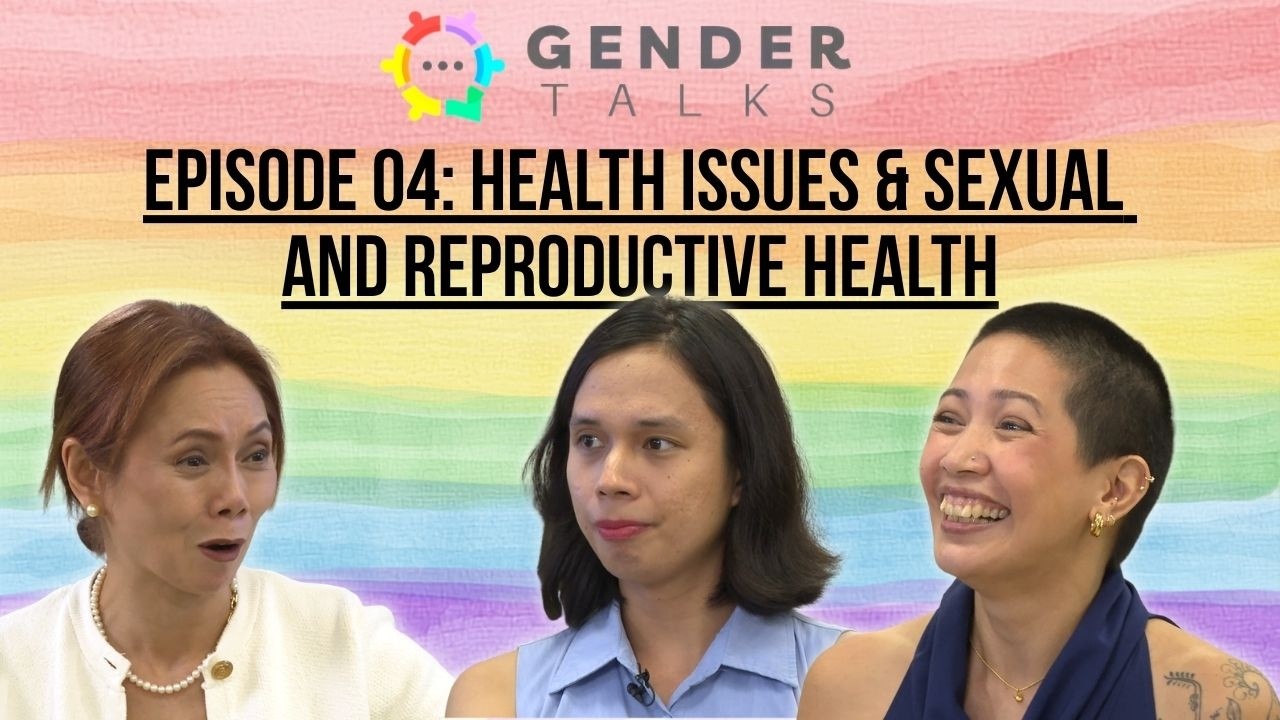
GENDER TALKS | Season 2 Episode 04: Health Issues & Sexual and Reproductive Health
Watch on YouTubeVideo summary
This episode of Gender Talks focuses on the critical health services required for women and the LGBTQI community, highlighting significant gaps in their provision due to stigma, discrimination, and systemic barriers. The discussion begins with HIV, emphasizing that it is a medical condition affecting all individuals regardless of sexual orientation or behavior, rather than a punishment or a result of immoral conduct. Experts argue that reducing the fear surrounding HIV requires dismantling deep-seated misconceptions and religiously influenced stigmas that label affected communities as "morally unclean." By reframing sex as a source of intimacy, love, and joy, and treating HIV like any other manageable illness through antiretroviral therapy, society can normalize testing and treatment. The conversation underscores that with proper medical care, people living with HIV can lead normal lives, making it essential to protect them from workplace discrimination and ensure they are not forced to disclose their status while still advocating for their rights.
Beyond HIV, the dialogue addresses the urgent need to expand access to sexual health services and correct harmful myths regarding transmission and testing. A major obstacle identified is the lack of affordable and accessible testing facilities, particularly in underserved areas where designated treatment centers are scarce. The hosts suggest that integrating sexual health into routine self-care and utilizing home test kits can demystify the process and reduce the shame associated with visiting clinics. Furthermore, the episode highlights the importance of education through modern platforms like social media, where influencers can normalize conversations about testing in an entertaining and non-threatening manner. Economic factors also play a crucial role, as high costs for vaccines and lab services prevent many from seeking care, necessitating policy changes to subsidize these treatments and ensure that preventive measures are available to everyone, not just specific demographics.
The conversation then shifts to gender-affirming hormone therapy (HRT) as a vital component of the transition process for transgender individuals, helping their external appearance align with their internal identity. While acknowledging that HRT is not mandatory for every trans person, the speakers stress that access to endocrinologists, psychiatrists, and affordable lab tests is currently hindered by high costs and stock shortages in drugstores. To support this community effectively, the health system must become more inclusive by providing subsidized medical services and ensuring that necessary medications are readily available. The discussion also touches on the Human Papillomavirus (HPV), noting its link to various cancers and the need for broader vaccination campaigns. Overcoming barriers related to age restrictions and vaccine costs is essential, alongside fostering an environment where open discussions about reproductive health occur without fear of judgment or ostracization.
In conclusion, the episode calls for a comprehensive approach to gender and health issues that involves raising critical consciousness and designing equitable healthcare systems for all genders. The hosts advocate for ending the stigma surrounding sex and sexuality, urging society to view these topics as integral parts of overall well-being rather than sources of shame. By making health services accessible, affordable, and free from discrimination, communities can create a supportive environment where individuals feel safe seeking help. Ultimately, the goal is to build a future where healthcare systems serve everyone respectfully, ensuring that no one is left behind due to their gender identity, sexual orientation, or economic status, thereby fostering a healthier and more inclusive society for all.
Read the full video transcript
[music]
Good day everyone. and welcome back to
another episode of Gender Talks here on
TVP. We've covered a range of topics in
our past episodes and now we are back
with another interesting and crucial
topic. This time about the key health
services necessary for women and the
LGBTQI community and the gaps in their
provision. Before we begin, I'm Nati
Africa Verscelles from the department of
women and development studies and with
me today are I'm Laka Numali from the
department of English and comparative
literature.
>> I am Ena Gakad from the department of
women and development studies. Okay,
let's first take a closer look into the
health services most crucial for men who
have sex with men or MSM.
Transgender individuals and other
high-risk groups including those that
are currently underprovided or
inaccessible starting with those related
to the human immuno deficiency virus or
HIV. So I have a question. What specific
steps can be taken to ensure that at
risk groups receive the crucial HIV
related health services they need
without the barriers of stigma and
discrimination?
I think
people living with HIV vulnerable group
for example men having sex with men or
trans people. So I think that
stigma
HIV medical condition
for example contract HIV it is a disease
like every disease and everyone is
susceptible to it. It's not like you can
only get it if you're a quote unquote
or if you engage in promiscuous
behavior. Even if you're straight, even
if you're heterosexual or you're sis,
you can still get HIV. So I think
addressing stigma.
>> I agree. And a major barrier to I think
[clears throat] still is also stigma.
And many members of the LGBTQI community
are judged and viewed as quote unquote
morally unclean often influenced by you
know our religious beliefs. So with that
no what strategies can be implemented to
reduce this stigma and encourage more
open and inclusive health discussions
within communities cuz that will help
dstigmatize the topic of HIV
and other sexuality issues
discussion that should really happen is
there's no problem if people want to
have sex
>> basta they are having sex with people
that want to have sex with them as well.
Um, and then also recognizing the value
that sex creates, which could be
intimacy, which could be a sense of love
or a sense of joy,
wedding forever, wedding for now, but
recognizing that it is valuable an
interaction. And then second looking at
categories,
joy, connection, intimacy and then tell
each other how unfair that whole
enterprise in society is.
And once we start to open up the
discussion about sex, it will easily
allow for the risks that are associated
with sexual intimacy to be discussed as
well as something that is part of the
engagement between two people. Um and
then finally again with our now modern
very scientific efforts to curb and
combat disease. Now, as long as you get
access to a trained professional, as
long as you get access to testing, and
as long as you get access to preventive
or curing measures, technically
even if you live with HIV,
[clears throat]
>> you have to add something.
>> I want to add that
HIV
and scientific advancements
vulnerable or
HIV. People living with HIV can live
perfectly normal lives
so long as awareness and access to
medical care and medical facilities. So,
it's not something to be ashamed of and
it's not something to be hidden. Of
course, But neverly pressure a person
living with HIV to come out to disclose
their status. No, but at the same time
should be aware that there are many
people living you know living with us
know possible colleagues, friends,
workmates, people living in the same
apartment building who might have HIV
which is fine and which is like any
other medical condition that a person
might contract throughout their lifetime
and it's not something to be scared of
and it's not something to be ashamed of.
That's a nice way to look at HIV because
the tendency nice to see it as a death
sentence. There are also continuous
misconceptions about how you can even
catch it anybody. They think that it's
so easily transmissible etc. And also
it's because it's um very um
predominantly seen no among um
transgender communities or MS and men
having sex with men.
stigmatized but in reality it's an
illness just like any illness and it can
be controlled by anti-retroviral
therapy for instance okay so um there
are also problems that people living
with HIV face in workplaces
and there have been no cases wherein
they have lost their jobs because of
their HIV status so what do you think no
to protect this community of people
living with HIV who are employed. No,
how can we strengthen legal protections
no and workplace policies to ensure that
this these people living with HIV are
not discriminated against?
Employment and livelihood.
>> Yeah. Um top of mind is the
implementation of the laws we already
have like safe spaces act um antisexual
harassment at different levels in the
workplace workplace policy
anti-discrimination efforts workplace
policy and embedded into each of these
policies and supplemented by the force
of the law you responsibility now
employers to maintain all information
about their staff now to be private and
confidential. Second, actually my
question is why would you have to ask
the HIV
>> all these details about a person who's
working with you unless you had to know
the health status particular health
details that are relevant to the job
here.
So sometimes people or employers assume
that they have the right to know
absolutely everything about one of their
employees or all of their employees and
then make a decision about the fitness
of a person to continue on the job based
on obscure health things that are not
even related.
>> And then that is just basically flatout
discrimination. but they will make it
look as if they're only looking out for
the well-being of that person or their
company. And a lot of these things
really do require for us to look inward
and say
what is the intention for all of us
having this access to information about
other people.
>> True.
Protections that are provided for by the
law without giving up so equality bill.
>> We need the equity. So let's start with
that and then let's go back to the issue
of HIV. No, a second major barrier to
getting tested are the many
misconceptions no about HIV because we
want to continue to educate our
audience. No, people often think that if
they're physically fit or don't have any
symptoms, there's no need for testing
and then if they're monogamous,
they also think that I I'm protected no
from HIV. [clears throat]
So with that, what strategies do you
think can be implemented to correct
these harmful myths? No. And promote
regular HIV testing as part of routine
health care for everyone, not just
members of the LGBTQI community, for
everyone cuz all of us are actually at
risk.
Can you just give us an idea?
>> I think emphasize
testing in addition to it being
something to secure oneself.
No, I remember that in a couple of years
ago for HIV of course important
important part counseling
both pre and post test counseling
home test kit to test if you have HIV
which is very convenient no and it's
something which certain organizations
give out for free so it's something that
a person can easily do in the privacy of
their own home
healthare provider
which again it's there's nothing wrong
with being seen there sense of shame
that a lot of people uh or or or
timidness that a lot of people
experience. So it's something getting
tested it's something you can do as
easily as getting a using a COVID test
on yourself.
>> It's reliable as well.
>> Yes, it's reliable.
>> Is it financially prohibitive? How much
do these tests
>> I got some tests for free? Yeah. Yeah.
Libra pa.
>> Okay. That's important cuz we know for a
fact that access to testing services h
outside no is limited. There were only
180 designated HIV treatment facilities
in the Philippines as of last year. So
how can we expand access to HIV testing?
Do we need to expand it if we can have
pa these home kits? But do you think we
should still expand access to HIV
testing and treatment services across
the country especially in areas that are
underserved?
>> I think expanding access to sexual
health in general because in hospitals
for example there are so many different
kinds of fields of medicine uh targeting
different kinds of bodily ailments from
for example uh respiratory ailments or
uh digestive ailments
that support for when it comes to sexual
health. Yeah.
>> Oh, sexual health
which brought up the fact that
enjoyment of sexual health. How come we
feel that we have to deny ourselves the
joy of sexual health? because to
contract an STI or to contract HIV would
be seen as a scarlet letter and be seen
as a morph against their person. It's
not okay and it's not just HIV. It's
there are a number of STI that anyone
can really get no matter how safe or no
matter how monogous you think you are.
So in addition to expanding um support
for people living with HIV for HIV
testing facilities, I think expand
medical support for sexual health in
general. Yes.
>> Okay. But we still know also that there
is a fear of testing positive.
You're you're fearful of the results
which could be positive and also what
comes after that no can be overwhelming
for many. And you said there is
counseling that is given. But what more
people should know is that HIV like we
already mentioned earlier
with anti- anti-retroviral therapy
people living with HIV can reduce the
viral load to undetectable levels now
making it actually impossible not to
transmit a virus and to live perfectly
normal lives. No. So how can health
campaigns more effectively communicate
the advancements in HIV treatment?
I mean some do
advancements
other advancements like there's a team
from UP Manila that is investigating the
efficacy of a plant. Have you heard
about this lang? It's a plant extract
that is used to treat HIV especially
given the rise of drug resistance in the
country and art's instability to target
latent infection. So art okay art highly
effective but there are still barriers
to uptake [clears throat] and adherence.
So art can be be accessed at designated
treatments facilities which is a problem
for those in areas without HIV hubs. So
while the therapy itself is free for pe
people living with HIV, patients often
face additional costs for lab services
again no and consultations making
treatment challenging for many. So
other um therapies ar
instance you were not even aware that
there's that plant extract developed in
UP Manila. So there's a communication
problem also perhaps
>> there's a communication problem and I
think it's also tied to the fact that
continuing to demonize people living
with HIV and exaggerating the effects of
the disease I think they serve certain
political ends now
>> elaborate can you elaborate on the
political ends
>> more conservative people would like to
use HIV as a kind of boogeyman or as a
sign that people who are queer here.
People who are gay or transgender will
naturally get punished by God.
>> Oh, okay. So, like
it's like a punishment that you're
supposed to fear.
>> Yes.
>> And that's how it was taught to us when
I was in Catholic high school. Yes. Yes.
That HIV is God's punishment to gay
people.
>> Yes. So, so what do you think about this
enabl
shows us as a level of acceptability for
treatments like arts or even testing for
HIV and in general sexual health? Um,
and I just remember my first time to get
tested for all the sexual health
concerns was when I was in grad school
in offer Libra University affiliated
clinic. So, Australia
Amazon
test for all of these things. I like
okay
cuz it's as simple as just extracting a
blood sample from they could use for all
the other tests that were on the list
that I didn't even consider I should be
taking. So the idea now if your health
is based on health we just assume that
it's always just about our feeling okay
but lately we've encountered all of
these ideas of self-care as in you
preventive measures so that we can
continue to be okay across all kinds of
stresses. So if we start to see sexual
health as an element of self-care, then
we start to see, especially when you're
sexually active, that the requirement
for self-care includes professional
testing, includes treatment for whatever
you might encounter. That already would
normalize the whole process of sexual
health. And then maybe eventually, maybe
10 years from now, it's not as scary,
it's not as offensive, it's not as
stigmatized, but integrating it into the
more popular notions of self-care could
be a good start. I've noticed also a lot
of the young LGBT orgs doing all these
reals on Tik Tok and Instagram with
influencers just incorporating the
conversation on sexual health and
testing in their entertaining reels. So
gan class pop education approach that is
a conversation that two random friends
could have as opposed to a person
sitting with a very serious doctor
>> telling them the most dramatic result of
a testa even that treatment of how we
talk about these issues could do a lot
in terms of dstigmatizing testing and
access to medication
>> cuz it really should not be any
different from all the other health
tests
only because again of that entire stigma
when it comes to issues of sex and
sexuality that even testing becomes
something that is not talked about or
even
done.
I was just reflecting also idea
is a very appreciation of
Medicate. So there is also very a very
real economic factor that prevents
people from accessing services such as
um testing and treatment. So
intersectional gender, economics and
poverty and then the very dismal state
of our health system
and gaps
needs and then s ability system to
provide. So at the minimum having these
conversations and even normalizing fear
now what if
and then letting people know actually
you communities around HIV prevention
they are the most loving most welcoming
people that one could ever possibly meet
and to be honest never in your journey
if you are trying to heal or recover
because there will always be a community
around you.
So again, it's about raising awareness
in critical consciousness. Oh, there's
another key health topic no that I want
to talk about and it's gender affirming
hormone therapy no or HRT which is a key
component of many transgender
individuals gender transitioning.
So Lan, you have to walk us through
this. No. How does HRT help transgender
individuals transition?
>> Uh well, [clears throat] HRT helps
transgender individuals transition by
helping the outside match the inside. Uh
for example, you know, mentally,
emotionally, I've always identified
womanhood with femininity. And the bo
but the body I was born in was a male
body. So HRT helps my body be a bit more
feminine, look like, feel like, even
sound like the kind of body that I'm
more comfortable with, the kind of body
that I want. HRT is not necessary for
every trans person. No, there are many
trans people who do not take hormones or
do not transition medically and that's
fine. But for a lot of trans people,
it's another step towards the process of
becoming, you know, becoming the person
that we want to be. So it is an
affirming yes intervention for trans
individuals.
>> But there are though significant
barriers to accessing gender affirming
health care. So can you tell us what
measures based on your experience can be
taken to ensure that gender affirming
treatments such as HRT are accessible,
affordable and supportive of the needs
of the transgender community. For those
who want to transition medically, like
you said, not everyone, not all
transgender individuals are interested.
For those who are want to be able to
support them, tell us how.
So I think part of improving the
healthare system would mean that it
should be more inclusive and I think it
should be more inclusive towards the
needs of trans people like for example
um ensuring that trans people have easy
access to endocrinologists
or psychiatrist therapists who might
help us through the process of
transitioning that lab tests which are
needed to determine and if it's safe for
someone to transition or what dose would
be safe for them to take that lab tests
are at least subsidized or cheap so that
they're affordable because sometimes
they can reach 6,000 pesos which not
everyone can easily afford.
>> Ideally, hormones should be easily
available in in drugstores because often
times they're out of stock much like
many other necessary medications uh in
the Philippines. So those were some
steps I think to to ensure the trans
people get the transaffirming healthcare
that we have a right to.
>> We hope that we will be able to reach
that point where all our trans
individuals are are given no or or have
access to transaffirming healthcare. Now
let's turn to human the human papilloma
virus. No. Um this is uh more
concerning. No, cuz me strains that can
lead not more concerning but this is
concerning no because there are strains
that can lead to cancers of the cervix,
anus, penis, vagina, valva, and even the
throat. And then if you're familiar with
the Mayo Clinic in the United States,
no, they said that almost all cervical
cancers are caused by HPV infections.
And this is scary. No, it can take up to
20 years or more for cervical cancer to
develop after an infection. In fact, it
can go on in your body undetected.
So, in the Philippines, cervical cancer
is the second most common cancer among
women. Ena, I'll ask you, what are the
factors that can increase HPV infection?
>> Social factors because we know that
you're not a you're not a doctor
[laughter]
any kind of in the social factors. The
social
>> even economic economist
>> social factors definitely you obscurity
n information about bodies that are not
male y that is definitely a hindrance to
how people appreciate their bodies. And
then of course you issue n again if it
has to do with the female reproductive
system it is something that is mystical
and only meant for lifegiving daily
creation activities. So again with that
idea
purpose females
we obscure a lot of the details about
health and if people didn't know that
there was something they could study
about their health and wellbeing they
really wouldn't be looking for
information to begin with um and then
factor
HPV vaccine and the way it comes out is
[laughter]
you have to pay so much to get three
doses of the vaccine otherwise it's not
going to be effective and it is
definitely a prohibitive factor to what
whether or not people would try to
understand p HPV
>> so we need to make the HPV vaccine more
accessible
>> but you have to schedule and I think
it's only free for certain ages
>> par may certain age definitely optimal
matangap and if you're older you could
still indefinitely you should still get
the vaccine but sabaranga you will have
to pay you will schedule and then
>> so how can we do how can we improve the
accessibility
or or
>> awareness also how do we improve
awareness about
>> the conversations about health
>> and about sexual and reproductive health
that a lot of people are not having
popularizing the information Um, I guess
it also will help to integrate these
discussions in an overall health
discussion on women or LGBTQI
individuals. Making men participate in
the discussion of the health of the
women or female half of their families.
All of these encouraging society just to
be more open about discussing different
aspects of health that will eventually
lead to health seeking behaviors as
opposed to the kinds of health
discussions we're having that are very
stigmatized and very uh threatening to
the ideas or openness of people to look
into their own body.
Everything about health is stigmatized
whether from the perspective of pleasure
From the perspective of health,
should we even
proceed about to talk about sex and how?
No. So
topic today and we hope that each has
broadened your understanding of gender
and health issues. Let's continue to
push for health care systems. Let's
continue to end the stigma towards sex
and sexuality. No, that are designed. We
should work towards systems that are
designed to serve individuals of all
genders equitably and respectfully
Africa Verselles.
>> I'm Laka Numali.
>> And I'm Ena Dhaka.
And we'll see you next time on Gender
Talks.
>> [music]
[music]
>> Heat. Heat.
>> [music]
>> Heat. Heat.
>> [music]