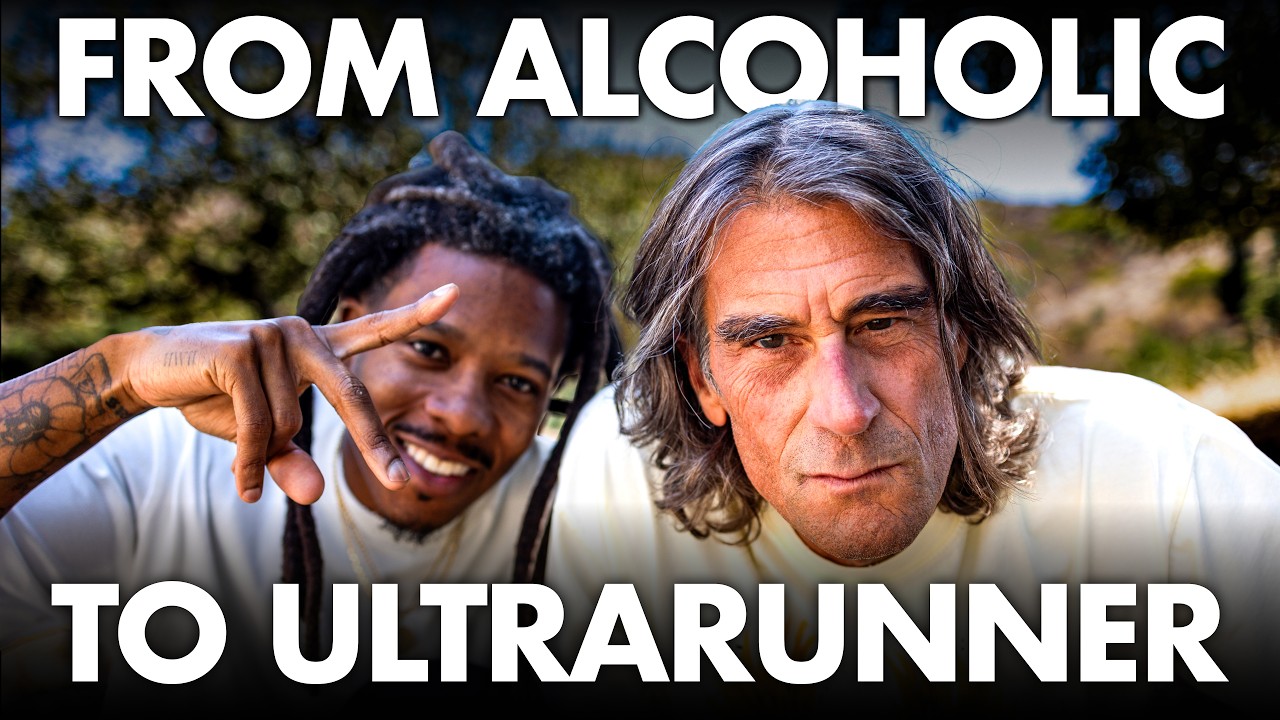
Video summary
Tommy Runs, a 41-year-old entrepreneur from Detroit, shares his profound transformation from severe alcoholism to becoming an accomplished ultra-runner and vegan advocate. His journey began at age 17 when he started drinking daily after a friend offered him liquor, quickly spiraling into addiction that led to passing out in school hallways; he rationalized this behavior as a way to cope with feelings of inadequacy and social isolation, mimicking the perceived "edge" of older peers involved in drug dealing. After fifteen years of hiding his struggle behind a facade of functionality, including holding entry-level jobs while secretly drinking until 2017, Tommy found hope through Alcoholics Anonymous meetings and Rich Roll's podcast, which resonated deeply as a Black man navigating sobriety in communities where such identities were often underrepresented. A pivotal moment occurred when his mother reacted painfully to him passing out at school, telling him not to let anyone see him like that; though he did not act immediately, this memory later fueled his quest for redemption by living according to her values after the death of his father and a period of leaving behind street life connections in 2007.
His recovery process was solidified in January 2017 when he attended his first AA meeting with the support of his friend Donovan, marking the start of over nine years of sobriety that eventually led to a complete lifestyle overhaul including adopting a vegan diet. In 2018, after achieving full sobriety, Tommy began running as a transformative activity that improved his physical health and served as a powerful metaphor for overcoming addiction, evolving his identity from "Tommy Guns" to "Tommy Runs." This new chapter allowed him to complete marathons, including the Osaka Marathon just seven days before Tokyo, and undertake the grueling 340-mile relay race from Santa Monica to Las Vegas known as the Speed Project. He credits running with providing a space for internal negotiation and self-reflection over days rather than hours, citing examples like Max Joliff's performance at Badwater and Molly Seidel's courageous finish at Western States as proof that human capability can exceed expectations even amidst physical collapse and extreme conditions.
Beyond his personal achievements, Tommy is dedicated to addressing the lack of diversity in running spaces, particularly trail running, by advocating for inclusive environments where people of color feel welcomed and represented. He emphasizes that sharing his story is about attraction rather than promotion, aiming to model aspiration and demonstrate the possibility of trail running to diverse communities while urging brands and organizations to diversify their advertising and events to avoid stagnation or exclusion. His mission involves shifting the mindset from viewing nature as exclusive to recognizing local access points for health and connection, ensuring that progress requires onboarding diverse voices rather than clinging to a romanticized past. Through his podcast, "Run Eat Sleep Show," and social media presence, he interviews industry leaders and shares insights to inspire others to pursue their own paths toward healing, self-discovery, and the understanding that inspiration comes from showing how one continues when broken and beaten down.
Ultimately, Tommy's story illustrates that healing requires confronting uncomfortable truths and building a new identity rooted in purpose, community, and self-awareness, with his primary goal being to learn to love himself enough to align daily decisions with genuine pride without relying on external validation. He reflects on running as moving toward an uncertain future while running away from a past self paralyzed by fear and alcoholism, viewing the act of finishing races despite dropping out as authentic and cathartic rather than ego-driven. While he appreciates the vibrant fashion boom in running, he remains vigilant against creating intimidating hierarchies similar to cycling culture, insisting that run club leaders actively foster an inclusive atmosphere for everyone. By acknowledging fellow runners, celebrating themed run clubs, and promoting the work of figures like Whiz Khalifa who normalized trail running through social media, Tommy continues to build a movement that embraces gratitude, humility, and the transformative power of confronting one's own limitations to find growth even in despair.
Read the full video transcript
I don't know when the morning drinking
started, but that was a standard. And
I'm just like, I'm going to die like
this. Like, this is how I die.
>> He's sober. He's an accomplished runner.
He's making a positive impact on the
world. Prepare to be inspired because
today you're going to hear the
experience, strength, and hope of Tommy
Runs.
>> 17 years old, senior year, I think it
was. Ran out of the classroom and then
like passed out. All of a sudden, I'm
drinking every day for 2 weeks. That's
like the most accelerated case of
alcoholism I've ever heard. Well, hold
on. You The story hasn't [laughter] even
The story hasn't even finished yet.
The meetings saved my life. There
wouldn't be any running if I didn't get
sober. I did Osaka Marathon 7 days
before Tokyo. Six or seven marathons in
a year. The speed project from LA to Las
Vegas, 340 mi. How do you continue? How
do you make that decision for yourself
even though like everything's telling
you to stop? So, how do you do that? Um,
[music]
>> all right, Tommy, before we even get
into it, Dan over here dug into the
archives and I want to share something
with you.
>> Hello, Rich Roll podcast. This is Tommy
Runs. I think it's important to mention
that I'm a young black guy from Detroit
area. Went sober, then went vegan, then
started running. and sober vegan runner
isn't normally synonymous with like the
black community. So, it was just so much
different for me to be going down this
road and I was kind of like on my own
with it. You know, the veganism is just
not a thing in the black community for
real. I mean, it's getting better now
for sure. But at the time, like I didn't
know anybody that was vegan that's black
or that was in my circle or even close
to my circle. So, I was just kind of on
my own looking for material and
information. uh found finding ultra and
it just spoke so much like to me. Um
I've been in AA and went through the
program. Love the program. Programs
helped me so much in so many ways that I
mean I just I feel like I'm indebted to
those people in those rooms in those
tables. So hearing that Rich went
through the same process in so many
different ways from a different side of
the world to me. Um but then also felt
like all the same feelings and all the
same like just troubles, you know? It
just made me feel at home reading the
book. And then so I started watching the
show and it seems like every time that I
was trying to make a new like direction
in my life, the podcast had a guest on
it that was perfect for that moment,
perfect for the past, the moments that
just passed that I needed to get over or
someone that was inspiring me to move on
to the next step and kind of reach
forward. My journey went from desperate
to thriving with running veganism. Now I
have a running company. I have my own
little personal brand on Instagram. Now
I'm working with companies. I've been
able to interview and I have a podcast.
I've been able to interview some of the
people that and have ended up on your
show as well to help people just kind of
navigate through these things and
through these times. I super appreciate
how much time you spent on talking about
the black community uh and the issues in
2020 that arose and came back to the
forefront. So I appreciate you. Tommy
runs. Thanks Rich. Namaste.
>> So that was 2021.
>> Yeah. So like five five six years ago um
>> I had forgotten about that and Dan
unearthed it and uh it was so fun to
listen to that today you know.
>> I happily forgot about that. [laughter]
>> So how does that make you feel hearing
that now like so many years down the
line from where you were at that moment?
Um, it makes it feel like sitting here
feel surreal because I know how much um
I know like what role that book and your
podcast and the beginning of my sobriety
in running. Um, I just I just know how
much it all meant to me to like see
somebody thriving and working cuz before
sobriety, I just didn't know like what
life was on the other side of that and
like who I would be. So to to get into
it and be curious about like
self-improvement and all that stuff, um
to catch all that, you know, catch your
your your content and your story at that
time. It was like a big deal for me. So
I was really happy to be able to like
have a moment to record my thoughts and
like send it to you, you know, whether
you used it or not. So it's like surreal
for me to be sitting here. Um and I
guess I'm proud of me then. Like it
makes me feel kind of proud. Like it's
kind of cringey hearing it, but it's I'm
proud that like I'm still
finding out like still like trying to
find out who I am in this journey but
then also like trying to help people
along the way. Mhm. I'm very moved
listening to that. Uh and knowing you uh
now you're paying it forward like this
is what we do, you know, this is what we
learn in the rooms. Like you hear the
experience, strength and hope, you put
it into practice in your own life and
then you
>> turn your head around, you put your head
on a swivel and then you pay it forward
for somebody else. And this is just an
example of that. And I think this
journey that you've been on is
>> so beautiful. You know, we first met at
the running event. How many What year
was that?
>> 2021.
>> 2021. Yeah. So, maybe it was Was that
after before? It must have been It had
to have been after, right? It was we
were introduced uh by our mutual friend
Russell Nadal. Uh shout out, Russell.
>> Shout out Russell.
>> Thanks for making the introduction. And
uh I've been able to kind of watch from
afar as you really embraced sharing your
story uh your story of addiction and
redemption uh and your running journey
and it just continues to blossom and it
feels like you're really hitting your
stride right now and you're connecting
with people uh you're out at all the
races, you're creating content and
you're inspiring all kinds of people
particularly uh you know communities
that are unfamiliar with this world that
you are now like very much a part of.
>> I appreciate that.
>> Yeah. Uh let's do uh a little walk into
the past. I want to take it all the way
back to you know growing up in in in
Detroit or just outside Detroit.
>> Yeah. Um all right. So when I was one
year I'm playing um
>> it's far back. It's you know we're we're
going to do what it was like what
happened and what it's like now.
>> Okay. Okay. Cool. Yeah. So, like I grew
up um I was born in New York and um my
mother and father separated when I was
five. So, then we moved back to Detroit.
My whole mom's side of the family is
from Detroit. And like my mom was just
like single mother kind of like from
that point on. My dad passed away when I
was uh 8 years old. He died of a of a
stroke at 39 years old.
>> Um
>> and you're 41 now.
>> About to be 42 now. To be 42. Yeah. So
like the my 39th [clears throat]
year was like I was my I was in my head
so crazy, you know.
>> By the way, you look like you're like
26. It's crazy. You're like ageless.
It's insane.
>> I heard some like some some saying like
black don't crack or whatever. But I
grew up without him, you know, and my
mom did such a great job of like really
hustling and trying to make everything
work for me and my sister, you know,
like and it was really
like a great place to be, you know, to
grow up because there was just so much
diversity in some of those schools. But
at the same time, like I felt lost, you
know, like, and I'm not sure if it was,
you know, probably because my dad passed
and I didn't have like I'm the third, so
I have the same name as him, you know,
and I just always was like trying to
chase this or thought of chasing this
person that I didn't really know that
like people spoke so highly of like it
wasn't like, oh, your dad was cool or
whatever. It's like the people that
talked about him, it it made me feel um
like I could never be that. your kid
growing up, confused, uh, not feeling
great about yourself, like what was your
kind of journey through like junior high
school and the early years of high
school? Like, who are you hanging out
with? Like, what kind of kids? Like,
where did you fit in?
>> I was not like the cool kids and I
wasn't like like
>> That's crazy cuz you're so [ __ ] cool.
>> It took a long time. I was like, I need
some fashion advice, but go ahead.
>> You're doing good. You're doing good. I
like this. I like this whole look.
>> Yeah, I thought a lot about this. I was
like, Tommy's coming in. I got to like I
got to I got to take this seriously now.
>> One thing I wish I could do is grow a
beard. And you know, every time you grow
>> I saw your video about that. You It'll
Well, yeah. I guess Well, I guess you're
40 [laughter] years old. You about to
gaslight my beard is going to come in.
>> For those that don't know, like you can
see it on Tommy's Instagram. He did a
video where where he's like, "I wish I
could grow a beard." So, you had AI. You
had AI lock you up with a beard. And I
was like, "Oh, you look like Denzel
Washington's son and tenant." Like, it's
pretty badass. Yeah. Like it it looked
pretty good. Yeah. So you're like I'm
going to go to Turkey and get
>> hair transplants on my face.
>> I'm traumatized at this point now.
>> But like you got so much on top of your
head.
>> Yeah.
>> Going on, you know? You get one or the
other. I think,
>> you know,
>> I guess I guess [laughter]
I feel like there's people with both,
but whatever. You know, um
>> we can't have everything.
>> No, you really can't. Um but yeah. So
like I don't even know. What was the
question?
>> I don't know either. Uh what you weren't
with the cool kids. Who were you? Who
who was your hang?
>> Yeah. So like I was kind of like I was I
was like in the middle like I was trying
to I was like kind of watching the cool
kids do their cool kid good things you
know like cuz we just didn't have like
you know the school I grew up in cool
meant you had the all the nice stuff you
know you had all the you had the iceberg
you know sweaters and the whatever jeans
um and that was the vibe and and if you
didn't have that you were just kind of
like had to watch it happen. So, like I
was friends with all of them, but I was
just like on the outside because I just
wasn't that cool, you know, like to them
because of like what I wore.
>> But I was always everybody knew me, I
knew them, and I just felt like I was
just kind of meandering through this
like, you know, middle school, high
school experience. It was like watching
what I wanted to be, which like just
kind of like tore me up a bit because
like I was friends with all of them, but
I just wasn't I didn't feel like I was
okay or cool enough to come like walk to
like the you know the heaters that they
used to sit on like in the hallway in
the school, you know, and it was it was
like strange, but I've always had like a
few friends. I've never been the person
that had like 20 friends at a time,
which is kind of counter like what I was
what I wanted. But I wanted all of them
to be my friend. But in reality, like
I'm the type of person that has like
two, three friends that I rock with and
hopefully till like death do us part
type of vibe. And so like middle school
and high school was like a weird thing
for me. Like I was I wasn't great at
school. I didn't like homework. I could
pass any test that you give me. Um just
because I was in the class like I could
figure it out on the test day. But I
never [snorts] really like applied
myself like just ever um at that point.
And maybe it was cuz I was trying to not
look like I was trying hard.
>> Mhm.
>> But it just left me in this like limbo
of like are we trying to do this life or
not? And if if I can't be as cool as
them, then maybe I don't want to try. Um
but I started golfing in like 8th grade
or something like that, which was
definitely also different at that time,
but that was like the Tiger Woods era,
so it was okay enough. But that kind of
gave me some like purpose through
through high school, which was like make
sure my grades were good enough to cont
to play. And I was like pretty decent,
but I was also still pretty short at
that point. And so it just didn't allow
me to like like flourish in the way that
I thought I wanted to. But it kind of
gave me purpose to kind of connect those
years of making sure I didn't like flunk
out of school. Um so
>> so no track and field, no cross country,
basketball, no running,
>> golf.
>> Yeah. Like so like all the sports that I
played were just all like neighborhood
stuff. Like we had a bunch of kids in
our neighborhood and we used to play
every sport like possible. If somebody
watched a movie about football, we're
playing football the next day for sure.
>> But so I've always been athletic, but I
I never I didn't play any like high
school um sports except for on the golf
team.
>> So when does drinking enter the picture?
>> Drinking enters um in the hallway. Um 17
years old, senior year I think it was.
Um, and my friend brought like these
little nips, you know, little bottles.
Uh, he like got them from his mom or
something like that or stole them from
his mom. And he's like, "You want some?"
And I'm like, "Sure." So, the first
drink I took, it was like all of a
sudden I didn't care about what I
thought everybody else thought. It was
like the moment of like fake clarity,
like, "Oh my god, I can I don't care
anymore. I can be myself." And then once
people start realizing I was drinking
cuz then I just went from those couple
little nips to like trying to find out
like next day like how can I drink more
of this stuff? Do you have more? And
then I found out ways to try to get some
of my own. So I went from not drinking
at all really um having a family of in
my dad's side of the family is a
drinking family. Um or at least that's
what my my my view of it um to like all
of a sudden I'm drinking every day for 2
weeks
>> just like that. just like a light switch
got flicked.
>> Yeah. Like it was like I mean it was
like fast friends like I need tomorrow
like or today. I need this like now like
cuz if I can walk into school and not
like think that everybody's looking at
me weird cuz or whatever then that's
what I want. And
>> did it go [clears throat] immediately to
drinking like before going into school
like in the morning?
>> I was just looking forward to after.
>> No no it was in school. Wow.
>> It was cuz I needed it in school in my
head. Yeah. like right away. Like, so
that's like the most accelerated case of
alcoholism I think I've ever heard.
>> Well, hold on. You the story hasn't even
the story hasn't even finished yet. So,
like two weeks into the drinking thing.
Um, this is the first time I've said
this uh on on microphone before. So,
this is funny. Um, so the first into two
two weeks into drinking, there was a pep
rally day and I had gotten whatever
liquor that I thought I needed or
whatever. And I drank so much cuz like
even in that first two weeks, people
realized like I had a drink on me. So
they would be like wanting the drinks.
All the cool kids, oh, let me take a
sip. Let me take a sip. So like then all
of a sudden I needed to have extra, you
know? And then so I'm drinking
throughout this whole day, this pep
rally day. It's only a half day. By the
time like before the pep rally, it was
only like two hours into school. Like I
wake up and I'm on the floor in the
bathroom,
passed out with my mom, my principal,
and like the security layers on like
standing over me cuz I had like ran out
of the classroom and then like passed
out. And that was two weeks into my
alcoholic like journey.
>> Wow, that's wild. Like I tell that like
cuz it's probably my mom's probably like
you did not have to tell that story. But
it's just like it just that just shows
like how powerful like alcoholism
alcoholism is because like in any other
scenario that happens to you that fast
into this thing you're scared straight.
You scared away like I I can't obviously
that's not for me. I can't handle it.
>> But what I did was like slowly like okay
well if I can't drink liquor right away
cuz I just can't even smell it cuz it's
just too it just sends me off. Maybe
I'll just drink some beer. like as I got
back into it. So, I like slowly like
weaned myself back into it because I
just needed to have like that feeling
again.
>> Uh yeah, a normal person would be
appalled and say, "Yeah, no more of that
for me." But the reason that it happened
is because you're not that guy. Like
from the first drink, you're like,
>> "Oh, this is the solution to all my
problems. This just makes me finally
feel comfortable in my own skin."
>> And you begin to realize like how
uncomfortable you've been all along. as
if all the cool kids had this operating
manual for life and they're all walking
around feeling great about themselves
and and now you've discovered this
elixir of life that allows you to feel
the way that you assume everyone else
feels all the time.
>> Yeah, it was a cure to to like the pain
that I felt like I was going through
every single day.
>> And that's the thing that gets missed, I
think, too often in discussions around
alcoholism and recovery. Like it works.
>> That's why you're doing it. you know, it
is a solution to a problem. It's not the
problem.
>> The problem is, you know, you feeling
uncomfortable in your own skin and why
that's the case, right? And until you
heal that or find a solution for that,
>> uh, you're going to continue to drink.
>> Yeah.
>> This episode is brought to you by Whoop.
To celebrate turning 60 in a handful of
weeks, I am planning to guide a disabled
athlete at the New York City Marathon,
which is quite the leap from where I was
not long ago, slowly recovering from
spinal fusion surgery. And to be ready,
I have plenty of hard work ahead of me,
but I need to do it smartly. meaning I
need to check my ego to prevent it from
writing a check that my still very much
healing spine simply can't cash and this
is where Whoop becomes my essential
training partner preventing me from
overstrain because I always want to do
too much [music] so I best absorb the
training load that I'm putting my body
through and Whoop does this by providing
feedback on how my sleep and my recovery
are trending against the [music] strain.
So each day's decision gets made from
evidence instead of some old habit or
from insecurity or anxiety. Push today,
back off tomorrow, [music]
trust the process. Getting to that start
line healthy really is the achievement
for me and whoop is how I protect it.
Whatever your own start line is, it can
be a race, season, or just a stretch of
life that you want to show [music] up
for, that awareness changes everything.
So check it out. Go to
join.woop.com/roll
for one month free of Whoop.
I spent a lot of time on this show
encouraging you to chase experiences
that actually light you up. Careers, of
course, but also hobbies and other
pursuits that could turn into revenue
generators [music]
and even careers like a coaching
practice or the creative thing you've
always pushed off until later. But if
you're going to do that, you need
somewhere people can find you, book
[music] you, and pay you. Otherwise, it
will always just remain a hobby. And
Squarespace makes that part almost
embarrassingly simple. It's the
all-in-one platform to build your site,
claim your domain, and run the whole
operation in one place. And if you offer
a service like consultations, sessions,
live events, it's got the unglamorous
stuff that actually runs a business
built right in. The Pside flag is the
email campaigns. You can set up
automations that stay connected with
your people, nurture the ones who
haven't booked [music] yet, and keep you
top of mind, all in templates that look
as good as the rest of your site. That's
the difference between [music] a website
that just sits there and one that's
actually working for you. Turn the thing
you love into something real and get
paid for it. Head to
squarespace.com/rich
roll for a free trial. And when you're
ready to launch, use offer code rich
roll to save 10% off your first purchase
of a website or domain.
That's such a extreme kind of episode
where, you know, even a young person is
going to know immediately like, oh, this
is like like my my thing with this
drinking is different than
my classmates.
>> Yeah. Yeah. Yeah. Not that you're going
to do anything about it. But you're like
you you make a mental note of it.
>> I knew I was an alcoholic
>> and like you don't want to be the guy
who's passing out. So you realize like I
got to reel it in, but I got to find a
way to be able to continue doing this.
>> Yeah. Like you have to it's like okay
lesson learned instead of you know
lesson learned. Here's how I can do this
better, you know, and be I don't want to
be that extreme cuz that's that's
abnormal as well. I'm not going to fit
into the cool kids if I'm laying in the
bathroom floor. But how do I like how do
I weave this into my life in a way that
can allow me to be functional? And I
think that like the functional
alcoholic, the term that's the most
dangerous
term that is thrown around like in
society to me because that's the issue
cuz you if you're if you have a job, if
you're moving forward, if you're going
to school, doing the things, you're
you're not on the side of the road, you
know, drunk all the all day. You feel
like you're normal in some way. And then
you it just lets you just pass time and
continue to just like make these
decisions or tear your life apart or
tear your health apart as you
>> Well, the word functional is the wrong
word. Like you're operating
dysfunctionally. Yeah.
>> But you're not so dysfunctional uh that
anybody is going to kind of force you to
stop doing what you're doing. You can
get by, but you're operating at like
such a suboptimal level in
>> think you're crushing it. You really
think you're
>> Well, that's part of the denial and the
delusion. Like nobody knows what I'm
doing. they don't, you know, like I'm
getting away with this and and then as
it accelerates, then you have to start
with all the lying and the hiding and
all of that. But what was what was the
conversation with moms that night after
passing out on in in the bathroom in
high school? She [snorts] couldn't have
been too happy.
>> Yeah. So, I don't even know. I think um
you know, this was in the this was in
like early 2000s, so like um parents
putting their hands on on kids was kind
of was okay at that point. And I was
like 17, so I think she like punched me
when I got in the car. Uh like maybe in
the chest or something like that. But
like she never like she wasn't a
physical person like that.
>> Um but I just knew like really her the
look she's always she has this like look
that she's like a lot of like a lot of
parents have
>> but it's this look that just like tore
me up and I I just felt so embarrassed
and like ashamed and felt like I like I
um like disrespected her and and
disrespected my family. And the thing
was like I had a one thing I remember
about that day is like I had a job at
that point and I had I was supposed to
go to work like later on that day and
she made me go to work but she wasn't
going to take me. So like I had to call
my grandma to come take me to work. She
knew the whole situation and she's like
this if you like I hope you get to meet
her. Um, she's like this really like,
you know, quiet, so kind. Everybody, if
you meet her, everybody's just going to
be like, they're just, everybody loves
my grandma, just automatic cuz she's
just so kind, supportive, and attentive.
And you feel like she's like looking
into your soul as you talk to her, as
she talks to you. And so she got in she
I got in her car quiet cuz I'm trying to
figure like how to not be drunk right
now. And we're driving to this this
place out in like the suburbs. And she
like right before I got out, she like
looked at me and like the first word she
said was or the only word she said in
the car was like don't let them see you
like this. Like to me that meant just it
was just so much cuz I was just walking
into this building with you know at that
time it was a it was a golf store and it
was just it's just going to be all white
people and I'm just looking a mess. So
she's like just pull yourself together
>> and don't ever let anybody see you like
this. And I wish I took like the meaning
of that like right away and and and
maybe just went a different direction.
But, you know, the the addiction won in
that in that case. But that's what I
remember from that day. And once I
finally like came to terms with like my
sobriety and started going on that walk,
I knew more like what she what she
meant. And um and I kind of tried to
chase that that like redemption of that
of that moment, you know, like
throughout my life. Now
>> with that rapid of an acceleration
uh it seems like uh it would be
difficult for you to sustain any kind of
relationship with alcohol for very long.
But
>> that was what year? 2000
>> 2002.
>> 2002. You get sober in 2017. So you got
a good 15-year run after that.
>> Yeah. Yeah. Good is is a is a strange
word. [laughter]
>> Yeah. from so from that point like I got
back into it just a little more tame I
thought I was being and like I said I
eased back into it
>> and
I just knew my I kind of learned my
limit you know I thought I learned my
limit at that point like I'll never I'll
never be that drunk in public ever again
I'll never drink that much in a short
period of time ever again like I set
these parameters without like without
knowing it and it just allowed me to get
to the point of you know okay I need to
go home and I would just go home.
>> And you were able to do that.
>> I was able to do that, but then a lot of
but that also led me to like this really
isolated life. You know, you had family
and stuff like that, but I still was
like I would just be at home drinking. I
wasn't I wasn't the type of drunk or
drinker that like would want to be
outside and at the bars and stuff like
that. Like that.
>> Yeah. You're taking your grandma's
advice. It doesn't You're you're not
interpreting it as stop drinking. Just
don't let anyone see you doing it.
>> Yeah. Yeah. So, like and if you're in my
house Yeah. It is what it is. like, you
know, so that was my my my thing was
just like kind of hide hiding it as much
as I could and then just never being in
a car.
>> Um, you know, absolutely just trashed or
just I just didn't want to be around
people like I was very alone to myself
like drunk and that's it was just part
of I wake up every morning and finish
whatever I didn't you know the day
before.
>> So the morning drinking started pretty
early. Um, I don't know when the morning
drinking started, but it was, you know,
definitely around like 200 like 12 or
13. Like that was standard, you know,
and that was and I I just pulled from so
many different like dumb inspirations.
Like it was a dude that I I remember
being around like cuz after I graduated,
I went down this whole like street like
rabbit hole where I just knew that I
wanted to be out there or outside like
that. And as a dude I knew that was like
he would drink every day before he'd go
out, you know, into the world because I
mean he was living a much different
lifestyle, but he just felt like he
needed to have like a edge when he went
outside.
>> And I'm like, well, I'm going to work
inside, but I could I could still use
this like little edge. So, I was just
using all these little random moments to
validate like how I was like moving
through my life. And but I just, you
know, like they said, like there's like
three phases of it. It's fun in the
beginning. In the middle, you're just
kind of maintaining. And at the end,
it's just like absolute torture cuz you
there's no chance of of stopping this
this like train that's just is
constantly rolling. And like every time
that I would try to like stop, I would
try to stop for like a week and I
couldn't make it a day. And so every
time I'd wake up in the morning and
drink or every time that I would fail on
these like little small little stances
of of
sobriety or like dry Januaries, it just
felt like every day I like I was losing.
I'd wake up every day and take a L. And
it felt so out of control. Not because I
was just like
walking around the street stumbling
around, but I was just had no control
over my next like 20 minutes. Every time
that happens, it's it's like another
deposit in the uh hopelessness,
desperation, uh piggy bank.
>> Desp desperation was was like if I could
have bought like two weeks of sobriety
with every dollar I had at any point, I
would have just to say that I did it. Um
>> did you know anybody that was sober or
that didn't drink or you were just it
was like lower companion situation? No,
I mean [clears throat] I I knew people
that drank normal like regular like
people that would drink once every week
or something like that and they could
control it. When you leave somebody's
house like you'd buy a bottle and you
take it to the house to have a party and
you come back 2 weeks later and that
same bottle is there. Like those people
drove me crazy. Like how did you not
drink this while I was gone?
>> But no adult in your like orbit who was
like yeah I'm an AA person.
No one's checking in on you like that.
Like cuz even the people like in my
people in my family like um on my mom's
side that didn't drink,
>> they drank every now and then, but it
was no like no intentional, you know, I
go to AA was was a movie thing for me.
>> Um that's the only time I saw it and it
was never really depicted in like this
light of like you should check it out.
>> Yeah.
>> That wasn't an option.
>> Yeah.
>> For me.
>> You worked for many years uh at a auto
transport company, right? Like now
you're full-time running influencer
racer dude. Uh but you had a pretty good
job for a long time. Like you kind of
worked your way up the ranks to like a
VP level I guess, right?
>> Is that a job that you started like
right out of high school or or you know
like how did you find your way there?
And then how are you uh kind of uh
getting promoted at your job while
balancing this secret life as a morning
drinking alcoholic? [laughter]
>> Functional bro. Oh, no. It was
>> because they they must have on some
level. There's no way you had to just
smell bad.
>> I asked him after I got sober. I was
like, "Did you?" And he was like, "No,
>> I didn't."
>> Wow.
>> And I mean, he had to be lying to make
me feel good. I don't know. But so I
started working for them in 2007. So
like from the like graduating high
school to 2007, there was like this like
little area where I like I jumped into
like I guess like street life um in a
way. And
I I found myself going directly in this
path of of like self like actual
self-destruction and like gambling like
my freedom
>> and life like every day.
>> What are we talking about here? Like
selling drugs or
>> um so I knew people that I knew people
that did and I was around people that
did. Um, and like I dabbled in it here
and there, but I was much more like the
younger dude around like people that
were like 10, 15 years older than me and
they were just doing really well. And I
met them through through a girl that I
knew at the time. And next thing you
know, like cuz I I I I grew up
glorifying like that,
I guess, the cars and the money and
stuff like that, but it was really more
of like that masculine like I have it
figured out energy and and that
confident energy that I felt like I
didn't have. Like, so I watch all these
movies and it's like, yo, that's the guy
that I that I think I should be like,
you know, I should be like running this
or having, you know, money and doing
what I want to do. And so like all of a
sudden to like run into some people like
this, they were they were everything
that I thought I wanted to be, which
was, you know, confident, took care of
their families, um, and people knew
them, you know, and in hindsight, it was
a very dangerous like decision for me to
be like, "All right, what y'all need?
And let's let's work and let me help and
let me, you know, make some money on the
side here, do all these like it was it
was a um a big risk, but like I actually
like thank God that that I met them and
not like a different set of people
>> cuz it wasn't like I guess hand to hand
like it wasn't like I was like standing
on a corner somewhere. Yeah. Like it was
>> much different than that and a little
safer but probably higher. the amount of
years that potentially you could get if
you got caught doing something would
probably be a little a little crazy. But
it was I'm just happy I met them because
they they kept they were kept me farther
away far away from that daily energy as
possible. But then they also like
strangely had even though I looked at
the drug dealing part of it as yo this
is who I want to be because they're drug
dealers. It was really who I wanted to
be because they were a lot of these guys
are people that are just trying to take
care of their families.
>> Yeah. They look like they're thriving.
>> They look like they're thriving. But
then a lot at least in the generation
that I grew up in and looked up to, they
had morals and like and in and to a to
an extent and had
like a code amongst themselves like how
they would carry themselves in the world
and how they would take care of them
their families like you know this is all
a roundabout story to get to like 2007
but when my my kids mom had our daughter
uh in 2007 in 2007 I needed to get I
needed to make a as I couldn't be in the
house I was in and have her in the house
with a baby. So, we moved to this other
house. And
I didn't see a dad directly with with
children until I saw these guys handle
their kids. And so, like for 2 3 years,
I I acted I treated my daughter how they
treated their their little girls. And I
would say the same things to my daughter
eventually that they were saying to
their kids. and they like taught me how
to be like a a a father and like a man
to a to kids and a man to a woman, you
know, and so it's like a blessing, but
it was it's a weird it's a dark moment
in my life, but it was also this
blessing that I ran to these people in
general. But so like to fast forward to
2007. But before you go there, I mean, I
think the
point that stands out to me in in what
you just shared is that these things are
not black and white. It's in the same
way that we were characterizing alcohol
as a solution to a problem.
>> You know, you could look at this
community of people and now in
retrospect realize like that was a bad
decision. That was a potentially
dangerous environment for me. I'm
grateful I got out of it.
>> But they were fulfilling a need. like
they were solving a problem for you by
being a mentor in a certain kind of way
that you needed and lacked and didn't
have in your in your upbringing.
>> Yeah. And I'm like super thankful for,
you know, to them and for them. I'm not
really in communication with them that
much at all anymore, but like they they
kind of gave me the blueprint of like
how I can move in the world and how I
can thrive in the world. you know, all
you just got to replace, you know, you
know, from drugs to something different,
but like how do you carry yourself
through these business interactions and
how do you u like stand tall, I guess,
on your on your what you believe is true
and right and how do you move forward
with that like with some sense of
confidence and build.
>> Um, so like that was just a that was
definitely a blessing.
>> So, you have kids all of a sudden.
>> Yeah.
>> How old are you?
>> I'm 40 Well, at the time 23 23
>> 23 in 2007. So I imagine that's a that
that was a catalyst or kind of a
recognition like hey like I gotta like
figure my [ __ ] out a little bit.
>> Yeah. So like I'm So I started say like
I'm I'm going to get a job now cuz like
I can't I don't want to be like the
movies just doing one more little thing
for a couple dollars here and then all
of a sudden like you're in prison. So
I'm like all right let me get a job. And
I was I I said no to using like some of
the cars that I had access to before cuz
I just didn't want to have to be pulled
in that direction. So I'm like, "No, I'm
good." Or, you know, and I was paying
for a cab just to get back and forth to
this church that I got a job at. There
was a church that my mom like like kind
of grew me up in and like for my like my
high school years. And so I'm working at
this church and also sort of trying to
play that lifestyle of trying to make
money every now and then if I could. But
it was just like this hard thing to go
from like having everything that I
needed and making really good money to
all of a sudden trying to raise another
person and
figure like this like life out. And it
was just my mom came to visit and cuz
she was living in Massachusetts at the
time and she came to visit for a few
days and I was just trying to hold it
together like as much as I could and act
like this like $20 that I had was like
enough. and she like saw it, didn't say
too much. Her and my grandma came picked
me up and took me to like Target or
something like that to buy a bunch of
stuff and they're like, "Oh, we just
want to help you with like a home a
homewarming type of gift." And she
called me like a month or so after
visiting and was like, "I see that
you're I don't know what you're doing or
what you were doing. I see that you're
trying to make a difference or a change
in your life and you're trying to take
care of this little girl. Um, if you
want, you could come to Massachusetts,
live with me, and you know, you can
bring, you know, you can bring Iris, her
mom, you can bring her, too, and you
guys can start over if you want.
>> And she's like, it's different. It's
Newport, Massachusetts. It's like as
white as you can get,
>> you know? And I'm like, uh, let me talk
to her and see what she said. And she
said yes. Like within like first
conversation, she's like, yeah, sure.
Let's get out of here. cuz she everybody
saw me like that cared I guess about me
saw me trying to figure this thing out
and not like resort to what I thought
was the easiest way to make money at
that mo at that point. And so I moved um
my mom the guy my mom was like really
close friends with came picked me up on
September 10th 2007 and we drove from
you know through Canada um to go to
Massachusetts. All my stuff was in the
back of a pickup truck and we just like
started this life over and I started
working at like a a doughnut shop for
seven days and then the eighth day I
started at at Lowe's like home the home
improvement.
>> Yeah. worked there for two months. And
while I was working there, I got hired
at Reload Trains, Auto Relocation for um
at the entry level position. Like I was
the money I was making was like kind of
laughable like but it was definitely my
first desk job and I started at the
lowest position you could get and just
over those years I I just kept kind of
climbing and kind of instilling like
what I saw my mom and my sister and my
grandma do in their lives which is just
like keep going forward and figure it
out. So, how many years were you in
Massachusetts before you moved back to
Detroit?
>> I moved back to Detroit, I think, in
like 2014.
>> Oh, wow. So, so I was there for like
seven years.
>> Yeah. So, like six or seven years, I was
out there. And in that, in that time,
like I I I stopped working for Reload
Trans in 2025.
And in that time, I went from the person
that just talks on the phone about the
relocation that ads puts it together to
sales to creating a position for like
director of sales and then just kept
working my way up because I was just
making a name for myself in the industry
and really like helping the company grow
really quickly. But all that time I was
like my my addiction was just there
>> and [clears throat] it was just
increasing. And then I was drinking
during the job. I was had like liquor in
Red Bull bottles, you know, just
thinking that the smell of the Red Bull
would like mask the liquor. But I it was
keeping me together, I thought. And um
couple like scares like health-wise and
just like decision- making, but somehow
like I put this like string of of years
together where I was really thriving.
The first time I saw an R2 in person, I
got it immediately. This is the Rivian
that a lot of people are going to be
able to enjoy. Driving it with R.J. only
confirm that.
>> All right. So, first impressions in my
first
>> in your first
>> experience in the R2.
>> Nice. All right. Now I'm getting the
feel.
>> Yeah.
>> Feels [music] really tight.
>> It feels nice, right?
>> Yeah. Interestingly, like from a first
impression point [music] of view, when
you see it from a distance,
proportionally, it looks very similar
[music] to the R1, you know, like the
way that it is designed, it looks kind
of integral with the original.
>> It's quite a bit smaller. And [music] so
when you look at them separately,
sometimes people be like, is that an R1
or an R2? And they have a lot of
similarities.
>> But I I actually think R2 ended up with
a better set of proportions. And it's
[music] that kind of thinking that just
exists across everything to try to
deliver an [music] experience that still
feels really Rivian like but at a
fraction of the cost of R1.
>> First impressions aside, there's a lot
more to the R2 than what you see at
first glance. [music] To learn all about
the R2, watch the rest of our
conversation and book a demo drive at
stories.
Roll.
All right, you guys. I got to tell you
about Freaksof Nature. Have you heard of
this? This is the sexiest sunscreen on
the [music] market. It's also the first
natural one that I found that actually
works and it's the best for just so many
reasons. Not the least of which is
because it gives you 80 minutes of water
resistance. All without any white
streaks or greasy hands. These products
have no chemical fillers, no
microlastics. Just like the sunstick,
this mineral spray right here, it just
disappears into your skin. It doesn't
turn your face and your skin [music]
white. It hydrates you with just the
good stuff. Aloe, green tea, hoba,
supporting the skin barrier instead of
stripping it. [music] I'm in love with
this product line. I've been using the
Freaks of Nature products all summer.
[music] And so, I can personally attest
to you that they work. So, thank you,
Kelly Slater. You beautiful legend of a
man. You actually did it. You finally
cracked the code and created a series of
environmentally conscious, chemical-free
skin care products that live up to your
insanely high standards without any
trade-offs. The Sunstick sold out last
summer and their mineral spray is
selling really fast right now.
Everything is in stock right now, so
make sure you get it before it sells
out. Go to freaksofe.com and use code
richoll to save 20% when you order now.
So, you're moving up in the job, but
your quality of life is degrading. You
have a 10-year run drinking as a parent
also.
>> Yeah.
>> You know, that has to be like looking
now, you know, backwards at those times.
Like, it seems like you have a great
relationship with your kids now.
>> I think so. I tried to. She's 19. My
son's just turned 16. Um they I mean I
don't think they remember me drinking,
you know, but she remembers me as a dad
then. So I don't know. I just don't
really know like how much of that life
she remembers. But I'm so happy that you
know that I've been I've been sober
going on I've been sober over 9 years
now. And it's um I I can't I'm so
thankful. like I don't even necessarily
have the words of like how happy and um
grateful I am to be in their lives and
be in and be a point of inspiration in a
way or I don't hide you know the fact
that I used to be an alcoholic or I am
an alcoholic when we first met correct
me if I'm not me remembering this
properly but uh when we were talking you
you were still sort struggling with
whether to share your addiction and
sobriety story. I mean, obviously you
were much earlier in sobriety at that
point.
>> Yeah.
>> And now this is, you know, it's it's
sort of running first in terms of like
how you communicate publicly, but um the
recovery piece has has become much more
prominent in how [clears throat] you
think about, you know, how you share
your life. Yeah, it was definitely like
I didn't being in corporate for so long
and trying to build yourself, your your
personal brand, but then also you're
working you're representing a company
like I didn't ever I never talked about
sobriety. Even after I got sober, I kind
of was really quiet about it cuz I you
don't want to you don't want to
negatively impact a company, but I had
to like come to terms with this is my
per this is my personal brand. This is
my message. this is like could
potentially be my purpose in the world
is to share some of the things that I've
learned and I got on a podcast uh once
or it was like a live with believe in
the run and he it was like 30 minute
little spy he asked me some questions
and there was a moment that I could have
talked about sobriety but and he like
teed it up perfect for it and then I
like pivoted and went back to running
and I got off that that 30 minute live
and felt so terrible like like I missed
an opportunity potentially help one
person maybe. And I'm like, okay, if I'm
going to do this whole Tommy Runs thing
and I ever get an [clears throat]
opportunity to be on a podcast again, if
someone ask me that m about that moment
or there's a chance that I could talk
about sobriety, I'm doing it. And I
think that was when we met, it was like
kind of right before that all that
happened. And you know, knowing that
there's a you too out in the world that
leans heavily into that story gives like
other people moments of um clarity in a
sense or I can do that too. And so in
that moment I'm like probably referenced
to you and other people in my brain like
they're doing just fine and there's no
one like shaming them for being you know
attempting to be sober and stay sober
and help other people. So that's when I
leaned in like I'm telling this story
because when I got sober in the first
day, the first meeting I went to, I went
into a room with, you know, it was in a
nice area. There was nice cars outside.
Walked inside, everybody, you know, the
average age was probably like 45 to 50.
Um, everybody, no one looks like me in
the room. And I walked in because a
therapist told me that I should maybe
check it out. And there's a guy that was
going to be waiting on me to get there.
So I'm like, "Okay." And I walked in,
I'm like, "These people will there's no
chance that they understand what I've
been through."
>> Yeah.
>> And then I heard
>> like a Gross Point crowd.
>> Yeah. [laughter]
>> I told you this, you know, I was born in
Gross Point.
>> Okay. Yeah.
>> Do you remember? We I think we talked
about
>> it was actually West Bloomfield.
>> So basically, same thing. Maybe even a
little
definitely a little more. And it was
like a a Bentley outside and like a like
a Porsche or something like that. Okay,
this is this isn't going to work. But
then I'm sitting there and all these
people are telling their story and they
literally in some way said how they in
their stories they they shared how I
felt you know about myself addiction um
and all that. So I'm like this is these
are my people almost immediately before
I even said a word. I'm like these are
my people and I need to be here. If I
can do that randomly on a podcast or in
some version of like a caption of a post
that I share about some shoes and I
mention something else that strikes like
that chord of like, oh, I do I resonate
with this and if he can do it, I can do
it, too. And that's been my theme for
like everything that I've done, whether
it's, you know, these big races or just
going after marathons. It's not
necessarily like I want to inspire you
to do this, but I want to inspire you to
do some form of whatever that next step
is for you. Um, so that that was really
what I was grappling with was like, can
I share this and is it helpful? And then
I had to think about like my life was
saved in those rooms because people
shared their stories authentically. They
didn't cut corners. They didn't try to
preach to the thing. They literally just
shared some of their most vulnerable and
scary and kind of like laughable
stories. Um, but it was what I needed to
to know that like it's not just me, you
know?
>> Yeah. Walk me up to your moment of
clarity. Like how did you uh wake up one
day and decide this is the day that I'm
gonna get sober. I'm gonna go to my
first AA meeting. The day was uh January
11th, 2017. Um that was the the the last
drink I had was January 10th. And
leading up to that was like just a
couple years of just trying so hard to
figure out how to string together a week
or a month or whatever. And my friend
Donovan, uh like best friend, brother,
met him when I was like 12. And we just
were like inseparable for so long. Rest
in peace. He passed in um March in March
2025.
And so he was he definitely was
alcoholic as well. He didn't never say
he was, but whenever like I would say
that I wanted to stop drinking for a
little bit, he would be like, "All
right, cool. I'll do it with you." And
it was strange how quick he would I knew
he needed it too, but he was doing it
for me, you know, in his head. But it
like it let me keep trying to do it. So
every time I would try and fail, like I
would tell him the truth and he'd be
like, "Oh, you good, bro?" Like, you
know, you got a good job. Like we kind
of played it off and kind of roll
forward. But every time I would try to
get worse and worse to the point where
like my mom text me one day in January
2007, like right after the new year, uh
he and I were going to do this dry
January thing. And I got to like the
third or fourth day into January, went
over his house. Um, our wives at the
time were, you know, were drinking and I
I made it through the whole night, no
drinking. And I woke up at like 2:30 in
the morning. Our my kids are downstairs
with his kids. Everybody's sleeping in
the house at 2:30 in the morning. And I
like went into the kitchen, found the
bottle of vodka, and just started
drinking in the middle of the night. No
one's awake. There's no reason why I
would need to do this, you know, in my
in rational mind. and
then just got drunk and
>> fell asleep. And that was the silliest
and dumbest and saddest that I've ever
been. [laughter] You know, it's like
>> at least like I could have caved like
people were awake.
>> Sleep. You just woke up in the middle.
Yeah. Like you couldn't even sleep
through the night. There's everyone's
there's nothing going on.
>> There's no benefit to me being tipsy,
drunk, or anything alike at that point.
There's no awkward social situation that
you have to show up for. Yeah, I
[snorts] just had to [laughter]
I just had to stay asleep. I could have
just went back to sleep, but I'm like,
let me go have this drink and and then
but that was just I woke up the next day
and the days after that I would just
obviously right back to it, but I just
felt that was the worst that I felt. And
I'm just like I'm going to die like
this. Like this is how I die is in a car
or you know I'm already I'm I'm 30
whatever 32 and it's going to be blood
pressure cuz my blood pressure was high
blood pressure.
>> Yeah. Like I was in the hospital when I
was 30 or something like that 29 30 with
like 82 over like 120 something.
>> Wow. Like at this point from then on I
could feel whenever my blood pressure
would get high enough like my hand was
starting to go numb like so I was
playing with like dying just like my dad
did you know?
>> Yeah. You have this you know father
figure looming over you died so young.
>> If I can't be better than him I might as
well like die sooner than ridiculous I
guess. But
>> so like that's but that's where I was
like that's like this is just how it
ends you know. There's no I I cannot
beat this. It will not happen. And
it just is what it is. And my mom like
texts me one day. She's like, "How's my
son?" And this was like a day or so
after that episode. And I'm like,
normally I just go, "I'm doing great.
Kids are good." Blah blah blah. I just
told her, "Not good." And simply like
just just that quick. Not good. Didn't
divulge what what was happening. And she
said, "You know, you should call you
should reach out to EAP. You have
insurance employee assistance program.
Reach out. They'll maybe help you." And
so I did what she told me to do
>> and they called me like the next day and
was like, "Hey, you know, they do like a
little screening thing to figure out
what type of therapist maybe you need."
I complained about family stuff and
blamed everything. The reason why I was
calling is not my fault. It's not
addiction. It's just, you know,
whatever. But she asked me how many how
many times I drink a day or a week. And
I'm like, it really just depends on like
what it is. If it's beer, it's a ton. If
it's liquor, it's 7 8 or whatever until
I can't anymore. And I wake up in the
morning, I drink. And she was like,
"Okay, no, no."
>> So, you were honest in that answer.
>> So, like I told her the truth. I told
this lady on the phone the truth. And
then they like, "Okay, well, we have an
appointment for you on January 11th uh
with this person and she's a family
therapist." And so I'm like, "Okay,
cool. January 10th, I drank at like
10:30 p.m. Like, I can't go there
smelling like liquor, so let's stop
here." Um, so I walked in and she starts
talking to me. started complaining about
family and this and that, works hard.
She was like, "Well, how much do you
drink, you know, or do you do do you
think I have a drinking problem?" I'm
like, "Yeah, I mean, I drink a bit." And
she asked me, "How much?" And I told her
the truth again. She was like, "Okay,
well, the cool thing is I'm a family
therapist, but I'm also um I'm I'm
actually mainly a substance abuse
counselor." And I'm like, I almost
walked out like, "You guys tricked me."
You know what I'm saying? But uh they
she she said, "Well, you you definitely
have a drinking problem. I'm not going
to call you an alcoholic, but you you
have you have an issue. There's a
meeting that happens on Sunday. I know a
guy that goes there. He's a nice guy.
He's around your age. You should go with
him. Just meet him there. And then so I
walked out of that office and was like,
"All right, well, how about I just don't
drink from Wednesday to to Sunday." And
at that point, that's like four or five
days. And that is a stretch for me.
>> Mhm. But somehow because of I said like
those three truths, I was able to like
the weight of the addiction was lifted
enough for me to to hold and not drink
from January 11th to that till when I
walked in that meeting.
>> Right. Also, you're a man of great
integrity and when you say I'm going to
I'm going to not drink for these four
days, like you're a man of your word.
>> Yeah. Yeah. I've been able to Yeah.
Yeah. I didn't tell her that. I just
said that in my head like I'm just not
going to drink. But it's that it's that
thing that superiority complex like I
am, you know, like I'm stronger than
anyone while also feeling like I'm the
worst person in the world. Like you're
simultaneously like inhabiting those
>> two ideas about yourself.
>> I don't know. Like I don't know if I
ever I always thought that I could be
really good at something. Um but I just
didn't think that I was I had what it
took to reach like my potential,
>> you know? Like that's just it. Like I
knew that I was like smart enough. I
knew I could talk enough. I knew I could
make friends with people that I needed
to and talk to whoever. My mom, you
know, my family raised me so well.
>> Who else could drink as much as you were
drinking and still move up the corporate
ladder at your job and be a parent, you
know, like you know, you're like, I'm
I'm like crushing it. I mean low key
like low-key renaissance man type stuff,
you know, but you know like I think that
I just never looked at myself well ever,
you know, like even during that time
working for that one company for 17
years. I was just telling somebody the
other day like I had job offers that
were easily anybody else would have
taken. But I can't take that job because
you're going to you'll find out they'll
find out.
>> You'll find out cuz if whatever whatever
reason this company they don't they're
not paying attention to me like that.
you're going to find out that I'm an
[ __ ] or that I'm like just drinking
my life.
>> I'll stay here cuz they're sort of blind
to what I'm doing and I have a setup
where
>> they need me. They like, you know, like
>> and so like I just didn't have the
confidence at that time to like make a
decision that would put me at risk of
being like found out, you know,
>> right? But leading up to that like
moment of of like walking into her
office was just I think it's it's just
the truth part, you know, like I li you
we lie about our our alcoholism and the
things we're doing so much. It's just
it's like second nature or first nature
almost just to hide lie. Um you know,
how many drinks have you had? Two. you
know, but it's like I finally was able
to tell the truth about it to someone
outside of Donovan, you know, and people
that I probably wouldn't have told the
truth to and it just it like loosened
its like grip enough for me to see some
space in between, you know, myself in
this drink.
>> Um, and I'm I just like thank God for
like for whatever happened like I was
able to tell the truth at that moment.
>> Yeah. So, you go to that first meeting,
you hear a version of your story,
something clicks in you. How do you go
from being a guy who can't go three or
four days without drinking to not
drinking for coming up on 10 years at
this point from that January 11th, 2017
day?
>> Um,
you know, the the meetings
saved my life. not just like that day,
but having um a place to go that felt
like home more than home did
allowed me to just continue to work
through some of those those worries and
issues that I thought were just so
important to me. You know, like when you
go into a meeting and you complain about
something or you're worried about
something like somebody that has like
15, 20 years says like the most simple
stupid statement
>> Mhm. That just means like, oh, relax.
That's one day at a time. I'm worried
about three months away because I got to
go to a conference.
>> One of the endless apherisms that are so
annoying.
>> It's like, so it's like, bro, shut up.
[laughter]
>> Like, okay, though. I get it. you know,
it's but it was it's all the things that
I like I learned in the program and as I
worked through those like first few
years of, you know, being able to bounce
ideas or thoughts or worries off of
people who weren't judging me but like
saw themselves or heard themselves in
what I was worried about and responded
in a way that was much more passionate
and um like caring than someone who
doesn't understand who can have a drink
and not drink for 3 4 is um people like
that don't understand like what your how
silly some of the things you worry about
but how large those issues can become if
you if they go unchecked.
>> And so being in the program those first
few years was so
I needed every I needed that more than
anything. And I also think that I'm
blessed to to not have the urge to
drink. And it kind of happened really
fast. Like once I like fully made that
decision that this is where I belong.
I just haven't had that, oh, I think I
need a drink or oh, I should drink right
now. I've just I just haven't had that.
And I know people struggle with that
like every day.
>> So, I know that I'm blessed and kind of
rare in that in that aspect, but I think
it was just because of how for me how
much I I really wanted to be here, but
just couldn't see a way. and they and
they showed me like the way to it
>> and I just accepted it like
wholeheartedly. And yeah, I probably
still act like an alcoholic and process
things in a weird way that only we
would. But at the same time, it just
doesn't lead me back to to like wanting
a drink cuz I know I know and I also
know that I fully believe that I'll die
if I go back to drinking.
What do you think the difference is
between someone like yourself who can
walk into a meeting desperate,
still not sure, not only like am I going
to be able to
be a sober person, but do I even really
want this? Uh and yet building this
foundation of sobriety and the person
who has walked some version of your path
who goes in and feels similarly about
themselves and their relationship with
alcohol and like can't get it or is in
and out all the time. Is it something
more than deeply wanting it? Is it a
function of willingness? like what is
the differentiator between the person
who really kind of locks in and like
does the work and builds a new life and
the person who just continues to
struggle.
>> I think I mean the first thing that
comes to mind to me is like ego. I mean,
we have we have this like identity built
in like who we think we are and
and I mean the reason why it takes
people to get to rock bottom, whatever
your rock bottom is to make that change
is cuz you're still attached to that ego
or to that identity. Um, and anything
that rubs against that, you're going to
have some, you know, unwillingness to to
shift or make the change. So, like for
me, my rock bottom doesn't look maybe
not nearly as bad as someone else's, but
I was just ready to change and like I
wanted it, you know, bad enough to be
willing to do all the things and say all
the silly statements. But I think it
really just comes down to maybe not
wanting it, but just being open and
ready to take the suggestions of this
book or these people that are ahead of
you in this journey. Um, and also just
like surrendering to the fact that you
really don't have any control like
whether it's over alcohol or drugs or
whatever, you just don't have it in life
in general. We just have no only control
we have is just how we respond to these
to like to these moments and to these
opportunities or happenings in life. And
as if you can just get to the point
where you just are okay with like that,
then that's the building blocks for like
whatever is next.
>> Yeah.
>> But you just see so many people kind of
holding on to their identity or who they
think they should be. They want to be
sober,
>> but there's also this this thing that's
holding them too close to
what they built during their addiction.
They haven't fully surrendered to this
idea of powerlessness. Yeah. And the
idea that this has to come before
everything else and there's no quick
fix. Like
>> you really have to just be like, "All
right, like what's it going to be?" You
know, um,
>> you know, Odysius uh, on the raft, you
know, [laughter]
>> leaving Calypso behind in full surrender
and letting the the gods direct the
current, you know, and hopefully I'll
end up home. But it's really out of my
hands.
>> So silly. I almost like cried in that
movie when he did that cuz it's like I
mean that's how it feels. It's just like
you
>> he's going through the 12 steps in that
movie. He talked about this with Ryan
Holidayiday. I love that podcast. Yeah.
>> Thank you [laughter] for that.
>> And it's like finally, you know, like
now he's going to get it. Like the only
way he's going to solve this problem is
by by like relinquishing the idea that
he can solve it himself.
>> Yeah. You just have Yeah. You just have
to have to let go. And if that's what it
feels like, it feels like you're you're
just laying. It's not like they sent
them in a little boat with a paddle.
It's literally just lay on these couple
pieces of wood and just float and see
what happens. And that's what it feels
like. Even though we were like probably
on a makeshift boat with like 20 holes
in the bottom, going to sink anyway.
We're like holding on to this thought of
we should be able to this should be
different. It should be a plan. It
should be something more, you know,
amazing to think about like this better
journey. But we really just have to like
let go and follow the like the tenants
of the program, but then also
just relinquishing all control of what
we thought we were controlling. Cuz
that's one thing like for for me at
least, alcoholism seems like this wild
thing that you're just so out of
control, but there's this weird false
sense of control within ourselves. We're
like, we know what we're doing. We've
crafted this master plan of how to be
drunk around everybody. No one knows.
It's this false sense of of security
that we still try to hold on to as we're
like trying to step away from it.
>> Mhm.
>> Yeah. Well said.
>> When that was my goal is to get you to
say well said at least once.
>> I got Well, all right. Goal goal
unlocked. Okay.
>> Um I have some goals also. I'll show
them. Okay. At the end. We're not there
yet. When is running enter the picture?
Uh so running um enters in 2018.
Um so I was like after getting sober
like two weeks into um that walk I could
I could like start to see myself in the
mirror like physically. I'm like oh I
look like crap like you with my shirt
off in the mirror like this is I feel
terrible still. I look bad. Um so let me
start going to the gym. So I was going
to the gym six or seven days a week. I
just started going and I got real buff.
Like I was really into it and my name I
forgot what my name was before but uh my
name was Tommy Guns on Instagram after
like I started getting like real buff.
>> You had a you had some other uh stage
name on Instagram before that.
>> I mean it was like
>> I can't remember what it is.
>> No, I think it was like something about
cooking or something like cuz I liked
cooking cuz I could drink while I was
cooking and I enjoyed that that process.
All right. So now you're
>> So now I'm Tommy Guns. Tommy guns. I'm
in the gym like heavy. Um like I was
actually
>> Guns with a Z. Of course.
>> Guns with a Z. Yeah. Yeah. We we stayed
branded right across.
>> Um but then so like I was still working
at the job. I had a client that was
based in Chicago and he's like in 2018
he's like, "Hey, um you're fit. We run
the Chicago Rock and Roll Half Marathon
every year as my for my company. who
raised a bunch of money for a charity
called Move for Hunger. Um, and I was
familiar very familiar with the charity.
Like I met the guy who owns or who
started that the same like my first
business trip. He was on that first
business. It was his first business
trip. So, shout out to Adam. Um, but so
like I'm like, "Yeah, bet. I'll raise
some money for the charity." So, I
raised some money and but I'm training
for this race training. you know, it was
like six weeks of just like kind of like
I jumped into a couple like 5ks to see
what I could do. And then I ran this
this this race in Chicago and at that
point it was like a little over a year
of sobriety. But somehow like getting on
the line with all these people that I
don't know, like thousands, it was a big
race. Thousands of people I don't know
running through the streets of Chicago
all with like the same similar goal.
Some people are going to get there
faster or slower, but like we all did it
together. And it felt like this number
one felt a lot like the rooms to me
somehow in in sobriety. And then
secondly, no disrespect to my kids or
whatever, but it was probably one of the
most proud moments that I've had in my
life to be somewhere so far from like
from what I thought was possible like
growing up. I didn't grow up seeing
people like run half marathons for fun.
Like my mom did like a couple charity
walks and stuff like that for like
breast cancer like back when I was a
kid, but I didn't know anybody that
would run 13.1 miles in a row on purpose
and pay for it and go do it. So it was
like I'm so proud of myself at this
point. And so as soon as I got over like
a metatarsal fracture that I had like
right before the race, I ran anyway cuz
that's what we do.
>> Yeah.
>> Um I'm like I like this running thing.
Let me just keep doing it. So then I
would just run a little bit more and
started training and started signing up
for different stuff. And then eventually
my cousin was like, "Uh, you're not man.
You ain't Tommy Guns anymore. You're
Tommy Runs." And I'm I looked on
Instagram really quick, put the R in to
see if it was available and it was so I
took it.
>> And that's all she wrote.
>> That's all she wrote. Now we're sitting.
>> You were off to the races. Uh, literally
from that point forward,
>> um, you've gone on to I mean, how many
marathons have you run at this point?
>> 17.
>> 17. You did all six majors.
>> Mhm. Did you do that in a single year?
>> I did run all six majors at the time
when there was only six still. There was
the last year there was six. 2024 I did
all six in a year. I did Osaka marathon
seven days before Tokyo, which is the
first marathon major of the year. So I
did all six in one year, but I had done
multiple multiple of them many different
times. But I got my six-star
medal thing in uh London that year.
>> Yeah. And your marathon PR is like 246
or something.
>> 2469. Yeah.
>> 246. So, you're quick. You've matured
into like an excellent marathon runner.
Now, you're applying your trade on the
trails.
>> Yeah.
>> You've done the Havalina 100. Uh you did
100k race also. You uh you did the speed
project and you recently did Western
States.
>> Western States 100. Yep.
>> Did I get all of them?
>> Yes, you did.
>> Yeah. So, uh you stepped into this whole
other world. along the way at some point
uh in your running journey, you decided
to be kind of a content creator in this
space.
>> I'm interested in how that evolved like
this thing that was a very personal kind
of self-discovery
>> um relationship with running now becomes
like a you know kind of a public
relationship that you're having and now
it's like a business. you know, it's
like you're a running influencer, quote
unquote,
>> in the best kind of interpretation of
that phrase that has a kind of porative
connotation.
>> When I first started running, I was
already making like content and stuff
like on LinkedIn for work. So, I was
very familiar with like just making
content, editing videos. So, when I
started running, I started posting more.
And the cool part about the sobriety
thing, going to the gym, and then the
running was I would share like just what
I did. and some of the things I was
doing was so far outside of what people
that I knew would see on a day-to-day
basis. People responded to it really
well. Just like the it wasn't about
influencer cuz there was no influencers
to me at like 2019 or 18. But the people
who give me like little kudos here and
there saying like, "Oh, wow. This is
really cool. Keep going. Oh, wow. You're
a year sober. Great. Keep going." That's
what I needed. I needed like some of
that reinforcement that that what I did
mattered not only to me, but it
potentially mattered to other people.
And I just needed that nudge to keep
pushing. So, like as I that that journey
went on, I started just getting more,
you know, just a little better at making
content and seeing people on YouTube do
cool videos. So, I tried to make my own
little cool videos on on Instagram. Um,
but then after like during 2020, um,
obviously I mean I was already working
from home cuz I had already moved back
here, I mean back to Michigan. So, um, I
was, you know, I just had a little bit
more time because everything slowed
down, work slowed down. So then I
started, you know, really kind of
leaning in and making some content. And
then one thing that I felt I felt like
that was very prevalent in that moment
for me is like after like co happened.
So obviously like life is strange and
weird and kind of scary because you're
like who what's next? But then Ahmad
Arbory, George Floyd, it's like, okay,
like number one, I as a black man in
America, I felt very just vulnerable at
that time
>> that my job could be just gone because
of COVID. My life could be gone because
of, you know, anything or racism.
>> So, I'm looking at my kids like, if
something happens to me, what have I
left behind for them? the fact that I'm
sober sweet, you know, but I'm like, let
me start doing something that I feel
like they can be they can see and
something that's like a little more
tangible than just like he was a cool
guy and he ran or something like that.
So, I started a um I heard this phrase
said run eater Pete like years before
and so I'm like you know I'm about to
print shirts and make shirts that say
run sleeper Pete. So that was like my
like foray into like starting a company
and having shirts for sale. People liked
it. People were supporting it. And as I
was doing that, like my social media
presence was kind of growing like very
slowly. But then I'm like, okay, how do
I sell these shirts? Like what can I do
around that? And then watching your
podcast, I'm like, I could do like a
podcast, right? And so I started doing
live videos of the Run Eat Sleep show.
So then I started doing live videos with
people I knew. I would ask people to be
on the show and I started interviewing
like really big names in the industry or
in the running world as I kind of went
on. So everything just started like
growing at that time and I was also
doing the Tommy Runs thing, also doing
the show, but I was making a lot of
contact with brands because of the show.
So I was just like they were feeding
each other. Um, and then eventually I
got to the point where Tommy Runs was
just doing well enough where me doing
this show, interviewing other people
didn't feel like my voice anymore
because Tommy Runs was my voice and I
could talk about sobriety and talk about
the things that I'm feeling, you know,
on the other side of the world, you
know, like I was in I was in Tokyo uh
with my mom cuz she came to on that trip
to to run the Tokyo Marathon. I was
there the day like the day that my dad
that I was the same exact age as my dad
when he passed like cuz I was very
familiar. Our birthdays are only 5 days
apart. So I know like February 19th is
the day he passed. I know. So I knew on
this day I'm the exact same age as he
was, you know. So, like I'm able to
share that story directly through the
Tommy Runs thing and I can lean into the
the the the what I think is potentially
helpful, maybe very vulnerable but
helpful for other people in that
position. And so, I just kept building
that thing, slowed down on the show and
leaned more into the Time Runs thing and
started working with brands because of
those relationships. That's just been my
like my journey a little bit.
>> What is the mission that you're on? Like
what is the purpose of all of this? It's
like what are you aiming for or trying
to accomplish in the in the public
facing aspect of of running these races
and training for them and sharing your
sobriety story?
>> Um it imposter syndrome going crazy
right now. um in to inspire people
through telling my story and doing these
things like in an authentic way, you
know, like if I'm if I say yes to doing
a race, uh it's obviously for me because
I learned in the program like I have to
put a lot of my decisions with me first
in mind to make sure that like what that
I'm okay and I want to do this and I can
be um of value to the people around me
at least. So I have my own like personal
journeys and like this is why I'm going
to do that because I want to do it and I
know that it'll push me to to work hard
to get there. But then I I share all
this stuff and um run all these races to
present like my my vulnerable self to
people and try to make it look good and
fun and cool. But if if I can go run
six or seven marathons in a year or the
speed project from LA to Las Vegas, you
know, 340 mi, if that thing kind of
clicks somebody into being like, "Oh,
well then I can do like a 5K or 10K or
whatever or even a marathon, then that's
what, you know, that helped him doing
that helped me
>> you know, pass past the drive-thru on
the way home or like the whole bag of
chips. It's like it doesn't have to be
running, you know?
>> No, it doesn't have to be.
>> Inspiration is transferable.
>> Yeah. So, it's like if if I can just be
real open and honest in this journey and
do things that kind of light me up, then
I want to inspire people along the way.
And some of that like when I started
that company and selling clothes and
stuff like that, that was also like in a
way it's like what can I do that makes
me feel good enough that I can position
this and share in a way that someone
else can be inspired in some way. And
but that also goes back to the sobriety
thing is is just people sharing their
stories. They weren't doing it for me.
They weren't sharing their their drunken
story for me and their 20 years of
sobriety for me.
>> Yeah.
>> But them being real and open and showing
like the the process that they went
through, that's what inspired me to
change my life and saved my life.
>> Let's talk about representation. When I
asked you about your mission, you know,
a big piece of this is is is about
representation. like, you know, what is
the the black community's relationship
to running generally, to the marathon
space, and now more recently the trail
space?
>> Um, so I'll just speak from like my
perspective. Most of us didn't grow up
seeing running done as a hobby um or for
fun or for health or for whatever. We
just we thought like we've always
thought that, you know, running and
jogging is a white people thing to do.
>> Yeah. I listened to the podcast that you
did with our friend Zack Clark. Yeah.
>> And you're like, "No offense, like
jogging is a white people thing."
>> Yeah, it is. You know, I mean, it was.
And that's what at least that's what our
perspective was on it cuz um we just
didn't we just didn't grow up seeing
that like in our in our areas and
neighborhoods. Um and if we did, it was
it was definitely not somebody that
looked like us. So, you know, as I
started running 2018, you know, I'd go
to some of these races and um it was
wasn't terrible, but it was still like
very much um an outlier thing to do as a
as a as a black man in this in in
America to be like running marathons.
And I know that there's plenty of people
that were doing it before us, but that's
just like, you know, you come into these
races and you don't feel represented.
Well,
>> what's interesting about that is, you
know, at the elite level, the highest
level of performance from the 100 meters
to the marathon, it's dominated by black
people.
>> Yeah.
>> But then like
>> that's not trickling down participation
level.
>> I mean, okay, like you're not jogging
with Noah Li, you know, like
>> he's not jogging, you know, but like but
then on the other side, like when you
talk about the marathons, I mean, they
are black folks, but they're also just
different. I mean they're they're you
know just from they're different
different countries. They're born in
different circumstances and that doesn't
necessarily like that just doesn't
resonate with you know people from
Chicago or Detroit or whatever you know
it's just not it's not us still in some
way like we're just like oh that's them
cuz they're from Kenya or whatever.
>> So it just there's a disconnect there
when it when you when in reality there
really shouldn't be cuz it should be
like oh that's obvious we we should be
able to do that. Um, but as I like
started to run and and grow in that
space more and then 2020 happened and
then Black Lives Matter happened, then
people are starting to like we're
starting to gain steam, people are
inside or like, you know, not going to
work necessarily, so they have more time
to try to find recreation. So, we saw
that running boom and black people were
involved in that. And then you have, you
know, people that are out like really
pushing forward like uh Allison Deir,
like shout out to her, you know, like
people like that were like outside like
talking about these issues and how, you
know, the running community or running
industry needs to to open and at least,
you know, make space for this to be a
path, you know, and as that happened,
you know, you got run clubs popping up
shouts like we run 313 in Detroit and
all these big run huge run clubs right
now. It's like started in those in like
around that time and
>> gave black people um a space to come and
hang out and run two, three, four, 10
miles, whatever that felt like this is
our thing and we do belong at least in
this spot. And so the more you saw that
happen, the more you saw that trickle
into like 5ks, 10ks, marathons. And as
I'm going through like my marathon
journey and sharing it intentionally,
um, not being like, hey, I'm the only
black person here, but it's like, hey,
I'm here and here's the process that I
went through and sharing it in a way
that I think looks cool. And then you
start seeing more and more people um,
gravitate towards like, okay, marathon's
next and let's what are we going to do?
And as I saw like that thing happen, now
that I've like kind of stepped into
trail, I just walking into a running
space that doesn't mirror or even
closely resemble the progress that's
happened on the road feels very um
it feels intentional. It feels like like
how is this possible, right? You know,
like how is this happening? I mean, the
trail, you know, racing, running world
is is about as white as it gets.
>> Yeah. So, and in being closer to it,
like from from the outside looking in,
it's like, oh, this is intentional for
sure. But then you get closer to it and
you know, you maybe talk to the right
people and you start seeing like what
the what the actual intention is, but
maybe there's not enough paths or like
whatever tools for this to change
rapidly. So, as I'm like in this space,
I'm like, how can I what can I do to
like help this? Because I feel like I
was I helped a bit like on the roadside
just by sharing like my journey and
pushing forward and speaking on podcast
and sharing like my perspective on like
what black running is and what like the
black experiences are at these races and
traveling around the world. um how can I
mimic that or like lean into that
feeling of not only you know showing or
making a statement that that shows that
there's so much room to grow here but
doing it in a way that's pulling people
in um and not necessarily speaking at
the like not avoiding the issue but not
but all my focus is on how do I make
connections for like someone that's in
Atlanta, what if I post a video or a
picture or a shirt that makes somebody
say like, "I want to support that, but I
don't run on trails, so let me go find a
trail." Or, "Oh, if Tommy just ran
Western States, I don't even know what
Western States is or like why it's
important, but it seems like it's
important. I can find a trail near me."
And I'm not necessarily saying like we
all need to be out there, but the fact
that it's it's definitely it's just so
much different than road. Like you don't
run for 5 miles on the road and then go,
"Oh, wow. Look at this." Like it's like
>> Yeah.
>> You know, it's it I was listening to
Oprah Pod that she did the other day and
she was talking about hiking is her
favorite thing to do right now. And she
said that like you don't look at the
where you're going. You don't look at
the top of it the whole time. You just
kind of head down doing your thing and
every like 10 minutes or so you can like
look backwards to see how far you how
far you've come. And when you run these
trail races, like if it's a long enough
race, you could run for 10 minutes, 15
minutes, and if you can look around, the
view changes so often that it's so like
you find yourself looking at things that
you never dreamed that you that you'd
see. And I want that experience for as
many people as possible, especially
people of of color that like grew up
that didn't think that they'd ever see
themselves on a mountain.
>> Mhm. [clears throat] I said on a on a
panel once, it was like we did a little
a shakeout run um for Trailcon last year
and it's a four mile run. It's not very
far, you know, it's just four miles and
you get to the top of that thing. It's
like right up near the escarment and you
turn around and you look and you see
views that I that a picture just a phone
couldn't capture the beauty of this
thing. And so if I can share
my journey that would make someone
potentially want to find that in their
way, that's like what I have to do.
>> Yeah. It's very much uh attraction, not
promotion. You know, it's kind of a
recovery principle. You're not trying to
convince people that this is what they
should do. You're kind of modeling the
aspiration of doing it yourself as a
magnet to attract more people and and
demonstrate that it's possible. But when
I think about why the trail community is
the way that it is, I mean, you you use
the word, you know, intentional. I mean,
what are the the barriers to access are
economic, obviously, there's proximity
to trails, you know, for communities
that are in urban environments, etc.
There's not seeing somebody that they
recognize or, you know, feel like
represents who they are in this
community. And now you're very much like
serving that role for a lot of people.
What are the other factors that you
think have contributed to this? And and
beyond what you're doing individually,
>> what are the solutions
>> to diversifying this sport? Because it
started so granola. It's not like like
these were cheap races. Nobody was
signing up for them. Now there's a lot
of money in it. It's very different. But
um but it's not like
you know lacrosse or hockey or you know
or cycling or something that you know
there's a there's a there's a huge
capital expenditure involved except that
there's having to travel to these places
and that's obviously expensive.
>> Yeah. I mean so I think it's just the
some of the solution is like back to
intention you know like it's um I'm a
brand like guy like work with brands so
it's it's a lot of my thought when I see
like some of these spaces the community
itself plays a big role in like how much
they're like trying to extend that net
or like the the like how much are you
trying to show that this is an option
like and attract people in but then
you're also like I also look at the at
the some of these uh the brands I mean
because
you know how it works like you choose
some brands they go on a trip to Tahoe
or whatever there's they're making a
choice of who they want to be there and
it seems like really simple and little
but like you know I'm not saying every
brand invite me somewhere but like if
there's people that are already in trail
and they may not be the biggest trail
influencer in the world
it's it's it's a vote to be like you
know we I do want trail as a brand I do
want trail to look different. I do want
Trail to represent our customer base. I
do want Trail to feel like everyone
should be able to experience something
like this. So, our vote as a brand is to
make sure that we're finding authentic
people that are really into this thing,
but then they also serve as a catalyst
or like uh people that will open the
aperture of a community to be like, hey,
you know, that's an option, too. because
I think you know there's obviously some
some economic issues of how or in
proximity of trail and all that stuff
but there's also a lack of or has been a
lack of a communication of like the
possibilities of it just period because
two years ago
>> I didn't see if you can see it
>> and you're interested you you you'll
make it happen you know like you can
make it happen at least So I think that
it just has to be more of a vote and a
real thought like let's look back at
road in 2019 2020 2021 and how much
brands leaned in to making sure that
that row was more diverse and these
races are more diverse in the in um
advertising and brand trips and blah
blah blah blah. That was a very
strategic effort, you know, on them in
response to a lot of pressure, but they
responded decent to it. So like maybe we
should think about for trail let's
implement some of that and lean into as
a community whether it's brand whether
it's um uh organizations whether it's
conferences how do you lean into like we
want this place to look like you know
what we want a random trail race in the
you know close to Chicago to look
>> you know cuz this isn't about getting
more people to one spot or like one race
and access to western states or trail
con or broken air like that's a separate
that's like an entity within itself like
that's an isolated thing but there there
is access to these to trails much closer
than that and much cheaper than going to
fly to Tahoe California
>> sure I mean most urban areas have some
kind of natural preserve situation that
isn't that far away
>> but it's also a mindset thing like the
idea of like I'm an urban dweller this
is my environment like I I don't belong
in those spaces like it's a it's before
you even get into trail running it's
like oh just like I'm going to go for a
walk in a nearby forest.
>> Yeah.
>> You know could be a leap for you know a
certain a certain person who was raised
um to believe a certain thing about like
who they are.
>> Yeah. Like we like when I came here it's
it's you know I see a mountain close by.
Two years ago I would have just saw a
mountain like just that just happened.
whatever. I don't care. But as soon as I
see it now, I'm seeing like, oh, maybe I
should look on on on an app to find out
if there's a trail or not. And I think
that that's like that little switch of
there's a there's a potential really
cool view or like a really good workout
that could be had if I just find a
trail. And a lot of people just don't
have that. Like if if you I don't even
know all the trails in my area, you
know? And there's people that have been
in trail that would be like, "Yo, bro,
there's a trail 15 minutes from you.
Like what do you mean?" And that to me
is just saying like let's open up like
the the direct like line to like this is
a possibility and if even if you only
run on trail like once a whatever or you
don't
>> it just it should be an option or an
unlock there and I think that that's the
way towards progress is opening that
thought up to to as many people as
possible so they can decide how far they
want to go when we push for like more
people to more black folks and brown
folks to be on on the road at these
marathons. That doesn't mean, you know,
everybody that was inspired by that
doesn't mean that they ran a marathon,
but they might have started going to
their their local run club. They might
have just decided to get to run by
themselves and get healthy. But how do
we just like get that rolling and get
that momentum as a people and as a
community?
>> Were you the only black person running
Western States? No, there was only a
few. But I don't I don't know all of the
people, but I think there was at least I
can't remember if I saw any other black
person at Trail Con other than you.
>> Oh, okay. Well, Trailcon was a little
different. Um Trail uh I was the only
person that was I think that was like
speak that spoke at Trailcon this year.
Um that was black and there were like a
lady that I know that was there. She was
black. She counted I think it was like
four of us at Trailcon
>> and then probably less than
>> thousands of people that attended that
event. the Trailcon part and some of the
Western States part. To me, that's it.
The brands have a lot to do with that. I
think, you know, there's a they spend a
lot of money to be sponsors to these to
these things. Yeah. It's become a very
commodified event like all the vendors
and like you know, ACG had a huge like
presence there like every brand was
showing up at Trailcon like and you know
they're investing money in this space
like it's a very commercial prospect
right now. Yeah. And so, but like in
that, you know, if a brand's a big
sponsor, they're not it's not just them.
They're bringing people with them.
They're we know this influencer market
is what it is. They're they've got five
10 people there just making content,
having fun, running the races, being
involved in the in the in the
conference. So, it's like at that
moment, I think that's the decision.
That's the point where it's like, okay,
like where how can we make that part
look a little different too
intentionally? that I think that's the
move, you know, for some of these bigger
moments is like how do we vote in the
right direction? And it's not a
diversity. It's not like a oh, let's um
it's not a DEI thing. This is just like
what do you want trail to be and look
like? Do you want it just to be what
it's always been? Do you or do you want
to see some of the progress and
innovation that's happened on the road
when it comes to like run clubs and
race, different types of races,
different types of brands, uh making
different types of clothes and apparel.
All that came because just more people
from different backgrounds were
attracted to it. And we've seen the
running boom because of so many
different people. It wasn't because
running stayed the same.
>> So if you look at trail like how can we
bring more more people from some thought
they would be there forever, some never
even imagined it, but those two people
come together.
It's it the possibility is like kind of
endless.
>> Sure. that was the topic of at least one
panel at Trail Con. Like there's a lot
of uh discourse around like what's
happening to the Trail community. You
know, it's it's grown obviously.
>> Um but you know, there's a
romanticization of like the early days
where you would pitch your tent at the
starting line and it was you know, a
couple guys in vans or whatever and now
it is what it is today. Is this moving
in the right direction? Is it not? Like
there are protectionists like we need to
protect the purity of this culture and
then there are opportunists on the other
side of that spectrum who are like
looking at like the financial
>> opportunities that are available here.
And in the middle there's like you know
a variety of opinions about like what
this community should look like and what
trail running should represent etc. But
the community is dictated by the people
who are participating in that community.
It's not dictated from above like this
is who we are and what we are. It's like
the people who inhabit the ecosystem are
the ones who get to decide that and
unless you are onboarding a diversity of
voices, it's going to you know remain
stagnant and kind of stuck in what it
was before and it's missing out on what
it could be by you know virtue of having
a variety of perspectives.
>> Yeah. Because like the more the you know
to the people that like are are
romanticizing like the old days and
keeping some of these things you know so
pure. Um I understand that like it's I
mean I get that I get
>> and there are certain races that
probably will always stay that way like
Barkley Marathons is never going to
change. You know
>> somebody's like would you run Barkley?
Hell no. [laughter] Right. Like so
>> I'm not ridiculous. Um, but it's like to
those people that like are trying to
like hold on to that, the running boom
has showed us that like if you don't
open the door to new voices, the way
that things are going with social media,
it's going to happen. They're going to
they're going to people are going to
start running trail regardless whether
you invite them or not, you know, or if
you if they feel welcome by you or not.
And so if you feel like a like a real
like trail trail purist and you want
people to take care of the trail and you
want people to to make sure that they're
like respecting like nature and all
these different things, you should
openly be a part of the growth of the
sport instead of like clinging to like
we can't do this because of the you know
all these reasons. open up a bit and
realize that you could be like the the
the generation or the people that help
guide this growth in a way that stays
and maintains like this this purity of I
mean because we are in nature. It's not
like we're just running down the street
and there's some rules and guidelines
that you should follow, you know, just
because it's we're running on on on on
borrowed land or taken land, you know,
and so we should respect these things.
And if you decide that you don't want
this group to come because they are
different, then they're probably going
to do whatever they think is best for
them at that moment. And that may not be
in line with what some of the things
you're trying to say. And then so it's
just going to happen anyway.
>> Is there anything else that we should we
should talk about when we're talking
about u representation and inclusion?
Like have I even asked like the right
questions? Is there something that I'm
missing?
>> No, I don't think so. I'm like you said
earlier, I'm very much on that like I'm
going on my journey and I know that I
repres I know what I represent and I
know who I am and so I intentionally
just share
because of that.
>> And I'm not
like I'm not as well verssed on all the
things that are like the way to move a
culture and a movement forward. I just
know that, you know, if I can use what I
have in my and the leverage that I have
with brands or the relationships that I
have with brands, then I'll just try to
push um in that way. Cuz if I can maybe
risk or like maybe not jeopardize, but
if I can use some of those things that I
have to say like, oh, hey, can we get a
couple people couple more people invited
to this space that wouldn't necessarily
be invited by you? But just the fact
that there's this, you know, dude with
dreadlocks who's like running western
states and every every other dude kind
of looks like the same guy. Yeah.
>> You know, a skinny guy with a probably
with a mustache and you know,
>> some good mustaches.
>> Yeah. And you know, listen, nothing but
love, but uh you know, I think it's
really powerful. It's it's like you
don't
>> like just your being there, you know, is
is making a statement louder than
anything you could put into words. And
it's it's powerful. Like if I if I could
say like what I would love to recreate,
I guess the feeling of or the thought of
was like when I did uh the speed project
in uh early 2025. Going into that thing,
what I saw was who does this race if
they do it solo is is like white and
super tatted and really cool looking,
you know. But then there was a guy named
Malcolm who who was the second person to
do like the OG 340 mi route. He's a
black dude from from New York. explain
what uh the Speed Project is for people
that don't know before we get too deep
into this.
>> Speed Project is a unsanctioned
um race from Santa Monica Pier to the
Las Vegas the old the welcome to Las
Vegas sign in Las Vegas, Nevada. It's a
the original route that they did was 340
mi um on foot and but there are no rules
as well. So like there's relay teams
that do it. It's a mainly a relay race.
>> Most people do it. most people
>> by relay because it's 340 miles, right?
So, how many people solo it? And
>> when you say there's no rules, like it
doesn't even matter like what route you
take to get there. Like people are
taking all different kinds of routes.
>> Yeah. So, there's only only like I guess
technically there's only one route and
it's like the OG route
>> that's like if you're going to say you
did the OG, this is the route you have
to go. Any other thing is shorter if you
can find a way to do it while being
safe, not on the, you know, whatever.
Um, you just get to go. So it can be as
it can be as short as 200 like high high
200s or as long as 340 or unless you get
lost it could be more I guess. But he
had done Malcolm had done the 340 mile
route solo and he was the second person
to have done that OG route and not gone
like through some of the other ways that
people have like carved into this thing
now. and he was really instrumental in
like once he found out that I was going
to do it, he like I met him before in
like the marathon scene, but he hit me
up and was like he was really helpful
and like for me and my crew. Um, so he
kind of like gave us gave me the the
like audacity to like continue to push
for this and make sure I showed up. Like
one thing he said was like don't come to
this thing and then just kind of fit in
with whatever. Be Tommy runs like all
the way, you know? That's kind of the
ethos of the whole event. Like you said,
like lots of tatted guys. Like
>> there's a panache to this event that's
very different from the traditional
trail world. Like this is like it's very
punk rock.
>> Yeah, it is. It feels like and he helped
me by just being him
>> um and being being useful like re
resource-wise and knowledge. But then
when I went about it, I made sure like I
lived up to like that part. I was like,
I've been Tommy runs this whole time. I
did this on the road already. just make
sure you pull up and be you like fully.
And we captured it and made a little
documentary and everything about it. The
cool part,
>> you're saying that with a lot of
humility like that documentary is
incredible.
>> Oh, thank you.
>> Yeah. Yeah. I watched it for a second
time um this morning.
>> It's really well done. It's beautiful
and it really illustrates
the odyssey of this race and the highs
and lows. like you just go to the depths
of your capabilities uh and you're being
tested, you know, to the fullest extent
uh you know, possible. And it's all
illustrated and beautifully beautifully
filmed. So, I encourage everybody to to
check out that documentary. I'll link it
up in the show notes and stuff.
>> And it was called and I called the hero.
And I knew I was going to call a hero
before, but it was really just it wasn't
necessarily like I'm about to go be a
hero, but it was that moment of um that
storyline of like we all have to be like
the hero of our of our own stories at
some point. And we all did it at some
point whether we decided to like I'm
going to lose weight or I'm going to get
sober or I'm going to start a company.
Those moments where we had to decide to
like no longer be the villain victim or
guide for someone else. We had to be the
hero ourselves. And me telling me doing
this and like sharing my sobriety story
and walk this whole time was just me
deciding at one point I had to be like
the hero of this journey and that
hopefully people would watch it and
decide to be the hero of theirs in some
way.
>> But the way that I shared it
intentionally was like I'm like told the
guy um this dude named Olu he shot it
was his first time making a feature like
a feature length film. Oh wow. He did
just a phenomenal job. Like it's crazy.
I never had didn't meet him until the
day that we met in Santa Monica or I met
him before at TR. He took some pictures
of me. That's how that's how I knew
about him. But spent six days, seven
days with us. Um, but I told that story
like that openly and show I mean, please
don't get all the highlights like show
all the all the crap that's like makes
it challenging. And then fast forward,
reason why I brought it up is cuz like
this year, shout out to a d young dude
named Mitchie Paul from from uh from
Boston. He ran, he's the fourth person
to do uh the OG route, a a young black
guy from Boston. And uh it was like he
did it because he saw me do it. And I
also felt like that's it was cool
because I also showed everything that I
had to show. So it wasn't like I vainly
inspired him. I showed them all the
[ __ ] And if you feel like you're
watching what I'm doing and and I share
my story, whether it's sobriety or being
black in space content creating or
whatever, I want you to be inspired by
something I do, but for the right
reasons. And
>> the inspiration doesn't come from uh
this this idea that you're out crushing
it. Like, you're you're just so beaten
up, dude. Like, it's shocking that you
finished this race. like you're so far
away from Vegas and you can't even walk,
you know, and you've just got like an
insane number of miles left before
you're going to get there.
>> And the inspiration is like how did he
even like
>> complete this thing? Like you were just
absolutely broken. That's what I wanted
to show because that to me is the same
story as as us or me in sobriety because
you're just like like shredded to pieces
at some point and like how do you
continue like how do you keep keep going
and how do you make make that decision
for yourself even though like
everything's telling you to stop or
saying that you can't make it or can't
do it.
>> So how do you do that?
To me, it's like that
somewhere you you've you've made some
decision that you're willing to go as
far as you possibly can and then a
little bit more. Partially because, you
know, I feel like I owe it to myself to
go farther than I thought and dig deeper
than I thought I could because I don't
think I'll ever be as low even in that
whole dock. I'll never be as low as I
was in those last like couple years of
sobriety. Just never. I don't care if
I'm choosing to do this. Like it's my I
want to do this. It may be terrible in
that moment, but I got to remind myself
that I can go further because like this
is what I decided to do.
>> To me, what you did and the documentary
that you made about that journey is a
living breathing document. It's the
embodiment of this idea I believe in
that we're all so much more capable than
we allow ourselves to believe and that
our darkest moments and our depths of
despair and our trauma are actually
engines of change and transformation.
>> Yeah, you want we can redo the
documentary. You could narrate it.
[laughter]
>> No, I it's perfect as it is, dude. Yeah,
it really illustrates those are the
themes, you know, that come across for
me
>> that these low moments are not things to
be ashamed of. They're things to be
leveraged.
>> Yeah.
>> Um and the way that you do that is the
way that you get sober one day at a
time, one foot in front of the other.
What's the next right thing to do?
What's the contrary action to take? and
cultivating this familiarity, this
relationship with discomfort as a friend
rather than something to avoid.
>> Yeah. Yeah. I mean, this like this
choosing the the uncomfortable thing to
do when you know it's against your lower
nature is like if I could say that to
myself over and over, I think I'd still
even be a better person. if you can
choose to lean into that like that thing
that's saying you really should do this
even though you don't want to, you know,
that's what I lacked for so long, you
know, and that's why I, you know,
essentially like hated myself and who I
was and who I was going to be was just
because of this like
my first thought was always go towards
like what's comfortable now even if it
was the most painful choice.
>> Mhm. That has to be the hardest thing
that you've done
>> that that distance.
>> Yeah. that race in comparison to western
states or are they all just some version
of awful?
>> Yeah, they're all some they're all some
version of awful. The Speed Project 340
was was challenging, but it was like it
felt like I was all the pain was spread
out over like a few days instead of like
Western States was was challenging,
really tough like in its own right
because it was such a short period of
time and you have like a thought of like
when I want to finish this thing. Um
like I wanted to finish in 22 hours and
I finished in 2455 which I'm still happy
about. But it's like
boiling it down to like a day of
movement and having like a time goal in
in mind is to me just made the speed
project feel like a little easier in a
sense. Um but it's all it's all like
some version of of crap.
>> What is the difference? Like you're a
marathon guy. You've done all these
marathons for a long time. You're like
the guy who's always at every marathon
and now you're in the trail world. like
how do you put to words like the
difference in those experiences? And
then
secondarily, like how do you change your
training to train for these kinds of
races versus marathons?
>> I guess I've never I never like looked
at it like differently like showing up
and doing this. I I look at it the same
because I'm still me wherever I'm going
to go. I just try to look at it the
exact same and just share as I'm going
along. um and just connect and and and
bring the presence that I feel like
maybe is lacking in the room and and
like that might be mine, you know, and
just making sure that I'm like truthful
and honest in like whatever answers or
whatever questions I get asked.
>> There's this idea like a marathon is
long and it's super hard, but you know,
in
>> 240, whether it's, you know, 246 or 4
and a half hours or 6 hours, it's going
to be over, right? Like you're gonna
you're going to be on this trail for
what is going to feel like a lifetime by
comparison. Yeah. To me, to be honest,
like once I did the speed project, I
think I think I kind of started on the
deep end, you know?
>> Yeah.
>> I I really [laughter]
>> I enjoy like this
>> the pyramid's upside down. Yeah.
>> I feel like and then I'll be down to 50
miles. But um I feel like I enjoy this
this I enjoy this like low level of like
consistent discomfort in negotiating
with yourself. Like in a marathon, you
do it is over much quicker and it seems
like to me there's just less opportunity
to make a choice to stop. You know, like
during a 100 mile race or 100k, there's
so many exit points. There's so many
exit ramps where you could just be like,
"Yeah, I'm done." You know, and you're
you're negotiating with yourself for
hours and hours and hours. You know, out
of 24 hours, I probably wanted to
like it's I en but I enjoy
it feels like my life. 100 miles feels
like
what 42 years of trying to figure it out
like as I go along and trying to talk to
myself the right way and not lean into
every negative thought or thing that
happens. And
so like when you get to a finish line,
it's like you it's like you rearrive and
like have like re like shown yourself
again that everything that just happened
in that race and everything that's
happened so far in my life all still can
come together
and be a success. And I just don't feel
like I have in marathons, they're just
so much faster and it's just kind of a
>> not a blink of an eye, but it is
essentially just over much. It's just
over faster 24 hours. You're not running
a marathon for 24 hours.
>> Yeah.
>> So, it's like it feels like very
gratifying to to do a 100 mileer or run
through these different, you know, races
and see different um scenes as you go
through and views. You know what I mean?
>> There's also the highs and lows that you
experience. uh the longer the distance.
Like if you're running a marathon, like
you're going to go and then you're
either gonna maybe you're going to blow
up and like that's all she wrote.
>> In an ultra, you can feel like it's over
and then suddenly something shifts and
then you feel good again, you know, like
there there's it es and flows in a
different kind of way.
>> As you were sharing, I was thinking
about uh Max Joliff's recent performance
at Badwater, which is just absolutely
insane. like yeah like like bow let's
all bow down you know at at that
performance it's like when you look at
>> his stats I don't know if you saw them
like he's running 730s and then he's
running eights and and you're like okay
when's it going to drop down to the
12minute mile it just he's at like
eights consistently the entire time and
>> I think it was I don't know if it was
mile 35 but like pretty early in the
race like he was like this is not going
well and his he was having gut issues
and he thought it was all over and and
suddenly when he gets to the hills or
what he has a second wind and like you
know he just he comes alive again like
there are these kind of mini deaths and
rebirths that happen along the way that
you're not going to experience in a
marathon and not for nothing like
>> you know it's 130 degrees out his body
temp is like he even has his body temp
metrics and there it goes up to like 101
degrees like he's essentially running a
fever you know
>> and his heart rate never goes over like
138 like it's just like That is a
bananas performance.
>> Yeah. I text him after that and was
like, "Hey, congrats, bro. How you
feeling?" He said, "That race took
everything that I had."
>> I can't imagine. And you know, nobody
has won that race without doing some
version of a runwalk method. And he
never walked the entire way.
>> Insane.
>> He only stopped to like change his shoes
or whatever. Like that is just like the
next level. And that's what continues to
convince me that, you know, this is such
a new sport and even when we see these
outrageous breakthrough performances,
like I think we're still at the
beginning of seeing what's actually
possible. And the longer the distance,
the bigger the delta between like,
>> you know, who's winning now and who's
going to be winning, you know, what
we're going to see in five or 10 years
from now, you know,
>> like with UTMB coming up, like I'm
really interested to see like what
happens there, you know, cuz it just
seems like since I just started watching
or looking into Trail even, it's just
like the
the the like advancements in like the
the the gains that have that have
happened over like a year's time are
just really crazy. Um, and it's just fun
to watch. It's fun to watch. Like these
people are, including Max, like these
people are ridiculous people.
>> Like this the guy who won Western, what
he finished in sub4 or something like
that.
>> Yeah. I mean, it's it's
>> Yeah, sub 14. Three Three people
finished.
>> The pace at which people are running
Western States now that are winning is
just is off the rails.
>> I was out there. I know it's not like
Apparently, it's not hard.
>> 246 marathoner and it took you uh, you
know, 24 plus hours to finish this
thing. some of the stuff that these
people ran up at mile 90 something it
like while I was running I'm like this
is ridiculous like I got my friend Ern
out there he'd never been out there he
never seen it he's like I can't believe
you're still we're still moving but yeah
these races are just they're they're
beautiful in their own like right like
if you're if you are like interested in
like these longer distances it's a
journey like it's a it's like you said
like the highs and lows the lows are
long and you have to like manage your
way through those and that's why I think
I like it cuz I spent so much of my life
kind of at this low energy or not low
energy but like low like state of mind
that like it's kind of fun to to be
there and still and have to like
negotiate through those cuz you know
it's going to change and it's not life
or death if it doesn't you know like you
can you can stop if you need to and you
know you can DNF this and the one thing
about trail that's really cool is like
DNF is not like some big shameful thing
like if you if you don't finish a
marathon the road scene is like more
like like oh dang what happened like you
you know if you don't if you DNF 100
mileers it's like oh okay well next year
you know
>> yeah I mean sometimes it's just not
going to happen it just happens but
>> it's just been it's been really fun and
and I'm going to run marathons still
like I'm actually going to be running
Berlin I'm not going to be racing it cuz
I'm not like fit like that but I'll be
running it and I'm always going to be
around the marathon scene cuz it's just
it's still so fun. It's still like
that's where like my people are at and
that's where I feel like that's where I
started at. But I definitely want to
keep pushing in the trail and like just
see I want to see where I can go like,
you know, helping, you know, increase
visibility is one thing, but then I also
would love to see like what me a couple
years from now running 100ks, 100
mileers, like I wonder what that looks
like.
>> Yeah.
>> Finish time wise.
>> Uh we left the training part dangling.
>> Okay. Training in training.
>> Training was cool. Like big shout out to
my coach Melissa Johnson Weiss. She's
been she I got her before my first
marathon in 2019. So she's been with me
all these years through all these
different races, backto-back races, tsp.
So it's like she literally just ramped
up the numbers and changed some of like
the the the like the concepts of a
workout. And a lot of it was much more
instead of trying to hit this marathon
pace for a 10 mile, you know,
progression run, it's more about like,
okay, you're going outside and you're
going to be outside for 4 hours today
>> and just get outside and get moving. And
the miles are much obviously the the
weekly miles is crazy high.
>> Mhm. But at the same time,
>> lower volume, lower intensity.
>> Yeah. Just you're just out there. And we
still did like workouts like to for
turnover to not make to make sure it's
not boring. But she's done a really
great job of like hearing what I wanted
to do, believing that I that I would put
in the work to do it and then and just
give me a plan and like letting me do my
thing.
>> Um, so the training for it is just
slower, longer, way more miles. I think
for for Western States, I think I was
like a couple weeks over 100. Um, but a
lot of like just time outside and I
enjoy just not necessarily having to go
be obsessive over a pace for 16 weeks of
training.
>> Yeah.
>> Similar to myself, your your influence
sort of crisscrosses uh recovery with
running.
>> And that means that like me, you're also
probably getting um a lot of DMs from
people uh you know with questions about
these things. And one of the things that
I've that I'm curious about uh that I've
experienced is uh a fair amount of
confusion that conflates these two
things like in other words that the
recovery is is related to running uh in
a way that like misrepresents like what
sobriety is like oh if I just start
running like that's the solution to my
addiction problem versus like what you
and I both know that it's anchored in
like working this program and that's
something that's very different and
takes priority over the running. The
running is a byproduct of putting in the
work in the rooms of recovery and
participating in in sobriety. But I
would imagine that you probably get
like, oh, like I'm I'm struggling with
this, but like I've quit drinking and
now I'm I'm running, but there's like no
program there.
>> Yeah.
>> Like how do you respond to those people
or try to be helpful uh for people who
are
>> either struggling with sobriety or sober
curious and also running curious? you
know, it's sort of like let's take care
of the sobriety thing first, like and
then we can get to the running part
later.
>> I think exactly that like I I remind
people um that there they wouldn't know
who I am or they wouldn't be DMing me if
it wasn't for sobriety period. I started
running a year after. So, a lot of times
like I'll I'll people like to like if
you do a podcast or an interview or
something like that, they'll try to go,
"Oh, he use you running to stay sober."
And I like I make them change. running
is how you got sober.
>> Yeah. Like I make them change that cuz
like I wouldn't I there wouldn't be any
running if I didn't get sober. And so I
just try to like remind people while
they're trying to figure their thing
out. I remind them what is most
important to me. And most important to
me is soiety cuz without that I wouldn't
be here. It's as simple as that. Like I
can't necessarily I mean I can say check
out a meeting or whatever but at the
same time like I just want to make sure
that whoever's talking to me understands
like what I put as a priority
>> so that they can maybe look at their
thing okay maybe I am using this as
something that is unsustainable cuz what
if you get hurt what if you don't like
running after 6 months or whatever are
you back that means you're back to
drinking or back to whatever um so I
just say like hey priority is the is the
sobriety do that and everything else and
do that for yourself, not for anybody
else. Be sober for you and then
everybody else benefits from that. And
the running thing or for the cycle or
whatever it is, that's all second or
third or whatever, but never first.
>> It's complimentary though, you know, it
it it is putting the principles into
action. Like you have to take contrary
action. You have to take things one day
at a time. You know, it's it's it's an
exercise in humility because you're
never going to you're never going to
beat the mountain and you're never going
to beat yourself and there's always
going to be other people faster than
you.
>> And uh and it's also an exercise in
confronting yourself honestly, you know,
like you can't participate in one of
these races, especially the really long
ones or or any race for that matter
really, and not have uh your denial
upended. You know what I mean? cuz
you're going to meet yourself where you
are in in the truest version of yourself
and that's an opportunity for growth
like just like how can I move towards
this thing that is uncomfortable it's
going to teach me something and failure
is good because I can learn from that uh
and I can grow as a result of these
experiences so it's not that running is
you know something totally detached from
sobriety and I think it's why so many
people in recovery gravitate towards
endurance sports because it is it's
almost like a spiritual practice on some
level.
>> Yeah. You just like you just have so
much time to to to work through these
things like in movement. But if you're
some of these longer races, like you
said, there's so many um you meet
yourself, different versions of yourself
so many different times in these races
if you want to finish and keep going,
you do have to like have that
conversation with yourself. I mean,
you're out there sometimes by yourself
for hours.
>> Yeah. And you have plenty of opportunity
to to beat yourself up if you want and
talk crap to yourself or and or continue
>> or like change that negative internal
>> Yeah. narration
>> and then but then that lasts for 20
minutes sometimes like you you feel like
a high for 20 minutes and you're back to
that low again because something reminds
you of the thing that was bothering you
before.
>> So it's it's it's the it's therapeutic.
I was going to say it's therapy, but
it's therapeutic in a way just to to
know that you are you've signed yourself
up for a task that is going to require
you to
to dig so deep, you know, to continue at
certain moments um that when you finish
it just it feels like you you're a
different person on the other side of
these races if you allow it. because you
could go through and kind of, you know,
only look at the highs and go like,
"Okay, I'm great." But I also it that's
pointless. That's also like when people
are sober and they're only just looking
at the the the the fancy stuff that they
get to tell people how many like how
long they've been sober.
>> They they are transformative
experiences. Like each and every one of
them is like its own hero's journey.
>> 100%. Yeah.
>> And I'm just I'm grateful that like I'm
grateful that I started backwards and
did the TSB thing first,
>> but I'm just like I'm so grateful to
like to be out there like I when I was
when I was in at Western, I planned on
being done before the sun rose,
>> but like the one of the most beautiful
moments of that race was after like
coming to terms with like I wasn't
having the day that I wanted to have
around like 19 or 20 hours in that I was
gonna I was going to miss this goal of
the 22-hour thing and may maybe even the
24h hour the sub 4 like once I like in
motion like was able to like keep moving
forward but then also like grapple with
that disappointment potentially and
rephrase and reframe like what life was
at that second or that time got to this
point where the sun rose that I didn't
think I was going to see and it was the
most beautiful moment and like joyful
moment of the race when I looked around
and saw like this sun rising over the
mountain and that to me is like we all
thought we were going to be somewhere
different or somewhere better at this
point. But if you stop thinking about
like the future or the lack of the
future that you thought you wanted and
really stay like exactly where you are,
like be where your feet are and be in
this moment, it's so many beautiful
things like right in front of us. And
we're experiencing so many things to be
grateful for. even in the midst of like
the most terrible or tough moments of
our lives, there's always something like
right there that we can be eternally
grateful for. And running to me shows me
that just in much more like physical
sense. And then I get to go home and try
to figure out like how what I learned
from that moment and then how can I
actually like live that out in a
day-to-day basis and maybe even like
impart some wisdom like onto my kids
first and then maybe other people after.
It's a very elaborate extensive
gratitude practice,
>> you know, [gasps]
>> but that opportunity to frame it uh you
know having agency over how you you know
decide uh whether this was a good or a
bad experience, whether or not it went
your way or not. Like another example of
that is Molly Sidell who Olympic
marathon like the elite of the elite of
the elite who like is like okay now I'm
going into trail and you know there
isn't that much time or distance between
when she was just like you know the
world's best essentially
>> uh and things didn't go her way at
Western states she ends up finishing
around the same time you do I don't know
exactly like in the same range right
that could be chocked up as like a
failure or like oh turns about like the
Olympic marathon like that doesn't
translate on the trail but it's actually
a story of triumph because almost
anybody else in her shoes would have
pulled out and she's like I am finishing
this thing
>> and it was just the most kind of
courageous you know kind of statement
that she could make and ends up
>> being this inspirational story rather
than like an example of failing. I mean,
to me, it just shows it shows me where
like where her ego lies. And her ego is
is more so on the like I'm going to
finish what I started thing as opposed
to like a ego of what people are going
to think of of this time because like
you said, if somebody in her shoes
>> pulling the plug and then just signing
up for a different race, you know, and
just running as a professional. But I
saw that and like huge hats off to her
cuz a lot of people that were elites and
pro and pros dropped out that day and no
like shame in that. they made the
decision that worked for them, but she
signed on and was like, "Nope, I'm gonna
I'm finishing." And who cares what
everybody else thinks as long as she
crossed that finish line and was proud
of herself and felt like she
>> Yeah. And she was so like it looked like
a very cathartic experience for her.
>> Yeah. And and I I love that like that's
>> I mean cuz that's more realistic to all
of us anyway.
>> Mhm. the perfect race day like happens
for who you know like very very rarely
even on the marathon side you don't like
strike a perfect race all the time her
having that moment and deciding to
continue and push through and then share
it and let it just be a thing and go on
pods and talk about it that's like
that's what we're doing is is living
life and trying to do it to the best of
our ability and and framing it or
sharing it in a way that's like
authentic true and like potentially
inspirational
>> yeah um all right uh I got a few uh
lightning round questions for you.
>> Okay,
>> Tommy,
>> Rich,
>> what are you running towards and more
importantly, what are you running away
from?
Um
I'm running towards whatever's in the
future. It's like I'll leave it at that
cuz I don't know what's out there. Um
I'm running away from
the person, the version of me that was
scared of the future.
And once an alcoholic, always an
alcoholic. You can hide, you know, in
this world uh very easily like and and
and be shrouded in in praise and
external validation for doing these
races. You know, we all have things that
we avoid and we can use any device uh to
make people think that we're not
avoiding them.
>> So, what is the next mountain that you
have to climb? Not running wise, but
like personal growth wise or like like
spiritually or like in terms of you know
your psychological well-being cuz the
work is never done right. We know this
from the rooms
>> for just like my own personal like
internal work. It's more for me it's
about like for me it's about like loving
myself you know enough to
um align like my actual decisions on a
day-to-day basis and or even like some
of the things that I am aiming for or
want to do or share with the world or
all of those things are based in like
how much will I allow myself to like be
proud and love myself you know and cuz
some of this stuff whether whether I
want to like sit here and be cool or not
is based in validation in a sense, you
know, like I would run these races I
think without people saying is cool, but
at the same time that's also part of the
thing that's like feeding like my will
to do more. And somewhere under there is
this is like is this kid that's like not
good enough. Um, [clears throat]
and
I just want to make sure that like as
I'm growing that I'm actually like
checking that version of me and bringing
that like up to speed
>> to like not just preach a story that's
inspirational, but like
live a life that like that I'm actually
proud of that if everything went away
like I'd still be really cool with it
and I would still Keep going forward.
>> Beautiful, man. I love that answer.
>> All right, the rest of these are are fun
ones. That was the heavy That was a
heavy one. That wasn't really a speed
round question, was it?
>> Yeah. Okay, thanks.
>> I lied to you.
>> What is the appropriate reaction when
you wave at a fellow runner and they
don't wave [laughter] back?
The appropriate reaction of you passing
a runner, unless you're like in Central
Park where there's like a thousand
people running, you wave back. you wave
or wave back or a nod or something like
acknowledge each other. It's just human.
It's a thing, you know. If you see me
and I wave at you and we've made eye
contact and I saw that you saw me wave
and you don't wave,
>> I think that's just that's just that's
just rude on
>> what's just punishment for the person
who doesn't
>> straight to jail. Straight to jail. So,
yeah. [snorts] So, yeah, PR Project we
do
>> we're talking truth here.
>> Run clubs are cool.
>> Um,
>> are there too many run clubs? Have we
maxed out on run clubs?
>> Nah, I won't say that. I I don't think
we've maxed out on run clubs. I feel
like maybe um maybe we've maxed out on
some of the same type of run clubs, but
I think that if you're if you're into
like Zelda and you got a Zelda run club,
great. If you're a trail guy or girl or
whatever, you want to run do a trail run
club, do it. I think that um we can't
like police or people gathering for
whatever reason they want to gather.
>> Training with carbon plated shoes. Hell
yeah. Or super cringe.
>> Hell yeah. Okay. Why?
>> Why not?
>> It's more fun.
>> You run faster,
>> you know? Or just like I mean they're
built for fast and speed, but they're
also built in a way that like saves your
legs. I mean, it may not be super
healthy to always run in them. I'm not
sure. I'm not a scientist. I've heard
people talk about it different ways,
>> but I think that like some of the long
runs that I have, it's like I I'll bring
out some super shoes and carbon plate
shoes and figure out how to get through
this run and have a good day and put the
miles in. And I see nothing wrong with
it. I was in New York uh a little while
back and did this podcast with Chris
Chavez and Malcolm Gladwell. And before
we started taping, Malcolm was just
talking. He's like, "I love I love
training in carbon blade is because like
also when you're older, like you know,
you recover faster."
>> Yeah.
>> All right, good. You're on the record on
that.
>> Okay.
>> Um what is a real runner?
>> Somebody that runs. If you run to me, if
you run once a month, a week, whatever,
you're a runner. If you can, if you have
a practice, uh, your movement practice
is running. No matter how often you do
it or how fast or slow you do it, you're
a runner.
Related question, also related to the
Run Club question. What do you make of
the fashion explosion in running right
now? Because I'm of two minds when it
comes to this. Like, I think it's cool.
Like, I I'm like excited about like some
like flare coming into the scene. Yeah.
and some interesting, you know, brands
that are trying to do things a little
bit differently. Um, it just makes it
feel like more vibrant and fun,
>> but it also could be something that a
new, you know, quote unquote real runner
might find intimidating. Like it's a
price of entry. Like if I don't if I
show up to my run club and I don't have
the right socks or, you know, my kid is
like, you know, not not quite there.
Yeah. like I don't feel like I feel
insecure rather than like putting out a
welcome mat where everybody feels
comfortable showing up.
>> Yeah. To be honest, I don't think I've
thought about it like that. Um that's
interesting and I feel like that that's
obviously happening somewhere, but I
think it's all good. Um I feel like
that's a person thing. You know, if you
pull up to a run club and they've
created a atmosphere of of like
being a super welcome and making sure
people feel like they belong there, I
don't think it really matters what you
have on.
>> Um, but if you've allowed yourself to be
like more high school and you there's
clicks in that thing and they make
people
>> inadvertently feel uncomfortable.
>> All the run clubs, it can be that kind
of like high school clickish sort of
thing. there's a hierarchy and all that
>> and that's just that just rely that's
that the weight is on the shoulders of
the run club leaders you know and and a
lot of them know that and they work hard
to make sure that that doesn't happen um
as often as it probably could if there
wasn't somebody like kind of policing
that energy and that's just like that's
I never start a run club like like I
don't want to be responsible for all
these different things um and I probably
if I started a run club nobody would
pull up anyway but
>> yeah it it it seems like it's starting
to come look more like what cycling has
always been like cycling like I remember
the first time I wanted to buy a bike
and I went into a bike shop like I was
so intimidated you know it's like it's
scary and it's sort of like if you don't
really know you know like you don't feel
like you can even ask a question and
there's these group rides and you know
there's a certain sock height and like
you got there all kinds of like
unwritten rules and yeah are your are
your
>> are your shades on the inside or the
outside of the which is right the
outside outside.
>> Yeah. Okay. Um Yeah. And it it's
ridiculous, right? And I can see like
running moving in that direction with
all these clubs and that concerns me a
little bit.
>> So,
>> while also appreciating that like you're
taking your kit seriously in your
presentation and there's a fashion thing
to it and that makes it fun and
interesting, albeit an expensive hobby.
I think that part partially like the the
coolness factor of it and like these new
things, I think that's also why we're
seeing such a boom because it does look
cool. And I think for certain
communities, the the a cool factor is an
invitation. You know, like when I first
started running, I went into a store and
they were I was asking for the right
shoes and they handed me two pairs of
shoes that I thought were just
horrendous. And I'm like, "All right,
dang." This is a real I'm like, "Oh man,
I left my wallet in the car cuz I'm too
embarrassed to say that I didn't like
them." So, I just walked out the store
and just didn't go back into the store
and I like ordered some shoes online
that I thought looked better.
>> And I think that like some of the the
the the vibe for sure if you can make
something look cool, people will want to
want to like come to it sometimes. And
>> that's an intrigue, too. Like, oh, I can
I can run for my house.
>> I don't have to wear that super stuff
that everyone else is wearing. I can
wear this. And
>> like if I can get a fit off at the at
the run club and I'm also healthy and
meeting people that are doing the same
thing, that's kind of cool, you know?
like that's like not just cool, but like
that's fun and that's like that's
positive. So, I think it's just really
just someone needs to police or watch
like that that that thing that could
make people not want to be there. And if
and if that happens, that's also why
there's other run clubs. Like you come
to run club and you're like this is
really fun and great, but there's like
10 of us that just don't feel like this
is our thing. Then that's why you people
have started other run clubs like down
the street.
>> Two more. This one is also related to
the question of what is a real runner?
Are you following Whiz Khalifa's running
journey? [laughter] Because this is the
best thing to happen to running in a
long time. Like I am so in love like
with what that guy is doing right now
and the way that he's sharing it on
social media. I think it's fantastic.
>> Yeah, that's he's he's that's the next
guest. It has to be.
>> I'm trying. Anybody out there have a in
with I DM'd him, but he doesn't follow
me. He's not going to read my DM.
>> I'll text him. I'll text him.
>> Yeah, text him afterwards.
>> Yeah. I don't have his number, but I'll
text him. Um but I know I think it's
really cool. cuz I feel like there's
been it's funny as well because like you
see like the running industry and all
the brands are just like in the they're
not even in the DMs. They're like in the
comment sections like going crazy.
>> Um I think he's been rocking the 247
represent lately.
>> Yeah. Yeah, I saw that. I saw that.
Well, they Yeah, they got to him. I
think Choros got to him. Um but
>> he's sharing his choros little like
graphic on the You know,
>> I think it's cool. Well, like I mean we
saw it with so many different likeuh
entertainers as well and we've seen like
there's just there's there's money like
to be had like in the health and
wellness space especially in running.
It's such a big boom right now and if if
somebody like him can come in too and
and bring his like what he's created and
the energy that he's that he's put into
like the hip-hop and uh hip-hop scene
and that's great. Like because if he can
make other people that absolutely would
never put on some running shoes and go
out on a trail because he's in trail and
road,
>> that's fire. I think that that's really
cool.
>> And he looks great. Like he has the
natural skinny runner's physique and you
know and he's just like I don't know
what I'm doing but like he's so in love
with it. His enthusiasm, you know, is
like really infectious and he's so
funny.
>> Yeah. And he and it's cool. That's true
though because
>> he makes it look cool cuz he's having
fun doing it and he doesn't look like
he's trying to look cool.
just to be cool. He's just doing his
thing and he's with Khalifa so it works
out.
>> I think it's it's fun. It It's
>> that to me was proof that people are
saying like the running boom's going to
>> That to me is proof that like it's just
going to keep like growing. It's going
to look different in 5 years or
whatever, but I just feel like this this
running [clears throat] thing is like
super here to stay on a mainstream type
of level.
>> Sure.
>> All right, last question. This is going
to [clears throat] hurt a little bit.
Might be a little confrontational. Okay,
Tommy. Um,
am I correct in believing that from this
point forward,
uh, for the foreseeable future at least,
or perhaps forever, you are only going
to use Lidwig Goransson's Odyssey score
on every single reel that you post on
Instagram. [laughter]
>> So, yeah. Yes, that is true.
>> I think you've done it like
>> So, whenever I'm
>> 10 times in a row now, and I'm like,
this he's he's like he's on his groove
with this. I'm in there, bro. I've seen
the movie twice.
>> Me, too.
>> Um, I think I'm gonna try I'm gonna go
for three. Nine hours of my life is is a
good investment.
>> I think you should just like this is my
thing. I just always use this. I always
use this score for every real I make
>> every time like all the videos that you
mentioned like are the ones that like
I'm talking and I don't normally talk
directly to the camera as much as like I
might I've used to. I've always just
been like running and using like just
different music, but I feel like it's a
funny it's a funny like score to like me
talking about something silly like
growing a mustache or like Do people
want to see my toes?
>> And you have this like epic, you know?
>> Yeah.
>> So, it's like I think I'm gonna I'll
make I'll make a video and I'm gonna I'm
gonna tag you
>> and I'll be talking about, you know, the
fact that like I just sat down with you
and I'll use the score. Is that cool?
>> Yeah. As long as I can like post a meme
in response,
>> please.
>> All right.
>> I'll I'll allow that.
>> All right. Cool. This was great, man.
Uh, super fun. Uh, I think we covered a
lot. Uh, wow. We've been going a long
time. Um, you're amazing. I'm I've got
nothing but love for the journey that
you're on and I'm always behind your
back uh spitting wind in your sales, my
friend. I appreciate that.
>> You're a beautiful representation uh of
>> being a real runner and uh I think the
mission you're on is is is beautiful as
well. Auditory. So, thanks for sharing
with me today.
>> Thank you.
>> Um if people want to connect with you,
Instagram obviously you got your
podcast. Where do you want to point
people?
>> Um Instagram. Tommy runs on Instagram.
Um, I'm sure you'll tag it, but T M I E
R U N Z on Instagram. And then a big
thing that like we're pushing a lot
you'll see there as well is PR project.
That's me, Gary, and Aaron. Uh, we we
sit down every other week and talk about
all the things running and then we do,
uh, some fun stuff. Um, but that's super
important to me cuz it's like it's an
extension of me and but it's it's my
friends and we we represent different
cultures that aren't normally seen in
that like podcast world and
communicating for and about brands and
about running culture. So, that's super
important right now. Um, I think those
are the two places to find it. Got a
couple short and longer documentaries on
on on YouTube. Check those out and and
hit me up if you want a shirt, too, cuz
that's a statement that I that I want to
continue to make and hopefully it turns
into a movement that means something.
>> You can buy that on your website.
>> On my website, tommyruns.com.
Um, yeah. And I appreciate this
opportunity to be to sit here with you
and talk and and do it in a way that
like that just feels like the timing is
right for it. And I can't wait to see
what's next. So, I'm just ask everybody
to kind of tap in and as I announce
things, if you rock with me or you're
you're liking where I'm going, support
in some way.
>> Right on, man. Excellent. Have a great
time at UTMB.
>> I will.
>> All right, dude. Till next time. Peace.
>> Thanks. You say it still sweet. I know.