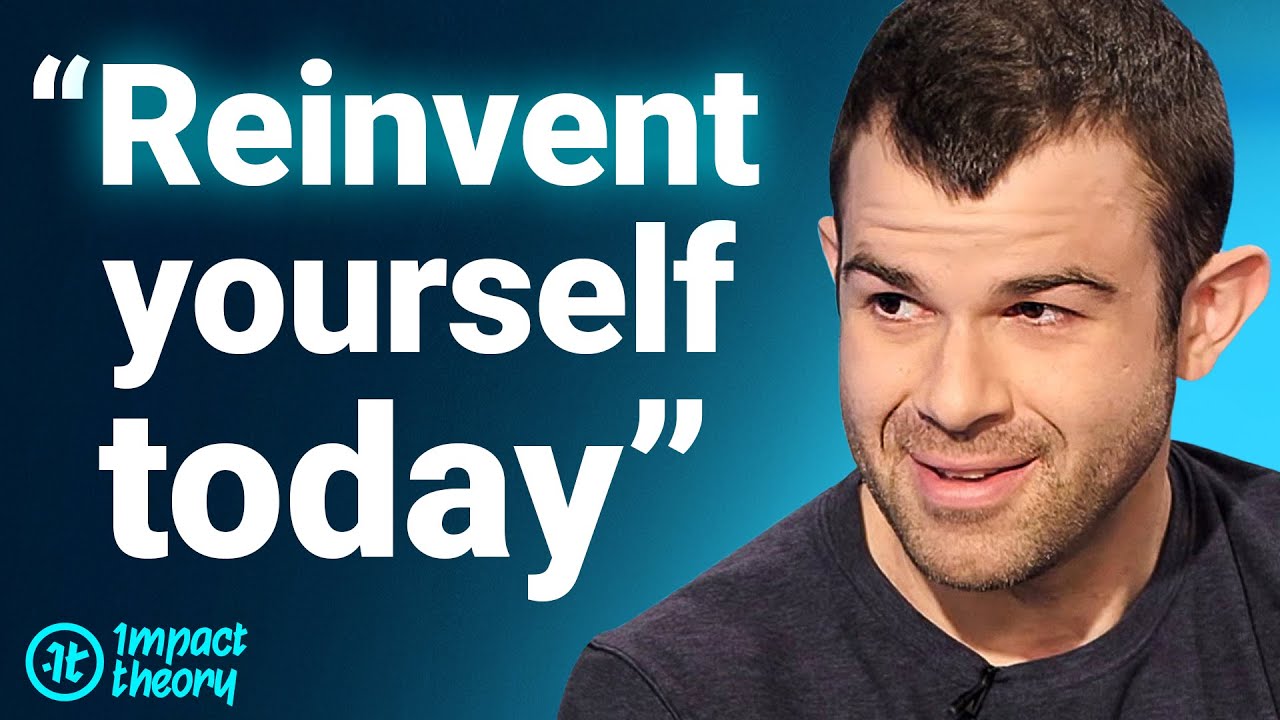
Former Drug Addict Explains How to Completely Turn Your Life Around | Doug Bopst on Impact Theory
Watch on YouTubeVideo summary
Doug Bopst, a former drug addict and felon who was sentenced to jail for possession of narcotics with an intent to sell, shares his journey from a deeply dysfunctional childhood marked by bullying and substance abuse to becoming a fitness trainer and author. His descent into addiction began at age 14 as a coping mechanism for emotional pain, escalating rapidly through various drugs including Percocet, cocaine, and OxyContin until he was arrested with half a pound of weed and thousands in cash. While incarcerated on felony charges, Bopst faced the prospect of his life ending but found redemption when an obsessed cellmate named Eric challenged him to choose between being a man or remaining broken. This pivotal moment forced Bopst to take ownership of his circumstances rather than blaming external factors like his parents or past trauma, leading him to dive headlong into fitness as a means of rebuilding himself from the inside out. The core philosophy behind Bopst's transformation revolves around three pillars: faith, family, and fitness. He describes "blind faith" not necessarily in a religious sense initially, but as an unwavering belief in oneself despite impossible odds, viewing it as believing in something unseen that has yet to manifest. This mindset shift allowed him to stop obsessing over past mistakes and instead focus on the present moment, leveraging the neurological concept of neuroplasticity where repeated actions hardwire new behaviors. Bopst emphasizes that pain is not an obstacle but a catalyst for purpose; by channeling anger and negative emotions into physical exertion like push-ups and running, he could endure more suffering and achieve growth. He notes research suggesting that expressing anger can help people withstand pain longer, turning what was once a source of shame into fuel for improvement. As Bopst progressed from jail to becoming a successful trainer with five percent body fat, he realized that physical fitness alone did not solve his internal struggles regarding regret and shame about his past actions. This realization led him to deepen his spiritual connection through Christianity after being encouraged by clients and peers during mastermind retreats. He acknowledges the irony of asking for forgiveness from God while having committed sins but found peace in realizing that events happen "for" a person rather than "to" them, framing even his time in jail as part of a divine plan to help others today. To sustain this progress, he surrounds himself with mentors and like-minded individuals who challenge him daily, avoiding negative influences or those who enable bad habits. He advises people struggling with bullying or addiction to remember that how others treat you reflects on them, not their character, and encourages seeking help early rather than hiding shame from parents or peers. Bopst's approach to rebuilding life involves a strict focus on what can be controlled today while maintaining long-term vision goals. His daily routine starts at 5:00 AM with hydration, followed by fasting until late morning before training clients, ensuring that every action aligns with his identity as someone who is disciplined and purpose-driven. He teaches others to create a "life works list" detailing the activities, people, and environments they desire in their ideal life, using this vision to guide daily decisions rather than reacting impulsively to emotions or stressors. By changing how one attaches behaviors to feelings—such as replacing drug use with meditation or exercise when stressed—he can break destructive cycles. Ultimately, Bopst concludes that success comes from failing more often because failure indicates a willingness to take chances and believe in oneself; each day offers a fresh opportunity to change, proving that no matter how far one falls, there is always a way to build back into a beautiful life through relentless effort and faith.
Read the full video transcript
I felt like I have lived two different
lives. I really feel like I died in jail
and was reborn in a weird way because I
look at myself now and I don't really
remember that person back then. I mean,
I surely have memories, but [music]
when I look at pictures, I'm like, "Who
is that guy?"
And I think in life we can't [music]
change the past, right? We can only
learn and grow from it. So, there's no
sense in like harping [music] on the
stakes you made. They're done. I always
say fail more because if you, you know,
never made a mistake, it means you never
tried. If you never tried, it means you
never took a chance.
[music]
If you never took a chance, you never
believed in yourself. You never had
faith. And faith, we need faith. You
need to believe in yourself and it
doesn't matter how many times you
failed. What matters is you keep getting
up every day and trying again. And
that's what really is important at
knowing that,
[music]
you know, each day you have an
opportunity to change.
[music]
Everybody, welcome to Impact Theory.
Today's guest is a former felon and drug
addict who was found guilty and
sentenced to jail for possession of
narcotics with an intent to sell. He's
also, however, living proof that no
matter how far and hard you fall, there
is always a way to build back to a
beautiful life. Growing up in a highly
dysfunctional, broken home and facing
intense bullying in school, he turned to
drugs at the age of 14 to numb the pain.
And it worked, just not for long. And
soon enough, he went from smoking weed
to graduating to harder drugs like
Percocet, cocaine, and OxyContin. He was
using so heavily that the constant
snorting actually eroded away part of
the inside of his nose. And to make
matters worse, he ended up having to
sell drugs to afford the outrageously
expensive opioids he needed just to get
out of bed. During this time, he watched
multiple friends die from causes related
to drugs and alcohol, and he himself
assumed he wouldn't live to to his 25th
birthday. But luckily, all of the bad
choices came crashing down on him when
he was pulled over with a half pound of
weed, a scale, and thousands of dollars
in cash in his car. He was arrested and
sentenced to jail, and while he thought
it would be the end of his life, it
actually ended up being a whole new
beginning. He had a cellmate who was
obsessed with fitness and who pushed him
to be a better man. He took it to heart,
got clean, dove headlong into fitness,
and he stayed sober now for over a
decade. He's written three books around
addiction and how to turn your life
around, and he's on a mission to help
others do exactly that. So, please, help
me in welcoming the author of The Heart
of Recovery, trainer and fitness
personality Doug Bopst.
What's up, dude? How you doing? Thank
you. Thank you.
Sure.
So, welcome to the show, my man. Thanks,
man. I mean, I tell you what, those
intros are amazing. I got to start
bringing you with me on my dates. I
think I'd have more [laughter] luck.
Dude, we'll get you locked down ASAP, no
question. Now, what I want to know is
how the hell do you rebuild from feeling
the sense of worthlessness that you had?
You said that part of the reason that
you were doing drugs was you had all
this emotional pain, you'd made all
these mistakes, all the mistakes were
compounding, and getting sober was
always having to face that, and that
became the really hard part. And this
may make sense, I hope. I met a guy who
used to really stutter, and he said,
"Tom, the hardest part of stuttering is
just beginning the getting the spiral
going in the opposite direction, because
stuttering makes you worry you're going
to stutter, which makes you stutter
more, which then, you know, makes it
almost impossible to start moving in the
opposite direction. And I imagine it's
the same with getting down on yourself.
It just compounds. So, how'd you get
that going in the opposite direction?"
Well, you know, fitness really saved my
life when I was in the depths of
despair, when I was incarcerated on
felony drug charges. And up until that
point, I was the most unhealthy person
you could think of. I was managing
um, some trauma with some super
unhealthy ways such as, you know, drugs,
alcohol, all that stuff. Um, my life was
really spinning out of control and so
what really helped me was when my
cellmate took me looked me in the face
and he said, "Doug,
you're going to be a man or you can be a
bitch." Cuz I was complaining to him
when I was in jail. I was like, "Dude, I
have so many problems. Um, I my parents
are this, my friends are this. I was
bullied, I was picked on, I was all
kinds of made fun of."
And he's like, "Well, Doug, like [ __ ]
you made the choices in those situations
that got yourself incarcerated." And I
was like, "Well, what do you mean?" And
he was like, "You're here, aren't you?"
And I really believe, Tom, that we're
not defined by our circumstances. We're
defined by the choices we make in
response to our circumstances. And he
said, "When I was in jail, you know,
he's like, you can be a man and look
yourself in the mirror and say, 'You
know what? Take responsibility for
yourself.
You got yourself here. You're here right
now. And, um, you can, you know, man up
and do what you need to do to get better
or you can be a [ __ ] go cry in the
corner, blame everybody for your
problems, say, 'Woe is me.'"
And where I came from, where I grew up,
I mean, being called a [ __ ] isn't cool.
And I was like, "You know what? I'll
take the opportunity of being a man."
And at first it was really hard for me
because when you're in jail, all the
masks come off, right? You know, the
mask of, you know, trying to fit in, the
mask of trying to to, you know, deal
with your insecurities, the mask of
dealing with your all these masks. And
it was just me and my problems and
looking at this kid who was 50 lb
overweight. And my cellmate was like,
"You're going to start working out with
me." And this guy was like the more
jacked version of Brad Pitt from Fight
Club. Like literally.
And I had no idea what was going to
transpire because
before that I had never formally
exercised. And I remember,
you know, finally after watching him
just do crazy amounts of push-ups,
sit-ups, and pull-ups, he was like,
"You're going to start working out with
me." And I just at first was like, "No
way." And then, um, after weeks of him
bothering me about it, I decided to give
it a chance and said, "You know what? I
also have to lose. I can sit here, play
spades, play pinochle, play Scrabble, or
I can try and better myself and invest
in myself. And I think there's no better
decision you can make
to invest in your health and I want to
stop you there. I know there's no better
thing you can do than to invest in
yourself. And I think that people get
that on paper, but I I want to really
look at that moment because here's the
heartbreaking punchline is Eric does not
end up getting his own life together,
but he's able to transform you. And if
you can capture what you were thinking
in that moment where you're like [ __ ] my
life is over. I feel really shitty. I'm
sober now. Which you did just cold
turkey. Right. And
how do you cuz this is that downward
spiral I'm talking about. So this is the
first time you wake up from the sort of
stupor of drugs
to whoa, I've made some horrific
choices. I'm not happy with how I've
managed the relationships with my
parents and I'm not happy with
manipulating my brothers into giving me
money. I mean there's like a lot of
heavy [ __ ] sitting on you. And so what I
don't understand is
how and why you were able to look at
him. Was it like
he just looks rad? Is it that he was so
intense? Like what was it that made you
click something over in your mind?
Because that like the reason I'm going
to make you find this answer even if you
don't have it on tap is somebody
watching right now. They're in that
spot. They have a sense of hopelessness.
They want to do better, but they're they
don't.
I think it was because he believed in me
at a point where I didn't even believe
in myself. And I think sometimes in our
lives when we're feeling that
hopelessness and we're in that rat race
of just feeling sorry for ourselves and
saying you know life's never going to
get better.
It's tough. And I think especially when
we don't believe have that belief in
ourselves. When somebody says I believe
in you and you can do it and I'm going
to help show you the way to get you
started. I was like I never had anybody
do that to me before. That unconditional
love and I just felt like this void
being filled from you know whether it
was the friends I had that were just
using me for drugs or whether it was my
relationship with my parents. And that
to me was just like what really
kick-started that belief in me and
inspired me to take a chance to get down
and do a push-up. And when I couldn't do
a push-up, he looked me in the face. I
was like I was like, "Eric, why can't I
do a push-up?" He's like, "Cuz you're
[ __ ] fat."
I'm like, "I know, but like why can't
He's like, "You're [ __ ] fat. Like how
else do you want me to say it? You're
fat."
And I needed to hear that. And I needed
to look at myself and be like, "I got
myself here." And it was him believing
in me and me seeing that the slight
progress in me being able to do a a
push-up, two push-ups, three push-ups
that I was like, "Wow, I can start to
achieve things if I put my mind to it."
Because whether we believe we can or we
believe we can't, right? It's the same
answer. And for me, I always believed
that I couldn't. I'm not going to be
able to do it. I'm not. And And Eric was
like, "Get your ass down there and do a
push-up. Keep going. Keep going. Keep
going." And it reminds me a lot of I was
watching Creed II on the way out here.
And it reminds me of Rocky training um
Creed when he's going back to fight the
Russian and just, you know, he didn't
want to keep going. He didn't want to
keep going, but he believed in him
enough to to really like pick him back
up and keep training. That's what my
cellmate was like for me in jail.
God, it's so interesting. I really hate
that answer. And I know from hearing
your story that that really is the
truth.
The reason that I hate that answer is
because it is so hard to make sure that
everybody has that person that believes
in them. Like I try to put belief out in
the world like just telling people even
without having met you. Like I know you
can do it. And
um I'm working on a book right now and I
am obsessed with conveying that notion
to people that the reason that you
should believe that you can do it is
because humans are meant to grow and
adapt. Like literally epigenetics. That
is what we're designed to do is to
respond to our environment to improve.
So, setting that aside cuz we're not
going to be able to give everyone the
gift of somebody who's right there with
them that will push and encourage them.
Thankfully you had that, but then what
is the process underlying that? Like so
for instance, even just to juxtapose
Eric who was that for you, but could not
be that for himself, cuz I would say,
and I'm super interested to hear what
you think, that he didn't have the
process. He didn't have the things that
he needed to do, whether it was changing
his friends, whether it was a belief
around drugs. I I I don't know him, so
I've no idea. But, what was the process
that you used that people can take and
apply to their own life? I mean, it was
really for me it was faith, family, and
fitness. And I don't mean like to get
all spiritual, but faith for me was I
believe in God, but it was like the
blind faith. I know you talk a lot about
blind faith. I had to really, really
believe in myself, even though I
internally shouldn't have, right? The
odds were stacked against me, but I had
to keep believing if I knew that if I
could just become a better version of
myself each and every day that I had
faith that things would like get better
moving forward.
though? So, you go from And this this is
the transition. This transition, the
thing that you did, is what will change
people's lives. But, how the [ __ ] did
you do it? So, you go from it's
everybody else, it's not me, to suddenly
really taking on extreme ownership.
Well, it was when Eric looked at me and
he said, "You can either be a man or you
can be a [ __ ] and you chose to get
yourself arrested. Like, you chose to
sell drugs. You chose to use drugs in
response to your circumstances, so you
it's your responsibility to change.
Like, no one's going to do it for you.
You have to look at yourself in the
mirror." And I'm one of those guys I'm a
sponge for like knowledge. Like, I even
today like I'm just a sponge to learn
from people, and that to me was like,
"You know what? I don't know everything,
so I need to seek out somebody who
does." And obviously at that moment was
my cellmate.
And
and so when I just decided to really
start putting my mind to it and keep
continuing working out, keep doing
push-ups, and listen to what Eric told
me, my belief system changed. Like, I
had confidence in myself. I felt better.
I Why? I just felt like better about
myself when I was stressed out and using
exercise as a way to cope with that,
because before Was it like endorphins?
Is that what we're talking about? Or was
it seeing progress? Like, what was the
thing that was feeding that belief? I
think it was a combination of the
endorphin rush and seeing progress and
knowing that like goals like can
correspond with anything whether you're
in fitness, whether you're in life,
whether you're at your job and I just
saw that okay, I couldn't do a push-up
from my knees. Now I can do a set of
five, now I can do a set of 10 and so on
and so on. It just like the feel good
dopamine rush hit me and was like, "You
know what Doug, you can do things you
never thought you could do because
exercise forces you to get comfortable
being uncomfortable and doing things you
really don't like doing." I hated
getting down in front of a bunch of
grown men and doing push-ups when I
couldn't do a push-up. I hated running
around the the common area in there
while everybody else was kind of
sitting. I hated it cuz everyone was
looking at me and feeling like like what
are they looking at?
But in my mind I knew I wanted to do
whatever it took, whatever it took to
change my life.
And then it was just day by day things
started getting better. I was like,
"Wow, progress. I can do a set of 10
push-ups. I'm feeling better about
myself. I actually feel like I have a
chance to make it." And so faith was a
big part of it.
And then family and I believe
Let's go a little deeper on faith
because um I've had the good fortune of
listening to you talk about this a lot
so I know where you're going with this.
Um but take people into that. How How
did that serve you exactly?
Well, I knew I had two choices. I knew I
could believe in myself or not believe
in myself. I knew like in my mind I
could tell myself I could or I couldn't
because in jail I was telling myself I
couldn't a lot. Yeah, but what's that to
do with faith? Because I believe faith
is believing in the unseen. Faith Faith
is believing in something ahead even
though you can't see it. And for me I
couldn't see recovery. I couldn't see
holding a job. I couldn't see losing
weight. I couldn't see any cuz I never
had any of that before. So for me I was
just living in fear. That's why I had so
much self doubt in jail. So faith to me
is believing in the unseen. One thing I
heard you talk about which I thought was
really interesting. So I am I am not
religious in the slightest. But the way
that you talked about um I wasn't okay
with the things that I did but God was
and that was enough. And I thought,
"Ooh, I actually really get that." I I
get the sense of um there's something
that releases me from having to worry
about it. So, the the game that I play
with myself is the notion that like it's
done and gone. There is nothing that can
be done about that, but you can move
forward and the way that the brain works
just from a neurological standpoint, if
I obsess over this negative thing, it
will hardwire, it will become very easy
for me to think about it. It will be
less effective and it's less likely to
move me towards my goals, which is like
in my life I have a mandate that I only
do things that move me towards my goals.
So, I don't do or believe I don't even
allow myself to believe something that
might move me away from my goals. And in
that is the release. Like, oh, does
obsessing over this stupid thing that I
did and thinking about what a dick I am,
like does that help me get get to my
goals or not? Oh, it doesn't, cool, then
I I'm released.
Which felt to me the way that you talk
about
your relationship with God, however you
define that, felt very similar to that
sense of like there was something else
that just let you let go of it and I
think that is something people need to
hear. Well, yeah, I mean cuz growing up
I grew up old school religious where if
you're good you went to heaven, if
you're bad you went to hell. And for me
I knew I was on the highway to hell
based on my actions. And it wasn't until
I really started believing in God years
into my recovery that what really helped
me was that I realized that things
happen for me in life and to you. I know
Tony Robbins says, you know, the moment
you realize that things happen for you
and to you and the universe like, you
know, game over, something like that,
game over, right? And I started
realizing that everything happened for
me. Like I can't really make up the fact
that my cellmate is helping me use
fitness to change my life in jail and
now I'm helping others use fitness to
change their lives. Like I can't make
that up and I'm not proud of the people
I manipulated, the times I lied, you
know, the manipulating my family and and
selling drugs and all that stuff, but he
was because he used that for his purpose
for me to help other people. And that's
what really has helped me because for a
while I was at a lot of guilt, a lot of
regret with my past. And that's really
what faith in God is for me. It's I
don't see like a person in the morning.
I don't go to church every single
Sunday, but for me it's just
I look at like the resurrection, like
being born again, like in a way that I
felt like I have lived two different
lives. I literally feel like I died in
jail and was reborn in a weird way
because I look at myself now and I don't
really remember that person back then. I
mean, I surely have memories, but when I
look at pictures, I'm like, "Who is that
guy?"
And I think in life we can't change the
past, right? We can only learn and grow
from it. So, there's no sense in like
harping on the mistakes you made,
they're done. Like I always say fail
more because if you, you know, never
made a mistake, it means you never
tried. If you never tried, it means you
never took a chance. And if you never
took a chance, you never believed in
yourself, you never had faith. And
faith, we need faith. You need to
believe in yourself and it doesn't
matter how many times you failed. What
matters is you keep getting up every day
and trying again. And that's what really
is important in knowing that, you know,
each day you have an opportunity to
change. Yeah, I think there's two things
in there that are super, super powerful.
One is this notion of however you get
there, whether it's the way that I think
about it, which is sort of just a the
way the world works is if you're in a
death spiral loop about being, you know,
worthless, then you will achieve less,
certainly be less happy, you're not
going to be able to contribute. So,
people need to find a way to release
themselves and then people have to be
able to think now forward. Like how do I
move forward? How do I begin to build
something new? And having that vision
and the clarity to move forward, but you
can't move forward until you
have that release. And so, that is
something that
I really think people struggle with a
lot. They get into this self-defeating
self-definition. And that's one thing I
want to hear from you is how did you
begin to define yourself anew?
When did you start thinking of the
analogy of I'm being reborn? Like is
that while you're doing the push-ups,
you're still in the jail jail cell and
you start to think this is a rebirth for
me.
Because I think the way that you begin
to conceptualize that, anybody going
through this, that conceptualization
becomes important. Well, I think for me
originally it wasn't the case.
Originally it was like my pain, turning
my pain into purpose. Because I had a
lot of people disappointed me, a lot of
people doubting me, a lot of people who
made fun of me. And I remembered that
each time I would go out and do a
push-up. That was like one of the things
my cellmate helped me learn was like
think about what makes you mad when
you're working out because that'll help
you get through. And I just thought
about all the people that brought me
down when I was when I was working out
and that helped me get through it.
Why is that I think that's
so powerful and so overlooked. But this
is controversial. So get go a little
deeper. Why is that so effective?
I mean it just released like some anger
in me and it helped me channel whatever
I had inside of me in a positive way
because I think like
it's there. Like those memories of
people that you're not just going to
forget about people who bullied you or
made fun of you or the way your parents
treated you or anything that happened
when you were younger. You can only
change how you respond to it.
And the way I was responding to it was
horrible for me up until the point where
I got into jail and now like I had to
learn to channel those memories in a
more positive way and to get angry. I
was never an angry kid. I always held a
lot in. And it wasn't until you were
never outwardly angry or you weren't
angry at all? I was never outwardly
angry. Like I was never the guy who
would start fights. I was never the guy
who was like screaming. But inside were
you getting pissed off all the time?
Were you getting angry? Were you getting
hurt? Were you getting pissed off? Were
you getting resentful? Were you getting
ashamed? Um and I didn't know how to
manage all that stuff. So when I when I
found that I could just think of the
people who made me angry and start
working out like boom, a light switch
went off. And I think people don't they
don't like you look at pain. Like they
don't people like are afraid of pain.
They don't want to be hurt. They want to
be coddled. They want this. They want
that. Pain's great, man. And I think we
need to change the way we view pain
because pain can really be the catalyst
for purpose. I mean you think about
working out, right? One of the things I
love about fitness is how it can be such
an influential part in so many other
areas of your life. You have to fail to
grow stronger. You have to fail to run
faster. You have to be in pain.
And so using that pain to get better and
you grow from it. And for me, that's
what really started was in jail thinking
about all that stuff.
The dark side, which is how I refer to
using the anger and the hatred and all
of that, I think is really
misunderstood, really underutilized, and
there's some really fascinating research
around how if you let people express
anger, they can endure more pain. And so
one of the ways that I think about
suffering, pain, anguish, hurt, guilt,
shame, all of that is you're tapping
into the the dark energy, for sure. It's
not a place that I want to spend a lot
of time. It's very ugly. It's very
tumultuous.
But it is
you're going to leverage the fact that
we have emotions for a reason. They're
evolutionarily advantageous in some way.
And so based on the studies I've done
where they took people and they had them
submerge their arm in ice and they said,
"How long can you hold it there?" They
established a baseline. And then they
say, "Okay, now when you feel like you
just absolutely have to pull it out, I
want you to swear and get angry." And
people were able to leave it in
something like 30% longer. I mean, it's
like really extraordinary how much
farther it allows people to push. And so
if people are able to tap into that,
it's interesting. I've never thought of
it as a release before, but it probably
also serves that function of just sort
of getting some of that anger out, but
it also gives you the energy to see
things through. When I was reading your
story,
I kept thinking like it's really
interesting to me that you were able to
sustain energy, that you've been able to
do this over time, that you've been able
to radically transform your physique.
What allows you to sustain that that
focus, that clarity, the drive, the
energy?
Remembering where I came from. I mean, I
never want to be that kid who was so
unhappy, so unhealthy that was suicidal
and didn't want to live anymore. And
whatever I do, I got to make sure that
it's pushing myself further in life. And
I think one of the things my cellmate
did was the importance of having
mentors. So when I got out of jail, I
joined a mastermind group cuz I knew
like I didn't know everything. I wanted
to know how to get better. So, I needed
to surround myself with like-minded
people that wanted to push themselves
and and chase goals and change the world
and everything else, which was huge for
me because it pushed me to write my
first book. Like at the beginning like I
never I thought my story was my story. I
didn't think it was cool and like I was
sharing my story to mastermind event and
they're like you got to write a book and
I was like book? I barely graduated high
school. Are you kidding me?
And it I they pushed me to write my
first book and you know that snowballed
into everything else. So, it definitely
surrounding myself with great people has
been something that's been so huge for
me. Changing my friends,
um hanging out with people that have
common futures not common past. I mean I
think has really helped me kind of stay
the course.
Um being humble, looking at myself in
the mirror and you know, I'm human. I'm
going to make mistakes and I'm doing
myself a disservice if I sit there and
throw a pity party and cry and say woe
is me.
Um and just be I just remember every
time I want to quit on something I'm
like Doug, you're going to be a [ __ ] or
you're going to be a man. One thing that
I find interesting in your story is that
you make it clear that it's not like
getting sober is a hard thing and it is
a messy thing and it's you know, one
minute you're fine and the next you're
not and at first fitness seemed to be
solving all of your problems and then
there was sort of an emptiness and it
was it's very much I think the way that
people expect with money. Like once I
get my body the way that I want it, I'll
be happy and you got there and you were
like huh, there's something still wrong.
But you didn't just go throw your hands
up. Like you really dug in to figure it
out. One, I'd like to know how like so
you're in that phase. How do you
identify what's still wrong?
Well, I think for me I looked at my life
and I said, you know, I I figured I had
everything together. I was like super
fit. I had like five or six percent body
fat. I was making great money as a
trainer. I was sober.
Um but then I looked at like I just
wasn't fit being fulfilled, right? I
wasn't fulfilled inside. I still had a
lot of regret, a lot of shame about my
past and that was what really drove me
to come um be more spiritual. I cuz I
was never like I said a spiritual guy. I
was like, you know, if God's real, why
am I in jail? Why me? Why me? Why me?
Victim, victim, victim, [ __ ] [ __ ]
[ __ ] right? And then [laughter] like
seriously, and then like
I One of my clients was like, "You know,
you should start coming to church." And
yeah, I was like, "Dude, I don't go to
church, man." I was like, "I'm going to
hell for putting you through this
workout. Like, there's no way I belong
in there." And And finally, like I was
in a mastermind retreat where they
challenge you to go deep, like not on
like fitness, but like on your life and
personal development and and business
development, which has been huge for my
recovery because I think a lot of times
when people get sober, they're like,
"Ah, that's it. Like, I'm not going to
grow anymore." Well, for me,
I'm like, "How can I keep getting better
How I've already accomplished things I
never thought I could accomplish? Like,
what's next?"
And um so, I remember getting to a point
at this mastermind retreat I was just
like broken. I just like made a mistake
and a girl I was chasing around and
didn't work out. I was like mistake
after mistake in relationships.
And I remember just sitting there and
everyone was like, you know, "I think
you need some like faith in your life. I
think you need some spirituality." And I
was like,
[laughter]
So,
I don't know what made me do it, but I
called my client, the guy who was
pushing me to come to church. I was
like, "Hey, man, like I think I'm ready
to give this Jesus thing a a try." And
he was like super excited. So, I
remember getting down on my knees in his
office and praying my life to Jesus. I
acknowledged that he died for my sins,
all this stuff.
And I didn't really believe it, you
know, but I kind of was like, "You know
what? Let me try it." And I remember the
same monkey that came off my back when I
was like smoking pot, when I was, you
know, escaping life, was the same monkey
that came off my back there. I don't
know what it was. But, I remember
walking out of there, calling my mom for
the first time, like telling her I was
sorry, which is something I'd never
done. And that's what really started my
belief that things happen for me and not
to me. And as I look back, like, you
know, I'm not
But, God was. And then I know that I
wake up with purpose every morning that
like whatever's meant to be is meant to
be.
And I can't thank my The minute I thank
myself and think that I like and know
everything is the minute I know nothing.
I think that's when my ego gets in the
way.
And I also think what it did for me was
it just realized that he was with me the
entire time.
And I think a lot of times people just
they don't see that when they're in the
depths of despair. They're like,
"Where's God? Where, where, where?" And
you know, I think he's there, whether
you believe it or not. And I know
sometimes it doesn't seem that way when
we're there, but you know, if you just
keep doing the necessary things like
having faith and keep putting one foot
in front of the other and hanging out
with great people and working out and
taking care of yourself like you'll
you'll start to accomplish things.
You'll start to look back and say, "You
know what? Like
I think he was there with me."
Yeah, the whole idea of progress, I
think is really powerful. How do you
help your clients with that? Cuz I'm
sure that a lot of people when they
first start, there's there's that chasm
of I'm working really hard, but I don't
see any results yet. Maybe I'm not going
to see results for 4 weeks or 6 weeks.
How do you get them to cross that that
space? Is it just showing them the
number of people that have succeeded
before them? Or is it something else?
It's helping them change your mindset,
really, and helping them like really
like just look at how the progress that
they've accomplished so far. Remember
how the far they've come and how far
they have to go is like one of the
biggest things I live by because like
say they've worked out for like 4 weeks
and they haven't they haven't lost as
much weight as they did, but they were
out of the gym for like 20 years. So, I
look at them like, "Listen, like you've
worked out more in the last 4 months
than you have in the last 20 years. Like
that's positive." Like I don't I I get
them to not just look at the scale cuz I
think the scale is just it's irrelevant
to me, really. It's really how you feel,
how you look in the mirror. Like do you
look good naked? Yes or no? I mean,
really, seriously. Like I think that's
what it is.
And
so I get them to kind of like forget
about the scale and just and work and
look at other things like how they're
feeling mentally and physically, like,
you know, how many times they came to
the gym versus how many times they
didn't before and and also that like if
they quit on their goal, like it's not
helping them feel any better. Like and
just trusting the process, being patient
if they're they're they're not seeing
results as fast as they want.
Quitting isn't going to help them get
there. So, I just try to help them see
that just change their mindset, change
their perspective, be grateful, you
know, be as positive as you can be
because
I think positivity is one of those it's
like one of those buzzwords now. Like be
positive, be this, be that.
But you can't be positive about
everything cuz there's there's some
things in life that suck. Like you got
to be like, "Well, I'm 100 lbs
overweight." Like that sucks.
But I think the key is being positive
about the way you're going about doing
things is what changes things. Cuz if
you're pessimistic and negative, you're
not going to do [ __ ] And I think so
many people are afraid to look at
themselves in the mirror and realize
that they're the problem. Like, they
realize that they're the ones
complaining, bitching, and moaning, and
that them being coddled and and
sugarcoating everything is the reason
that they're not getting anywhere in
life. Are you hard on the people that
you train? I am. I mean, cuz I can
relate to them because I think they
respect me about that because I have
been that kid who struggled with weight.
I have been that kid who struggled to
fit in. I have been that kid who wasn't
fit. I have been that kid who struggled
with depression, anxiety, all the stuff
that a lot of people do that why they
embark on a fitness journey.
And so they really like they align with
that and they know that I mean love when
I'm like, "Hey, like, I'm not I'm not
being a good coach or I'm not holding
you accountable or I'm not calling you
on your bullshit." Like, it's not
helping you. I mean,
reaching a goal sucks. It takes a lot of
hard work, but not achieving the goal
sucks even more. So, choose your suck.
Do you want to suck by not achieving it
or do you want to suck by working hard,
putting in passion, putting in
discipline, commitment, and hard work,
and then achieving something? And that's
how you build confidence is, you know,
tackling things you never thought you
could do, trying things and failing,
getting back up and keeping going and
keeping going. And like, doesn't matter
how many times you get punched in the
mouth, it matters how many times you
fight back. And I think a lot of times,
Tom, like, I love this analogy cuz it
relates to so many people. In In a
fight, if you and I were to sit here and
um I were just to you were to start
punching me at random, sucker punching
me, like, would I stand here and let you
beat the piss out of me? Like, I would
hope not, right? But in life, we let
life beat the piss out of us. We make
our circumstances even worse by when a
negative event happens, we get depressed
or we feel pity for ourselves or we turn
to quick fixes like drugs, alcohol, and
it makes our situation worse.
So, when you unpack the layer and you
give that tough love of saying, "You
know what? Like, you need to [ __ ]
change. Like, you need to look at
yourself in the mirror and stop being a
victim, stop blaming other people, and
take ownership for yourself, and stop
waiting for other people to fix your
life."
I mean, I think people will like who
really want to change, who really want
to change will align with that. And and
I'm not saying that that's the only way,
but for me like I was just all ears for
whatever I needed to be told because I
didn't want to go back to jail.
So,
one thing that I really want people to
get is that you're very direct with
yourself, you're very hard on yourself,
but that you also have a deep love and
respect and even I would say compassion
for yourself. How do you foster those
things? Do you have a strategy, a story
you tell yourself, something you say
like Yeah, of course. I mean there I
mean is I always like try to like you
know start my day with some sort of
affirmation of how I tell myself or you
know your reading. And then it's like
also like what I surround my life with
like you know working out and taking
care of myself like is the biggest I
think one of the biggest things you can
do for self-love is showing that you
love yourself enough to invest in your
body, right? And then the people I hang
out with I hang out with people that
only challenge, support, and love me
unconditionally. Like I don't have any
negative Nancies, Debbie Downers, like I
don't have time for it. Like I always
say to people when they're like trying
to change their friends I'm like, "Well,
if you knew about them what you know
now, like would you still want to hang
out with them?" And if the answer's no,
then I mean get them out of your life,
right? And I think it's also just
gratitude and just being grateful and
just showing love that like you know
what Doug, you've accomplished a lot in
your life. So, and it's always a dance
between being hard on yourself and like
cuz I mean if you're not hard on
yourself, it's really hard to get stuff
done and loving yourself and being like,
"You know what, it's okay. Like get back
up."
But I think they go hand in hand because
when you fall, you got to have the
self-love to say, "You know what, it's
okay. You tried. Get back up." And then
cuz then the hard on yourself person
will be like, "You idiot, you missed.
Like stay down. Stay down. Stay down."
And
Um and I think it just also goes back to
the story you tell yourself inside your
head cuz I think our belief system about
ourselves can be so like hijacked based
on what people others say about us and
then we start to believe it whether it's
like, "You know, you're ugly. You're a
[ __ ] You suck. You suck. You're
unathletic. You're unathletic." And then
sure enough if it happens over years,
you start to believe that about yourself
if you have no confidence in who you
are. And I think the more you can own
who you are and just chase after your
own dreams and stop worrying about
everybody else, then those things start
to become lies when people are saying,
"You know what? You're a piece of [ __ ]
You suck." When you know if you know
about yourself like that that's not
true. I mean, that's what self-love is.
It's just really knowing truly inside of
you who you are.
I want to go back to something that you
said about life beating the piss out of
us. How do we stop that exactly?
I mean, you got to put the fire out
somehow. You got to kind of look and
address the situation and say, "Okay,
what do I need to do to improve and get
past the situation? What's the solution?
What can I control?" Is that how you
were thinking when you first got out of
jail? You had the felony conviction and
you were applying for jobs. So, I know
that was a pretty rough time for you.
Well, I knew there was a lot I couldn't
control. I knew I couldn't control if
somebody said yes to hiring me. I knew I
couldn't control, you know, the way my
parents treated me. I knew I couldn't
control, you know, what people said to
me, but I knew the only thing I could
control is who I chose to spend time
with. I could control my my exercise. I
could control my work ethic. Like
getting down pounding the pavement every
day and knocking on doors to get a job
and how I felt about myself and my
beliefs and my myself because I knew,
Tom, that like even though when I got
out of jail like didn't believe in
myself all that much cuz I had no real
right to, but I knew I had to fake it
till I make it like in that sense that
if I didn't, I wouldn't be where I am
today.
And I just knew I got I guess I got kind
of like lucky, if you will, in a way
that I knew that everything I did up
until the point I got into jail was so
far wrong that I had to try something
completely different. And if it was like
whatever I did before, I was like,
"What's the opposite? I'm going to do
it." Oh, I didn't want to like hold a
job or like bang on doors to get a job.
Like, "Oh, I'm going to do that." Or if
I didn't want to run, I'll do that.
And so, when I talk to people,
I just have to I tell them. I'm like,
"Listen, like
you have to like the more you can like
align, the more you can narrow that gap
between what you want most and what you
do, that's when success really happens.
Because we have we have great intentions
as people to change. Everybody wants to
change. There's not one person that
wants to be a drug addict. There's not
one person that wants to be 100 lbs
overweight. The problem is that we end
end doing things because we're looking
so far ahead to the future that we
almost self-sabotage ourselves because
we're worrying so much with what's going
to happen in, you know, 5, 10, 15 years
from now when we just really need to
focus on what we can do today to make
sure we become the best version of
ourself. What can I control today? And
then tomorrow. And then the next day.
It's like life's a game of inches,
right? And it's like it's it's great to
have 5, 10, 15-year visions cuz I think
it's important, but not once does any of
that does any of that ever say
"Don't do anything daily. Just have the
goal and just do it." It always comes
back to what you need to do on every
single day. How do you break your days
up? Like do you have um
a list of things you should be doing or
goals that you write for the day? Like
how do you begin and really manage your
day-to-day existence?
Well, I mean I wake up and one of the
first things I do is um you know, drink
a bunch of water cuz I think, you know,
obviously staying hydrated is important.
And then I like try to tackle like
whatever is the most important in my my
uh my day to do, whether it's
um I know I need to some calls I need to
make, whether it's some outreach I need
to do, maybe it's following up with
people via email. And that's like early
early morning. I get up around 5:00 in
the morning.
And then typically I have clients from
like 7:00 to 11:00 in the morning. So I
typically fast throughout the morning
because I I love fasting, too. I think
it's great. I feel so much better doing
it.
So I typically will will leave the gym
at like 11:00. I'll go grab a workout
and then, you know, eat lunch or
something and then I'll come back and do
some more work between like the hours of
like 2:00 and 4:00 and then go back to
the gym for my evening client.
And then I come home and I just
I work on my personal brand side of the
business cuz I still train a lot of
people and that's like my my bread and
butter of what I love doing, but I'm
also like working on building this
personal brand up, sharing my story
more. And so in my spare time, that's
what I spend a lot of time working on.
I think the thing that I find most
powerful about your story is the
complete reinvention of yourself. Like
the building of the new identity, the
way you're talking about, you know, if I
used to do that then I'm going to do the
exact opposite and understanding what
the most important things are that you
could be doing in your day and having a
vision for the brand and all that.
How do you think of identity? How do you
think of building it? What advice do you
have? Like if you knew that somebody
were on drugs and they were going to try
to get off, what advice would you have
for them about dealing with the emotions
that arise? Would identity play into
that? Um and just how do you think about
the construction of an identity?
Well, I think you got to look at your
why. Like why you're doing it cuz I
think when you have a strong enough why,
like the what's in the how's become
irrelevant. You remember like why you
started, right? So like if somebody's
trying to get off drugs and they they do
and they they say their reason is say
because I want to, you know, reestablish
a relationship with my wife or whatever
it is whatever it is.
I mean, that's like then they remember
like why they're they're not doing it to
get off drugs, they're doing it to
reestablish a relationship with their
wife. They got to get deep rooted in
that issue of what caused them to use
drugs in the first place, whether it was
trauma and what was the trauma and what
what behaviors, you know, caused that,
you know, what emotions did that cause.
And I think really like changing the way
you attach um behavior to emotion
because I think a lot of times when
people get stressed, depressed, anxious,
we attach a certain behavior. Like for
instance, if you've had a long day at
work and you're stressed, you drink a
glass of wine. Or if you're depressed,
you snort a line of cocaine or I mean, I
can go through a thousand things and
just changing that behavior you do with
that emotion and saying, you know, what,
I'm going to change that, you know,
instead of using drugs or alcohol to
manage my emotions, I'm going to go for
a walk. I'm going to meditate. I'm going
to um go to a movie with a friend.
Whatever it is that they like to do
because I think we spend so much time
worrying about what everybody else is
doing and we've lost track of who we are
as a person, right? And just looking
within
um whether that's in meditation or
prayer or journaling to really figure
out like the things we like, the people
we like, you know,
where we like going and all that stuff
and then kind of filter that into your
life organically.
Do you have a way for people to find
that cuz I know whenever I give advice
like that, people like, "But I don't
know what will work for me." Is there
like a set of things that you encourage
people to do? Like, "Hey, start
journaling 10 minutes a day. Just write
anything that comes to your mind." or
meditate or like what's that path? I
mean, I really think it's like they
they should make like a when life like a
when life works list. Something like
that. Like when they're when they feel
like their life could be at the happiest
and they could be most fulfilled. Like
what does that look like? What kind of
things are they doing? What kind of
people are they hanging out with? What
kind of places are they going to? What
are they doing on a day-to-day basis?
And then that then you can write that
stuff down and then from there you can
just set goals and you can you'll have
an you'll know where to go because you
know where to get where you're going you
got to know where you're at. So, if you
know the types of things and ideally
when you're writing stuff down it's
going to be stuff you like doing. It's
not going to be like, "Hmm, what would
Tom say or what would Doug say?" It's
like, you know, what would X, Y, and Z
say? And then they'll have like a plan
in being able to get from where they are
to where they're going based on that.
And I think the more happy you can be
with yourself and the more you really
find out who you are and just getting
through life the more of your identity
you become cuz my identity 10 years ago
was way different than it is now. My
identity 10 years ago I was I was like,
"Man, am I ever going to be able to hold
a job? I'm a convicted felon. Like how
am I going to get through this?" And now
like my identity is quite different. So,
I just think it's like once you really
align with doing what works in your life
and making you the best version of you
possible,
I think it gives you a shot to really
evolve in whatever identity you're meant
to have.
Mhm. That's super interesting. How do
you think about bullying now? Like when
I think about how much your story goes
back to that
and how pervasive bullying is now
especially with cyber bullying stuff
it's pretty scary.
Do you have advice for people that are
struggling with that? Like how can
people mentally protect themselves?
Well, I think first of all just know
that the way somebody treats you isn't a
reflection of you, it's a reflection of
them. Right? They obviously have some
stuff in their Does that really help
like a 12-year-old? You know what I
mean? Yeah, I Truth. You're so right.
But like do I really expect that to
Yeah, I mean I guess when you're 12
years old I think it's really important
probably at that point to talk to your
parents and really be authentic about
telling them like the whole story as
much as you can and not hiding it, not
being ashamed of it cuz I think a lot of
times as kids like and you're at that
age you're ashamed of it, you're ashamed
of telling your parents to say, are they
going to A believe me? What are they
going to think of me? What are other
people going to think when they they
have to tell their parents like
because it sucks to like to do that, but
you know, it can save you years
of trauma. It can save you years of
making, you know, poor choices to
respond in the in that unhealed emotions
and
I mean, I just think the number one
thing people should do when they're
struggling with any type of situation
like that is ask for help.
Let's make this really [ __ ] hard. So,
I'm going to put you in a time machine
and I'm going to give you I'm going to
give you 15 minutes. It's enough time to
really sit down and you're going to be
able to sit down with your young self.
They're going to believe it's you.
They're going to actually believe that
that you are them in whatever 20 years.
What do you tell them? You only have 15
minutes. Knowing that like if you say
um
you know, there's going to be certain
advice that you would give to them that
like, you know, hey, don't worry about
trying to be like the cool kids. They're
going to be like, well, [ __ ] dude. You
obviously don't remember what it's like
to be 12. I've got to be cool otherwise
my life isn't worth living.
So, there's probably going to be things
that they're going to push back on. What
would you try to convince them of
in 15 minutes?
I mean, that life's going to get better
if you believe it will. They're just
having that blind faith that, you know,
whatever is happening to you right now
is meant to happen for you
um for a greater good and I know it's
going to it's tough right now for you to
hear that, but
you can either look at it two ways. You
can either look at it that this like woe
is me, this is going to happen, this is
happening to me and I'm going to, you
know, blame everybody else and respond
in a way that's going to make my life
worse or I can acknowledge that I'm
using the situation to become a better
version of me to be able to help other
people going forward. And I think with
that it kind of gives you a positive
approach to it where they can look at it
and say, you know what? Like I'm going
through this pain right now. I
acknowledge I'm going through it, but
it's It's to be make me make me one hell
of a man growing up and that
ultimately is going to save my ass um
you know as I grow up.
Totally.
Tell people where they can find your
books, where they can learn more about
you.
So I mean I'm most most active on
Instagram at Doug _bopst and then my
books are all available on Amazon,
dougbopst.com. I mean if anybody's
struggling wants to reach out, I mean
I'm always happy to to to answer
questions and help people where I can
and
you know it's just one of those things
man that I'm just so grateful to be
alive and I just really thankful for the
opportunity here and you know I've been
following this show for a long time and
I just love what you're about. I love
the the vision of this company and I
love the whole like get [ __ ] done
approach and it just so like really
really aligns with my mentality. Thank
you man.
What's the impact that you want to have
on the world?
I mean the impact I want to have on the
world is to help people
become better versions of themselves
each and every day through faith, family
and fitness. Helping them believe in
themselves more, helping them to do
things they never thought they could,
helping them surround themselves with
people who will bring the best out in
them and then doing things every single
day that allow them to be mentally,
physically and spiritually fit. I mean
that to me is what kind of impact I can
bring to the world.
I dig it. Awesome man. Thank you so much
for coming on the show.
Guys, it is an extraordinary tale of
somebody who completely rebuilt
themselves not from zero but from a deep
deep deep deficit and I think it's
something that we can all learn from. So
I highly encourage you to check it out.
If you haven't already, be sure to
subscribe and until next time my
friends, be legendary. Take care.
Doug, thanks my man.
It was It was tough, you know, to to
amount to some success in my life and
for me I started just asking myself
tough questions of like why, you know,
why did this all happen, you know, how
did I overcome all of this and like what
can I do every day to to truly inspire.