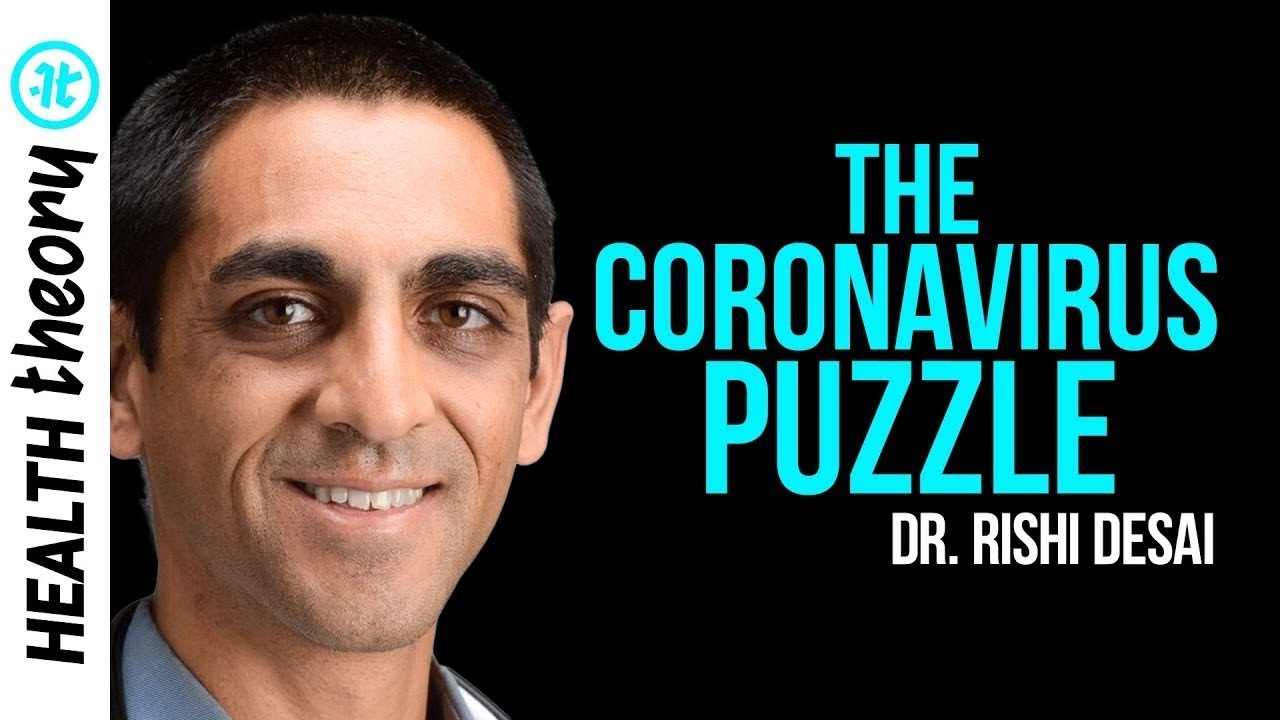
Former CDC Intel Officer Dr. Rishi Desai on Why It's Hard to Get a Grip on the Coronavirus Pandemic
Watch on YouTubeVideo summary
Former CDC Intel Officer Dr. Rishi Desai explains that understanding the coronavirus requires looking beyond lung damage to recognize it as a disease of blood vessels, where the virus infects cells lining these vessels and causes endovascular injury leading to strokes in younger populations. The infection process is described as a "numbers game," where high viral loads overwhelm innate immune defenses like mucus proteins and local antibodies; while viruses do not move independently but hitch rides on bio-aerosols that evaporate over time, the sheer volume of exposure matters significantly. Desai notes that cases reported in hospitals are lagging indicators by several weeks due to testing limitations, meaning current data often fails to reflect immediate reality, leading to reactive policy shifts rather than proactive management based on accurate reconnaissance. The virus's ability to persist despite warmer summer temperatures and humidity challenges the assumption that it is environmentally fragile; Desai suggests this may be due to high viral replication rates or a strong affinity for ACE2 receptors which act like a perfect lock-and-key fit, allowing infection even in tropical climates. To mitigate risk, he recommends practical strategies such as batching errands to minimize time in enclosed spaces with poor ventilation and diluting the virus through outdoor breezes or water washing on produce. Furthermore, maintaining social cohesion within one's household cohort is advised, alongside wearing masks which protect both by covering the source of emission and filtering inhalation risks, while homemade polyester face coverings offer additional screening capabilities. Underlying conditions play a critical role in disease severity because they compromise oxygen transport and vascular integrity; diabetes with high A1C levels reduces hemoglobin's ability to shuttle oxygen, while obesity creates chronic inflammation that damages blood vessel linings similar to plaque buildup. This damage sets the stage for a "cytokine storm," where immune cells scream via molecules like IL-6 due to infection or existing inflammatory states, causing blood vessels to become leaky and fill with fluid (edema). This systemic leakage prevents oxygen from reaching tissues, leading to hypoxia, organ failure, and kidney issues as the body struggles to manage massive inflammation that turns the immune system trigger-happy. Regarding treatments like convalescent plasma therapy, Desai clarifies that while it provides passive immunity through antibodies, these proteins degrade over time and do not teach cells how to fight future infections; thus, they are only part of a broader immune response involving B-cells and T-cells rather than a complete cure. He also addresses the difficulty in creating vaccines by distinguishing between efficacy tested in controlled trials taking up to 18 months and effectiveness impacted by real-world logistical barriers like cold chain storage issues or vaccine hesitancy. While human challenge studies exist as an ethical method to determine infectious doses quickly, Desai emphasizes that Vitamin D supplementation targeting levels around 75 nanomoles per liter is crucial for bone health and viral protection, noting that many people are deficient due to modern indoor lifestyles but cautioning against toxicity from excessive intake. Ultimately, Dr. Desai concludes that while the immediate focus on COVID-19 is justified, long-term public health resilience depends on addressing broader threats like climate change through lifestyle changes such as eating fiber-rich vegetables for gut and immune support. He encourages listeners to utilize free resources available at Osmosis for continuous education on infectious diseases and highlights the importance of sleep monitoring via devices like Whoop to manage recovery effectively in a stressful world, urging individuals to adopt smart habits that build immunity from within rather than relying solely on external interventions or outdated data models.
Read the full video transcript
cases in the hospital are a lagging
indicator of reality and when you don't
have accurate testing on the ground
which we don't then all you really have
to go on is cases and that leaves you
blind for a few weeks as to the reality
of what's happening everybody I hope you
enjoyed this episode brought to you by
our sponsors at whoop you can save 15%
off your purchase when you go to whoop
calm and use the code HT at checkout now
enjoy the episode everybody welcome to
hell theory today's guest is dr. Rishi
Desai he's a pediatric infectious
disease doctor who was also formerly a
member of the CDC working in their viral
disease division doing outbreak research
additionally he's a chief medical
officer at osmosis and has been a
leading voice across pretty much all
media types educating the public daily
on the current state of Cova 19 dr.
Desai welcome to hell theory they
thought for having me you can call me
reach me by my first name
amazing man well thank you so much for
joining me I'm really excited to get
into the current state of this give us
the most up-to-date on learnings and the
things that I care most about are
obviously what what is actually
happening inside the body at the viral
level is that obviously everything we do
to protect ourselves the solutions to
this are all gonna be predicated on us
pinning that down yeah so let's get into
that you know the virus enters your body
typically you're gonna get it in through
one of three passageways your eyes nose
and mouth probably mostly your nose and
mouth and once it hits the back your
throat that's where it starts its
journey
it starts infecting cells and gets down
into your lungs and that's been the
story for most of this outbreak we've
thought about it as a lung disease and
talked about it as infecting you know
the little alveoli and causing damage to
the lungs and I think what we're
learning now you asked me about kind of
what's the bleeding edge I'll tell you
it's the blood and so as you go across
from the lungs into the blood vessels
it's what's happening in the blood
vessels and I think that's what we're
starting to realize right now in the
past few weeks we've seen more
more studies talking about strokes and
young folks and so so in your age
shouldn't be getting a stroke you know
you're a healthy person presumably and
and now we're seeing strokes and people
your age my age for sure and that's
worrisome you know people have thought
up until now to disease of old people
and it's a disease of lungs and now you
tell them well there's an actual
increased stroke risk and that's because
it causes endovascular damage it's
literally infecting the cells that line
the blood vessels and damaging them and
what does that sound like that sounds
like what sets up for a heart attack or
a stroke and that's I think the
increasing realization that people are
having about stars co2 or the virus that
causes coma 19 yeah that the the notion
of what's going on in the blood to me is
is really interesting it certainly
points at things that we can do to
ultimately defeat if I can use that word
the virus but talk to me a little bit
more about what's happening at a
cellular level so the cool thing is I've
really started to understand how viruses
work to be honest like and in the
beginning I always imagined like a cold
virus being able to move that it had
some sort of locomotion so beginning to
understand that's not how it travels
that it has like the spikes on the
outside that it is basically has evolved
to attack only a few type of cells for
the sort of infection site which is why
it goes for things that have a mucosal
layer so your eyes your nose your throat
and that it has to get on that but once
it gets on that that the infection can
what I'm told happens very quickly
within seconds but getting into what's
really going on in those cells that are
lining the blood vessels what's actually
happening what is the damage that it's
doing so the first thing I'll say is
that think of it as a numbers game right
so you just mentioned a really classic
example you think of it touching you and
it getting in and in taking five seconds
to do so that's not how I think of it I
think of it as if there's a lot of it
then yeah I'm in trouble if there's a
little bit I'm not in trouble so there a
number of innate immune defense systems
you have in place and you know it's a
little bit like think of another numbers
game you know sperm creating
fertilization you know
there are a number of reasons why sperm
wouldn't make it to an egg and it's only
because we you know have millions and
billions of them that you get one to
survive it's a numbers game
similarly the virus is trying to play a
numbers game it's gonna get stuck by
mucus we have little proteins defensins
within that mucus that are going to
deactivate or you know attached it to
the virus we have new coastal antibodies
we have local monocytes you have all
sorts of things set up to allow for you
to not get an infection and if you get
overwhelmed if you get too much of iris
then yeah maybe you'll get an infection
maybe some cells will get hijacked even
when they get hijacked there is a
numbers game on the other side you know
getting one cell infected technically
you might think of that as an infection
and maybe some would agree with you
others would say well known infection is
when you can detect it well what's a
detectable threshold is it a single cell
can we detect a single cell infected not
really not that I've ever seen
so you have to have enough of an
infection to even detect infection to
call it infection and again that's a
numbers Dan tune and the reason this
matters is take two scenarios I'm in a
grocery store I grab an apple someone
sneezed on it two days ago there was a
tiny amount of virus on it two days ago
that's been steadily decreasing as the
ambient temperature and humidity in the
grocery store is causing the virus to
essentially die off and so the actual
threat is pretty low it's a very very
tiny amount of virus on an apple but
comparing now that scenario to another
scenario where you for your healthcare
worker you've intubated a patient they
coughed in your face they got a lot of
inoculum then you move to patient two
they coughed in your face patient three
been in cough but they sneeze ten
minutes before you walked in you're
getting multiple large inoculum so virus
when you go home at night you're dealing
with a lot more than that person with
the Apple so these are two different
scenarios and so numbers matter and
that's why we're seeing so many more
health care workers that are in that
setting get sick when they're healthy
and otherwise kind of able-bodied when
in other scenarios you don't see those
same attack rates so that's the first
point I want to make now the second
point is what happens when a cell gets
infected you correctly point out cells
no viruses don't walk around in fact
that's why isolation works they don't
they don't cross highways or walk across
the street they don't
walk around your body either and so when
a cell is infected that cell might lyse
it might break and the stuff inside
might come out where does it go
goes to the immediate vicinity right
goes right into that area now there is
some aerosolization and things like that
that we've we know and you make bio
aerosols even when you speak and so it
does actually make its way out into the
environment through that mechanism but
it itself is not moving it's hitching a
ride on a little droplet of mucus and
that's it's right that's its uber to get
into your you know workspace yeah the
idea of viral load I find really
interesting in terms of trying to
protect yourself so obviously being
outside if if you have to come into
contact with somebody for whatever
reason being outside is going to be
obviously much better and then also my
understanding is that you have like a
band of humidity which is problematic
for the virus so if it's too low the
virus thrives if it's too high I've
heard that it thrives but somewhere in
like the 40 to 50% range am I getting
that roughly right that it struggles
yeah a lot of the humidity studies and
data we have are actually not even on
star scope do we have some but a lot of
it is based on other cousin viruses like
MERS and stars from back in 2002
so we're extrapolating and saying hey
you know this is another corona virus
I'm sure it behaves similarly and so
when we look at temperature humidity
data much of it is from other virus in
the same corona Barton's family you're
right you know there are two silver
linings around this virus one it's not
that Hardy so it's it's in this fat
bubble and it's got a little RNA in it
and that fat bubble essentially you get
a bit of a cocoon when you have a bit of
I call it spittle but essentially the
little bits of stuff that come out of my
nose and mouth every time I spit that I
can't even see technically they're
called bio aerosols those land somewhere
sometimes they float in the air and when
they land or they're floating they're
evaporating right so in every moment
they're slowly evaporating in that
surface to volume ratios is making it
more and more likely to evaporate over
time and remember that's the ride it's
hitching so the more devourer hits the
more that's kind of
being smaller and smaller and therefore
it's you know less prone to just falling
on the ground and so then it really just
diffuses in the air so let's talk about
this as an outbreak so you were working
at the CDC looking at literally what
we're living through now one give me
some context where do you see this going
what kind of drop-off should we expect
I've seen that some of the numbers are
beginning to trail off in the US are we
on the decline now are we not and then
the thing I care most about is is this
coming back in the fall right so let's
go through those in order I think things
are getting better in most parts of the
country I think things are getting worse
in some parts of the country
I think things we're getting better in
might get worse in some areas let me
give you a concrete example Southern
California things were doing pretty well
and then everyone hits the beach this
past weekend so much so that governor
Newsom just said you know what closing
the Orange County beaches now what we're
possibly gonna see in ten days is all
those people that were beach goers are
gonna go home they're gonna have more
disease overall than they did previously
they're gonna spend time with their
elderly parents their elderly in-laws
those folks are gonna get sick maybe
that'll be eight days from now and then
those folks are gonna get really sick
sick enough to go to the ER 18 to 21
days from now so maybe in three weeks
we'll see a little uptick and we'll all
scratch our heads think what what is
this what happened it's from that Beach
incident three weeks ago guys that's why
you're seeing this now so we're gonna
see blips and this is the challenge is
that the cases that come into the
hospital are a lagging indicator of
what's actually happening an example is
when you look out at the starry sky you
see light on your iris right but that
star may be gone you know it takes
billions of years for that light to hit
you so you're getting a lagging
indicator of the reality of your solar
system and in outer space cases in the
hospital are a lagging indicator of
reality and when you don't have accurate
testing on the ground which we don't
then all you really have to go on is
cases and that leaves you blind for a
few weeks as to the reality of what's
happening so that's my sense on what our
country is experiencing now all the
models are based on continued social
this
thing that's falling apart right now
state-by-state we're seeing people lift
barriers and saying hey it's okay to do
you know let's say outdoors activities
or okay golf's courses are open now
because they're outdoors you know yard
works okay landscaping that industry is
okay constructions okay as you start
opening up industries you're gonna start
seeing more and more chance of this sort
of uptick now my hope is that we'll see
a little uptick which I imagine will
prolly see maybe regionally maybe even
nationally but that what happens
afterwards is the key are we going to
close down again or are we gonna say
well let's let it ride because when you
let it ride you let it ride for three
more weeks now you've got six weeks
because it took three weeks to get that
data and then you didn't do anything
about it so now you got a few more weeks
to let it ride and so we'll see what
happens but whatever we do is is really
it's a delayed effect and so if we see a
surge it's because we don't have actual
on the ground reconnaissance we're going
by this really old three-week old data
and we keep making mistakes and fumbling
our way through so that's my challenge
or that's the challenge that I see are
we gonna see an uptick in fall there's a
good chance because I think what will
happen is we're gonna keep making these
little fumbles along the way we're like
open no close open no close and we're
not actually closing it down for a
significant period of time to really
shut it down and at the same time we're
just now getting contact tracing up and
going we're just now getting testing to
the levels where we needed to be meaning
our average number of tests per day in
the US and if you've seen it but it's
about 200,000 where was it the first
week of April 150 so gosh in the whole
month of April we bumped it from 150 to
200 we need to get to 800 that's the
goal what are we doing we're slow
walking to the solution we're not
running to a solution now what I want to
know I don't even think about colds and
flus say May through September right I
don't even think about it the odds like
I wash my hands like a psychopath from
October through April normally just cuz
I hate getting sick so much I can't even
tell you but like I'm already a psycho
and as a psycho I always let my guard
down in the summer months so why is this
one so virulent that we still have to be
on guard
even now as we approach may like it is
hot as hell here in SoCal right now I'm
just shocked that we that this one sort
of defies the normal pattern yes I'll
take a word you just said virulent and
and hone in on it so there's
contagiousness and there's virulence so
there are some things that are super
virulent let's say Ebola it's not that
contagious what you're worried about is
contagiousness why is it that people are
getting it so much even in the summer
months and what I think the answer is
gonna be is that there's just so much
disease out there and it's pretty darn
good at getting across so that could be
one because the viral load you generate
is huge so maybe it's replicating like
mad and so when you do COFF it's not
just a little bit like 10 to the 6 maybe
it's 10 to the 7 like who knows what the
exact inoculum is that you're putting
out there it could be effective at
actually living in the environment maybe
it's just a little bit more Hardy than
I'm giving it credit for or maybe it
lands on larger bio aerosols so it has a
little bit more time before they dry up
completely it could be that it's
actually really darn good and this is
actually where I'm putting my bet at
getting attached to that ace to receptor
in the cell that's the name of the
receptor we have ace 2 receptors on
different cells in our body maybe it
doesn't need too many of those receptors
to get an infection to go across maybe
other viruses need maybe more kind of
hits to hit that receptor and tag it
this one just sticks like a like a lock
and a key there's a really really nice
fit and so it could be a number of those
factors whatever it is I think you're
right that in the summer months it's
getting warmer warmer we're still seeing
it
we saw outbreaks in Singapore Singapore
is you know along that tropical belt in
many countries only that tropical belt
it's exploding in India right now so
we're seeing it in places where it is
fairly humid fairly hot and it's still
kind of causing a lot of disease I think
resting on this idea that it's gonna
just dry up in the environment or that
the humidity will kind of get it is
probably not realistic I think what's
much more realistic is thinking about it
from a person-to-person standpoint
rather than an environmental foam light
to a person standpoint some of that's
probably happening there's probably much
more this person-to-person so as you
think about like protecting yourself and
your
Emily like the more that we understand
what the virus is doing in fact I'd love
to hear more about the ACE to receptor
how that works and how that influences
how you think about keeping yourself
safe sure it's a couple of concrete
things that I do so I try and I'm not
perfect at this and I don't expect
anyone to be but I try to batch my
grocery shopping I try to batch my
errands and say let me do one errand and
hit up a few different spots and so I
don't have to keep going back out again
every time I leave the house that's a
chance especially if I'm going to an
enclosed space where there's not as much
ventilation when you're outdoors I'm
going to the park that's a different
ball of wax and if I'm going to a store
where the ventilation even though they
of course have HVAC systems they're not
ventilating nearly as well and
effectively as an outdoors area with a
breeze so it's all about dilution if you
can dilute the virus whether you do that
with water when you're washing your
Apple whether you're doing that with air
as you're going through an outdoor space
whether you're rolling the windows down
and uber if you're in an uber anything
you're doing to dilute is stacking the
deck in your favor that's the first
thing minimizing the trips at tyrunt's
locations high risk is anything that's
enclosed so again like minimizing
batching your trips that's the second
the third thing is when you're in your
home cohorting yourself to your home so
it's just me my wife my son my dog right
like that's our cohort we stay together
and we don't you know our son isn't
going off anywhere else we're staying as
a unit and so that's the best you can do
is kind of keep your unit safe if you
guys get sick likely it's everyone in
the house that's going to get sick so
protect everyone and make sure
everyone's making the same smart choices
you're making
you know masks and coverings there's a
lot of data now on the fact that they're
probably helpful and probably need to be
mandated frankly especially indoor
settings so that's another thing that
people can do is just cover their mouth
it protects the source so you're not
spitting it out even if you're talking
as I said you can get it out there it
also protects you from inhaling it and
there are maths that you can make at
home that have pretty good effectiveness
at getting viruses screened out believe
it or not so we can talk about that as
well and the one I'll just give you the
answer there is polyester seen is pretty
effective with kitchen
inside that's a good strategy those are
some concrete steps you can take to
minimize your chances of getting sick so
talk to me more about the ACE 2 receptor
so what's going on there or why is your
money on that yeah so when you look at
the ACE to receptor it's a receptor that
sits on the airways and we know that
that's where the spike protein you
alluded to it it's called coronavirus
because it looks like it has a crown
under our microscope and corona means
crown so it looks like it's wearing a
little crown well that crown is studded
with little proteins those proteins that
are studded in its crown are spike
proteins so those are the proteins it's
using to attach what is it attached to
attaches to a receptor we call it the h2
receptor that receptor it's lining many
cells it's lining the cells with Airways
but also it's loaded in the blood vessel
cells so those cells have a lot of h2
and as we're seeing more and more
disease in the blood vessels one
hypothesis is that that's how it's
causing the disease you know we know it
binds to h2 already no cells have it
logical conclusion is probably what's
happening and so my money is on that's
where it's binding and that's why it
causes a lot of disease now there are
some ideas like what if you for example
inject someone with soluble ace 2 you
know where it's kind of free-floating
that ace 2 could bind up the spike
protein and and therefore the spike
protein can't bind to your ace 2 as it's
already bound to this soluble used to so
there are ideas out there and these are
more than just ideas these are actually
some of these are in randomized
controlled trials where they're trying
to see if this is a strategy to try to
minimize the infectivity of the virus so
this is out there this is why I'm
betting on it that's really interesting
so talk to me about the comorbidities I
know that everybody's on diabetes is
wildly problematic and if you have
underlying diabetes you were in real
trouble if you get Koba 19 but I was
talking to another researcher and they
said that nothing had been officially
done around obesity have they since then
that was a few weeks ago it's a good
question you know in the data that I've
looked at they have talked about obesity
is a risk factor but I can't say with
confidence that I've actually reviewed
the obesity substrata of patients and
whether that was not confounded by other
factors but you're right you know
diabetes
specifically unmanaged diabetes you know
where you have a1 seeds that are really
high you know that's where the risk is
highest all these conditions or
conditions that essentially plague
America obesity diabetes and ones we
haven't talked about you know coronary
artery disease lung disease asthma and
these are all problems that many
Americans have and carry with them I
think there are a couple of things to
notice here one it's it's about function
right so if you have let's say this is
how I explained it to my to my son if
you have function that's like this and
you take a hit you're down to here maybe
that's fine maybe you can kind of go on
with your day doing your notice it but
if your function is already like this
and then you go down this you feel that
you'll be short of breath you'll be
really tired and you'll be admitted to
the hospital that's one factor the other
factor is the fact that not only are you
just losing function but maybe you're
actually hitting the same target so we
know it's cardiovascular disease what's
damage there the intimal lining of the
blood vessels that's fancy talk for the
inner lining of that of that vessel wall
that's what's damaged what that that's
really interesting I want to stop you
there to make sure that I understand
this because now pieces just click
together from what you started so
originally what I was hearing was part
of the reason that diabetes was creating
such a problem is you've got high h a1c
levels the hemoglobin is getting all
clumped up with the sugar and the
bloodstream is making oxygen transport
very difficult so you've got a disease
that's already exacerbating or lowering
your ability to get the oxygen coupled
with another comorbidity that does the
same thing and now you have this double
whammy and you've got a real problem
which explains why intubating people
with the ventilators is working it's not
a mechanical problem this is a in the
bloodstream you're just not able to
shuttle the oxygen properly when I think
about heart disease and again I could
not be more of a novice but when I think
about heart disease and the way that it
attacks the lining and I think what a
lot of people misunderstand and correct
me if I'm explaining this improperly is
that when you get plaque buildup it's
not like it's clumping together inside
the normal transit part of the blood
vessel it's actually in the lining of
the blood vessel and so it creates like
this bulge and so if that's a like
inflammation issue with the epithelial
lining
I'm not mistaken and this is further
inflaming that area then this makes
sense as to why this would exacerbate
the problem and just from the little bit
that I know about the sort of
physiological impact of obesity fat is a
signaling organ which is crazy to think
about but that is pro-inflammatory so if
you you have all these crazy
inflammatory markers and then that leads
into the cytokine storm it's sort of all
starting to make sense yeah that's
that's exactly right you're right in
describing it it's it's causing a bulge
and it's in some cases obviously you'd
have some breakage there in that lining
or the covering of that bulge but the
fact is you're right it's in the walls
and it causes that thing to bulge out
and when it bulges out if you damage the
thing that's lining it then yeah now
you've got all this fatty gooey mess
that's gonna cause lots of inflammation
and can cause heart attacks or strokes
and things like that
because that starts to break apart and
create essentially a blood clot right
there that's how strokes happen now in
heart attacks
now with Koba 19:00 you talked about the
phrase cytokine storm and it's out there
people talk about it there is a lot of
increasing evidence that that's exactly
right and it's specifically there's one
called il-6
interviewed is what right for people
exactly what a cytokine is it's because
once I understand what it does I was
like okay I get why this is a problem
yeah totally let's say that I'm in a
room full of other people and I'm a cell
and I've got to communicate things to
the people around me well I can't just
like speak and is cells don't have
voices they don't have you know the
ability to just talk through words so
they talked through molecules and these
molecules they're not words they're
cytokines and so cytokines and which
cytokines you put together and the the
number of cytokines I'll tell a story so
if I'm screaming in other words if I'm
letting out a lot of il-6 I'm telling a
story to all the cells around me that
like hey I'm dying I'm going down here
and things aren't going well for me are
they going well for you and and if all
the cells are screaming and they're all
letting out il-6 well now you can detect
that in the blood and you can check
someone's il-6 of it I call my god
this is high the cells are screaming
they're endangered and this isn't going
well
and so that's what it's icon is it's
it's basically a way of a one-celled
talking to its neighbors it's its words
and we can detect them and we can put
together a story based on what we think
aisle 6 means in the context of the
other words and that one I'm talking
about a lot because we know that for
example kids are doing better than the
elderly with Kobe 19 and if you look at
their cytokine profiles you see why they
have lower levels of a lot of these
cytokines specifically aisle 6 but also
some other ones that may tell you that
actually kids with a RDS are doing
better because of these profiles looking
better and maybe that cytokine storm is
a warning from the cells that hey the
ship is going down here
correct me if this is inaccurate so to
sort of use your analogy of the
screaming that the cytokines are
basically screaming saying or the words
that they represent our dear immune
system come and address this attack this
thing I'm going down you need to get
this thing and so the reason that the
cytokine storm becomes a problem is you
have every cell screaming out immune
system come and like attack this
and so now the immune
system is going bananas and you actually
get the immune system just attacking
everything because it's on such high
alert it's like shooting first and
asking questions later and so the the
body has essentially it's got this
military that's now shooting everything
in its sight and diving into sort of at
a cellular level what's happening if
your body is already you have diabetes
you are obese you already have all this
inflammation you already have cytokines
saying yo we have a problem and now you
throw this other thing in if you have a
high viral load and just literally every
cell is crying out that it has a problem
you get how the immune system becomes
trigger-happy and and just goes bananas
exactly and by the way the immune system
is also part of the problem right it's
releasing some il-62 but what the immune
system tries to do is say like hey we
need to make the blood vessels here a
little leaky so that our immune cells
can get in and and deal with whatever
the problem is
whoa whoa I've never heard that before
what do you mean leaky so when a blood
vessel is passing by an airway normally
it's not leaky meaning liquid can't get
out of that blood vessel so it's nice
and tight between cells lining that wall
well when you have inflammation just
think of when you've fallen and banged
your knee you have inflammation there
but get the puffy right immediately it
kind of swells up
what is swelling exactly well it's
leakage of liquid out of the blood
vessels and into the tissues oh so
endothelial cells instead of being nice
and tight like I'm showing you right
here they become more like that and as a
result stuff is getting through well
some of the stuff is good right it's
immune cells getting through that's
great good job good on you for sending
out the mean cells but it's also fluid
and so that's what happens when you're
banging your knee or banging anything
it's kind of swollen and puffy that's
fluid getting through right so your
blood has things other than blood cells
and white blood cells it also has serum
right so the serum component has a lot
of proteins so that's antibodies that's
a big part of it
and those antibodies are gonna be
necessary to be part of this immune
response so you want these proteins to
get over there you also have albumin and
other proteins too so they're getting
across albumin either cost but the other
cooking is due and the reason that this
is important is that if you now have
leakiness not just in one area but in
all areas because you again you're
screaming all over the body and you know
the immune systems kind of like going
bang bang bang all right we have to
respond everywhere well what happens
when you get it kind of diffuse
leakiness well now you've got a lot of
wetness you've got a lot of extra fluid
that's sitting between the air space
over here and the blood vessel before
the blood vessel interspace are nice and
tight now you're filling up with fluid
because again the leaky right if who's
got to go somewhere it's going in
between and now you're asking oxygen to
get all the way from here to here and
it's got a lake to swim through now that
it never used to have to swim through
right what do you think that happens a
lot less oxygen gets across and so you
become hypoxic and so that hypoxemia
that we're talking about you know with
with this and the shortness of breath
you get
so that's in part due to this massive
Lake you've created and you're creating
it not just in one part of the lungs
it's all over and so you've got all this
fluid now that's preventing oxygen from
getting to where it needs to go which is
the blood vessels and that's a big part
of what happens with with search or when
you get a systemic inflammatory response
syndrome and that's what happens is a or
TS and diffused inflammation causes
fluid to get everywhere in fact it also
gets in your tissues it's a lot of these
patients end up being super puffy but
they just got fluid everywhere there's
fluid on-boarded and their kidneys can't
push it out because also autonomic
kidneys are failing
so you end up getting into a very
positive fluid balance as a result and
that's what happens not just in this
disease but in a lot of diseases where
the end state is this massive
inflammatory State some ants oh my god
very much so really being able to grasp
what's going on is super powerful and I
guess I'm now talking to the audience
like this stuff begins to staff like
since I started doing health theory it's
like you know one person will say one
thing and you kind of hold on to but you
don't really understand like where that
goes and then another person says
something and you just begin to like put
all of this stuff together to I guess
get a deeper understanding of why it's
so important to take care of your health
and when I can imagine something when I
can picture the state of my blood
vessels like it actually gives me more
motivation to do things I don't
necessarily want to do I want to eat ice
cream and play video games all day
that's what I want to do but you know I
work out I eat right and all that stuff
and it it really really helps like to
actually piece these things together
speaking of the pieces that are coming
together
you mentioned serum and I want to talk
about passive immunity what we're
finding with blood plasma like what's
the the state of that yeah great great
question and thanks for breaking it down
like that for audience I feel the same
way that when I understand something I
care about it if I don't understand it I
don't care and if I care about it I'm
much more inclined to do something about
it because care includes motivation as
far as serum goes in plasma let's be
really clear we've done this man
times before this is not new in fact for
many viruses let's take a very classic
virus measles you can today you can go
in if you're a high-risk patient and if
you in the setting of an outbreak of
measles you would be given measles
antibody that's a thing in fact if you
have other conditions you might have
heard of the phrase IVIG what is that
that's intravenous in the vein AG in the
globulin so this is extremely common and
the new thing is we're trying with Cova
19 because we're saying hey we tried
with all these other diseases maybe it
works here too
of course it works it makes sense it's
logical what it is is let's say between
you and I let's say that I get co19 and
I do fairly well and I recover and in
the weeks afterwards you check my blood
and of course as you would predict I got
an immune response and I have an
antibody floating around I have a lot of
it so you basically take that antibody
and you purify it and then let's say you
get co19 and unfortunately you don't do
so well for whatever reason you end up
in the hospital and you go to ICU and
you're sick and you're on other
medications you're on antivirals you
know steroids and they're like yeah you
know we don't know how he's gonna do we
really hope for the best but who knows
in that situation they would give you my
antibody as long as other things are
cleaned up about it and you wouldn't
have a reaction they would give it to
you and what we've seen is that
generally speaking when it's done it
works it seems to you know make people
better now here's the catch I purposely
mentioned you're on steroids and you're
on antivirals well what made you better
was it the passive immunity was it the
other stuff you're on was it the fact
that time pass your immune system kicked
in who knows and the question is not
does it work but how much does this work
is this moving the needle a lot or is it
like yeah it's good but you know that's
not really what made him better so
that's what we're trying to figure out
is how much of a benefit you really get
from this and in the coming days and
weeks of course we're gonna start seeing
plasma drives where you know you say hey
you know if you've recovered go donate
blood but also donate plasma to help
those that are sicker than you this is a
national effort this is gonna happen and
so it's just a matter of kind of
figuring out what levels we accept what
levels we think are safe
etc etc let me ask the obvious question
how on earth would that not be a hundred
percent effective yeah great question so
the first thing is that I'm giving you
an antibody but antibodies are proteins
and proteins break down so it's a little
bit like I'm giving you fish I didn't
give you a fisherman so I didn't teach
your cells how to make the antibody only
only a vaccine can do that I just gave
you that fish and that will turnover
over time it'll degrade in fact in some
cases a quick example of this is that
many cases where you do need IVIG
infusions what's the frequency of those
infusions monthly so you might need a
monthly infusion of ibhe well why
because it breaks down and so the
question is how do you respond with your
immune system well a crash course in
immunology here goes is you have your
innate immunity we talked a little bit
about that mucus you've got some cells
that's all part of your innate immunity
then you've got your adaptive immunity
which is really characterized by a kind
of two big categories of cells there's a
third but mostly it's your B cells and
your T cells those two categories of
cells are doing different things they
work together and so you want to be able
to for example track down infected cells
and destroy them this antibody do that
it helps that's not the actual cell
destroying the other cell so there are
other parts of immune system that you
need to fight this effectively an
antibody helps a little bit you know
it's like bringing the violins to the
game you still need the whole Orchestra
to make this sound right and that's just
a part of it not all of it so yeah it
helps it doesn't cure the infection
completely you know I actually have a
question I can't believe I've never
asked anybody this why are vaccines so
hard to create like if if you know this
is one of the main strands of this virus
slap it around or whatever people do to
weaken it and inject it and obviously
there's a reason that this it's hard so
I'm not saying that like I've solved
something I'm just curious what what is
it that makes it hard yeah so it's I
wouldn't say it's hard it's just time
consuming so there's preclinical trials
that's where you weaken the virus or do
whatever you're gonna do to kind of
figure this out that happens and
happened on a course of a few weeks of
FERC over 19 so vaccine manufacturers
got their act together they worked hard
on this because everyone obviously sees
the need and over the
of weeks let's say six to eight weeks
for some of them they got the vaccine
ready for phase one amazing that's
pretty fast phase one is a safety study
is it safe okay that makes sense that
happens over a few weeks phase 2 is
immunogenicity so if I give you the
vaccine
why don't I measure some stuff to see if
did you mount an immune response I can
they measure your antibody levels maybe
I can look and see if your T cells are
responding I can do these things to see
if there was any sort of effect those
things all happen relatively quickly now
here's the kicker phase 3 phase 3 of
these trials is where it takes forever
and I'll tell you why basically what
you're doing at that point is you're
saying all right it's safe there's some
sort of immune response does it work in
a clinical trial setting and the key
here is it's called vaccine efficacy not
effectiveness efficacy so vaccine
efficacy is in a controlled environment
if I vaccinate a bunch of people and
then I follow another group people that
didn't get vaccine does the group that
got back soon have a lower rate of
disease well how are you gonna know that
well you're gonna know if they catch the
disease at a lower rate well if we're
all isolating we're all kind of trying
to keep ourselves protected and cocooned
you're not gonna really see a difference
in these two groups right it's gonna
take a while to see a difference and so
these trials can last like 12 months 18
months to really see a difference in
efficacy between these two populations
right that's statistically significant
and it's a large group of people you got
to get even do it to notice that tiny
difference right so that's the phase
three trial it takes forever phase 4 is
vaccine effectiveness
now you launch it in your country or
your kingdom or whatever it is that you
have and you say in real life are we
seeing that and what is in real life
people can get the vaccine because it's
only given in one city and the people in
the rural areas oh I couldn't get
vaccinated I didn't you know I didn't
decide to do it or you have people
saying I don't want to get vaccinated
I don't trust it it might have something
in it that's dangerous or you have
people say I can't give the vaccine here
at my clinic we don't have a fridge and
you told me it has to be within this
certain temperature and we we just have
power out so you know the vaccine went
bad all sorts of logistical and
practical and social issues that prevent
you from getting the same effects that
you got in the bactine efficacy trial
we're literally
population is not benefiting at all
maybe even though technically they could
that's the effectiveness see now here's
the kicker
have you heard of human challenge
studies or is this something you're
familiar with I have because I cheated
and I've obviously done a lot of
research yeah for this episode but
please tell people what it is yeah I
mean basically it's it's giving a person
the virus and on the face of that sounds
super unethical you're giving people the
virus this this thing that we're all
told to to wash our hands and wash your
apples over it now you're doing it to
people how could that be okay and I'm
not here suggesting that it is okay
all I'm going to tell you is that this
is a thing the WHI is a whole written
piece about it they do that it has been
done and the idea is that there are ways
to mitigate the risk you take low risk
individuals that otherwise had a good
chance of getting the natural virus you
know from their community and then you
make sure they get the best monitoring
in the best care and that's your way of
essentially saying all right this is our
way of minimizing the harm and if you
can get a handful of people that you can
literally just let's say you spray them
in the face like a clone bottle with the
virus let it get into their eyes nose
mouth you can a figure out what dose
thing they need to even get sick so now
we finally know the viral dose or not
get what you need which right now we're
sort of conjecturing about but then you
would know and then you could say okay
well given that dose the people I got
vaccinated actually did quite well and
the people that didn't didn't and so we
think that this was very protective and
you can do it in this small cohort of
people because you're actually giving
the virus rather than just like sitting
back and waiting for things to naturally
happen and that condenses the timeline
and that's what the whole ethical
argument is about is is a week saved on
the vaccine trial presuming that it's a
successful one you get the bactine out
to people is that justifiably okay for
then turning around doing something like
giving people the real virus is that
trade-off acceptable and people can
debate that and should debate that but
that's what human xiaolin studies are
yeah talk to me a little bit about
vitamin D how important is it if I'm not
mistaken there's actually levels
certainly that are too low to provide
any real benefit but there's also levels
that are too high which I had never
heard that before yeah it's a good
question so the
there is like most things the more you
dig the more the controversy there is
vitamin D is no different so there is
some controversy around it what I'll say
is that the endocrine society put out
levels that I personally think make the
most sense they suggested something like
75 animals per liter as a target that's
75 animals per liter target in my
personal opinion might even be a little
higher it might be okay you know maybe a
hundred or so so when you get up to
those levels what they've said in the
endocrine papers at least is that it
really promotes bone health it promotes
protection against viruses is one thing
and in factions in general so a number
of kind of categories of disease but
among them was you just had me say
Restaurant viruses and so another study
said hey if you give people vitamin D do
they get less restaurant virus illnesses
and the answer was emphatically yes and
in fact that was mostly people that were
very vitamin D deficient so they said if
you were less than 25 nanomoles per
liter which is pretty low and then
you've got a daily dose in that study
they said you know about 5,000 per week
then you stand to benefit them most in
terms of having a reduction in the
number of arrest rate illnesses you got
that was a recommendation The Endocrine
Society said well let's zoom out not
just a restaurant veterans but let's
like a bone health and these other kind
of factors and say maybe the target
should be your target level the other
one didn't have a target level but your
target level may ought to be around 75
and to get there you might need 2,000
units per day if an adult that was their
recommendation the only reason I'm
suggesting that maybe even a little bit
higher might be okay is there were
studies done looking at folks like
lifeguards in the Midwest and folks
living in Hawaii and East African tribes
that that essentially are out in the Sun
more and in those groups of three
different groups the levels were much
higher above 100 and so the question is
perhaps a normal level for a human being
is above 100 and not sure how much
higher but let's say a hundred at least
and perhaps the reason all of us are
essentially much lower or many of us is
because we're indoors were wearing
a lot of clothes were hunkered behind
your laptops like you and I are right
now and this is our kind of new
lifestyle right like even when we go out
to to work out many of us go to the gym
which is covered and you know you're not
really getting the sunlight that human
beings were it essentially evolved to
develop and kind of live with and so
we're all essentially pretty deficient
and that may be in the absence of that
we do need supplements to get us back to
a normal healthy level to boost our
immune health among other things and
from the reading I've done it definitely
seems beneficial to get more sunlight
for most of us and there are certain
groups that are high-risk so for example
if your darker skin tone like no I'm
darker than you for example if I'm out
there and you're out there you're
benefiting more than I am and so I'm at
higher risk of developing deficiencies
and we see this in terms of like the
latitude bands as well so probably in
certain groups there should be
monitoring or routine surveillance of
vitamin D levels the other thing is
testing itself is not great so sometimes
you can take the same sample of blood
test at five different ways and maybe
get kind of scattershot results and so
that is a separate problem of you know
testing reliability but on the vitamin D
point I think generally what most people
agree on is there is value to getting
more Sun lights from the Sun there's
more value I mean also psychological
benefits as well which we need to talk
about but there's also value of probably
taking supplements if you're not able to
do that and most people are probably
deficient yeah vitamin D is is
implicated in a lot of things that
definitely seems like one that people
should really be going out of their way
it's my understanding though that if
you're over whether you're supplementing
or getting into the Sun it's my
understanding at some point your body
begins to break it down I don't think
your body would let you go quote-unquote
too high is that not true so the
societies have put out thresholds and
they say you know you should probably be
careful of vitamin D toxicity above a
certain level but like most things if we
can chemically reduce it to a pill and
if you let's say take 50 of those pills
on a day probably you can overdose on
vitamin D in a way that could
potentially hurt you that there's
probably clear evidence of that having
said that I think that the pendulum
clearly is swung in the area of
deficiency not overdoses at the moment
and so I think that doing it in a smart
and kind of
a stable way over time makes a lot of
sense and that we probably should be
advocating for more vitamin D for people
in general Rishi where can people
connect with you man you putting out so
much rad information what is the best
place to connect well thank you I love
the word rad so it's nice to hear it I
will say that you know we're we're
basically putting out over 19 content on
osmosis todrick sashko 19 so that's all
free we even have CME courses for those
of your audience members that need tme
it's a free course so go check it out
basically yeah yeah exactly so that's
the acronym there and it's um you know
it's aimed at health professionals but
honestly it's I think it's just aimed at
anybody that's motivated and interested
I can follow it and so yeah go go check
out that site again awesome so we're
ecstatic over 19 - to get you know the
latest information as we know it
amazing well dude thank you so much one
last question if you were gonna have
people make a single change that you
think will have the biggest impact on
their health and preventing getting cope
at 19 what change would you have them
make you know I just did a video today
about climate change and it's about
climate change in Kobe 19 and I do think
that we're very focused on Kobe 19
rightly so I think that when you're
thinking about things that feel like
future threats like climate change that
feels a little bit more ffice as a human
brain goes I think we have a hard time
wrapping ourselves around that and for a
climate change and for health and for a
number of other reasons I personally
would recommend going out and eating
some vegetables today and I can't think
of anything that's more important than
the fiber you get the nutrients you get
the the sense of fulfillment from
healthy proteins you get from eating
vegetables so that's what that's what I
would recommend all right well thank you
so much man and again guys the content
that he's putting out truly is rad you
will enjoy it he is putting out a lot
there is a ton of content osmosis is
putting out a lot of free stuff that's
really amazing I encourage you guys to
check it out if you haven't already
speaking of things that if you haven't
done you should do if you haven't
already be sure to subscribe and until
next time my friends be legendary take
care everyone I want to tell you all
about our sponsor whoop life can be
stressful
we're all impacted by stress differently
though from what we do at work how we
train and our lives at home work
constantly exerting ourselves and
oftentimes we only think about what we
do to stay fit and how we eat but we
overlook the importance of sleep in all
of this
tomorrow's best work though is done by
night and our sponsor loop is a fitness
tracker strap with an incredible app
that helps monitor your sleep who
provides the personalized insights to
make smarter performance habits from
your sleep loop tracks all things sleep
from your sleep cycles stages
disturbances and efficiency based on how
strenuous your day is loop will provide
suggested sleep times so your body is
able to get the rest it needs to recover
loop also automatically tracks workouts
so you can focus on your training loop
has a built in app that's amazing and it
has this cool feature that allows you to
track your strain from training in
real-time monitor your calories burned
heart rate and what zone your heart is
in the loop strap 3.0 has five-day
battery life and on-the-go charging so
you never need to take it off and it's
even waterproof you can also sync your
heart rate to compatible treadmills
bikes and rowers and the woot membership
service provides a fitness tracker for
free and gives members access to their
app which provides personalized insight
into recovery strain and sleep if you're
looking to be smarter about how you
sleep recover and train so you can be at
your best you have to get whoop-whoop is
offering 15% off to our audience when
you go to whoop calm and use the code
h-t a check out that's wh o o p dot-com
and use the code h t at checkout to save
15% off your order unlock your best self
today with whoop alright guys take care
and be legendary thank you guys so much
for watching and being a part of this
community if you haven't already be sure
to subscribe you're gonna get weekly
videos on building a growth mindset
cultivating grit and unlocking your full
and sure