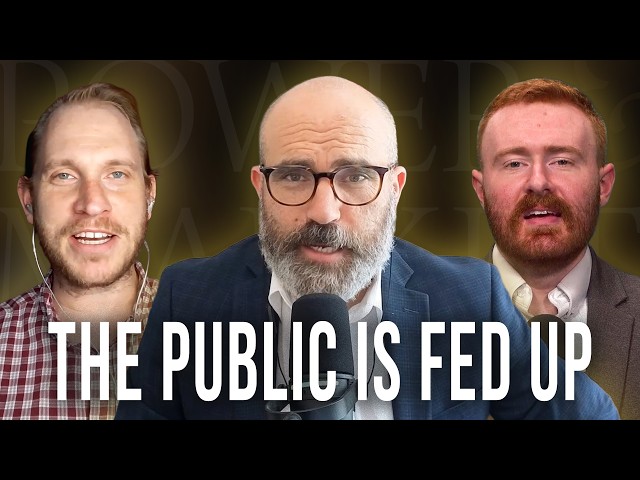
Flock is Down in Florida, Protests are Up in Spain, and Oil is Pumping in Venezuela
Watch on YouTubeVideo summary
The recent episode of the "Power Market" podcast delves into a complex landscape of domestic surveillance controversies, geopolitical crises, and shifting political dynamics in Venezuela. A significant portion of the discussion focuses on the backlash against FLIR license plate reader cameras in the United States, where public outcry has led to their removal in both Tennessee and Florida. In Knox County, Tennessee, the mayor investigated and invalidated contracts after discovering that the sheriff's department had illegally bypassed spending limits by making multiple purchases just under the $25,000 threshold required for board approval, resulting in over $2 million in unauthorized spending. Similarly, Governor Ron DeSantis revoked permits for these cameras in Florida within 24 hours, a move the hosts interpret as proof that public opinion still holds weight against law enforcement narratives claiming such surveillance is essential for safety.
Beyond domestic issues, the podcast addresses severe instability in Ceuta, Spain, and Venezuela. In Ceuta, a Spanish enclave on the North African coast, approximately 80,000 migrants, described by the hosts as likely state-orchestrated and predominantly male, swam across the border to overwhelm the city, leading to looting and crime that disrupted local life. The hosts attribute this coordinated effort to geopolitical tensions involving Morocco and potentially Israel, exacerbated by Spain's opposition to Israeli operations in Gaza, which has sparked massive protests against the government's perceived inaction. Meanwhile, the anticipated regime change and free market reforms in Venezuela have failed to materialize; instead, American companies are entering joint oil partnerships with the Maduro regime, creating a neo-colonial dynamic where the US exploits local resources while maintaining a strongman government.
The speakers critique these developments as contradictions to their own principles of limited government and liberty. They argue that funding domestic protests through executive orders undermines libertarian ideals, just as the Venezuelan intervention mirrors historical mercantilism rather than eliminating socialism or improving conditions for citizens. The discussion highlights how political optics often drive policy swings, causing restrictive measures to be abandoned for convenience while "open borders" advocates ignore the reality of uncontrolled migration. Furthermore, the Venezuelan immigrant community faces marginalization once they are no longer useful as political leverage, a trend similar to that observed with Iranian protesters. Ultimately, the episode concludes by warning that such interventions risk emboldening future escalations due to deep-seated anti-US sentiment and ongoing cartel operations, while also raising concerns about long-term economic precarity linked to bond issues and corporate interests rather than genuine public safety or environmental progress.
Read the full video transcript
Welcome back to the Power Market
podcast. I'm Ryan McMacon,
editor-inchief at the Mises Institute.
And joining me today are two of our
contributing editors. We've got Tho
Bishop and we have Connor O'Keefe.
And we've got a variety of issues I
think we're going to cover today. There
hasn't been any one thing really
dominating the headlines, but there
there's definitely stuff going on. So, I
think we can cover a few uh different
issues relating to things like like
bonds, like gold, like immigration.
Uh so, we'll get into that here in just
one minute. But though, we've got events
coming up here in the near future,
right, for the Mises Institute.
>> Yeah, Ron, we can tell you're not a
college football fan because Lane Kein
versus the SEC has been dominating the
headlines. But uh we also have coming up
at the Mises Institute some great events
uh and in the SEC footprint. So they it
works there. I can make that as a
bridge. Uh the in Greenville, South
Carolina on just next weekend uh we've
got what government schools uh don't
want to teach you or why government
schools don't want you to understand
economics. What will they not teach you
proper economics? Um we've got a great
lineup there. Uh no Ryan McMon this
time. This is not part of the 2026
making world tour, but we do have uh
play Peter Klein, Jonathan Newman, Mark
Thornton, Paul Swick, and our good
friend Pete Faggley. Um so that will be
a great event in Greenville, South
Carolina. There's still a little bit of
space open for that one. And uh our
supporter summit is coming up in October
on the 22nd through the 24th in
beautiful San Antonio, Texas. Uh if you
want to learn more about that and get a
peak of the events already shaping the
calendar for 2027, you can find that and
more at mises.org. And of course, a
reminder, we've got two great books that
just hit the Mises bookstore. Uh both of
which Dr. Patrick Newman has a buy line
with. We've got Cronyism, Rise of the
Corporist State, a sequel to his book on
Cronyism, Liberty, and Power in Early
America. great great read about how uh
the the elites were formed during the
progressive era and post civil war
politics. A lot of great narratives in
that and also uh the making of an
Austrian economist, a biography, an
intellectual biography of Murray
Rothbard. Again, both of those are now
up at the Mis bookstore, also on Amazon
and anywhere else you get your books.
So, I highly recommend checking those
out. Back to you, Ryan.
>> All right. Well, let's follow up on our
discussion from two weeks ago about
flock cameras. remember we uh we talked
about that a bit and there's actually
some interesting developments that have
occurred since then. The the backlash
has not gone away and I wanted to talk
about our man Glenn Jacobs who I think
we just briefly mentioned last time but
there's I think there's a several
different issues uh contained uh with
the the Jacob situation. So, if you
don't know, Glenn Jacobs was cane uh in
pro wrestling
and he is now the mayor of Knox County
in Tennessee and he's a or at least has
been historically. I don't know I don't
know what his status is when he's an
actual elected official. uh which he's
wrapping up his eight years now as mayor
in Knox County, but historically he's a
Mises Institute supporter and you can
see that in a lot of his work um as
mayor down there in in Tennessee. And
there's for years there's been an
autographed picture of Kain of Glenn
Jacobs as Kain in in the offices there
in one of the offices that I would often
sit in when I was visiting the institute
and I just called it the Kane office. Um
which I don't I never followed pro
wrestling but uh I kind of like the
concept. I I like the Kane character,
let's put it that way. So good for him.
Great career in pro wrestling. He went
on and he so he became mayor of Knox
County. And the reason he got mentioned
this last time is because he delved into
the paperwork for the flock camera
operation in Knox County. And this had
been set up by the sheriff's department.
And what uh Jacobs found was that
essentially the sheriff's department had
been so totally unethical and really
skirting the law. It's it's it's not
clear if it's even what they did was
legal or not, but but they were clearly
trying to avoid
uh telling the public that they were
importing a bunch of flock cameras. So,
what they had done is is since and if
you've ever worked for the government,
you know that there's a certain dollar
amount over which you then have to have
like board approval or some sort of
extra approval for spending money. So,
the sheriff's department being sneaky
liars went in and they're they were
saying, "Well, we need to get in under
what I think was a $25,000 limit on on
the procurement. We're going to do
$24,990."
It was like literally $10 below the
limit. And they did this multiple times.
uh Jacobs went in and said, you know,
really if you read the the way the law
is written, the full purchase is what
matters, not these individual purchases
you're making to skirt the law. So, he
just declared then the contract to be uh
not valid between the sheriff's
department and uh the county. And of
course, the sheriff's department whined
and bitched and moaned about it. Uh but
now it looks like the county has gone
back and the actual elected officials
have said, "Yeah, we're kicking flock
out of the county altogether." And this
comes after the county had already spent
$2 million
on it without asking any voters, without
any sort of illegal vote. So now they're
trying to recover from that politically.
And it was all started off by the
sheriff's department, which I mean just
should tell you what you need to know
about law enforcement on this issue.
they will lie to your face about it so
they can get their spy cameras and that
seems to be the issue there now.
>> Yeah. Well, we had a similar situation
on on even a bigger scale in Florida um
earlier this week. Dantis through the
Florida Department of Transportation FOD
um announced that all of the permits for
license plate readers um obviously a key
part of the flock uh infrastructure
there um were going to be revoked in the
next 30 days. And so immediately within
24 hours I think every single county in
the the state um you know announced some
sheriff's office, local police forces,
things like that. I mean pretty much um
you know on you know every state road
and which is obviously most of the veins
going into um cities and things like
that. I mean pretty much you know within
a 24-h hour period flock was pretty much
removed from Florida or or started the
process of removing it statewide. And I
think kind of that dives directly into
what we were discussing a couple weeks
ago is that this this populist backlash,
the broad nature of this um you know has
the ability to act really quickly. I did
not expect us to be talking about this
two weeks later um particularly with a
state like Florida. But um it it
definitely goes to show um just how
quickly this action is evolving and and
Dantis has always been someone who's
doesn't mind just doing things. And so,
uh, this is definitely I was always
interesting seeing all the the the
messages out there from various law
enforcement officials around, you know,
it's like, oh, of course, we've always
agreed that the trade-off between public
safety, you know, there there is no
conflict between uh individual liberties
and public safety and therefore yada
yada yada. Um, you know, they they were
dra kicking and screaming and now
Florida will will be a flock-free flock
free state in in most meaningful ways.
Theoretically, I guess you'd have like
cities and still do it, but like you for
the most part, this seems pretty pretty
broad and and largely absolute
throughout most of the state.
>> Well, I saw Oh, go ahead, Connor.
>> I was just going to say it shows the um
something that I often like to remind
people, which is that public opinion
does matter still. I think there's a lot
of people out there that have the sense,
I think, especially in our circles, that
it's all meaningless. The government's
just going to do whatever they want to
do. Um, and you know, that certainly I
think uh can grow out of what you know I
believe is to be accurate criticisms of
democracy and stuff like that. But no,
the state does what it can get away
with. And this is a good example now of
this issues getting enough attention.
People are getting worked up enough
about it that the state can't really
keep getting away with uh you know what
what they had in the past as the Faulk
thing continues to grow. Um and it gets
back to what we were talking about last
week. I I view it as coming from the
fact that people just don't trust
institutions and people in power
anymore. And I think the Tennessee case
is a good example of that. I mean, when
you have these, I guess, sheriff's
deputies going $10 below the limit so
that they don't have to have that extra
council
um oversight of that issue. That that is
not what the government that is not them
doing something purely for the public
good. They're not just doing this to
keep people safe. this is them trying to
get away with something. And if there
wasn't all of this national interest
and, you know, enthusiasm about flock,
it's probably, it's likely, I imagine,
that they would get away with that. It's
just because people are so worked up
about it, you know, appropriately, in my
opinion, that it's getting that kind of
attention. So, it does actually matter,
you know, when we're like talking about
these issues, trying to wake people up
to it, like that that is not a
meaningless thing in our current system,
even though it can sometimes kind of
feel like that.
Yeah, and I I hope it is reminding some
people that law enforcement is generally
not your friend. Um, a lot of people
forgot that. I guess after COVID, they
just forgot about it. They forgot that
it was the cops who were shutting down
your business because you opened your
restaurant when there was a lockdown
order. It was the cops who, and I know
this was true in many cities because
police officers told me this, that they
were essentially being prepared to make
mass arrests against people who left
their homes uh during the lockdown
orders. Fortunately, the government
chickened out in the end in most places.
They were unwilling to carry that out.
But nine out of 10 police officers were
100% willing to do that. To just round
up the people in general, throw them in
patty wagons, ship them off to jail for
leaving their houses. That was where the
endgame was for police departments
across America on top of shutting down
businesses, on top of harassing
citizens, for uh violating just these
completely madeup uh things that that
health departments were handing down.
And remember they were arresting people
for going on playgrounds.
Uh I mean just the harassment was
astounding. And then everybody forgot
about it. Uh I think because the left
then engineered all of this BLM stuff
and everything. And then the right which
has the memory of a goldfish decided
that oh the police are on our side now.
They're they're anti-woke or something
which this is illustrating again. No,
they are 100% in favor of spying on you
every minute of every day. And they're
justifying with the most laughable stuff
like, "Oh, if you don't if you don't let
us spy on you every day, grandma with
Alzheimer's is going to wander off and
get lost. So therefore, we need to
abolish the Fourth Amendment for
grandma." Uh, and it's it's really quite
remarkable that they're getting away
with this. And and I've seen a couple of
videos also with cops saying basically,
well, we just can't we can't enforce the
law anymore. You have no reason to
expect public safety unless you give us
uh these flock cameras. And I noticed
that in a lot of these cases, the
police, they always put on their
tactical gear, right? To make it look
like they're on their way to war or
something while they're just like in a
suburban uh basically conference room
doing a press conference. So, it's it's
so much theater. It's so much whining
about how, god forbid, we do any actual
work. It's just the typical sort of
behavior you'd expect from a bureaucrat.
Give us what we want or we will give you
nothing in return even though you're
already paying for it. So, I'm hoping
some people are starting to see just how
law enforcement really functions on a
lot of this. Uh, go ahead, though. Well,
that that's kind of, you know, I'm I'm
going to put on I'm I'm assume the the
McMaken role and kind of take the the
the negative sort of you the the the
concern fory sort of view on this is uh
that that like the the uh my my concern
is that like part of the appeal of Flock
or the success of Flock is that like
it's it's like the perfect embodiment of
new era surveillance for like a Tik Tok
generation because you had the overt,
you know, you you could take a video out
in front of it, right? like there's
there's these there's very very public
physical things that you could see. I
think one of the one of the scary things
one of the one of the concerns I have is
that okay let's say you have this
massive retraction of flot cameras uh
when it comes to the broader
surveillance state in its modern form of
technology right like this this is a
small relatively new and this this this
form you know addition to something
that's been growing for decades and
decades right and so how much of this
you know do you have people that kind of
like oh golly gosh darn you know we've
had our big I think there's something
true kind of the larger mindset like all
of American politics Right now so many
people conceive of politics and
political action and you know everyone
wants their own march on Selma, right?
Everyone wants to considers themselves
like great civil liberties, you know,
activists, right? And so they like I
check the box here and yet like okay
fine flocks flocks down but the broader
state right the broader se you civilian
surveillance apparatus all the things
that you know most of us opt into either
uh knowingly or I think more commonly
apathetically but not willing to give up
the convenience or the tools the
services etc etc etc of just modern life
that you fine we got this one victory
but you know really how much of this
really impacts the net surveillance
aspect that exists in the modern world.
Again, we can, you know, some people can
go full Krinski in kind of, you know,
how they view these sort of things,
right? I'm not, you know, that's up for
every individual to to to think about,
but I I I'm I'm a little skeptical of
how much this, you know, sparks a
broader reconsideration of the more
fundamental problem outside of, you
know, you know, we talked about this a
little bit, right, about just rebranding
flock, you using a different contractor,
yada yada. that's the most most basic
example of this that we actually have
seen already play out. Um but you know
does this become an afterthought when
some of these victories are you know are
Fidians going to still care about the
concept of AI and big big you know daddy
you know big brother you know watching
every move if it's okay now we're just
you know pulling cell phone data rather
than having the very obvious you know
Orwellian depiction of a camera outside
your house. No, you're right. It's a
never- ending thing. And they're already
plotting their next move in the sense of
so Flock gets kicked out. They bring
back another brand of the cameras, Axon
or whatever. And then they're just
saying things like, "Well, can you just
attach them to the top of like a really
tall street lamp instead of using the
usual shorter poles so it'll be harder
to cut down so we can just keep spying,
but it it'll just be easier for us." And
then I'm hearing about palunteers like
putting together their spy satellites. I
mean, yeah, there's there's so many
different things going on at once. And
as long as you've got a significant
portion of the population willing to go
along with it, yeah, they're going to
get away with it. And there's no
shortage of conservatives pushing this
sort of thing. Like there's this guy who
pops up in my feed named Will
Chamberlain. I don't know, he's like
with the Edmund Burke Institute or
whatever. Total apologist for the
surveillance state. uh really shocking
and I assume that this is moderately
mainstream conservative sort of stuff.
So uh there's never too much government
power for these people uh as long as
it's anti-left, right? Basically what he
was saying, we need a surveillance state
to own the libs. That was his whole
position because the far-left likes
crime and they don't want surveillance
cameras. So therefore, you have to want
surveillance cameras if you're not woke.
And I guess some people fall for that
sort of thing.
>> It's absurd. And you're you're seeing
I'm seeing a lot of that right now with
like there will be some clip that goes
viral from like a teen takeover or
something like a bunch of like like
somebody taking or a big group taking
over a grocery store or something and
these conservatives are pointing to that
like this is why we need flock cameras.
It's like they're already on camera. I'm
watching video of this. Like the problem
isn't that the government doesn't know
who these people are. It's that they're
not doing anything about it. Like the
data already exists there. So putting
more cameras up there is not actually a
step towards a solution there. Like the
the problem what you were saying though
like the problem is so much deeper than
this one brand of camera that's going up
on some street corners. It really like
it's it's a deeply systemic thing. It
reminds me of like the frustration I was
having where talking to a lot of
right-wingers especially they were
almost acting like if we had just if
Trump had just fired Fouchy the whole p
pandemic response would have been great.
They would have been the whole federal
government would have been really like
working purely in the interest of
keeping everybody safe. And it's like no
the like okay I'm not a fan of Fouchy.
have a lot lot of problems with him. Um,
and I wrote a long article about him
recently, but he was serving his role
well because in like that it's not like
he came in and corrupted a system that
was supposed to work on behalf of all of
us. He was serving his role well in a
system that is working against us. And
it's a similar thing with this flock
thing. And I also I'm always kind of
interested in like the media component.
I think there's just different uh
dynamics here that feed into it. I think
the fact that Flock camera is kind of a
catchy name, like there's just reasons
that this just kind of took off as a
thing. If they were called some boring
name like X1D cameras or something that
there's a good chance like it would not
get to the current level. So like it's
important to not get too distracted and
focused on the very surface level thing
because yeah, you're right. If it just
rebrands, if it if Flock goes away and
they switch to another camera or they go
back to something else that all the
problems are still there. you don't want
you don't want to get too focused on
what is really the symptom of a much
deeper problem.
>> Well, one thing I think is interesting
is and you know looking up various legal
cases involving this um for my own
interest in our episode a few weeks ago
is that like I I do do think it's going
to be interesting and again the
assumption should be bad, right? Like
I'm not trying to say the Supreme
Court's going to come in and save us,
but like there has been I think an
interesting acknowledgement um from
several court cases dealing with
surveillance that basically a lot of
them were in defense of you know
technology 5 years ago, 10 years ago
etc. uh you know whatever the question
at hand was but you know within the
opinions there's there's a lot of um
indications of recognition that as
technology increases and you know that
that some of these questions become more
valid with if technology becomes better
at doing x y and z um and that's why
we've seen some of these you know uh u
various policing tools start being
struck down there was the carpenter case
the one using geoencing data a couple u
that came out this year. Um, and so I'm
interested to see, you know, is there
any um um, you know, how does the the
combination of increased, you know,
nominally private I know we we we talked
about why it's not the case last time
around, but the nominally private tech
uh, security sector, you know, to what
extent is the legal system um, prepared,
capable uh, uh, and able to update?
Again, this is not to say the Supreme
Court is the body that really cares
about civil liberties and golly gosh
darn like they're going to protect us,
but like these are questions that have
been out there asked. Um, and and
really, you know, some of the problems
that we have with this sort of stuff is
like one some of the justifications used
compelling, you know, whether or not
they're compelling, right, is like, oh
well, you know, in the modern day and
age, you you know, we can't do a warrant
process because that's so antiquated,
things like that. There's a lot of I
think interesting upgrades to the legal
system that you know these are questions
that that are going to be confronted one
way or another. Again, I think the
default expectation should be it will be
in the side of the regime and be very
expansive. Um but but even like I mean
so much of the the tech companies code
like the the the extent to which um you
know the the agreements between in uh
between customers and tech companies it
doesn't matter what the legal ease in
the contract is to the extent people
care about that and don't just scroll
down but you always have this massive
gaping backdoor change because there's
always some provision like we're going
to listen to the government. So the
government, you know, single-handedly
changes what it expects of tech
companies. Like you like these are these
are, you know, interesting legal
questions that go beyond just the public
sentiment side of that. And I'm I'm
interested to see how this sort of stuff
resolves because these are questions
that are not going to be going away. And
I think they invite very interesting
questions from, you know, label
libertarian legal lens, but also broad
more broadly on this topic.
>> Yeah, I think we've haven't heard the
the end of this. It's just I I do agree
with you though, right? There's so many
things going on right now on the
surveillance state front that I think
this is just one thing that attracted
some attention, but it has really drawn
out, I think, just how much of the
people who you thought maybe were on
your side are not right. Local law
enforcement, support your local police.
That means apparently supporting the
surveillance state. Uh, and you I mean,
heck, you even got guys like uh Grady
Jud from Florida, who I see
conservatives post all the time. He's
out here whining about not having flock
cameras. Interestingly, he's also one of
the few departments uh that doesn't have
body cams on his deputies. So, so spying
for me, but not but no uh no recording
of what we're doing for the general
public seems to be the position.
basically a microcosm of the larger
state uh where they control all the
information and you have none and I mean
that's that this is a conservative hero
we're talking about right here. So, not
doesn't speak well, I think, to any sort
of uh overall sea change unless
something significant uh significant
changes. And of course, right, we've got
a couple members of Congress that were
introducing bills. Probably Massie was
one of them. I forget if he was
involved, but oh, we're going to cut off
federal funds for any use involving
flock cameras, things like that. We all
know that the leadership in Congress is
not going to let that happen. and public
opinion. It it does matter at the state
and local level. And you see that sort
of responsiveness, right? Just how short
a time frame it took for some city
councils, some county commissioners,
some state legislators and governors to
respond to the backlash. But nothing
like that's going to happen in Congress
because they have just a much tighter
grip on power and they're much much more
separated from uh the general people who
elect them. Right? your member of
Congress simply doesn't care about some
sort of mass movement back home because
he knows he's he's got he's an incumbent
which means he's almost certainly going
to get reelected. Doesn't matter what
you say or do. Uh because that's just
the way that system is set up and
they're not allowed to really run
legislation anyway because that's all
orchestrated from the top. So, uh, you
got we got a long way to go in terms of
changing the federal view of this sort
of thing because they are still all in
on the surveillance state. Um, but
speaking of law enforcement not being
your friend and really not caring about
you, uh, let's look a little bit at SUTA
in Spain. Um,
I we never covered this, I don't think,
on Power Market at all. I don't think
we've even mentioned it, although I've
run two or three articles on it,
especially when it really got underway a
few weeks ago. Now, this is a situation
where there's some Spanish enclaves on
the northern coast of Africa. And these
date back hundreds of years, really
back, I think, to the 16th century. And
of course, nowadays, uh, they're really
the most civilized outposts in North
Africa, right? This these are places
where there's actual religion of
freedom, where they have well-developed
economies. And so of course then the
people in Suda who are Spanish citizens
and they're part of Spain, they have a
much much like something like three or
four if not more times the size of per
capita GDP than the surrounding area
which is Morocco in this particular
case. So what you've had for years and
years and if you follow these sorts of
things you know this has been going on a
very long time. Uh, but this is just the
latest flare up of it where you've got
this country of millions and millions of
people that are right next to this
little enclave of Spanish civilization
that has fewer than 100,000 people. And
what happened then a few weeks ago is at
the prompting of their government most
likely and probably with NGO money and
who knows what else was uh orchestrating
it and encouraging it about 80,000
people maybe certain nation states on
the eastern end of the Mediterranean
were involved uh where 80,000 people
suddenly amass on the border of Suda and
decide oh we're all just going to push
through that. And so they were swimming
around the border, right, because it has
a has a a maritime border there. They
were swimming around to get in the
country and they basically just
completely overwhelmed the city. More
migrants moved into Suda over that
couple of days than there were people
living in Suda at that time. So it was a
complete disaster. The the uh the city
came to a standstill. There were
refugees everywhere. Of course, not
really refugees. They were state
orchestrated migrants moving in. You
could even say since it was state
orchestrated virtually like I don't know
as far as I could tell 90% men military
age. This was a geopolitical situation
being engineered by Morocco and possibly
their ally the state of Israel. Uh the
US maybe because um Spain of course has
been declared the enemy in recent days
because of their opposition to the
Israeli operation in Gaza and things
like that. And so shortly after uh Spain
announces that they're they're going to
cut ties with uh with the state of
Israel and stuff, lo and behold,
Morocco, which was naming highways after
Trump uh which is very happily engaged
in which has recently in recent years
normalized relations with with Israel,
suddenly now the just out of nowhere all
these troops are looking to overrun
Spanish territory
and Uh it it is now continuing. They
they yeah they threw out some of them,
but there's still tens of thousands of
Moroccans still in Suta. Girls can't go
to to school because crime is out of
control. There's looting. People are
afraid of being assaulted. There's
rapes. Uh and this of course uh many in
the state of Israel think this is great.
Spain's getting what it's deserved. Uh
the Moroccans are kind of like playing
it off like, "Hey, we weren't involved
in any way." Trump used it as, "Oh, this
is what happens when you have open
migration." Uh, but Trump probably knew
about it and and let it happen u because
it served his purposes there
rhetorically and also happened to punish
Spain at the same time. Spain is really
doing nothing about it. This is relates
back to the issue of law enforcement
being useless because if you have a
border but you're unwilling to enforce
it that is you're unwilling to enforce
literal hordes of people that outnumber
your native population in a city just
come in pillage loot. Stores are
constantly being broken into. You can't
move around the city. Uh there's just
filth and dirt everywhere. The Red Cross
of course then comes in and and make
sure that the people can stay by handing
out free stuff all the time. German
NOS's are there handing out free phones
to the migrants, uh free food from the
Red Cross. A lot of local Spaniards are
kind of getting wise to it. They're now
trying to kick out the Red Cross, which
they can see is clearly an operation of
some sort of um geopolitical group,
right? They're not there to to feed
hungry people.
And now there was there's protests in
Spain. 50,000 people were protesting the
non-action on the part of the regime.
So what is what does this mean then? I
mean it's it's really a remarkable
situation and just the the sheer
magnitude of it. So yeah, what do you
what do you think though?
>> I don't Madrid has responded. They're
sending millions of dollars for uh for
social workers. So they have responded.
Um I mean no I think it's I mean like
again like this this you know I I you
with respect paid to the um uh Middle
Eastern war driven migration massive
overruns that we saw in in other parts
of Europe um kind of kicking off the la
the populist era the last last decade or
so um throughout the west. U I can't
really think of anything that's more of
a of like a true like camp of the saints
sort of moment than than this particular
incident. I think it's very interesting.
is along with and and perhaps further
supported by the uh uh you know various
theories of foreign actors participating
in it that a lot of people have
indicated that there were like um it was
almost like you know social media
inspired flash mobs of uh of information
kind of got out there that is part of
the reason why this was such an
organized massive wave and and I think
it really goes to just how um the the
for one the explicit weaponization of
immigration
in this vivid way. I mean, first and
foremost, this is like a caricature of
what people were talking about a decade
ago. Um, to the, again, I think that
social media and the again, going back
to our our topic of technology, the ways
that that has a a a very real influence
on these very old social problems and
the way that they change the the size
and scope of them and therefore the the
consequences there on after. Um, and I'm
also interested to see just the the
political ramifications within a country
like Spain that has a very left
government right now. This is something
that has been seized upon by um, you
know, various right-wing parties there.
Um, and you you very much have a, you
know, this particular part of the
country which always been a little bit
different than the rest anyway. Like I
mean this this very real nationalist
sort of spirit there on the extent to
which the government has, you know,
worked against their own interest on
this problem. I I think it's a it's a
very interesting um illustration of many
of these you know broader macro problems
that have faced again particularly most
of the the west for the last decade and
just reminder that these tensions are
still very much out there and at play
and in many cases escalating
>> well and in addition to that their
president is being accused of having
known about it beforehand and taken no
action. Pedro Sanchez uh is he's their
left-wing prime minister and yeah, he
clearly welcomes the immigrants as far
as I can tell.
>> Yeah, it's kind of those things like
would you rather him know about it or
not know about it? Like what would be a
worse outcome from
>> nefarious or incompetent? That's kind of
the constant question with this stuff. I
so I don't know too much about this
specific story, but um I guess what just
stands out to me and this is true for
all of politics, but I think it's
especially true with immigration right
now is that the most important thing is
optics. And I think, you know, there
there are obviously ideologues on both
sides. You have, you know, hardcore
immigration restrictionists who want to,
you know, basically deport everybody.
And I'm talking a little bit more about
the US, but I think it's it's similar uh
broadly in Europe as well. And then on
the other side, you know, the hardcore
open borders um supporters, some of them
may not call themselves that, but they
at least want more immigration and, you
know, less restrictions right now. But I
think most people, and you know, once
again, the important thing for us to
always remember is most people are
pretty apathetic about politics. They're
not like us. They don't obsessively
follow this stuff. And of that giant
group, which is kind of the important
group in terms of like that they're they
have the numbers. They're like the
independents that can swing one way or
the other. When it comes to immigration,
I think that most people are
uncomfortable with footage like this of
a bunch of people running across or
around a border crossing and they're
uncomfortable with imagery of, you know,
people being put in cages or marched um
and essentially a heavy crackdown. And
so I think the real battle in in
immigration sense is through who can get
their who who can reach their goal in a
quieter, less visible way. I think going
back a few decades, the more
pro-immigration side has been winning
that. Um but really especially once
again more in the US just going back
like a few cycles like um obviously the
the first Trump term was a in large part
a response to a lot of the open
immigration in the years before but then
I really think like the you didn't get
the Biden years of a lot of people
flooding over the border without the
optics of that first Trump
administration the whole kids in cages
thing which was largely not true but the
truth doesn't matter. about the
perception of it. And then of course,
what was it? Uh I mean, I always
remember the um the Eagle Pass, Eagle.
There was that one crossing during the
Biden years where they just had this
insane footage of people camping on both
sides and moving across. And that really
what was that I remember that happened
shortly after there was that incident
where like the border patrol agents on
horses who had um it was like lassos or
something and it once again wasn't true
but there was there were photographs
taken that looked like they were just
these guys in cowboy hats were just
whipping these like Haitian migrants and
so that optic kind of drove then the
Biden administration to really pull
things back there. you get this whole
thing and so it goes back and forth and
then because of that eagle pass thing or
whatever it was called you get the
second Trump administration where now
they're really trying to look tough and
crack down but then you get like the ICE
shootings and stuff which probably going
to swing things back in the other side.
So it's just this back and forth thing
and I just I so I feel like when I see
something like what happened here in uh
Suta or however you say it like this I
think was an optics loss for the those
who want less immigration restriction
here. That doesn't mean you know it's
this clean thing like it's a battle but
yeah there are to as you mentioned
protests right now but like if they if
they really wanted to um move more
migrants you want to do that quietly and
this was not quiet which does you know
it begs you know or it brings up
interesting questions about what was
actually happening here um behind the
scene but I don't know that's just what
this kind of story brings to mind for
me. Yeah. And I think it illustrates
that the real debate is going to be
right just it's going to be the more
immigration party and the less
immigration party. Clearly the party of
closed borders total migration moratorum
for 20 years can't see that getting a
whole lot of traction. Uh at the same
time the the open borders the true open
borders position or even the mostly open
borders position right virtually no one
is ever like totally open borders,
right? Let let the cartels come and go
as they please. let people uh with
smallpox across the border, right? It
that that position nobody ever took
seriously. But even the less open
bordersy position like say the the Brian
Kaplan position of okay, I could see
like some limitations on disease or
military units or things like that, but
totally unrestricted economic migration.
Nobody's going to take that seriously, I
think, after this Suda thing, right? I
mean the Kaplan position is is that the
the the economy of SUTA should now be
booming uncontrollably. They should be
taking off. Spain's economy should just
be absolutely amazing. And you should
you should embrace rapes on your
streets. You should embrace the fact
that your daughters can't go to uh to
school because your GDP per capita just
went up .001%. Why don't you know how
good you have it with 80,000 Moroccans
flooding your city? That is essentially
the unrestricted economic migration
position and no one's going to take that
seriously either. Nevertheless, there's
a whole lot of room in between which is
oh well we need at least 2 million
migrants a year is what they're going to
say on the left and then how do you deal
with that then? I mean, clear clearly
the easiest way to prevent being in a
situation where you're sending in ICE to
route a bunch of people in cities is to
have an actual border where you don't
have a million people come in that you
later have to remove. But the regime is
clearly unwilling to do that uh for
whatever reason. It's not actually you
don't even have to build a huge wall.
It's not that hard to maintain a border.
Uh but we live in a country where you
pay more and more in taxes every year
and the services get worse and worse
every year. You can see it at the city
level. You can see at the federal level.
Uh that's just where we are right now.
And is an extreme version of that in
Morocco and Suta. And I don't know where
it's going to happen. Other countries
can see where this goes, right? like
Italy has closed its border with Spain
on this recognizing that Spain
apparently has no control over who's
coming in. Could be terrorists. They
don't even know. Um and so there is some
concern about Spain's border with the
rest of the EU and that's an obvious
problem, but it seems something that
Sanchez isn't particularly concerned
about.
>> Yeah. Well, I mean the EU has had
problems with this work for quite some
time anyway. But I I say like I I'll
push back a little bit. I my slight
disagreement would be that I don't
really think it's about having some sort
of immigration policy at all of having
some specific number in mind having some
you know particular restrictions in
mind. I mean I think what we've seen in
practice is that basically is
immigration something that the a regime
in power has any interest in controlling
or not? Because again like I we we did
have you know basically a de facto
policy during the Biden years which are
you know even more extreme than the
Obama years for this particular issue
which is that there's no enforcement at
all. Right? And so if you have no
enforcement at all your policy isn't
golly gosh darn you know Mexican gang
should come through but in practice
that's exactly what it means. Um and and
like this this situation there you know
an advances is coming. There is no
enforcement here. And so it's this back
and forth between governments that you
know for for whatever reason be they
ideological their own you know views on
you know they they've rationalized it
from humanitarian purposes is their
broader political objectives you know
whatever their their their reasoning is
they refuse to have any sort of serious
control there. And then you have the
other side where there are attempts to
you know deport and whatever that will
never be at the same capacity of getting
in. it's always harder to remove than it
is coming in, right, when you have this
back and forth. Um, but again, I don't
think that there's any sort of, you
know, deeper over, you know, I I think
expecting the public or expecting some
sort of lasting political condition. You
when it's a problem, people pop up, they
get mad about it when it is no longer a
problem, it kind of rolls in the back
burner for most people who are not
thinking about this non-stop. Um, and so
I, you know, to me, like that's the way
I kind of see the policy swings. It's
not, you know, it's it's is there
immigration control or or not? And if
not, then you know anything can happen
from that point.
>> Well, and it wasn't even the government
choosing to do nothing. They were
actively subsidizing,
>> right, giving money to people. Yes.
>> To move to the United States. And that's
just so easy as a libertarian. You're
right. It's just like, hey, maybe we
should just stop giving money
>> to these people as step one. That
doesn't seem real hard. Why is there
even an argument there? because that's a
>> then you got the then you got the NGO
operations and things like that. It's
like oh it's not you know it's not the
state you're going to be going to this
you know it's you know it's like yeah
it's
>> yeah the the basically these quasi
states within a state that come in and
oh we're going to pay all of these
people to be there then where's that
money come from? Nobody knows. uh I
suspect comes from governments and it's
a it is a remarkable situation, but a
lot of that money did come straight up
from governments and I I suspect they're
going to go back to that, especially now
that we live in a a country that is run
by executive order and edict. So, it's
not like you need an act of Congress to
give money to these people. You just
have a president come in and decide,
"Oh, well, we're just we're going to
find $50 million to give to criminals
living in luxury hotels in New York
City." And it's fine. And bizarrely,
there are some libertarians who seem to
think that that's the lazair thing to do
is to give away government money to
people who show up. So, yeah, we got a
lot of work to do on that to say the
least.
Well, there's as just this last issue
which I think we spent a couple of uh
minutes on
um Venezuela. What's going on in
Venezuela lately? I was a I was told
that the US was already going to be out
of there and this was going to be like a
free market paradise now and they were
going to have like free and fair
elections and all that stuff. Is that
what's going on down there yet though?
>> Yeah. Yeah. No, it's it's it's a whole
it's libertarian beacon down there. No.
Um I you know I think this is exactly
the sort of outcome that that you know
we were talking about in the immediate
aftermath is that you know peace has
been made with the existing regime and
the regime is perfectly happy to
basically trade favors from one group of
international actors to the United
States. Um it's now on steroids with um
oil deals with uh uh you know part joint
partnerships between American companies
and Venezuelan companies. um you know
traditional V Venezuelan oligarchs are
making out good out of this. Um you know
it guarantees you know it's the the
biggest oil deal in human history. Um
and again you know I you know this is
pretty much exactly how we kind of
expected it to go. It it is worth noting
that I know some of my concern at the
time was you know we're going to have
like open massive civil war between you
know new regime and Maduro loyalists
that you know largely has has not been
nearly as widespread as I I feared could
have happened there. Um but it is
interesting that you know this this very
overt uh um you know contractual
obligations between American companies
and Venezuelan the Venezuelan regime on
these particular deals. It's uh you know
explicitly kind of highlighting the the
kind of you know neoc colonialist aspect
of this particular forward policy
venture. Um but uh yeah so new new new
deals with Venezuelan oil and uh this is
yeah this is where we are right now in
Kacus.
>> Yeah it's quite remarkable how much it
mirrors the mercantalism of old right.
We're we're going to give this
essentially our favored government
corporations. We're going to give them
special licenses to access resources in
these particular places and the whole
process is politically driven. And that
seems to be where we are now with
Venezuela. We'll send in uh our people,
seize control of the local resources,
and then we'll pick and choose which of
our political supporters we then uh
allow to profit off of that. Um how
anyone could support that. and also
think that uh the that they're somehow
in thinking in line with the American
revolutionaries is quite remarkable like
this is explicitly what they were
fighting against. This is the um the
East India Company model. This is the
tea tax model. That whole thing bound up
in terms of what are we taxing you for?
Who gets favors? Where does the money
flow? It's the US is the metropolis and
Venezuela is the colony and but
apparently being against that sort of
thing makes you woke now even though
that's what John Adams and Thomas
Jefferson were fighting against. I guess
they were woke. Uh so it'll be
interesting to see how long this
situation persists. I mean it could
persist indefinitely, right? Because
they've already created the situation
which most colonists colonial powers are
smart enough to do. you just get in good
with the local regime and then use the
local regime to exploit the local
population. So, this does emphasize just
what absurd nonsense it was when
conservatives were claiming that, oh,
the Americans will go in and they'll get
rid of socialism and the Venezuelan
people will be much better off. They're
just being exploited the exact same way,
if not worse, than what they were being
exploited before the US went in and took
out Maduros. same party in power. It's
still socialism. It's still strongman
type government. It's just as long as
they don't run a foul of Washington,
they're allowed to exploit their own
domestic population as much as they
want. But I guess for some people that
counts as the latest war for democracy
and peace and freedom and all of that
sort of thing.
>> Yeah. It's like notice how absent the
whole like Venezuelan immigrant
community, all the people that had fled
socialism and you know were being used
by the regime by our regime to justify
us getting more aggressive with them.
They're not useful anymore. So they're
just not getting a platform. It's
actually kind of a similar thing with a
lot of the Iranian people that starting
to come a little bit back uh Trump's
back talking about the protesters that
were allegedly slaughtered um by the
Iranian regime. But yeah, that it's that
was stark with um Venezuela especially.
I'm sure, you know, if they make some
move on Cuba, it'll be the same thing.
Once they stop being useful, you know,
the these communities, these interest
groups can uh kind of go away because
yeah, there was no actual regime change.
It's just this idea, like you said,
though, that we can essentially
strongarm the same regime, you know,
goes to Deli Rodriguez and her brother,
and now it's like you guys got to play
ball with us. I'm still a little
skeptical that this is going to be
stable for a long time. you know, it has
been relatively stable so far. There are
but there's just like some dynamics like
yes, but like a lot of the population
was very much propagandized against the
United States for a long time and
probably, you know, it's a little bit
difficult to just pretend like 1984 like
we're suddenly at war with, you know,
the BRICS nations now, uh, not the US
anymore. There's also like some things
with the drug cartels like deeper in the
jungle. Like a lot of this has been sold
on going cracking down on drugs. It's
like one of their favorite excuses.
that's that was their excuse for moving
um so much of the Navy into the area.
And yet like those cartels had kind of
an agreement with the Maduro regime um
to sort of leave them alone and to let
them operate a bit. And it's like okay
so does the US um you know maybe take
out a drug boat every once in a while
but essentially allow the drug cartels
to do their thing like there's just some
questions like that. So I'm I'm still a
little skeptical of the idea that this
is just done and solved and they can
kind of move on. But then once again um
that and I remember us talking about it
right after they took out Maduro. My big
concern the the entire time was not
about really what specifically was going
to happen in Venezuela. I thought it was
going to embolden Trump to try something
else and that's exactly what happened
with Iran. That to me was always the the
big problem. So even if somehow this
stable uh or relatively stable situation
does persist for a long time, I still
think that if you just look at the whole
big picture, um this was not good for
us. Oh, and then yeah, that's one other
thing. This like that Trump supporters
treating this oil deal like this is
really good for us. Like this is going
to be excellent for the everyday average
American. Like the only way you can kind
of understand that right now is through
the lens of Trump started this war with
Iran and the price of oil has gone up a
lot. And so yeah, if we can get some
more oil on the global markets, that'll
be good for gas prices. But like this is
to this is good for specific energy
companies. And also there's this whole I
drives me crazy is the and especially
with um you see it a lot with the MAGA
people right now. There's always just
this assumption that they're going to be
in power forever. And so Trump come this
is this is one example, but it goes
beyond the oil deal. Trump has really
escalated the whole idea of the federal
government taking stakes in these
companies. And that's part of this deal
is that whatever the um I forget what it
was called, but like this I don't know
if it's a new company or an existing
company, like the federal government is
going to have a pretty big stake in the
actual energy company down there. And um
I like I was just reading a a article
today I think in um Politico about how
all of the like um environmental
progressives are just chomping at the
bit with this because to them this is
like been the big answer. This is what
they've been aspiring for is if we can
get the federal government to take more
control over especially energy companies
and uh you know infrastructure all that
stuff then that's going to make it way
easier to roll out all of their insane
climate stuff without having to worry
about public opinion or Congress or
whatever. And so like Trump's just
creating this weapon for the
environmentalists that is going to be
handed over to them at some point in the
in the future. And um that yeah, I think
this oil deal is one example of that.
Well, we didn't even get time to talk
talk about uh the bond situation and the
precarious economic situation which
seems to be rapidly
approaching. And I can say that because
>> I have a feeling will not resolve itself
before next week.
>> Probably not. And I can say that though
because I'm not one of these people
who's been calling a new great
depression for the last 10 years or
anything. I've been waiting for real
specific issues to show up. And I think
the bond issue is a real specific issue
that's uh a significant problem. But uh
yeah, we'll have to get back to that in
the future. So thank you uh gentlemen
for joining me today. Thank you everyone
out there for listening. We'll be back
next time with more. So, we'll see you
then.