Filing Taxes for Graduate Students 2026-2027
Watch on YouTubeVideo summary
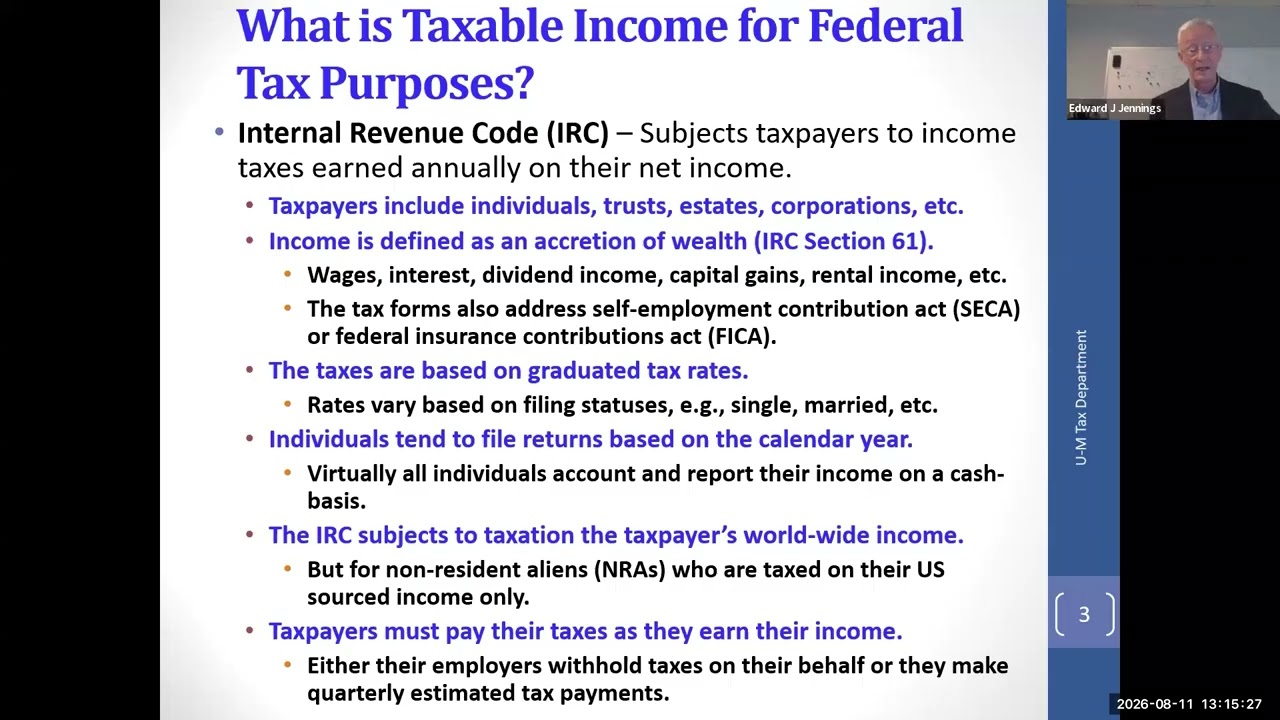
Graduate students navigating their 2026-2027 tax obligations must first understand how their status and funding sources define taxable income. Generally defined as an accretion of wealth, scholarships are only non-taxable if they qualify for tuition and required course materials at an accredited institution; any portion covering rent, food, or personal expenses becomes taxable income. While FICA taxes typically do not apply to scholarship recipients since these funds are not wages, the reporting requirements differ significantly based on residency status. U.S. citizens and permanent residents usually receive no 1099 forms for educational scholarships due to specific exceptions, placing the burden on students to self-report and pay quarterly estimated taxes if necessary, whereas non-resident aliens may receive Form 1042-S with withholding rates that can be adjusted through treaty provisions.
Determining whether a student owes tax involves calculating annual liability against standard deductions or filing thresholds, which often results in minimal liabilities for many graduate students receiving only stipends or partial funding. For instance, a student relying solely on scholarship money might have income reduced to near zero after applying the standard deduction, while others with postdoc grants may face small tax bills from taxable living expense portions of their awards. If the annualized liability exceeds $1,000, students are required to make quarterly estimated payments using confusing schedules that demand advance planning; strategies to avoid penalties include adjusting withholding via a W-4 or utilizing joint filing where a spouse's employment income covers the student's tax burden. Additionally, because fellowships generally do not constitute earned income, graduate students cannot contribute to retirement accounts through these funds, adding another layer of financial complexity for those fully funded by grants.
Beyond federal obligations, state taxes introduce further considerations such as double taxation or opportunities for refunds depending on residency and location. Students residing in states without an income tax like Florida or Texas avoid this issue entirely, while others must navigate multi-state scenarios where maintaining home state residency allows them to file non-resident returns elsewhere if the host state has a lower rate than their domicile. Michigan specifically offers a refundable homestead credit for students who rent and meet asset limits, potentially resulting in receiving money back from the state rather than paying additional tax. To successfully claim credits like the American Opportunity Credit or Lifetime Learning Credit, which require out-of-pocket tuition payments, fully funded scholarships can disqualify applicants unless partial payments were made elsewhere to offset costs.
Ultimately, successful tax compliance for graduate students hinges on proactive documentation and understanding one's specific financial situation before filing returns annually by April of each year. Students should maintain detailed records such as award letters, canceled checks, and faculty confirmations linking research or travel expenses directly to educational purposes to defend against potential IRS notices or audits. While university payroll offices can assist non-resident aliens with interpreting forms like 1098-T and Form 8863, they cannot provide personalized advice due to insurance constraints, making it essential for students to utilize resources like TurboTax software through international centers or peer networks. By carefully distinguishing between qualified and non-qualified income sources, managing estimated payments effectively, and preserving evidence of residency changes or tuition waivers, graduate students can navigate the complex landscape of federal and state tax laws without incurring unnecessary penalties or liabilities.
Read the full video transcript
Paul, thank you. I appreciate that. Uh,
as Paul mentioned, uh, my name is Ed
Jennings. I'm the tax director at the
University of Michigan. Um, and have
been doing this for 26 years and
enjoying it very much. I really, uh, uh,
appreciate the opportunity to get in
front of students. I really do, and I
find every year you surprise me that
much more as to how you pick up taxes.
So, don't be shy, and feel free to ask
questions as we go through. Um and I do
want to say welcome. Um today's uh
discussion is tax workshop. Um and
really what we're going to talk about is
the taxation of scholarships and
fellowships and how best to report them
on your tax return. uh as an overview uh
you know the issue this is for most
students um and you'll we'll talk about
that as we go but there are certain
significant tax uh burdens that you're
going to pick up uh as we go through
this and it's requiring you to identify
your tax quantify your tax which may
include paying quarterly estimated tax
payments you may also need to file uh
multiple state tax returns so we'll talk
about this as we go through uh the
session We have some case studies for
you. If I may, as a qualifi qualifying
statement, I unfortunately uh as the
university tax director, I'm not allowed
to to provide personal tax advice to
individuals. That includes uh interim
president Graasso uh for insurance and
risk reasons. That said, I'm able to
respond to any questions that you have
during and immediately following the
presentation. Um that said, afterwards,
I won't be able to answer your
questions. So if you have them speak
them, speak them now. Um uh and and of
course the reason is this session is
viewed as educational which I'm allowed
to provide but afterwards it's viewed as
consulting which I'm not and again for
insurance and risk reasons.
So here's the agenda. Uh and one thing I
want to say as an overarching statement
is during our discussion we're going to
make a distinction between a class or
two classifications. There's US citizens
and permanent residents over here and
then there's non-resident aliens over
here and uh that's all defined by the
code and that's important because a lot
of the tax consequences differ depending
upon which classification you fall into
and it will impact how you identify
quantify and then report and pay your
taxes. So it's something to keep in
mind. So with the agenda what we have is
you know just basic questions and that's
really what tax is. What's taxable
income for federal tax purposes? Um, how
is the how how basically how are taxes
paid is a general rule and there are
certain forms we'll talk about. Then
there's questions you're going to want
to ask. How do I file my tax returns for
the for the coming year uh with the IRS
and again we're talking federal taxes.
So you're talking IRS internal revenue
service and there are certain uh
deductions and threshold issues we'll
talk about and we'll go through some
case studies on income tax returns. Then
it's how do I pay and file my quarterly
estimated tax payments? And that's where
it gets interesting and again this is
where that distinction comes in between
US citizens and permanent residents and
those uh non-resident aliens again as
defined by the code. Um and then you may
have a situation where you have to file
a state tax return and you may have to
file multiple state tax returns. So
we'll go through this as with a case
study to leave you with some comfort as
to how to work this. And again, as Paul
mentioned, it's taped or recorded. So,
this will be very good to go back and
refresh uh refresh whatever questions
you have. At the very end of the
presentation, we have some IRS
publications, and a lot of what we're
going to show you comes from those IRS
publications. So, it's a resource, so
it's something to use as you go forward.
Um, do keep in mind whenever you deal
with an IRS publication, it's written in
favor of the IRS. So, you may say, "I
thought we could do this." Well, you
probably can. uh the IRS just may not
mention it because it's not favorable to
them. So, it is the one party providing
you instructions on how it's best for
them to make as much money as they can
from you. That said, um there are other
resources as well. Master Tax Guide, uh
a few other even your Turboax software.
Uh so there's re certain resources, but
if I may, the best resource are each
other. um you really have basically the
same s scenario and everybody's going to
have just enough of a different fact
pattern to be able to understand what
the other person does and how you're
doing what you're doing as opposed to
what they're doing and it makes a really
good metric uh if they're doing certain
things and you can learn from them. So
again there's software there's outside
other books outside of these
publications but more importantly I
think you're going to find uh where the
real benefit comes is in uh each other
the network you can build. So this
slide, I like this slide. This slide is
about federal tax purposes, uh, federal
income tax, and it has the general
concepts of how taxes work all on the
one slide. First, your authority is the
Internal Revenue Code. Generally, one
source. Now, there's a lot of
pronouncements and treasury rags that
support the Internal Revenue Code, and
there's IRS pronouncements, rev rulings,
and so forth and so on, but we're
talking generally about the Internal
Revenue Code, and that's what Congress
actually is responsible for. they pass
provisions and so forth and that's how
it works. And the interesting thing
about the IRC or the code is that it
really subjects you to taxes on an
annual basis on your net income. And
we'll see through examples exactly what
that means. It broadly defines every
term. So taxpayers is everyone
individuals, trusts, estates,
corporations, even the University of
Michigan is an income taxpayer. Uh it's
just on what we call unrelated business
taxable income. It's a much smaller
amount than what our income is. It
doesn't include tuition. It doesn't
include um uh patient fees, but um
basically uh we do pay and do have
income tax. Income, income is broadly
defined as accretion of wealth. They
would tax happiness if they could figure
[clears throat] a way to do it. So, it's
very broadly defined. Uh wages,
interest, dividends, cap gain, rent
income. There's also when you go to do
your tax return another concept here and
it's called uh Sika or FICA and
basically it's self-employment tax. FICA
is also the the share of self-employment
and it's on your earned income your
wages. It won't be on your scholarship
uh revenues and we'll talk about that
but basically another level of tax. It's
a 15.3% flat rate. Um we we'll mention
it as we go through but it shouldn't be
applicable. So, we're really talking
about income tax as we go through, not
to be confused with FICA. Um, now
something to keep in mind is the taxes
are based on a graduate a graduated tax
rate or progressive rate. And we'll have
examples and walk you through that. Um,
those taxes are often often tied to your
filing status. You can be single, you
can be married, you can be married
filing jointly or married filing
separately. Uh, you can also be ahead of
household. So, they have various
classifications and you have to know
where who you are and what which one you
fit in. Um, they also have tax returns
and they're filed on a calendar year for
most individuals. Uh, same with
partnerships on a on many cases. Um, and
it's a 12 month period or less. Some
people like to make it, oh, we'll just
make it a 13-month year. You cannot. Um,
it's also on a cash basis. So, someone
was going to pay you in December 31st
and they didn't get to it until January
2nd, it falls into the next period. And
it's something to keep in mind. Very
important when you're talking about
certain scholarship payments that are
subject to taxable income in which
quarter it falls into. Um, uh, there's
also a concept on worldwide income. So
if you're a US citizen or a permanent
resident, now a permanent resident is a
foreign born person who has been in the
US long enough to be a considered a US
resident. Not necessarily advantageous
because what happens is as a US citizen
or permanent resident, you're taxed on
your worldwide income. So you go over to
Ireland and you sell some art, um you're
going to have to pay tax to the IRS on
the art you sold in Ireland. And yes,
you have to pay tax to Ireland as well.
Um, now we have a foreign tax credit.
So, it's in a sense it's trying to work
out where you don't have to be double
taxed. There's also income tax treaties
that try to avoid duplicate taxes as
well. But the bottom line is you're
going to be taxed on your worldwide
income. NAS, non-residentalians, you get
comfortable with this. That's not the
case. And we'll talk some about that as
we go through. And the last concept is
something that is very interesting. And
this brings up quarterly estimated tax
payments. It's pay as you go. You know,
a lot of times people think, well, uh,
it's the 25 year. I don't have to file
my taxes till April 26. I don't have to
pay them until April 25 26. No, you have
to pay your taxes as you go. Uh, and
your employer withholds taxes from you
as you earn your wages. Uh, and this is
something to keep in mind. This is why
you have to pay in taxes quarterly even
when you're going to file them file the
tax return next April of the of or April
of the following year. So these are the
concepts we're going to talk about.
You'll hear them in the case studies.
We'll review them again when we get to
the state income tax returns.
Progressive tax rate. Well, here we are.
This is what it looks like. First, you
have to find your classification.
Single, married, head household. And
then of course the percentage. The less
money you make, the lower you will be
taxed. The lower the tax rate, the
income tax rate. Um, and 37% you can see
people are doing pretty well at $640,000
6601 or more. It's that's how it works.
Um, now that's for current year 2026.
What I want you to keep in mind is right
now midway through the year, the IRS
hasn't really come up with a lot of tax
information or forms for the 2026 year.
So, you'll see a lot of examples. we
have a we have to show you based on the
25 year uh that's unfortunate but the
concepts are the same so we're not able
to update the forms we don't have them
but we do have basically the concepts
will carry forward and we'll note that
to you as we go through
so we're talking about income tax and
taxable income so are scholarships and
fellowships taxable income and then if
so you know how do we if it's taxable
how do we pay them and uh how does it
work so is As a general rule, uh,
anything that you receive increasing
your wealth is taxable income. And
that's true with scholarships and
fellowships unless they meet the
definition of qualified scholarships. So
qualified scholarships are not subject
to taxable income. That's really going
to be um in a scenario when you're a a
recipient. We like to call them
students. You're for a candidate for a
degree. Um and you're basically being uh
pursuing the uh uh study or or the field
of education. You're not working for the
individual the employer who's paying
you. You're actually just in the pursuit
of education and uh you're being paid by
an accredited educational institution.
So basically, uh, tuition,
uh, tuition is something that if you had
to, if that's being waved, um, that
could be taxable income. Someone's
paying your tax or pay paying your
tuition for you. But in this case,
because it's what we want you to do,
which is have a a study, uh, an
independent study, that's not going to
be subject to taxable income, and that's
how it works. So uh it could also
include uh expenses uh for things like
books and so forth that are required as
part of the curriculum. So in my day you
used to have a syllabus and it said
books required books recommended or the
books required would be qualified. The
books recommended would be not
qualified. Um one taxable when when the
other not. So that's how the tax comes
up. Someone's paying an expense on your
behalf. That's a benefit you're
receiving. that's an accretion of wealth
that's taxable. Um, and then you have a
situation where it can be excluded if
it's for educational purposes. And
that's how we look at it. Non-qualified,
that's going to be a um qual a
scholarship payment uh often defined or
called a stipen. There's no real
definition of the code for it, but it's
for paying rent, buying food, anything
else. More on the personal side of
things that triggers taxation. All
right. And then at the very bottom I do
mention the FICA and self-employment
again and generally the scholarships are
excluded. The reason is the FICA and the
self-employment tax are on earned wages.
Well, if you're pursuing education,
you're not earning. You're not working
for someone. You're working for yourself
for your own educational benefit. So,
for that reason, it shouldn't apply. And
that's very important because every once
in a while the IRS usually have the
Philadelphia office will send notices to
you saying you didn't pay your FICA on
your on your scholarship and and that's
a problem and you want to be able to
respond by saying well you know from
what I understood I didn't have to pay
it and they'll they'll basically say
they're sorry and bury bury that notice.
So now we're moving on to how is the tax
paid regarding taxable income.
So basically, okay, I got taxable
income, fine, and I've identified it.
I've quantified it. How do I get the
payment to you? Um, and and you know,
how does that work? Well, so we have a
W2, and that's a wage statement. So an
employer basically has to withhold taxes
on your wages as you earn them. And
that's the concept we were talking about
earlier. Um, and they'll do that
throughout the year. So basically the
employer, if you're an employee, will
identify your taxable income, quantify
your taxable income, and then withhold
that amount, send it to the IRS on your
behalf. You don't have to do anything.
Uh, and that's the good news. Um, you
just have to reconcile that when you go
to file your income tax return of April
the next year. Just attach the N2,
explain how it works, and so on.
Hopefully, the amount they've withheld
covers your taxes so you don't owe
anything. Uh, and that's the idea. Uh,
we call that intoxication. That's where
you get real excited about a refund
until you realize it was your money to
begin with. That's the idea. Now, a
1042s, that's a form specific to
non-resident aliens. And again,
non-resident aliens are foreignb born
individuals who have not been here in
the US long enough to become a permanent
resident. Um, the 1042s, again, an
employer will pay it to you. Not in the
ambit of an employee. uh it would be in
the ambit of a let's say a student
receiving a scholarship um and then that
would be subject to withholding um and
they withhold at a 14% rate um and it
could be a smaller rate uh depending on
the treaty um there is a higher rate but
generally that doesn't apply to students
so that shouldn't be an issue but the
point there is they're identifying
quantifying withholding the payment and
paying it on your behalf again life is
good now then there's the 1099 9. That
would be for US citizens and permanent
residents. Um, and what in that case, if
you get a 1099, they're quantifying or
identifying and quantifying your taxable
income, but they are not going to
withhold. You still have to make a
payment. Well, the irony here is that
with students who are US citizens and
permanent residents, you're not even
going to get a 1099. Back in 1986,
higher ed, they changed the law and we
higher ed started to have to tax
scholarship income, even what is now the
non-qualified.
Well, at that time, everybody said, "Oh,
boy. Well, uh, do we put it on a 1099?"
And higher ed said, "We can't do that to
our students. Uh, we're not really able
to be able to do that. That would cause
us a lot of problems." So, for whatever
reason, the Treasury regulations gave us
an exception. So, you will not get a tax
form. If you're a you're a a gsi, a
gsrra, you'll get a W2 because you're an
employee. And that's even if you get
waved tuition, you will still get uh a
um a W2. And if you're a non-resident
alien getting any kind of stipen payment
that's a non-qualified uh payment,
you're going to end up with a a form.
But if you're a uh US citizen or
permanent resident and you have a
scholarship uh and you're not an
employee, you're not going to get a
1099. No one's going to tell you you
have a tax a tax issue. That's your
burden. And that's the distinction
between the two classes, the uh US
citizen permanent resident versus the
non-resident alien. And the higher
burden is on the US citizen permanent
resident. Now you have to be able to
identify and quantify and then you have
to determine what the amount is that you
have to pay in on a quarterly basis and
you have to make that payment. It's your
burden and that's basically that's
basically what really what the impetus
of this presentation is about.
Um so for the next couple slides we're
just going to talk about NAS.
So basically, again, NASA's are uh
foreign individuals who haven't been
here in the US long enough to be uh
permanent residents.
And a permanent resident, you'd know
they have a green card or they're here
long enough. Typically, it's 183 days in
in a year. Well, a lot of times a
student is uh you're here more than half
the year. Uh but in in with students
many times the treaty overrides the
treaty does override the state the IRC
the internal government code and does
actually ex extend the period. So it
could be a five-year period or even
longer that you're going to be an NRA.
So based on the treaty you're going to
be here a lot longer than the
substantial presence test in the
internal revenue code. Uh and it can
also be through things like marriage and
stuff like that. What's interesting is
as as an NRA, you're only subject to tax
on your US sourced income. So again, you
go over to Ireland, you sell art, make
money, you're going to pay tax to
Ireland, but you don't have to owe
anything to the US. You're a foreignb
born person who has no contact with the
US. You're not under their jurisdiction,
and you didn't make any of the money in
the US. Now, scholarships that you're
receiving to attend the University of
Michigan would be US sourced income. So,
you will be taxed on your scholarships.
Now, payroll um uh the um you our
payroll office will report um on the
10402s the non-qualified payments and
withhold on them. They will not report
the qualified payments and as mentioned
the rate is at 14%. And of course, we
mentioned treaties. Treaties help very
much. And when you work with payroll,
they will work with you to make sure
that you have the least amount withheld
and possibly no withholding. So if you
get a 1042s and you have any questions,
you now unlike me where I can't answer
your tax questions, um, payroll can
basically based on the form that you
bring forward. If they give you a form,
you can call payroll and go, I got a
10402s. What is this? How's this work?
Uh, is this correct? they have to answer
that question for those questions
because they put it on a form for you.
And a lot of this you've already told
them in advance. They've already asked
you some of these questions. So, it's
all set up. So, do keep in mind if the
university gives you a tax form, there
will be a resource to go to to help
understand that form. We're there for
you. Um, we talked some about FICA.
Well, you may be subject to FICA based
on the the rules are a bit different for
um non-resident aliens and you'd have to
check and see. A lot of that's driven by
treaties. Um and and the Internal
Revenue Code has a broad period. Uh
sometimes it's five years, sometimes
it's two years, but that would be when
you're working as an employee. So,
there's a lot of exceptions for
non-resident aliens from FICA. And the
reason is you're not here. You do
realize and I don't think I mentioned
this earlier, but u you know FICA is
really for retirement. You're working
today. They're taking the money from you
today. So [clears throat] when you go to
retire, they put out a fund and they
give it back to you. And that's really
what FICA or self-employment is supposed
to do. Um how it really works is the
lower generation uh or the younger
generation is actually um affording the
social security payments for the older
generation. Um, so you folks are going
to be paying my social security in years
to come and I appreciate it. So, thank
you. Um, and that's how how that works.
Well, with the NAS, they're really not
going to take advantage of it. So,
there's more exceptions. So, that's
really the reason for that. Um, and then
you have your US income tax returns.
You, if you've got US sourced income, as
we mentioned, you have to pay you have
to pay the tax. You're now a lot of that
will be filed on your behalf by payroll,
but you still have to reconcile your
return. uh and it's on a 1040NR and you
have to file that next April of uh April
of the next year and you have to
basically be able to explain um uh your
situation and uh there's a form for that
the 8843. So it's can be confusing and
what we have down here is you can
contact payroll if you like. We also
have some good web resources.
International center has a software so
they have a Turboax that'll help you
walk through this for non-resident
aliens and it's for free. They don't
charge you anything. They also will
provide some pretty dogone good advice
to help you get through this and really
figure out where you are. So keep in
mind if you're a non-resident alien,
you're in good hands. First, you don't
have that extra burden from a tax
perspective, but secondly, you have a
lot of resources. You're getting a form
so you can talk to payroll and you got
the international center which will will
give you a software for free to use and
at the same time provide you with some
information. Now, it won't be advice,
but it'll be information for you to be
able to do what you need to do. So, it's
a very important and a very helpful um
um resource.
So, at this point, I think I just want
to give a quiz. Um and that will prepare
us for going into the tax returns. Um uh
and this uh basically is always a trick
question. Do know in tax they usually
are. Would you rather have a $50
deduction or a $15 credit? 50 is more
than 15. So, most people would say the
deduction and actually the answer is
credit. We'll walk through that. So, as
you can see here, what you've got is
this grid. And on the left column, this
is what the tax return looks like. The
concepts are what's your income? What
are the deductions? Subtract the
deductions from income. You have taxable
income. That's what you're going to get
taxed on. The tax rates of 10%, we're
going to tax 10% on taxable income. Now,
if you have a credit, you can offset the
tax. And this is the difference between
a deduction and a credit. And then, of
course, the difference, sometimes you
owe, sometimes you get a refund.
So the middle column is the deduction,
the $100 or I'm sorry, the $50. So you
earn a h 100red, you subtract 50 out,
you're left with 50. With a 10% rate,
you owe a $5 tax. Not so bad for earning
$100. Um credit is zero. So you pay the
$100. With the credit, you start out
with $100. You don't have a deduction.
Oh my. You're taxed on the full $100. At
10%, that's $10. But a credit offsets
tax, not taxable income. it's much more
powerful. So, what you have then is a
negative number. And uh basically, if
it's non-refundable credit, you don't
owe any taxes. But if it's a refundable
credit, the IRS will pay you $5. So,
[clears throat] it's a money maker.
Okay. Anyway, we'll talk about these
concepts as we go through with the case
studies, but this does set those up. Um
before we get to case studies very
quickly, there is another form out
there, a tax form that you may receive
and again you get a tax form. There's a
service you can call and that's student
financial services and they will help
you walk you through this form. So what
this form is is basically a credit just
what we were talking about earlier and
it's really if you pay for your
education the the IRS Internal Revenue
Code and the IRS manages it will allow
you an education credit. There's two
kinds. American Opportunity Credit,
which is refundable, and then the
Lifetime Learning Credit, which is not.
Most of you may qualify for the Lifetime
Learning Credit. Very few. The American
Opportunity Credit. It's based on age.
And if you're over a certain age, you
won't be entitled to the AOC. Um, and
then you're entitled to it only if
you're cash out of pocket. So, if uh the
university you got a full ride, you
didn't pay for any of your tuition, you
didn't pay for any of your schooling
anytime during the calendar year, even
if you were at an ear school earlier in
the year and you you were on scholarship
there. If you didn't pay anything out of
pocket, you can't take advantage of the
credit because you're not out of pocket.
Uh you haven't paid for it. Um, but if
you if you come it came from another
university where you actually paid full
for for the full tuition, you may
qualify for some of this credit for the
for the calendar 26 year. Um, and uh
these uh I'm going to show you that the
these two slides are very similar. This
and the next one and they walk you
through it's a you know decision tree
and this is for AOC and the next one's
for the lifetime learning. They're very
similar. And you can see when you get
down here, the question is, were the
same expenses paid entirely with a
tax-free scholarship or grant? And if
that's the case, you can't take it
because you're not out of pocket. You
can't benefit from from a you can't get
a cash benefit when you didn't didn't
actually pay uh for any of this. So,
that's usually how it works. So, you got
to be out of pocket in order to benefit
from it. Um, now it says 25. Again, the
IRS hasn't updated this, so I just want
to let you know. 26 will say the same.
The law hasn't changed. Um, and then
here for the lifetime learning, it's
this down here where the same expenses
paid with a tax free scholarship or
grant. And again, if you say yes, you
won't be able to take it. Uh, so that's
how it works. And again, the the rule is
the same for uh the the 26 year. Now,
they did update the form. So, we do have
it here in the 1098T. So, if you get
this in the mail, you may get very
excited. Oh, he credit sounds great, but
you may also have to realize that if you
had a tuition was completely paid for by
scholarships, you're probably not going
to be entitled to it. How you know is
box one is the tuition. Box five
includes the scholarship. And if that's
this equal to or greater than and box
five may be because your scholarship may
be what the tuition was waved plus
whatever cash you received. So you may
end up with a higher number in box five
than one and that would mean you're not
entitled to this. So that's something to
keep in mind. That said, for those who
it does apply to, the 1098T gives you
information for you to then put on
[clears throat] your tax return. But you
need to have a a separate form to do
that. That's the 8863. And that's
narrowly tailored to your situation. So
this form here just helps you prepare
that form there. And that's usually how
it works. So, um, a lot of times
students will call up and say, "I'm not
sure how it works or whatever." If
you've got questions, as we mentioned,
student financial services can help you.
Um, and then that form will help you
with this form. So, that's how it works.
And you may get a credit. Here's what
that form looks like. And you can see if
you get some time, you want to go
through it. [clears throat] Always very
exciting. And you know what they say
about tax professionals? We're we're not
boring people. We just get real excited
about boring stuff. And this is boring
stuff, but it's it's very it's very
helpful to get through and uh you may
need it if you have that situation. So,
it's something to keep in mind. So, now
we're up to your situation. How do I
file my taxes? So, we talked a lot about
tax billable income and how to pay them
and what the impact is in the general
rule. So, I'm going to stop there and
ask, do we have any questions?
>> Hi, can you hear me? Okay, Edward.
>> Yes. Hi, my name is Ariana Cabodian and
yeah, thank you so much for for your
time. I really appreciate it. Um, a
little bit uh maybe like I don't know 10
minutes ago you were talking about um
how the IRS I think you said might reach
out to you and if it's not the IRS, I'm
sorry. Uh saying like, "Hey, where's
your, you know, info or something?" And
then you respond with, "Well, I'm
actually a student." And then they say,
"Okay." Do you know what I'm talking
about?
>> I do. Yes. That would be Yes. Go ahead.
>> Would they would they be like, "Okay,
and then that's it." Or um why would
they how would they know that what I'm
saying is true? And then if it's a
simple, okay, that's it. Then why would
why would they how would they I don't
know. It just kind of seems odd, I
guess.
So you raised a great question and this
is very important because a lot of tax
is answered with documentation. So uh
this would be the case whether you get
audited which is unlikely. If they audit
you would be through us and we do a
pretty good job of making sure that
that's not going to happen. Um that said
uh you may get notices. Now, in this
case, Ariana, we actually answered that
question because we had 12 or 14
students come forward and say, "We all
got the same letter and we saw it as a
design flaw with the IRS so we could
respond on behalf of our students
without it looking like consulting." Um,
>> okay.
>> So, we were able to do that and in that
case, we basically said, "Here's the in
that case, Ariana, what we said to the
IRS was this is the law.
>> You're not understanding how it works."
So, it wasn't necessarily that we had to
attach any any of your tax documents or
anything else. That worked out real
well. And I I talked to the person in
Philadelphia. They were extremely
apologetic and, you know, they couldn't
believe it happened and and that's a
good sign. So, that means it goes away.
And then that means they clear your
account. And all we did is follow up to
make sure they cleared your account so
they weren't going to continue to bother
you. And we let all the students know.
But normally, we won't get involved with
any kind of notices you get from the IRS
because it's personal to you. But if
they do come out and reach out to you
and say, "Listen, we we don't understand
how this happened." When you, and we'll
talk about this in case studies, but
when you fill out a tax return, you
don't attach your tuition statement. You
don't attach anything. So, they come to
you and they go, "What happened?" And
you go, "Well, here's how this went.
Here's the letter that said I got a
scholarship and they were going to wave
my tuition." Okay, fine. And we they
should know that the law under 117D says
that should be excluded. 117A should be
excluded from income. Um, so my sense is
so they shouldn't be challenging the
law. That's when they come out with
notices. They'd like to see how this
work. Um, and you'll see this sometimes
on on the quarterly estimated tax
payments. They go, "Well, you paid them
in in all in in April and September. How
do I know you received your income
then?" And you just give them a copy of
the check, cancel check. Here it is.
Here's when I received it. It's cash
basis, so it's when you received it. And
they say, "Okay, fine. and you've got
it. It's not a problem. A lot of the
documentation we're talking about, you
have uh it's just a matter of gee, what
do I need? Well, a lot of times whatever
you're using to prepare your tax return
is probably the documentation you're
going to need on an audit. That's
usually the rule of thumb. And you want
to make sure you you have access to it
at all times. If you want to save it
down on something, that's fine. But, uh
in our day, it was shoe box and students
move a lot. And uh one thing you moved,
everybody had their shoe box with them.
You know that sometimes you had a
sleeping bag and a shoe box and that's
all you had. But
>> oh, like an actual shoe box. Gotcha.
>> Yeah. Yeah. Yeah. And and it wasn't for
shoes. It was for all your tax
documents. So that's the idea. So you
rais a great question. Something to
consider as you go through. But yeah,
that's what an audit is. And it's a show
me audit. So you just need to be asking
yourself questions. What would I need to
prove to myself? Oh, I'll do this, that,
and this. And then you have built
yourself a defensible file.
>> Gotcha. And then that's when you'd reach
out to your accountant if you had one
and they would do what you did.
>> Yep. Yeah. And they and they answer
questions and go forward and Yeah. But
you
>> Okay.
>> The value here is you're already way
ahead uh just from the questions alone
and what you're what you're learning. So
that when you go to a tax uh
professional and a preparer, you already
know what the issue is. A lot of times
they they're you have to point them in
the right direction and so forth. you'll
be able to make sure you're getting
you're going to get the right answer or
a better answer by knowing what you
know. So, well done.
>> Okay. Thank you. Yeah, I'm assuming the
documents will be accessible for us in
Wolverine Access. So, but it's so good
to keep in mind of these things. So,
thank you so much.
>> Uh any other questions?
>> Yeah, we have a a couple more in the
chat here. Um, as a grad student, I'm
getting my tuition waved via not
scholarship but some other waiver due to
my position. Does this still count under
the same category you're talking about
on slide five?
>> Yeah, I think that the great question
and the down the just basic question is
going to be are you uh paying it? If
you're not paying your tuition and then
it's been waved and it may be waved
because of a certain fellowship or
scholarship or or for another reason,
but you're not paying it, you're getting
away with not paying it. You're getting
a benefit and then that benefit the IRS
considers to be taxable income to you.
So, somebody gave you a benefit. Now, if
your grandparents or something like
that, it comes from an individual along
those lines, that's going to be viewed
as a gift.
So that's not there. Somebody in your
family is paying it. It's just not you.
And gifts are excluded from income tax.
Um, so that would be fine. But if you
have an agency or something along those
lines paying and absorbing your taxes,
then that's a benefit you're receiving
that's taxable. I hope that answers your
question.
>> All right. And then the next question we
have is, do grants for research count as
qualified scholarships? These grants are
supposed to be used for travel and
accommodation while performing summer
fieldwork and data collection.
>> So Danielle, thank you. And I don't know
who asked that question, but I have to
tell you it's an excellent question. And
I think the reason is um this is where
it's up to you to go back to Ariana's
question. Um you know, uh IRS is going
to come in and say, "Well, how do I know
that's related? How do I know it really
is for the pursuit of education? How do
I know that's your purpose? you're
telling me you're just traveling. That
sounds like that's a lot of fun and
personal is taxable. So, you know, you
sit down and say, well, here are the
terms of the grant. The grant includes
it. Uh, more importantly, I reached out
to my faculty and said, I'm taking a
travel for this purpose, and I'll be
able to report back to report back to
you on exactly what I'm doing, which is
actually part of my grant. You know, you
can you can have you can't have too much
documentation. You can overemphasize
what you have. build your case. But
yeah, that should be fine. If you've got
the if you've got the situation where
you said, "Yeah, this is the whole point
of this is for me to I'm I'm studying
the koala bear. I can only go to one
place to study the koala bear. It's
obvious to me." So that's the idea. So
you want to make sure that you make that
you make that very clear that yeah, this
is all part of the same process. This is
part of the tuition costs. They're
required as part of the curriculum.
That's how it works. and you got your
faculty to agree or acknowledge and so
forth. So, you're fine. That's the idea.
But you build your own case. Um, that's
me anyway. Uh, you could probably do it
just the same without, but sometimes
agents can be difficult. Depends what
they had for breakfast. So, it may be
more challenging, but that's the idea.
Um,
>> do two more for you, Ed. Um, if I do
want a personal consultation, do you
have any suggestions to whom I can reach
out to?
Well, there's a lot of places, you know,
there's, if you always hear commercials,
HR block and things like that. There's a
lot of accountants around. Um, and
that's not bad either. Particularly,
some people have a very complicated
situations. Rental properties have the
significant cap gain uh from stock sales
and so forth. But my sense is whatever
you think works best for you is, you
know, great. I I personally would like
to talk to a lot of my peers just so I
get a better feel for it. That way, when
you go to a service provider, you have a
real good feel for what you're doing.
You can you're going to get paid. you're
going to get charged by their hour and
they can spend that hour like I am
explaining the general rules or they can
take that hour and answer your very
specific questions highly detailed uh
and review your computations. So,
however you want to do it, uh whomever
you want to use, it's up to you, but I
would make sure you're as prepared as
you can be before you go. There you are.
That's my thought.
>> Thank you.
question I have for you right now is I
am a Michigan native and an incoming
grad student who has zero scholarships
nor financial aid paying myself. What
tax form do I need for the upcoming
April 2027 year assuming these are on
Wolverine access?
>> Um so we'll go through some of the
forms. Um we we go through a Michigan
form and we go through a a federal form.
Um, and then I think uh that's the tax
forms that you're going to file and then
it all depends what you're they're
pretty good about it and the
instructions of telling what else you'll
need. So you get to that line item and
they'll say you also need form whatever.
So that will help you get through it. So
we'll go through some case studies and
then if you have some questions let me
know.
>> Sounds great. That's all I have for you
right now.
>> Okay. So now we're going to talk about
cool estimated tax payments. This is a
tough one to get a hold of. comfortable
with. So there's the concept. Okay, I
get that. And then there's actually
really how's it work and I get it and I
understand and I feel for you. I can
honestly say with tax, it's a ripple
effect. So it's like throwing a
[clears throat] stone in the water. You
know, it's every time a little bit more
you get a better understanding of it.
And the more you hear tax, the more
you'll get more comfortable with it. Uh
and that's just the rule. So uh and I'm
um I've got the gray hairs to show it.
Um, so in this case, uh, and again, we
start out with humor. Uh, as you'll find
as we get through the outline, it's just
not very funny. Uh, when my kids were
younger, they would look at when they
were bad, I made them, you know, review
my outlines and it's a great tool for,
you know, uh, making sure kids kids are
good. And, uh, they would go through and
say, I noticed you have jokes at the
beginning. Yeah. It's not very funny at
the end. So, just the same, we do our
best with humor, and that's how you get
through tax. uh and uh but it it is it
is a struggle. So now with your tax
return, there's a couple things you need
to know. Uh one is there's a filing
threshold and um this is very important
because you may not have to file a tax
return although you may want to and this
all comes down to the standard
deduction. Uh every year it changes.
What we do have is the 2026 in here
currently and again that's done by
classification. So, it's something to
know. And basically, it the standard
deduction should not change for your
scholarship. Although, when you go to
read the instructions, it may sound like
it does, but it doesn't. So, it's just
something to keep in mind. And we have
examples to show this. So, what I'm
trying to say is if you the standard
deduction is $16,100,
you get that for being a human being,
just for breathing. And basically, if
you turn around and you have $15,000
worth of uh taxable income, you don't
have to file a tax return because the
deduction is greater than the income.
You have a negative. Uh that said, you
may have actually had some kind of
withholding. It could have been on uh a
tax form for interest or it could have
just been a job that you had. $15,000
was a job that you had and they withheld
taxes. Well, the only way to get back
those withhold held taxes is to file a
tax return. So, even though you may not
owe anything, you may still want to file
a return. Um, and that's the filing
threshold. That's very important because
that's going to come in and we pretty
much presume you're single throughout
this, although I realize that this
that's just to make the calculation
simple. Um, all throughout our examples.
So, that's where uh you'll hear standard
deduction. Now, again, we're using 25
forms, so you'll probably see last
year's standard deduction, but that's
what it is. It's a deduction that you
get. You didn't have to pay for it. You
didn't have to do anything for it at
all. you just get it for being for being
you. Um, and then there's something to
keep in mind. These are concepts that
used to play in big in the past for your
tax return, but today it really plays
into your parents' tax returns. Um, and
it's whether they can take you as a
deduction on their as a an exemp as a
dependent on their tax return. And
you'll see that in a minute when we show
what the case studies looks like, go
through one a form. You'll see that. But
bottom line is the question is are your
parents going to take you as a
dependent? Chances are no. Um and based
on these tests, but I'll walk you
through them just the same. You can
either be a qualifying child or a
qualifying relative. If you're one or
the other, um then you can be claimed as
a dependent. We start with the
qualifying child test. As you can see,
it's based on relationship. So you're
pretty much going to check that box. But
you have to check all five. And the
interesting one is box two. If you're 24
or older at the end of the year, um your
parents will not be able to take you as
a dependent on their tax return. Um that
means then we look over at the
qualifying relative test. So if you fail
the one, you can still pass the other.
And again, you check the boxes, but in
this case, you get the box three, your
stipened, the taxable piece of it would
have to be um greater or less than
$5,300. That's just not usual. So bottom
line is it' be very rare for your
parents to take the claiming exemption,
but you'll see the concept on the
returns. You may hear the parents ask
you about it. Um, by the way, I've
always thought that if they do take you
as a dependent, you're helping your
parents to lower their tax. And if
that's the case, um, you know, there's
nothing wrong with saying, "Oh, how much
did your taxes drop by?" And they show,
well, $1,000. You say, "A,000. What was
that? 500 for you, 500 for me." So,
there's always ways to work through
that, but just the same, this is a
concept you'll hear again more from a
parent than from your perspective, but
it is something I just want to make you
aware of. First case study, you're a
graduate student. Um, you're single. Uh,
you receive $16,000
as a scholarship in 25. You're a US
citizen and you're 23 years old. Mean
somebody could take you as a dependent
possibly. And you work solely on your
scholarship. You have no other income.
Oh, that's the joke, by the way. Um, and
I'm letting you know that's, you know,
see, it's not even that funny now. But
if I put at the beginning of who knows.
Um, so here's what a form looks like.
Now, we I know it's hard to read
through, but uh I'll walk you through it
and you'll get a sense. You get the form
1040, the tax year. Again, we don't have
the new form. That's where your SO goes.
So, the tax information, who you are,
address, and so forth. Here's the filing
status. They want to know, are you
single or what? because that's very
important as to what the rate is. Then
we get down here uh on dependence and if
a parents return, they might put your
name on there and that's what's very
important to them because they get a
deduction for that. Then you get down
here and you get to the income and you
think line one would be the income.
That's for wages, but because you're a
scholarship, you're down here and uh
then you get the you have to add them
and that's income is at the bottom of
page one. So that's just $16,000.
Bottom top of page two, you bring the 16
over and then you use the standard
deduction. Now, this one's lower than
what we saw because this is for 2025,
but in the end, you end up with $2 I
think it's $50. Very hard to read. Um
10% tax bracket, $25$26 and that's what
you owe. And when we get into quarterly
estimated tax payments, you'll hear
about how that works too because that's
very helpful because that is a um uh if
it's under $1,000, you don't have to
pay.
Um case study two, we have a postoc
student uh who receives a grant of
$17,000
um US citizen and the expenses are all
the stipen is all for living expenses.
That's very similar to how we do it at U
of M. We wave your tuition. you won't
you don't pay for that. Uh and then and
and we give you a credit. You just you
know uh we don't charge you the tuition
but then we'll give you cash stipens and
that's two generally what's taxable but
for that which is required for the
curriculum. Now in the alternative
scenario we're doing two at the same
times and see is the result any
different. And in this case, and this is
not how we do at U of M, you get 27,000
and then you have to use the nine for
tuition, a th000 which covers books
required for the curriculum. You're left
with 17 for rent just like above. So,
you know what's taxable and how's it
show up on the return? Well,
$17,000 is what's taxable in both
scenarios. And what shows up on the
return is just the 17. This piece here,
the IRS doesn't want to see, but to go
back to Ariana's question, this is what
you're going to they're going to ask to
say, "How did you get from 27 to 17?"
You're going to need that documentation.
In our case, you can just say they waved
tuition. I just have 17. You won't have
to have you have less documentation,
less to prove. So, that tax return
basically same situation. Uh in this
case, yeah, your your filing status is
single. Um, and then you've got a
situation where um, you have 17,000.
That's what you have total. That's all
you have. That's at the bottom of the
page. You could have income from
interest, dividends, and so forth all
throughout, but we're making this
example very simple. So, in this case,
17. You subtract out the 15750, which
was the standard deduction from last
year, and you end up with 1250 of
taxable income. That's the net amount.
And again, you get this expense, the
15750 just for breathing. So now you do
the tax 126 and you're going to find
again that's under the $1,000 threshold.
So you don't need to make any quarterly
estimated tax payments throughout the
year. Just don't you get to come up with
that 126th April of the following year
and then brings you up to estimated tax
payments. So let me stop there because
this is a a good question on some of
this. Anybody have any questions?
So I'll jump into quarterly. Uh again,
funny but not so funny. Um so now we've
identified and quantified. Okay, we do
have tax and here's how much I owe. Um
now we have to make payments and we have
to do it as we earn as we earn it, which
is that concept we talked about before.
So now you basically supposed to do it
within four quarters. That sounds like a
lot of fun. And the first one is
January, February, March. All the cash
that you've been paid during those three
months, you have to figure what you owe
taxes on. And then that April 15th, you
get two weeks uh to basically pay it in.
And we'll talk a little bit about that.
What gets confusing is it's not every
three months. Then you go April and May,
and then you have to make a payment in
June. It's only two months. And then you
go three months, which is June, July,
and August. and then you get to make a
payment in September and then you have
four months September, uh, October,
November, December, and you make that
payment in January. So, it's very
confusing. Um, and why they do that, I
don't know. But the idea is you need to
figure out um, whether you need to make
a quarterly estimated payment for the
quarter that you're in. And um, we'll
walk through some scenarios. The form is
a 1040ES. A lot of it can be done
electronically now, so it's not a
problem. But to go back to Ariana's
point, you always want to make sure that
you have documentation that you paid it.
They will take your money and forget you
paid it. So you want to always have
documentation that you paid it. You will
receive notices that says you didn't pay
anything in. Here's your tax. Here's
your penalty. And you go, no, no, no. I
paid it. Uh we get notices probably we
go into the office. We work remotely. We
go in every Wednesday mostly to handle
the notices. We get three or four
notices a week. uh and the IRS says we
didn't do something and we did and with
us of course it's millions of dollars so
it's just that much more fun. You also
have an obligation at the states just as
you do at the Fed and for instance in
Michigan uh basically that balance uh is
the 11,765.
You really won't have to owe anything
until you're beyond that. So because
they make it they give you a $500
threshold and that $500 at 4.25% gets
you up to 11765.
So, um, and what the IRS does, and they
have this publication, it's listed on
the very last slide of the of the
presentation, how to estimate your
taxes. It's a worksheet, and you really
just figure out what how much do you
think you're going to make and you add
it in. And if you're married, then you
have to add in, if you're going to file
jointly, you add in your spouses as
well. Um, and you get to figure out what
that is. Now, that can help actually if
you're married because uh your partner
is going to be out there working away
and actually having a lot of um taxes
withheld on a lot of this. In fact, you
may have them overwithhold and then you
don't have to pay any quarterly any
taxes on your scholarship because it all
goes into one bucket and they've already
paid a lot more on what they should have
paid. That excess comes over and covers
your scholarship. So, there are certain
advantages to having your um um filing
jointly. Um and in this case, you you
just figure out a return like you like
we just did. You just annualize it.
We're going to make 30,000 in the year.
We got the deduction. That leaves us
with 14250 at 10%. Well, it's a little
bit more than 10% because the bracket
just a little bit more. Um 1462. And at
1462, that's basically what I'm supposed
to be paying over the four quarters.
Now, uh there are certain exceptions,
which is uh you only have to pay in 90%
of the current year or last year. It
looks like you paid in 1303. You can pay
in the lesser of 90% of the current year
or 100% of last year. Uh and a lot of
times folks like to pay in the least
amount until they actually have to make
that payment. And that's what this
allows you to do. And then of course
down here you divide it by four. So you
come up with 326. And that's really what
you're looking at. Um tell you the
truth, you can manage it any way you
like. If you owe 1462, you can pay in a
good $1,500
in in um April 15th of the 2026 year or
2027 year and that would cover the the
entire year. Um and that would be fine.
So that's the idea. Um so you can pay it
all up front. You don't want to pay it
late. you'll get hit with penalties, but
you can pay it up front if you like. So,
if you're worried about, oh, I I can't
remember four quarters. I can't remember
this two month, four month, three month,
I'm confused. Well, then just pay it in
whenever you think you can. The earlier
the better. And uh you can manage it
your way. Quarterly estimated tax
payments is something you really want to
talk to other people about because
everybody everybody has a a a strategy
and a lot of times you get all those
together and they really make a lot of
sense. So, and you find something that
works for you. Corius made tax payments
can be interesting. Um they're basically
filed on a 1040ES like I say and you'll
see payment voucher one. This is for the
first quarter. Um then you got your
social security number which they
definitely need. Um and uh and all the
information that's going to be on your
tax return. You also run some stuff on
the check that you send in as well. But
again, so much is done electronically.
Feel free uh just keep documentation as
you go. Um, and then you'll see this in
the publication as well. The IRS is
always very good about making sure uh
how to keep you organized when you're
going to pay them money. Um, they're not
very good at remembering you pay them,
but they're very good at making sure you
do. Um, so here you are there. So, if
you need it, there are things out there
you can use that can um, you know, help
you with aids to make sure that you're
making your payments.
Um, penalties. Now, this is a very
important part of the Internal Revenue
Code. It just makes a terrible parent
there. There's no positive reinforcement
here. If you do something wrong, you're
penalized. End of story. Uh you do
something right, they don't say anything
nice. Um so, penalties, what kind of
penalties you're looking at? Well, uh
the penalties can be userious. They're
very high rate, but they don't kick in
uh until it's in excess of um uh what's
considered to be uh an underpayment
penalty. And you can go the whole year
just paying in 90%
of the current amount. You can leave 10%
for the that next April 15th when you
following April 15th when you go to file
your 1040. You can do that and you still
not be charged or you can pay in last
year's 100% of last year's which may be
way less than what your current year is
and then make the difference. Again, a
lot of people like to hold on to the tax
payments as long as they want. But this
is usually people who make a lot of
money. So, we had a client who had uh um
come up with some type of royalty
arrangement. They made like $30 million
in one year. Well, the year before they
were making $200,000. So, the tax on
$200,000 was much less. That's all they
paid in during the quarter. And then in
the fourth quarter, they had to pay the
huge amount which represented the
increase in income that they had in the
current year. But again, that's when you
really want to make sure you take
advantage of the interest instead of
giving it to the IRS. That's what they
do with it. They take your payment and
they put it in uh to an investment and
they they make interest on they make ear
earnings on and that's what they do with
your money which is why they get very
upset when you don't pay in when you
should because that's their money
interest they could have earned. Um
these are things again ripple effect
you'll get comfortable with when you
hear the concept a few more times. Uh,
and again, most importantly, there's an
exception. If the tax liability uh that
you owe is $26 or um 1426, well, that'd
be interesting. Uh because the $26,
$125, that's below a,000. But at 1426,
you're over and yeah, you're going to
get hit with a penalty if you don't do
quarterly estimated tax payments. Now,
we're hit, and this is very helpful to
you folks because we're in August. So,
you might be just incoming students and
you're sitting there saying, "I just got
uh paid or I'm not going to get paid
till September." Well, that September
payment is cash. It doesn't hit until
the month of September, which we know
doesn't fall into the it falls into the
January 15th quarterly estimated tax
payment. If you receive something this
August, then you have until September
15th uh to pay the tax on it if you need
to. If you have a partner, sit there and
ask them what they're making and figure
out if you even need to pay any taxes.
So, there's a lot of things to think
about right now because it's pay as you
go. Uh, so that's the idea. Quy
estimated tax payments.
So, I'm going to stop before we get to
the states and turn around and ask turn
it to the group and ask you folks any
questions on quarterly estimated tax
payments.
>> I have um couple questions for you in
the chat. Um to confirm, do GSAs get
their tax withheld so they only pay
taxes in April?
>> That's a great question. Yeah. What
happen generally? Yes. Uh it's
contingent on the W4 that you fill out.
So you may say don't take any taxes out.
Then you'll end up having to do
quarterly. Uh you could also tell them
overpay, withhold more than you need to.
that people do do that and then they end
up getting a refund back in April or
they use some of that excess amount to
cover their partners' fellowships or
whatever. But yes, a very quick answer
to what you're saying is that should
generally they should you should be man
that's a good way to manage your taxes.
You shouldn't have to worry. Uh you
might want to check and make sure and
it's always easy to do you know pull up
what you've got on the last payub and
annualize it and make sure it looks
good. But um yes, that should be that
should give you comfort. Right.
And then the second one is if you're on
fellowship, you get no taxes withheld.
So you need to make quarterly payments.
Yes. And to go back to the earlier
question, if you're a GSRA half the year
and a fellowship the latter half of the
year, your first half is probably going
to be covered, not the second half,
because nobody's withholding for you. So
you're going to have to withhold in that
second half unless you overwithhold in
the first half. That's how it works
because it all goes in one bucket. But
that's the idea. So yeah, fellowships,
you got to pay if you're gi
somebody's doing withholding on your
behalf. That'll help. But if you're
fellowship, it's on your own. And you're
going to need to make sure that once you
figure out what your taxable income is,
how much tax you're going to pay, and
it's up to you to pay that it. Yes.
Then the the third one is are firstear
PIBS students considered GSAs or are
they on fellowship?
>> Well, this is a great question for
payroll. Um and feel free because
they're it's a question. Am I going to
get a tax form or not? And uh if it is,
it'll be a wage statement. You should
have already been asked for a W4 to fill
out. You would have talked to payroll
already uh if you've already started or
received your first payment. Um, if you
have it, you're probably being treated
as a fellowship. But to confirm, it's a
question payroll will be able to answer.
>> All right. And then the last one is, can
we contribute to retirement on
fellowships?
>> Um,
so I'll get back to that in a minute. By
the way, the person at payroll you want
to reach out to Leslie Brown. Um, she's
very helpful. She'll be able to do that.
Now the question on contributions of
retirements, do they mean can out of the
fellowship can I take some of the
fellowship side and put it into a
retirement account like a uh like an
IRA?
>> Yeah, that's that's my question. Um like
I yeah IAS.
>> So Jack, no because in in essence it's
not considered to be earned income. What
you're allowed to put into those uh
funds are is earned income. So, uh,
generally the answer is no. So, good
question though. Um, but and thank you
for asking it, but no.
>> Thank you so much.
>> Sorry, I do have one more for you. Um,
what happens if you haven't paid into
quarterly taxes for the spring semester?
How do you make up that mis tax?
>> It's all based on time. The longer you
wait, the greater the penalty. So, if
you miss the day by two days, still pay
it in two days, you'll just be hit for
two days worth of penalties. um the
longer you wait the worse it is. So if
you have it and you're like I think I
might owe that's fine. It happens you
know get her done you know use that
expression. My sense is um you know the
it's the payment is bad enough but they
also like to put you on a list you know
oh this person is delinquent and they
like delinquent people. You're very
popular. So you want to show good good
faith too. So you say I'm sorry this
happened. It won't abate anything, but
it certainly explains your situation,
and they're very they're very
understanding. But keep in mind, you
still have to owe $1,000 or more. So, if
you sit there and say, "Man, I looks
like I owe $28." Well, are you going to
owe $1,000 or more? Because if not,
then, you know, then you're good. And
now that thousand is really split into
four, 250 each if you want, but the
bottom line is you have some leeway. So,
keep in mind, feel free to go back and
calculate it, make sure you're good
because, you know, you may not be having
a problem. That said, it never hurts to
make sure you you're feeling good about
your situation. You don't have to wait
till the end of the year to look at your
taxes. You know, here you have it. You
can have a tax day at the end of every
month. It's an exciting time. And just
make sure you're on par, you're on
schedule, everything's going well. Uh,
and if not, you want to add in more. And
if if you are good, at least now you'll
know. So, it's very help helpful. And
again, that's why it's very um um you
know, I always find it good to just chat
with a bunch of people on this because
again, everybody, you're going to learn
again the ripple effect. You're going to
learn a lot about taxes from how other
people compute their taxes. So, I'll
stop there. I sound like I'm lecturing.
Sorry.
Okay. Um so, Danielle, I can move on to
multi-state
Um, one more. Uh, just to confirm, can
my spouse have his job withhold the
amount of tax that I would owe and then
I wouldn't have to pay quarterly?
>> Yes. Yes, that's the beautiful and great
question if I'm understanding it
correctly. So, yeah, the two of you
going to put all your income on the tax
return. Um, filing jointly. Well, if the
one uh does all the withholding and and
you don't do any cuz you're on a
scholarship or fellowship, if they did
enough withholding, it covers yours as
well. It's all in the same bucket. So,
and within the 12-month period, and
that's the good news. So, your spouse,
you know, they they you know, you you
love them to death, but uh you also get
an extra benefit out of it. They can
actually help you if they're working.
just say, "Listen, I don't have to pay
in quarterly because you just have to
make sure you're overpaying and then the
overpayment will be credited to to my
fellowship or scholarship by the IRS."
That's how it works.
>> Thanks so much, Ed. I think that's all
we have for right now.
>> And that's just another good reason to
be married. Um anyway, I'm going to move
into uh state taxes.
Um, this is a this is one of my an IRS
agent gave me this. We thought it was
very funny. Um, but uh if you ever get
to read the code, you may feel this way.
Uh, it is very difficult at times. Um,
and a lot of times it's nice to have uh
peace and quiet. Um, state income tax,
just like we talked about the Fed income
tax, there's just certain general
parameters. One, a lot of the same
concepts we talked about the Fed apply
to the state. So, in this case, the
question is, do I have to file a state
return? I filed a Fed. Yep. And you say,
"Well, [laughter] wait a minute. Uh, I
got taxed. The Fed taxed me on this
dollar." Surely the state won't.
Absolutely. The state will double tax
you. So, you'll pay a double tax. You'll
pay the state tax and you'll pay the Fed
tax on the same dollar. So, yes. Why do
we have a Tea Party? Good question. But
that's how it works. Now, that's
assuming you have a state tax regime. So
Florida, if you come from Florida, they
don't have an income tax regime. So
you're just going to be paying fed
income taxes. Now, what Florida does is
have an intangibles tax on anything you
keep in a bank or any kind of stock and
so forth that you have, and basically it
includes cash. So, you know, they just
tax you another way. Uh, and I think a
lot of it is a lot of people retire in
Florida. They're not income earners
anymore. They're retired, but they have
a lot of cash. So, it it depends how
that state looks at it. Tennessee
doesn't have an income tax regime. Texas
does not for individuals. Um, and you'll
see, I think, Nevada and a few other
states as well. There's like six or
seven. Um, so there are certain things
to keep in mind as to whether you're
from a state that has it or not. And
that'll play into what we're going to
talk about as we go. But the idea is if
not, then you're going to have to file
two returns, a fed return and a state
return basically. Um and yes, it'll be
on the same dollar. It's very easy, just
very painful. Um
so then we have multi-state filing
requirements and um you so now you have
to file a state return. We made that
clear, but uh if you have a tax regime,
but uh multi-state, how does that come
up? Do I have to file more than one
state return per year? You may. Well,
how does that happen? Well, basically if
you're earning income in various states,
uh it could be um where you you come
from California and you were earning uh
wages and then you moved to Michigan for
this year for the scholarship and uh now
you have you're earning income in
Michigan the scholarship and you earned
income in California. So the question is
how do you want to handle it? And you
have two choices. uh you can you can
actually just say I'm staying as a
resident in California and um that'll be
what you and you're you're saying I'm my
doicile isn't changing my residency is
going to be California no matter what in
which case you'll end up filing a tax
return as a resident in California and
then you'll file a um non-resident
return in Michigan and that means if you
stay that way you'll probably have to
file a tax return two tax returns one to
California one in Michigan every that
you're in the state of Michigan. So long
as you keep California as your state of
domson. Now you could also say I'm
leaving I'm leaving California. I'm
going to Michigan. So it's a partear
return. So the first year you'll do a
return part year that was while you were
in at California and then the other
return to Michigan part year for the
time that you were in Michigan. And
that's usually how it works.
Um, and then there's certain attachments
you have to make. So every every state's
comfortable that you did move and that
it's fair that you're only giving me
part of your income because you moved.
And when you move, you're changing your
doicile.
And now you're saying I'm a Michigan
resident. Now, that can play into all
this because
what happens is now you're going to be
subject to, remember the concept,
worldwide income. So Michigan, if you
change your residency in Michigan,
they're going to tax you on all your
income. And if you stay in California,
they're going to tax you on all your
income. So if you do a part year, you're
changing your residency. If you want to
keep it to California, that's fine. And
then you're a non-resident Michigan.
That's fine, but you're stuck with the
California tax. California tax is higher
than Michigan. So you probably would be
better moving to Michigan and taking
Michigan. That's the example we have,
and we'll go through that. Um
uh so getting to just the state, if
you're a resident of Michigan, you're
going to have to file that one state tax
return. What's interesting is um there
is a homestead exemption, which is a
credit, a refundable credit. Doesn't get
any better. Do know, you want to make
sure you follow this closely. They have
some Department of Treasury is really
the the equivalent of the IRS for the
state of Michigan, and they have a lot
of information of this on their website.
So, feel free to read it because they
want to make sure that you get this
right. But you basically can get a
credit, a refundable credit. And you
basically have to have a property in
Michigan. Uh you have to be a Michigan
resident for at least six months of the
year. So, it really works for students.
Um it's if you own a home or you pay
rent, again, it's for students. If you
own a home, the taxable value has to be
less than $165,000.
And then your household resources are
less than 71. Well, if you rent, chances
are it is less than 71. So, look at
that. Look into that and see what
happens. So, a case study, you make
8,025 in non-qualified scholarship in
the calendar year. We know that that's
taxable income. There's no other income
earned. You're not claimed as a
dependent. That's very important because
you get to take the exemption in at the
state level. If the parents take you on
the fed return, you won't be able to
take that at the state level. So, it's
something to keep in mind and that's
where it does come into fact uh to come
into play and the student is a resident
of Michigan and lo and behold qualifies
for the homestead. It it goes through a
lot of loops to ensure that you qualify.
So, you want to make sure you get that
correct. But if you do, here's what it
looks like. This is a Michigan return.
Up top is the exemption. You're allowed
to take an exemption for yourself. The
amount is $5,800.
You get to subtract that from the
$8,000. You'll end up with 2225.
uh the tax on that all on the first
page. That's a four uh four and a
quarter percent uh $95.
Now you bring the 95 over and then you
get to bring over the property tax
credit from another form which is $425
and you add everything up at the bottom
page. You get to page three and they end
up paying you $330
because of the homestead credit is $425
which is greater than the tax amount
that you owe 95. So, this the state will
pay you money. Now, this is very tough.
You want to make sure you make you make
sure you meet the homestead credit.
That's what this form does. And it
starts out by asking, are you a
resident? If you hit the box
non-resident, you might want as well ask
the state of Michigan to come out and
audit you. There's single, whatever you
are. You list here is your uh rent. Um
they take a certain percentage. Um then
they determine what your wages are
because you can phase out how much wages
you make. Then they come up, they bring
that over and then they make a
limitation on the wages. You make some
adjustments against that and here's how
you come up with the 425 and I think
you're subtracting the 257
from the 966 and that'll get you the
425.
Um, so that's basically how it works.
And you bring the 425 over and to your
tax return and that's how you end up
getting $330. So Ariana's point is, gee,
I didn't have to show any documentation.
You don't. You have to keep it though
because what the state of Michigan comes
out and says, "How'd you do this?" You
want to say, "Here, here are my wages,
and then here's what I end up paying in
rent." You're going to have to have
evidence of that. Um, and then make sure
the calculation works the way it does,
and you should be good. Um, so that's
where the strategy comes in. So now
we're going to talk about multi-state.
And we're back to the point we were
talking about. Are you going to be a
non-resident and stay in California
during the time that you're really
earning your scholar your scholarship in
Michigan or are you going to be a
part-year resident? Well, part year
means you've moved. You've changed your
residence. You're not a Californian
anymore. You're Michiganian. And does
that help? When would why would I do
that? Well, if Michigan has a lower tax
rate, you'd want to do that. Um you may
say, "Well, I just want to stay in uh uh
California." Fine, but and we're going
to go through an example with South
Carolina. You'll pay more. Now, you say,
"Well, wait a minute. I I'm from
Florida." Well, then Florida, you would
probably want to stay as a resident in
Florida because I don't have an income
tax. And that way, Michigan will only
tax you as a non-resident, which means
on your Michigan sourced income, just
the scholarship. So, it's a matter of
how it works, what state you're from,
what the tax rates are in that state,
what you want to do. If you want to
change your residency, uh it's very
important that you uh prove you're
resident of Michigan. That would be a
driver's license,
voting registration. Um you'd also have
and there that's probably the strongest
evidence that you can have. Uh and then
there's also like, you know, the lease,
your name's on the lease, uh you have a
bank account, things like that. there
they're that's a supplemental re uh uh
strong evidence of the fact that you're
a Michiganian, but you really want to
say how do I want to handle this? How
long am I going to be in Michigan for
the next couple years? And what do I
want to what do I want to do? Uh it
doesn't affect your FAFSA. So if
[clears throat] you say you're a
resident of Michigan for tax purposes,
it doesn't necessarily translate that
that's what you're saying for FAFSA
purposes. So it's se separate and
distinct. So, there's certain advantages
to being able to figure this out. And we
have a case study. We'll walk through
that. Yeah. Posttock student gets a
$50,000 grant from NIH to conduct
research at U of M. Student has interest
income of $70. Student earned that
income as a resident in South Carolina
and is not claimed as a dependent by
another taxpayer. So, they get the full
exemption. uh the individual would need
to file the state tax returns in
Michigan and South Carolina because of
course and Michigan rate is four and a
quarter. South Carolina has a uh
progressive rate much like we talked
about the Fed rate starts from three%
and goes up to six. So if the 50,000 was
much less the answer might be different
but it's 50. So let's see what happens
with that. Um
sorry uh itchy finger. So here we are.
We've seen the Michigan tax return
before. the one the 5,800 um and that's
less the 50,000 se well 50,00070 is the
income that's what you report on your
fed return then you get to subtract the
70 out because you're saying up here
you're a non-resident you could only be
taxed on the income you earned in
Michigan that would be the $50,000
scholarship
so you're only charged on the 50 not the
full amount I know it's just $70 but
just the same you're not charged on the
full amount when you subtract that
amount out 50 less than 58, you're at
442 with the tax rate $1879,
just under $2,000.
You bring that over, there you are,
$1879.
Now, you got to go through some other
forms to be able to show certain things
so they're comfortable with it. But
basically, you owe $1879.
And one of the attachments is uh the um
non-resident partyear resident schedule
because they're saying you're not paying
tax on the $70. is you need to explain
why. Well, here's the total income.
Here's the Michigan income. And then
here's the income of another state. And
they'll probably want to see a copy of
the tax return, at least page one, that
you're filing with South Carolina, so
they know you've reported that. Anyway,
this also helps to calculate how much
your exemption amount is. And since the
50,000 is almost the entire taxable
income, you get 100%. So, and then you
can see here it is. They're asking,
"What is this that you're saying here?"
So you're saying, "But it's interest
income." Well, interest income resides
with the individual and where you reside
is South Carolina. You chose to remain a
resident of South Carolina. It's where
your bank is and that's where the
interest is. So that is actually South
Carolina income. So Michigan, if it's if
you're a non-resident Michigan, they can
only hit you or tax you on Michigan res
uh Michigan sourced revenue. And that
would be the 50,000 which is the
scholarship but not the interest that
belongs to South Carolina. So you're the
good news is you only charge them 50,000
instead of the full amount. The bottom
line is though the rate is a little
different. The rate's much higher in
South Carolina at $50,000.
So here Jane Doe has the one exemption
and then she brings over 50,70 which we
know is the full amount. Why? because
you get taxed on your worldwide income.
If you're a resident of South Carolina,
they're going to tax you on that Ireland
sales, too. Then you get your deduction
of 4930, which is nice. 45140 for 267.
That's how much you owe to Carolina. And
you go, well, wait a minute. I already
paid tax in Michigan on 50,000. So, so
what happens there? So, we subtract what
you paid to Michigan, the 1829.
So that leaves you with 188. But because
the rate is higher in South Carolina,
you're now paying $188 worth of tax on
$70 worth of interest
because the tax rate is higher. If you
went and stuck with Michigan, you would
had a much lower amount.
So that's how this can work if you don't
understand uh the difference between the
two. So, I just want to make sure you
see that uh and then you ask yourself,
do I want to change uh my residency uh
or should I? And if not, some people
were comfortable staying with South
Carolina and they just pay the extra
amount. It's comes down to a financial
decision, but it is something that's
legitimate so long as you do eyes and
cross tees. And uh I think that's how it
works. This is the last page we
mentioned on publications. And you can
see again the ones that for higher ed
970 deals with most of the concepts we
talked about. 505 is withholding and
they have the example we talked about
for estimated taxes. 515 is for
non-resident aliens. It's very helpful.
17 is voluminous. Uh it has everything
under the sun, but it's voluminous. So
you can get lost in that one. But that's
really it. So let me toss it over to you
um uh Danielle for questions or if
anyone else has any questions.
Yeah, if anybody has any questions, feel
free to unmute and ask Ed. Um or just
throw them in the chat as well.
All righty. Uh so let me So if I can
I'll preach a bit. I know I sound like
this and after a big presentation like
this I also sound like a Darth Vader so
I get that too. But bottom line is um
you just want to be real comfortable
with the uh ripple effect. you're not
going to get it all first time. If you
do, it's amazing. And we do have some
people who do and and I and I applaud
that. But if not, don't worry. You'll
get it as you go. And again, you have
each other to learn from. There's also
other sources we talked about. Master
text Guy is wonderful because they
explain concepts. You can Google a lot
of stuff. It's pretty good. Um, but you
know, particularly when it's AI, you get
what you get. Um, but the idea is you do
have a lot of opportunity uh to learn as
much as you can and bring in as much as
you can. So, it's really not that bad.
So anyway, as you get through it, we do
have other sessions throughout the year.
So again, you can feel free to attend
particularly with any situation that
comes up for you and again ask whatever
questions you have. Um uh I can answer
anything during these sessions. So
anyway, on that note, I am going to stop
and I'll turn it back to you Danielle
and uh and and the team.
>> Well, thank you everybody for joining us
today. Um, just as a reminder, there's
an evaluation survey in the chat. Again,
this uh does help us improve our
workshops. Um, and then also I just want
to remind everyone that you will be sent
a follow-up email and the slides um
following the workshop today.
And again, if you do have questions,
feel free to put them in the chat or
just unmute, ask Ed. Um, and if not,
that's all we have for you today. And I
hope everyone enjoys the rest of their
day.
>> Thank you. And thank you, Ed, very much
for your time today.
>> Well, I appreciate it, Danielle. And
thank you,