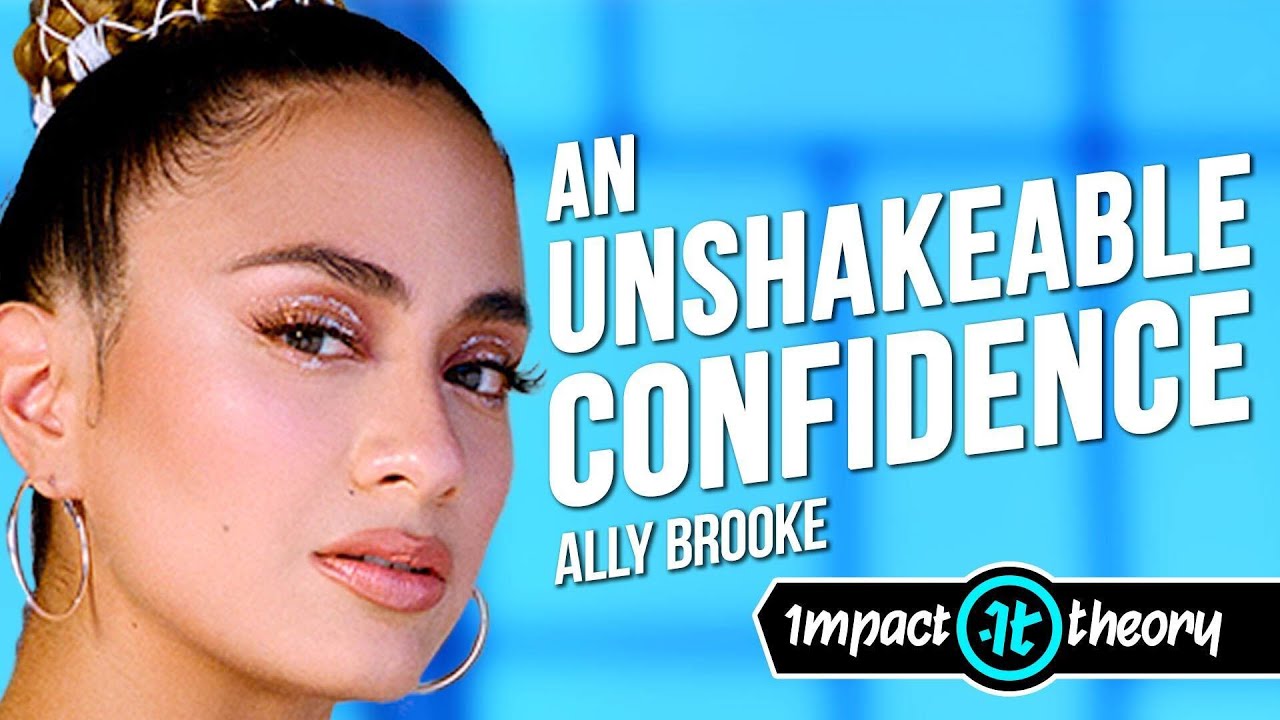
Fifth Harmony's Ally Brooke on Why You Shouldn't Let Others Slow Down Your Drive | Impact Theory
Watch on YouTubeVideo summary
Ally Brooke, formerly of Fifth Harmony and now a solo artist, joins Impact Theory to discuss her journey from singing at age nine in San Antonio to achieving fame on *The X Factor* at eighteen. Her path was not linear; she spent six years "pounding the pavement" between ages twelve and eighteen before securing her big break. Brooke credits her parents as her greatest support system during this time, noting that they balanced their own livelihoods while funding her pursuit of a record deal despite numerous rejections and financial burdens. She emphasizes that the reality of fame often differs from youthful dreams; rather than an immediate magical transformation where everything goes smoothly upon signing, she faced significant culture shock moving to Los Angeles as a teenager and endured years of uncertainty before finally landing on *The X Factor*. Once in Fifth Harmony, Brooke encountered severe adversity regarding her identity and artistic contribution. Despite working hard since childhood to have her voice heard, the show's editing portrayed her audition negatively, leading to self-consciousness where she felt compelled to monitor every word and expression for fear of further manipulation. This issue escalated when producers limited her singing parts in live rounds and assigned only one line and ad-lib in their debut single, "Miss Movin' On." When Brooke respectfully asked a vocal teacher for more opportunities to showcase her talent, she was met with shame and guilt rather than support. These experiences, combined with the label's heavy control over their image, created a domino effect of negative events that made it difficult for her to feel happy or validated within the group dynamic. The pressure from public cyberbullying, body shaming, and internal group friction led Brooke through an incredibly dark period involving alcohol abuse and suicidal ideation. She describes reaching a point where she felt trapped by lies about being the "weakest link" in the group and having no one to turn to for help; even attempts to seek assistance from music executives were met with inappropriate behavior, leaving her feeling more isolated than ever. Her manager intervened during this crisis, reminding her that God was still present despite the brutality of the industry. Brooke explains that recovery required a "mustard seed" of faith—a belief that things would eventually get better—even when she felt hopeless for months or years at a time. She rebuilt herself by slowly finding trustworthy people who lifted her up and receiving validation from fans online, which helped shift her perspective back toward hope. In her solo career, Brooke has intentionally focused on empowerment, soulful introspection, and positivity rather than the party-centric themes common in pop music today. With full creative freedom as a solo artist under her own junior label managed by Charles Chavez, she strives to create uplifting songs that resonate with children, mothers, grandmas, and anyone needing an emotional escape or positive message. She reflects on what kind of legacy she wants to leave for her young cousins, ensuring the music they listen to makes them feel good inside. Brooke asserts that while validation from others is helpful, true confidence comes from sticking to one's own decisions even when facing disagreement, a lesson learned after years of being a people-pleaser who suppressed her voice to avoid upsetting others. Ultimately, Brooke's story serves as a testament to the power of resilience and intentionality in overcoming life's obstacles. She defines "not giving up" not just as passive endurance but as an active choice to keep creating music, dancing despite ridicule, getting out of bed after dark nights, and standing tall even when facing potential career blacklisting or lies from industry figures. Her book, *Finding Your Harmony*, details these struggles alongside stories about her grandparents and parents, aiming to inspire others not to lose hope during their own storms. Through her journey, she demonstrates that while circumstances may be beyond one's control, individuals can choose to push through darkness by maintaining faith in a better future and surrounding themselves with supportive communities who speak truth into their lives.
Read the full video transcript
Everybody, welcome to another episode of
Impact Theory. I am here today with Ally
Brooke, formerly of Fifth Harmony, now a
solo artist. You, my friend, are a
bonafide pop star. I am excited to have
you on, so welcome to the show.
Thank you so much. Oh my gosh, this is
awesome, and I just
I can't believe that I have a book and
I'm here. It's It's It's amazing, so
thank you.
Absolutely. Um reading your book was
really interesting. You're obviously
super raw in the book, really open. And
one of the things that I have been
fascinated with for a very long time is
that rise to fame that so many kids
dream about and so few actually get to
do. What was that like?
Oh my gosh, it was crazy. So, in my
book, I talk all about that journey and
how hard it was. You know, sometimes
people see artists and they're like,
"Oh, wow, you know, it must have been so
easy or look, it came to them so
naturally." And
that is usually not the case.
Um
so, for me, what I what I share in the
in the book is
I started singing at 9 years old, and I
want to thank my third grade elementary
school teacher for changing my life, and
I write about that, too.
And I started singing at 9,
grew up in San Antonio, Texas.
Um sang all around my city, and then at
12 years old, it's kind of It's a crazy
story. I got discovered by Dana Barron,
who was the original Audrey in National
Lampoon's Vacation. And at 12, she took
me um to Los Angeles, you know, my
parents and I
traveled there and
started to chase a dream at 12 years
old. And it wasn't until I was 19 that I
No, 18 that I really got my big break,
so from 12 to 18 I was pounding the
pavement. I was
gosh
First of all, just to be
barely a teenager and going from Texas
to LA was such culture shock for me. It
was so different.
I missed my family.
My my pets, my brother my friends,
everything that was familiar, but my
parents really believed in me
and I thank them for that and many years
trying to record music, writing and just
trying to create something for years and
trying to get that goal of getting a
record deal.
And we had so many moments of tears, you
know, of things not going out the way we
planned. So many moments of not knowing
what the next step would be. You know,
even financial burden for my parents to
balance both livelihoods
to so many doors in my face and then
doors would open and it would be
amazing, but it wouldn't work out the
way we planned. So many things, so many
sacrifices and I was dealing with my mom
and her scoliosis
and gosh, just as a young girl that that
took a toll on you, you know, but my
parents and I we always had faith and
even when we we would just have an ounce
of belief in the end it paid off and I
got my big break when I was 19 at 18
years old on the X Factor and of course
I go into way more detail in the book
about everything and all the
the trials I went through in those
a few years before that cuz it was a
lot, but um
you know, we just had that faith and we
never gave up and I credit my parents
for everything. They're my
They're my everything. They're my heart.
They're my angels. We talk every single
day on the phone. In fact, I just talked
to them
like an hour ago.
They're the best things in my life.
One thing I want to talk about is, you
know, a lot of people have that dream of
becoming famous. For some people, it's a
lifelong dream and you know, it's sort
of the the thing that never came true
for them. What you detail really pretty
extraordinarily in the book is that it
isn't what you think it's going to be
and that it isn't like, "Oh, I got my
record deal and now there's no drama and
everything is great and it was what I
thought it was going to be."
What was the dream that kept you
fighting? Like, what was the image that
you were holding on to in your head and
then how did that compare to when you
finally signed with Fifth Harmony and
you guys end up starting to get hits?
Like, what was the the image and then
the reality?
Um so, you know, when you're a young
child pursuing this dream, you kind of
think, "Oh,
you're going to get signed and then you
get to make the music you you love and
then you're going to tour the world and
and everything's just going to going to
come and happen to you. Your life's
magically going to change like that."
But for me,
my success looked very different. Of
course, being in a girl group and I
adjusted pretty quickly and and was just
trying to have the most positive
attitude and especially when I
difference? Like, when you say that it
was different than what you imagined cuz
it was part of a girl group. Obviously,
you talk about this in the book, but for
uh people that don't know the story of
some of the early difficulties, what
what was it that, you know, created that
friction in the early days?
Well,
it
it was a lot of things. You know, being
you have this image of like, "Oh, you're
going to be signed." And then when um
so many
so many adversities kind of came really
quickly in Fifth Harmony, being on X
Factor. I opened up about that. How my
audition, the show had edited it to be
very negative
experience versus what it really was. It
was such a glorious moment. It was
beautiful. There was no negativity from
the judges or the audience. It was
amazing. But, on TV they made it look
like the judges were annoyed by me. That
I was in it for the wrong reasons, just
to be famous. And they edited the
audience to like laugh at me and roll my
eyes. It's horrible. Um so, that right
off the bat was hard. And then on X
Factor, when we became a group, you
know, super self-conscious after it
aired. And I was like, I have to watch
my every word, my every um my every
facial expression. Um because the show
could edit it again. And now that we're
in a girl group, you know,
um there's so many different
personalities. I want to make sure I
come across the right way. Um but one of
the hardest parts about X Factor was
that. And then also, um on the show
right away, losing my identity and
losing my voice on the show.
I wasn't given very many singing parts
when we made it to the live rounds,
which was devastating for me. I had
worked basically my whole life to
have my voice be heard. And I didn't
want to be, you know, the only one
singing or anything like that. I just
wanted all of us to have
you know, a fair presentation. But, that
wasn't [clears throat]
the case. And then uh one day I had a
little bit of confidence to say, "Hey,
can I please you know, have a little bit
more lines in the song? Um I really want
to be able to show what I can what I can
do and that I can bring something to
this group along with everyone else."
And I was met by the vocal teacher being
really really mean and just saying like,
"You should be grateful you're here. You
have a opportunity that millions of
girls uh would be
dying to be in. Kind of met with that
shame and guilt when I had a very
innocent and fair question. And after
that, I was like,
"I'm not going to ask again because I
don't want I cried, you know, right
after that. I don't want to be made to
feel small and to feel like my question
is worthless." So, that was hard to
endure. And then, um
you know, with our music, the first
single we ever had, which is called Miss
Movin' On,
I opened up about having one line and
one ad-lib in our very first single. And
again, there's so many punches being
thrown in my face with this X Factor
experience and the Fifth Harmony. And
right away, I keep praying and thinking,
"It's going to be a new start. It's
going to be better. It's going to be
different when I'm on the show. It's
going to be different after the show.
It's going to be different in our first
single." And then, it's just all the
this domino effect of kind of negative
experiences was very tough. And then,
also feeling like I wasn't
uh fairly represented in the group. It
was horrible cuz again, you can just
imagine
being 12 years old, you know, you have
this big dream, then you finally make it
and it's not what it seems. Also, the
label had so much control of our image.
And so, all those factors, it took me a
while to
really kind of be happy. And again, I
wanted to balance being grateful, this
amazing experience, traveling the world,
being in front of thousands of screaming
fans,
um
getting to meet our favorite artists,
all that. But also, I had the
I had the right to to feel like, "Dang,
my voice is being lost in in a moment
where I thought
my dreams were coming true." Does that
make any sense?
It does. Yeah, I want to go even deeper
into that. So, I'd love to know when you
when you were young and you were
thinking about fame or performing or
like whatever that was going to be, what
did you have an image? Was it you in
front of fans that want to hear you
sing? Was it just actually the emotions
you go through when you sing a song?
What was it that made that so
interesting that you were willing to
work that hard for it?
Mhm. Well, just 9 years old right away.
I was super shy at that age. I was only
comfortable really in front of my
parents and in front of my friends, but
elsewhere I was super shy. I'd have my
back um against the wall singing.
And I I had to battle that for a long
time. But when I got on the stage for
the first time, I felt
that that um feeling of how the music
made me feel, of transforming into a
different version of myself, and seeing
the audience have fun and the audience
actually like it, and having that like
confidence boost of oh my gosh, like
they liked it or the audience really
liked me, and seeing the way music
transformed people. I was so inspired by
Selena, Selena Quintanilla, and seeing
her movie and the way she touched so
many lives including mine. Oh my gosh,
she's my number one inspiration. That's
what struck me the most, and then
discovering that I could do the same in
a in a way
that was the most incredible thing. So,
kind of picturing myself on the stage in
front of so many people,
us together connecting and and having an
experience that no one can really
describe, um even though we may not know
each other, just having that music bond
us forever and the way that just singing
makes me feel and makes my heart feel
and my soul feel it
hard to describe but just this like
uplifting
in your spirit rising up. It's this
beautiful image that I get and I feel my
heart this electricity and mostly the
way that it moves people. That's the
most beautiful thing. So having all of
that and having a dream of one day being
on a stage of my very own, touring on my
own,
creating music videos and writing and
creating songs that make my heart beat
and that uplift people and that are
positive and fun and that kids and moms
and grandmas could listen to and escape
with and it could make them
feel something beautiful inside and it
can physically and emotionally move
them. That's those are all the images
that I had as a young child and
praise God I've been able to really
experience now. It's been
overwhelming.
[sighs]
How do you
define who you are, hold on to that
definition,
not be afraid to stand out when you're
getting thrashed
on social media?
It's It's so hard. So I I open up in my
book about just how much cyberbullying I
went through. I mean everything from
body shaming to saying, "Oh, Ally's
never going to make it. She's the least
talented member." Or saying,
"Yeah, making compilation videos of
saying that Ally's a horrible dancer.
She has no like rhythm and
I smile too much and like all these
crazy things and it messes with your
mind. I mean psychologically you just
it's like you lose your your soul
honestly and for me
uh
I dealt with you know the bullying uh in
Fifth Harmony the cyberbullying and all
that by crumbling and turning to other
things
but then gaining the strength inside of
me to say I'm going to choose to listen
to my fans who are supporting me and
telling me to love myself. I'm going to
choose to listen to my parents and them
saying the same thing and I'm going to
choose to listen to that deeper voice
inside of me that
says turn it off like don't don't
believe the lies. I open up about a very
dark moment in my book several dark
moments
that
I was embarrassed that I went through or
I turned to certain things but um
by opening it opening up
and sharing that I'm going to help
someone else someone who feels like
their only way to cope is through
drinking their pain away. I mean you
know it's okay to have some wine and you
know oh I had a hard day let me have a
glass of wine of course that's fine but
the way that I
tried to escape through alcohol was very
very dangerous and I wrestled with
putting that in the book. So
there was a moment when um
there was so much going on around me.
You know there was body shaming
the public having or it felt like the
public having a perception of me of oh
she's the weakest member she can't dance
um
her you know she's
uh
she'll never be anything more
and then also internal things happening
in the group
and feeling like I couldn't turn to
anybody for help. Um
uh these music executives, I turned to
one for help and he ended up
uh being very inappropriate with me.
And I felt so humiliated and even more
alone. Many things were happening to
where one night I I opened up and
I
I wanted to escape. I wanted to escape
the world and I ended up drinking myself
to death, basically. I mean, not to
death literally, but I mean I literally
drank myself until I got sick cuz I
didn't want to live in my world that I
was living in because of all the pain
that I never shared with anybody.
And my manager came and found me.
Um I feel lost. There's no hope. I'll
never be happy.
Um things will never get better. I mean,
truly thinking these dark thoughts.
And he was there to pick me up and to
comfort me.
And to say, "Allie, listen, I know it's
hard. I see what's going on. I know it's
brutal. This business is very, very,
very brutal, especially on young women."
I was reminded that there was hope and
that God was with me
even when
begin to rebuild out of that? Like, what
do you So, if the world is filling your
head with notions that you're the
weakest link, that you're a terrible
dancer, that you're struggling with your
body image
and you're not reaching out to anybody
for help.
Now that you get it, there's sort of
that wake-up moment, what begins to be
the internal dialogue that you have to
build this stuff back together? Is it
just everybody's wrong? Is it work
ethic? Like, I can get better? Like, how
do you begin to build in a new
direction?
Well, for me, I had to just
honestly
dig deep and to remember what my manager
said, his name is Will, is that God was
with me and things would get better one
day and I had to choose to just continue
fighting each and every day and showing
up and uh
it wasn't just the online bullying and
the names it was
a lot of stuff going on behind the
scenes too
and feeling like I had no one to turn to
I could trust anybody the times that I
did try was met with
severe just opposition and no empathy
but that made me feel trapped
and alone and scared honestly so all of
those things swirling that happened and
then for me
I well first of all I just felt really
I didn't feel good being that position I
never wanted to feel that way again that
that sorrowful that dark that um
that
out of it that um there's just this very
ugly sick feeling that you get when you
get to that point I don't know how to
describe it but it's very harmful and
and just toxic um I don't want to have
to go through that again and
again just like
listening to those words and praying and
and kind of being confronted with that
darkness and knowing that I could turn
to someone sometimes you just have to
ride it out like it doesn't mean the
next day will be better it doesn't even
mean the next month or maybe even the
next year but just riding it out and
having that mustard seed of faith and
saying you know what
I'm just going to do my best to survive
and that's it I'm going to try to be to
be present to be used in the way that
I'm allowed to be used
to shine my light where I can even if my
light's dimmed right now
and just survive and and know that one
day a better day will come
and I had to do that for a very long
time. Same thing, same thing, same
thing. And then eventually opening up to
my parents and and talking to a few
friends and just listening to don't give
up and don't settle and sometimes you
can't change certain things or
circumstances, but you certainly can
push through them and get through them.
And eventually I came out of that very
dark place and what I called the great
sadness in my life just by hanging on,
you know.
Talk to me about the mustard seed. What
do you mean by that?
That means when you
when you're like hands to God and you're
like, "God, what is going on? Why are
you allowing this to happen? God, I
don't see my life getting better."
But deep down knowing that like there's
that much faith you have and letting
that grow over time.
Faith that things will get better?
Yes, faith that things will get better.
Faith Faith that one day I will see the
the sun again,
um meta you know, so to speak. Um
that's really what I had to hold on to.
And things got worse before they got
better, sadly. I didn't have one of
those nights again, but I definitely had
many more nights of crying and feeling
alone and feeling hopeless. Uh but just
enduring it for as long as I could and
right when I felt like I got I've got to
just
you know, leave or change things.
Things began to shift and began to get
better. And sometimes that's what
happens.
what actually shifted? Because I'm
thinking of the person right now who's
in the middle of that great sadness.
They are in the storm of darkness. And
like them understanding how to
push that shift along so that they can
help it to happen. Um but I think them
understanding what it was would be
really useful.
Well, I feel like uh
one,
there's many things, but
one, I found the people I could trust,
people who would lift me up when I was
down, people who were there for me,
people who were encouraging me, praying
for me.
Um two,
I feel like slowly, little by little, I
began
personally to get certain validation and
uh
people um
like online
some examples?
Yeah, so people online being so much
kinder to me and not
body shaming me,
celebrating me. I felt like even in the
group um even something as as
small or what is insignificant, but
meant a lot to me is being able to sing
more and be a part of the process more
and being validated more in my voice and
in my talent and
in my writing little by little to shift
and building a community of people
around me that have lifted me and and
spoke truth into me, spoke life into me.
When you feel like
you're in a place where you're not
really getting that
and then you are like, "Okay, I'm going
to stick it out and I'm going to see if
life gets better."
And it might take many years, but it
does. That's like
you just feel like you get your life
back, your soul back, your spirit back.
Um I hope I'm making sense.
[laughter]
You're definitely making sense. One
thing I want to talk more about is the
the notion of validation and confidence.
Do you think that validation is a
necessary part of confidence, or can you
develop confidence even if other people
are like, "This is the wrong direction"?
Oh, you can totally do both. I mean, I
have moments where
see, for me, sometimes and to learn
sometimes my validation came from other
people, a lot of it. I'm a people
pleaser. That's why in in the group, I
didn't really speak up for myself
because I knew it would make someone
upset. And for me, in the long run
though, that hurt me and that hurt my my
confidence, the way I I I looked at
myself and just just my happiness. Um
but I had to learn that
speaking up for yourself, as long as
you're respectful and kind,
eventually it will it will work and it
will pay off, you know? And
um
and I had to learn that, but also learn
that even if someone doesn't agree with
you, you still have to stick with your
decision or your choice or whatever.
Yeah, it's really it was really
interesting to follow you along in the
book as you go through all of this and
begin to build yourself back up and as
you go into the solo career and how much
intention you've had to have now to get,
which is one of my favorite parts of the
book, when you're going through trying
to get your solo record contract. And
again, yet another moment where I think
so many people would have given up, but
you didn't and you double down and you
you know, take the notes and realize
sort of what wasn't working in the
initial pitch and and I want to talk
about that process. And this is one of
the things that I think is is so
extraordinary and I think anybody will
benefit from reading the book, but I
think especially young people realizing
that you have to have intention in your
life and you have to decide who you want
to be and the world is not going to just
embrace you with open arms. The world is
going to challenge you at every turn and
it's going to ask how serious you are
about who you want to become and what
you want to achieve.
So, as you thought about really defining
yourself,
were there a handful of characteristics
that you knew, like, I'm going to be
leading with these things?
Uh in those meetings, the label
meetings?
Well, more like when I think about your
music, empowerment is one of the things
that comes to mind, right? When so many
of your contemporaries are sort of
leaning on the party scene, and look,
you've got club bangers, and I you know,
I'm not denying any of that, but
there's, you know,
there's a bit more soul, a bit more sort
of internal introspection to your
lyrics.
And I just wondered how much of that is
you doing that intentionally?
I assume it is on purpose.
Oh, yes. So, it is so awesome. Listen,
being a girl group had its
advantages, and it also had its
challenges, and a lot of that was being
controlled by so many people, so many
cooks in the kitchen, you know.
I mean, it's hard to make a move on your
own without kind of being reprimanded
and all this crazy crap.
[laughter]
I mean, of course, it had its beautiful
moments, and I share that in the book,
too. Um, but having that complete
freedom as a solo artist to be who I
wanted to be, to write about what I
wanted to write, to have the music that
I wanted to have, my intention,
and especially when I met each label,
and when I met Charles Chavez, who is my
He's my manager, but also he's the head
of my junior label. So, if you guys can
kind of
understand that, I guess. Um, and so, I
just shared my soul, and I'm like,
"Listen, I want to um,
do all types of music, of course, pop
music, but, you know, I'm I believe in
being yourself and being sexy, you know,
I am a woman, but also I I personally
just don't want to be sexual,
and also having music that is uplifting,
that is positive, that is real. That was
my goal and my dream and I prayed for
the right person to be behind that, to
support that, and to execute my my
visions. And some people, you know,
don't
um you know, understand or they might
try to push you. Um I've had songwriters
who tried to get me to go one way, but
I've had to be very much like
"Hey, I'm sorry. Can we change it?" Or I
come up with a change or I'm in the end
don't use that song or whatever.
Um but most people have been so
respectful and it's awesome, you know?
Um but for me it was such intention to
to create music that everybody can
listen to and feel good about just
knowing how much I went through and and
kind of thinking of that little girl who
may need that uplifting song or positive
message. That's what I think about in my
music. And you know, I have little
cousins. They're like
4 years old and I think of them like,
"Okay, what music do I want to leave
behind for them to dance to and to
listen to and
to feel good about." So, that has been
the key to
to what I've built on my own and and I'm
just so happy that
people see my music as positive, you
know? It's That's awesome. And again,
you'll get the full spectrum and the
full
story by reading my book, but knowing
that you can not just survive, but
thrive in the end.
Like
it's incredible.
And and things can change. And sometimes
you may even stumble upon something that
you hadn't planned in life, but it ends
up becoming one of your most cherished
memories or something. It's wonderful.
Like if I could just tattoo something or
or just tell the world one thing is do
not give up and do not lose hope because
there is hope. Just
I pray that even in my story, I feel
like I lived five lives, is that showing
people that it is possible
to get to a place where you're healthy
and you're happy.
Talk to me about what not giving up
means. So, you do Dancing with the
Stars. You actually work your ass off to
get really good. I mean, same thing with
what you've done in your career. You
Like there's a real element of work
ethic to your story. Um, so you've
talked about two different things.
You've talked about just holding on,
having the mustard seed of faith that
there will be sun again, but then
there's also the self-evident nature of
your work ethic and you don't really
refer to it as work ethic in the book,
but it's pretty clear that that's what
it is. Um, when you say don't give up,
are we talking about being proactive or
are we talking about just holding on?
All of it. I mean, gosh.
So, for example,
when I was, you know, looking at all
those,
uh, labels, interviewing, and was told
by my manager, who was so nice, you
know, my manager at the time, was so
nice and you're going to have a bidding
war. You're part of the biggest girl
group in the world. Get ready,
girlfriend. And then all those doors
were shut, and literally there was
pretty much no other option for me as
far as labels
and figuring out how, like,
God, am I going to ever be able to
release music? Am I ever going to be
able to sing again if I don't have a
home to distribute that music to
to take care of the funds and the costs
that comes with being a a
female solo artist. Um, just having that
moment of breakdown. Choosing not to
pack up and go home even when I wanted
to.
Uh choosing not to stop music.
Choosing
even like songs, songs that I thought
would, you know,
do better than they did or whatever.
Choosing not to stop creating music, you
know, keep on creating music. Um
choosing to continue to dance even when
people laughed at me.
Um choosing to get up out of bed the
next day, you know, when there was a
loss or, you know, a dark moment or
night that I had. Um choosing to stand
tall in the industry when I was scared
that someone about to to blackball me,
you know, was someone about to to lie
about me.
Um was someone about to try to take my
career away from me. Many things, just
choosing to
continue to live and to continue to
fight
through the good and the bad.
That is all amazing. It comes across
perfectly in your book, uh which by the
way, you did an amazing job of walking
people through the difficulties and, you
know, giving them that mustard seed of
hope and
um some sense of how to begin to build
back. Where can I mean, look, you're
very easy to find, but where can people
find you? Where can they get the book?
How do they connect more deeply with
you? If they're not already in the
Allegiance.
I love you. Thanks. You know my fan
name, my fandom name. That's awesome.
They're called the Allegiance. Uh but
yes, y'all can follow me at Ally Brooke
on social media, a l l y b r o o k e,
and you can order my book Finding Your
Harmony on Amazon or wherever books are
sold.
Um
it's just such a beautiful thing for me
and and not just for me, but for my
family to
be in this moment, to live it out. I
mean,
there are so many stories about my
parents in here, about my grandma,
about my grandparents who are no longer
with us.
And I just think of them and how proud
they would
be and how proud they are and they're
watching over me and
their story is going to be told in this
book and I'm so excited
for that. So,
sorry. Thank you guys
for
the love and support. It means so much
and I hope that
through this book you can be inspired to
go after your dreams, to not lose up, to
not give up on yourselves.
Um
and to know that faith can change so
many things.
And I saw a lot of this in front of my
eyes even when
it felt like there was no hope. Um
so, I really hope this can touch
people's lives.
And uh God bless you guys. Thank you so
much.
Absolutely. I have no doubt that it
will. And guys, speaking of something
that will touch your life, if you
haven't already, be sure to subscribe.
Ali, thank you so much for joining me.
And guys, until next time, be legendary.
Take care.
earned is
[music]
for the things that I'm wanting and
believing, I just have to do everything
possible that's within my power. And
[music] there's some things that aren't
within my power and that's where I trust
God.