Video summary
The video "Farming Without Borders" explores a significant agricultural exchange between Alabama and Queensland, Australia, where farmers face remarkably similar challenges despite being separated by an ocean. Teams from Auburn University traveled over 9,000 miles to engage in a deep dialogue with Australian researchers, extension professionals, and producers, aiming to learn how they adapt to water scarcity, climate variability, rising costs, and labor shortages. In Queensland, described as one of the driest inhabited continents on Earth, every drop of water is critical, forcing farmers to become experts in capturing and managing limited resources. This shared struggle highlights that while the physical landscapes differ, the core issues driving innovation and adaptation in agriculture are universal across both regions.
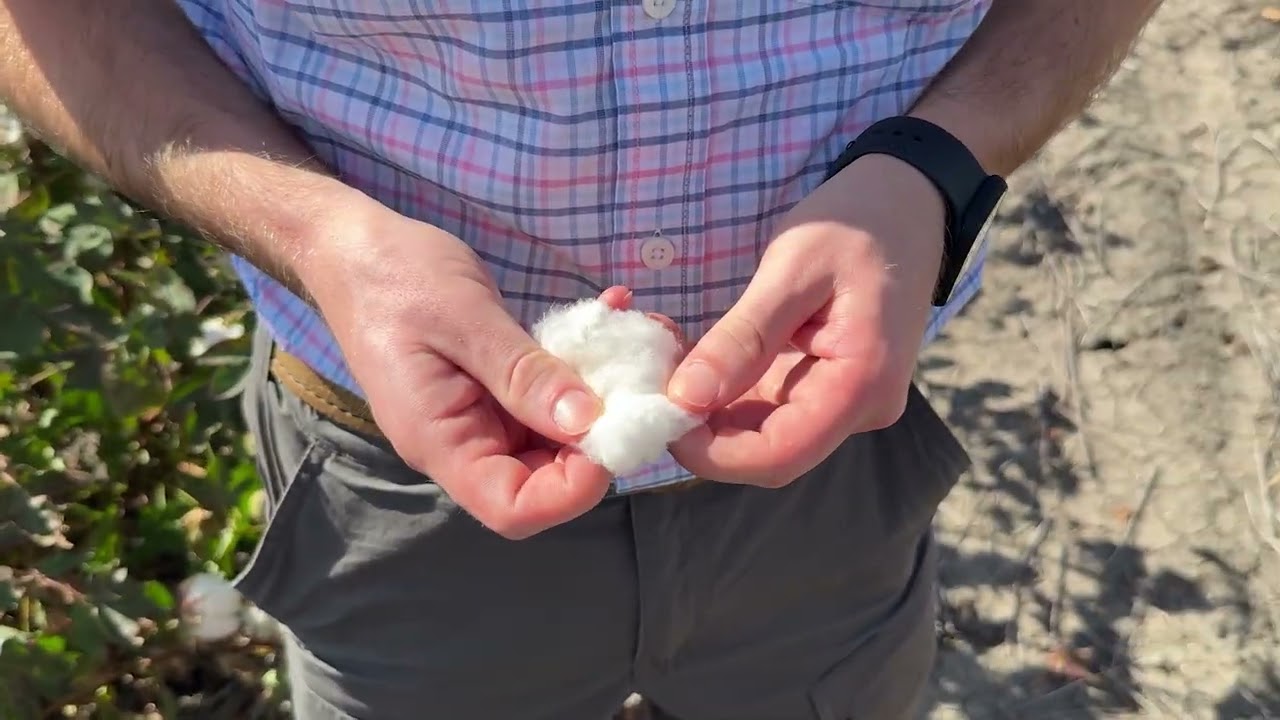
A central theme of the visit was the necessity of diversification and site-specific management to survive volatile weather and market conditions. Unlike some approaches that rely on a one-size-fits-all strategy, Australian producers have mastered tailoring their farming practices to specific field needs to maximize yields and efficiency. Cotton production serves as a prime example, where growers consistently achieve some of the highest yields in the world by using minimal pesticide applications and focusing on precision management rather than blanket spraying. This flexibility allows farms to grow multiple crops simultaneously, creating a safety net when weather patterns shift or market prices fluctuate, a lesson that resonated strongly with Alabama specialists who are currently facing thin profit margins and seeking more resilient crop rotation strategies.
Technology and automation emerged as vital tools for overcoming labor shortages and improving operational efficiency in Australia's evolving agricultural sector. Because resources, equipment, and labor are often limited, Australian farmers have been compelled to be "cleverer" by adopting innovative technologies that enhance precision management without relying on excessive manual input. The Alabama team was particularly impressed by fields that could harvest five to seven bales with very few insect sprays, demonstrating a level of efficiency that is difficult to replicate in Alabama's current regulatory and economic environment. These technological advancements represent the future of farming, showing how automation can help producers do more with less while maintaining high standards of production.
Ultimately, the trip concluded with a clear realization that the solutions developed in one part of the world can offer profound insights for another. The exchange was not merely an observation tour but a collaborative learning experience where ideas flowed freely between researchers and growers on both sides of the globe. By sharing experiences regarding soil types, crop management, and resource conservation, the teams identified common ground that could help Alabama farmers improve their own practices. As Mike Clardy from Simply Southern noted, the greatest value of the journey was not just seeing the fields, but learning how to bring these new concepts back home to support local growers in facing their own unique challenges with greater resilience and innovation.
Read the full video transcript
Red soil, endless sky, and a landscape
where every drop of water matters.
This is Queensland, Australia, half a
world away, where farmers face many of
the same challenges as producers in
Alabama.
Water scarcity, climate variability,
rising costs, labor shortages,
challenges that have pushed Australian
agriculture to innovate, adapt, and
evolve.
That's why a team from Alabama Extension
at Auburn University traveled more than
9,000 miles, not simply to observe, but
to learn.
The trip was designed as an exchange of
ideas among researchers, [music]
extension professionals, and producers
working in different parts of the world.
>> You can go on the internet and see
[music] most anything we've seen, but
it's more important when we're here,
we're seeing [music] that the physical
crop, we're talking to the farmers, the
growers, the
>> [music]
>> industry people, the their extension
service, the researchers, and we're
learning from them.
>> Those conversations have been taking
place across farms and research stations
throughout Queensland. For long time
Australian agricultural partner Kevin
Norman, the value comes from sharing
experiences and learning from one
another.
>> And it's all about, yeah, exchanging
ideas, seeing [music] how we farm many
of the same crops in the different
environments, and seeing if there's new
innovations or technologies. [music]
And I think that's the wonderful thing
is that we can share, you know, we're
growing similar [music] crops, fairly
similar soils.
>> One lesson appears almost everywhere the
team visits. Water drives everything.
[music]
Australia is one of the driest inhabited
continents on Earth, and farmers have
become experts at capturing and managing
every available drop.
>> Australia is a very dry continent,
>> [music]
>> so they have to adapt to impounding
their waters, and we've seen some big
what they call ring tanks, where they
just basically put up a berm around. We
saw one that was a
over 170 acres.
>> [music]
>> That same spirit of adaptation has also
led many producers to diversify.
>> [music]
>> Throughout Queensland, farms often grow
multiple crops, creating flexibility in
an environment where weather and markets
can change quickly.
It's an approach that caught the
attention of Auburn University nutrient
management specialist Rishi Prasad.
>> There's a lot of things that I'm taking
back to Auburn,
especially Alabama [music] extension.
Specifically like you know, the
diversification part because in in
Auburn we [music] we do a lot of like
crop rotations,
like cotton with peanuts and corn and
beans and we see and hear like farmers
[music] are struggling every year with
thin profit margins.
>> Cotton was a major focus of the trip.
Despite challenging growing conditions,
Australian growers consistently produce
some of the highest yields in the world.
Researchers and extension professionals
work closely with farmers, helping move
new ideas from research plots into
production fields.
>> A lot of these fields are are picking
[music] five and six seven bales and
they don't spray or maybe one time for
insects [music] and in Alabama can't do
that. So that's really
really impressed me.
>> These guys are really
keen on site-specific management.
[music] And site-specific management is
key because like farming it's a
one-size-fits-all approach would be
nice, but unfortunately it doesn't work
that way. To get the highest [music]
yields to make the most out of the land
that you're farming, it's going to have
to be tailored and catered to your
specific [music] needs and what you're
trying to get out of it.
>> The team also got a glimpse into
agriculture's future. Across Queensland,
technology is helping producers overcome
labor shortages and improve efficiency
through automation and precision
management.
>> It's [music] that
need to be innovative because you don't
have all the things that you would like
or both from a from a technology and
equipment and a resource and a labor
perspective. So, [music] how do we try
and be much cleverer about the the stuff
that we've got? [music]
>> After hundreds of miles, dozens of
conversations, and days spent in the
field, one thing is clear. [music]
Farmers in Australia and Alabama may be
separated by an ocean, but many of the
challenges and many of the solutions are
remarkably similar.
>> [music]
>> This is strictly a tour where we're
meeting with the growers. We're getting
to see their fields. We're getting to
learn from them. We're getting to learn
from industry. We're getting to learn
from their uh researchers. We're getting
to learn from their extension
specialists. So, it's been a great trip
and we've had a great [music] time, but
more importantly, we've learned a lot
and we've learned a lot that we can
bring back to the Alabama growers.
>> For Simply Southern, I'm Mike Clardy
with Alabama Extension.