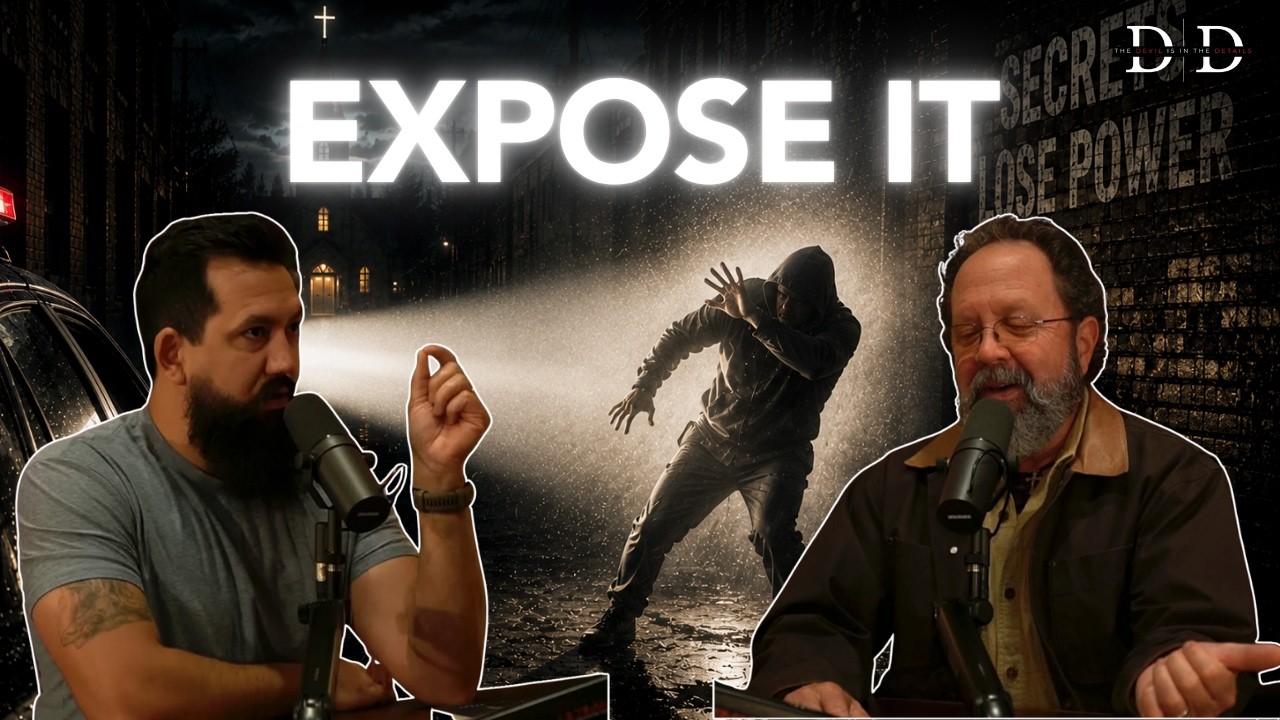
Exposing Desolation (and the Enemy) | Ignatian Rule 13 Explained
Watch on YouTubeVideo summary
Rule thirteen in the Ignatian tradition is widely regarded as the second most important principle for spiritual warfare, focusing on exposing the enemy's efforts to weaken a person during times of desolation. The core concept behind this rule is that demons are creatures who thrive on secrecy and fear; they become significantly weaker when their deceptive actions are brought into the light by someone other than themselves. When an individual remains silent about feelings of anxiety, confusion, or spiritual fog while suffering from these attacks, it emboldens the enemy to continue its work undisturbed. Conversely, acknowledging that one is under attack and revealing those struggles effectively disrupts the enemy's strategy, causing them to back down because they can no longer operate in the shadows where they feel most powerful.
To practically apply this rule, individuals are encouraged to take immediate steps to externalize their internal battles by writing down exactly what lies or negative thoughts they are hearing during a period of desolation. This act serves both as a psychological tool to break the cycle of stewing in anxiety and as a spiritual declaration that removes the enemy's power over the soul. Once these struggles are documented, the next step is to share them with a trusted confessor, spiritual director, or holy person who understands one's specific situation. By telling someone else about the attack, the believer transforms from a helpless victim into an aware participant in their own defense, much like how a well-lit house prevents burglars from hiding; similarly, bringing the enemy to light makes it impossible for them to succeed with their malicious designs.
The video illustrates this principle through various real-world analogies involving law enforcement and animal behavior, emphasizing that humans possess an innate ability to sense danger when they remain alert and do not avert their gaze. Just as a police officer must keep eyes on a dangerous suspect or how a dog is less likely to bite someone who stands firm rather than cowering in fear, the spiritual life requires constant vigilance against internal threats. The speaker recounts instances where confronting an aggressor directly caused them to retreat, demonstrating that maintaining awareness and refusing to drop one's guard neutralizes the threat. This approach extends to prayer as well; by asking others to pray specifically for deliverance from identified struggles, a believer mobilizes a team of support that further diminishes the enemy's influence through collective spiritual resistance rather than isolation.
Ultimately, rule thirteen teaches that there is no downside to admitting one's struggle and reaching out for help, even if the cause appears merely physiological or emotional. The enemy desires for believers to feel ashamed and alone in their battles, often convincing them that they are simply tired when they are actually under spiritual attack. By refusing this deception and actively engaging others through confession, prayer requests, and honest communication about one's state of mind, a person can effectively domesticate the devil or deny him his power. This process involves recognizing desolation early, fighting back with truth, escalating to community support if necessary, and trusting that God is on the throne while believers take active steps to expose darkness through light and transparency.
Read the full video transcript
I as soon as I saw the guy, there was
something in his eyes where which may
sound a little dramatic, but you just
you can kind of tell with people, you
know?
>> Yeah, well, you could.
>> And I was like, "Hmm, okay, I need to be
careful."
And unfortunately, my rookie goes He
goes, "You have a felony warrant." I was
like, "No!"
>> [laughter]
>> He goes, "Now we're going to fight."
>> The greatest trick the devil ever pulled
was convincing the world he didn't
exist.
>> I didn't know this [music] was a fight.
>> That's why you're losing.
>> Today we are beginning either to
domesticate the devil or else to deny
him.
He is most powerful when he is denied.
>> Welcome to the Devils in the Details.
The devil may be in the details, but God
is on the throne.
>> Amen.
>> We are almost done with the series of
spiritual warfare and discerning
spirits. I think we have what?
One more after this,
>> One or two, yeah.
>> one or two.
>> Well, you know, this is we're on 13, so
we still have one after this.
>> Yeah.
>> Well, that's assuming we
we stick with just the
the first rules. I am writing a book on
the second rules, but I don't know.
>> Yeah.
>> We'll see. I'm I'm not not far along
enough yet.
>> So, rule 13, the power of exposing the
enemy's efforts.
>> Yeah, so this
So, there are two rules
that what There's one rule that everyone
who teaches discerning spirits agrees is
the most important rule. That's five,
which is never make a change to your
to your uh commitments, spiritual
commitments that you've made in
consolation.
Never make a change when you're in
desolation. Rule 13 is generally agreed
upon as the second most important rule,
second most powerful rule. And it's
predicated on a simple idea, and that is
demons
are weakened by certain behaviors and
strengthened by others or encouraged or
discouraged. They're very discouraged,
as a general principle, whenever
anything is discovered about them by
somebody other than or either way, but
certainly somebody who's being oppressed
and they discover it, that's bad.
Far more difficult for them is when
you know, let's say I'm struggling with
desolation
and I and I, you know, become aware of
it, but then I make you aware of it
being, you know, that's
that's very
uh discouraging to them. Yeah. Very
discouraging. So,
the [clears throat] question in then is
how do you do that? And this is what St.
Ignatius
discovered this a rule.
Um why don't you go ahead and read the
rule. The rule's a little wordy, but
we'll simplify it.
>> one.
>> Yeah.
>> Likewise, he conducts himself as a he is
an enemy. Likewise, he conducts himself
as a false lover in wishing to remain
secret and not be revealed.
For a dissolute man who, speaking with
evil intention, makes dishonorable
advances to a daughter of a good father
or a wife of a good husband, wishes his
words and persuasions to be secret. On
the contrary, displeases him very much
when the daughter reveals to her father
or the wife to her husband his false
words and depraved intention because he
easily perceives that he will not be
able to succeed with the undertaking
begun.
In the same way, when the enemy of the
human nature brings his wiles and
persuasions to the soul, to the just
soul,
he wishes and desires that they be
received and kept in secret. But when
one reveals them to one's good confessor
or to another spiritual person who knows
his deceits or malicious designs,
it weighs on him very much because he
perceives that he will not be able to
succeed with the malicious undertaking
that he has begun since his manifest
deceits have been revealed.
>> So, I want [clears throat] to
We've covered this in a little different
way before, but it's very much worth
digging into again. So, when
when you're
let's just say when you're foggy
uh you and I both foggy today.
>> [laughter]
>> When you're foggy and desolate, I'm I'm
not necessarily desolate, but
uh or you're you're just, you know,
tired and by the way, it's when you're
tired, it's opportune time for the enemy
to work, so you got to be careful.
When you're foggy and desolate and he
proposes ideas that cause you
emotional anxiety
that's what we call desolation.
>> Mhm.
>> Um
there's
a a number of ways to bring that to
light.
The the first way to bring that to light
is that you
write it down.
>> Mhm.
>> You know, you get it out of your head.
And and I promise you for those
listening, I don't I don't know if
you've ever done this, but it's
been a practice of mine for decades,
though I don't do it anymore habitually.
But I did it for decades to get free is
when I'm experiencing desolation or or
spiritual battle
I write down what I'm hearing on a piece
of paper.
Have you ever done it? Have you ever
tried it?
>> No, I did recommend to guys, I mean, cuz
this is a practice that has a lot of
psychological backing to good
psychological backing to it to where
guys who are struggling with
pornography, I would have them write if
when you are starting to feel tempted
write down where you are, what you're
doing, and how you feel.
>> Mhm.
>> And that provide number one, it helps
break you out of that focus on the
temptation itself.
>> Yeah.
>> But then it also reveals to you what
might be triggering you. So, it's a
similar situation where I'm in
desolation
what am I feeling? What is the lie that
I'm being told?
>> Yeah.
>> If you write that out, it helps kind of
break that cycle for one cuz you're no
longer just sitting there listening and
stewing and whatever is going on.
>> It's waking you up to what the enemy is
doing in you. And that
foundationally takes away the enemy's
power. It dissuades the enemy.
And and you know, and I do think there's
both a psychological and a spiritual
principle, and I don't know where they
the two separate
or are distinct, but I just know
for years when I was dealing with the
junk from my childhood, my own sinful
life, whatever,
when I'd start feeling desolation, I
would write down the lies that I'm
hearing. And just writing them down
diminished their power. I could feel it.
>> Yeah.
>> And then of course, then writing down
the lie, we which we talked about in
rule seven, I think,
writing [clears throat] down the lie,
writing down the opposite truth,
renouncing the lie, affirming the truth,
then it's another level of freedom. So
that So there's some similarities to
that to this rule.
But this rule has us taking it a step
further,
which is when you're in desolation,
essentially, tell someone.
>> Mhm.
>> You know,
>> your confessor or holy person.
>> Yeah, the the the the key is
it says, "But when one reveals them to
one's good confessor or to another
spiritual person who knows his deceit
and wishes
malicious designs that weighs on him."
So it can't be and when when Ignatius is
using the word confessor, it's the same
thing as spiritual director.
>> Right.
>> Can be spiritual friend, you know,
whatever.
>> Well, same thing with
with holy person, right?
>> Yeah.
>> this is slightly off topic, but I've
been doing a lot of research cuz there's
been
some goofy videos floating around about
what spiritual direction is and isn't,
and they're completely objectively,
patently wrong.
>> Uh-huh.
>> And when you look at the writing of I'm
encouraged reading it here for the first
time listening in that frame of mind,
you know, about to do the series on
direction. That's That's what exactly
what he's describing. Not just he he
separates director, confessor, right?
Which ideally should be your director
but also a holy person with Right.
falls under that same category. So,
I don't know. That's a little bit of a
>> Oh, you went to the Oh, you I see the
point you're making. We should we should
use it. So, what we're Jordan's talking
about is we're going to do it series on
spiritual direction dot on Divine
Intimacy Radio.
>> On well, somewhere.
>> Somewhere we're going to do it. On
errors on spiritual direction.
But [laughter] I mean one of our
outlets. Um
But yeah, you're right because Ignatius
doesn't say
tend it to a priest which is
>> Yeah.
>> You know.
>> One of the premise. So, it's a little
bit tangential, but
what people should who are listening
should take away from this is it's you
don't have to just take it to your You
should. That's ideal, I would say. If
you have a good confessor and they know
you and then you have the
>> And they're helpful with these things.
>> Right. And if it isn't confession and
you know, especially if you've been
struggling with it for a long time, you
can receive those graces through the
sacrament of reconciliation. But also
the common thing is the quickest thing
in my opinion and we do it here all the
time
>> Yeah.
>> at the retreat center is I'm struggling,
you know,
>> Yeah.
>> and this is what I'm struggling with and
just saying it out loud to somebody else
has a profound effect. It's it's
bringing light It reminds me as I was
reading the rule, I was thinking about,
you know, that a police officer.
Why do we have spotlights and why did
why did we talk about people putting
bright lights on their houses?
>> Mhm.
>> You know, cuz burglars are much less
likely to break into a house that is
really well lit. Why? Cuz
[clears throat] they can't hide.
>> Mhm. [laughter]
>> They're literally in the light. They
can't hide from it.
>> Yeah. And as I always say, demons are
creatures, right? And they they act in
the creaturely ways even though they're
spirits.
You know, and some sometimes we don't
think of them like that, you know. But
they do and and it is, you know, like
humans, like dogs, you know,
they're encouraged or emboldened or or
dissuaded from doing bad things.
You know, it's funny because
there's a little dog. Uh what's what's
Chase's dog's name?
>> Oh.
>> Nugget.
>> Nugget, that's right.
>> Chase and Dara. So,
at the retreat center, we have people
who live in community here
and part of Apostoli VA work and just
wanting to live a life like this. And
they brought a little Nugget dog and
he's an ankle biter.
>> Yeah.
>> And what's interesting about him is he's
he's he when he's not happy, he's
looking for an ankle.
>> Yeah.
>> Not his Not his mass Not his regular
folks.
>> Yeah.
>> But if you're you know, a visitor, he
doesn't know I own the place. I I don't
own the place, but
he doesn't know I'm on you know, uh that
I I belong here, you know. So,
so when does he start
kind of he starts to circle around to do
his cowardly bite. When does he do that?
>> Well, I'll I'll give you a story that
fits this perfectly. He got someone's
ankle here on property.
>> Okay.
>> to say who it was cuz I don't want to
embarrass them.
>> Okay.
>> I will say that he's never got my ankle.
And why is that? Cuz even when I first
met him and he was somewhat I wouldn't
say he was aggressive.
>> Yeah. No, he's [clears throat] not a bad
dog.
>> Barking at me or whatever. Just let me
know like, "Hey, you're around my people
and I don't know you and I don't like
you."
>> "And these are my people."
>> And I didn't cower. I didn't you know, I
didn't do any of that. I kind of
confronted confronted him and in this
case I had to dog, so I was trying to be
friendly.
But he's never bit me even when he's
barked at me. This other person
was
is somewhat afraid of dogs.
Is was nervous about the dog. And what
happened? The dog bit her ankle.
>> [clears throat]
>> So, it kind of represents the two sides.
I think that's kind of where you were
going. Was it not?
>> Uh well, actually no, but I like that.
>> Yeah.
>> Yeah, so
Yeah, well, that but that goes to the
other rule we were about, you know,
where um
you know, the enemy is is like a a dog
that when
when you give him
>> have been better for
>> Yeah, we but this so
so this this what I'm talking about is
he he was nervous
>> Mhm.
>> and he started to circle around.
Why didn't he bite me?
Cuz I didn't I didn't drop my guard.
>> Mhm.
>> I didn't go
I didn't look away.
>> Yeah.
>> And he's and he knew I was looking at
him.
>> Yeah. Yeah.
>> And cuz he knew I was looking at him
what he doesn't know, the next thing I'm
going to do, and I warned his parents. I
said, "I won't hurt I won't hurt him,
but I will dominate him."
>> Yeah.
>> Clearly, which is you flip him, you
close their mouth, and and then they go,
"Ooh, not somebody I should be messing
with ever, you know." They remember once
they get enough adrenaline attached.
But it's similar with the enemy. It's
like, you know,
you
when he's doing his thing, you got to
You know, it's it's sort of like
as a cop, did you ever have a situation
where
you you had a guy you were dealing with
and
I I remember you and I were
somewhere
and I looked at some guy
dressed a certain way, certain stuff
going on. I said, "So, see is this guy
dangerous or not?" Cuz you and I were in
a place far away from home, and you
you're like, "No, not dangerous at all."
You just knew instinct- instinctively.
But you ever had a guy
you you didn't necessarily know if
you're going to bust him
take him in
um but you knew he was very dangerous.
And that you knew you had to keep him
you could not take your eyes off him for
a second.
>> Yeah. Yeah, I mean, I don't remember
specific instances. I There's a few
things flashing through my memory, but
yeah, there There just sometimes there's
people that you can you can tell. I had
a
I had a uh
This is the I think the only example I
can think of that doesn't reveal
anything, but
we got a
someone showed up to the precinct
hilariously
and they wanted to report for something
and the desk officer was filling out the
information and found out that they had
a felony warrant.
>> [laughter]
>> Genius.
>> And uh I had a I was training a rookie
at the cuz when I when I left I was a
field training officer, so I was
training guys fresh out of the academy.
And so we rolled up to the precinct and
um
I was letting him kind of the rookie
kind of lead it so he he he learned and
he and I as soon as I saw the guy there
was something in his eyes where which
may sound a little dramatic, but you
just you can kind of tell with people,
you know.
>> Yeah, well you could.
>> And I was like, "Hmm, okay, I need to be
careful."
And unfortunately my rookie goes he
goes, "You have a felony warrant." And I
was like, "No!"
>> [laughter]
>> Now we're going to fight. What are you
doing?
Thankfully we didn't have to we didn't
have to fight cuz I had a taser.
>> Yeah.
>> And as soon as I pulled out the taser
the guy stopped, but he was ready to he
was ready to go [clears throat] cuz he
just told you there was
you know, the posture and something with
and the guy it's like you I don't know.
You can you can kind of tell. So I don't
know if that answers the question, but
>> You you and I were at a at a fast food
place, remember that? In a major city
one time.
>> Yeah.
>> And I think we were going to
uh
>> I think we're coming back from
>> from completing NRA certification.
>> Yeah.
>> Uh
and um
which is a certification to be an
instructor cuz Jordan had a
at one time had a school where he was
training folks how to do self defense.
And um
we were in a fast food place and
something
you could see I looked I saw the guys
from their car.
There were three guys.
And you could just the posturing, how
they positioned they were separate
positioned themselves separate from one
another like spread out. And then both
of us knew instantly, okay,
>> This is a bad
>> it's time to find cover.
>> Yeah.
>> It's time to It's you know, without
being obvious.
>> Yeah.
>> Yeah, it was the other part. Okay, let's
So, but And both of us didn't take their
our eyes off of them until we got out of
the place. Got where we were going to
get out.
But this is [clears throat] the
principle
that we're talking about in this rule.
Um is
you got to be awake, right? I mean, this
is the whole the whole series is you got
to be awake to what's going on around
you. And And people who are victimized
are victimized cuz they're not awake in
in life.
>> Yes.
>> And in the spirit in the kind of normal
life and in the spiritual life.
>> Yeah. There's there's a phenomenal book
called by Gavin de Becker called The
Gift of Fear.
>> Mhm.
>> And The Gift of Fear is uh it opens with
multiple stories from people who had
that that little warning, whether you
want to call it your subconscious or,
you know, often we call it our guardian
angel.
>> Mhm.
>> But there is a physiological,
psychological system built into us to
recognize
>> given to us by God. Yeah.
>> And he calls it The Gift of Fear. And
unfortunately, these people were
victimized, and he works with them and
says, in in telling their story, where
was it that you ignored
>> that the gift
>> that gift that said, "Hey, this is not a
good idea."
>> Yeah, like a woman who's getting into an
elevator
>> That's exactly what
>> doesn't
>> Did you read this book?
>> I saw him interviewed one time. So, a
woman's getting in the elevator, she
sees a guy, I think he's a different
race,
doesn't want to appear racist, but
doesn't feel good, and gets in just to
not want to offend the guy, and then it
ends up going the wrong way.
And you just you can't ignore that. But
this is what happens Desolation is like
that.
You know, when you're in desolation, the
enemy is present and has some power in
the situation.
And is demonstrating that power in some
way. Well, how do you get over it using
this rule? It's really important. Like
we're in that restaurant, one of the
things that made me feel great that time
when when those bad guys came in and
there was something going down
is my comfort was you were there. And
all I had to do, I knew cuz I knew you,
I I I I
I, you know, we made eye contact which
and with the serious look like are you
ready? Like, yeah, I'm ready.
And and then we split.
>> Waited for our food.
>> And we're waiting for our food.
We did wait for our food cuz we wanted
the food.
>> It was a really long day and a really
long drive.
>> Right. But we split and and found
reasonable cover and not without anybody
knowing what we were doing. And then got
ready.
>> Yeah.
>> In case something went down. So,
being ready and then in this situation,
what's parallel is
I looked at him because I needed to know
he was ready and that he saw what I saw.
>> You
He being me.
>> You.
>> Yeah.
>> Yeah. Now in the spiritual realm, the
the only difference is the enemy knows
when you see him.
>> Yeah.
>> You know, it's a little bit like Lord of
the Rings. I'm assuming this to be true,
but I I think it's true.
The when the when Frodo or
whichever numbskull puts the ring on,
now they're invisible, but the the
baddest of the bad guy can see him.
>> Yeah.
>> You know.
So, I I I don't know if it works exactly
like that. It's kind of in reverse.
Um but that's
the the effect on them, it it has to be
true because the effect is to dissuade
them. So, what does it mean? It means
So, probably waiting for the punchline.
Like, okay, could you just tell me how
to do the rule?
Here's it's it's simple.
When I am in desolation, so I spot the
bad guy.
And I tell you, a good guy, the bad
guy's in the room.
The bad guy now knows we know.
>> Yeah.
>> And he starts to get nervous and back
down.
>> Yeah.
>> So, it would have been as if in that in
that restaurant when those three bad
dudes came in, it would have been as if
I looked at you,
they saw us look at each other, they saw
the way we behaved and knew they were in
trouble
if things got really bad, and then they
backed down and just left because of
that. That's that's the scenario this
rule 14 paints.
>> that if we're staying on on
trend with analogies, I was working off
duty at a um
at a brewery, a really popular brewery,
but it was in a pretty bad area.
It was mostly college kids, doctors,
lawyers,
that kind of crowd, but every once in a
while because of the area that it was
in, you would get some some interesting
folks in there.
And I had a guy in there, I won't tell
you the whole story, but basically
towards the end of the evening cuz I'd
already talked to him at at least once,
and there was something off with him,
and at one point he was headed out, and
he bumps into a guy,
and he they were both, you know, getting
up to cause problems, and this guy, the
main guy, primarily was causing the
problems.
And so when I tapped him on the
shoulder, and he turned around, that's
when he kind of slumped. It was like,
and he was still posturing, but he you
could it was a similar thing, right? You
bring it to the light.
>> Mhm.
>> Hey, you can't do this. There's going to
be repercussions for your actions.
>> Yeah, I'm now in between you and this
foolish behavior and the end conclusion
what you're trying to do, bring to
fruition.
>> And what's interesting is he still
postured, and he still tried to
like say something to me, and I just
kind of I did what I did at the time.
>> Mhm.
>> And eventually he he It like, forget
this, and turned around and left. And,
so
>> why?
Why did he do that?
>> at the time I was very intense.
>> [laughter]
>> Well, I would just say for the folks
listening
Jordan, uh,
at one time was not right with God or
with the world, and he was a very
dangerous man to himself and to those
who
would be, you know, be in the wrong
place at the wrong time. So, he looked
at you
and knew you were dead serious about
causing him major physical harm if he if
he kept escalating.
>> Yeah, what was interesting was that's
one of the first time So, I I went back
after he left, um, I went back to the
bar where I was standing and I was
talking to some folks.
And, this one young lady, she goes,
something switched in your eyes.
>> Yeah, we've seen that we've seen it
before.
>> Something changed. Okay, well, I look
the guy's gone, so I don't really know.
>> Well, yeah, you have dark, dark brown
eyes.
>> Yeah.
>> And, when you add
a anger to you and intensity, you you
have a pretty spooky look.
>> Well,
uh, anyway
>> That's gone now. I mean, I'm seen I
don't recall seeing it for years now.
>> Yeah, well, it's it's interesting. I
mean, maybe this is a conversation for
another time, but the meekness aspect,
which I've read a lot about, and
uh, I like the I like the Jordan
Peterson take on it. I don't agree with
everything he says, but I like his take
where, uh,
the meek are those who have a sword and
know how to use it, but keep keep it
sheathed.
>> Yeah, unless
at the absolute Yeah.
>> Yeah, yeah, yeah, you have that ability.
So, but that also kind of bleeds into
what we're talking about here, which is
yeah, you should you should have
the ability to fight back and the desire
to fight back, or or at the very least
no fear of fighting back.
>> Yeah.
>> And, to even tie it into the gift of
fear thing. I mean, the enemy
I know that sometimes when I'm in
desolation, it is I I can make excuses
without thinking about it. You know,
it's like I don't think that I'm
initially in desolation. I'm just tired
or oh, I'm just hungry or oh, I'm just
>> Feeling a little crummy, yeah.
>> Yeah, name these things.
And so, it's it's almost like you have
to sit there and think, "No,
you know, this is probably is desolation
or at the very least it doesn't hurt to
treat it like it's desolation."
>> It doesn't ever hurt.
>> Right.
>> Yeah. So, let's let's talk about levels
of response
and how
So, what level let's call this level one
is
uh
you fight, which is
you know, what the rules are there for
by on your own. Level two, we can use
the symbol of two as two people.
Level two is I
tell someone. Now,
my level two is a text.
Uh it cuz it's the simplest way.
>> going to say, it could be I was going to
suggest that very thing.
>> Yeah, to text usually to my wife, who
has authority over me as I do over her.
And it and I can text one word,
desolation. What have I just done?
Turned on the floodlights. Cuz the enemy
knows she's a holy woman and she will
pray for me and she and she immediately
starts to pray.
>> And you're aware that they're attacking
you just as the rule says,
now they know that their plan is not
going to be as effective because you're
not some helpless victim.
>> Yeah, you're not oblivious. So, that
I'll call that level two.
Level three
um is
when you it's harder
and you you get a person or persons to
specifically pray against specific
issues.
So, um
or you know, I
another
I I should have Let me back up and give
them So, let me give a level one is
you're aware you fight. I would say a
level one A
cuz it's happened to me Friday or
something. One of our employees was
talking to me
and noticed I was a little off and asked
me,
you know, are you okay? And which is
great. It's a great thing that we all
know these things and we're live these
things at The Avila Foundation, but
>> comfortable asking the question.
>> Right. Yeah, I know this is somebody
underneath me
in the hierarchy, so to speak, even was
comfortable asking.
And I said, I you know, I'm okay. You
know, and they went, "Ah, yeah. So, you
know, you just came back from Trinidad.
You just, you know, you're you have your
normal stuff as the founder. You should
go play the cleansing prayer." So, one
is I'm awake and aware and that can
diminish the power. Two is I'm awake and
aware, it's like one A.
I need to pray a specific prayer,
cleansing prayer from the St. Michael's
app. I did that, by the way, and it
lifted. Which was good, but I had bad
fog the whole day.
Level two is I tell someone there's
another person two, one person, two
persons.
You know,
a level three would be and one person,
two persons, just I'm in desolation.
Simple to Level three would be
I'm in desolation and
I it's not lifting and I'm fighting and
I've had somebody, you know, I've told
someone it's still not there. So, as an
example, what happened there is
in being involved in some kind of
deliverance work
and getting what we call slimed, and
which means a lot of kickback.
And so, then we call a priest and they
they um
pray over us, which and I'm not directly
into the deliverance ministry,
but I have been in the past and that's
when it happened. Or if I,
you know,
there was one time
at NAPA Institute as an example where I
was just attending the Savannah and
there was a guy
who was struggling with a family member
who was there and
said, "You know, can you pray for me?"
And I'm like, "Yeah, let's go.
Tell me what you're feeling." He didn't
expect me to do this, but I said, but I
took him I went instantly into
renunciations, you know, so that's like
engaging in battle for them, but you can
get kickbacks sometimes. No big deal,
it's just you have to deal with it.
So then you have a priest, we have a
priest that will pray for us, you know.
>> And I I would change the language only
slightly and maybe this is a little
pedantic, but
from levels to steps.
>> Uh-huh.
>> Cuz I almost think that you should or
people should think about this as a
step-by-step process.
>> Uh-huh.
>> Because if you number one, you have to
recognize you have to fight back.
>> Yeah.
>> Number two, you have to realize, so step
two would be, "Okay, hold on. Number one
didn't really work, so I have to
escalate."
>> Yeah.
>> the levels make sense, but I think it's
the levels almost seem as if it's a
one-off thing where if if I'm in the
situation I fits, like, "No, just apply
it all."
>> Right.
>> You know, cuz even if I'm I've I've had
it where I recognize it
and then
you know, I'd still reach out and send
money just to really cover my bases cuz
why not just throw everything at the
enemy that you can?
>> Yeah. Yeah.
>> Prayers and telling folks and
>> Well, and in that case, I if it's a
heavy desolation, we just step beyond. I
have a whole team, you're you're you you
have access to this, too. Have a whole
team of people who pray for us all the
time. And all we have to say is
desolation. That means not just one holy
person, it's 17, you know. And then
they're praying and that's just super
powerful.
So, but the key is is just, you know,
I think you identified a secret that's
really important and that is I'm feeling
kind of crummy.
Are you in desolation?
My natural, by the way, is to say, "No,
I'm fine."
Which is really not very smart. Because
Right. [laughter] So, even if you're not
even if you're fine. I mean, yeah, you
may be fine, but why not have people
praying for you as if you are?
Because if it's just physiological, it's
still there's still a benefit if if
because you're resisting it.
And if it's beyond physiological and
it's spiritual then it will diminish and
then, you know, that's that's great
beauty. So, that's
rule 13, the second most important rule.
And if we could just summarize it in in
two words, you know, I I've been
thinking lately about, you know, if I
could summarize the spiritual life, like
I have the paradigm of ascent, which
summarizes what it means to be an
authentic disciple, but summarizing this
phrase of ideas, um
is uh
is uh get up
on you know, what is you know, physical
discipline and getting up on time to
pray.
Um
uh show up, which is always go to prayer
no matter how you feel. Look up.
Uh which is when you're in the midst of
struggle, look up to where and see what
the Lord's doing. And I would and I I
would add the fourth one now just from
this conversation, reach out.
Reach out and ask someone to pray for
you.
>> Yeah, cuz there's no downside to asking
for prayers, you know. And and it
Yeah, I think
and maybe one final word on that is the
enemy wants you to feel like you're
alone and wants you to be ashamed.
>> Yeah.
>> You know, why are you asking for
prayers? Why are you, you know, the
these people have better things to do
than to pray for you. It's like, shut
up.
>> Mhm.
>> Tell to the enemy.
>> Yeah, in Jesus' name.
>> No, I'm going to ask for prayers. And
yeah, so anyway.
Uh Romans 16:20, The God of peace will
soon crush Satan under your feet. The
grace of our Lord Jesus be with you.
Amen.
>> Amen.