Video summary
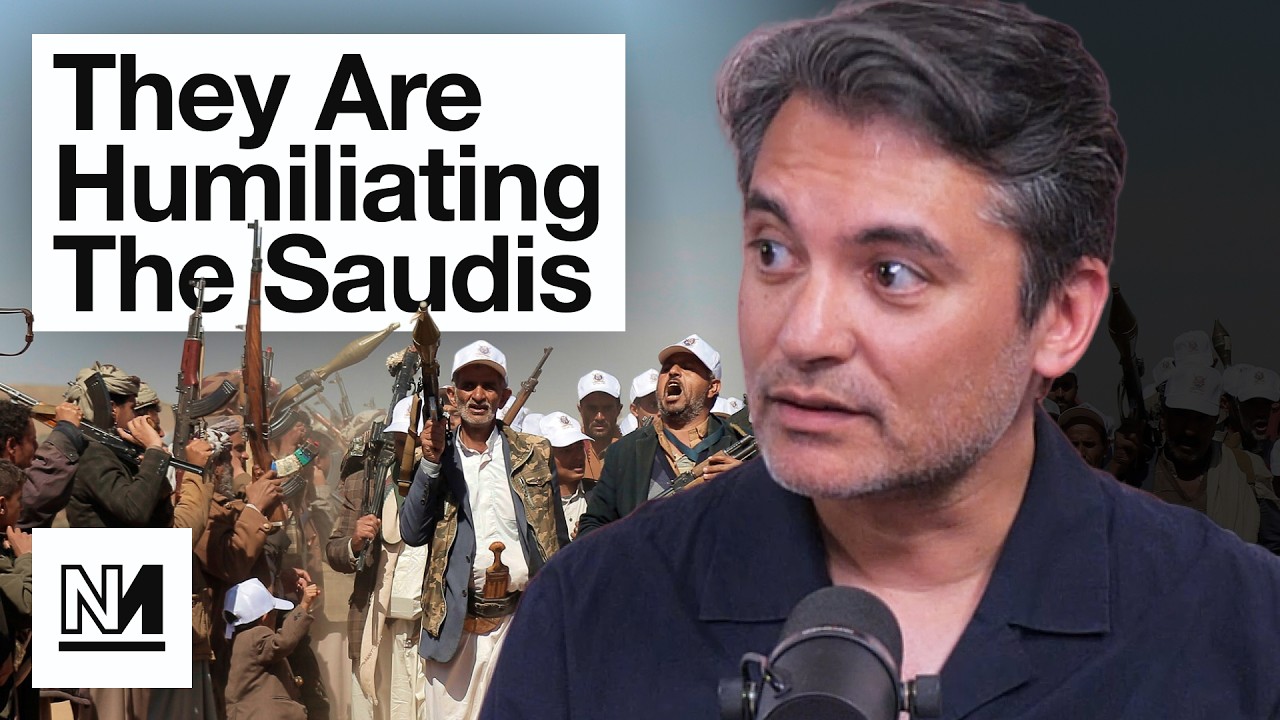
The video discusses the escalating conflict in Yemen, warning that a third major war front is becoming increasingly inevitable on the Arabian Peninsula alongside existing conflicts involving Israel and Western powers. The situation has deteriorated rapidly following Saudi Arabian air strikes on an airport in Sana'a in July, which blocked an Iranian airliner from landing in Houthi-controlled territory. In response, the Houthi rebel group launched missile and drone attacks against Saudi Arabia's airports and oil facilities, seizing significant new territory along Yemen's west coast to control the strategic Bab el-Mandeb Strait. This move has allowed the Houthis to impose a blockade on Saudi shipping, effectively cutting off their oil exports from the Red Sea while Iran simultaneously tightens its grip on the Strait of Hormuz, creating a dangerous geopolitical squeeze that threatens global energy supplies and economic stability.
The transcript highlights the deep historical roots of this crisis, noting that the war began in 2015 when a Saudi-led coalition, backed by the United States and the United Kingdom, intervened to support the internationally recognized Yemeni government against the Houthis. Over seven years, this conflict resulted in a catastrophic humanitarian disaster with hundreds of thousands of deaths, widespread displacement, and severe famine, largely due to collective punishment tactics such as starvation and indiscriminate bombing. The speaker argues that Western powers, particularly Britain and the US, have maintained their involvement through arms sales and logistical support despite the lack of accountability for war crimes, driven by a desire to uphold global order and protect strategic choke points rather than the welfare of the Yemeni population.
Current geopolitical pressures are pushing major powers toward renewed direct military engagement, as Saudi Arabia seeks assistance from allies like the UK under Prime Minister Keir Starmer to reverse Houthi gains. The speaker critiques this approach, suggesting that further intervention would only prolong a futile conflict and exacerbate the humanitarian crisis, while also damaging the political standing of Western leaders who are attempting to build bridges with progressive voters. Although the US and UK have thus far avoided overt involvement in these new hostilities, the speaker warns that the logic of alliance credibility and strategic necessity will likely compel them to join the fight, potentially leading to another devastating war where the interests of superpowers override the desperate need for peace among the Yemeni people.
The discussion concludes by examining the motivations behind Western military spending and interventionism, arguing that terms like "defense" often mask imperialistic agendas aimed at maintaining a specific global order rather than protecting national security. The speaker emphasizes that Britain's military capacity is deeply integrated into a larger American-led system involving allies like Saudi Arabia and Israel, which frequently engages in actions such as genocide and the use of starvation as a weapon of war. Ultimately, the video posits that without a fundamental shift away from these imperial interests and a genuine commitment to reparations and reconstruction, the region faces an unavoidable return to large-scale warfare that will once again leave the most vulnerable populations to suffer the consequences of decisions made in distant capitals.
Read the full video transcript
In the Arabian Peninsula, where two
major wars are being fought by Western
powers and their out of control proxy
Israel, a third front looks increasingly
likely to be opening up. Fears are
rising that war in Yemen is returning
with the rebel group Ansar Allah, also
known as the Houthis, and their enemy
Saudi Arabia, exchanging fire across the
two countries borders and also in the
vital Red Sea passage on Yemen's
southwestern tip. The recent hostilities
appear to have been triggered by Saudi
Arabian air strikes on the airport in
Yemen's capital Sana in July, preventing
an Iranian airliner from landing in the
Houthrolled city. At the time, the
western recognized Yemeni government,
which controls Yemen's airspace with the
support of Saudi Arabia, claimed
responsibility for the attack. And two
US officials told Axios that Donald
Trump gave Crown Prince Muhammad bin
Salman of Saudi Arabia his support for
that military action. The Houthi struck
back, immediately attacking Saudi
Arabia's AB airport with missiles and
drones. Since then, tensions have only
risen further. Last weekend, the Houthi
seized a swave of new territory running
south along Yemen's west coast,
essentially taking control of the Babal
Mandeb Strait, a narrow passage,
allowing transit of vessels from the Red
Sea into the Indian Ocean. Houthi
officials say that Saudi Arabia carried
out 300 strikes in the course of a week
in response to their seizure of further
territory. This was their spokesperson
Muhammad Albi speaking to Sky News last
week.
>> Government is actually seeking a a
deescalation in all internal fronts. The
target of escalation is actually the
Saudis and what we are seeking from the
Saudis is to end the blockade and to end
the the aggression against Yemenes. So
we say that that the ball is in the
Saudis playfield. So it is their
decision to stop this war. Actually
stopping the war is a is a common uh
win. It's it's a win-win situation. Uh
the the Saudis have a lot more to lose
than what Yemen has left to lose. And
Yemen has already gained big military
capacity. So, so ending this this
operation, this military action is all
in in Saudi's hand. Uh, all that we have
done is uh is put the equation of a
blockade for a blockade, an aggression
for an aggression. The Saudis are the
ones who started this war against Yemen.
They started it 12 years ago with the
with the fatal operation that started in
20 2015. But to start this uh in this
moment and I know you're referencing uh
the attack on the runway uh back uh when
a uh plane full of Houthies was coming
back uh from the Iranian Supreme
Leader's funeral and and you say that
this is in response to that. However,
your critics would say that you're
actually trying to secure uh the control
over the Red Sea as the Iranians
continue to tighten their grip on the
Strait of Hormuz. So, this opening of a
of a new front, a new theater is part of
that.
We don't need to actually overlook the
Red Sea of Babel Mandep to to impose a
blockade against Saudi ships. Thanks to
our advancing military abilities,
whether
air abilities or sea abilities, we are
able to impose a blockade whether we
control Babel Mandep or we do not.
>> This weekend, the Houthies retaliated
again. On Saturday, thick plumes of
smoke were seen rising from the location
of the airport in Saudi Arabia's
capital, Riyad, after the Saudi
government had issued red alerts to
inhabitants of the city, warning of
possible attacks. The Houthis have since
claimed responsibility for the strike,
saying that a large number of ballistic
and cruise missiles and drones had been
used to attack sensitive sites in Riyad
and Aramo State Oil and Gas Company
facilities in Gamboo along the coast. So
far, countries like the US and the UK
have stayed out of the hostilities, at
least overtly. The New York Times has
reported that US President Donald Trump
has decided to stay out of the joint
strikes on the Houthis, at least for
now. And British Prime Minister Andy
Bernham is said to be considering
bolstering Saudi Arabia's forces as they
try to push the Houthis back, but he
hasn't done anything yet. In a recent
article for Zateo, assistant professor
of international relations at the
University of Sussex, David Wearing has
explained why this is a bad idea getting
involved and that Burnham should go
further against Saudi pressure. He's
argued that Britain must end its role in
Yemen's brutal war, but also that it
should pay reparations for its role in
the last one. That was, of course, the
humanitarian disaster that dragged on
from 2014 all the way into 2022, during
which time a UK and US backed coalition
of Gulf States and other countries
relentlessly assaulted Yemen. Over that
period, some 377,000
people were killed in the country,
around 150,000 of them by direct
violence. Others died from disease and
starvation including at least 85,000
children according to save the children
and 5 million people at least were
displaced on Britain's involvement in
what the UN called the worst
humanitarian crisis in the world at that
time writes this many of the Saudi
coalition's air raids were conducted
with British-built aircraft and bombs at
the start of the war then foreign
secretary Philip Hammond declared that
the UK would support the Saudi military
in every practical way short of engaging
in combat including the resupply of
spare parts and ammunition. The British
state and its arms industry, sorry, the
British state and its arms industry
lived up to this promise. More than
6,000 government and contractor
personnel worked throughout the war to
support and maintain the Saudi Air
Force, enabling it to continue
operating, as one BAE Systems contractor
disclosed, the fighter jets in question
would have been rapidly grounded without
the maintenance provided by Britain.
Today, BAE Systems has around 7,000
employees in Saudi Arabia. Despite there
having been no meaningful accountability
for Saudi atrocities in the 2015 to 2022
conflict, the British government appro
approved arms exports worth 464.8
million to Riyad in the first quarter of
this year, most of which is likely
accounted for by the very air-to-surface
missiles used in that early conflict. In
approving the transfer of these arms,
the Kisama administration showed a
striking lack of concern for their past
and possible future use by the Saudi
regime. Indeed, the de facto impunity
compared by this continuation of arm
supplies only increases the likelihood
of further war crimes as the conflict
resumes. We wearing and his colleagues
have also worked out how the UK could go
further, not only by refusing to fan the
current hostilities, but by helping to
reconstruct Yemen. He writes this,
"According to our estimates, a windfall
tax on profits made by two leading
British arms companies, BAE Systems and
Rolls-Royce, from weapons they sold to
the Saudis for likely use in Yemen
between 2015 and 2022 could raise up
to3.9 billion pounds. The British state
could match this sum by restoring the UK
aid budget to 0.7% of gross national
income and drawing its portion of the
reparation payments from these funds. A
total reparations payment of 7.8 8
billion pounds targeted at urgent
humanitarian reconstruction and
development needs would go a long way to
building a better future for Yemen,
especially if it were matched by similar
arms export bans and reparations
payments by other culpable states, not
least of all the United States. David
Wearing, assistant professor of
international relations at the
University of Sussex, joins me now.
David, thanks very much for coming in
this evening. Um, before we get into the
present danger, the the danger that's
currently unfolding in the region, can
you start by explaining, you know, how
this all started? So, you know, a basic
primer. Who are the Houthies? Who are
what's often called the internationally
recognized government of Yemen? And what
does any of this have to do with Saudi
Arabia?
>> So, Yemen is obviously to the south of
Saudi Arabia and the Saudis have often
seen it as their kind of backyard. Same
way as the Americans see Latin America
as their backyard. What goes on in uh in
Yemen matters a great deal strategically
from Saudi.
Now, Yemen has always been a kind of a
weak state centrally. Lots of competing
poles of power.
um 2010 2011 your sort of viewers cast
their minds back uprisings across the
Arab majority world calling for peace
calling sorry for democracy end of
corruption stuff like that in Yemen some
of the biggest protests challenged the
then president Ali Abdasal
um he was effectively toppled and then
you've got this contest for power that
happens after that on the one hand you
got the Houth who are a kind of um
little bit like Hamas I say they're like
a political movement with a paramilitary
group attached. They're religious
fundamentalists. They're also
nationalists and anti-imperialists. So
kind of right-wing anti-imperialist kind
of force. Um you've got them on the one
hand and then you've got a whole kind of
constellation of anti-Huthy forces. Um
some of whom are loyal to the Saudis,
some to the United Arab Emirates. The
Houthies come down topple the interim
government in 2014. the interim post
sale government and then the anti-
Houthy forces try and prevent them from
taking hold of the country and then
you've got this war 2014 15 to 2022 when
it's the Houthies versus everyone else
and it ends with the Houthies
controlling
um what used to be North Yemen during
the cold war and the anti-houthy forces
controlling what used to be South Yemen
during the cold war. um North Yemen
being where the majority of the
population live and you got a cold peace
from then until now.
>> But what [clears throat] I I guess I
still don't understand the interest of
Saudi Arabia and then this coalition
that was backed by the US and the UK.
Like what was the what was the purpose
of their involvement? Why why were why
were they picking one side over over the
other?
>> Well, the Americans and the British one
side over the other.
>> Um I mean I guess there's a number of
reasons. One might be just a kind of de
facto. You support your ally, you know,
in this when when your ally
um is involved in a conflict in the
region. You want to be seen to be
supporting your ally. You want to be um
sending them the message that you got
their back. You want to be sending their
enemies the message that you've got
their back. The whole credibility thing
that superpowers care about. But there's
the bigger kind of geostrategic region
reason sorry as well which is that Yemen
sits next to one of these really
important choke points. Over the last
sort of six seven months we've all had
this big like demonstration of the
importance of um certain choke points in
in global sort of um global sea routes
uh with regards to the Gulf and and the
um straightforward moves where so much
of the world's oil flows. you choke off
that sort of um choke off that straight
and you could do enormous damage to the
world economy. Now, if you think about
the strategic leverage that Iran's got
by being able to close a straight form,
what would it be like if an Iranian ally
an anti-British, anti-western,
anti-Saudi group, the Houthis were able
to control or threaten to control the
kind of twin of the straight of Hormuz,
which is the Babel Mandeb straight at
the bottom of the Red Sea.
>> [snorts]
>> What the hoofers have done in the last
few weeks is realize the fears of the
Saudis but also the west as well. The
pro Iranian group um or just an
anti-western group taking control of
that stray and using that strategic
leverage against the west and against
its allies that it was so so back in
sort of 2015 to 2022 they were thinking
about a scenario like this and trying to
prevent it I guess.
>> Right. I see. And so and that and that's
why they were prepared to be engaged in
a in a war for seven years against one
of the poorest
>> well the poorest state in the Gulf right
just to maintain that strategic
advantage over that straight
>> I mean okay so as you point out there
like none none of this is is happening
in a vacuum right so you mentioned
>> straight of hammurs and the global oil
supply we as you said we saw the Houthis
um uh really disrupt international cargo
travel in in you know late 2023 early
2024 for um how does this new front here
just you know taking the west coast of
um of of of of Yemen how does that
impact that and and the risk of the US
and the UK getting involved once again?
>> Um yeah, I mean it's difficult to see
how this doesn't turn back into at least
something like the 2015 2022 conflict
which as you indicated was absolutely
devastating. It was the scene of the
world's worst humanitarian crisis and
the Saudis in that conflict were really
like using collective punishment against
a population in Houthi controlled areas.
The the rationale seems to me looking at
the patterns of violence. It seems to me
to be
if we pulverize the civilian
infrastructure, if we make the
population suffer, they will turn
against the Houthies. That seems to me
to be the calculation, classic
collective punishment strategy, not
dissimilar to what the Israelis were
doing in Gaza, right? um
that that was devastating. It didn't
work, but that was that was the that was
the way it planned. It didn't work like
in terms of, you know, military
objectives of defeating the Hoofies, but
it was devastating. It's difficult to be
to see how we don't go back to something
like that because what the Houthies have
done is make the Saudis look ridiculous.
>> The Saudis effectively started this
latest round of fighting. They launched
an air strike against the major airport
in Huihill territory because an Iranian
flight was landing there. They didn't
want the Iranians to land. The Houthies
have used this as an opportunity because
they saw that the pro-Saudi anti-houthy
forces in Yemen were weak. They used
this strike by the Saudis as a pretext
and have grabbed this huge swave of
territory on the western coast of um of
Yemen. They've gone right down to the
Babel Mandeb. They've taken the
strategic islands in the straight
um and now they look like they could be
heading westwards as well and seizing
even more territory. And they're hitting
Riad. the heck of the Saudi capital. Um,
and when you feed that into look at that
in the context of the wider war with
Iran
and how, you know, the Iranians are
squeezing the global economy and
squeezing the sort of pro- US alliance
and in the region by shutting down the
straightforward moves and now the
Houthies are squeezing on the other
side, the Saudis Saudis were trying to
get their oil exports out of the Red Sea
because they couldn't get them out the
Gulf. Now that's shut off as well. From
the Saudi point of view, it's
go back to what I said about
credibility. You can't have your
opponents
like achieve these wins over you and
just let it slide.
>> So, you almost have to I'm not trying to
justify it, but I'm I'm trying to
describe the mentality realist about it.
>> Well, that's the mentality, you know,
you have to strike back.
>> Um, and the Saudis know, by the same
token, the Saudis know, we we fought a
seven-year war and we couldn't dislodge
them. So now they're going to Trump,
they're going to Burnham and saying,
"Look, can you join with us and help us
drive them back?" And obviously
the Americans and the British know the
same thing as the Saudis did, which is,
you know, we've been bombing these guys
for a decade.
>> The previous central government was
fighting them for the previous decade.
No one's been able to beat them. So it's
a you find yourself in this kind of
checkmate scenario strategically
speaking like these guys are hard to
beat but at the same time what they're
doing can't be allowed to pass
especially with regard to the impact of
all this on the world economy. So it's
difficult to see how it would play out
other than more protracted futile
conflict and the people of Yemen being
the ones who suffer. I wanted to ask
about the the the Houthies interests
because they must have interests
themselves, national interest as you
said they're right-wing nationalist um
you know
you know political movement in some
sense.
>> Um
>> like in the west they're always
described as Iranbacked militias,
Iranbacked rebels or in sometimes just
Iran proxies like they're just doing it
for Iran. Um, is there no sense in which
their interests can be appealed to in
order to negotiate something
independently of of this kind of network
of events that's happening in the in the
in the region at the moment?
>> Yeah, definitely. I mean, they're an
independent actor.
>> Yeah.
>> Um, in the same way as, you know, like
Hamas and Hezbollah get described as
uranium proxies, but they're all
independent actors within a wider
alliance. I mean, you might as well call
Britain a US proxy. Like Britain has got
a relationship with the Americans which
is very unequal, but the Britain aren't
literally US puppet. Um
yeah, like the the hoops have their own
interest. They're a real group in their
own right, you know, with their own
ideology. They make their own choices,
sometimes choices which the Iranians
don't like. Um, and I think what they're
looking for here is kind of recognition
from the international community for
their kind of proto state that they're
developing. Um, they want Saudi
restrictions on their sort of um,
[snorts]
you know, there's been a longterm Saudi
blockade, air and sea blockade on that
part of of Yemen. They want that
completely lifted. Not just alleviated,
but lifted. um they want lots of things
that people don't want to give them, but
they do want certain things. They do
have certain material interests. Um it's
hard to see how there isn't an a [gasps]
a diplomatic solution to all of this at
some point. But unfortunately, you get
all these, you know, interests of
credibility, strategic interest,
imperial interests,
>> precedent.
>> Yeah. Which which overrides the sort of
interest that, you know, you and I might
just want to see peace. People in Yemen
know that want to see peace, but the big
powers have their own interests and
that's trampling over the interest of
the Yemeni people unfortunately.
>> Yeah. But the UK and the US haven't yet
got involved. What do you think's
holding them back at at this point? I
mean, I know you said as a check made,
they sort of know from history that
it's, you know, probably not going to
work, but that doesn't that doesn't stop
them before. Um
>> um is it threat greater threat to oil
for example, blowing up of Saudi
pipeline?
I think it's the sense of futility
>> like I mean you have to remember like
not only have the Saudis fought this
failed war against the Hoofies but the
British and the Americans have
intervened directly against the Houthies
as well. So when the Houthies intervene
in the kind of regional war around the
Gaza genocide, they try and join in or
do join in and um try and restrict
Israeli shipping to put the squeeze on
Israel to raise the cost of is Israel's
actions to Israel. Then the British and
the Americans come in and try and defeat
the Hoofies, stop the Hoofies from doing
that, which is effectively intervening
on the side of Israel. And you might
remember the parliamentary debates where
Rashi Sunna was then prime minister
making out that it was not just
incorrect but almost offensive to
suggest that any of this had anything to
do with Gaza. Certainly did. They just
didn't want it to be seen that way. But
anyway, I mean point being British
Americans intervened. Then the Americans
had another stab at it for about 6 weeks
last spring. None of this worked. Um,
and you think about how much it's cost
the Americans to fight this stupid war
against Iran. How much, you know, the
loss of munitions, the damage to bases,
all of it to achieve literally like less
than nothing.
Can they afford to open another front?
Probably not, you know. And one thing,
>> not with the midterms coming up.
>> Exactly. Exactly. Like oil's already at
$100 a barrel. this goes, you know,
even hotter than it already is,
six weeks time, Americans are paying $7
at the the gas pump and um and the GOP
were obliterated. So they're thinking
about stuff like that and and just
thinking about Burnham. Burnham will be
deeply concerned that if Britain is
involved in a Saudi war against the
Houthies, it's anything like the 2014
1522 war and he's implicated in that. Um
that undoes a lot of the work that he's
been trying to do to reach out to the
left. I mean it seems to me that Burnham
understands that Labour's big problem is
that it lost voters to its left and it
has to win them back. And if you look at
the moves Bernham's made since he came
in, a lot of it's about building bridges
with progressive voters.
>> Um, if he finds himself embroiled in
this, it undoes all of that. All the
stuff with regard to the sanctions on
settlement activities that they made
such a song and dance about a couple of
weeks ago, it undo all of that. So,
there's lots of reasons for them to
hesitate before getting involved. But it
sounded like from what you were saying
before, a kind of sort of natural law of
like um alliance and bravado is going to
eventually pull them pull them into
this, right? Because it can't be allowed
to stand that the Houthies make headway
here. Like there's a well I was going to
just say put this in the context of like
military spending that's coming out. a
big debate about um you know defense
budget whether it should should increase
um you know what does the case in in
Yemen of the past tell us um you know
about those very current arguments about
about increasing our defense spending
and remilitarization I it's always
called defense but it doesn't
necessarily feel like defenses in in the
homeland right it's sort of out there
>> yeah no people are calling for an
increase in military spending I think
that's really important to insist on
that this term defense Ministry of
Defense, defense spending. The I mean
this is literally Orwellian language. If
you look back at the wars Britain's
fought over over a long long period,
it's fought some wars of defense, some
legitimate wars, but many many many wars
which have been about upholding a
certain global order, you know, in the
interest of of Britain and in the
interests of in British state power, in
the interests of US agemony, which
Britain committed back in the 40s to
support as the replacement for the
British Empire.
wars that have been fought, you know,
for for those reasons. Wars, you know,
Iraq and stuff like that. This is what
this increase in spending is is about.
It's not just about there's a reality of
Russian aggression in Eastern Europe. I
personally think it's it's right that
people should support the Ukrainians in
in self-defense against Russia. Um, I
think it's right that Britain should
have alliances, and I think, you know,
Britain, like any country, is always
going to have some self-defense needs.
But, you know, hawkish people, people
who are pro increases in defense
spending will always lecture people like
us about the hard realities of the
world. Well, one of the hard realities
of the world is Britain doesn't just
take defensive action and Britain's
military is not just defensive. And the
reality of British militarism
is not only not just defensive and it's
not just like imperialistic, it's also
specifically
not just a British military capacity.
like Britain's military is a part of a
much bigger military system run by the
Americans with different nodes in
different parts of the world. So NATO in
Western Europe, but also the Israelis
and Saudis in the UAE. Um, tied together
with with arm sales and the
interoperability that comes with that
with like the relationships that Britain
has with countries like Saudi where you
not don't just sell them the the planes,
you provide them on an ongoing basis
with the training, the munitions, the
spare parts and all of that. The whole
thing links together and Britain jacks
up military spending to 3.5% of GDP. It
is feeding that larger beast. And that
larger beast doesn't just do nice things
like support Ukraine when it gets
attacked. Most of the time that beast
does pretty horrible things like
committing a genocide in Gaza,
committing actions which are not
dissimilar to what Israel did. You know
what the Saudis did in Yemen is not
dissimilar. use of starvation as a war
tactic, that sort of thing. [snorts] So
when we think about this question of
Britain's legitimate defense needs,
which it has, um, and the threat from
Russia, which is real, we have to also
think about all these larger issues that
are part of British militarism and try
and unpack that rather than just, as
Hawks wants to do, pretend that that
other stuff doesn't exist and Britain is
this kind of,
>> you know, pure and noble force for good
in the world, which it clearly isn't.
It's being stunned. David, thanks very
much for joining us this evening.
>> No problem.