Video summary
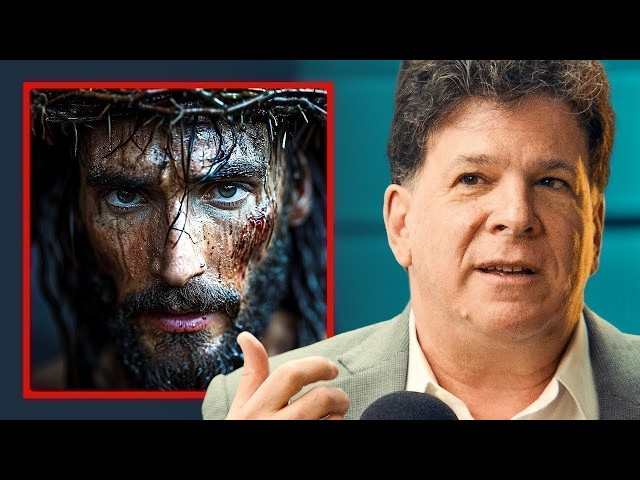
Eric Weinstein opens his discussion with a reflection on the profound confusion of modern life, where individuals struggle to discern reality and trust information or people around them. He posits that religion historically served as an essential tool for making sense of this chaotic world, though he questions whether one can maintain a purely "cultural" affiliation without engaging in actual belief practices like prayer or meditation. The conversation shifts to the mechanics of faith itself, challenging the notion that atheism is a static state; instead, Weinstein suggests that most people flit between belief and non-belief depending on their emotional context, much like how one might oscillate between enjoying Ray Charles's fusion of secular rock and sacred gospel music or listening to Robert Johnson's blues about bargaining with the devil at the crossroads. The dialogue explores the immense power of religious language, song, and mythology in shaping human experience, citing specific examples such as Dan Brown's *Angels & Demons* where faith is described not just as a belief but as a gift that must be sustained across all quadrants of the mind. Weinstein recounts an anecdote from his travels through Siberia with miners who initially reacted negatively to blues music but were moved by Jewish songs, leading one woman to reveal her own Star of David and demonstrate how deeply religious identity permeates even secular environments in Russia. This illustrates a fear that many feel regarding prayer—specifically the feeling that it is disingenuous if not accompanied by genuine belief—but Weinstein argues that this hesitation prevents people from accessing the communal power found in churches, synagogues, and mosques. A significant portion of the conversation addresses the role of language and ritual in religious services, particularly contrasting modern vernacular with Latin liturgy. While acknowledging a trend among younger demographics toward Latin Masses to enhance spiritual immersion by removing critical analysis, Weinstein notes that understanding the original words can deepen one's connection without destroying meaning; he points out how Jewish prayers recite Genesis directly ("evening and morning") or reference biblical texts like Daniel 5:25 regarding "writing on the wall," showing that scriptural references are woven into daily life. He warns against losing these powerful cultural touchstones, such as Ecclesiastes' reflections on seasons or Isaiah's imagery of approaching riders, which provide a framework for understanding history and personal destiny. Ultimately, Weinstein concludes that religion is inherently interested in every individual regardless of their stated beliefs, finding ways to enter all aspects of life even if one attempts to remain an "honest atheist." He expresses sadness at the potential loss of folklore and mythology when people divorce themselves from these traditions due to a fear of losing their atheistic identity. The discussion ends with a wistful longing for a belief system that offers structure against psychopathy, emphasizing that we need communal spaces where individuals can submit to something bigger than themselves through song, word, and harmony, rather than retreating into isolation or skepticism that ignores the deep psychological roots these traditions provide.
Read the full video transcript
the world is confusing it's hard to make
sense we don't know what's real we don't
know what isn't we don't know if we can
trust the information that we're getting
that's in front of our eyes we don't
know if we can trust the people that are
around us do they have our best
interests at heart how do we make sense
of the
world religion provided a pretty good
tool for that and I I I I'm not sure
whether it's possible to be a cultural
Christian or a cultural Muslim or a
cultural
Jew I I wonder how important the belief
bit is to the religion
bit do you do you pray and meditate
which is as close as you're going to
get what do you mean you want to try
prayer sure well I mean what what
prayers move you I don't know enough I
mean I took my mom to riing Cathedral on
Christmas Eve and we went through a full
service of 90 minutes with
13 14 15 hymns and a bunch of prayers in
between lot of Christmas trees and
decoration and stuff but I think that
would have been the first time that I
would have heard something like that
since Primary School since I was 11 or
10
yeah is there religious music that moves
you
see you have the major scale as the
centerpiece of western music do you need
a
guitar we're
okay um wait do you have a guitar we
have a guitar can we get the guitar come
on we need
a need to be able to hear
this principal reason for bringing out a
guitar would be to stop me from singing
which I think is an excellent idea okay
well hey no but look I can't sing and I
can't play the guitar I enjoy doing it
so the the internet can there you go
well look this is a full-size one last
time we gave you one that made you look
like you were a
giant okay so if you just take the the
the major scale
right that's not really
music but try just the descending major
scale
[Music]
what is that to you it sounds like Mary
had a little lamb or something
similar now what is it where do I know
that tune from what is that Joy to the
World the Lord has come right now if you
take a different scale right um and you
go uh the blues
[Music]
scale
right it's a little bit meanor so you
can ask the same question if I do the
descending
scale you know what is
that it's like the intro from messing
with the
[Music]
kid or it's close to Sunshine of Your
Love right so is a descending scale
music not much but when it's made music
by pausing or by
emphasis one of the great tunes of uh
Western Civilization has created Joy to
the World you know my my feeling about
it is that song should move
you
and all of these religious songs
[Music]
um they mean something you know I I I
was in a a
car train going from Bulgaria to
Kiev and there were all of these
Siberian miners I brought my
harmonica and they were they had a
transistor radio and at some point the
radio gives out and they want to drink
and dance because this is their holiday
and they started getting really Rowdy
and I realized I had the ability to make
music so I pulled a harmonica out I
started playing some blues and
everybody's dancing and having a great
time and they're like morea whatever and
I'm paralyzed I don't have that much of
a repertoire on the harmonica
and the one thing I could do was I start
um playing Jewish
songs and this woman comes up to me and
grabs me by my lapel and says you know
in Russia where do you know this from
where do you like I'm realizing that I'm
in an anti-semitic environment I think
and I've got a Siberian minor who
recognizes that I'm playing Jewish
music and I'm terrified I'm paralyzed I
don't say anything I pretend that I
can't understand her in
Russian and she reaches into her bosom
and she pulls out a giant Star of
David right and like she's just looking
me in the eyes like I know you you know
me there's a way in which religious
music is incredibly powerful and prayer
is incredibly powerful
and I think we're afraid to
pray you know you say this in terms of
meditation
we're afraid to submit to something
bigger than ourselves to use the the
programming that we have that
um that makes us feel there's something
that feels disingenuous
about praying if you don't believe
there's a line from Dan Brown's Angels
and Demons the movie Tom Hanks is
speaking to the calango and he's trying
to get access to the Vatican archives he
wants to get down there to work out some
secret that was left that he needs to
find out who who's killing who's killing
everybody ningo asks him played by Y and
McGregor he says do you believe
professor and he starts giving
some politicians answer where he skirts
around the question he says I didn't ask
that I asked if you
believed he looks him straight in the
eyes and he says faith is a gift that I
am yet to be
given
I don't believe it we all have the gift
of faith what we don't have is the
ability to sustain it we don't have the
ability to import it into all qu
quadrants of our
minds look I'm saying that I'm an
atheist I don't I don't believe in the
stories about the
deity but that's not
constant you you flit in and out you
know Mike
do you believe in Ray Charles I do do
you no no I'm sort of joking but if I
think about what did I say by Ray
Charles why was that song so
powerful he's basically bringing
Saturday night and Sunday morning
together right there's a there's a
religious sort of gospel Coral aspect to
it and he's got the rett's in the
background echoing him he goes uh and
they go uh he goes oh oh uh uh oh oh
that's that's
pretty that's satanic grunting going on
on Saturday night right and then you're
going to show up in church and you're
going to turn it
into uh something else Ray Charles was
scandalous because he fused the secular
and the sacred the profane in the sacred
do you believe in the
devil one of the you
know
you know the song Crossroads by Robert
Johnson nope
well I I can't let's see if you do
right I don't know that I could do a
Robert Johnson for It Be Country blue
but like if this were an electric guitar
you probably know
[Music]
um
[Music]
went down to the crossroads tried to
flag myself
around went down the crossroads tried to
flag myself
[Music]
around and all good people they just
passed me
by
he's talking about going to the
crossroads to bargain for his
soul he wants to learn how to play the
guitar
and that's powerful because you have
this
myth you know the devil Goes Down to
Georgia
or you go to the crossroads to gain
something in a FY and bargain um how are
you going to believe that with no
Lord you're going to screw yourself out
of the ability to listen to
Folklore to mythology to Great
literature and that that that makes me
sad you know it's it's like are you
making a point of saying that you can't
understand the religious
person we need churches and and and and
uh Manders and and mids and
synagogues and we need them to behave
non-
psychopathically and you can't hate on
the
psychopathy
um and divorce yourself from the power
you know the power of the word and of
song and of communal prayer and Harmony
it's something it's something I'm
wistful
for wistful for a belief that I never
had in a way yeah
uh yeah there's
uh I think there's a particular Latin
church Chase can you grab this uh big
gele for me
please
um one of the quickest growing
denominations I think of church
attendance in America is this thing
that's all in Latin mhm have you heard
about this no I can't remember what it
is and it's growing massively in the in
a young age demographic under 30 or
something the whole thing's in Latin and
which can be awesome right well I think
I'm wondering Vatican 2 may have been a
kind of a big
mistake how
so because when you're forced to
actually contend with what the words are
in a modern
context they don't have the power that
they sometimes have as a spell well it's
difficult to switch off a very
particular type of critical Vigilant
analytical mind when what you're looking
to try and do is allow the experience to
wash over you so
perhaps uh yeah not being unless you're
a fluent in Latin being able to just
enjoy the experience and just be maybe
that
is most of what you're trying to maybe
that's most of what religious service
was doing maybe it wasn't really
anything to do with the words very often
it isn't I
mean it depends you know so we're
actually meeting on Shabbat this is the
I shouldn't have traveled here we
shouldn't be using electronic devices
but I'm not a practicing Jew at that
level but I think
about what we say over the wine when we
pray you know we have this thing where
we begin
um
like this is the
sound of of Jewish prayer
right and then you're thinking about
what it says and it's very moving to me
because what it is is it's a it's it's
taken directly out of
Genesis and it was uh evening and it was
morning the sixth
day right and Yom is day and shishi is
six and arav is evening and wer is
morning so you know what the words
mean
and you're actually recapitulating God's
shifting from work to
rest so as you come to understand what
the words
mean um it it's not destroyed by
knowledge uh you know you know that old
song by The Rivers of
Babylon that's related to the grace that
we say after
meals um these are references that
matter uh and I think people are are
shocked
um they don't know how much of their
life comes from
scripture you know you have a round of
firings that accompany
somebody says I can read the writing on
the wall well do you know that that's
Daniel
5:25 do you know what the wall
says I think many many take you know
you've been measured and found wanting
your lands will be distributed to the
Persians or something like
that you know these These are incredibly
powerful references that we live
with you know you think about the birds
to everything turn turn turn pet Seer
sound there is a season and a time and a
purpose under Heaven it's
Ecclesiastes you think about Jimmy
Hendrick going off about two riters were
approaching and the wind began to howl
that's
Isaiah where are you where are you with
the power of the
word are you afraid to welcome in are
you worried that you'll lose your
[Music]
atheism what what are those two writers
approaching they come with news that's
the fall of
Babylon who are The Joker and the thief
in that
song I believe they're on either side of
Christ
being
crucified religion is interested in you
whether or not you give a
it knows about you and it finds its
way into every aspect of your
life and if you're going to be an honest
atheist you have to admit that in other
news this episode is brought to you by
element stop having coffee first thing
in the morning your a Denine system that
caffeine acts on isn't even active for
the first 90 minutes of the day but your
adrenal system is and salt acts on your
adrenal system this is the best way to
start the day and I've done it for over
3 years now it's got a science backed
electrolyte ratio of sodium potassium
and magnesium which helps to curb
Cravings improve brain function and
regulate your appetite best of all there
is a no BS no questions asked refund
policy so if you're not sure you can try
it completely risk-free and if you do
not like it for any reason they'll give
you your money back and you don't even
need to return the box that's how
confident they are that you love it
right now now you can get a free sample
pack of all eight flavors with your
first box plus that no questions asked
refund policy by going to the link in
the description below or heading to
drink LM nt.com slod wisdom that's drink
LM nt.com
modern wisdom thank you very much for
tuning in if you enjoyed that clip with
Eric you will love the full length
podcast which you can watch right
here go on tap it