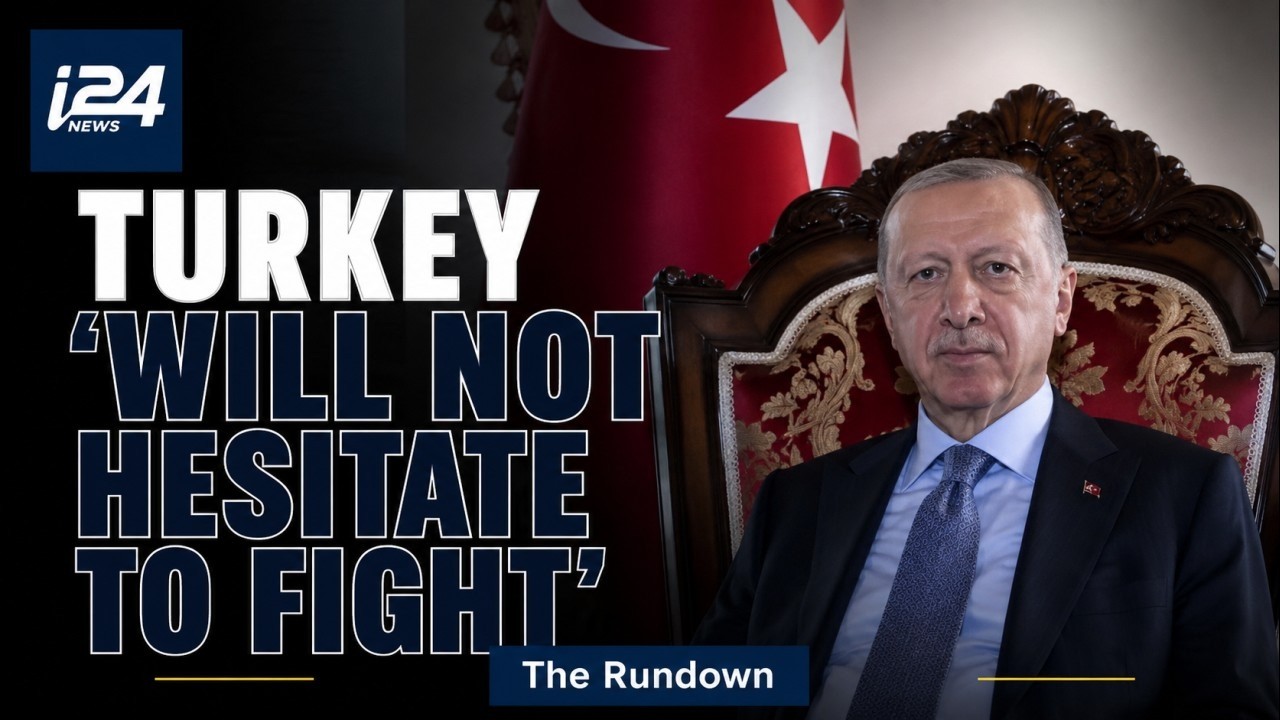
Erdogan says Turkey 'will not hesitate to fight' but advocates for peace with Israel
Watch on YouTubeVideo summary
Turkish President Recep Tayyip Erdoğan recently made a strong statement to Al Jazeera, asserting that while Turkey advocates for peace with Israel, it will not hesitate to fight if attacked. In his remarks, Erdoğan emphasized that the current dialogue is focused on peace rather than war, yet he explicitly warned that any aggression against Turkey would trigger a military response. This dual message reflects a complex geopolitical stance where Ankara seeks stability but remains prepared to defend its national interests and pride, especially given the historical context of bilateral relations between the two nations since 1949, during which no formal hostilities have occurred.
The discussion also highlighted a significant shift in regional alliances with the introduction of a new defense pact involving Turkey, Saudi Arabia, and Pakistan, known as the Mecca agreement. Under this framework, the three countries pledged to defend one another against any form of attack, signaling a broader realignment in the Middle East that President Trump praised as a step toward meaningful self-defense for the region. However, experts note skepticism regarding the immediate security benefits of this pact, particularly after recent Houthi attacks on Saudi Arabia where Turkey and Pakistan did not intervene militarily. Despite these initial limitations, there are reports of Turkish military transport planes delivering ammunition and personnel to Saudi Arabia, suggesting a deepening operational cooperation that could evolve into the establishment of new military bases in strategic locations like Tabuk.
Critics argue that Erdoğan's rhetoric about potential war with Israel is poisoning the social discourse between the two countries and creating a dangerous collision course that benefits no one but Iran. Analysts point out that while Turkey's stance is understandable given national pride and domestic political pressures, openly discussing the possibility of war undermines decades of diplomatic stability and could lead to a deterioration in relations that neither side can afford. From Israel's perspective, this rhetoric contributes to a sense of being encircled by a growing coalition of Sunni Muslim nations in Syria and beyond, raising serious concerns about national security as regional tensions continue to escalate under the influence of realpolitik.
Ultimately, the situation presents a delicate balance between diplomatic overtures and military preparedness, with Turkey attempting to position itself as a key player in a reorganized Middle East while managing its complex relationship with Israel. The expansion of this new defense initiative, potentially including Egypt, suggests a trend toward forming a bloc that could further isolate Israel if it continues to pursue policies perceived as hostile by its neighbors. As the region navigates these shifting dynamics, the world watches closely to see whether diplomatic efforts can prevent conflict or if the rhetoric will eventually give way to the very confrontation Erdoğan warned against, making the coming months critical for maintaining peace in an increasingly volatile environment.
Read the full video transcript
Turkish president Raship tape Erdogan
spared no words against Israel in his
latest interview with El Jeazer. When
asked about a possible war with the
Jewish state, Erdogan said, "We're not
talking about war. We're talking about
peace. But if someone is going to attack
Turkey for war and not peace, Turkey
will not hesitate to fight." Neither
Israel or Turkey has shown any signs
that they want to fight a war. But if
that changes, Turkey also has some new
backup. the Mecca agreement with Saudi
Arabia and Pakistan. And touched on this
new defense pact and said whichever
country is targeted, if an attack occurs
against any of these three countries,
the three countries will be able to
defend one another against any kind of
attack. President Trump also had some
fresh praise for the Mecca agreement.
Writing on Truth Social, it shows how
the Middle East is coming together and
how countries will finally be able to
defend themselves in a more meaningful
way. To discuss more, I'm joined in
studio now by Dr. Hi Ethan Kohhen Roch,
a Turkey expert at the Moshe Dian Center
at Tel Aviv University. Hi, thanks for
being with me for news studio.
>> Listen, when it comes to these recent
statements from Erdogan to Al Jazzer,
are there any signs that Turkey does
want a possible war with Israel or is
this just Erdogan's own message to his
own base?
>> Okay, when I'm analyzing this latest
statement, I see two different layers.
The first layer is he made a very uh you
know responsible statement that Turkey
is looking towards the peace and Turkey
does not want to speak the language of
war. I think for Erdogan this is super
responsible. Okay. So this is this must
be praised. However the second layer uh
of his statement of course is definitely
understandable for a Turkish president
given uh the Turkish national pride. You
know, we of course uh you also mentioned
that this is very much um related uh
with his base and this was the LJZA
channel. H this is completely
understandable but but my point is here
that he did not rule out you know of
such a such a war. You could say, you
know, since 1949,
Israel and Turkey, they do enjoy a
bilateral recognition. Both countries
never uh declared any hostilities
against each other. I mean, he could
also add these important sentences, but
he chose not to do it. My concern here
is uh this message of talking about a
possible war between Israel and Turkey,
you know, is sickening me.
>> This is unfortunately poisoning uh the
uh the social discourse of two
countries. People during the 1990s could
never imagine such a scenario would ever
take place. But today with these kind of
questions and with these kind of uh you
know talks in the TVs and the statements
uh unfortunately uh the deterioration of
the Turkish uh Israeli relationship is
going to a a place which in my opinion
two sides would never profit from that.
I mean it's a collision course that the
real politic is dictating both to
Jerusalem and both to Ankara to refrain
from taking such an action. and it would
only you know make the Iranians happy.
>> But let's say something does happen.
What would this new defense pact
actually change? We saw Saudi Arabia
[clears throat] was attacked by the
Houthis hours after it was signed.
Neither Pakistan or Turkey did anything.
So what would this relationship actually
entail?
>> Well, first of all, let me highlight
that Turkey is a NATO member since 1952.
So I'm very skeptical whether this Mecca
agreement would contribute to
Turkeykey's uh you know immediate
security. I think it would create a huge
burden for Turkey. As you mentioned the
Houthis tested the uh ability of this
agreement whether it has some sanction
power or not. But uh after um days after
the Houthi attack against Saudi Arabia,
we began to see uh the latest uh Turkish
transport uh h airplanes. They began to
carry uh some uh military, you know,
ammunition and I assume also their
experts and military personnel uh to
Saudi Arabia. There are some unconfirmed
reports that Turkey will integrate new
military bases not only in the vicinity
of the Yemenite uh region but also they
would do that also in north west of
Saudi Arabia in the city of Tabuk which
is very close to Jordanian border. So
long story short, when I'm looking at
Turkish uh diplomacy uh since uh March
uh 2025, I do see that they have such a
strategy of encircling Israel with this
Muslim Sunniim nations in Syria. They
formed an organization called Neighbors
of Syria
>> and um also of course we should speak
about this Mecca agreement that there is
also high probability that Egypt may
also take part in this initiative
continue to expand.
>> Yes. And when we are looking at this
huge Middle Eastern picture at large
>> we will see that from Israeli
perspective Israel would be encircled.
So that's a that's a very important
challenge for the Israeli national
security.
>> There certainly things that we have to
continue to look at when it comes to
this
>> growing tension between these two
countries. Dr. Hayan Kohan Yunoch, thank
you for being with us in the I24 News.
Thank you for having me with the
updates. Thank you.