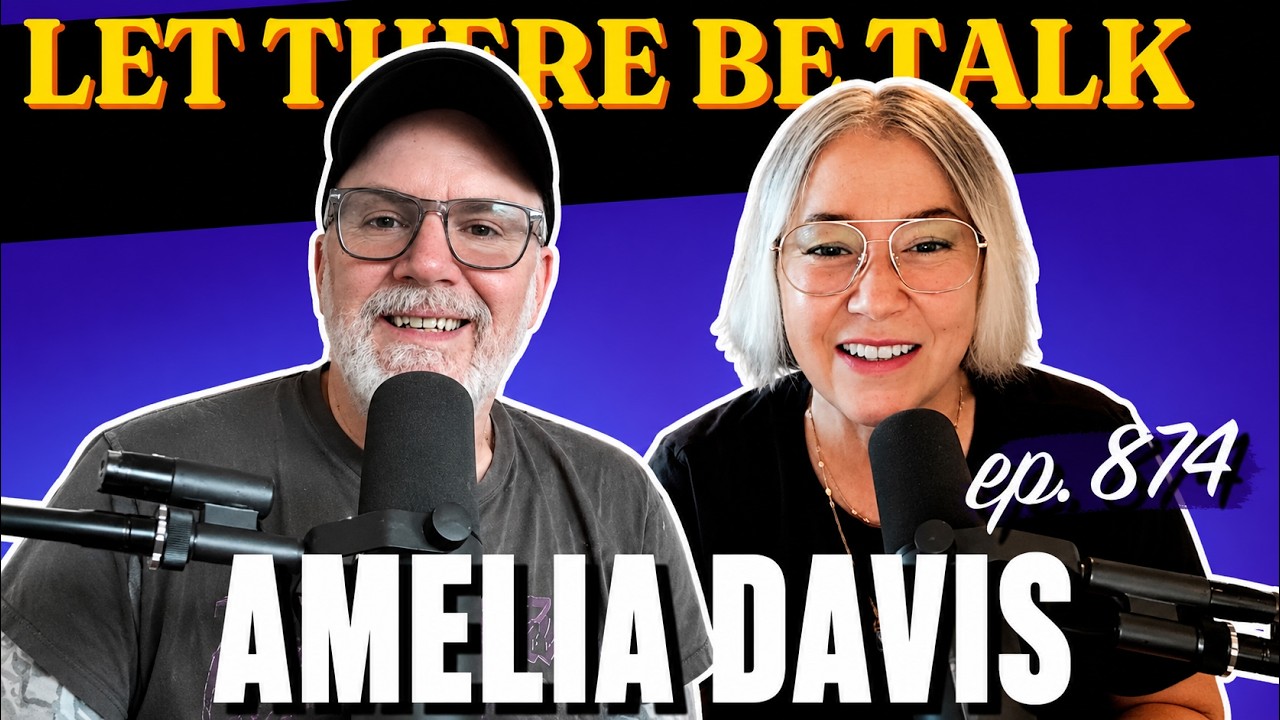
Ep 874 : Amelia Davis / Jim Marshall's Photos of the final Beatles concert
Watch on YouTubeVideo summary
Amelia Davis, the owner of the Jim Marshall Archives, returns to discuss a new book featuring previously unseen photographs from the final Beatles concert at Candlestick Park in 1966. The collection offers an intimate glimpse into the band's exhaustion and boredom backstage, capturing moments where they were drinking tea, smoking heavily, and doodling on tablecloths rather than partying as typical rock stars might. Unlike many other photographers, Jim Marshall was granted unique access to the locker room area because it served as their only green room at the stadium, allowing him to document the raw reality of the musicians before they took the stage. The photos reveal a tired group that had just endured a disastrous performance plagued by poor sound systems, fog, and wind, which prevented them from hearing themselves sing.
The narrative extends beyond the final show to explore the broader history of Jim Marshall's career and the iconic venues he documented, including the Cow Palace and the Day on the Green festivals. The transcript highlights how Bill Graham revolutionized stadium-style festivals in the 1960s and early 1970s, creating massive outdoor events that were often overlooked by younger generations today. The book aims to preserve this lost history, showcasing lesser-known acts like Edgar Winter and Dolly Parton alongside legends like Peter Frampton and the Rolling Stones. A significant portion of the discussion is dedicated to the unique challenges of Candlestick Park, a venue known for its freezing temperatures, structural decay, and eventual implosion, which Amelia recounts with vivid detail regarding the toxic environmental legacy left behind by the Navy projects nearby.
In addition to the concert photography, the book includes proof sheets that provide insight into Jim Marshall's artistic process, showing how he selected his best shots from rolls of film. The project also features contributions from Julian Lennon, who expressed gratitude for seeing photos of his father that had never been published before. Amelia and her team are currently working on a documentary exhibition at San Francisco International Airport titled "Two Sides to a Coin," which juxtaposes the Beatles' performances with anti-war protests occurring simultaneously during that era. Furthermore, they plan to release a new coffee table book dedicated to the Monterey Pop Festival in 2024, celebrating another pivotal moment in San Francisco's music history and honoring the influence of Jim Marshall on future generations of photographers.
Read the full video transcript
Amelia Davis, my friend and uh owner of
the Jim Marshall Archives has returned.
How are you?
>> I'm good. Thank you, Dean. It's so much
fun to talk with you and see you.
>> Oh, man. I'm going to be uh up your way
in a couple weeks if you want to go. The
the Saratoga Mountain Winery
>> in Saratoga. Send me the email.
>> I will. I will.
>> Yeah. What do we got behind it? Have you
rotated the photos behind it at all?
>> No, they've stayed the same. [laughter]
>> Before Before we get into it, I I've got
a pitch for you and I thought about it
this morning walking.
I would love to do like a collab with
you and just do a Dan the Green photo
book.
>> I think it needs to be done. First of
all, the Peter Frampton uh photo at Dand
Green is one of the most iconic Jim
Marshall photos and
>> absolutely
>> and and I am obsessed with Dan Green and
so many people in the Bay Area are also,
but I think the world needs to
understand, you know, you had Woodstock
and you had, you know, these festivals,
a couple of them like that Almond
Brothers, uh Grateful Dead one that
happened a couple years later. But then
Bill really kind of pioneers this
stadium style festivals,
>> right? You know, it's true. And a lot of
people um younger generation know
nothing about it. It's kind of been lost
in history, I think. Um and a lot of
amazing acts and and Bill, you know, he
was such a visionary, too. um and
brought a lot to the the music scene
here in San Francisco and Oakland, you
know, the Bay Area. Um which was just
amazing. Yeah.
>> Well, also I interviewed Dennis Lens
that did all the scrims for this the
concerts and uh yesterday I had Corey
Glo Glover on from Living Color and we
were talking about you know the Stones
and Living Color on the Steel Wheels
tour, but that's later on. But the 70s
day in the greens into the early 80s are
insane. And I know Jim has some great
photos from that.
>> He sure does. And a lot of it hasn't
been seen.
>> So that's great. You know, a lot of acts
that nobody knew Jim photographed. So I
mean he's got some great um
>> Oh god.
>> Dolly Parton. Did he shoot that one? No,
he doesn't have Dolly Parton, but you
know, he's got um just tons of stuff. I
can't I'm blanking in my head right now,
but um you know, Leon Russell, he's got
Leon Russell, some great shots of him
like on top of the piano [laughter] and
the crowd is there and and of course
Peter Frampton. I mean, that was just
amazing. Well, what's really crazy too
is if you think about these Bills back
then like Leon Russell like you know the
uh the um the Bills the headliners at
the time when you look at the headliners
you're like wait Leon Russell was
headlining 60,000 people.
>> I know
>> you know that kind of stuff is wild and
I would love to see what eras and shows
he shot. How many Day Greens did he
shoot?
I
>> think like three or four, but they were
major major ones. So, you know, you got
a lot of the great the the Winter
Brothers, you know, I mean, just like
some great stuff.
>> Yeah. Edgar Winner headlined Day on the
Green. When you think about that right
now, you go, Edgar Winner, like it's
just crazy to think. Did he do Zeppelin?
>> Not on Day on the Green. He did Zeppelin
in LA,
>> right?
>> But not Day on the Green.
>> Wow. I' I'd love to know which ones he
shot and look through the photos and uh
I mean,
>> you should come up here next time. When
you're up here, we'll, you know, go
through the photos together.
>> Yeah, I got to do that. I got to do
that. I'll be there. I won't this time.
I won't. But when I'm there for a
weekend, I'm I'm all over that because I
think this would be an incredible book
just visually the stage, the uh the the
size of these shows and and
>> stage too, which is what Jim, sorry to
interrupt, which is what Jim is so good
at is, you know, not only the
performance shots, but behind the
scenes, too, right? um which she's got
tons of which is so great to see because
you normally don't get that viewpoint,
you know.
>> Yeah. And and I've seen so many
backstage photos where they got the
chalkboard with the times. It's just so
like early festival life and and it
really brings me up to today's subject
because, you know, outdoor concerts
were, you know, few and far between. I
mean, they would have fairgrounds and
all that, but it wasn't like every, you
know, month like Dan Green became, but
you think about some of the famous ones,
which is Beatles Shay Stadium,
>> of course, and then, you know, you've
got the Beatles Candlestick, and that's
the this new book is the Beatles Live at
Candlestick, which was their last show,
unless you count the uh rooftop concert,
which that's a different animal, but
this was the last show. And you think
about the Beatles, their first gig in
America is the Cow Palace 1964.
Their last gig is Candlestick 1966.
That's when I'm born. And it's two years
these guys tour.
>> I know. I know. Nonstop. They were I
mean, they were faking burnt out, man.
And that and I think it really shows in
the photos in this book too because
again true to Jim Marshall, he was the
only professional photographer allowed
in the locker room because it was at
Candlestick Park which is so there was
no green room. It was literally the
locker room. Um and they just they tried
to dress it up by putting white
tablecloths on foldout tables and you
know a local Simpsons catering from
North Beach catered it. Um, so they
tried to make it look really good, but
the photos Jim got, they are just
they're bored, they're tired, you know,
they're uh and they're not drinking
alcohol like normal, you know, every
everyday rock stars are. They're
drinking tea and they're smoking like
crazy and they're doodling on the
tablecloth and they're just, you can
meet meat and grates, but they're tired.
And uh you know, Jim didn't know. Jim
always said he had no idea that this was
going to be their last live concert
really. Um and so when they he just took
the pictures and when they left that was
it. It was over. Boom. Boom. They're
gone. No more Beatles.
>> It's it's really wild too because, you
know, their major complaint was back
then they couldn't hear theirelves
because they did not have
state-of-the-art sound systems like they
did now. They just had those steel, you
know, horns and then they just turned
the amps up on 10 and they played, but
they couldn't hear theirel, you know,
>> they couldn't. And I mean, it was just
the stadium equipment. They're in the
middle of the field on a stage
surrounded by a gate, right? So, it's
weird. And it's San Francisco, so it's
cold and foggy and you can't hear
anything. And it was it was a disaster.
It was not a great concert. Um, you
know, and that's what everybody says.
Even Jim, he was like, it was like being
in a Hard Day is Night movie. It was
crazy.
>> Yeah. And I think they played 36
minutes.
>> Yep. And then they left. They came in on
in an armored car.
>> Yeah.
>> And had to park it right at the field
because the groundkeeper was like, "You
are not going to be ruining my grass."
So, you cannot drive that armored car
over the grass. So they had to take all
of their equipment and walk it to the
stage and then when they left they got
in the armored car and it took off to
the airport.
>> Yeah, that's what's crazy. They go
armored car. So it's like the one that
they pick up the money at Banks in and
they go straight to SFO and fly home.
And
>> it is uh unbelievable
what this this show, you know, like the
photos. First of all, like you said, the
stage is a cage. It's really weird. Now,
here's one of the things I was really
tripping on was you got SFO, SFPD there
and stuff. Um, but you know, at any time
those people could have easily just gone
towards the stage and completely took
over the whole thing.
>> Yep. And there was one [clears throat]
lone guy who jumped down and the police
were chasing him, but it was just it was
silly. it was nothing threatening. So
yeah, I mean just one guy, but you know
that's San Francisco. I think [laughter]
>> another another um thing that I think
that this book is so amazing about is it
captured Candlestick. It is gone now.
And
you know I saw the uh Stones. So at the
time there was only two concerts ever
really at Candlestick. It was Beatles
and then Stones on the Tattoo U.
>> And then later they had the Monsters of
Rock with Van Halen and Metallica and
Dawan and Kingdom Come.
>> But at the time it it's just those two
bands and you're thinking this is wild,
you know, like the Beatles played in '
66 80 the Stones play there
>> and Candlestick is um it was iconic for
being freezing cold on the on the bay
there. The wind blew in weird. The
Giants played there. No one ever went to
go see games. It was too cold. The
Giants sucked.
>> So, it's really
>> towards the end it was kind of
dilapitated and it was falling apart. I
mean, chunks of concrete would fall down
and people were like scared to even go
there.
>> Yeah. I'll tell you a crazy story. I was
there the day they imploded the Geneva
Towers.
>> Oh god.
>> The projects. So, I was watching the
Giants. I believe I went with Tim from
the Mother Hips. I can't remember, but
we're watching the game and then they
go, "They're going to implode the Geneva
Tower." So, we went up to the rim and we
watched it and we're like, "This is
crazy." During a Giants game and then
the smoke and asbestous and [ __ ]
cancer [ __ ] blew right into the stadium.
So, you know, I've shaved some ears off
the back end [laughter] here.
>> Of course. Oh my god. I know Candlestick
Park. What memories?
>> Oh, I got a picture. I I rode up there
on my Harley-Davidson
the day that they were going to tear
down Candlestick. So, I rode all the way
up there. I've got photos and part of it
was gone and the orange seats were in
the parking lot and people were stealing
the orange seats.
>> I know. And they auctioned them off and
people bought them online and it was I
know it was crazy. And then they never
rebuilt anything. still completely
desolate. I mean, just nothing. Well,
there's an amazing documentary
um called Hunter Point, and it's the
number one breast cancer area, I
believe, in America because the Navy
ships would come in there and they would
scrape the paint off the ships and let
it go right in the water and it got into
the soil and all of the, you know, those
projects up there and everything are
loaded with uh toxic lead water and
these people, these female women got,
you know, tons of cancer.
>> Well, it was predominantly
African-American who lived there. So, I
did a whole book on breast cancer um
because my mother had breast cancer and
so I did and it came out in 2000 and I
have a lot of women that I interviewed
and photographed from Hunter Bay View
Hunter Point and it really just horrible
and a lot of artist studios were there
too. Um, so everybody was affected by it
and they supposedly cleaned it up, the
city, but you can't clean that [ __ ] up.
I mean, it just seeps into the soil.
Yeah.
>> And it's just horrible. I know.
>> Yeah. And yet we don't learn anything.
Glyophate is everywhere. Our soil is
completely destroyed. It's uh it's a
it's a wild time. Definitely. You know,
>> I know.
>> Now, the cow palace is another star in
this book. Now, I want to uh see if I
can show this book here. I got it like
uh There we go. [laughter]
It's hard to see, but you got one there.
>> I do. Let me put it up.
>> Yeah. Yeah, there it is. It's beautiful.
These photos are fantastic. And look at
that. Now, the Beatles start their
career in what I think is one of the
most iconic venues in America as far as
underrated. The story needs to be told.
I'm dying to play this place, do comedy
there. The Cow Palace. Now, in 1964, the
Beatles come to America and they start
there. The Cow Palace in the last two
years has had this amazing resurgence.
Yes.
>> That because of these uh DJs from Europe
and this guy had a vision of like they
all love to be inside this place because
it doesn't have uh you know luxury boxes
and all that high ceilings and so it is
killing again man.
>> Yeah. Yeah. Well, I mean, originally it
was what it was, the Cow Palace and they
had livestock there and so it you can
imagine what it how huge it is, but
yeah, they started doing concerts there
and you know the Rolling Stones actually
played there in ' 65, 1965 and Jim has
photos photos of that and it's, you
know, there they don't have their edgy
look yet. They have, you know, haircuts
and Mick is wearing an Oxford white
shirt and uh, you know, it's half full
because the, you know, the the Stones
weren't the Stones yet really. People
didn't in America didn't know who they
were. So, you have this one shot that
Jim took behind Charlie Watts at the of
the drum kit and the whole upper part is
empty. Completely empty. It's amazing.
Yeah.
>> Yeah. That put, you know, I um I did a
podcast in there with the uh people that
run it and you go into the dressing room
and they have this classic photo of the
Beatles in this little box room. There
was no dressing rooms there. It's a
literally a box
>> and there's this black and white photo
of them in there, you know.
>> I know. It's funny. It's funny. But I
think, you know, it was important for me
to show that aspect in the book too of
Jim because people ask, well, you know,
why in ' 64, why did Jim not photograph
them at the Cow Palace? He did it in '
65, but not 64. Because Jim was on the
East Coast. Jim moved to New York from '
62 to the end of ' 64. So, he wasn't
there to photograph that. Otherwise, he
would have, but he was photographing
music. He was doing, you know, the folk
festivals and he had photographed Bob
Dylan rolling the tire down Greenwich
Village, you know, John Bayz, just all
these iconic jazz. He did a lot of jazz.
Then, you know, Theonius Monk in his
teeny apartment in New York City with
his grand piano in the kitchen. I mean,
just some great great shots. But um I
really wanted to bring that story in to
show Jim was a working breathing
professional photographer. And at that
point he had already made a huge name
for himself. He had already photographed
a ton of album covers. So of course the
Beatles knew who Jim was, you know, and
of course they wanted him to photograph
them because he was the guy at that
point.
>> How does he get um asked to do
Candlestick? Does he actually become
personal friends with the Beatles and
stay in touch with them?
>> He stayed in touch with Paul McCartney,
right?
>> Um, but yeah, he wasn't. He never was
close close friends with them. He Tom
Donahghue was the one that really put
the whole thing together and he was the
one that really said, you know, we want
Jim because Jim is the guy and we're
going to get the best photos if we have
Jim photograph this. So, it was really
Tom Donahghue behind the whole thing and
he he had a company called Tempo
Productions. So, they put it on. Um, and
in the book, we talk a lot about it.
Joel Selvin wrote a great piece in the
book and does a lot of the history and
it's really great. Does a deep dive into
it. Um, you know, and a lot of people,
one of the things I wanted to do with
this book is show almost every
photograph because people basically saw
maybe five to 10 of the photographs from
that that Jim would let out into the
world and there's so many more, you
know, and it's only 17 proof sheets.
That's it.
>> Wow. So, we included the proof sheets in
the book, too, which I wanted to do
because it gives you another sense of
Jim's train of thought when he was
photographing. It was like kind of a
journal, but also people don't know what
a proof sheet is these days with digital
photography. They have no clue. So, you
know, it was important to show this is
what these guys they were shooting on
film and they had proof sheets and then
they looked through their proof sheets
and they used a grease pencil and
circled the one that they thought was
their best shot. But, you know, Jim
Marshall, you got 36 frames on a roll.
They're all iconic, every one of them.
[laughter]
>> Now, you were with Jim a long time
before he passed, obviously. And, uh, if
you guys have not seen the documentary,
I cannot recommend it enough. Now, over
those years, of course, you know, Jim
and you talk all all the time, every
day, but did he ever tell you like what
that concert was like? I mean, he was
shooting it, so he's not really even
That's the thing. You're shooting and
you're in another world, but does he
really have any stories on that? Like,
oh god, these guys were done, you know?
>> Well, yes. I mean, he did what he did
say is is what he told everybody that it
was just crazy. It w was not a success,
you know, because of everything we
described. It was just the stadium
lights. They were in this little cage.
Nobody could hear them. They couldn't
even hear themselves sing. Um, you know,
they came on, they came off. It was just
a disaster. Um, but again, he said Jim
did not know that this was going to be
their last live concert. You know, some
people say they knew, some people said
they didn't know. You know, there's all
these different stories, but Jim himself
always said, "I had no idea that that
was their last gonna be their last live
concert." But, um, you know, he really
it was great. I mean, he was in there
and he shot live stuff and behind the
scenes, which he I think he felt really
comfortable doing that. And what's great
about Jim is he captures kind of
everything. So, it's not just like the
people, but he'll zoom in closely to
what they're doodling, you know, and
most photographers don't think they
don't think of doing that. They just
capture the subject and that's it. But
Jim would go all around and do all these
different kinds of, you know,
photographs of little little pieces that
he thought were interesting. And so, it
really tells a story is that that's what
his photos do. And I think that's why he
was a photojournalist. He never never
wanted to be called a music
photographer. He was a you know
photojournalist. He was documenting
um things that were happening with his
camera and that's really how you know he
took his photos like telling a story a
true from start to finish.
>> Now when you put this together
were you ever able to talk to Ringo or
Paul? Like I would love to see Paul look
at this thing
>> and just and just go like, "Oh yeah,
this right here or that, you know?"
>> Me too. No, they're really really hard
to get a hold of unless you've got, you
know, some kind of in. So if Jim were
still alive, probably, but Jim isn't
alive. So, you know, we sent them books.
Hopefully, we'll hear back. But I did.
Julian Lennon did uh see the book online
and he DM'd me and he's like, "Hey, is
there any way I could get a copy of
that?" And I was like, "Of course." So
we sent him a book and it was wonderful.
He goes, "There's so many photos of my
dad that I've never seen."
>> Wow.
>> And it was he goes, "Thank you. This is
a beautiful book." You know, so that was
really nice to hear.
interesting thing about um him is uh
like you know have you heard uh Claypool
uh Lennon Delirium?
>> No.
>> Sean Lennon's band
>> I've heard of it but I haven't Yeah, I
haven't heard it.
>> I tell you, you know, like I saw Julian
Lennon on that first tour they put he
played the Warfield. Uh my mom and I
went and uh it's really wild to see how
artistic and incredible
Sean Linen has become. I mean, this guy
is just a juggernaut in art rock, man.
And it's and it's and it's not like it
feels so authentic and what he's doing
with Les Clayole to me is it's just
unbelievable, man.
>> Yeah. Well, I mean, you know, they come
from a creative family.
>> Yeah. But, you know, there's only a
handful of people that have ever really
knocked me out. you know, Jacob Dylan,
Sean Lennon, uh there's there's some out
there that have done it and you're like,
"Wow, Jeff Buckley, you know, but uh
man, they are that that band is uh it is
it to me it could just be easily
right in the Beatles 60s era of the
psychedelia, you know."
>> Wow. Right. That's cool. Well, it's
funny, too, because when you think of
the Beatles when they were playing
Candlestick Park,
>> just over in the hate Ashberry, you
know, the whole counterculture was
starting to just explode. Yeah. And you
got the Grateful Dead and Jefferson
Airplane and all those guys are are just
forming and really starting to explore
psychedelic you know rock which is such
a interesting juosition with the Beatles
[laughter] you know this teeny bopper
band playing these songs and then you've
got this psychedelic counterculture
thing happening at the Fillmore and
Winterland and you know I mean
Winterland yeah Wonderland was there so
you have you know all of this stuff and
again It's Bill Graham, right? Yeah.
>> Bill Graham,
>> visionary.
>> I um I wonder if they're, you know, I
I've met people over the years that saw
that Beatles Candlestick show, you know,
and it's a lot like Woodstock. A lot of
people say they were there, but they
weren't there, you know. I wonder
what amount of successful
uh bands from the hate era like say the
dead, say Santana, say Jefferson
Airplane, uh you know, Country Fish, all
these people. I wonder who them went to
that show because with me when I was
young, I'm at Dan the Greens and then I
go, I want to play music. I wonder how
many famous or they weren't famous then
but became famous later because of that
show.
>> That's an interesting I don't know.
That's a really interesting thought. I
know.
>> Yeah. Like did any of the dead go to
that? Did Bob Weir or anybody see that
Beatles show? You know, because they're
in they live there and everybody knows
it's going on. It was huge,
>> right? I mean, that's interesting. I
don't know. I don't know. I mean, the
other musician that was there was Joan
Bayz, right? So, she she went there with
her sisters. So, Jim's got some great
shots of her meeting the Beatles. Um,
and she's like huge at that time, too.
But she's looking at the Beatles like
they're these, you know, amazing gods.
And she's just as popular, right?
>> Oh, yeah. And she looks dynamite in the
photo. She's smiling like, "Oh my god, I
can't believe I'm seeing the Beatles."
>> I know. It's great. Really, when you
think about it, nobody saw the Beatles
in a in a grand scheme of Earth, right?
>> You know, there's like two years. Sure,
a shitload of shows, but really minimal
people when you look at the grand scheme
saw the Beatles.
>> Yeah, it's true. I know. I know. Well,
and that's why this book, you know, I
think is important, too, because you can
look at the photos and it makes you feel
like you're there. And that's, you know,
again with Jim's photography,
I never feel like I'm a voyer looking
in. I feel like I'm right there with Jim
seeing what he's seeing through his
camera lens. And so, you know, the book
really gives you that feeling of being
there and what it was like the whole,
you know, in the locker rooms during the
boring meet and greets and drinking tea
and, you know, smoking tons of
cigarettes. Um, and then going out onto
the stage and looking like a zoo animal.
I mean, you know, surrounded by this
chain link link fence.
>> That fence would have done [ __ ] if the
people just got up there. That thing was
just like It was just like this. It
looked like a little uh like thing you
keep your dogs in in the backyard, you
know?
>> It does. It does. It's so funny. I know.
Another thing I like looking at with the
photos is I just uh I've got a a book
here called uh what is it called? It's
like the Beatles gear. It uh it has all
their equipment. It's called Beatles
something. It's over there. I see it. Uh
Beatles gear. That's what it's called.
>> And it has all their gear ever. So I
love looking at this candlestick. you're
seeing the amps and the drums and the
guitars, you know, and you're like, "Oh,
there's their stuff right there." You
know, it's wild.
>> It's cool. It's really cool. I know. And
Jim, and we tried to um identify as many
people as we could in the book, too,
because
>> when there are captions of these photos,
nobody tells you who these people are.
>> So, you know, we set out to really try
and identify as many people as we could.
>> Here's a funny photo in here. It's Joan
Bayz hugs Beatles roadie Mel Evans. And
when you look at him, he does not look
like the roadies that I know in the 70s.
He's dressed all sweet and kickass and
he looks like he uh could easily been
the keyboard player in the Beatles, you
know. Um it's funny to see that. Then
there's some great photos of the
Ronettes open. Now, I never knew there
was an opening act at that show.
>> Yep. and the circle too, which was
another
>> act. But and and oddly enough, well, not
oddly, interestingly enough, Ronnie was
not Ronnie Spectre was not allowed to go
to be there because he was jealous of
the Beatles. So, he forbade Ronnie from
going and playing. So, I think her
cousin came and stepped in for her.
>> Whoa, that's nuts.
>> Yep. What a
>> Isn't that crazy?
>> There's one There's one photo in here
called fans watch the Beatles Inner
Candlestick and the dude looks like
Brian Wilson.
>> I know.
>> It's nuts.
>> I [laughter] know.
>> I know.
>> I tell you, you know, I feel blessed to
have grown up in the Bay Area and to
been to these venues and the history.
Uh, I think more than anywhere in the
United States, San Francisco has one of
the most incredible
music history
uh, of anywhere. I don't care what you
say, New York or whatever. it to me it's
really just that 60s thing and then you
get into the you know the 80s of all
this stuff of like from Huey Lewis to
you know just to dead Kennedy's to to
Metallica. It's just insane all the
music out of there over the years.
>> Yeah. Yeah. I know. It's great. I mean
Yeah. And this the book what I love too
is it's really kind of a love letter to
San Francisco,
>> right?
>> The Beatles and Jim Marshall.
>> Yeah.
>> And the the publisher is Chronicle
Books, which is a San Francisco
publisher. And they literally are their
headquarters is a block away from the
Giant Stadium today. So, it's just it's
just so San Francisco, all of it, you
know, and encompasses the history. And
it's it's a great book. It's a great
book.
>> Now, how many books have you done? I I
had the Grateful Dead one. We talked
about that, which is mindboggling. This
There's a bunch of books, but how many
are there now?
>> Well, we I've since Jim has passed away
in 2010, I've done eight books.
>> Wow.
>> So, a lot. And you know, because Jim,
we've talked about this, is was a hard
guy to deal with when he was alive. and
he had, you know, he would only show
certain things and, uh, publishers
didn't want to deal with him because he
was so erratic. Um, and so it's almost
like since Jim passed away and he
trusted me with his children, the
roadblock is not there anymore,
>> right? And so he's got so many historic
photos of many different things that I
really want to share it with people,
especially the younger generation
because they just they eat up. They're
like sponges. They don't know this
history and nobody's telling them about
it. And so I think a photography book is
the best way to get this out there and
show people what it is, you know? Oh,
and we're going to have a show at SFO,
San Francisco International Airport,
starting August 1st on the Beatles and
Jim's protest photos.
>> So, it's called uh two sides to a coin
and it's about because it's
simultaneously you've got the Beatles
performing, but you've got all of these
anti-war protests. Um, tons of stuff
going on. So, it's really interesting to
see the two different sides. So that's
going to be up almost for a year. So if
anybody is is going to be flying through
SFO, it's between terminal 2 and three.
You need to go see it. It's it's going
to be amazing. Amazing.
>> That SFO is just beautiful now, man.
They got they got, you know, human food
in there. You know, they do the uh
silent airport. No speakers. And
[clears throat] and me being a traveler
every weekend, you immediately notice
stuff like that and it's just zen.
You're in there like, "Oh god, it's nice
in here." And last time I was there,
they had a full photo exhibit of
something else and I was like, "This is
incredible." And there's no like
It's just peaceful, man. You know?
>> Yeah. Well, that I mean it is a real
museum, so they rotate their shows and
they just have some amazing shows that
they put together. So, this one's going
to be great. I really And they're
wrapping the columns. There's four big
concrete columns, floor to ceiling.
They're going to wrap all four with
photographs. It's going to be amazing.
>> Wow.
>> So, you know, everybody needs to go for
sure.
>> Other than our day in the green book,
what's coming up? [laughter]
Well, I can tell you now. Monterey pop.
>> Oh, man. That photo behind you is
Monterey Pop. Jim Morrison.
Is that called? Is that San Francisco?
>> Jim. No, that was the Northern
California Folk Rock Festival.
>> Gotcha.
>> You know that is that's John Lennon at
Candlestick.
>> Wow.
>> Smoking cigarette there. But uh yeah,
Monterey Pop
>> the best.
>> Next year is the 60th anniversary. So,
uh, yeah, Chronicle Books did a Monterey
Pop book in ' 92 and Joel 7 wrote the
text, but I mean that, you know,
publishing has just come such a long way
since '92. They cropped the photos. The
reproductions are not great and it kind
of there's no rhyme or reason to where
they place the photos. So, we're like,
we need to do a proper coffee table book
of Monterey Pop for next year. And so,
that's what we're doing. and Joel Selvin
wrote the text. We're reusing his text.
We added some people. Um Yorma Kalin
from Jefferson Airplane talks about what
it was like. And then Matthew Baton,
who's a Leica user, really great
photographer, wrote about um how Jim
influenced him as a photographer today.
looking back at Jim's photos that he
took. Um Jim really influenced a lot of
young photographers that are now kind of
at the top of their game. But uh that's
going to be a beautiful book. So
definitely everybody needs to get that.
>> Did Jim take that Hendrickx photo from
there with the guitar on fire?
>> Yep. That was Jim's.
>> Come on, man. That's like
>> I mean
>> that's so iconic. Just the whole thing
too of like the who making Hendrickx go
on before them and he's like all right
you're gonna pay the price now
>> and
>> exactly and the Grateful Dead got
sandwiched between the two.
>> So you [laughter]
you know you've got
>> Jim not the who.
>> Yeah
>> who like is probably one of the first
times they're performing in the United
States. So nobody knew they were just
like oh my god who are these guys
destroying smashing all of their
equipment. After that, the smoke is
starting to clear and here comes the
Grateful Dead.
>> Yeah. Yeah. Yeah. Yeah.
>> They were like, "How do you compete with
that?" They played and then you get
Jimmyi Hendris who then lights his
guitar on fire. It's just crazy. Crazy.
Yeah. But again, you know, that was one
of the first rock concerts that was
devoted to rock and roll and it's just
amazing. I mean, you even get Otis
Reading, you know, who came out like a
freaking freight train.
>> Janice
>> Janice Joplin, Jefferson Airplane. I
mean, you know, Country Joe and the
Fish. I You just You have so many iconic
San Francisco bands that were playing
there um at the Monterey Fairgrounds,
which is still there today.
>> I think there's a photo of Brian Wilson
there back Brian Jones backstage there.
Brian Jones was there by himself, not as
>> Yeah. Not as the Stones, but as himself.
>> Yeah. And he hung out and Dennis Hopper
was there. You know, Jim
>> has such a great shot of Dennis Hopper.
And that's where Dennis Hopper saw Jim
>> running around with all his five leas on
him and that he based his character on
Jim for Apocalypse Now. And that's from
the concert seeing Jim there.
>> Wow man. I did a film with Dennis Hopper
and it's the highlight of my life, you
know? It's just like to sit down and
talk apocalypse now with him is just so
[ __ ] mind-boggling, you know? And his
photos are fantastic.
>> Yeah, he he was an incredible
photographer, too, and a big art
collector.
>> Oh, god. He had so many warh halls, man.
He had like [ __ ] a garage of warh
halls. They're like, "There's 75 of
those [ __ ] you know, different
different ones that Oh [ __ ] these are
worth a fortune now." You know?
>> Yeah. Yeah. Oh god.
>> I will tell you this before I get out of
here. I uh last time I was in San
Francisco, I went to um Paul McCartney's
photo exhibit. Did you go?
>> I did. It was really interesting. I
thought it was interesting. Yeah. I
mean, he he even says, "I'm not gonna
say I'm a professional photographer, but
he I mean, he had an eye. You could see
some of the stuff that that really early
stuff of John Lennon in natural light.
So, the only light source is is the
light. I mean, it was great. Some of it
I really enjoyed it. I thought it was
good.
>> Oh god, some of those like Holiday Inn
photos of them at the pool and [ __ ]
That's nuts.
>> I know. I know. It's really crazy. And
they all had actually cameras. All of
them when they were at Candlestick Park,
you can see all of their cameras. They
all took photos. And there's that one
when they're coming off the airplane um
in that series where Paul McCartney has
his camera and he's shooting directly at
Jim. I would give anything to see if
Paul McCartney has that film
>> still or if he lost it. Who knows? But
that would be amazing. What was crazy
that those photos were just stashed in
some [ __ ] attic, you know?
>> Yep.
>> 60 years.
>> I know. And Ringo has some really good
photos, too, that he would take like
inside the limos looking out at the
fans.
>> Oh, that was crazy. [clears throat]
>> Yeah,
>> they're just running towards them.
You're like, "Wow, look at this."
>> I know.
>> It was funny. I was hoping more people
saw that um saw that uh photo uh show
because I was doing bits about it, you
know, but people are like, "Huh?"
>> Oh, no.
>> It's all good.
>> Yeah, it's it's good. It's traveling.
So, you know, hopefully more people see
it. It started in San Francisco, so now
they're traveling it.
>> But
>> where do they get the book? Amazon.
>> You get the book anywhere you buy your
books. So indep I always like to plug
independent book sellers because Amazon
is a behemoth and you know we I love to
support small businesses but if you have
to get it on Amazon it's there.
>> I don't use Amazon anymore. I boycott
them. But uh yeah my my thing is if I
don't get it in the neighborhood, you
know, I got to I got to support the
neighborhood. The hardware store.
>> Okay, I need a plunger. I'm walking over
to the hardware store, you know, oh, I
need some uh measuring cups, whatever. I
need some waters. I'm going to the place
in my neighborhood because when your
places in the neighborhood close, then
you're a goddamn just robot in your
house.
>> Yep. Yep. I agree. Support support your
local bookstore and buy the book. You
will not regret it. It's a great price.
Um, that's one of the things I love
about Chronicle Books is they do these
quality photo books and it's an
affordable price for everybody. So, get
it. You will not be sorry.
>> Excellent. And then where's the
documentary now? Uh, I think I saw it on
Criterion Collection.
>> It is. It's in a number of different
places. It's called Show Me the Picture,
the story of Jim Marshall. You can get
it on I think iTunes has it so you can
rent it or buy it on iTunes. Um I think
Amazon might have it as well. And then
our distributor is Utopia and so you can
get it on their platform which is called
altivod.com.
Um so support them. They're, you know, a
distributor. They're not a huge
conglomerate. So um it's always great to
go on to altvod.com as well. But um
yeah, the documentary tells you
everything about Jim Marshall that you
want to know start to finish unfiltered
because you know it was important. I
think so many times when an archive uh
is taken over by somebody they edit all
the bad parts of that person and you
cannot edit Jim Marshall. Jim Marshall
was who he was. He lived the life he
wanted to. He had no regrets and that
was him. So yeah.
>> Yeah. Yeah, these rock and roll
photographers lived it, man. They were
out there. Mick Rock, Jim Marshall, uh,
you know, um,
>> Baron Wman, rest in peace. Oh my god, I
miss Baron every day.
>> Um, and and all these guys, they were
they were doing the incredible work. uh
you know just art that we can see and
just you know they they'll stop me in
the tracks every time I see them you
know and people come in my house and
they're like whoa and I love that
response and I have different eras of
different photographers and they're just
so monumental to me. I got rid of all
posters in the house. I go no posters
anymore. It's got to be uh real
photography
and man, it makes the place come alive.
>> It really does. And they're pieces of
history, too, that you know, we don't
want to forget. And Jim's got such
amazing stuff with the Jazz Greats, too,
that people don't realize. They just
>> Nile stuff is nuts.
>> Oh my god. The Miles Davis in the boxing
ring. Come on.
>> That's amazing. And when we looked at
the proof sheet really closely, what's
hysterical is he's literally squatting
and leaning on. There's no stool under
him. So, he starts sinking and sinking
and sinking. And you can see he's
getting more and more annoyed with Jim
like get the frigin shot because there
is no stool under me and falling down.
It's great.
>> That's great.
>> All right. Thank you. Uh website real
quick. Jim Marshall PhotographyLLC.com.
We're also on Instagram. Please visit
our Instagram, Jim Marshall Photo. Uh
because I discover new gems that going
through the archive. I mean, there's
over a million images
>> and going through them, we find stuff
and I put it up on Instagram because
it's it's such a great way to show
people. So, definitely give us a follow
and you'll see these things that have we
unear all the time.
Well, I'll see you soon and we will uh
get into that Dan the Green archive and
uh maybe we'll get get lucky and piece
something together because I think it
you know I've been wanting to do the Dan
the Green documentary for 10 [ __ ]
years. I was hoping that Kirk Hammet
would jump on board with me because it
was really really a gamecher for that
band and um you know I think the story
needs to be told and and seen because
what it was it wasn't just scaffolding
and speakers
>> right
>> it was a fullon Bill wanted it to be
like a Broadway play
>> so you weren't just sitting in some
baseball park generic IC [ __ ] He
wanted it to be beautiful and he had a
vision and then the eclectic lineups is
just fantastic, you know.
>> Yeah, it really is. It's It's amazing.
>> I talked to Bootsie Collins recently and
they had the funk on the green, you
know, uh Bill Graham did Funk on the
Green with like Parliament Funkadelic
and Oh my god, it's Those photos are
insane. There's minimal, but wow.
>> Yeah. Yeah. Oh man. fun.
>> All right. Thank you for doing the show.
>> Thank you, Dean, as always.
>> I love you. And uh keep rocking and
we're still alive.
[laughter]
>> Absolutely. Let's keep going.
>> Okay. I'll see you.
>> Okay.
>> Bye.