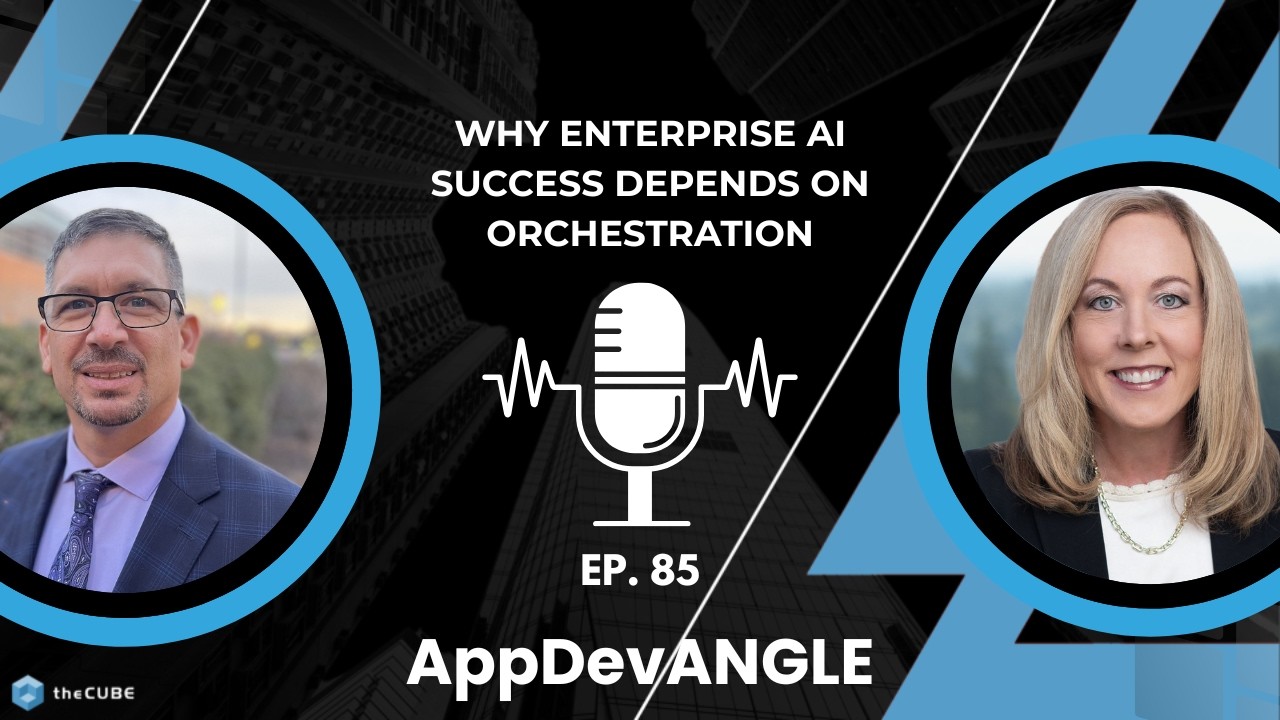
Video summary
Enterprise AI success is currently hindered by a significant gap between widespread experimentation and effective implementation at scale. While 51% of organizations rely on public AI tools like ChatGPT without governance frameworks, only 20% have deployed enterprise-wide AI solutions built on governed structures. The core issue is not technological capability, as proof-of-concept projects are becoming common, but rather the operational challenge of moving from pilot to production. Many companies mistakenly believe that simply layering AI technology onto existing workflows will yield results, yet this approach often accelerates fragmentation and confusion. Instead, successful organizations recognize that deploying technology and operationalizing it are distinct processes; the former is relatively easy, while the latter requires addressing complex realities such as regulations, security, compliance, and multi-departmental coordination.
The fundamental root cause of poor AI adoption lies in broken or inefficient underlying processes rather than a lack of advanced technology. AI acts as a magnifying glass that exposes these operational dysfunctions, such as fragmented workflows, unclear ownership, and disconnected systems, rather than fixing them. Consequently, automating flawed processes without first redesigning them leads to faster failure and increased complexity. High-performing companies approach this by starting with an operating model that defines clear accountability and governance before applying AI. They focus on orchestration—the seamless collaboration between human judgment and AI capabilities—rather than viewing AI as a replacement for humans. For instance, in scenarios involving complex customer emotions or compliance issues, human empathy remains critical, requiring a smooth handoff where context is preserved so customers do not have to repeat themselves.
To achieve true success, organizations must shift their metrics from efficiency-focused measures like token usage or cost reduction to outcome-based indicators such as resolution quality, customer effort, and trust. There is often a perception gap between practitioners who face operational complexity and managers who prioritize reliable outcomes, leading to misaligned strategies if not addressed by leadership. AI maturity is ultimately a leadership challenge involving organizational alignment across technology, operations, compliance, and customer experience teams. Leaders are encouraged to assess their readiness across four key areas: governance with clear ownership, workflow optimization, organizational alignment on written business outcomes, and the ability to consistently execute at scale. The winners in the future of enterprise AI will not be those with the most advanced models, but rather those who can effectively orchestrate people, workflows, and technology to create seamless, trustworthy customer experiences.
Read the full video transcript
[music]
51% of organizations rely on public AI
tools such as chat GPT and co-pilot
while only 20% report enterprisewide AI
deployments built on governed
frameworks. My name is Paul Nash and the
practice lead and principal analyst and
this is the appdev angle. Today I'm
joined by Molly Moore from Live Ops, a
company that sits right at the
intersection of AI, customer experience,
and very real challenges that makes uh
intelligent technology work in
production at scale. Molly, how you
doing today?
>> Great. Uh, thank you so much for having
me, Paul.
>> Yeah, thanks for being on. Why don't you
introduce yourself and introduce your
company?
>> Awesome. So, I'm Molly Moore, president
and COO of Live Ops. We help enterprises
solve kind of one of the biggest
challenges in AI today, turning um what
we would say promising technology into
real world customer outcomes. So we sit
at the intersection of AI, customer
experience and operations. Our role is
to help companies determine where does
AI belong, where do the humans belong,
and how do those experience work
together. So we're combining tech,
operational to design, governance, and a
global workforce to help clients move
from experimentation to execution.
>> Very very relevant these days. I mean,
everyone's trying to figure out what to
do with their AI budgets. Um, you know,
organizations are trying to, you know,
take that 2025 experimentation and put
into 26 reality of implementation. So
very very relevant real time. So here's
what the data is telling us, Molly, that
92% of organizations report that AI
capabilities are now integrated into at
least one stage of the software
development life cycle. This is a sharp
increase from 71%. And the adoption
story on the surface uh sounds like
progress, but the adoption and execution
are two very different things. The gap
between where enterprises are are are
struggling is is a is a is an issue. The
governance uh picture is concrete. more
than half of the organizations still run
in public AI tools like chat GPT or
co-pilot you with no govern framework
underneath them that's not a technology
problem that's an operation problem
right so we see this as a as an issue
that's that means decisions are being
made workflows are being shaped and
customer interactions are happening
really inside systems that nobody
formally are accounted for and when
something goes wrong nobody owns it and
that's a problem accountability is
definitely really what we want to get uh
make sure our organization understands
so Molly
Lots going on here. Um, you know, when
we look at from pilot to production,
execution is where AI investments win or
lose, right? This is really where it's
happening. And most enterprises can
stand up a proof of concept. We see VI
coding all the time. That's not the hard
part anymore, right? That's the that's
the thing that people are getting
getting done. The hard part is actually
AI integrating into the real workflows
within the real governance structures
and the real customer journeys at scale.
This is where I think you were talking
about, this is where you come in. Let's
talk about that. What are your thoughts
on that?
>> Yeah, I mean, we're seeing a lot of
unsuccessful AI um projects, right? And
you hear about them in the news. You
hear about it every time you talk to uh
somebody, you know, in an organization.
So, the the companies that are
successfully operationalizing AI
understand that deploying technology and
operationalizing technology are two very
different things. So most enterprises
can get a pilot running that's easy but
pilots happen in a very controlled
environment. Production environments are
where the complexity shows up. You end
up you know you're dealing with your
customers uh regulations, security
requirements, compliance obligations and
likely multiple departments. So that
gets really complex really fast. So the
companies making the most progress start
with operating model first. They define
ownership. They establish governance.
They redesign their workflows to be more
effective. So putting tech just on top
of existing workflows is not going to
help support. So those companies that
are really determining how decisions
will be made and who is accountable is
really critical and then they apply the
AI. So the the companies that get stuck
in this pilot mode um are doing the
opposite. They're starting with the tech
and hoping hoping the organization can
catch up later. What we're seeing is
that execution has become the real
competitive advantage. AI adoption is
becoming common. Operationalizing AI
successfully successfully is still very
rare.
>> Yeah, Molly, I I like where you're going
with that. That that that definitely
tracks and resonates to the market
issues that we're seeing. AI exposes
broken processes, right? It it it
doesn't fix them. it actually just
exposes what's happening and there's a
belief from a lot of organizations that
AI will smooth over the operational
dysfunction and the reality it doesn't
right the data suggests just the
opposite actually we're seeing that when
when you automate fragmented workflows
you're accelerating fragmentation and
when you automate unclear escal
escalation paths you make uh the
confusion faster right it just really is
it's you're kind of garbage in garbage
out model here right so the top pain
points that we're seeing with AI and
operation models is the reliability at
33% operational complexity at 31% and
compliance at 15% almost 16%. And you
know those aren't technology failures
the symptoms of process debt that's
hitting new surface areas. So the
question I have for you Molly is when we
when you work with organizations and you
see that there's limited returns from
the AI investments, what process issues
tend to be the root of the cause like
root cause of it all? Where's the
where's the challenges here?
>> Yeah, it's um kind of as we discussed a
second ago, you know, organizations
frequently have fragmented workflows.
They don't have clear ownership. They
have disconnected systems. I mean, I
think that's what we see the most of is
these disconnected systems that are not
integrated together and then
inconsistent escalation paths. They've
been creating their CX journeys for
years and they've shifted and evolved
and they haven't really stopped to say h
how do I build this from the ground up?
So, you know, if ownership isn't clear,
AI is going to expose it. If the
escalation paths are broken, AI is
exposing that, too. And if the workflows
were inefficient before, boy are they
even um accelerated after uh
implementing AI. So I believe that AI
doesn't fix the broken processes. It
really exposes them. So you know the
companies that we work with that are
seeing the strongest results. They're
not asking where can we deploy AI. Uh
they're asking what outcome are we
trying to achieve? Then they redesign
the workflow around that outcome and
determine where AI and human expertise
fit within it. You know, I feel bad for
companies because they're getting so
much pressure by their boards, their
leadership, their investors to do
something with AI. Uh, but really what
they need to be looking at is
operationalizing.
>> Oh, well, you're 100% correct. I mean,
we're seeing in our research a 25% of
2025's
budget, IT budget was allocated to AI
projects with no real understanding of
what that was a what those AI projects
were doing. There was no ROI.
Tokconomics are a big problem. We see
that the uh you know the the measurement
or metrics that people are using to
understand what's going on with the AI
adoption. Is their workforce increasing
the uses of token? All they're doing is
burning money and that's not really the
right use of money. So, but let's let's
look at this from a customer experience
perspective. The future of customer
experience is really about
orchestration, right? Not automation.
So, the question that most organizations
are asking themselves whether AI should
replace human agents and and to me, I
think that might be the wrong question.
The better question is where does AI
belong and where do humans belong and
how does that experience move cleanly
between the two of them, right? And when
we see in our research, we see that
enterprise leaders, AI leaders are
envisioning a future where, you know,
these agents, human, non human, AI
agents, whatever, are actively
collaborating on complex task and
sharing goals, not replacing one
another, right? That's not really what
we're seeing. It's really about
collaboration. So these top agentic AI
priorities and to your point about
budgets uh these top agentic AI
priorities that need to be kind of
accounted for are around automating
repetitive tasks we see that at 73% in
our research decision automation is at
71% and AI assistance are at 71% all
pointing towards argument augmentation
not replacement and you know the
question I have for you Molly is you
know how do you look at the highest
performing organizations
that you work with and how what is the
handoff between AI and human agents and
non-human agents in this customer
journey? What what are your thoughts
there?
>> Yeah, so the highest performing
companies are not thinking about AI
versus humans. As you said earlier,
they're thinking about orchestration,
but you know, I want to pause a moment
here and because I think there's a lot
of confusion around what orchestration
means and what the definition is. So we
believe orchestration is simply
determining what AI should do, what
people should do, and how the work moves
between them to create the best
outcomes. So the question isn't whether
AI should replace people, it's where
where does AI create the most efficiency
and where does human judgment create
value. As you said, AI is very effective
at repetitive structured rules-based
interactions. But when complexity
increases, when emotions are involved,
when compliance matters, or when a
customer needs that reassurance, human
expertise becomes incredibly important.
So I think maybe an example would be
relevant here. So let's say in
healthcare, you have a member uh trying
to understand a denied claim. AI may be
able to gather the information about
that patient, verify their eligibility
and explain the process generally. But
if the member is super frustrated or
confused or upset, that's where human
judgment and empathy become critical. So
organizations doing this well create a
seamless transition between AI and the
people uh the humans that can help. So
context follows the customers and
information isn't lost between the
handoffs. The customer never has to
start over and the data tells us this is
one of the biggest frustrations. We
don't want to have to reexplain oursel.
So the handoff itself between AI and
humans that is often the most important
thing over the the automation itself.
>> Yeah, Molly, I I agree. I I I'm looking
forward to a world where that omni
channel experience is seamless and
there's, you know, you pass the
conversation from your text messages to
your voice messages to a phone call and
you don't have to repeat yourself each
time. I mean, you know, you know, we all
experienced it. You go into a an
appointment and they give you a
clipboard and you fill out the same
information three, four, five times on
the same piece of paper or the same
thing. It's really frustrating. But, you
know, I also think that there's
interesting uh ways that organizations
are looking at things. Most
organizations are measuring AI success
really with the wrong scoreboards in my
opinion with that. They're looking at
speed, containment, and cost reduction.
And and like when we look at this, those
metrics are most AI deployments are what
what are getting evaluated on. But
customers don't care about any of those
when we look at it, right? They care
about resolution, effort, trust,
outcomes, that personal experience you
were talking about, Molly, and the
significant perception gap of inside
organizations that reinforce the
problem. You know, we see 45% of AI
practitioners site operational
complexity as their primary challenge
compared to 31% of managers. They they
they're looking at it going, okay, well,
the practitioners have a different view
than the managers, right? Um, and these
managers are commonly prioritizing
reliable outcomes. you know, those are
the ones that we're looking at going,
"Okay, is that is that right?" Um, when
people are closest to the work or
sitting setting the strategy, they're
not measuring the same thing. So, you
end up with optimizing for the wrong
results, right? And and you know, I
mean, I was talking to one company
recently. We're talking I mentioned
tokconomics earlier. Measuring success
by the number of tokens that are being
used is not the right measure, right?
And I can't emphasize that anymore. But
you know, Molly, a question for you is
what does it look like when an
organization realigns its AI metrics
around customer outcomes and what does
it take to get there? Because I mean
that I think is really what's more
important.
>> Absolutely. Can't agree more. I think
you know operational metrics tell you
how efficiently the company operated
which is important but uh they don't
necessarily tell you whether the
customer succeeded. These those metrics
matter, but customers don't often
experience met uh metrics. They
experience outcomes. So customers
measure something very different. They
care whether their issue was resolved.
They care whether they had to repeat
themselves, how much effort was
required. Do they trust the interaction?
That's the key. That's the most
important thing they ask. Did my problem
get solved? How hard was it to get help?
Did I trust the experience? Did I get
the outcome I needed? So this boils down
to if efficiency improves while customer
outcomes decline, you have optimized the
wrong thing. So one of the things that
we found in our AI maturity benchmark is
that mature organizations evaluate AI
very differently. They're asking whether
AI improves resolution quality, customer
effort, operational consistency, and
business outcomes. So the most
successful companies don't optimize for
speed alone. They optimize for
resolution and trust and that is a
fundamentally different scoreboard.
>> Yeah. Yeah. Molly, I agree. I want to
add to that. I think that a AI maturity
is a leadership problem, right? And
before it's a technology problem, right?
I think the skill gap is and the data
that we see is is is is
uh evident, right? We see this that 82%
of AI teams report skill gap in their AI
operations, right? And 31% describe
these gaps as extremely prevalent. So
there's a lot of skill gap issue here
and that's a big issue that we all have
to overcome because you know the the the
tech the deeper issue isn't technology
skills it's governance operation models
readiness and organizational alignment
that our leadership responsibilities
right accountability that really is a
leadership issue and many leaders don't
yet have a clear framework on where
their organizations actually stand right
and that goes back to some of the
metrics and such but you can't build the
road map without having an honest map of
where you stand today, right? So,
understanding that Amali, what framework
do you do you use to help leaders kind
of assess their organizations in real AI
maturity? You were talking about your
study and such, but like what framework
are in place and what do leaders tend to
underestimate when they're getting
started in these conversations?
>> Yeah, great question. And I can't agree
with you more that this this all is a
leadership challenge. Technology is just
one component. So we encourage leaders
that we work with to evaluate their
maturity across four key areas. First,
governance. Do you have clear ownership,
accountability, risk management, and
decision-making structures? I think
people, this is the one that people
underestimate the most. you know, you
should have an AI governance committee
across your organization working with
different um groups and departments
across the company really driving and
providing direction and guidance for the
business. Uh second is workflow
readiness. We've talked a lot about that
this but are the processes you're trying
to automate actually optimized? You
can't optimize something that is broken.
Um and then third, organizational
alignment. our technology, operations,
customer experience, the compliance team
and leadership working towards the same
outcomes. Do you have written outcomes
uh that you're trying to achieve as a
business? And then fourth is execution.
Can you consistently operationalize AI
at scale and measure business impact? So
when we work with companies, we take
them through this maturity model. We
assess them. We help them create a road
map. We define are they in a crawl,
walk, run stage and with that um
position where they are h what what what
roadmap should they optimize for first?
Um and so different types of AI
technology are more in the crawl stage
versus the run stage and so making sure
that you're thinking through those uh
you know issues before you deploy is
really important. So I I think leaders
tend to underestimate the first three
the organizations really creating that
long-term value focus on creating the
right operational model.
>> Yeah, Molly, I agree. You know, and I
also think that organizations do they do
buy vision. They don't just buy what's
on the truck today because they need to
know where it's going and we're all
really trying to figure this out
together. But before we wrap, Molly, you
know, the the listeners here, there's a
lot we talked about, a lot to unpack. if
they're in that crawl, walk, run stage,
where should they go to learn more?
>> Ah, thanks for asking. So, you can learn
more about us at liveops.com.
And I think, you know, if you're trying
to understand where your organization
stands in its AI journey, as I
mentioned, we launched that AI maturity
benchmark that's available online and we
have an AI readiness assessment um
interactive online. It's free um on our
website and you can get your AI maturity
score. Um but thank you for having me
today. I'd just say if there's one
takeaway I'd leave listeners with um
regarding our discussion, the winners
won't be those with the most AI. They'll
be the ones that orchestrate AI people
and workflows most effectively.
>> Well said, Molly. Well said. Thank you
for being on the podcast today. I really
appreciate you being on.
>> Thank you so much.
>> And thank you for watching for all of
you who've tuned in. We do appreciate
you being part of the App Dev Angle
community. But for now, that wraps up
this episode. But we'll be back next
Wednesday with another conversation
diving into tools, threads, and talent
ship in the future of the application
development. Whether you're deploying at
the edge, building with AI, or
modernizing your cloud stack, we've got
you covered. Be sure to follow us on
social if you have any thoughts,
questions, or just want to connect.
Until next time, stay curious and stay
building.