Video summary
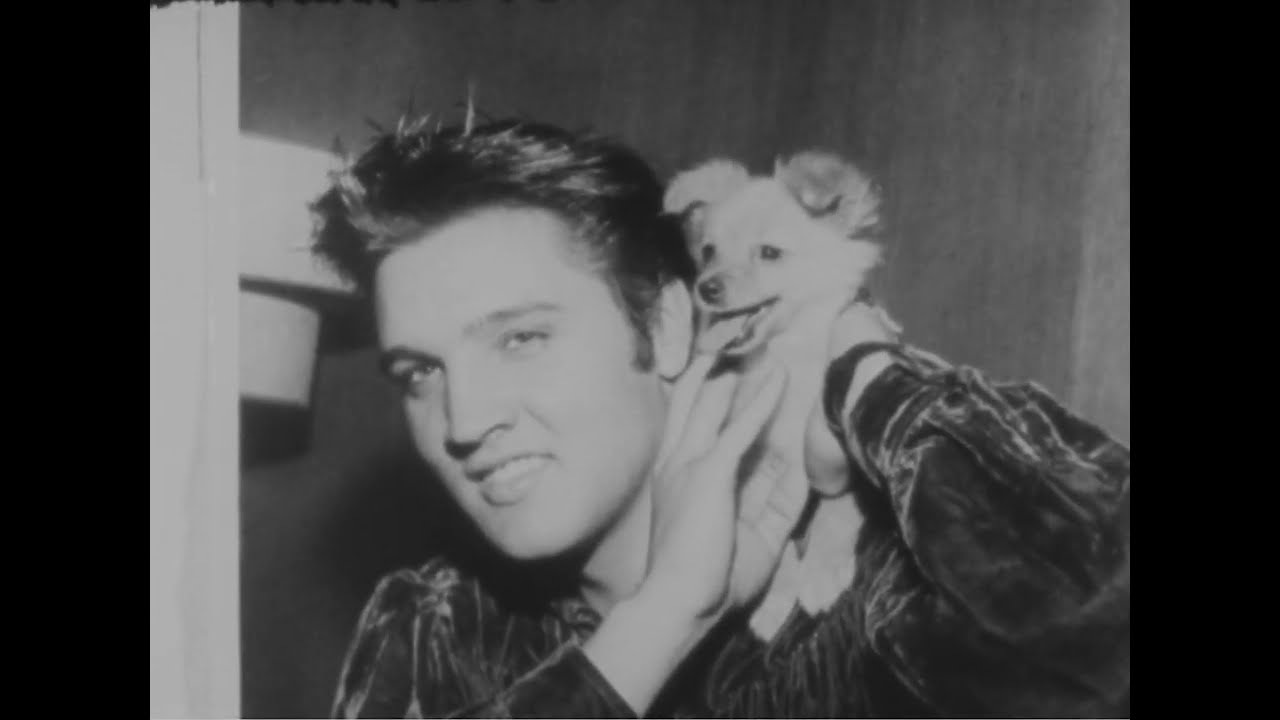
The video presents an inside look at Elvis Presley's meteoric rise from a humble background in Tupelo, Mississippi, during the Great Depression to becoming a global sensation by age twenty-one. Born into poverty where his family relied on WPA work and tenant farming, young Elvis developed his musical talents through church spirituals before moving to Memphis as a teenager. Despite initially failing an audition due to a lack of technique, he persevered with practice until Sam Phillips at Sun Records recognized his potential, leading to the release of "That's All Right" which ignited local radio frenzy and thousands of orders for his first commercial recording.
As Elvis gained traction in the South through hillbilly radio programs and roadhouses, major entertainment businesses quickly intervened to capitalize on his popularity. RCA Victor purchased his contract from Sun Records for a significant sum, resulting in record-breaking sales like "Heartbreak Hotel," while television networks competed fiercely to secure his appearances. Hosts Steve Allen and Ed Sullivan initially criticized his style as vulgar but eventually booked him due to the immense ratings pressure; notably, when Elvis finally appeared on Ed Sullivan's show after demanding fifty thousand dollars for three performances—a stark contrast to the five thousand he had previously refused—Sullivan admitted these appearances were worth a quarter million in publicity value.
The primary source of controversy surrounding Presley was his transformation into a sex symbol for teenage girls, which sparked riots and criticism from ministers and educators concerned about juvenile delinquency. The narrator argues that while Elvis faced intense scrutiny for his dancing style and perceived vulgarity, the blame lies less with him than with music companies and television executives who prioritized profits over good taste by thrusting a twenty-one-year-old truck driver into the spotlight amidst an abundance of money and adoring fans. Although critics attacked his movements on TV, he began to appear more restrained afterward and even surprised audiences with acting skills in his first movie, suggesting that his initial notoriety was fueled partly by parental disapproval rather than inherent moral failing.
Looking toward the future, the narrator predicts that Elvis's current hysteria will diminish if parents stop criticizing him and if he learns that vulgarity is not a sustainable path to lasting success. He draws parallels between Presley and earlier idols like Rudolph Valentino and Frank Sinatra who achieved fame through hard work without resorting to shock tactics, noting that unlike them, Elvis came from poverty and lacked formal musical training yet possessed an undeniable appeal rooted in his persona. The conclusion suggests two possible outcomes: if he adopts a steadier approach to his career similar to past legends, he will secure a permanent place in entertainment history; however, should he fail to adapt or work harder than before, the video warns that his star could fall just as rapidly and dramatically as it rose.
Read the full video transcript
I suspect that some of you are going to
be surprised at the subject of this
telecast. You figure I'm supposed to
diagnose political situations and
foreign affairs or dig up inside stories
around the White House. But I'm going to
fool you because today I want to relax a
bit and report some inside facts about a
young man who's become the rage of
millions of teenagers and who has some
of our experts on juvenile delinquency
just about as worried as the teenagers
are crazy.
I refer to Elvis Presley.
Here's a boy of 21 who two years ago was
driving a truck for $40 a week. This
year he'll make $1 million.
He now has four Cadillacs, a three-
wheeled Messormith sports car, a
motorcycle, a ranch house, and a
swimming pool in Memphis. He has police
escorts, is mobbed by thousands. He's
also a boy who's had more criticism
thrown at him than any other
entertainment personality, I suppose, in
recent American history. But why? Does
he really deserve it? What effect does
he really have on juvenile delinquency?
Just who's to blame? In a minute, I'll
tell you the inside story of Elvis
Presley, including a prediction.
Now, to tell the truth, I'm not an
expert on rock and roll. But when I
learned the rock and roll music made
famous by Elvis Presley had caused
teenage riots in two staged countries
like England and Norway. When I learned
that Elvis had been barred from a
Pittsburgh auditorium because of the
damage done to the hall by his teenage
audience and how he'd been threatened
with arrest by a judge in Jacksonville,
Florida, and how ministers and educators
all over the country had protested his
style of singing. Well, I got
interested. Here's what I found. Elvis
Presley was born just 21 years ago in a
two- room house in Tupo, Mississippi and
didn't even have a bathtub. Those were
depression days. His father worked for
the WPA as a carpenter and as a tenant
cotton farmer. His family was religious.
And at meetings of Holy Rollers, Elvis
learned to sing spirituals and play the
guitar. His first guitar cost $12.95.
Today he pays 300 for his guitars. Yet
he still can't read music. In fact, his
musical technique is such that sometimes
he breaks the strings of his guitar
before he finishes a show. However, he
has an accompanist. And his guitar is
chiefly a decoration to swing around the
stage and whip up his teenage audience.
Well, when Elvis was 14, his family
moved to Memphis in 1949.
The Great Depression was over. His
father got a job in a factory. His
mother went to work as a cafeteria
waitress and Elvis got an afterchool job
as a gardener. Things were looking up
for the Presley family. Meanwhile, Elvis
made a hobby out of singing spirituals
and hillbilly songs. At this point, he
was actually very shy about singing,
even for his friends. He was obedient,
polite, very bashful. Didn't care much
about baseball, football, like other
kids. Quite a contrast from today when
crowds besiege his car after a
performance and police have to protect
him from well-wishers, autograph
hunters, and jealous males. Well, one
Saturday afternoon in June of 1953,
Elvis wandered into the front office of
the Sun Record Company in Memphis where
for $4 you can get a home recording of
yourself. He brought along his guitar
and recorded two songs, My Happiness,
and that's when your heartache begins.
Ordinarily, that would have ended that.
But a few months later, Sam Phillips of
the Sun Record Company was looking for a
ballad singer and decided to audition
Elvis. Elvis, however, did very badly at
his audition and he didn't get the job.
He lacked the rock and roll technique
that he has today. However, Sam Phillips
still thought Presley had possibilities
and he suggested he spend a few weeks
practicing and then cut another test
record.
Well, the rest is history. Accompanied
by a guitarist and a bass fiddler, Elvis
finally was able to make an acceptable
record for the Sun Company, Sam Phillips
took it then to the local Memphis disc
jockey named Dewey Phillips. And the
kids of Memphis simply went wild. The
local radio station got 47 phone calls
and 17 telegrams after the record was
played. And Sam Phillips of the Sun
Record Company found himself with
thousands of orders for Elvis Presley's
first commercial recording. That's All
Right, Mama.
Well, Elvis quit his job as a truck
driver, signed a contract with a Memphis
disc jockey named Bob Neil, and began
singing on hillbilly radio programs and
at local roadhouses. He barnstormed
through Texas, Arkansas, Louisiana, made
four more hillbilly records and was a
sensation among the kids of the South
and the Southwest.
Well, at this point, big business in the
entertainment world took a hand.
Television MC's need to get good ratings
and big record companies like to sell
records. So, as the word spread about
the kid down in Memphis who was creating
a local sensation, RCA Victor sent its
hillbilly talent scout Steve Scholes
down to Memphis to buy a Presley's
contract with the Sun Record Company for
$35,000 plus a $5,000 bonus to Elvis
himself. Three months later, Presley's
records were responsible for one half of
Victor's entire output. His recording of
Heartbreak Hotel sold a million copies
in 9 weeks, a new record.
Meanwhile, the Dorser brothers signed
Elvis for an appearance on their Coast
to Coast variety show. And he also
appeared on the Milton Burl show where
he was widely criticized for his bad
taste in performing.
Finally, he got into the real big talk
by appearing on Steve Allen's new Sunday
evening program. The truth is that Steve
Allen didn't really want Presley. Steve
didn't like Presley's wise guy
mannerisms and vulgar body grinds and he
had made fun of Presley. However, Steve
Ellen was then in a race with Ed
Sullivan for TV viewers. So, he agreed
to have Elvis and succeeded in beating
Ed Sullivan's audience rating for the
first time.
Well, the competition at Big Time
Television is terrific. Ed Sullivan was
not to be outdone. He tried to get
Presley on his show a year earlier when
Presley was only a local southern
sensation, but Presley at that time
demanded $5,000 for a single TV
appearance. And Sullivan had laughed him
off. Like Steve Allen, Sullivan
considered Presley's way of performing
vulgar. But competition is competition.
So he offered Elvis $50,000
for three TV performances, the most
Sullivan had ever offered anyone. And
quite a contrast to the $5,000 he had
previously refused.
But he had to win back those Sunday
night viewers stolen by Steve Allen, and
he was successful.
Later, Sullivan admitted that Elvis
Presley's three appearances on his
program had been worth $250,000
to him in publicity.
The good taste of Presley's performance
apparently wasn't important.
A good rating was.
Well, that competition between Steve
Allen and Ed Sullivan marked the high
spot of Elvis Presley's meteoric rise to
fame. In a minute, I'll make a
prediction as to where he will go in the
future.
Now, the chief reason for all the
criticism of Elvis Presley is that he's
become a sort of a sex symbol to teenage
girls. They go wild over him. Presley
doesn't smoke or drink, but he does like
girls and they are prone literally to
throw themselves at him. However, it
seems to me important to remember that
it's not exactly Elvis's fault that he
has suddenly shot to fame, fortune, and
influence over girls, but rather it's
the fault of the big music companies,
the TV MC's, and the business managers
who were looking for profits and high
ratings. You can hardly expect a
youngster 21 to resist vigorously when
money and women are thrown at him in
such profusion.
So here is my prediction regarding the
future of this strange once shy young
man who is zoomed to such meteoric fame
in show business. If you look back you
recall the famed matinea idols who
preceded Presley worked hard for their
success. Rudolph Valentino the silent
movie idol of girls and older women
worked for years before he achieved fame
and he did it without resorting to
vulgarity. Rudy Valet, the collegiate
type of kuner, also worked for years
before he won the worship of romantic
girls and women in the late 20s and 30s.
Frank Sinatra, also studied and worked
hard before the teenagers swoomed over
him in New York and Hollywood. He also
reached fame without resorting to
vulgarity. But Elvis Presley was a truck
driver who still can't read music and
whose main appeal appears to be frankly
sex. But as I said, Elvis is a boy who
came from a povertystricken background,
and you can hardly expect him to resist
the screeching girls and the fat
pocketbooks being thrust upon him. In
all fairness, it's also true that Elvis
began his climb to fame before he ever
appeared on television. His records were
bestsellers in the South before he hit
the big time. And following the violent
criticism of his body movements on TV,
he's become less objectionable. In his
first movie, Elvis amazed the critics by
doing a good job as an actor. Nobody
ever thought he could act. So, here is
my prediction. One secret of Presley's
popularity with teenagers has been his
lack of popularity with their parents.
So if parents quit criticizing his
singing, I predict the great Elvis
Presley hysteria will diminish. And if
Presley finally learns that vulgarity is
not the way to permanent success, and if
he works hard, which he's never done
before, I further predict he'll find a
less spectacular but steadier place in
our entertainment world. If he does not,
then I predict Elvis Presley star will
fall as rapidly as it rose. I'll make a
prediction about next week's program in
just a minute.
Next week, I'll report on some of the
amazing cross currents behind the Iron
Curtain and whether they mean peace or
war to the United States.
Heat. Heat.
down.