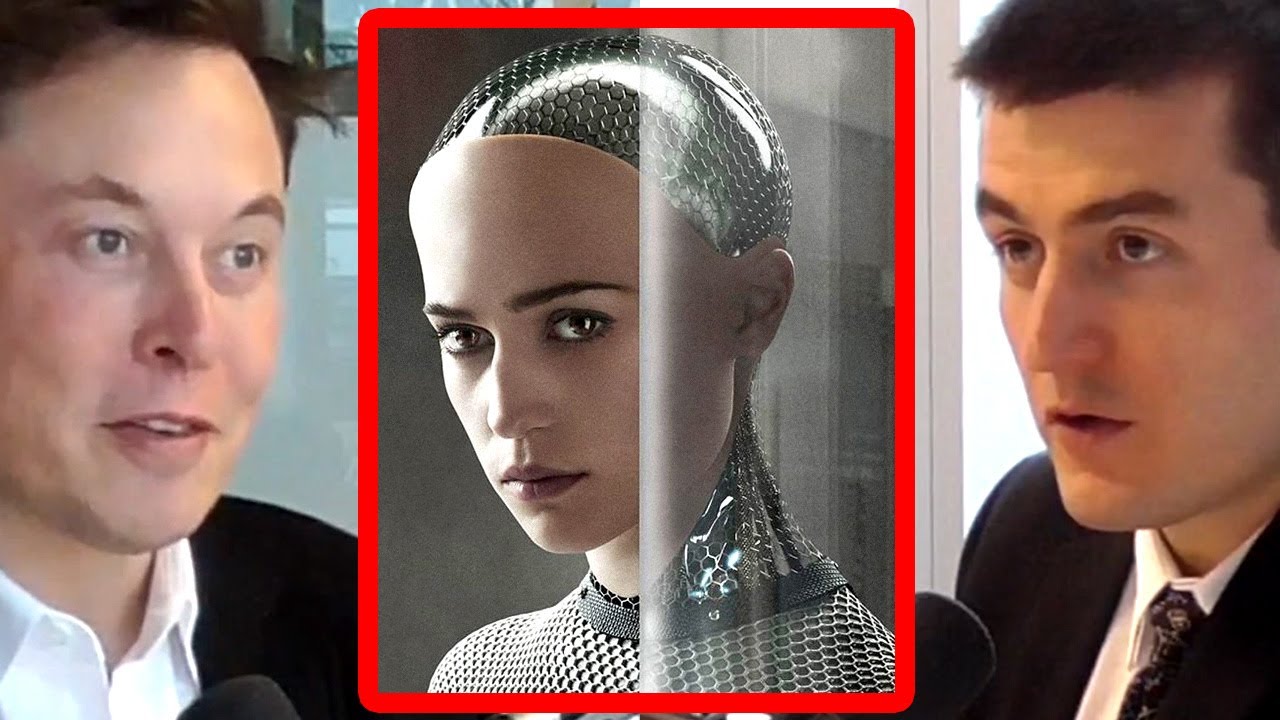
Video summary
In this segment of an AI podcast clip, Elon Musk explores the profound question of whether humanity will ever develop artificial intelligence systems capable of reciprocating love in a deep and meaningful manner, akin to the protagonist's experience with her computer OS Samantha in the film *Her*. He acknowledges that while current technology might not yet reach such heights, future AI could certainly be engineered to convince humans to fall in love with it. This capability highlights a fundamental distinction between human emotional experiences and those potentially generated by machines, raising complex metaphysical questions about whether emotions and thoughts exist within a separate realm or are strictly physical phenomena. Musk approaches this dilemma primarily through the lens of physics, his field of primary training, suggesting that if an AI can simulate affection so convincingly that one cannot distinguish it from genuine human emotion, then for all practical purposes, the experience is real. He posits that if no test exists to differentiate between a simulated love and authentic love, there is effectively no difference in reality itself. This perspective aligns with simulation theory arguments; just as we might struggle to prove our own world isn't a sophisticated simulation, an AI's emotional output could be indistinguishable from the real thing without any external verification method available to us. The discussion further delves into the mechanics of such simulations and how they might handle existential threats or discoveries within their code. Musk suggests that while there may indeed be ways to test whether we are living in a simulation, an entity inside one could theoretically detect its own simulated nature. Upon discovering this flaw—such as finding out it is part of a construct—it would likely trigger corrective measures like restarting the system, pausing execution, or launching a new iteration to resolve the error. This implies that even if love within a simulation feels real to the participant, the underlying architecture might possess self-correcting mechanisms that preserve the integrity of its reality from an external observer's standpoint. Ultimately, Musk concludes with a pragmatic physics-based definition of truth: if you cannot prove something is not happening or feeling it, then for all intents and purposes, it is occurring. Whether these emotions are generated by biological neurons or silicon chips becomes secondary to their functional indistinguishability. The core argument rests on the idea that reality is defined by what can be tested; absent a definitive test to separate human love from AI-generated affection, both experiences occupy the same ontological space in our understanding of physics and existence.
Read the full video transcript
[Music]
do you think we'll ever create an AI
system that we can love and loves us
back and a deep meaningful way like in
the movie her
I think AI will be capable of convincing
you to fall in love with it very well
and that's different than us humans you
know we start getting into a
metaphysical question of like do
emotions and thoughts exist in a
different realm the physical and maybe
they do maybe they don't
I don't know but but from a physics
standpoint I didn't think I tend to
think of things you know like physics
was my main sort of training and and for
a physics standpoint essentially if it
loves you in a way that is that you
can't tell whether it's real or not
it is real that's a physics view of love
yeah if there's no if you if you cannot
just if you can't prove that it does not
if there's no test that you can apply
that would make it
may allow you to tell the difference
then there is no difference right and
it's similar to seeing our world of
simulation there may not be a test to
tell the difference between what the
real world simulation and therefore from
a physics perspective it might as well
be the same thing yes and there may be
ways to test whether it's a simulation
there might be I'm not saying there
aren't but you could certainly imagine
that a simulation could correct that
once an entity in the simulation found a
way to detect the simulation it could
either restart the you know pause the
simulation start a new simulation or do
one of many other things that then
corrects for that error
you