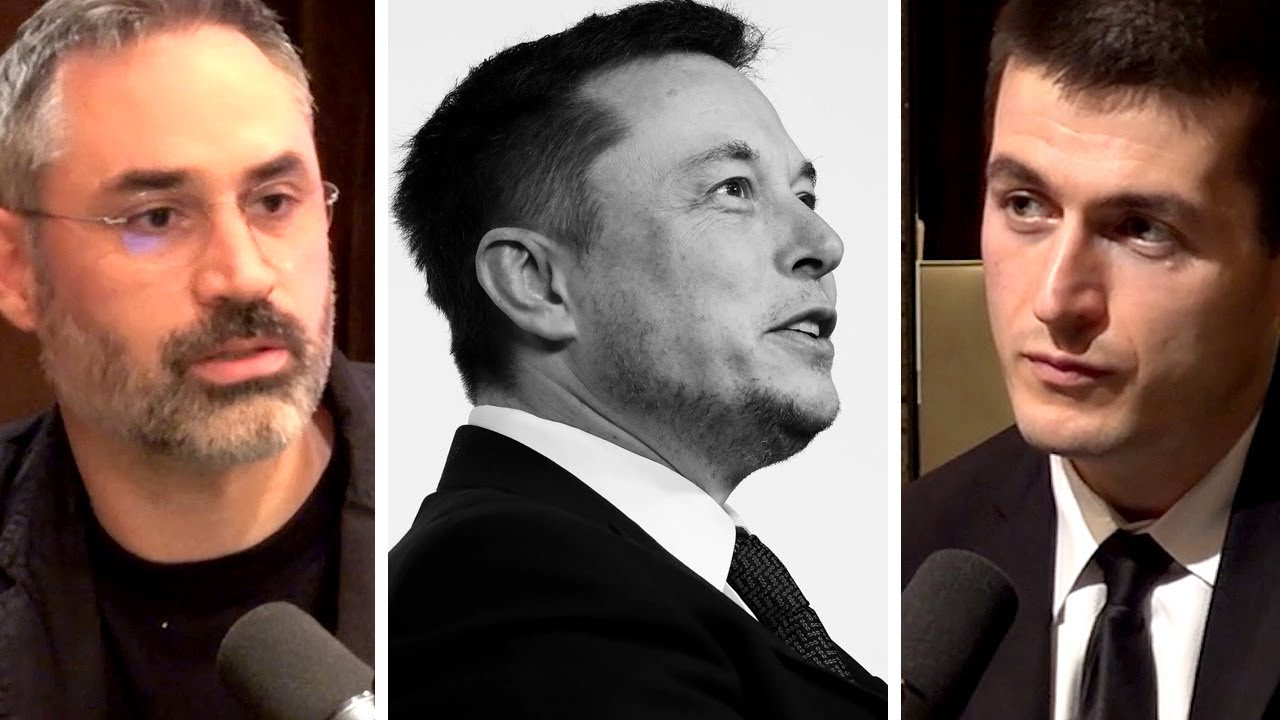
Elon Musk as Inspiration for Science Fiction (Alex Garland) | AI Podcast Clips
Watch on YouTubeVideo summary
In this discussion, filmmaker Alex Garland reflects on how real-world technological advancements serve as primary inspiration for his creative work, specifically citing Elon Musk and entities like Tesla and SpaceX. Garland notes that he is naturally influenced by the world in which he lives, viewing Musk's efforts with a sense of support rather than skepticism. He highlights Tesla's impact as particularly significant, crediting it with challenging traditional car manufacturers and disrupting the fossil fuel industry to the point where such disruption was necessary for progress. Having personally purchased a Tesla, Garland acknowledges that these tangible shifts in reality directly inform his writing, allowing him to avoid the common pitfall of filmmakers who simply remake movies from their childhoods by instead drawing material from current events and living experiences. Garland identifies space exploration as the most exciting direction among Musk's various technological endeavors, noting that he has not yet explored this theme extensively in his own work despite having considered it for a potential multi-year series titled "Space Wars" if unlimited funds were available. His fascination stems from the existential necessity of expansion; Garland argues that humanity must move beyond Earth to ensure its long-term future, especially given the fundamental link between energy and matter which suggests resources will eventually be depleted on our current planet. He posits that leaving is not just an option but a biological imperative built into human nature, drawing a parallel between ancient Polynesian navigators who reached Easter Island by crossing vast oceans to humans venturing into the cosmos as their next great frontier of discovery and survival. The conversation delves deeper into the philosophical implications of space travel versus other technological frontiers like brain-machine interfaces or neural links. While Garland expresses curiosity about unlocking the nature of consciousness, he feels a profound sadness at the prospect of humanity remaining confined to our solar system without venturing further out into the galaxy or beyond. He finds beauty and hope in the act of reaching out across centuries on Earth and extending that same spirit into space, viewing colonization as an essential step for human evolution rather than merely a logistical challenge. This perspective suggests that true fulfillment comes from breaking boundaries and exploring the unknown, whether through maritime history or future interstellar travel. Regarding the specific concept of colonizing Mars, Garland admits that while he is excited by the idea of humans stepping foot on another planet, his ultimate excitement lies in leaving the solar system entirely. He acknowledges that we already possess a significant amount of knowledge about Mars and hopes to witness such achievements within his own lifetime if they occur at all. However, for him, the mere presence of humanity on Mars is secondary to the broader goal of becoming an interstellar species capable of traversing other galaxies. This distinction underscores his belief that while planetary colonization marks a major milestone, it does not fully satisfy the human drive to explore and expand unless it leads to leaving our immediate cosmic neighborhood behind. Ultimately, Garland concludes that these technological efforts define the future worlds he creates because they represent the actual trajectory of humanity's development. By grounding his fiction in the reality of electric vehicles, space rockets, and neural interfaces, he ensures his stories resonate with contemporary audiences facing similar existential questions about survival and expansion. His support for Musk's initiatives reflects a broader optimism that human ingenuity can solve critical problems like resource depletion while fulfilling our innate desire to explore. The dialogue serves as an affirmation that the future is not just something we imagine in isolation but something shaped by real-world actions taken today, making his creative process a reflection of the dynamic world he inhabits and supports.
Read the full video transcript
drawing inspiration from real life so
for devs for ex machina look at
characters like Elon Musk what do you
think about the various big
technological efforts of Elon Musk and
others like him and that he's involved
with such as Tesla SpaceX in your link
do you see any of that technology
potentially defining the future worlds
you create in your work
so Tesla's automation SpaceX is space
exploration your link is brain machine
interface somehow merger of biological
and electric systems I'm in a way I'm
influenced by that almost by definition
because that's the world I live in and
this is the thing that's happening in
that world and I also feel supportive of
it so I think I think amongst various
things Elon Musk has done I'm almost
sure he's done a very very good thing
with Tesla for all of us it's really
kicked all the other car manufacturers
in the faces kicked the fossil fuel
industry in the face and and they needed
kicking in the face and he's done it so
and and so that's the world he's part of
creating and I live in that world just
bought a Tesla in fact and so does that
play into whatever I then make in some
ways it does
partly because I try to be a writer who
quite often filmmakers are in some ways
fixated on the films they grew up with
and they sort of remake those films in
some ways I've always tried to avoid
that and so I looked at the real world
to get inspiration and as much as
possible sort of by living I think and
so so yeah I'm sure which of the
directions do you find most exciting
space trouble space travel so you
haven't really explored space travel in
your work you've said you said something
like if you had unlimited amount of
money I think I read at AMA that you
would make like a multi-year series
space Wars or something like that
so what what is it that excites you
about space exploration well because if
we have any sort of long-term future
it's that it just simply is that if
energy and matter are linked up in the
way we think they're linked up we'll run
out if we don't move so we got to move
and but but also how can we not it's
it's built into us to to do it or die
trying I was on Easter Island a few
months ago which is as I'm sure you know
in the middle of the Pacific and and
difficult for people to have got to but
they got there and I did think a lot
about the way those boats it must have
set out into something like space it was
the ocean and and how sort of
fundamental that was to the way we are
and it it's the one that most excites me
because it's the one I want most to
happen it's the thing it's the place
where we could get to as humans like in
a way I could live with us never really
unlocking fully unlocking the nature of
consciousness I like to know I'm really
curious but if we never leave the solar
system and if we never get further out
into this galaxy or maybe even galaxies
beyond our galaxy that that would that
feel sad to me because because it's so
limiting yeah there's something hopeful
and beautiful bar reaching out any kind
of exploration reaching out across earth
centuries ago and reaching out into
space so what do you think about
colonization of Mars so go to Mars does
that excite you the idea of a human
being stepping foot on Mars it does it
absolutely does but in terms of what
would really excite me it would be
leaving this solar system in as much as
that I just think I think we already
know quite a lot about Mars and but yes
listen if it happened that would be I
hope I say in my lifetime I really hope
I say in my life
I do it would be a wonderful thing
you