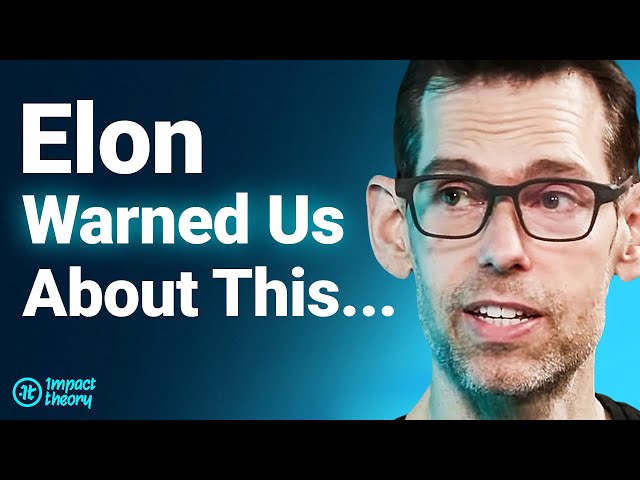
Video summary
Elon Musk has launched a high-profile campaign to cancel Netflix, citing its distribution of content he deems too woke and immoral for children. While critics point out that other major platforms like Disney, HBO, and Paramount also host controversial material—including unlimited pornography on X—Musk's focus remains specifically on streaming services with perceived ideological biases. A significant factor in this targeting appears to be a recent business development: Musk's associate Larry Ellison finalized a deal to acquire Paramount, which owns CBS, Showtime, Nickelodeon, and popular children's franchises like SpongeBob SquarePants and PAW Patrol. This acquisition has led some observers to question why Netflix is singled out for cancellation when competing services face similar scrutiny regarding their content libraries. The core of the discussion revolves around the nature of children's programming as inherently values-driven storytelling. The speaker argues that every piece of entertainment for kids, from historical PSAs in GI Joe cartoons to modern themes of friendship and inclusion, transmits specific moral lessons designed to shape how young people interpret the world. Consequently, there is an inevitable clash when society lacks a shared set of core values; some parents embrace content featuring transgender characters as inclusive and kind, while others react with extreme backlash against such representations. This divergence in parental philosophy creates a polarized environment where platforms are forced to navigate conflicting demands from different segments of the audience regarding what constitutes appropriate or offensive material for minors. A major concern highlighted is the lack of effective algorithmic control on current platforms like YouTube and Netflix, which can inadvertently expose children to violent and disturbing content through autoplay features and recommendation engines. The speaker describes experiments where wiping a device clean only leads algorithms to suggest increasingly bizarre and graphic cartoons involving violence against animals after hours of passive viewing. To combat this, the proposed solution is not top-down censorship by corporations or governments, but rather giving parents direct control over their children's digital diets through robust tagging systems and parental filters. This would allow families to explicitly approve or disapprove specific content categories, ensuring that algorithms do not push inappropriate material onto unsuspecting users without consent. The conversation further explores the philosophical question of who owns a child: the government, the corporation providing the platform, or the parent? The speaker firmly asserts that parents must have absolute authority over what their children see and learn, whether it involves religious instruction like teaching about Jesus or evolutionary theory versus creationism. While some worry that implementing filters based on values could lead to slippery slopes where users demand racial or gender exclusions in content feeds, the argument is made that businesses should facilitate these parental choices rather than dictate them. The ultimate goal is a system where parents can opt out of specific ideological options without being told by society what they are permitted to teach their offspring, thereby respecting individual family autonomy while holding platforms accountable for providing necessary safety tools and transparency regarding content tags.
Read the full video transcript
Elon Musk has been going on a crusade to
cancel Netflix. Matt Kim, who's like a
political correspondent
>> I want to hear his conspiracy theories.
>> Elon Musk is leading the charge to
cancel Netflix because it's so woke.
He says nothing about his own platform
having unlimited porn and death
available to minors, but okay.
Netflix has had bad immoral content on
his platform for years. So is Disney, so
is HBO, so is every single platform. So
why Netflix? And why now? Here's a
coincidence. Elon Musk's buddy Larry
Ellison, and Ellison's son David, they
just closed on a deal to take over
Paramount. You know the competing
streaming service that also owns CBS,
Showtime, Nickelodeon.
And Paramount just dropped 7.7
billion dollars.
>> A worthy conspiracy theory.
>> All this bad kids content, you should go
to Paramount. Well, we got SpongeBob and
PAW Patrol, and they're not going to be
trans. We got dogs on a motorcycle.
>> What people need to understand is
children's programming is entirely
values-driven. That that is the point of
children's entertainment. We're wired to
take in the world through story. And so
forever, I mean, when I was a kid, GI
Joe was like they had like little PSAs
in the middle of the episode and they'd
be like, "Don't go in the water when
it's thunder and lightning because the
electricity travels through water and it
can kill you. And now you know, and
knowing is half the battle, right?" And
then every episode is going to have some
theme of friendship or whatever. And so
literally every piece of children's
entertainment is wrapped around a theme.
That's what storytelling is, especially
when you're talking to kids. So there's
always going to be values that are
transmitted to kids. So the fact that
they are transmitting values isn't a
problem. The problem is we no longer
have a shared set of values. And so now
it's like, well, some people are like,
"Oh my god, this is amazing." Remember,
there are people that are looking at the
trans ideology in these cartoons and
they feel warmth. They feel an embrace
of inclusion and they're like, "Oh my
god, this is amazing, and I'm so glad
that my kids are growing up with this.
This is so inclusive and so kind." It's
just that some people have extreme
backlash against this. So, I think
Netflix is going to have to do something
like includes
like
trans content, LGBT, whatever, like and
they list the things that this includes.
It'll probably be something like that.
That way parents can click a button and
be like, "No, no, no. Don't ever show my
kids that stuff."
>> Exclude rainbow flags.
>> Because like on YouTube, I would very
much The degree of parental control that
I would want for my kids would be
extreme. I want to make sure that there
are certain things that my kids don't
see. There are people that do
experiments where they'll wipe an iPad.
They'll do things like um watch auto
watch, because I guess auto play is a
signal that you're a kid, uh auto play
it out hours with the Cocomelon,
and then see what the algorithm starts
like showing you after that. And then
they'll watch a bunch of shorts that are
being recommended to them. They'll let
them all auto play. Uh and then they see
what they start getting recommended, and
there's like all this crazy violent like
ultra trippy cartoon stuff. But like
bunny goes to a lake and throws a bomb
in the lake to kill all the swans, and
then it's like grabbing the swans and
dragging them out, cutting their own
like intestines in, and like pulling
like a rabbit out of their guts. Like
it's wild. I'm like, "Okay, first of
all, a lot of this stuff I'm sure is
being AI generated, but nonetheless,
like that's what your kids are getting."
So, I would want to be like, "Okay,
their algorithm's going to be very good
at recognizing what's violence or
whatever." And as a parent, I just want
to be like, "No violence, no this, no
that. Approve channels, disapprove
channels." And then now I know my kids'
algorithm is going to get the following
things. And algorithmic control, I
think, is going to be
super important, and I think people are
going to go crazy demanding that,
whether it's Netflix, X, Instagram, that
I determine my algorithm. And I think
that that people are going to be
fiendish about it for kids. If Netflix
is watching, that would be my advice.
Immediately race not to pick a winner on
the values debate, but instead give
parents control over what kind of
content they do and don't want their
kids to see and make sure everything is
tagged and that you can't put content up
that isn't tagged and that accounts like
get a reputation score. So, if you've
got somebody where the account itself
has a
Let's say they've been creating content
for 2 years and I mean it's a little bit
different than Netflix cuz they
literally have buyers that like bring
the stuff into the ecosystem. So, this
is
going to be far easier for them than it
will be for somebody like YouTube. So,
my advice is the same for YouTube, but
accounts will get a credibility score.
So, if that account has been putting out
like good stuff for years, they've never
violated it, they don't get unreasonable
reporting on them and all that,
uh they're going to get more leeway if
they put something up and it's like
we're not quite sure, whatever. Yeah,
we'll give them the benefit of the
doubt. Other accounts, maybe their thing
is fine, but they're brand new and so
it's got to go through review, whatever.
It'll be something like that, but you
have to put parents in control. Now,
that comes down to the debate about who
owns, I know people are going to hate
that word, but who owns the kid? Is it
the government or is it the parent? I
think it's the parent. So, for me it's
like the parents should a thousand
percent be able to decide what their
kids do and don't see and that means
they will need
algorithmic control.
>> This is the slippery slope where like
hypothetically speaking Netflix
implements that and there now is a does
this contain LGBTQ content, yes or no?
Is it toggle? Could that mean somebody
could be like, yeah, I don't want black
people in my content either. Let's
toggle that. I don't like business
themes in my content. I can figure
>> People may say like it's in the uh I
don't want, I as a business don't want a
racial filter.
Great. Let the business make that
decision. Parents can and should be able
to teach their kids what they believe is
right. If somebody wants to teach their
kid about Jesus, they should be able to
do that. If somebody wants to teach
their kid Jesus isn't real and evolution
is, they should be able to teach that.
If people want to say that um
embracing trans people is about love and
inclusion, they should be able to teach
that. If they want to teach them that
trans is mental illness, they should be
able to teach that. Parents should be
able to teach their kids what they want.
You have to deal as a society with the
consequences of that, but I don't want
to be in the business of top-down
telling parents what they can and can't
teach their kids. That is
the catastrophic mistake.
>> So, from your perspective, it's not
necessarily censorship as in don't give
me these options, but I should have the
ability to opt out of options.
>> People should be able to censor what
their kids see, a thousand percent.