Video summary
The impact of Electronic Identification (EID) systems on sale yards has been minimal for staff who can immediately identify escaped sheep by hand and return them to their rightful owners. Despite this ease of manual identification, modern sale yards utilize three-way Hamilton drafters equipped with scanners to capture essential data as agents categorize mobs. This information is uploaded directly into software on tablets, which organizes the animals into selling pens while ensuring that EID numbers travel with the mobs even when they are moved around during the auction process. Once a mob is sold, the buyer's details are added to the system before the data is transferred to the other end of the supply chain.
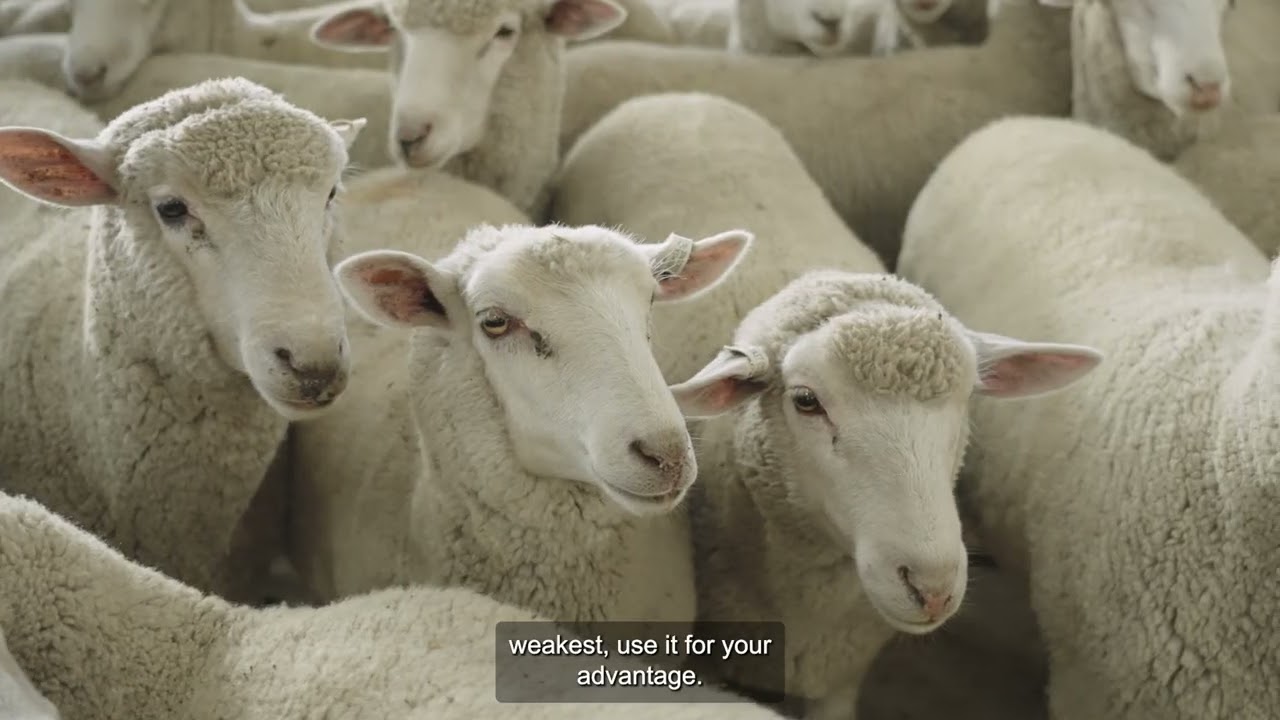
A primary benefit of this digital infrastructure becomes evident at the conclusion of the sale, where staff must upload all transaction data to the National Livestock Identification System (NLIS). While agents in the yards may spend slightly more time scanning during the event, this effort significantly reduces the workload for office-based background staff who would otherwise have to manually enter all that information. Consequently, the overall time required to process a sale is decreased, allowing the entire operation to run more efficiently. Furthermore, the speaker argues that if farmers are investing in tags, they should utilize the associated data within their own flocks to manage stock effectively, such as identifying the best animals during severe droughts or determining which weakest livestock should be culled to maximize survival rates.
Beyond operational efficiency, EID provides a critical advantage for disease traceability, allowing authorities to track outbreaks much faster than was previously possible. The speaker highlights the devastating effects of foot-and-mouth disease in Nepal and the United Kingdom, noting that such events can remove entire industries from the market for extended periods. With rapid traceability enabled by electronic tags, farmers can quickly contain outbreaks, return to the market sooner, and protect their livelihoods and jobs. This capability is essential for maintaining confidence in the industry and ensuring that producers can recover quickly from biological threats that could otherwise cause long-term economic damage.
To fully realize these benefits and remain an integral part of the supply chain, it is imperative that all participants do the right thing by using electronic tags and ensuring they are consistently scanned and transferred as animals move through the system. Practical issues, such as tags falling out during shearing, must be addressed immediately because re-tagging animals in the sale yard consumes valuable time and disrupts the workflow. When everything functions correctly with accurate data transfer, the entire system operates much faster, helping to streamline processes from the farm gate to the final buyer. Ultimately, maintaining a robust EID system supports the whole industry by enhancing efficiency, improving biosecurity responses, and ensuring that all stakeholders can work together effectively.
Read the full video transcript
The impact for EID in the sale yards has
been very minimal for for myself and the
staff. I know from our point of view at
a sale yard, if we have a sheep that
escapes, we get them in. I can get my
hand one, and I know who belongs to them
straight away, and I can give them back
to the rightful owner.
In the background, you'll see that we
have our scanners, which are three-way
Hamilton drafts. The agents,
>> [music]
>> as they're categorizing the mobs, they
run through a three-way drafter, and
that is capturing the data that we need.
[music] They upload that into the
software on their tablets. That puts
them into the selling pens. That's
setting [music] up our sale. They move
those around occasionally, and when they
move a mob, the actual EID numbers go
with them. Once they're sold, [music]
they add a buyer to that sale, and then
it goes to the other end. Our main thing
is at the end of the [music] sale, we
have to upload the data to the NLIS. For
the agents in the yards, it probably
[music] takes a little bit longer, but
it definitely saves time back in the
offices for the the background staff
that have [music] to do all that. The
overall time to process the sale, I
believe would be less.
If you're going to put the tag in, you
might as well be use the data yourself
in your own flock. So, we've had some
horrendous droughts about, so if you
need to cull stock, if you've got the
database, you know your best stock. If
you have to cull, you'd cull your
weakest. Use it for your advantage.
If we get an exotic disease, we'll be
able to trace [music] it back far
quicker than we could before. So, for
me, that's a
a big advantage. [music]
Got to do a trip to Nepal, go over there
and look at foot-and-mouth disease in
Nepal, and to see the effects that it
has, [music] and actually hear from
their minister the effects that it has
on animals, cattle, [music] and sheep,
and goats is horrendous. When it hit the
UK, it put them out of the game for such
a long time. EID is a a for quick
traceability, [music]
so we can put our foot on it and get
back in the market and so we can all
have our jobs.
If you want to be part of the supply
chain, do the [music] right thing. Put
electronic tags and make sure that
they're scanned and transferred to where
[music] you're sending them. If tags cut
out at shearing time, please replace
them because it does cost us time
[music] in the saleyards when agents
have to actually re-tag things. And if
everything is in there and it is all
working, it helps us [music] get through
a lot quicker. That will help the whole
system.