Video summary
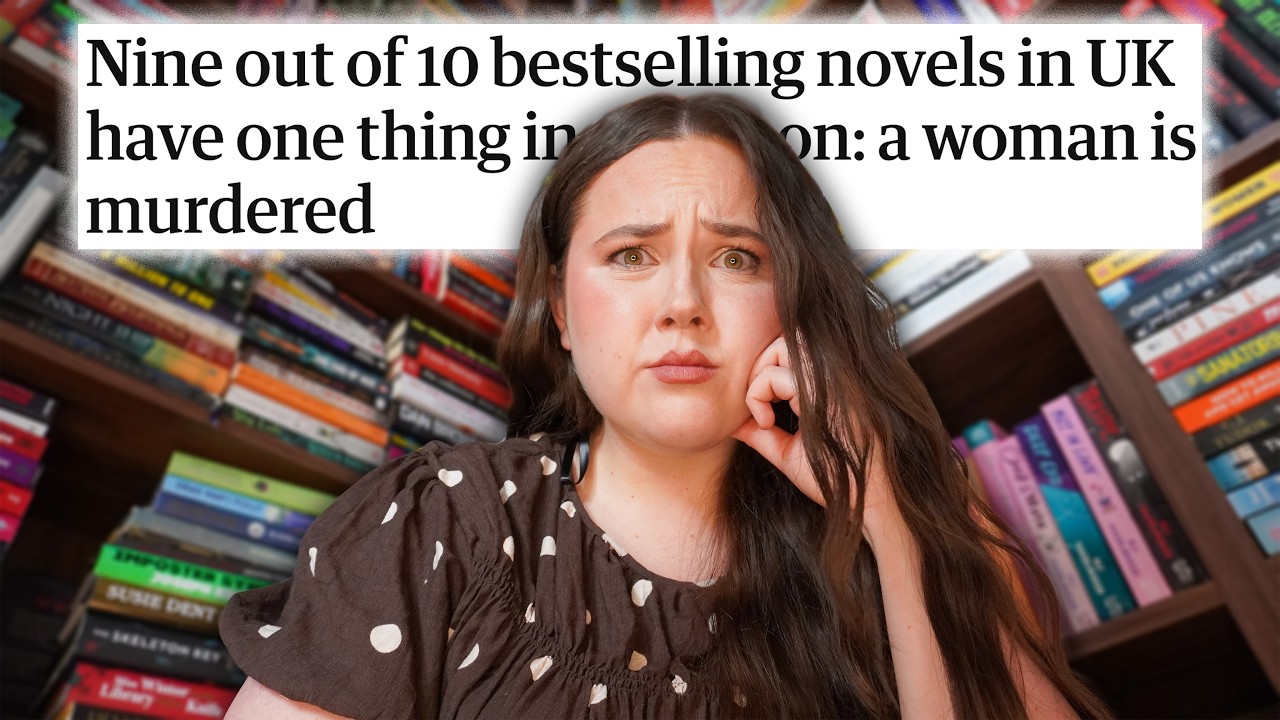
The debate surrounding whether crime fiction gratuitously murders women for entertainment was sparked by claims that nine out of ten UK bestsellers feature a female victim, a statistic later corrected to seven out of ten after clarifying that some titles depicted accidental or self-inflicted deaths rather than murder. While the genre is often criticized for relying on the historical "dead girl" trope, authors and experts argue that this narrative device serves a deeper purpose: it allows readers to process real-world dangers, reclaim control over their own stories, and critically examine societal issues regarding violence against women. Rather than endorsing harm, many writers use these narratives as a safe space to confront trauma, with some intentionally subverting expectations by focusing on toxic relationships between women or exploring the psychological complexities of abuse rather than relying on sensationalist gore.
However, the genre is not monolithic, and there is a significant spectrum of quality ranging from works that reinforce harmful stereotypes to those that offer nuanced explorations of justice and closure. While some thrillers depict women killed by strangers—a trope that contradicts real-life statistics where intimate partners are the primary perpetrators—other authors leverage these misconceptions to challenge the "ideal victim" theory and the availability heuristic. For instance, books like *The Names* carefully address domestic abuse with empathy, while others like *I'm the Girl* delve into the complexities of grooming without demanding that victims be perfect to deserve justice. This distinction highlights how intentionality in storytelling can transform a potentially exploitative trope into a powerful tool for social commentary, holding a mirror to society rather than simply sweeping violence under the rug.
Ultimately, the discussion rejects broad accusations that the entire genre kills women solely for entertainment as reductive, emphasizing instead that readers often seek closure and justice in fiction because such resolutions are rare in reality. Although some authors withhold traditional happy endings to reflect the harsh truths of the world and challenge reader expectations, others provide comforting narratives where rational detectives deliver justice, offering solace in an uncertain environment. The video concludes by encouraging specific critique over simplistic condemnation, urging audiences to recognize that engaging with these stories can be a feminist act that validates women's struggles and fears, ultimately fostering a more honest and constructive dialogue about gender dynamics and violence.
Read the full video transcript
A couple of months ago, The Guardian
published an article about how in one
particular week, nine out of the 10
best-selling books in the UK featured a
woman being murdered. And it asks the
question, is crime fiction relying on
women being killed for entertainment?
Now, I am a big reader of of mysteries,
of thrillers, of crime fiction in
general, and so I do really want to
interrogate this. Do we kill women for
entertainment? Do we murder women for
entertainment in our fiction or is there
a little bit more going on than that?
Let's get into it.
Okay. Hello everyone. My name is Megan.
Welcome if you're new. I just want to
get straight into it. So, here are the
10 bestselling books that we are talking
about. This is the bestseller list in
the week that started this conversation.
an Instagram post by Wendy Jones was
kind of the originator of this
discussion talking about how nine out of
the 10 of bestselling books in the UK
featured a woman being murdered and then
the Guardian did an article on it and
there was quite a big discussion about
it and I think I just wanted to take
some time to speak to some experts to
speak to people in different fields that
would have different opinions on this
and to do some thinking on this for
myself. So yeah, from this list I've
read two of the books. Two books I think
were five stars for me. Two of the books
that had women being murdered in them.
The only one that the article says,
which we'll get into, the only one the
article says doesn't feature when being
murdered is the correspondent, which is
about writing letters. All the other
ones feature women being murdered, says
the article. You know, I want to talk
about those two books in particular a
little bit later on, The Names and The
Impossible Fortune because I have
thoughts on both of them. But yeah,
obviously [laughter] this is the
bestselling books in the UK. Obviously,
a lot of people are reading books with
women being murdered in them. That's a
fact. I guess I want to start with my
initial reaction when I saw this list,
right? My initial reaction was it's a
little bit simplistic. I think the
argument that both the Instagram post
and the Guardian was making, I think
there's a lot more going on that needs
to be addressed that perhaps the article
didn't address and the Instagram post
definitely didn't address. we will dive
into some negative aspects that I think
having a preponderance of women being
murdered in fiction um causes and on
especially on a zoomed out level. But
yeah, I kind of want to speak about my
initial reaction to the story first. So
that list is very crime fictionheavy,
right? I think out of the nine books the
woman is murdered in, eight are crime
fiction, could be categorized as
thrillers, mysteries, crime fiction.
When I decided I wanted to do this
video, I knew I wanted to speak to
people from a wide array of of opinions
on the topic. And I am so lucky actually
that I got to speak to Claire Douglas,
who is one of the authors on this list
coming at number five, but the family
friend. And so I guess to kick us off, I
wanted to hear her opinions when she saw
herself being part of this discussion.
I was quite shocked I have to say
because you know when I'm writing the
story so like all my books have got
different not the some most of them are
women that have murdered just because
it's more of the emotional connection
between the women that my books are
about so head happens to be a woman that
gets murdered but some of them have been
a man and some of them have been
obviously no murders has just been like
other psychological like you know
aspects so I was quite surprised what I
saw and then I was like oh my gosh yes
my book do I see who's the main
character in the She does get murdered
right at the beginning and I was like
gosh she Yeah, it is. And then I looked
back and then I thought back to all my
other books and I was like nine times
out of 10 it's a woman that gets
murdered out of like I've written 12
books and I think like nine eight or
nine of them have been women. But I
think that's for me that's because I do
write mostly about women and about
women's relationships and they're like
like toxic friendships or toxic
relationships. So that's why when you've
got the proper crime where there's a
serial killer and you know most of the
time it's serial killer like targeting
women and then you've got my books which
are aren't about a serial killer. It's
more about a relationship between a
group of women say and then one woman
might kill the other or a man but most
of the time my books do seem to be women
do seem to be the perpetrators actually.
Um, and I think it's because my stories
are more about like the relationships
between the women.
>> Women read these books. Women write
these books. Out of the nine books
mentioned on the list, six are written
by women. And women are really
predominantly the readers of crime
fiction. I think it's believed to be
somewhere about 64 to 80% of crime
fiction's readers are women. Crime
fiction is dominated by female authors
and has been throughout history. You
look at Agatha Christie, Dorothy Elsa's
back in the 1920s and30s. What other
genre at the time was dominated by
women? I don't think there was one,
right? And now I would say it's still
dominated by female authors. And so part
of me feels that to tell women to tell
women what you are reading is wrong. I
think to have this moral assertion that
you as a woman are so dumb that you
can't see how you are contributing by
reading this to a negative place,
negative connotations in society for
women. I think that's a bit ridiculous.
[laughter and gasps] I don't know. I
don't know if that's crazy to say, but I
think yes, as we'll get into, yes, there
are negative portrayals of women being
murdered in books. Yes, there are books
that don't take care. Maybe I'm kind of
at the end of the video already. I do
have a lot more to say, a lot more to
get into. But my initial reaction was
like readers are more critical than
that. And in terms of what I read, and
again this might be a bit of a failing
on my part, that I read very specific
books that do take care and do take
nuance. And so perhaps I didn't quite
understand some of what's out there at
my initial reaction. My initial reaction
was readers read critically. Readers
read
with a view at what the book is doing,
what commentary it's giving on society.
And I just kind of felt like, yeah, it
it felt like it was a little bit looking
down on both women readers and writers
of the genre and not understanding what
what they may be doing with having a
woman murdered in their book, what they
might be saying with that. This is
actually one of the things I spoke to
Caitlyn Phillip about, who is professor
of library and information science, and
also has a law degree, has specialized
in kind of true crime representations of
the legal field and stuff. And so I
spoke to her about this, and I think she
had something really interesting to say.
I mean, I think that like my initial
reaction to this is like I think that
there's an extent to which it is true
that like the murder of women is over
represented in media about murder,
>> but I don't think that there's any world
in which it's reasonable to say that a
representation of something is an
endorsement of it. I'm immediately
suspicious of someone claiming that a
genre that is often largely written and
read by women is bad for women because
it strikes me as like a disingenuous
um account of like moralization of how
women should be and like we don't know
how to consume stories. Um it it's a
profound lack of faith in the
intelligence of the reader. There are
also some that argue that reading a
book, reading a crime book written by a
woman about women, about women's
struggles perhaps, is an inherently
feminist act. That through doing that,
there is a reclaiming of the violence
that women are subject to in society.
There is a retelling of the narrative.
There is an examination of the narrative
through that. Also, I mean, this was a
big argument for books like this in the
Guardian article, and it's not one that
I'd ever really considered in my own
reading. We'll kind of get into why I
enjoy reading these books in a second,
but a lot of people argue that through
reading crime fiction, women are
processing a very real fear.
Psychologist suggests that there is a
biological drive to avoid becoming a
victim. And there are real dangers in
the world that women are subject to.
There is an inherent danger to being a
woman. And so I think I can understand
that. I've never really seen that in my
own reading, but I I think it must be
part of why women read these books, why
women are drawn to these books, is to
process the dangers that exist towards
them in the world, and why women are so
good at writing these books as well. I
think for me um it's like imagine in my
worst case scenarios like you know I'm
not a detective or anything like that.
I'm just a more regular woman and I just
think you know what how would I feel if
this happened to me or you know if
neighbors moved in next door and they
were they knew me maybe from the past or
they were like wanting to or I overheard
them talking about crime or you know
like it's it's I tried to put myself in
the situation of the every man every
woman type person um and think this is
interesting to me because I you can put
yourself in that position can't you? I
think you can say think to yourself,
right, this could actually be me. It's
hopefully it's not going to be me, but
it it could be. And then I think that
gives it more of a realistic slant when
you're reading it. I've been reading a
little bit of young adult mystery and
thriller lately. And I've been thinking
about how those authors are very
specifically thinking about teaching
their readers how to think about like
the justice system and how to think
about like their own uh teen often
female relationship to it. And I know
that you like uh the Girls Guide to
Murder series. And I think that like
what's really compelling about that is
how it shows the sort of like realities
um of like how Pip experiences trauma in
a way that is like not accessible
necessarily in many other types of
media. And there are girls who
experience trauma and for whom it's
really powerful and important to see
that being represented and to see
someone having like a rich complex life
around that is really profoundly
important and I think that that
importance is probably for me more
important than the risk. Speaking of ya,
someone that I really wanted to speak to
about this topic was Courtney Summers.
And we're going to get into actually the
genesis of why I wanted to speak to her
in a little bit. Um, because there's a
really specific reason why I wanted her
perspective on this. But she has, I
think, some really valuable things to
say about why there is a demand for
books examining violence against women
and why that is something that's very
real for a lot of readers.
>> Hello, Meg. Thank you for letting me
speak on this from my throne of books
about dead girls. Yeah, we regularly see
female characters who are underwritten,
objectified, sexualized and brutalized
as a form of entertainment or
titilation. That content does exist and
there is unfortunately a demand for it.
We live in a world that normalizes the
demand by electing known abusers of
women, celebrating known abusers of
women, uplifting and supporting the work
of known abusers of women. But it it
feels to me kind of like the article is
saying books about dead women shoulder
the weight of that normalization
by asking authors and readers to justify
a category of fiction or a narrative
choice by assigning a moral value to it.
I don't think fiction is like the
largest piece of a puzzle that, you
know, for example, kept Epstein Island
in business all those years, but I do
think books frequently reflect the place
we find ourselves in as a society and
are a great way to confront and
challenge what we see in that mirror.
But the the question that is being posed
um since it is being posed across such
disperate titles feels like it's more or
less asking should it exist at all and I
believe very strongly in the freedom to
read. You know our intellectual freedoms
are currently under an unprecedented
attack. Assigning a moral obligation or
responsibility to authors is defined by
what exactly? Just simply having a dead
woman in a book um makes it very easy
for book banners to do their job. But
anyway, and as an aside, it's
interesting that when we talk about
these books, we say this is a book about
a dead woman, right? But we're not
saying this is a book about a violent
man.
So yeah, I think that was my first
reaction as someone who is a reader of
this genre is that it felt too
simplistic an argument and like it
almost wanted to ignore who is reading
these books. Yes, men do read these
books, but like I say, the readership of
crime fiction is between 65 to 80%
women. This genre is not built on
violent men reading about violence
against women and getting ideas or
something like that. It is built on
women readers wanting to read about, I
guess, yeah, violence against women,
prepare themselves, process those fears,
uh, in a safe environment. And our
brains like to view danger from safety
in order to kind of process those kind
of circumstances ourself. Okay, so we've
touched on why people read these books,
why women want to read these books, but
I would be remiss to not acknowledge the
dead girl trope. This is a trope that
has existed in literature throughout
history as something that has appeared
time and time again. And I think
sometimes, yes, there is a laziness.
Listen,
crime fiction is a spectrum of quality,
right? There are, and we'll get into
this, there are going to be incredible
books out there. There's going to be
some not so good books. There's going to
be books written by incredibly
intelligent people who have such care
and such nuance to what they're writing.
There's going to be books that are
written by intelligent people, but maybe
not trying to say too much, but what
they are saying, there's intentionality
behind it. And guess what? There's books
written by dumb people. [laughter]
There's books written by dumb people.
Let me say that. or just people there
are books that don't have care to a
representation right and so this
perpetuation of the dead girl trope has
existed throughout history and I think
sometimes it does come from laziness the
things that you can say by just having a
young innocent dead girl the kind of
ease that gives you to get into the
narrative to maybe get into realizations
that gives you a detective etc etc I
think sometimes that does come from
laziness right and there must be
something also Though even when it is
used with intentionality, there must be
something that we find compelling about
a dead girl in the book for it to be
something that we come back to time and
time again. Someone who I loved speaking
to about this was Dr. Nicola Bishop, who
is currently academic enhancement lead
at Deont University, but has previously
been a senior lecturer in English and is
very much specializing in crime fiction.
So, she actually taught me some stuff I
didn't know about the history of the
dead girl trope, which I think was super
interesting. So the dead girl trope is
really interesting though because there
is um a body in the library. I don't
know if you've started on the Marple
books yet, but one of the Agatha
Christie ones where she actually she has
she says in the Christy writes a little
bit in the beginning, a little forward
where she says um I want to do something
with this kind of trope, the kind of the
unlikely body in the unlikely place. And
she says, I'm going to take the most
sort of sensational body I can think of
and it's this platinum blonde woman on
the floor of the library of the really
respectable character. And and so it's
interesting that she already references
that and is kind of joking about that
trope and and has tried to find a way
because somebody has sort of said to
her, "Oh, you don't do that." She's
trying to bring that into her fiction,
but in a very kind of silly way. So she
she's playing with that idea. So clearly
it was something that existed before. So
yeah, obviously for Agatha to be
referencing it and kind of playing with
it already at that point, it must be
something that was already pervasive and
known back then. I like Agatha's
acknowledgement that she is purposefully
playing with this trope and kind of
upending it. And I think that's what the
best authors do, right? Like they may
use a trope. They may use a stereotype,
which is very common in murder
mysteries. And as a murder mystery
reader, I do enjoy when you kind of have
these authors that are caricatures,
right? Lucy Fley does this a lot. at the
back of her book, there'll be like the
struggling artist, the drunk best man or
something. One of her books, all of her
characters can be distilled down to a
stereotype, but she's going to play with
those stereotypes. Maybe not overtly,
maybe not like, oh, I'm being so clever
here and I'm upending these stereotypes,
but she's going to play with what you
expect from that character and perhaps
upend it, perhaps give you something
unexpected or perhaps give you something
expected. But she's intentionally
playing with those stereotypes rather
than just using them because they're
easy. But also, there must be a
psychological reason for this reliance
on women as victims. And with the dead
girl trope, is it an indication of how
women are viewed in society, or does it
also then inform how women are viewed in
society? I was lucky enough to speak to
Martin who's a legal psychologist, and
we touched on this, and they had some
really astute things to say. I feel like
I learned a lot from speaking to Martin.
So, I'll put a few clips in now of some
of the stuff they said. So, back in the
80s, this sociologist and criminologist
Neils Christie came up with this idea of
ideal victim theory, which is the idea
that certain victims or certain people
who suffer from crimes, whether they
survive or in the case of homicide do
not survive. That some of them are more
likely to be seen as sympathetic victims
and that they should have justice
bestowed upon them. that the system
needs to work on their behalf.
Specifically, there are five to six
tenants depending on who you ask about
what constitutes an ideal victim. First
and foremost, the one at the very top of
the list is that they should be weak.
And when Christy wrote his original
paper about this, he used a frail old
woman as the example of the epitome of
weakness. Specifically in our western
cultures today, that's the idea of a
weak victim. But even outside of an old
woman, he centers that first point on
women and children generally.
And so to be seen as a victim worthy of
help, worthy of belief, the very first
tenant that he puts forward is that they
should probably be female. So I guess
from this we can ask, are we doing women
a disservice from presenting them as
victims so much? Are we perpetuating an
idea that women are victims? Women are
weak. Women need protecting. Women need
need the legal system. Need a need a
detective like Puerro to step step in
and defend them and get them justice.
Does it reinforce the idea that women
are someone that violence is done to?
Are we perpetuating that idea? And does
it normalize violence against women? The
more that we view women as weak, the
more that we view women as someone at
least protecting, are we more and more
unsurprised by violence against women?
And is it more and more common for an
aggressive man to view a woman as
someone that they can inflict violence
upon? I think that's a real
consideration, right? And I guess it was
one that I kind of initially dismissed,
but the more that I think about it, I do
think it has some weight to it. But I do
find it hard to draw the line between
these books are normalizing violence
against women, we shouldn't have them,
and violence against women is a very
real thing, right? Violence against
women is an incredibly real thing. and
we shouldn't sweep that under the rug.
These are real stories that we should
talk about. To hide something isn't to
stop it happening. I want to dive back
into the list. I want to discuss and
break apart this list a little bit more.
And maybe you'll see why I have some
issues with the Guardian article in the
Instagram post. So, here's the top 10.
It asserts that nine of these 10 a woman
is murdered. Okay,
incorrect. Incorrect. Your honor,
incorrect. Seven out of the 10 feature a
woman being murdered, which is still a
lot, but it is not as many as the
article was saying. And on the Instagram
post, let me actually get it up because
I don't want to like say incorrectly
state what they're saying, but Wendy
Jones, peace and love to you, Wendy, you
know, peace and love to you. We just
maybe have different opinions on this.
She says, "So nine out of the 10 of the
top best-selling books or of the 98,000
books sold this week in the bestseller
list, 81,000 had women being murdered as
central to their plot." So, and here the
math ain't math. So, 84% of the books
people bought and read in the UK this
week involved a woman being murdered for
[snorts] entertainment. Listen, a lot of
books are bought that are not on this
top 10 list. And obviously crime fiction
is super popular, is super well-loved,
well bought, but there's a lot of books
bought that are not on this top 10. And
so that's where the math math and trying
to say by this logic, 84% of the books
people bought in the UK feature a dead
woman is not correct. Also, it's not
nine out of the 10 of the books that
feature a woman being murdered. It is
seven out of 10. And I found that out in
like 5 minutes from doing some research.
And I think it would have been easy for
either Wendy Jones for making this
Instagram post or for the Guardian to do
their own research on that and to know
the woman is not murdered in two of
those books. Seven is still a lot. It's
still a huge chunk of the list. But it
isn't nine out of 10. It's seven out of
10. And I think if we're going to
interrogate this topic, it has to be
done with specificity and seeing what
these books on an individual level are
doing. But all these books are doing
something different and presenting women
in different ways to a better or worse
degree. The two books that it asserts
feature women being murdered that don't
are The Impossible Fortune by Richard
Osman. I'm going to give a little bit of
spoilers of these two books. So like,
you know, skip ahead a little bit if you
don't want to know. But Richard himself
on his podcast when he spoke about this
topic is like, "A woman isn't murdered
in my book. Woman isn't murder in my
book."
>> But you actually look at the list. It's
it's it's slightly disingenuous to say
it. Firstly, I mean, I'm on the list.
I'm in the top 10 and a woman isn't
murdered in my book. So factually I I
can't speak for everyone else but there
but there isn't one in my book. So I
mean fine.
>> So it is a little bit murky. I guess I
can understand if someone hasn't read
the book why they may think it. But
essentially a female character places a
bomb on someone else's car. Then someone
takes that bomb and places it on her car
as like a warning. It is not intended to
kill her. It's intended as like a a
recognition of what she's done and a
warning to her to not do it again
essentially. And the bomb goes she sets
it off accidentally and it goes off and
kills her. So she does die. Women do die
in both these books but they aren't
murdered which is what the Instagram
post and the Guardian article assert.
And then in the divorce by Freda McFaden
which listen I'm not afraid to defender.
I'm not about to be afraid to defend
her, but a female character in this I
think this is like real spoilers for the
ending, but a female character does die
in a fire that she sets herself to cover
up some of her crimes. So, it's seen as
self-inflicted. A man is also murdered
in this book and she dies kind of a
self-inflicted fire. You know, there's
other books on this list that maybe a
man and a woman die in. Not to I really
don't want to mention this person. I'm
not even going to say her name. We'll
use the pen name, Robert Galbrath. If
you know who that person is, you know, I
I'm not going to I am not going to
defend this person. [laughter] Let that
be for sure. But just an example, it's
called the Hallmarked Man. A man is the
main murder. A man dies. A woman does
die. A woman is murdered in it as well.
She is a student/ only fans model. And
perhaps from that we can already glean
that there there is a little bit of a a
using a woman's job to maybe view her as
an unworthy victim. I mean I haven't
read the book but I think I would not
expect anything more from this author
than to rely on base stereotypes and
have no nuance and be like oh this woman
got killed cuz she was an only fans
model. You know that is I think a bit
part of the course. So already there, I
think we can see there's probably a
spectrum on this list of good
representations of women and
interrogating the dangers women face and
perhaps bad bad representations of
women. I do just want to touch on one
book that I think I was defensive off
immediately when I saw it on the list
and saw it included as part of the
discussion. This is not a crime book.
This a woman is murdered in this book,
but it is not crime fiction. And that is
the names by Florence Snap. If you don't
know this book, and I'm gonna give some
minor minor spoilers for this book, this
is kind of a contemporary following the
lives of a boy and his family. And we're
following three different timelines. And
those three different timelines are
based on a decision his mother makes on
what to name him. What you know from
very early on in the book is that his
mother is an incredibly abusive
relationship. Incredibly abusive. one of
the most odious men I've ever had the
displeasure of reading. But also one of
the most tender, nuanced, care taken to
represent the life of a woman suffering
from domestic abuse. I think this book
is incredible. I gave it five stars.
Spoiler. I gave this book five stars. In
one of the timelines, spoiler, she is
murdered by her husband. But in other
timelines, she is not. In other
timelines, spoiler, she goes on to live
a very fulfilled life, a very happy
life, a very joyfilled life, a free
life. In other timelines, perhaps she
doesn't. Perhaps she doesn't die, but
she says an abusive relationship. And I
do feel like the murder of this woman in
this book is not gratuitous. You don't
really know details of what happened in
the murder. You just know that she dies.
And it's heartbreaking. [laughter] It's
I'm getting choked up just thinking
about it. But I don't really want to use
the word beautiful, but this book is
beautiful. It feels like it wants to
wrap its arms around every victim of
domestic abuse and tell them how strong
they are and tell them how capable they
are and tell them how proud of them they
are. It is not done in a way that is
done without care. And I think to say
that in this case a woman has been
murdered for our entertainment,
I think that is totally reductive and
totally ignoring what this book is doing
and the beauty of what this book is
doing, you know. So I just wanted to
say, you know, I haven't read every book
on this top 10 list. I won't read every
book on every top 10 list ever. Wendy is
continuing on many weeks, I think, on
her Instagram to post the top 10 books
the week and count how many a woman is
murdered in. And I think just to if
you're not reading the books, babe, if
you're not reading every single one of
them, I don't think you can assert that
it's a good representation or not, that
it's dangerous or not, you know? And
actually, the majority of books, like on
this list, like I said, are crime
fiction. But what I think is important
about them is they are not gratuitously
violent, right? They are not depicting
the violent deaths of women, the violent
killings, slayings of women. often they
in fact are doing the opposite which is
something I spoke to cla about and it
was fascinating to hear her perspective
on this as an author writing in the
genre
>> and also my books there obviously that
people are murdered or pushed or you
know whatever but I try not to focus on
the gratuitous violence of I don't like
reading books myself that are very
violent or watch things that are too
violent towards women on telly and
whatever so I try to sort of most of my
books have been like a spur-of-the-
moment murder rather than a planned
meticulous you know like a push like
like a you know moment of like anger or
whatever rather than it being really
violent and bloody because I don't I
won't want to read that myself so I
don't want to write that either it's
quite a dark space to be in I think
>> Rich Osman also spoke about it
>> the stuff that was selling there was a
lot of blood and gore and violence and
all this stuff and I just I didn't like
it it's not what I wanted to read I want
to write about crime and I want to write
about wrongdoing but I'm I'm not
interested in that side of
at all. And I think almost all the
writers on this list are not interested
in it either.
>> Blood and gore is not what is popular in
crime fiction today. And this actually
ties back to what has been popular at
different times in crime fiction. This
is something I spoke to Nicola about
that actually crime fiction was super
duper popular during the World Wars.
This was a key part of her research. And
so I asked her about this and I think we
can already see some parallels that we
can draw.
>> Crime fiction was hugely popular during
the wars and in the inter war period.
Crime novels didn't often mention the
war and people were the the level of
violence in society because of the fact
there was kind of mechanized warfare
does mean that people were not keen to
have very barbaric crimes in their crime
fiction. That's why we get the kind of
cozy crime trope because people wanted
to deal with the mystery. They wanted
the rational. They wanted the detective,
the police person to come and solve it
all. But they didn't want to deal with
kind of in-your-face violence because it
was a society that just wasn't in the in
the space for that. And so that I think
the tropes there are the body is found
but it's not it's not grotesque. It's
not gruesome. It's just sort of um done
quite quickly and over and you kind of
move on. I would say that with the
emergence of of cozy crime of more
murder mystery style stuff like the
Thursday Murder Club by Richard Osman.
We're seeing a return to that right or
Agatha Christie back in the day right
who wrote during the world wars. In act
of the book you don't really ever see
the death. the body is kind of like
discovered maybe in the library or
something and often she would use
poisoning as a as a method or yeah there
wasn't like blood and gore there wasn't
a description of a violent slaying of a
woman. There must be something similar
happening now happening now for crime
fiction to be making up like eight out
of the 10 best sellers of a week and for
crime fiction to be have been so popular
during world one and two where they
didn't want the violence they didn't
want the gore but they did want the
rational detective coming in and solving
the mystery solving the crime and having
that reassurance at the end which we'll
get into. I think there's something to
be said about our mental capacity, our
mental health right now in a world that
feels increasingly uncertain, that feels
increasingly hopeless. I think on an
individual level, we've never felt more
fragmented and more disconnected to each
other. Social media, our phones rule our
lives. We have to get devices to brick
them. I would like a brick. I must
admit, I would not be adverse to getting
a brick myself. I think there's
something to be said about the safety
that comes from a murder mystery that is
solved. The rational detective figure
comes in and fixes it that we must be
craving now. I think it is kind of crazy
to say like we are as depressed as they
were during the world wars. But I think
there's a link to be made there in the
kind of fiction we're wanting to pick up
and how we're struggling mentally as a
society. You know, I want to talk a
little bit about why I love murder
mysteries, okay? Cuz if you're new here,
I am a big big murder mystery girly. I
read like so many murder mysteries. It's
my main genre. And I think, like I said
earlier, for me, the kind of processing
of the fear, processing of the danger
that might be um compelling for some
people isn't really why I read the
books. I love murder mysteries because I
think there is a comfort, like I kind of
just mentioned, going into it knowing
that the murder will be solved, all the
clues unraveled, all the suspects spoken
to. There's a formula to it more so than
some other genres. I'd say things like
romance also have a formula they follow,
but murder mysteries definitely have a
formula they follow, and it's a formula
you can play with, and I really love
when when books play with that. But
there is a set of rules. There is a
comfort that comes from the death being
solved, right? From from seeing it all
wrapped up, and from seeing that person
get justice, the bad person taken away.
They're put away, never to be seen
again. You know, research has shown that
humans have an innate desire for
cognitive closure. You know, it's also
been said that murder mysteries are kind
of like fairy tales for adults. They
have that structure. They have things we
can learn from them, and it helps us
move from that fear to reassurance. It
takes us on like a helpful brain path.
You know,
>> it's a sort of sanitized version of real
life, isn't it? Where something bad can
happen like it does in real life. But
there is always a solution and there is
always it's more about in fact the
detective than it is the crime. And it's
more about the detective than anything
else. And that's why detective figures
are so pervasive and why we love them,
you know. So PRO who's this big cult
figure, you've got Marple, you've got
people characters like Vera, you know,
you've got um all these different
detectives. Sherlock the big one. Yeah.
But they we want that's the bit of the
story really that is the most important
isn't it? So whatever the crime does um
whatever happens to the victim what
we're really invested in is the
detective and the detective is the most
comforting figure in fiction because
they are somebody who can save you know
humanity society from its worst things.
So the worst the humans can do to each
other the detective is the kind of
savior in that scenario. And so I think
that's what's so important and maybe
that's also what's important about the
sort of 21st century crime and the kind
of the the way that violence against
women is talked about in the crimes
because actually maybe it's the
detectives that's changed who have
changed. So you know Vera is a very
strong female detective figure and so
perhaps that's part of the changing
narrative as well. It's about agency for
women. So perhaps they're seen things
happen to women in the in the novels,
but equally women are the new saviors
because it's these female detectives
that that have that power. And I mean
that's doesn't mean it wasn't true in
the gold because like I say, you have
you have Marple, you have plenty of
other kind of female detective figures,
but it is because actually the detective
is the most important person. So maybe
the victim is not the main part of the
book, but the how we respond to it is
and how the detective solves it is. And
that's what makes us feel so comforted.
>> And so that was one of my initial
assertions, right, was that it is good
that these books exist. It is good that
these books are telling women's stories,
stories of women being murdered, because
their killer is always apprehended.
Their killer is always brought to
justice. They they always get justice,
these victims, which doesn't happen in
real life. I've seen so many examples of
victims not getting justice in real
life. And this is something that I spoke
to a lot of my interviewees about and we
spoke about you know the importance of
that.
>> But I do think I have thought about this
and I because I do read them as well. I
read these books. I think for me the
reason the reason why I enjoy them and I
say enjoy is a loose term but you know
um is because I think you get a sense of
justice. So when you're reading these
books there is and obviously in real
life you have these awful cases and
nothing ever happens you know nothing it
doesn't get resolved. Whereas with a
book, you know, they do get resolved and
and the and the baddie normally gets
what's coming to them, don't they? That
is one of the reasons I think that they
are quite popular. And I suppose when
women read these books, maybe they're fe
I don't know. Obviously, I have to speak
for myself, but you sort of almost feel
like you take back a little bit of
control there. Do you know what I mean?
You're taking the control back. You're
reading a book and you're
[clears throat] thinking this person's
going to get caught. We're going to find
out who it is. They're going to get
their just desserts. They're not going
to get away with it. Whereas obviously
in real life, you don't have that. So
that's that's that's how I look at it.
So belief in a just world is basically
this simple idea that people have this
just world fallacy which means an
incorrect assumption or belief that the
world is fair that good things happen to
good people and bad things happen to bad
people and part of that fallacy again
leads us into that fiction where we go
okay we have this fallacy and we want
the bad guy but it also reinforces the
fallacy in all of the stories that I
read they catch the bad guy justice is
brought to this victim And so just like
the ideal victim theory, we're seeing it
both bleeds into the fiction and then
directionally reinforces it after we
read that fiction so that the cycle just
continues. But absolutely, people want
to feel safe. And the easiest way to
feel safe is to feel like things
wouldn't happen to you, which is why we
get victim blaming or we're looking at
non ideal victims in some cases. So
women who purposefully went to a place
that they shouldn't have been in, for
example, or have specific jobs, for
instance. [snorts] That's a popular
trope, right? And also the belief that
at the end of the day, good people will
get good things and bad people will get
bad things. But then this is part of the
reason why I wanted to speak to Courtney
Summers. Let me get some of her books
up. Here they are. Here's my little
Courtney Summers collection. I actually
do have some that are missing that some
family members have got right now. But I
love Courtney Summers books. I love her
books and she writes really about
violence against girls, right? But not
to spoil her books here, [laughter]
but often
they don't receive justice or they don't
receive justice in the way that you as
the reader might want. Some criticism
that she gets is like it doesn't feel
satisfying as an ending. But for me as a
reader, that is part of why I love her
books because it feels even more
emotionally devastating. But she always
does it in a way that feels real. She
doesn't shy away from
the reality sometimes that this awful
awful violence is enacted against women
and girls and they don't receive
justice. And so that made me I thought
of her and I had to unpack what I'd been
thinking. I've been thinking it's good
these books exist because it means women
get justice, but they don't always. And
in Courtney Summer's books, they don't,
you know, but I love them. And I think
that she writes about this subject with
such care and such nuance and such
intentionality and such intelligence.
And it feels like she's often
purposefully
interrogating the desire the reader has
to get closure, to get justice. And so I
wanted to speak to her about that, about
that need to sub subvert our
expectations and about why it's
important to her sometimes to withhold
that traditional closure and justice and
resolution that uh yeah, traditional
crime books have.
I know a little something about this as
someone who has written many books
centered on brutalized or dead young
women. Um, my novel Sadi is a commentary
on our consumption of media about dead
women as a form of entertainment. And my
novel I'm the girl is based loosely on
the Epstein case. And it asks some
really difficult questions about victim
blaming by committing to the perspective
of a groomed teenager. And these books
are largely defined by their open
endings and a lack of conventional
justice served. And some readers find
that really problematic. But I think
it's more problematic to undermine the
reality that upholds these narratives by
being dishonest in their portrayal
because it comes at the expense of the
victims and survivors who might see and
have seen themselves in it. And I'll
I'll always do what the story demands
with those considerations in mind. And I
back that up with due diligence when it
comes to my research and who I enlist
for outside reads. I can't control how
readers feel about my books. So I
measure my success in how clearly and
truthfully I feel my books are
reflecting their subject matter. And so
then I think I came down to the
conclusion that what's important is a
book that gives you something to think
about. A book that's written with
intent. stories that are ultimately like
probably running the risk of being not
good are the stories that don't give us
something to think about. Um, and that
aren't really doing much of anything.
And I do tend to think of like Freda
McVaten in that space. Um, because I
have such a sort of like problem with
how she's taken like the Jane Air story
into the housemaid and like turned it
into a nothing burger. [laughter]
>> Yeah.
>> Um, and there's like sort of like
nothing for you to do, nothing for you
to think about.
um just sort of like take it in
>> intent on part of the writer and then
intent on part of the reader. And I
don't want it to sound like everything
always has to be like super
intelligent and super having something
to say. And listen, I know there's some
cozy mysteries, co cozy murder mysteries
that are simple that I love that are not
super intellectual in intelligent books,
but I do still feel like they are
interrogating something. I think the
murder mystery genre when used well
interrogates of views in society,
interrogates stereotypes, interrogates
expectations and can do that with
tropes, with caricatures of types of
people. But when it's done well, it's
doing it with intentionality. When it's
not done well, it's just playing on
those stereotypes and tropes for easy
understanding, for easy thoughts, you
know. And I guess that is an difficult
distinction to make and one that I am
probably not doing very well, but I
think it's a really key distinction to
the genre. So I guess I'm kind of also
calling therefore some element of
critical thinking from a reader. A
reader not just brain off head empty.
And listen, there are books that I read
for brain off head empty, but I'm still
often it's like because I know they're
safe, because I know the author is not
doing things I think are immoral with
their stories, with their characters.
Like I love a lady hard castle. Those
series are doing interesting stuff, but
they are also kind of like playing into
the structure of the murder mystery in a
way that feels safe as a reader. But
sometimes we as readers do have to
notice when problematic
tropes are being relied on too heavily
or things are being done in a way that
doesn't reflect real life with no kind
of intentionality behind them. You know,
something that I think this is a little
bit of a tangent, but something that I
think is interesting is how often in
thriller books, women are murdered by a
stranger. A serial killer. I don't tend
to read a lot of like serial killer
books, but I think there are a lot out
there, right? Where a woman is is
walking on the street at night and
murdered by a stranger. That is not how
in real life women are murdered, right?
Women are traditionally murdered by
someone that they know, an intimate
partner, a family member. And so I think
it's interesting that the thriller genre
that stranger murder is something that
is so pervasive. It was super
interesting talking to Martin about this
about what makes a good victim from a
psychological perspective. What the
average person wants from their victim
and what they don't want from their
victim. And there are lots of other
things in ideal victim theory like the
idea that the perpetrator should be a
stranger to the person even though a lot
of homicides are committed by people
known to the victim. And also things
like that the victim played no part,
right? That we couldn't blame them for
what happened to them, that they were
just a stranger to this person going
about their daily lives. They were just
where they should have been doing what
they should have been doing and this
random big bad dude came and got them.
That's who we think of as an ideal
victim. And one of the problems that
even Christy points out is that we see
this trope perpetrated in media. And in
psychology, this brings up an issue
because we have this shortcut, this
mental shortcut, a heruristic called the
availability heristic where when we see
a word, for example, we think what does
this word look like, we think of what
we've had made available to us
information-wise. So when you think
homicide victim, because there are so
many instances in media of women
homicide victims, that availability
heristic grabs it and says women are the
victims of homicide. So where does that
leave us? [laughter] Where does it leave
us? I know I've spoken around a lot of
different subjects here, but what would
I like to see more of in fiction when it
comes to portrayal of women being
murdered? I think I am really enjoying
recently women being detectives of their
own stories. I didn't grab it, but Not
quite dead yet by Holly Jackson is a
woman investigating her own murder
before she dies. And I thought that was
incredibly incredibly powerful. The
agency that that gives her in that story
I thought was incredibly effective. I
also think it's important and I would
encourage everyone as much as possible
to kind of like Martine has mentioned
our idea of what a perfect victim should
be. I think that has to be really
carefully examined on an individual
level because of then how that affects
who we view as a perfect victim in real
life, a victim we can believe in real
life. So I think in books we have to
understand that the the victim shouldn't
be perfect in order to receive justice.
This is something that Courtney does in
I'm the girl, I think, to like an
incredible standard. So much so that
there was some critique of this
character, right, that that this main
character is a young girl who's been
groomed and Courtney is examining the
decisions that this groomed girl makes.
And I remember when I read it, you're
just like so sad how she thinks that she
has the power in these situations and
she doesn't. And I think to look at a
girl like this and to think she's
annoying when she's a victim of
grooming, I think like I would like to
see more unperfect victims and for
readers to see them and recognize them
still as victims who are capable and
deserving of receiving justice. At the
end of the day, violence against women
exists, right? violence against women
exists, but I think sweeping it under
the rug won't help at all. I think if we
were to suddenly get rid of all the
books in the world where a woman is
murdered and thus women aren't being
killed for entertainment, well, guess
what? Women are still going to be being
killed in real life by their intimate
partners, by their family members, by
colleagues, by friends. And as I've kind
of touched on, the best writers use
their books to unpack these questions,
to unpack gender, to unpack stereotypes,
to unpack uh violence against women.
They are using that to ask questions.
They are playing with societal
expectations. And like I say, it doesn't
have to be highbrow. Lucy Foley does
this. Richard Osman does this. A good
girl's Guide to Murder. YA does this.
Some of my all my favorite examples
really they are holding a magnifying
glass up if you'll excuse the pun to our
society what we like. Richard Osman does
this so well in kind of like little nods
to what we like as humans. His little
references to like a Tesco meal deal you
may think are flippant but in that he is
examining human nature and what we like
as humans. Why do we like deal? Why do
we like tipping point? It's very niche
and very central to the conversation. At
the end of the day, I do think and I
guess I've spoken broadly in this whole
video here, but to not speak with
specificity is letting the whole
conversation down. I've tried to speak I
gave an example of some specificity with
the book that I had read, right? The
names. I think just to look at a list
and count how many of the books have a
woman murdered in them without reading
them is
reductive, right? And I'm sure there are
books on that list, you know, I'm kind
of sideeying Fre McFaden and Robert
Galbreth probably. I'm sure there's
books on that list that don't treat
violence against women with care and
with nuance and maybe use shock factor
and maybe rely on killing a woman for
the easy shock that it would bring or
easy commentary that it could make. But
I think there's also a lot of authors on
there that don't do that. I love Richard
an author. I love the names. speaking to
Claire and hearing the decisions that go
into her books and the reflections that
she has on her books. I don't know what
clips I've managed to include, but you
know, there was one point where she's
kind of talking about her work as a
journalist where she worked as a
features author and would hear about
women's stories and women's lives. And
she hasn't directly add adapted any of
them, but all of the the knowledge that
she has absorbed by working with women
and hearing their stories, she is then
able to put that into her books. You
know, there's great intentionality
behind that, but not all do it great,
right? There's probably a lot of rubbish
stuff out there. [laughter]
Looking at Freda, you know, not to be a
Freda hater. Sorry, Freda, if you're out
there. I don't want to hate. I don't
want to hate. But I do feel like often
in her book, she relies on tropes in an
unhelpful way, in a reductive way. So,
I'm not trying to say that the whole of
the crime, fiction, thriller, mystery
genres are perfect. I'm not trying to
say that every author does this well.
But I think to kind of make some of
these broad sweeping statements that
that Instagram post and that article
made are reductive. Women read these
books. Women write these books. Women
work in publishing. These are all female
dominant dominated industries in a world
where female dominated industries are so
rare and they should be celebrated,
right? And there is a reason that these
stories are being told again and again
and again. You know, I feel like
Courtney put this incredibly. So shout
out Courtney. Play some more of what
Courtney said.
So the answer to why as the Guardian
asks fictions and and readers keep
returning to stories featuring dead
women is you know it's I think it's
complex but I don't think it's going to
be found by covering the mirror.
I think it's important these books
exist. [music]
I think many of them are doing something
important with what they are saying and
many are doing something important about
what they're saying in an incredibly
overt, intelligent, intentional way. And
some are doing it more quietly. I don't
think we should be reductive. I don't
think we should be simplistic in this
conversation. I'd love to hear any of
your thoughts about, you know, thrillers
or mysteries that you've read that you
thought did it with intentionality and
maybe didn't. I think there is a
spectrum, but I think just to say this
is bad, this is awful. We are murdering
women for entertainment in our fiction
is too simplistic. And at the end of the
day, a lot of these stories are based on
violence against women that is happening
in real life. And like Courtney says, we
should be holding the mirror up to it.
We shouldn't be sweeping it under the
rug, in my opinion. So, we have it
everyone. That's my little video essay
interrogation into violence against
women in mystery thrillers. You know,
there'll probably be people out there
who don't agree with my stance that do
agree that it's incredibly harmful that
so many mystery thrillers feature a
woman being murdered. And I kind of
think it's valid if you have that
opinion as long as you can back it up
and speak with specificity. I'm not
trying to say that my opinion is like
the be all end all opinion. That's just
my opinion. That's just my opinion. But
I'd love to hear any of your thoughts
onto this. Again, shout out to all of my
contributors, people I interviewed for
this. My interviews were incredible and
um I don't know how much of each I've
managed to put in here. They were each
like half an hour long. Obviously, the
video would be super long if I put them
all in, but they were all wonderful and
I've really enjoyed working on this
video project. I've loved it. I found it
so creatively fulfilling. I can't wait
to edit it as well. You know, I want to
give a quick shout out to my patrons
because my patron makes making videos
like this possible. I've been working on
it for like 2 weeks and or I will by the
time this video is up and so I can only
do that by having my patron. So if you
want to see more content like this um be
sure to join the Patreon because the
more people that join the more videos
I'll be able to make like this and
dedicate the time to it. But I would
love to do more stuff like this going
forward, more video essay style content.
So I really hope you guys enjoy it. I
think it's an incredibly important
conversation. I would love love love to
hear your thoughts on it down below.
Thank you so much for watching and I
will see you very soon in another video.
Bye.