Video summary
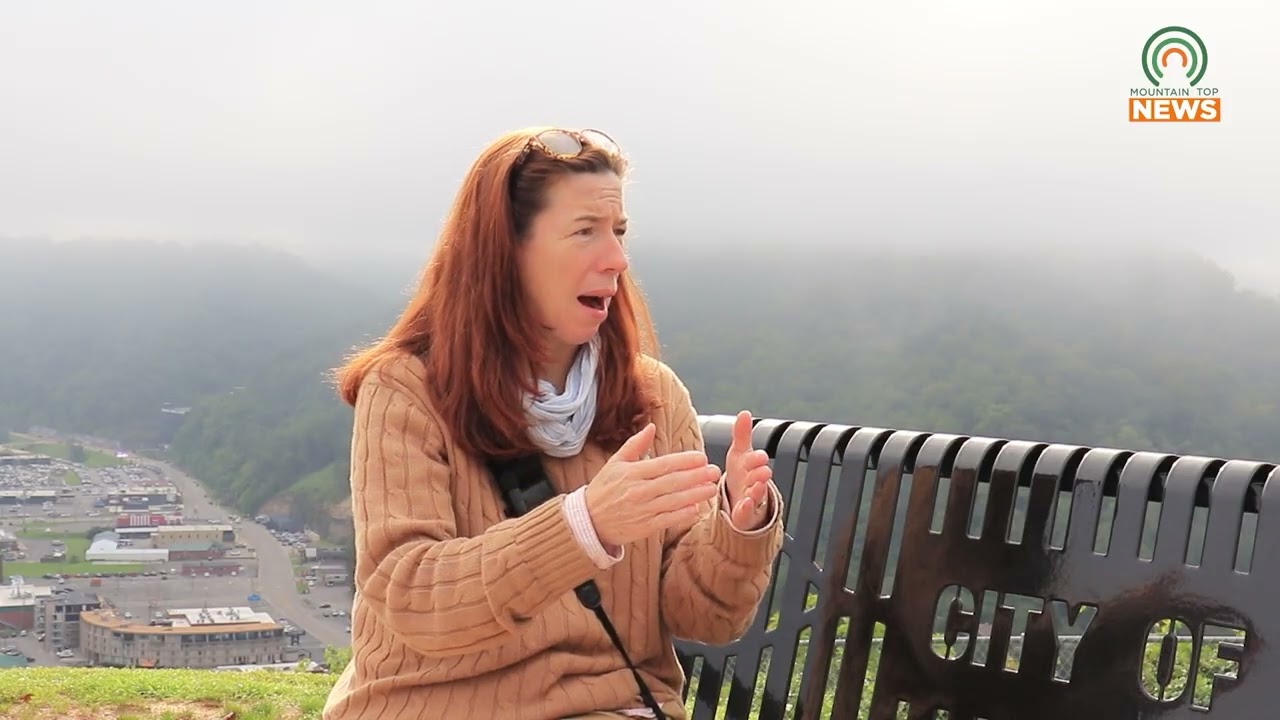
Documentary photographer Karen Lipowitz recently undertook a 7,000-mile journey to expose the severe housing crisis affecting Appalachia, a region often overlooked in national conversations about homelessness. Her investigation began when she stayed at a motel in Santa Fe, New Mexico, where she met individuals who had been living there for months. By spending time with them—riding buses, shopping, and eating together—she realized that a significant "shadow housing market" exists across the country, where people are forced to reside indefinitely in low-budget motels and hotels due to a lack of affordable alternatives. This experience prompted her to expand her focus specifically to the impoverished counties within Appalachia, aiming to shed light on a demographic that is much larger than most people realize.
Lipowitz challenges common stereotypes about homelessness, revealing that the majority of those living in motels are not merely individuals struggling with mental illness or addiction, but rather hardworking people holding traditional jobs. She notes that at least half, if not more, of the people she encounters work full-time, sometimes even holding two jobs, yet they remain trapped because these motels are not designed as supportive housing. The core issue is a severe shortage of apartments and mortgages, leaving families with no other options. Consequently, residents often spend upwards of $4,000 a month on lodging, which can consume 100% of their income, creating an inescapable cycle where they cannot afford to move into permanent housing or raise their families properly.
Her project involves visiting thirty cities across the thirteen states that comprise Appalachia, specifically targeting the most distressed communities as mapped by the Appalachian Regional Commission. Lipowitz intends to vary her locations to understand both the commonalities and differences between regions with different economic bases and political leanings, red versus blue. Her findings will be compiled into two books and presented through an immersive exhibit designed to simulate the experience of living in a motel as one's only choice. This 12,200-square-foot installation will feature sounds, videos, photography, and interactive elements intended to guide visitors through the reality of this housing crisis, ensuring that the invisible struggle of these communities is finally seen and understood by the public.
Read the full video transcript
Karen Lipowitz is a documentary
photographer who's recently embarked on
a 7,000mi journey to shed some light on
the housing crisis.
>> So about a year ago, I was on another
project in Santa Fe, New Mexico, and
decided for various reasons to stay at a
Windom. I was fortunate enough to meet a
couple of very interesting people who
had been living there for months and
decided to follow them for 4 days. So I,
you know, went to work with them, rode
the bus with them, shopped with them,
ate with them, and really understood
what I now know is to be a shadow
housing market in typically lower budget
motel and hotels throughout the country.
Um, and I really intrigued me to
understand that better and um, so then I
decided to start examining housing
throughout Appalachia.
>> Lipoitz explained that those living in
hotels is a much larger demographic than
most people realize. Well, when we think
of homelessness, we think of the person
living under the underpass or um pushing
a shopping cart. That's being
unsheltered or unhoused and and
homelessness. But housing and security
is a much broader question and it's
usually not very visible because those
are the people who are living on couches
in motel uh shelters and it's really
part of a much larger question and
problem. So, the thing that surprises me
most is when I come to a new city or
sometimes I try to book in advance
before arriving, I'm finding that I
can't even get a reservation. They're
full and they're full interminably.
They're full for months on end. And that
really speaks to the fact that there's a
squeeze happening. People are not
getting into apartments. People are not
getting mortgages. So, I'm definitely
seeing an increase in terms of where
people have fewer fewer options of where
to go. She said the majority of people
she's met do not fit the stereotype.
>> There are what you would consider the
stereotype. There certainly are um
influences with mental illness,
addiction, um medical fragility is a big
one, but it's also um more than half of
the people who are unsheltered are work,
you know, a traditional job and 56% of
people work at least one job, if not
more. I would say at least half, if not
more, of the people who I meet in these
residences work full-time and sometimes
two jobs. And and the issue with the
motel is that they're not meant to be
supportive housing. They're not meant to
be um congregate housing. They're not
meant to provide that next step. So what
happens is that people come in because
they need shelter, because they need a
place to live to raise their families,
and they're spending in some cases
upwards of two to three to$4,000 a month
to stay in a motel because that's what
it costs depending on the city. And
there's never an opportunity to get out
of that cycle. So um again, the people I
met in Santa Fe were spending literally
100% of their income to live in a motel.
>> Car and truck wrecks are stressful and
traumatic. For over 25 years, we have
represented victims of car wrecks
against big insurance. Don't let big
insurance take advantage of you and your
family. Bring in the team that knows how
to win. Call us today.
>> Lipoitz's plan is to visit 30 cities
throughout the most impoverished
counties of Appalachia.
>> So, I'm following the Appalachian
Regional Commission's map of all the
distressed counties over the 13 states
that comprise Appalachia. I will be um
staying is the I'm trying to stay in the
most distressed communities. Um I'm
trying to vary it in terms of regional
economy, red versus blue politics to try
to understand really both the
commonalities and and the differences
and the and the context that that makes
up Appalachia.
>> Her findings will be presented in two
different books as well as an immersive
exhibit.
>> So it will be uh a 12,200 foot immersive
exhibit built as a motel. You'll check
in. You will go through. There'll be
sounds and video and photography and
kind of Easter eggs and it'll be a
touchand feel kind of experience and
we'll guide you through the experience
of of living in a motel as as your only
choice.
>> You can follow her work at karen
lipawitz.com/extendedstayappalache.
Reporting for Mountaintop News, I'm
Robin Tilman.