Video summary
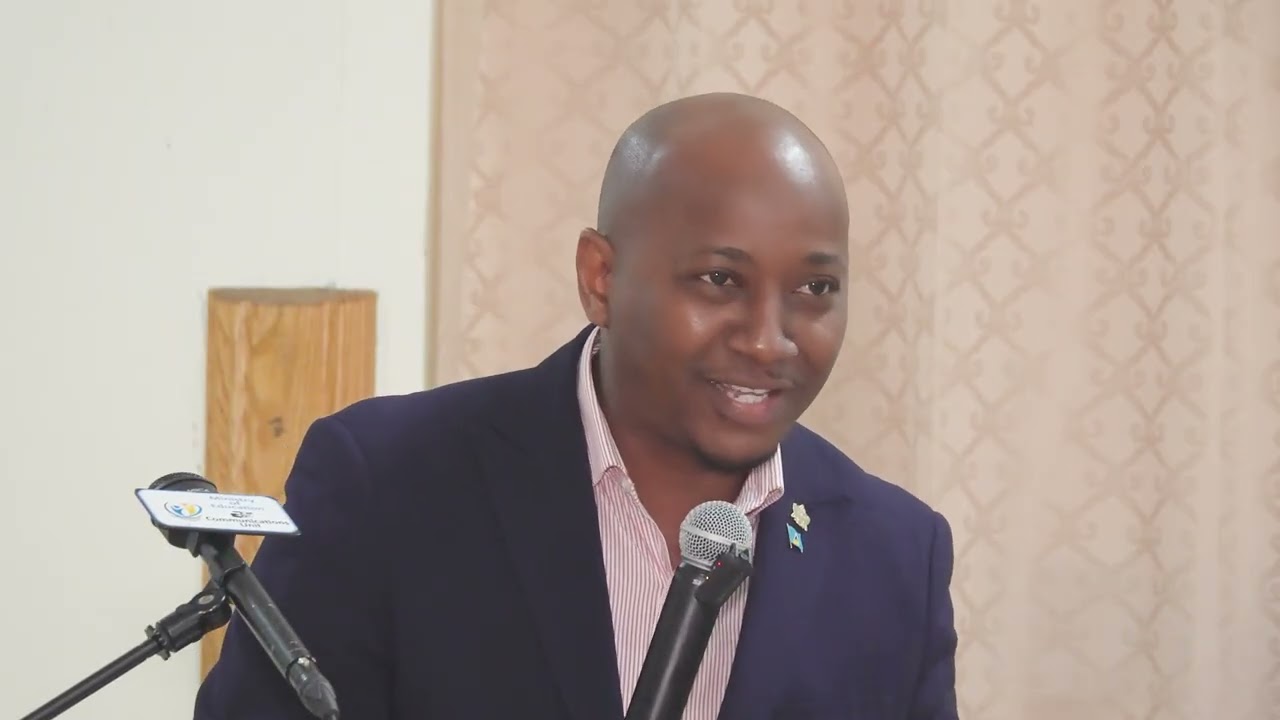
The video transcript details a significant government initiative in St. Lucia aimed at supporting private early childhood education centers through the distribution of financial checks. This program, which has been active for over three years, provides annual subsidies of $3,000 to approximately 104 private preschools, effectively offering about $100 per child per term. The Prime Minister emphasizes that the private sector serves roughly 80% of the preschool population, caring for over 3,000 children and bearing the primary responsibility for their development. Beyond education, these centers play a critical role in economic stability by providing reliable childcare that allows parents to remain productive in the workforce, a function that was especially vital during the COVID-19 pandemic when public schools were closed but private centers remained open to support families.
A central theme of the address is the recognition of early childhood practitioners as "unsung heroes" who often operate their centers with little to no profit, frequently sacrificing personal gain to ensure children's well-being. The speaker highlights the immense challenges these educators face, including operating in hot environments with limited resources and sometimes accepting food items like breadfruit or vegetables from parents unable to pay fees. Despite financial pressures and global economic uncertainties such as fluctuating oil prices that strain national budgets, the government has demonstrated political courage by maintaining these social programs. The speaker argues that investing in early childhood is a strategic decision that yields long-term returns for the nation, including reduced crime, lower poverty rates, and a more stable society, rather than being merely an expense.
The ceremony also serves as a platform to address specific operational needs and future improvements for the sector. The Prime Minister announced plans to introduce water harvesting systems in selected preschools to help manage rising utility costs and ensure sustainability, acknowledging that infrastructure upgrades will be implemented gradually based on physical capacity. Furthermore, there is a strong push for enhanced training for educators to better identify and support children with special needs, such as hearing or vision impairments, ensuring they receive early intervention before entering the formal school system. The address concludes with a call for greater gender balance in the workforce, encouraging more men to enter the field to serve as role models, while reaffirming the government's unwavering commitment to nurturing a society of love and positivity rather than one defined by anger and negativity.
Read the full video transcript
[music]
I would say Prime Minister, it's always
a pleasure to have you with us to
continue [music] to demonstrate your
commitment to early childhood education,
particularly through this initiative
which began over three years ago. Your
support has truly been meaningful to the
sector.
The private sector plays a critical role
in the care and nurturing of our young
ones and this financial support is
essential in helping our centers thrive
and operate within the expected
standards.
The private early childhood sector
caters to the majority of our preschool
population. some 80% of enrollment
representing
over 3,000 children. In real terms, this
means that the private sector carries
the bulk of responsibility
for meeting the learning and development
of our children.
And beyond education itself, we must
also consider what that means for our
workforce.
ensuring parents have a safe and
reliable place to leave their children
each day which turns into support
which turns into support a more
productive work workforce and I recall
during COVID for example when all
schools were closed down the problem
that we had we have a huge hotel
industry and of course those parents had
to go to work so we needed the early
childhood centers
especially the private um sector because
often you find when there are issues at
our school plants
the public centers remain closed but you
are the champions you remained open and
during co that is exactly what you did
you served the country and we continue
the workforce
so you don't only you play a critical
role not only in laying the foundation
for children's development but also in
supporting economic development and
poverty reduction done sir big things
right
it is therefore
vital that you receive this support
needed to help establish and thrive and
again I remember with my colleagues here
I think mainly Miss Favory and Miss
Mafra during COVID writing copious um
proposals to get the support during
COVID and it wasn't forthcoming and it
was really heartbreaking. And today we
have this blessing of receiving the
yearly subsidy of the $3,000.
And I don't often get the opportunity
to speak to you directly like this.
sender administrators and practitioners
who work tirelessly day after day to
nurture and shift the minds of our
youngest learners. You are in every
sense unsung heroes long before the rest
of us begin our day. You are already
preparing your centers, planning
activities and getting ready to welcome
our children with open arms. You wear
many hats.
Teacher, caregiver,
counselor and sometimes substitute
parent and I think most times substitute
parent often with little recognition and
we know not nearly enough resources.
And again, I reflect sometimes sitting
at my office at early childhood and
knowing how hot it is out there and you
having those little ones with extra body
heat. And I you and I really applaud you
for every day showing up and do what you
do so remarkably. Well done. Give
yourself a round of applause. [applause]
You see, I say unsung heroes
deliberately because many of the centers
operate with little to no profit at all.
At times we go to assess centers and
they would say okay can you fix that
door or can you get more resources and
they will say Miss Bruce we don't have
the money and at times I will pull the
administrator or the owner aside and
I'll say let's look at your finances and
you breaking even and some of you are
not making any profit and one of my
first suggestions would be let's try and
raise the fees
often there is reluctance
because you always say if we raise the
fees the parents won't bring the
children and you want the children to
come to to have the care that they they
need. So again you see sometimes we take
those little things for granted when a
parent drops a child at 7:00 we don't
realize how much it takes to care for
that child. There was a particular
center we visited recently and you know
some parents who are not able to pay
they batter they bring bread fruit they
bring vegetables in exchange for fees.
So this is what you do daily and
sometimes you don't get recognized for
it. So I say really about now you look
at each other and say well done.
>> Good.
>> And those decisions you take running a
business with no profit is a decision of
someone who has the well-being of our
children before your own. You have
contributed so much to the nation's
development
often quietly and without recognition.
and is truly delightful that you are now
celebrated.
This morning marks our third check
dispersement ceremony and it is a moment
to pause and appreciate just how far we
have come. What began as a single step
has grown into sustained commitment. And
as I mentioned earlier, we started at
25, we at 3,000. But that's not the
peak. We are moving forward.
I speak on behalf of the prime minister
[applause]
>> and this is precisely why we must value
the work of early childhood operators
and I know the minister values your work
because that's why he's here today and
that's why he's made the commitment over
the last three years to give us those
checks.
It is in these early years that the
seeds of who we become are planted. The
values, the discipline, the sense of
right and wrong that shape a child long
before they reach the classroom. Excuse
me.
Almost there.
So this is a very good investment and
later on we'll see returns on those
investment. Many years from now will
reflect
[snorts]
in a nation with less crime, less
poverty, and less social unrest. And we
could see what's happening right now.
Cit citizens who are well-rounded,
productive, and equipped to contribute
meaningfully to St. Lucia's growth.
That's the true return on our
investment. And when you think about it,
we have I think we wrote 104 checks at
$3,000
and each child over 3,000 children would
receive $100 each per term. Do the math.
That's an investment. Don't you agree?
Let's give the prime minister a round of
applause. [applause]
Every check represented here this
morning represents more than a financial
transaction. It represents a renewed
commitment to the children in our care,
to the centers that open the doors to
them each day and to the belief that
every child in this country deserves a
sound start to life and every
opportunity to develop to his or her
potential.
I want to take a moment as I have
thanked the prime minister, thank the
government of St. Lucia for its
unwavering support, investment in early
childhood development, and thank the
administrators and staff of our centers
for their dedication, patience, and love
in caring for our children. As we
proceed with this morning's program, I
ask that we hold in our hearts the
reason we are truly here,
our children.
Every decision made, every dollar
dispersed, and every policy shaped
begins with the ends with them. Once
again, welcome to our third dispersement
ceremony. in true early childhood early
childhood fashion. Let us enjoy the
morning together. I thank you
>> and I still feel your energy and your
and your excitement. Um before I before
I go and permit me this opportunity to
really thank the prime minister of
Senucha for his wisdom and being rem and
remaining committed to this initiative.
I think you should put your hands
together.
[applause]
Whenever whenever we have the discussion
about early childhood education, I will
tell you a secret about the prime
minister that he has a few soft spots. I
will not tell you all the soft spots
unless you take advantage of my boss.
But I can tell you one of his soft spots
is for early childhood education in St.
Sure.
[applause] And anytime you know we have
two min we have two ministers of
education. Anytime I hear minister of
education and I see he looks in my
direction I know he will ask me about
early childhood education
and that is that is that is a minister
who really who really loves the children
of St. Lucia. It brings back to me a
story I said briefly back my name but
I'll take my time there this morning.
It brings me back to to um this
encounter I had in one of our early
childhood centers. This is a true story.
I'm actually looking for the
practitioner. I'm not
[clears throat and cough] seeing I'm not
seeing her. I went to one of the schools
and it was after Easter. That's a true
story. I went there after Easter and I
school was reopening. So I visited I was
visiting the schools and while I was
while I was there the practitioner she
gave me this story about the children
returning from the Easter celebrations
and she was recapping with the students
what they had learned before and she
told she told the story she told the
children who's the man who gave us
everything that we needed and sacrifice
so that we could be where we are today
it's Easter time so she's looking for a
particular answer. [laughter] And when
she asked the students that, the
students in chorus and in unison said,
"Honorable Philly."
And she said, "NO, NO, NO, NO,
HONORABLE. [laughter]
That's not the answer I'm looking for."
You know, SHE'S LOOKING FOR JESUS
CHRIST.
>> BUT THE CHILDREN SAID, "Honorable Philip
Jier." And while those children are not
completely wrong, I don't why they're
not completely right. I do not think
they're completely wrong either because
really and truly he's a man who loved
who loves the children of St. Lucia and
who is delic dedicating resources
towards towards the children of St.
Lucia. So I want to thank him but I want
him to know there is a fan base. I will
not tell you which school but it's a
school in OJ library. So you could
imagine why it's a school in OJ library
that that I had this I had this
encounter. Also permit me to really
thank you. Thank you the men and women
who make who make all of this possible.
And I say men and women because I
honestly believe there must come a time
in early childhood education where we
need to really bridge that gender gap.
As children grow old, as children are
introduced at the formative stages of
their life to education, they must see
excellent male figures that they could
use as excellent role models as they
grow. And so I'm not saying this to take
a jab at any gender or at women. And I'm
just saying that the gender balance in
education needs to be one that we need
to really we need to really look into
and empowering early childhood
practitioners I think will be very vital
in ensuring that we have more men enter
early early childhood education. And so
I want to say I want to say thank you.
Thank you to you who really impress upon
our children at a very very early age.
You're the one who teach them, you
nurture them, you comfort them, you
challenge them, you help them to grow.
And sometimes you do it without a thank
you. I'm learning very very quickly from
December to now that sometimes in public
service, this job could be a thankless
job. And I'm I suspect because I was a
teacher before that sometimes teaching
could be a very thankless job. But I
want you to know that your efforts they
never go unrecognized. They might not
they might go unrecognized to maybe the
person whom you offered the sacrifice
for. But if you if you really understand
life, if you really understand your
maker, if you really understand that the
beauty that you put into people's life,
it comes right back into your own. You
will know that your efforts, they really
do not go, they do not go unrecognized.
And so on behalf of the government of
St. Lucia, on behalf of the people of
St. Lucia, I want to tell you thank you.
And I want to tell you thank you for
doing a remarkable job in the lives of
our children. And I think right now you
should put your hands together for
yourself and give yourself a pat on the
back for doing an excellent job and
reaffirm the person next to you for give
them a pat on the back for doing an
excellent job so far in early childhood
education.
really you are the ones challenging um
challenging our children. I'm a parent.
I didn't plan on saying all of this, but
I'll continue. I'm I'm a I'm a parent
and I remember um walking my daughter
the first day of school. The first day
of school, walking her to to the early
childhood center, Miss Kola's center. I
don't see her here today, but Miss Miss
Colola. And I remember how welcoming the
center was and how it made the
transition so easy. And I mean sometimes
it's the the difficulty is not with the
child you know the difficulty is with
the parent
>> because and I remember how she reassured
me and I guess the story is for all of
you head how she reassured me and she
said you could go Mr. Butcher and I
stood there and she said Mr. you could
go. She will be all right. And as a
parent, you really want to know, will
that child be all right?
>> And years and and and and days turned
into weeks and weeks turned into months
and months turned into years. So much so
that I was so comfortable I had a second
child
and then but I could tell Miss Schola
the second child is also the last child
cuz I'm not having anymore. And so and
so I really want to thank and I want to
thank all of you for not only making it
a comfortable place for the children but
for also reassuring us as parents that
we've left our children in a very safe
environment and in a world that is so
that is so full with turbulence in a
world that is filled with uncertainty in
a world that is filled sometimes with
very troubled issues I am so happy that
our children could get someplace that is
very safe very secure and in the hands
of people who really really care about
them. And so we thank you for that.
Today as we deliberate I want to make a
very very bold statement. I want to make
a very bold statement and I want to tell
you that this was a deliberate action by
the government of St. Lucia. We found
the political courage. We found the
political strength to make that decision
three years ago and to continue with it.
And we made it at a time of extreme
pressure. And I do not want I don't
think you'll take it for granted, but I
do not ever want you to take it for
granted that we had nothing else to do
with the resources of the country, so we
just decided to do this. No, that is not
true. In a time where we're losing
revenue, and the prime minister will
tell you that we're losing revenue, in a
time where we have global uncertainty,
in a time where we are practically in
the middle of a war that we have nothing
to do about and we have no control over.
Yet, this government saw it fitting to
continue all the social programs for
this country because we believe in the
people of St. Lucia.
And so that took political strength,
that took political fortitude, that took
the wisdom of a prime of our prime
minister. And these are things that he
will not have lengthy discussions about.
When you speak about the children, that
that's that's not that's not on the
table to cut. When you speak about
special ed, no, that's not on the table.
That's that is not a policy that you
could play with. That's what I'm saying.
These are policies he believed that are
etched in the social DNA and dynamic of
the people and they should not be
touched. And one day before I leave
politics, I will I will give you I will
I will mimic the prime minister not now
and I will show you in a very classical
example of what our our prime prime
minister is. And one of the lines he
always uses, leave don't play the poor
people of this country. Take care of the
poor people of this country. And he says
it with every fiber of his being. And
you know if you say something once,
somebody might not believe you, but if
every time you meet him, he says it, you
know that it's really in his heart. And
when he speaks about the children, when
he speaks about special ed, when he
speaks about the boys on the block, when
he speaks about truency, when he speaks
about water harvesting, when he, you
know, I could say them over and over
because I hear them every time. when he
speaks about those things, you really
know that it's deep within his heart and
he really really is interested is
interested in it. And so we kept all of
our social programs and every once in a
while people might somebody might say
you sound like a broken record because
you say the things all the time but I
say these are things that we must never
forget because these are things that we
must continue to celebrate. So when we
gave every child $500 when they went
back to sec when they after after
CPEA and they entered form one that's
because the government cares. When we
ensure that children have laptops that
because the government cared we I I just
told you that we under enormous
financial pressure yet we continue to do
it because we cared for the people of
St. Lucia. When we're going to pay five
C6 subjects for the for the students of
this country to ensure that they could
further their education, that's because
this government cares. When we made sure
that over that 100 students will get an
opportunity to get a degree at Monroe,
that's because this government cares.
When we ensure that you got educational
support for students going back to
school, this government cares. bus
subsidiary, food subsidiary. That's
because this government cares. Never
take it for granted
because these things come out of
enormous sacrifices and it comes because
we love the people of St. Lucia and we
love early childhood practitioners. So,
I want you to know that this is a
government that will continue to invest
in early childhood education. I'm coming
to the end of my very short contribution
and so we will invest in the future
already we have about $3.4 4 million to
invest in TVET special education and
early childhood education development.
Another $1 million in early
identification learning difficulties.
And that's important for early childhood
education. As they come to your doors,
as they as they come to your centers, as
they interact with you, you will be the
first to alert us that you believe that
there is something different, a learning
difficulty with with with this with this
student. and we could and we could
initiate the proper professional and
educational responses to make sure that
that child has the best opportunity in
their learning and educational and in
their educational and educational cycle.
Um I just came from a a meeting with
with UNESCO and UNESCO has already
pledged financial support for us and
technical and capac capacity building
for early childhood practitioners.
That's with that's with UNESCO AND SO
>> [applause]
>> BUT I ALSO want to tell you as we move
to universal access to education that we
cannot do it alone. A government policy
will only remain a government policy if
we do not have your assistance. If you
do not engage us in conversation, if you
do not engage us in discussion, if we do
not have dialogue, if there are times we
will quarrel with each other, but we'll
be back friends again. and and and
what's the best what's the best
mechanism to ensure that every child has
access to early childhood and I'm very
very happy when I heard when I heard
from from Miss Bruce contri contribution
when she said every time she comes to
you and she says let's raise the price
you'll be like no no no no we can't
raise the price because you're thinking
about the parents you're thinking about
the communities that the students that
the children are from you're thinking
about the children and the very fact
that you're going to think about the
children before you think about your
personal profit I will tell you that you
have blessings unimaginable that will
fall in that will fall in your lives and
so as we have those discussions as we
have those discussions we'll engage you
to ensure that we have the best method
the best process and the best mechanism
for early childhood education I cannot
tell you if the contributions will
increase by next year, but all I can
tell you is that you have a prime
minister that loves you. Thank you very
much.
First of all, I really want to to thank
the staff of the Ministry of Education
because you can have any policy that you
want as a government. If the civil
servants want to slow it down
or if they want it to happen in a way
that you will regret you ever chose to
do it, they can do it.
But I want to tell you from my
interaction with civil servants [snorts]
um particularly as I've been prime
minister I found that
the civil servants most civil servants
most of them and I underline the word
most civil servants want to see the
country move forward. They want to see
the country progress. And I want to put
special emphasis on the ministry of
education because the ministry of
education is arguably the most important
ministry in the country and the staff
for the ministry of education they have
a singular responsibility for the young
people of St. Lucia. I want to thank the
staff of the Ministry of Education for
their dedication
and for their flexibility to follow
government policy. I want you to give
him a round of applause.
[applause]
And
I know sometimes
I demand a lot from my ministers and my
ministers pass it on to their to their
staff. they pass it on.
And sometimes when I speak to the
education ministers, both Sean Edward
who would have been head but he's in
Taiwan now and the ministers now
um honorable Kenson Casm and Danny
Busher. I understand that I'm putting a
lot of pressure on them, but I can tell
them I will put more pressure on them.
And the staff
and all and all the ministers, they
always come back and they say and they
say to me, Prime Minister, the staff are
trying. And that's all we want. We want
the staff to try. I want the staff to do
well. And I want to publicly thank the
staff both the executive staff of the
ministry of education and the teachers
and the principles for what they do as
far as education is concerned in St.
Lucia. Um the minister said I had a
special
love for children and and and teachers
for for for children incidentally
because I only have one
and for teachers because my mother
taught all her life and I understand the
dedication of teachers and teachers at
that time were no less know less or more
dedicated than t than teachers. Now most
teachers
they take the children's welfare as if
it's theirs. They are more nervous than
the children when exams are happening.
And I remember one day there there was a
quiz somewhere. And I just I had to tell
the teacher relax. She'll be all right.
Relax. Because she was so she just
wanted the teachers want good results.
They want the school to do well. They
compete fiercely among themselves just
for their school to do well and for
their children to do well. And that
dedication of the education fraternity
in St. Lucia and that is why we are
improving daily we are improving yearly
and we intend to improve more and the
government within the limited resources
we have the government will give the
resources to the education fraternity so
that they can continue to improve. So I
want to thank them. I want to tell them
the government fully appreciates what
they are doing. I know sometimes it
roughs. It's rough. Some sometimes I put
a lot of pressure like my ent school
isn't finished as yet
[laughter]
you know I sometimes I do that. I will
continue to do that not because I'm not
because I want to give them pressure you
know but I want the children of this
country to do well. I want the country
to do well and they are the ones who
have it in the palm of their hands. So I
want to thank them and tell them I will
continue to ask for a lot more
because the country deserves a lot more
and we we have the skill in the ministry
of education. We have the skill. We have
both the academic qualifications and we
have both the experience. So all they
have to do is to keep their eye on the
prize and let us make St. Lucia move
forward as far as education is
concerned. So thank you very much and
let's look forward to BOTH
[applause]
this morning. We are giving some level
of support to the private preschools in
this country and I want to tell you
early you deserve more.
I want to tell you for what you do, you
deserve MORE
and and the minister tried to set me up.
You understand? That's that is the
habit. They tried to set me up. But I
was speaking to him about a few things
that we can do to improve the quality of
service that early childhood educators
give.
And one of them was the ava the
availability of water.
And I know when you deal with children
you need to have water for them.
Children you have they need water apart
from like to plain water. They like to
you have to bathe them etc etc. So we
will look into I will ask the minister
to look into if we can make available
and I see laughing because you know
where I'm coming where I'm going. see if
we can make available see if we can have
some level of water harvesting in the
preschools who can accept it.
Um so we will see if we can begin as
soon as possible in selected preschools
where they where the physical
infrastructure can accommodate it where
they can give you some water tanks for
the school.
>> [applause]
>> And these water tanks will be primarily
to harvest rain water.
So we look into it. We will I'll ask
them again. I given the ministry of
education more work. They will have to
look into we will not be able to give
every school at the same time but we
look to see if we can get at least uh I
I don't want to give you the give you
the dimensions I have to find out
whether you can see whether you can
selectively begin in certain
constituencies and give there are 104
there are 104 private preschools and 44
government preschools approximately so
if My arithmetic is correct and I know
your PS is a mathematician
so and I can say that from experience
it's a 138 that's correct [laughter]
138 preschools if you can see whether we
can selectively look into getting some
water tanks for you for water harvesting
that means you have to get get the
guttering etc harvesting because I
believe that that is a way where we can
be sustainable and where we can save
resources because
[applause] because
the minister is very correct.
Forecast say that crude oil crude oil
the price of crude oil yesterday it was
at $18
per barrel $18
per barrel
and forecast say that it will remain
like that probably until April or May
next year between 86 andund
$108 per barrel. Now that has absolutely
nothing to do with you or with the the
children the little children that you
attend to. Absolutely nothing to do with
them. But they and we are going to
suffer for it.
So yesterday
we had to increase the price of
gasoline by 50 cents. It still remains
one of the cheapest prices in the
region. St. Benson's $18.31
in Dominica is $18 and some cents. We
still we have to do it. We had to
increase the price of cooking gas by $2
per 20 and and 22 pawn cylinder. And
still for that every cylinder of gas
that every consumer buys, the government
puts in more than $30 in.
So you can imagine what would happen if
we did not put that $30.
nothing.
[applause]
And sometimes I sit
or have sleepless nights thinking about
how can we find ways of relieving the
people of the of of this country.
Our revenue from
excise taxes as far as fuel products is
is concerned has almost reduced to zero
almost
at at at yesterday's prices. We still
subsidize
all levels of cook and gas and gasoline.
We actually continue to lose
So our revenue sources for
fuel fuel are literally nothing. But the
country must continue and next year
hopefully we'll look because I've given
I noticed the minister did not tell you
the deadlines he has been given
and I don't know whether I don't know
whether he so he's told his staff the
deadlines he has what he has to do in
year two what he has to do in year three
because he's a young minister so he had
to start pass.
So he has some certain guidelines to
follow. So when we come in next year, if
God be our lives, he will have to he'll
have to advise you onto whether he has
done the first milestone.
We have three
>> and the first one is not whether I'll
give you more money next year
>> but the first one is whether he has done
what he was supposed to do in terms of
what he has to do for you.
>> So I I won't tell you I won't tell let
him tell you
>> what he has to do as far as the my
students are concerned. So we we take
early childhood very seriously for for
for for good reason. It is said that a
child's most important life is from the
womb till they reach the age of seven.
Some say is even less than that. They
say the age of three but the traditional
wisdom says age of seven. And you are
the ones who have the control of these
children from
probably two years old and I understand
some is even younger,
>> sometimes months, sometimes weeks. You
have them until they reach the age of
going to primary school or kindergarten
from kindergarten to infant school and
then primary school. So you see how
important you are
and the child early child education has
to be the priority for every educ every
education system.
That is where and that is why the
training of early childhood educators is
of paramount importance because you are
the ones who have the children at their
most formative time in their lives.
And with the hotel, with the tourism
industry, you will have more of that
because parents will have to go to work
and live their children in your hands.
So, we have to look at the times of for
the times that these schools they open
because you may have to we have to look
at all kinds of things. You may not be
able to send send the kids home at 5:00
again. You may not be able to. We may
have to look into even a shift system as
far as that's concerned because parents
stay longer at work. The traffic
sometimes creates congestion. So we have
to look at all these avenues because you
we have to see about the children before
they get to a situation where you cannot
control them again.
And I understand that 3,588
children are going to benefit.
3,588
children are going to benefit. That is
important. We are told that our our
education system needs to cater for
these people. And we are also told that
we have our our population is in a state
of decline.
>> [snorts]
>> That is a fact. But what most people
tell you is they can't afford to have
more children.
That's what most of them tell you. Now,
what's the government's role? And it
pains me sometimes when I see people
trying to make what they think is smart
or what they think will gain points by
trying to to to play when the government
says that for every child that is born
in this country for now the mother will
get a contribution of $1,000. [snorts]
The government never said we are giving
you $1,000 for big children.
Anybody who sells so is deliberately
misleading you. What the government said
is that the cost of having children or
having a baby is very high.
We're not saying $1,000 is enough.
$1,000 can never be enough. But a $1,000
is better than no dollars at all.
>> Amen.
>> And the people who complain about it or
try to downplay it, they do not need the
$1,000
because he who feels it most knows it.
They don't need it. So because they
don't need it, they will done play it
because they don't need it. You
understand? But when a mother
has a baby
and she has to get what they call yet,
>> that's the right word.
>> And possibly she has to borrow to get
delayed.
The time will come when she gets $1,000.
It will help her a lot.
to help her. And what we say is that
once you register your your child, I
know we had some issues with getting the
system to get $1,000 to the children.
When
um my when my
assistant when my vision assistant told
me when Monty told me so, I immediately
went crazy.
I seldom raise my voice. sell them. But
when I was told what what has happened
there, I got I got on the phone and I
instructed that this thing changed
immediately. Now I I'm not like that. I
know violent but when these things come
I have to get I get agitated
particularly when I know that people
need something and people are suffering
because of bureaucratic issues. There
are certain things I don't interfere
with. Certain things I do not interfere.
Certain things in government I do not
interfere with at all. I let the system
follow its cause. But there are certain
things that I have to interfere because
it affects people directly.
And when it comes to
particularly
assistance to lower income people, I get
I get agitated.
So, we dealt with it and we hopefully
the $1,000 will go smoothly.
Same as a check disbbursement. Normally,
we'd have to go to the treasury and get
a voucher and have an account. I said
no, from the inception, give the people
a check so they can go in the bank in
the ID card and get the money. No
problems. We may advance it to a stage
where we can put it on your card.
We may get there. We put it on your card
so you can collect your money from the
bank on your account. And that is where
we have to go. So I want to tell you
this is just the beginning of support
for the early child educators. Just the
beginning just the beginning of our
support for you. We appreciate what you
do. We appreciate what you do. We heard
about the violence etc. violence, crime,
all these people, they were children.
>> Every criminal was a child.
There was no criminal who born criminal.
He was a child. He had to be nurtured.
And the question is, did that nurturing
that nurturing cause him good or cause
him bad?
And that's where you come in. You come
in in being able by your experience and
by the education and the training that
we intend to give you, you can spot
these things very early. And I come
quickly to special needs,
special needs education. Again, very
very important
because what we did before is we we just
castigated children. You you you stupid
tattoo wed
tattoo wedd
that is how we treated our children
because they were special needs. There
are many children who could not learn
because they were deaf. We never knew
they were deaf. And incidentally
tomorrow I am meeting some deaf children
and I'm told that I must learn to speak
to them. How I can do that?
That's what that's what that is what
that is what they do the prime minister
just tell him do this do that
you might believe it most of my life is
people tell me what to do this do that
do this.
So um special needs children these kids
could not hear. So how you can learn if
you can't hear?
>> The children who had problems if their
eyes they couldn't see they some of them
were dyslexic. We cannot and this is why
we have an emphasis on special education
[snorts] an emphasis
because if you can get that thing out of
the way early. So if you can be able to
find very early which child has special
needs, which child has has hearing
problems, which child has sight
problems, you can get in the way early.
As you climb the education chain, it
will get easier and simpler.
So the minister
Danny Butcher has to deal with early
childhood and special education.
And that was deliberate
because without special education and
early childhood up the education chain
is going to be useless. We're going to
be wasting our time.
going to be wasting our time because you
have a set of children who come up come
just go through the system and they are
not able or not capable. Then we get to
the teaching of mathematics. Again I
want to urge that we start doing that at
the early child stage. teaching children
concepts, teaching children numbers,
teaching children at that stage. That's
that's where you begin to understand
mathematical concepts. And you can only
do that by training. And this why I urge
you when the ministry speaks about the
training for you, do not say I
accustomed doing that already. You are
never too old to get trained.
You never too old to learn anything.
Never too old. There are things that you
you you will you will learn. Every day I
learn things every day. And the concept
of AI, you learn even more. There even
more to learn because at the early
childhood level, that's where you can
detect the mathematics skills. That's
where you detect where you have to you
have to you have to make the changes. So
I urge you to accept the training when
the training is given to you. Accept
[snorts] it. And I won't tell the
minister of education to be patient with
you because everyone will not have the
same ability or capability to learn at
the same rate at the same pace. [snorts]
I'm telling you all that because you're
important. Then it comes to civics basic
manners.
We've be we've begun to lose our sense
of manners
because we we are developing a society
where you think it's right to be angry.
My f
you have to be angry, a society of
anger.
We cannot we cannot develop a society of
anger. Nor can we develop a society of
negativity. Why you tell your children
you stupid, you bad suppl?
We cannot do that. We have to develop a
society of love,
a society of positivity, you have to
always make our children believe they're
the greatest things on the earth. If you
develop children always angry, if
yourself always angry, if yourself
always according to to the the regist,
if you always yourself always have a
screw face,
the children
the children will be the same. Sometimes
you wonder every year from since I am in
politics I have a children's party every
year for everybody who is who going to
come where you come from just come
and what I found is sometimes the
parents are the one who encourage the
children to behave badly
>> go there call game child the parent
is a parent but You are the parents for
most of the time. So you have to put
them in the right path.
You have to you have to nurture them. If
their parents are not nurturing them,
you have to nurture them
because sometimes
the parent cannot nurture them. you and
that is why you want to make life as
comfortable for you as possible so you
can nurture them.
We have to develop a society that is
positive. We are leading to a society of
negativity. A society where only what we
hear is violence, murder, and we
encourage it.
We cannot we cannot have a society where
every time you get up in the morning
you're angry and you're looking to fight
and that is what is happening if we
continue on that trend of negativity.
There's never been any perfect
situation. All of us in our lives we
have situations that we wish never
happened.
But you cannot walk your whole life
always thinking about negative things,
always thinking about like me and this
and that and you I I'm not trust. We
have to develop trust in a society of
trust. A society where each one is his
neighbor's people.
It's it's not going to be perfect. It
can be perfect but you have to strive
for that level of perfection.
So I want to tell you you are very
important to the country. You are very
important to the society. Not not to me.
My job is just to try to use the
resources to make available. I am not
going to be there all the time.
But the children that you that you
raise, they'll be there all the time.
Most of them. The children. Not me.
Not me. Danny may be there longer than
me, but not me.
the children and that is why the job of
education is extremely important. So
when we we try to be difficult or when
we try to make life
unbearable because we believe that you
may affect an individual, that
individual will go
and the children that you n that you
nurture, the society that you develop,
the society that you build, they'll
stay. And when you nurture society that
breeds discontent,
that breeds criminality,
no one can stop it.
And that's why early childhood is so
important. That's why your job is so
important. So I want to thank you. I
want to thank you. I want to tell you
that the government is going to
incrementally make more benefits
available to you. We will do it
incrementally.
I can't tell you what we'll do next
because we're not sure what the
situation is fiscally in the country. We
don't know what happened to the price of
oil. We don't know what will happen. But
I can tell you incrementally we're going
to make your life more comfortable.
>> So [applause]
I want to to really thank you for what
you do. I want to thank the minister of
education,
the both minister of education. I want
to thank the permanent secretary, chief
education officer, education officers,
the staff and the teachers and
principles of this country. Most of them
I underline the word again most of them
do a great job. Most of them. So I wish
you a
good term and hopefully [music] we'll
see you next year at the same time.
Thank you very much.
[music]
>> [music]
[music]
>> make.
[music]
>> [music]
>> Oh.