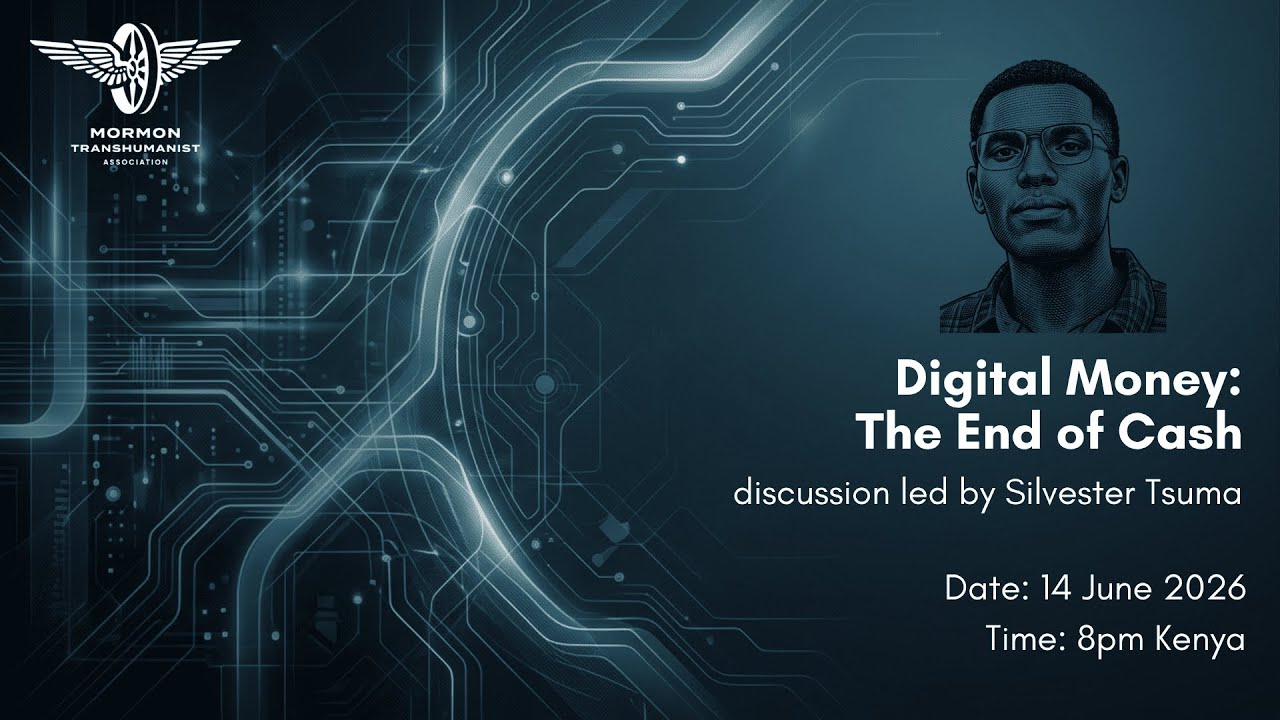
Video summary
The video explores the inevitable shift from physical cash to digital money, a transition driven by transhumanist principles that integrate AI-powered financial systems into daily life. The speaker explains that while traditional currency was tangible property one could physically own and touch, digital money exists as electronic codes on platforms owned by third parties like banks or tech companies. This means users do not truly "own" the funds in a physical sense but rather control access to them through devices and apps such as M-Pesa, PayPal, and cryptocurrencies. The discussion highlights that this evolution is already well underway globally, with digital transactions becoming more frequent than cash exchanges because they are accepted universally for goods and services, unlike physical notes which can be rejected by merchants due to fluctuating value or lack of trust in specific denominations.
The primary drivers behind the dominance of digital currency include convenience, speed, security, and accessibility. Participants note that sending money digitally is instantaneous compared to transporting cash across distances like from Ukambani to Nairobi, eliminating risks associated with theft during transit or loss of physical notes. Furthermore, digital wallets allow users to access their funds anywhere without needing a specific location for storage, solving the problem of forgetting cash at home. However, this convenience comes with dependencies on technology and internet connectivity; if devices fail, passwords are forgotten, or networks go down, individuals can be left unable to transact, potentially leading to financial hardship such as going hungry due to an inability to pay for food. The speaker also touches upon how private banks create digital money through lending mechanisms, where new funds are generated digitally when loans are issued, a process that requires careful monitoring by central banks to prevent inflation similar to historical hyperinflation events in countries like Zimbabwe.
Despite the benefits, significant challenges and risks accompany this cashless future, including cybersecurity threats, privacy concerns, and digital exclusion for those lacking technology literacy or access. The transcript details real-world issues such as scams via phone calls where hackers steal passwords, impersonation attempts by fraudsters, and the exposure of sensitive personal information when proving payments to conductors on public transport like matatus. Viewers expressed a strong desire for features that mask private data during transactions to protect privacy while still verifying payment status. Additionally, high transaction fees were identified as a major drawback, with some users noting that costs can be disproportionately high relative to the amount transferred, prompting calls for fee reductions or zero-fee models supported by alternative revenue streams like advertising rather than charging customers directly.
The conversation concludes by addressing the role of government and regulation in this digital landscape, specifically regarding tax authorities tracking transactions to ensure compliance. The speaker argues that even physical cash is not immune to surveillance if governments choose to implement serial number tracking systems similar to those used for digital money, meaning citizens cannot easily evade taxation or regulations simply by reverting to paper currency. Ultimately, the video suggests that while digital money enhances human capabilities through efficiency and global connectivity, it requires robust improvements in security protocols, user education on avoiding scams, and transparent fee structures. The future of finance points toward advanced technologies like biometric payments using fingerprints and even potential brain-computer interfaces for authorization, promising a more seamless but complex financial ecosystem where understanding the underlying mechanics is crucial for maintaining sovereignty over one's wealth.
Read the full video transcript
in the world we are living right now is
that we are actually getting off the
cash part of it and going digitally
where we now have to use currency that
is
you can't touch it.
In other words, I will say you don't
really own it. So, transhumanism is
involved in digital money using like
AI-powered financial systems. We have
biometric payments. This involves using
your fingerprints, smart contracts. We
have our integration with wearable
technology like watches or like uh bands
heart bands or things like that that can
uh make the transactions more easy and
faster. We can say that each one of us
uses digital money. No one will deny
that.
My name is Sylvester for those who do
not know me.
And luckily to those who know me,
and I currently am the chapter president
for Nairobi
of Kenya. So, since we don't have other
places.
And the discussion for today it's going
to be on digital money which is which
will
which probably leads to the end of cash.
And if you guys hear of the top the
topic digital money, the end of cash,
you can actually relate to exactly what
we are going to discuss about.
And
what that simply means it's how we are
all of us are becoming familiar more
with digital money than we are with
physical cash. And you can actually
count how many times you have had
physical cash.
And you can uh
barely count how many times you have
used digital money.
And sometimes it gets
it it doesn't bother us understanding
how is our physical money now becoming
more digital. How are these
money we have in cash being turned into
electronic codes that you can actually
transfer from your device to someone
else's device.
It's something that has uh
been on my mind thinking all through
before even I had an opportunity to
present here. It's something I've been
curious about of how is it possible for
us to
send uh numbers on our phone and someone
else receive the numbers and these
numbers are actually accepted by
everyone.
It's something that makes uh cash to be
more centralized for each individual to
use it. You you will see that each one
each person can work with
cash and everywhere place they go to in
Kenya
when they use this money, people will
still really accept it and in exchange
of goods and services.
But if you walked with the something
else, let's say a phone
and you went with it to any shop,
there's those shop that will accept it
and others will not accept it because
its value is not
uh its value is not
permanent, but it's always changing and
sometimes other people just don't accept
it as a form of uh
>> [clears throat]
>> exchange or rate at which people can
trust.
And what makes money to be more
uh dominant and worldwide you used, it's
because it's accepted.
So, each one of you understand that
if everything is if one thing is
accepted by everyone, then you can use
that as currency.
Earlier on prior to the money, there
were things that were used like barter
trade was an exchange of a good to a
good. But now they had to come up with a
model of something that each one each
person can accept it to be used for a
certain purpose and thus
money was created. And money
uh
is a form of a paper as we know the cash
money.
But
when it started, it was cash. Uh when we
mean cash, it's something you can touch
as a hard copy or something.
Where you can present it to a shop and
then
they will exchange and give you
something else
with value.
So, in the world we are living right now
is that we are actually getting off the
cash part of it and going digitally
where we now have to use currency that
is
you can't touch it. In other words, I
would say you don't really own it.
>> [laughter]
>> At least cash you can actually own it.
But when it comes to digital money,
platforms that own this money are
different platforms, but you you kind of
just have control over it.
But in other words, sometimes you just
don't own it because it's
on someone else's platform.
So, that's a basic overview of what we
are going to discuss today and see how
this can
has helped human beings grow in their
capabilities, which is the focus of
transhumanism.
We can say that each one of us uses
digital money. No one will deny that.
And what digital money is, it's money
that exists electronically and it's used
through computers, smartphones, and the
internet.
So, if I may ask a question to each one
of us,
we use M-Pesa, we use PayPal, we use uh
uh this online brokers that when you're
doing trading, Bitcoins, and all of
that.
Do we really understand how
these things function or we just follow
because actually other people also trust
them?
I would like to hear some views of each
one of us because we use them every
single day. Why do we use them? Is it
because we understand how they function
or because other people trust them, too?
>> So, what I think for me it's cuz it's
recognized as legal tender, as you said.
But it derives its value
probably
cuz it's
it's backed by
something that is intrinsically uh
of value or recognizable to to the
people. That's a terrible explanation.
Yes, legal tender is is the reason why.
>> Okay, Scar is talking about it's being
recognizable and legal.
This will help us know if we really
understand what we use or we just use it
for the purpose of Eric. Do you just use
M-Pesa money because you understand what
it is or because it's
it's accepted?
Uh what what what drives you to use
that?
>> For me personally, the
the main reason why I use it is because
it makes things easier.
Um it's it complicates stuff. Like let's
say for example
most of us know, let's say if you use um
usually you remember the thing where if
you use a matatu [clears throat] they
used
and you give them 1,000 shillings
uh you'd have to be keeping an eye on
the conductor the whole ride.
So, for me that that is one of the
reasons why it's just the ease of it.
>> So,
something [clears throat] else that I
realized especially when researching on
this is that
in Kenya, I will specifically talk about
in Kenya is that most Kenyans do not
really
understand the what is behind the why
behind the digital money. They don't ask
themselves a question
then what why why does it exist and how
does it really function? Is it really
important to me or not? Is it something
sustainable? Is it something that is
going to be there forever? Or uh is it
something that's temporarily there? Is
there something that I don't know that
is behind all these codes?
And sometimes you'll be like, "Why can't
I just sit down and
>> [clears throat]
>> uh
create and who also creates the codes
[snorts] you see on your M-Pesa. Think
of every individual person in Kenya,
they have M-Pesa balances and balances
here and there. How did that end into
the How did it end being on the
internet? Is it the real cash you have
that went there or there's something
that happened?
But
that can be a discussion I will have on
a
different day on how this money is
really created cuz even though we create
the real cash which is printed by the
Central Bank, then the digital money
needs to be created, too.
And you might be asking yourself then
if someone creates it, then
how how how is it
>> [clears throat]
>> how is it monitored to ensure that
there's no inflation that happens in a
country just like it happened in
Zimbabwe when it comes to printing cash.
So, just to give you a
preview of it is that the digital money,
it's
mostly created by banks as
the private bank, the private sector
bank that you you see.
In other words, is that when you go to a
bank and borrow money, the bank will
automatically create create some money
for you and then deposit it in your
wallet
and then
the interest earned on that money is
what the bank gets, but the
original value of it when you paid back
that goes to the Central Bank. So, that
makes the banks the private they have
the the the capability of creating
money.
Hopefully there's no questions on that,
but
it's just a preview of it is that that's
how this digital money come to existence
is that these codes that have been
set
and not that that's why you can't create
your own app and put money in it and
then to be used. There should be
compatibility based on that.
>> [clears throat]
>> So, some of the examples of where we use
the this money we have mobile money.
That's like in pesos. Each one of you
use M-Pesa. I'll say so. Online banking.
This includes your bank that have those
applications
on your phone.
We have digital wallets. We talked about
PayPal and all those. There's so many.
And then we have cryptocurrencies such
as Bitcoin.
So, all these are places where we we are
able to interact with actually this
digital money. Interacted with it as
many times as
as you you can count of on your own a
day.
So, there's actually few features that
help us mostly use the digital money.
>> [clears throat]
>> Eric talked about fast transaction.
That is one of the of the benefits of
using digital money.
There's no any time you'll have to ask
someone for change unless you send more
money than required.
And then there's convenient of access.
You can easily access your money
anywhere than when you have cash and you
left it home.
You can't really access it. But when you
have money digital money, you can
actually log into your
uh your wallet any place you are. And
then you can be able to
transact.
Okay. So,
>> [clears throat]
>> we we will we will discuss on
why is it taking over in the community
because this is what we are using in
most cases in most places. Everywhere
you go.
M-Pesa M-Pesa M-Pesa. M-Pesa M-Pesa
M-Pesa.
So, why do we think that this money this
digital money is taking over the
community?
In Kenya, the first digital money
introduction was M-Pesa and it has taken
over every place, everywhere. Why do we
think
digital money it's really growing and
blossoming every part of the community?
Why do you think so?
>> May I think cuz carrying
cash
is old school now.
So now we've transitioned into the
digital space
and it's now more easier to
you know, do transactions, have more
access or at least see where your money
is really going.
You can keep proper track of where it's
going, how it's coming in.
>> Okay, good. I can see since we have
digital money now we can say cash is
analog or outdated. Okay, other
thoughts, guys?
We use this every single day, so we must
be able to have reasons why it's
becoming more efficient and very
mostly used.
>> So what's there? I think for me
especially for the unbanked, like before
the mama mboga on the street, it was a
hassle like getting a bank account, but
M-Pesa and other decentralized forms of
payment have made it easier to
be able to you know, have access to
banking facilities and services without
all the hassle. So it's convenient and
it's more accessible, it's democratic. I
think people gravitate towards that that
kind of system.
>> Yeah, I can see like they've already
said it totally what I wanted to share.
Like, you know, it's portable and
the way technology is
advancing like we don't expect it to be
using the old way
to do payments, you know?
>> So
one of the benefits we have that you
guys have talked about is the ability to
reach in places where cash might be a
difficult thing. And think of the
security part of it is that carrying
cash is more insecure than carrying
digital money. And definitely you don't
carry digital money.
You just I don't know if you carry it
anyway.
I don't
But the the physical cash we carry there
is a
uh lower transaction costs. I just don't
know, but uh in most cases you realize
the the cash money, the transaction cost
was low, right?
Was it low or high or we forgot?
>> Come again. Like the transaction cost
for what?
>> Transaction cost for cash. Was it low or
high compared to the digital
uh transaction costs?
Imagine sending money from Ushago, like
probably in Ukambani to Nairobi. Sending
cash and sending the digital money.
For me, I never experienced sending
cash. So, it should have been expensive
because
think of it going to uh
a delivery or a post parcel uh company
and telling them I want to send 10,000
to Ushago. And then they will look at
the what the what then 10,000 they will
charge you a certain amount because of
for se- security and if the money got
lost. So, that they can be able to
refund to you.
And then you send that money digitally,
uh
it's
the cost is low because the the risk uh
attached to it is also low.
>> [clears throat]
>> We have faster payments. Uh
This uh
every one of us understands how this is
is that when you're sending money from
here to a different country or different
place,
it's faster. It's just numbers and it'll
be done.
Uh it's through seconds or minutes only.
And that makes the use of digital money
become
uh something that can be accepted very
fast.
So, we we we are interacting with
digital money for the purpose of uh the
convenience and I'm sure most of us love
things that uh
have
when our our processes are made easy or
they are they are simplified.
And if we are
cost that so much to do those kind of
things.
So, we have uh
the the increased smartphone usage.
Actually, most people use devices.
And this uh
increases the rate at which people would
use digital money.
But if the devices were not there like
uh some years back, then
uh
you can never send money to someone who
doesn't have a digital device. But since
most people right now have digital
devices, it gets easier for them to
interact with digital money.
But if you if you don't have a digital
device, then interacting with digital
money becomes challenge, and
you'll be left behind.
The [clears throat] e-commerce uh
sector, this involves the
We talk about buying and selling stuff
online
and paying them. So,
the that sector has grown so much to a
point where
uh by if there's no digital money, then
it's it's becomes hard for transaction
purpose transaction purposes. Assuming
you bought items on Alibaba,
uh a seller who doesn't know you,
neither do you know the
the buyer or something like that.
So, how would you
how would they trust you? Or how would
the trust work? Is that's where digital
money comes in. You can be able to pay
uh digitally, and then they can be able
to send you the product.
Then, we are also looking at the
internet connectivity. If there's no
internet, then digital money won't flow.
But right now in Kenya, we can say uh a
number of percentage of people really
have access to the internet.
And that uh makes it that you even if
you have your money digitally, you won't
really uh you won't lack access to it
because you lack internet.
Assuming you have money on online, and
then there's no internet, then you will
still suffer when you still have the
money.
Unless unlike when you have cash. So,
the government also has become support
towards the cashless part of it, the
digital money.
Because if this government supports it,
then the public also will support it.
But if the government doesn't support
it, then the government will definitely
not support it.
Uh so, when the government doesn't
support it, the public will not support
it. And now you can see some individuals
who are
have learned
little knowledge to do with this
technology and growth on digital
payments, then they will have to fall
with what the government says.
>> [clears throat]
>> We have track enhanced tracking and and
security.
This will mostly involve people who will
trust the platform. That's why the
question I asked earlier, why do you use
it? Because of its security and tracking
how the transaction can be tracked than
when you have cash.
Recording it down down every time it's
not something everyone loves. But when
you transact digitally, the records are
kept for you.
And now it becomes
>> [clears throat]
>> it becomes
easier for you to use it because it's
simplified.
So, when we look at the digital money
and transhumanism, we are trying to
connect the two. How is digital money
enhancing human capabilities? So, I'll
just pose a question to each one of us,
how has the digital money enhanced your
capabilities?
Unless we look let's look at from that
angle. How has it made your your life
more better?
Unless it has made it worse.
>> [laughter]
>> Um for me, I'll say digital money has
made my life more easier because I can
send my
money and receive it instantly using my
phone.
>> Instantly, that's your work has been
made easy.
Okay, Faith Bonareri, has digital money
made your life better?
>> Uh I'll say for me it's 50/50.
I'll
explain what happened today.
So, I was 15 minutes uh late to the
meeting because
I was
my phone was having trouble doing
transactions with the boda boda guy, so
um if I had cash, I know that would make
it easier.
>> Wow.
So, sometimes it can be negative or
positive depending on the situation.
Try to
try to send money and it doesn't work.
Sometimes the messages will never come
back. And sometimes you send two times,
okay?
Godfrey, what do you think? Has it
become more better?
>> Yeah, so for me, I'd say
it's both 50/50, like
the whole of this year, I think the only
physical cash I've dealt with is around
250 shillings, and that was yesterday.
So,
it's easier on the transaction cuz
it's just convenient. But then on the
transaction cost, I wouldn't be having
that when I use physical cash, you know?
When you give someone 100 or 1,000, that
would be it.
But then I transact, there's the fees
they cut, and since I've been
transacting a lot, my transaction fees
have actually gone up.
So, I'd say it's 50/50. It has its
merits and demerits.
>> Assuming your phone died,
you'll sleep hungry without uh
uh when you have money on your your on
your
>> [clears throat]
>> on your mobile. And think of it if you
forgot passwords and encryptions,
you'll still suffer. So, there's the
positive part of it and there's the
negative part of it. But in
on the most side is that it's it has
made our life more better.
Whereby it's making giving us access to
things that we could never have access
to without with cash.
Is that true?
Yes, it's true. Here we we looking at
the digital money and transhumanism. We
as I said earlier, transhumanism is uh
how technology
it's making a human
it's enhancing human capabilities which
means we can access things
more easily or be able to make our lives
more easier.
>> [clears throat]
>> So transhumanism is involved in digital
money using like AI-powered financial
systems. We have biometric payments.
This involves using your fingerprints,
smart contracts. We have integration
with wearable technology like watches or
like uh bands, heart bands, or things
like that that can
uh make the transactions more easy and
faster.
We have there's a potential of brain
computer interface in the future in
regards to uh the payments whereby you
can have to authorize it just using
whatever a thought.
And that will it's going to make
>> [clears throat]
>> the financial sector to be more
advanced.
And the good thing about technology is
that it's crossing both sides and when
you see any advancements
on a given in a given sector, it's
always to make uh life more better.
But even if it's making life better,
there's things that it brings that are
negative.
So uh now I can invite thoughts on uh
the entire section we have talked about.
What what are your thoughts in regards
to the digital digital currency that we
are talking about?
Uh
assuming every one of us interacts with
the
>> So my question is, Sylvester,
can uh
uh
digital money be affected by the
inflation?
>> Yes, that makes sense. Class, that's a
question.
You guys understand what inflation is.
Can digital money be influenced by can
can can it can it can there be inflation
due to digital currency?
Whether you have no knowledge about
finances, this is the time you can share
out and then that's how we we
>> Mhm.
>> Inflation, let me just make it inflation
is when there is
uh
it's mostly happens when there's too
much money in the economy
whereby now
purchasing items becomes
the money becomes useless.
Where you have 100 million, may I have
100 million, you have 100 million, so
life becomes
boring.
So, that's inflation. So, she's asking
if
the digital money can also cause that.
Okay?
Matlodi?
>> So, with inflation, it's not caused by a
specific aspect of like the specific
Did I say
money in use? It's caused by entire the
entire economy in general.
So, when inflation happens, it will
definitely affect
digital currency, whereby transaction
costs might become higher and all that.
But but that that that doesn't mean that
it's the digital currency that caused
the inflation.
>> So, what you're saying if I understand
it correctly, I mean digital currency
was meant to be like
a hedge against inflation, right? Cuz
it's
there's only a cap like for instance, if
you look at like Bitcoin, right?
There's a limit to the number of
Bitcoins in circulation, so it's almost
like
really hard
for there to be
uh in- inflation of of the magnitude
that we've seen in in countries like
Zimbabwe and other countries where
they had crazy amounts of inflation.
But that's just my lame understanding
of decentralized currency.
>> Okay, so as we talked earlier
when in the beginning is that you will
only understand you will only have
knowledge on how inflation happens when
you understand
how this money is created.
And as I said earlier, the cash money
was uh
was printed. And if it's printed more,
then it brings inflation.
We get that, okay?
And when it comes to digital money, it's
also created somewhere. It's created in
a computer where they just put in codes
and say 500 million, let's create it.
And that money goes into the supply on
the digital side of of currency.
That That definitely happens if the
central bank allowed the
if the banks were able to create this
more money without moderation, it would
definitely cause inflation, that which
means will cause prices of things to
rise up. And that's why you realize when
things go up in prices,
it's because the money supply of money
is higher.
And when it goes the supply is lower,
then things their prices goes down.
So, I'll say
for sister
sister sister Screven, okay.
Sister Uzi,
that yes, digital money can
can can They can be inflation based on
digital money, depending on if the
central bank allows more creation of
money
than the economy
that that is not based on the economy
growth.
So, that is true.
>> Yeah, personally I think I think yeah,
digital money is affected
by inflation. And that's because it is
just a representation of cash.
Like for example, if you are
if you are employed and you are paid and
you are paid using M-Pesa, you draw the
same cash. It's just the same amount.
So, you get the representation of the
cash that you have.
And I think it's the same way that
your cash will be affected by inflation,
it's just the same way
your money on M-Pesa will be affected.
So, I think
it's just a representation of the same
thing.
It's only made it easier for this and
that and all that.
>> Yes, thank you for that
because that is just a digital
representation of the physical money.
So, if it's too much then then inflation
might occur.
>> Oh, yeah, it was me. I just wanted to
say you see in that question cuz like
there's different types of digital money
just
you've been discussing. So, there's like
the physical the digital form of a
country's currency
there's the Bitcoins and then there's
the
stable coins or I think that's what they
call yeah, stable coins. So,
with Bitcoins they have measures taken
to prevent them from experiencing
inflation like that just as we had
mentioned.
With stable coins
they inherit the inflation of the
currency they track and then with
a country's digital money just like us
with M-Pesa it'll basically match the
level of what the physical currency is
going through in terms of inflation.
So, combining them in this aspect of
inflation is not necessarily like
correct cuz you just need to understand
the different types of digital
currencies and how they're affected.
>> Thank you for sharing that.
>> Okay, so
>> I'll add something.
>> Okay.
>> So, of late it has been on Twitter
but the it's for the current KRA
directive. Yeah. So, um by the new KRA
directives that they'll be tracking
businesses using the
the
M-Pesa
till numbers and all that their digital
money that they've started tracking.
Uh if you've been on Twitter uh people
people are starting opting for going
back to to the cash.
And
if if you've been to Eastleigh they
mostly use cash. They they
they they don't use the emphasize.
Either you withdraw or go with cash.
So, do you think
uh you might actually go back to
to the old ways of using the paper cash?
>> Wow, that's a good question. So, if the
KRA is coming to digital side of
currency, are we going to run back to
cash?
Okay, guys, uh share your thoughts.
>> From my perspective,
I usually think like it's pointless
people saying that you only use cash,
you can't be taxed and all that, but
they forget that every money that is
printed out in the system has a serial
number, and the government knows it
exists, and it can track its movement.
So,
it's just that they've not bothered to
do it yet to those East Leigh's traders
who think they're getting away with it
when the government actually decide
decides like Kering this instance,
decides to work together with Central
Bank and the DCI to track how that money
has flown in the economy even in cash,
they're able to do it. And in that way,
they can still track how much these
businesses have been making in terms of
profits and all that, and how much they
owe Kering and the government in
general.
>> Okay.
That's that's a good thought, because
the government can track because it's
the one which creates money, then
whether you go to cash or go digitally,
you'll still be tracked.
Okay, other thoughts? You are still
invited. Victor, I want to hear your
thought on this. Okay, also just to add
on that and that
just as our sister said is that
this money it's created the government
is the one which authorizes it.
And when it goes back to even the
the World Bank where it has to also
create and then send it giving bonds and
then bonds the government uses it which
is kind of data not be paid.
But remember all this money it's created
under the government's direction, and
it's hard for you to run away. If KRA
decides, "I want to tax this." Now you
are in it because
it's the one which created so it knows
how much it's in the economy.
Okay?
Uh hopefully that a little bit answers
your question unless you still have a
thought to I can see your hand is still
raised up. So as we talk about the
digital money, there's challenges that
are
that are that are growing so much in
that sector.
And each one of us have
uh have known of them when it regards to
the digital money.
Probably have been scammed sometimes.
Probably on calls and it becomes easy
for someone to steal your money uh on a
on a
on a phone call.
And sometimes when they know your
password, they can actually log into
your
wallet and steal your money as fast as
they can.
And if you compare that with cash,
you'll be like, "Cash will be in the in
my home or maybe under the bed or in a
drawer. It's probably secure."
So when you look at those kind of
things, we can see that there's actually
challenges that are
there when we use a digital currency.
Cybersecurity threats.
I know most of us have been part have
been able to suffer from this.
>> [clears throat]
>> Where people will probably impersonate
themselves and try to
uh play around with you so that you can
be able to
give uh credentials and they can steal
your money.
We have privacy concerns. This involves
uh how safe are your records, your
information, your banking information
which is used
which might be used uh wrongly by when
in the hands of those people
who have bad intentions.
We have the digital exclusion for some
population. This is uh some people who
who who do not
uh who are not literate when it comes to
technology, it it might be hard for them
to use
uh the digital currency because probably
they don't have knowledge about it and
now it becomes hard. So, it excludes
them.
So, which means it needs people with
expertise.
They are dependent on technology and
electricity. So, in places where there's
no technology, improved technology that
can handle digital money
and electricity that will power on those
technologies systems, it becomes hard
for such people to be
uh to use the money.
>> [clears throat and cough]
>> So, these are just a few challenges that
uh
are there based on using digital
currency that actually the biggest we
have frauds and
all that that is happening scams on the
internet all the time.
So, I have a food for thought questions.
Do you use digital money? If yes, what
should be improved in in your sector?
So, this is based on you. What do you
think should be improved
on the use of digital money?
I'll invite everyone to share a thought
because I'm sure there's something that
can noise you so much when you're using
this digital money and you want it
improved.
>> Yes, I actually have
the the most annoying thing for me is
Okay, so so suppose you send your money
you're paying uh for your bus fare,
okay?
through the matatu.
Uh in a mat. And
the conductor asks you for proof of
payment.
When you show him the message,
okay? Uh depending on how like if you
show him the full message or not,
he might see information that is not
relevant for him. He might see your
private information. So, I think a
feature that M-Pesa was floating around
was masking
your balance and other information that
is not relevant. So, for me it
the the part of digital sovereignty
where they only share what is needed.
It is is crucial cuz I think a lot of
times our personal information falls in
the hands of bad actors and they can use
that to exploit us.
>> So, you you feel like these things that
needs to be masked so that other people
cannot see them and
they are private
>> Yeah.
And you know how like in cryptocurrency
like in the blockchain
um if we had a verification system where
it's kind of like
crypto like it can be verified
by multiple
um
computers and then stored in the
blockchain and it you only release
what you need to release.
Uh that way you have more control over
your your personal information
as
opposed to
where there's just this central
authority that decides
what information of yours to reveal or
not
and there's no recourse to
uh to justice, you know.
Yeah. Cuz I feel it's unjust if someone
just shares my information without me
asking them like why.
>> Okay, so we can probably trust
cryptocurrency sometimes more than
our local
currencies because of the security based
on it.
And
what do you think should be improved?
Are there things you think can be
improved?
>> Maybe something else that I think can be
improved is the
reducing
fees for transfers and also with
withdrawals. Sometimes
you might
uh for example
you are sending money and abroad, but
the transaction cost is two-way.
And then
you there is this I'm giving an example
whereby maybe there's this bank I was
transferring money
whereby
uh maybe for example I was transferring
around
20,000
Kenyan shillings.
Then it's the transaction cost
it's around 5,000.
So, I think that's something that can be
improved because you'll find that
the transaction cost
of that 20,000 and also if you're
transacting also 40,000, it's still
costing you or transacting 5,000 as
well.
So, that even if you transact
small amount of money
still like the transaction cost is
two-way.
more
>> Okay.
So, but the mainly things the
improvement should be on the transaction
cost.
But recently like today I just saw
I don't even remember its name, but
there's this like wallet where they
they told you the transaction fee is
zero.
So, I'm sure that's how
those platforms get funds to maintain
and pay their staff, which is the
transaction fees.
But if it's the way you see it, if it's
uh
the fee is reduced to as minimum as it
possible, we can
it will be something we can adapt as
much.
Cuz when you think about giving cash,
sometimes you you realize there's places
you really don't have to spend.
I like today in a bus I was I was paying
transport and
I I had to pay like 110 shillings and it
costed me seven bob. And if I used cash,
I would have saved I would have saved
seven bob.
So when you look at it from that
perspective, you realize that
and there's sometimes where we lose much
that we don't need to depending on how
much we actually transacting.
Okay.
And for me, I think something I want to
be improved so much when it comes to
digital currency, digital money,
is that for me I always feel like the
process of sending money is always
too long.
I know that some might sound a little
bit crazy to some of you, but for me I
feel like sending money takes me too
much of my time. And I always want to
relax and I don't want to worry about
it. So if there was a better way the the
the
there's if there's a better way and the
those wallets can improve on how I can
just send money instantly without
uh
without having to press buttons buttons
and names and that all over that will
make my work a little bit more easier.
But that will be crazy if I if that
happened and I send money to the wrong
person, then I suffer.
So the longer the process, sometimes you
can't remember, oh, I'm not supposed to
send this person. So Faith, you're
trying to say something, but you're
lowering a hand.
Say it bona fide.
>> Me?
Okay.
>> Yes.
>> Uh
So I'll I'll say um
security.
Security should be stronger, especially
um M-Pesa. All we need is just your
Safaricom number and just two
codes
in.
That's all you need. So it's easy for
people to scam you.
If they put like passwords or
something else, it will be
hard for hackers to
like steal your money.
>> [laughter]
>> So, Faith, you uh you're on Safaricom
here. Instead of using the PIN, they
should improve it by probably having a
password.
What if you forget your password?
Have to call them, eh?
>> [clears throat]
>> That might be an option for them to
secure it.
And I also think the other best option
to help people uh be secure with digital
money is training.
In Kenya, we lack so much when it comes
to that. I've never had where people are
being trained on how to use digital
currency, how to be safe online, and how
not to be scammed. So, that's something
that can be improved. When people have
knowledge, it gets easier. So, that's
all I had today
and regards to the digital currency and
digital money, and hopefully each one of
us has been able to grasp a little bit
and understanding of what digital money
is. Whether you're in business, wherever
you always deal with this money, and
it's important to understand how it came
into existence. How can you be
What is How How is it making your life
better? And how can it be improved? And
uh and hopefully that you guys have been
able to be enlightened and you can be
think uh
dig deeper so that you can understand
more on how this
digital currency works. But, thank you
guys for your time, and that marks the
end of my discussion today.