Video summary
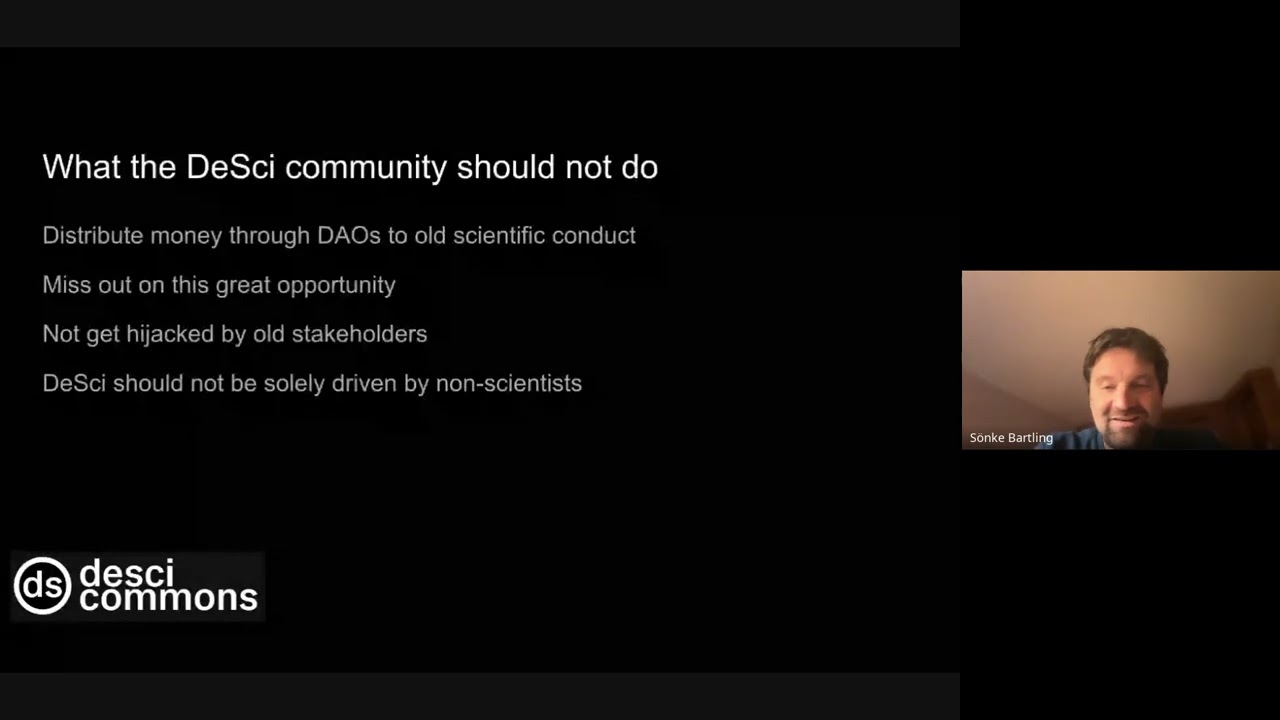
The D Funding Working Group, established in January 2024 with an ambitious goal of capturing approximately two percent of the global crypto market cap for scientific funding, seeks to redefine how decentralized finance supports public goods. By aiming to match annual state spending on science seen in nations like the United States, the group intends to move beyond merely supporting existing institutions and instead build a credible narrative that encourages blockchain protocols to automatically allocate resources toward research. Central to this vision is the concept of a "Decentralized Science Commons," which aims to address systemic issues such as data manipulation and publication bias by introducing guidelines based on Creative Commons principles, including open access publications via IPFS and simplified grant applications that combine reporting with publishing.
To ensure the integrity and longevity of this new ecosystem, significant attention was given to governance mechanisms designed to prevent monopolies by early adopters while maintaining legal compliance and security against malicious actors. The proposed framework utilizes a blockchain-specific protocol featuring "root nodes"—real-world, KYC-verified entities that act as arbitration courts only when fundamental rules are violated or during governance attacks—rather than interfering in routine operations. This system envisions a pluralistic environment where multiple certification bodies can coexist to issue graded certifications, such as Gold, Green, or Gray NFTs, allowing funders to trust verified high-quality projects without relying solely on individual reputations. Furthermore, the group advocates for democratic distribution of funds through collective ownership by participating organizations rather than centralized control by a small stewardship team, thereby reducing attack vectors and ensuring fair access.
The practical implementation of these ideas faces technical hurdles, particularly in developing robust rubrics to grade projects as "good decentralized science" and creating supporting tools like AI judges to monitor adherence over time using mechanisms such as decaying NFTs. The group plans to launch a minimum viable product version of their constitution soon, which will require relaunching with new parameters developed by the underlying blockchain company, while clarifying that current manuscript changes remain governed by existing rules rather than this new administrative system. Future steps include sharing the full constitutional framework within community channels and conducting follow-up discussions on social platforms to analyze past successes and failures of collaborative online research initiatives. Ultimately, the working group aims to create a "Green" path for scientists operating in both traditional and decentralized systems or a fully compliant "Gold" path, ensuring that scientific conduct is transparent, secure, and aligned with public good objectives without compromising legal standards.
Read the full video transcript
so welcome everyone for the first call
of
2024 um what is the mission about this
uh this working group uh D funding
working group is a forum for cross
project dialogue we want to uh generate
ideas and and and
collaborate um we have also like a free
marketing uh uh um concept to share with
everyone um what could we do together um
is um to capture 2% of the crypto market
cap for the advancement of society
through science um this I will explain
you briefly now where this 2% for dii
slogan comes from um basically if you
look at the average uh expenditure of
GDP or uh internationally it is 2% of
GDP that is put into scientific research
by nation states um and there has been a
presentation uh about a year ago by Juan
Benet who said that we are actually on
the path of um reaching this 2% uh or
reaching a market cap of the crypto um
uh space that would allow if we put just
a tiny fraction of this value into
funding of scientific research we could
reach the level of nation states and
actually if we take this 2% which is the
average spending you see that um and
this depends on the sources where you do
the math but um we basically could reach
by just doubling the current uh market
cap of the crypto space uh we could
reach a funding that is matching the the
funding levels of the US for science if
you compare the different uh uh uh uh SC
largest science funders worldwide uh
2% um means basically United States here
is is at the top with something like um
1220 billion US dollar
um and then it's followed by uh China
and the European Union and then here's
Germany as another as an individual
small comparable comparing to the United
States Nation uh it's quite less than
that so 1220 billion US Dollars spent
for science though has to be spent also
wisely and we should understand how this
can be done in a in an effective way uh
in a in a way that is also constructive
and that is complementary um and not
redundant to what already is being spent
worldwide right so this is why this
working group is for we want to uh
create new ideas educate each other uh
and and also uh share this narrative and
bring it out there because currently the
crypto Protocols are not having embedded
anything that necessarily automatically
um allocates money to public goods it is
uh something that we need to uh also
make um and AD advertisement form so
what we want to have is we want to build
credibility uh we want to create the
narratives uh to convince the blockchain
space to create new ways of funding
funding into science in a decentralized
way that means that we are not an
organization here that that this
dictates how this works every individual
organization every individual protocol
will have to find their own approach but
we can make
recommendations um and so we don't want
to stop at funding the status quo this
would be actually very ineffective if we
are just funding money back into the
existing institutions we can now also
fund our own infrastructure so this is
why the call is not only for funders but
it's specifically also for projects in
the d space that are building their own
tooling and we want that these are tools
that will be used by um by decentralized
science funders uh there is a group
currently a telegram group that you you
can join with this QR code here and the
link has been widely shared this is the
uh place where coordination will happen
um where we will openly discuss uh
agendas and we do research on different
subgroups that have been formed in the
last call and they are already
established there in this channel so you
can you can join and check it out um for
today the agenda looks the following um
and this is a proposal for this call and
we can then see how this works in the
next ones so we have two presentations
uh the first by um zun bartling um who
is a co-founder uh with me um he founded
actually blockchain for Science and then
I joined and he will speak about um
funding in D
Commons this is the name of the working
group that we have established we just
went ahead now because still there is
little traction on the telegram group so
we are having the first slot you know we
captured uh we have also Joshua bate uh
who who will speak briefly then about
how this could be governed um and then
we'll allow some time in the end uh
which might be just 10 minutes uh uh to
have an open discussions and individuals
may give updates um and I also want to
announce already the next agenda which
is a call for submissions and also for
networking uh before um you know we we
start this uh so the next call um in
roughly a month will then focus on
social platforms for D funding and
collaboration um and and from here I
would suggest that we are having the
general chat in the telegram group to
come up with proposals for what should
be the priorities for the upcoming
months um and so what we have have here
as a proposed structure is one call um
one one part of the call focused on a
rather longer presentation where we can
curate also several participants uh
contributing and then following that um
we have some some open red
discussion uh with that uh I stop my
introduction I invite you to to write in
the channel um in in the chat if there's
any uh things that you want to share I
will also review the notes document that
I shared there in the chat um and so
that we can come back to this in the end
of the call and with this I I stop
sharing and I invite Zuna to to start
his
presentation
you're
muted so thank you very much for the
introduction and I'm going to like talk
about the decentralized science comment
so the comment in terms of like you all
know creative comment so it's not the
blockchain comment of all dii whatever
so but we want to like create some
guidelines and
licenses um accordingly to the Creative
Commons uh licenses so take comment in
this like angle so in in dii we are in a
unique position dii is Young so that
blockchain and zence is named together
it's like six to seven years old and
this was weirdo idea in the beginning
and now it's a real thing but it's still
very young okay and what's different
from other science Revolutions in the
past and me and Martin and the OG's here
we went through a few revolutions open
science is popping up all the time there
was like science 2.0 Web 2.0 for Science
and like all these ideas and uh but
what's what's what what the problem was
in this they never controlled money
right the flow of money so whatever the
funders told scientists to do they did
right right and if the NIH didn't tell
them to to publish in things different
from established journals scientists
never did it right so but at the moment
um the NIH told them to like uh not
publish your results in close journals
but Open Access journals all the
Publishers and scientists mve from uh
closed access journals to open access
journ so just by the funer telling the
scientists and the research in
institutes some
conditions so in for the way they should
like behave as scientists they could
really change the behavior of the
scientist and in D side we are in a
similar situation because in the first
first science Revolution we have
actually money that we can decide how
how we distribute the money and what the
rules are um that goes along with this
money so it's because I know you all
mean the market caps of the blockchains
and then then we have research dolls
that actually distributed money so in
Web 2.0 there was never money involved
like research gate or social network for
science you still had the old science
funders right so this is a very
potential
situation but what what D Community
should definitely not do and not end up
would be to distribute money to for
example do to the very same old
scientific conduct yeah this was this
this would not be getting the point of
dii right it would be an opportunity
missed what's good like having research
Dows rooting the money through like all
institutes without telling them to
change anything right and this would
really miss out on a great opportunity
and then the D Community should be like
careful not to be hijacked by all
stakeholders for example Publishers they
have these nice lobbying guys that come
and have a beer with you and it happened
to us at one of the first blockchain for
science conferences they are very very
friendly people they basically want to
influence you and like maybe there
should be a role of journals in dii or
they will come up with all these kind
ideas they always do it they always have
people that look into new fields and see
what's going on there yeah and D should
not be Solly driven by non-scientists
it's good I mean there in this there's
like fields for people who can like
build tokens who can create Dows who can
put up web pages who can do marketing
who can build platforms so to say web
stre platforms but it should be like
there should be also be scientists
involved yeah so it should be because
they know how science is being done what
the pain points of science are and so on
So speaking of the pain points so what's
wrong with science well it's tldr I mean
all of you have some experiences
opinions and everything thing but what's
important here is to mention that
there's not just one thing that is wrong
in SS it's not if we fix peer review all
Zs will be fine forever right it's not
that we if we have open data we will
like be all sharing data for good and
there will be no data manipulations yeah
it will like all things in science are
connected yeah so we have to like see
what we can actually change I mean some
example what's swong and signs you all
know this photoshopping of like Western
blood results or that you can't like
rely on like mice results because it's
basically very biased I mean the
scientists look biased at the results
yeah all this like just like faking some
Excel sheets by even Ivy leag professors
and it was in the news in the last
months in the last year they basically
added some data did some P hacking and
all this kind of I mean you all know
this example the important thing here is
these are just the things that we read
about that end up as a newspaper article
but this is just the tip of the iceberg
everybody of us who expend some research
knows that basically looking a little
bit biased at data to say the least in
the least offending manner is is is a
common practice in science right so you
can basically tell us your story about
what you experience AR sign so we see a
lot of potential to improve Pro stuff
here so the D Community should or will
develop guidelines and best best
practices that will be followed by D
side Science funders And scientists in
the Futures to basically overcome this
limitation of the current science
practice and if I as I mentioned it is
like we basically took the logo and the
idea from the creative cman project so
sort of licenses for d right or sing how
would you design zence in research with
a current technological
means without Legacy
cultures and without Legacy
stakeholders just like from a blank P
table there's no science culture nothing
no peerreview how would you come up with
a science
culture right so I think this is a good
way of thinking of it yeah and we have I
mean there's a unique opportunity that
we have at our hands here so how would
we do that we don't know exactly but we
have a lot of ideas and I'm going to
show you some of our ideas and Visions
first at all who should do this well it
should be a community process right and
we are in the blockchain space so it
should be decentralized but as you all
know even the most decentralized
projects have to start somewhere
centralized so Martin and me we
basically put up a web page where we add
a call to action button and you can
please join the process to create the
decentralized science coms you can fill
in a questionnaire say how you want to
contribute and I want to say this is
just a very early phase so you can like
change your dedication and commitment
later on if you have the process more
defined okay but just please join us and
how should we do this we have some ideas
obviously there should be a governance
protocol earlier or later and V know the
thing that we really know is that it
dcum will be bold Brave and really
revolutionary yeah to what end well to
the betterment of humanity and to give a
solid back home for all future dii
funding maybe it's a 2% so that they can
actually invest in science that is done
in a good way and not in the
old-fashioned broken science way and of
course to really break with the old
desence conduct and how should we like
create this guidelines how should how
should we be GL guided well I think the
first most important thing is common
sense reasoning and first principle
right we don't need to have scientific
studies to show that closed access
Journal Publications are bad right you
don't need to have scientific studies to
show that if you Tim stamp your Excel
sheets every day it's much harder to
just like add some data at the end of a
study right you don't need to be open
with your data with your Excel sheets at
all times but it's just harder if you
want to fake the data I mean but still
we should like be open for meta science
or science about science
and uh creative comment especially in
the way of like how you how you
distribute money among scientists right
there are so many open questions and DS
could be a great aggregation place a
knowledge Hub of best practice and
evidence-based scientific methods right
so we could like give the future D
funders some guidelines how to like
decide on good ways how to actually
distribute research money yeah obviously
we're getting rid of unnecessary
stakeholders and limitations for example
why have Librarians why have Publishers
right we can like solve the problem copy
editing in another way
right uh how will the guidelines be
enforced maybe through D funders imagine
a dark research do says I want to like
fund a d Commons public good some IP
reserved project this this money so all
the applicants know that they have to
like not have restricted patterns or
have open patterns for example and so on
or the community will like review other
projects decide or say this is like
aderes to the guideline or not and these
are some sort of focus areas that you
want to like come up with guidelines for
example for grants for how dow research
Dow should work on how you think about
data sharing publication time stamping
and so on and so forth how you invest in
basic science Venture Capital how you
deal with cide traditional sign
centralized science right IP
nfts oh okay so I you some examples of
how these guys like just to have like
just to have a rough idea right so how
should like a guideline regarding
Publications how could it look like well
you obviously we will only support Open
Access Publications and for D you just
publish one copy on a decentralized
service like ipfs with a persistent paid
for for at least five years for example
this could be a guideline right publish
more often publish updates move away
from one monolitic publication right
have you every month have an update sort
of tweet that you publish on ipfs on the
progress of your research project with
all your Tim stamp data and so on yeah
for example this could be there should
be a high reuse of text and figures and
obviously it should all be C by right
and maybe we can move away from text as
a scientific feed and just like think of
text as a medium to convey scientific
ideas and restrict discussions about
plagarism just to like to like copy of
scientific ideas and not of copy of like
figures or text right this would be a
nice thing so we could like save a lot
of efforts on like discussions about
plagarism
right and uh well how could it look like
a guideline for Grants imagine you would
just like publish or just like write a
onepage grant yeah you can like use
links to like publish material methods
uh this would mean very little overhead
very you need you would need to have
some signal in that you are able to like
do this project but it could be like
your past project or some example work
and you don't need to like we anything
up in the 30 pages Grant application
that will be rejected in 90% of the
cases right so unnecessary work okay and
then another idea would be why don't we
like include Publications and Reporting
how you spend your money in one system
right the publication could be a report
on how you spend the grand money so you
don't have to like spend your time on
like writing a report a publication all
basically the same content right this
would be I think could all be on chain
time stamp right uh how how could we How
could a guideline regarding the
infrastructure look like so for example
obviously you use not Bop chains but
large public blockchains yeah store on
decentralized Services don't use servers
like in Web 2.0 use open source and so
on how should translational research
look like like develop standard maybe we
can like create something like
save uh agreement on future Equity this
used to like invest in early stage like
startup companies maybe we can like do
some example contracts that work in like
several legislation or like how to
invest in like early stage applicable
research maybe through an IP nft or we
can like come up with guidelines how IP
nfts should give like 20 send back to
the funding agency as like a revenue
stream to like fund more cure research
come up with certain blah okay well
there are a lot of ideas and I'm looking
forward to have your ideas and your
chairs so how do we do like d side to
like do D in a d way it's cool how we
deal with uh with Scientists because
there's no D Institute yet right so
basically we had like one idea would be
to have like two different kind of doing
science the green dway and maybe the
gold dway so in green you still have can
publish in all traditional science
Publications but you still publish on
decentralized services and so a
scientist can like live in both worlds
and slightly um trans translate to dii
or you just like do gold dii where you
basically Go full dii or another thing
and we we like this approach best at the
moment is we it's like like you know
when there's like creative commment they
have like CC buy
noncommercial or some rights reserved
right so we can be this could be like
Lego building blocks of licenses to do
like research in certain ways right so
is decentralized science project public
goods and the other thing that you can
do that you need to do is like site the
results there will be no
commercialization no IP with all the
advantages and disadvantages right there
could be a decentralized science project
that aderes to centralized science
principles it's still allowed for
scientists to publish in traditional
journals and some IP can be like for
like commercialization and so and so on
we can like build basically building
blocks for like okay you got the point
so so I ask you to like join the
decentralized comments on the web page
and we we look especially for people who
have like a bridge knowledge who know
web3 blockchain and know how to build
platform know how to do science have
some
La law experiences or maybe experiences
with governance creating guidelines and
so this will all be very valuable so
thank you very much for your attention
and this is the end of my talk I just
leave the page up here okay thank you z
um uh there's some some some comments I
see uh in the chat I mean danif for Eric
if you want to just voice them maybe
yeah I would like to take that
yeah hey I'll start yeah I put a comment
um Justin there that a lot of the
structure of
science is there for relatively good
reasons uh the lack of uh community
control over possible science uh allows
for people to move against Community uh
such that like someone studying
something in an armpit somewhere nobody
has ever heard of doing something that
most people have no idea
about SC the scientific process crates
its existence which is the purpose of
the scientific process so lots of pure
stuff in that vein I'm concerned about
the morality of even decentralizing the
manner in which it's conducted
alternatively of course anything
industrial or applied makes perfect
sense
I Y
so Yan you you mentioned your you your
worried that it like becomes too far out
and every crackpot can come up with a
crazy idea and there's no tunneling no
selection compl complete inverse of
that ideas are good things that's what
science that what science as it
currently is allows for that's what we
want it to do
decentralization um that takes away the
crazy people because then there is less
uh particular authorities but it's the
group The Norm which govern F the
creation ah interesting interesting take
I want to oppose your opinion for
example the centralize science May
probably have ill effects like so to say
legalizing or enabling astrology as a
finance finan it field of science but it
is like economy usual economy we don't
want not to be riches we want not to be
forced so uh science should be uh
decentralized in my opinion I don't know
how tol more
details yeah science is already
decentralized or centralized right it's
decentralized through different
institutes different working groups
different
nations so it's a it's a kind of
question how do you find Define the
centralization right and like taking
bringing decentralization together with
like
um converging towards the mean uh it's
yeah maybe these are like two different
things like the structural
decentralization and the uh
yeah yeah I think um maybe the the risk
is that uh this um y if the the the
concept of the comments right or if you
think of uh how currently for example
like things like gitcoin structured
these These are apparently mechanisms
that are being tried out that
are uh yeah that are that are kind of
pushing a certain direction and actually
taking the agency it seems away from the
individual crazy person but putting it
more more the mainstream stuff into the
focus that that can be like shared
easily on the internet and and social
media right uh this is what gains
traction and I think this is not
actually what we want and we could
rather see I just Shar this here there's
an article
about um from uh the Republic of of
Science by Michel Pani who actually says
that um the scientific process is one
that is governed by the scientist
themselves it shouldn't be influenced by
any collectivist uh you know or even
nation state approach um and I think the
the hope would be more to to make use of
the power of the internet of of having
those different crackpots connect you
know uh and and and do their research um
in a way that is more permissionless
than than having to go through all the
Hoops to join in institution and sit in
that building that you need to get your
title and your degree and your diploma
to to access yeah that's right so
soat said yeah so these we carried away
with the term decentralization ation
somewhat right because it's like before
it was like all blockchain for science
and research now it's called dite just
like defy right so it's uh so basically
with decentralized signs we mean
creating signs in the with Dows with
tokens with IPS with ipfs and we don't
worry so much about the social
structural
decentralization
complely we should like add add a slide
on this yeah Eric yeah look Eric needs
to leave soon and he has a comment Eric
go go for it yeah uh Thanks Martin sorry
to derail the discussion this was a
great one but I do have jum second um
first off I I want to say I had not
thought about the idea that licensing
requirements may need to change to
accommodate decentralized infrastructure
and kind of norms in decentralized
communities so that's a really
interesting point and I would love to
hear more discussion around it at some
point um probably needs careful and uh
wellth thought out
deliberation um and then yeah I guess
the one question that I would love to
see answered on the telegram as I'm G to
have to jump off is why blockchain why
does it have to be blockchain what
things can blockchain do that no
Federated database can possibly do what
things can ization due that the current
academic system which is to a certain
extent decentralized on a more granular
level kind of community by Community uh
can do so might an interesting artifact
coming out of this group is we're still
in the formation and vision stages why
blockchain why decentralization um but
with that being said I'm sorry I can't
wait for the responses but I do have jum
fine thanks we'll share the recording
later so you answer this please and then
and then we switch to Joshua
because completely agree with Eric
there's nothing that a centralized
service with like and let's add with
like some sort of like wallet to sign
transactions yeah so Eric missed on that
right so if you have a centralized
server with some wallets that you can
sign some statement and state changes to
the system you don't need blockchain
right and we completely on a technical
level we agree with this but the whole
blockchain and dii and like all this
whole thing these are new narratives no
new values no new cultures that are
being created and we can use this
movement and attach the D commment
guidelines on it and use this Force to
basically change something in science
right and from a purely technological
level you wouldn't need Bitcoin if there
would be a central edity or or ethereum
right but still it's it's a big field
you have developers coming up with defi
protocols with new platforms with nfts
with sort of new ideas right so they the
same they are changing defy we can
finances we can change science
right uh Martin I want to repeat what I
told to stress my point you said that
influence of the community is harmful it
really can be harmful for example it can
introduce astrology as a fin
science but I think like who disagree
with say that we should make people rich
not we should make no poor rather than
no Rich that astrology might become rich
should not much bother us it should
bother us but not much it's not our main
purpose to prevent fake false science
but to support legate V okay great yeah
great thank you for that very quick
response
I'm sorry I'm GNA face yeah go for so
you also brought this up in your
presentation I'll be very brief but the
fact that we have the power to control
money with blockchain blockchains are
not a thing they're a peer-to-peer
digital Cash System so the fact that we
can Min currency which was tried with
the Federated system and Tred with
centralize system before then and
control that currency is a very very big
thing you cannot do that with any any
except okay great what yeah it was hard
to understand but I think what you
mention what you said is that the NA
national science fund for examp they
can't do these certain mechanism and
things that that that we want to do or
that we can do with blockchain correct
we can we can print money no Federated
or Central system can print money yeah
that's it exactly that's a very simple
primitive that's I think why the funding
is the like the number one thing we can
go for and that D mentioned um and then
I'll hand over though to Joshua right
just uh yeah what Z said also I think
the
funding uh the ability of this current
movement that can can really decide how
the money is allocated is unique and has
never been there the open science
movement has been co-opted uh by
Publishers you know yeah um and it took
decades until finally governments took
action and said yeah you have to have
everything open access this is like
taxpayer funded research there's been a
lot of lobbying before by Publishers to
avoid this and now we can
basically uh hopefully fund individuals
that are going with this new paradigm
you know and are going really um uh and
are being empowered on the internet and
this is why I think it's actually quite
interesting to to really go into the
fringes The Fringe Parts the long tail
you know also with that said and there's
great comments uh I I would like to
invite Joshua now to share his screen
and and speak and and then if there's
some time in the end we can still have a
discussion great thank you um before I
show the the talk about the D funding
governance I just want to say based on
that um this concept of sort of like
what is the optimal tokenomics for
example or the optimal um centralized
entity in this decentralized ecosystem
come yanev I think your concern was uh
what if we have the sort of the the um
consensus of the masses leading those on
the outside to not even get a space at
the table I think that these concerns
about um the sort of direction that the
decentralized community will take
science in is kind of unfounded because
the whole point in the decentralized
community is that any direction can be
taken that the the technology itself
allows anybody to like as John said mint
their own currency or create their own
governance techniques um create their
own versions of a d Commons stand right
and and this sort of like decentralized
uh architecture that we're building is
brand new especially in dii and so there
will be moments where you have your
gitcoin who basically will control The
Narrative of public goods funding for
however many years and maybe
subsidiaries of gitcoin the gitcoin
friends will also do the same thing and
that's okay like they've done a service
to the people that they've done a
service to but those who are left on the
outside at some point uh will be picked
up by other public goods funding
protocols this is the size of this space
is Tiny in comparison to what it can be
and probably will be and so when it
grows it's going to be able to have many
many directions it's going to be a
multi-polar world it's going to be a
plural world plurality thing is a big
thing that a lot of a lot of the crypto
crew uh sort of talk about all the time
and just another thing that that book um
move fast and break things uh which was
written about the the way that Google
and Facebook and Microsoft basically
monopolized the tech industry because
what they did is they saw this new
technology and they just made some stuff
they made some stuff that people used
and it maybe it broke some things along
the way but now they're the incumbents
they're the monopolis right there is
that cutthroat attitude to Tech and Tech
Innovation is going to continue across
the whole world including in the
decentralized space and if truly
decentralized participants like
ourselves don't actually take the
initiative to start creating these
things then those that have the power to
do so much quicker than us will do and
they will break things and they will
continue the Monopoly of these things so
um I think that this this inertia in the
space especially in dite is really quite
damaging and I don't think that the
concept of oh if we do a dite Commons
it's going to put going to stop all
these other people on the outside from
coming in I think that would just be
damaging to the movement in general that
we could make a dii Commons too or a d
uncommons or whatever you want right the
idea is that just like put something in
put something out there so people can
get behind it and we can actually start
a decentralized movement um on that I'm
going to show you a potential governance
protocol for what you could consider um
the standards or
the the commons so
just briefly uh let me just fact let me
just stop that so let me just briefly um
The Commons document that sunu is
mentioning um there's an aspect of it
that was the gold and green standard of
dii and that's the thing I'm
particularly interested in which is sort
of D standards um all Industries across
the world have standards um it's
important that we do too so that we can
Inspire confidence in those looking from
the outside in in particular in this
group the funders right it's important
that we have funders who know what could
be considered a high quity project and
why they might be considered a high
quality project um and in order to do
that we have to have some kind of
framework of some kind of guidelines and
the guidelines are sunka has a a great
version of them um the the guidelines uh
Sun if you can share your guidelines um
at some point great these are just like
very early ideas right so we we we are
just starting the real serious attempt
to have guidelines here right and I hope
you sign up to the page yeah
to the D comment page it was just like
an early idea I'm going to share it yeah
one
second um Martin do you want a moment to
respond to G's comment or is your no no
no go ahead go go for it I I really sure
I got it okay so um yeah here is just a
very basic framework of what uh I'm
working on this with a company called Q
they're a governance blockchain an L2 EV
ml2 and their entire fpace is to uh is
to provide a blockchain specific for
governance they have some really Unique
Mechanics one's called the the root
nodes which basically allows um it's a
it's a real world entity you can
actually elect your own root nodes they
have the ICC the international Chamber
of Commerce because this is primarily
the font is not not seen form sorry yeah
maybe you can can you go into
presentation more or Zoom it out it's
really hard to see is it okay
uh
yeah like that maybe you can I can see
it give me one good it works you move
the
side yeah I remove the Side Bar I got
you how about that's better that's
better okay okay so basically it's a
very simple Dow mechanism it's your
typical uh proposer propos a vote your
members vote on the vote and then it's
ratified the key difference here is this
concept of the root node and the root
node is a real world kyc entity of which
it's sort of like an arbitration Court
think of it like claros but it's more
centralized uh you have these root nodes
which are paid a dividend by Q
themselves it's their own sort of
service um and they have the ICC for
international Chamber of Commerce for
their defi uh sort of root node
intervention requirements they have a
number of other sort of high quality
what you could consider high quality uh
people but the idea here is that you can
fill the root node position with
anything so you could fill the root node
position with people from the NIH uh
from from any of these organizations
that you feel would be beneficial for
the future of the adoption of dii they
could actually be incentivized to become
a root node but the core Point here is
that you have uh a dow mechanism which
is incredibly transparent it's cheap to
use it's powerful it's optimized for
governance and what the sort of
suggestion I had here is that we would
have a constitution uh to be clear this
Dow governs a Constitution and the
upholding of that Conti so here they've
actually gone through and created the
Constitution for us as a as a service
like this is all created and real and
the Constitution exists and it's a very
simple Constitution it's it's written in
English law and it's essentially saying
that this da has the objective of
upholding the Constitution and the
members of the Dow have certain
requirements and responsibilities to
determine that Constitution and then
uphold that Constitution the
Constitution itself is the thing that is
flexible and the Constitution is what
we're the proxy here is the commons
agreement right which is the guidelines
of what is a good standard of dii and
essentially what we have here um is an
idea that there's a a a way to uh to
grade a Project's ability to be a dite
project like is are you giving it a mark
based on a rubric of how decentralized
is it how transparent is it rep is its
reporting how is it publishing is it
using is it using designnative tools
when it's publishing is it using uh what
blockchains are it's using is it using
ethereum which is obviously highly
decentralized and secure or is it using
you know an L2 which has just one set of
multisig you know these sorts of things
which you can actually create in this
guidelines document a rubric a scoring
rubric and then you have now a document
of which you can compare uh new projects
against the eventual idea here is that
the new projects can fill out a form or
be assessed through this process and
then at the end they are issued a score
or an nft like gold green gray or 10 to
one on the scale and this is something
that now belongs to them and they can
use that for putting on their website so
we have the uh D funding working group
gold standard snap they put on their
website or when people come to us so
protocol labs for example they say we
have a$1 billion dollar fund we want to
give to dber you're the expert so who
should we give it to and you say well
here's a list of projects that have been
graded by our ecosystem now this is One
S and Yan I'm sure you might dislike
this this is one effort at deter like
trying to put some labeling trying
simplify and streamline the process so
that people can actually interact with
these decentralized protocols and trust
them in an inherently trustless system
but the idea of this is that the way
that this is structured is that any
number of guidelines can be issued so
you could have the D Commons V1 and
everybody can attest to that and then
you can have the D uncommons V1 that
somebody else could create and that
would also be fine and what you're
having here is a plurality of
certifications to say is this project
doing D in a manner that we agree with
you can read the Constitution and
determine which one of these
certifications you think is most valid
and then you can follow those ATT
attestations from
there so for me this is a process by
which again the inertia is damning in my
opinion and we have to sort of just push
on past the inertia and the beauty of
the decentralized system is that you can
create governance mechanisms such that
even if you make mistakes at the
beginning they can be rectified by the
community right there's no way in a
decentralized system such as this for
any one participant or any one group to
maintain control in perpetuity and
that's what this sort of governance flow
is
sorry I um I have a a number of
suggestions about how this can be
optimized and also suggestions about the
uh the Constitution itself um and this
is actually being done almost as a
service by Q it's a great use case for
them because it's a very powerful
project that we're doing and it's it's
based on legitimate needs um and so
they're giving us our full support
including writing the Constitution
helping us to ratify it legally
including helping us to recruit root
nodes that we believe are actually
valuable and also giving us grants as
well to seed the treasury so that if uh
somebody for example is working on this
on a part-time basis they can actually
receive an incentive for doing so and
basically what we what I would like to
see um because this is already done
right I did this as a use case with them
uh what I would like to see would be uh
some kind of
how do I say some kind of backing from
this as a concept and us to work
together as a working group in
particular those that are interested in
the funding uh standards in the
standards aspect work together to
determine some kind of constitution some
kind of guidelines framework it could be
various it could be multi-polar um and
we actually also at D World which is the
project I'm from we actually are also
creating AI evaluators which will
basically allow you to have a rubric of
this is the guideline and then it will
have form that a project who wants to
have be assessed could fill out and
there'll be an AI that essentially
grades you according to its rubric and
according to the answers and that would
essentially streamline the process
massively it will keep it transparent
also because you could determine the
inputs on both sides um but what this is
is a way for humans to come in and
govern this protocol but in a fair and
transparent way you have essentially two
core player key players on the on our
side which is uh the projects coming in
and then the Dow members I put it here
as ethics but call it standards
um the the the standards down members
and then you have two tiers of
membership you have the average member
the general member and then you have the
expert panel and the expert panel uh is
most likely going to be a sort of
incentivized position and then the other
down members probably less so and even
and in here in the Constitution I'll
just find it quickly you have here the
expert panel so uh members of the expert
panel May and such things their
responsibilities are as such here and
the idea here is that you have a very
clearly defined legal framework which is
actually ratified by law and then you
follow that and then you have this
decentralized participation framework
where you can have multiple different
standards multiple different signals and
at the end you issue this becomes an
issuing authority not the issuing
authority but an issuing authority uh
for these ratings of which people can
use to then fund just like gitcoin did
the public goods funding thing first and
now they monopolized the whole thing and
we retroactively we can see that
actually and wouldn't want to do that
ourselves um but they did it and it's
successful they've did they've given out
you know over aund million in public
goods funding to really genuinely good
causes so for better or worse they did
it and it worked and now they've funded
a lot of public good stuff so if we
actually want to fund science we have to
have some of these Frameworks and we
have to spin them up because you know
we're a group of people who get together
and have these ideas but like who's
going to trust us as individuals well
now you don't have to trust because you
have an actual governance mechanism and
so that's that's what I'm sort of
bringing to this table I've been working
on this for six months or so now I did
actually nearly two years I've been
trying to get this together but properly
for six months um and this is the
perfect group of people to get get
involved with it so i' just like to hear
everybody's thoughts on that if you if
you're
interested thank you very much
sha anyone that wants to to comment on
this
first to come what
on the on Joshua's uh any any
ideas uh Joshua is your system
for administrative decisions only or for
publishing a particular article
toal
manuscript so the manuscript is is in
itself not govern the manuscript changes
to the manuscript or the Constitution
that is governed by the da but what is
actually within it is not not of concern
question I'm asking about scientific
manuscripts sent for a preview is your
system also for a PR revie I don't think
it it's you you will no it's it's really
got nothing to do with the produce of
science it's only to do with the
governance of these badges as you might
might to call them these
certifications a great idea
in sorry I'm in let's do it let's let's
work at this group working group yeah
yeah yeah cool cool yeah definitely
yeah a question
here how is this how is this
different um yeah zuk go
ahead I no okay so um so I is it can it
also be mo be used to monitor science
project whether I here to the badges or
protocols or
E6 yeah I mean I'm sure you could push
into somewhere into the into the
Constitution that the members of the
expert panel would do a periodic review
see if they're maintaining that that
would be easily easy to do you could
have a decaying nft so you issue the nft
to the project and it decays over three
months nice and and again AI as it is
and we actually are developing a system
for this and it's kind of I like this
yeah that could be done on an automated
basis you
know Mar you you you raised your hand
yes sir hi I hope you can hear me my
internet connection is a little bad um
yeah I I I really enjoyed your
presentation Josh thanks for this um I
was also in touch with Nemo of Q network
uh working on some form of governance
framework for d for quite a while now
and I think uh this can pretty much play
out as like a dow of Da concept where we
can collectively govern the whole
ecosystem to grow um this is in
particular interesting for everything
related to also uh the flow of funds so
not only like giving away certificates
but also collectively go govern between
like different deide outs what we want
to do when there's a certain amount of
money raised so for example giving it
away on the request for Grants and
having like a due diligence scening
process or kickstarting some of these
quadratic funds uh together with gitcoin
for example and you know there there are
a variety of reasons why this can be
applicable and useful for us so uh I
would I would say let's definitely
schedule another call for this because
yeah what what I'm doing right now is
like yeah again setting up the whole D
Grands round on gitcoin with like a
variety of other um people as well and
what's missing right now is like a
long-term uh compliant way to distribute
those funds we are exploring with
different uh free trade zones where we
could possibly register a variety of um
of Institutions as well to collectively
govern the funds but yes still there's
the governance in place right to make
decisions so I think right now um the
best thing that we could do is having
this Dow of Dow governance framework
where we can collectively own um you
know the decision-making process and
which direction we are growing the
ecosystem while also staying legally
compliant with like an alliance for
example between different d d d entities
um that actively participate in this
process so uh these were like the two
two things sents that I wanted to bring
in here because this is like highly in
line with what you just said and I'm
looking forward to um actually getting
hands on with this process in the next
two to three weeks so there's some level
of urgency um so yeah just wanted to
bring this up again in this group here
to be clear to that point Sorry I
everyone's got the hand up but this is
very important to be clear um I would
not advocate any point for a centralized
control or you centralized decentralized
of a group control of the funds
themselves um I would actually suggest
that this process would allow a
certification which would allow the
funders to directly fund those that they
think are most valid I think us as a
collective holding the funds is a would
be a big mistake put too much pressure
on us and and that would open us up to
some kind of attack of people being like
these who are these guys like maybe just
just to we have janif and then also
Victor just one a comment on this I
think how this can be structured is
really that there is hopefully
disagreement on on on many of these
topics and therefore plurality of
different path that can be taken D
Commons for example can write up one
type of standard recommendation that can
be used by what Joshua proposed here and
then there can be others that say well
we don't agree with it we don't want to
do it this way we change it and what
will be very important is that all of
these things are kind of recorded and
within this ecosystem and maybe this
working group so we we can see also how
these different branches are are
operating
right directly add something to to
Joshua's Point here okay and then Yan
yeah yeah because I just wanted to say
that you know whether or not we have
like a system in place for example like
in a framework of a B2B Dow to
collectively decide in which direction
we want to grow the ecosystem there will
be like a handful of people who govern
funds either with the token or with
governmental money and you know they can
pretty much decide if they want to spend
the money on their own research projects
and their own ecosystem or you know be
open enough to support the newcomers of
our ecosystem to thrive and you know
personally I think this whole concept
around ecosystem governance and B2B DS
is pretty interesting when it comes to
ecosystem governance in a way um but
yeah this whole topic around yeah who's
owning the funds where are they coming
from for sure I know and I see some
blockers there but you know this is
what's happening anyways and I would
love to see a future where instead of
having like five stewards for you know a
d side round on gitcoin for example
raising you know hundreds of K uh for
General ecosystem growth I think it can
be like pretty much uh more useful to
have it like in the hands of yeah the
majority of the organizations and
institutions that are already working in
decentralized science and you know
creating positive impact for society to
change and building up the tools so that
we can better secure all this stuff and
for sure also the funding distribution
mechanisms to make it a lot more
democratic in a way
so yeah thank you yeah great janif you
you have been raising that yeah um so
one I I I keep uh pointing out negatives
or asking negatives but what sort of
elements of defensibility of the system
have been tried to be introduced here
because I I've I've been posting in the
chat anything which is too
decentralizes generally a after some
time that just makes it very easy to be
taken
over uh so I I like you say there's a
capacity for the group to uh update the
Constitution then that sounds to me like
some sort of malicious or overdominant
actor has the capacity to affect their
constitution
in a way which uh best supports
themselves or perhaps less uh
conspiratorially uh the Constitutional
governance of the system that you're
building
Josh um it tends towards the most basic
form which then becomes the one which is
easiest to uh
overtake uh purely by statistical
movement yes so it's important to
understand Schwarz C this also answers
your question which I was typing out um
this is essentially no different in many
ways to a traditional Dow governance
model it's just onchain governance but
the two difficult the two very specific
things that the Q blockchain offers here
is these root nodes and the Constitution
framework right so the Constitution
framework will y as you say uh optimize
for the simplest sort of um container of
like the simplest way to to interpret
the Constitution which is these members
must abide by the Constitution by the
supporting document sorry I've been
misusing the word to supporting document
which will be the guidelines the
Constitution says that we must uphold
the supporting uh must obey know OB obey
the supporting document and the
Constitution is set in stone and so
there are guidelines yanev I'm very
happy to send you the Constitution as it
exists right now because it's quite it's
simple and it's good it will laay a lot
of your fears about the potential for
governance attack because there are some
fundamental things that the constitution
could be built on which is that that
would if it decided to eventually become
if someone decided to try and uh attack
the governance which would be a
difficult process in itself but it could
it is possible then the Constitution
would essentially revert back
to would would revert the decision
because it would go against the
fundamental of the Constitution which is
to uphold the guidelines and there is
and especially with also the root nodes
here as well which is an actual real
world kyc entity which does get
arbitration um sort of say at the end of
all of this should they need to the idea
here is that you're not engaging the
root noes for any decisions at all
except those that are absolutely
mandatory that such as for example
potential governance attack the issuance
of any nfts or anything like that would
not be a root node decision I'll share
with you the Constitution though G
because I think it will lay some of your
fears um and schw cater just again this
is a pretty standard governance
mechanism with a few caveats of the
Constitution and the root nodes which
are great um in my opinion for science
in particular because people are a bit
finicky and a bit more risk averse um
but it's more the use case of it which
is to and I planned this before I ever
heard of Q this DCI ethics di which is
to issue some kind of certification in a
decentralized manner multiple potential
certifications with multiple potential
guidelines right um if through a
certification that people can use as
signaling when they engage in DSi
because there's going to be a lot of
crap in D there's going to be a lot of
scams in D there's going to be a lot of
science which is bad science or
dangerous science and for people to have
to not not be able to sift through that
without any kind of standardization uh
it's going to destroy the space's
reputation
right
me yeah go ahead go ahead uh Joshua I
have a note in the question a note I
think the da is best to be done using
Colony framework it's probably the only
same framework without dependency H all
you know what is dependency H or
no dependency H is when it's hard to
impossible to install software because
of it dependencies to other software
that is not handled properly and colony
is without dependency H unlike other
systems uh I'm working on a carbon
accounting project I tried to do with
different different DS DS and I'm almost
succeeded with namely colony and
question do you have existing Dow that
can be used for this purpose as this uh
C of this Constitution and
framework so yes I have the Constitution
I'm going to share it in the group chat
no do you have an
existing registered blockchain Network
Dow that you can use for this project or
it's only to
appear uh this ethics now has actually
been launched and it it has actually
been launched and ratified by that
Constitution however it's not active and
it was done as an MVP at a conference
okay so we would probably relaunch it
with with different parameters or maybe
not I don't know by the way this is not
me building it I'm working through D
World with q q is the company doing it
they're very well capitalized they have
a lot of reputation um they have great
resources and I think that they are the
kind of company that would actually help
this sort of thing get off the ground
and as much as philosophizing about it
in group chats this is 100% necessary
there has to be some kind of action and
I think that they would be the kind of
people that would put that into action
because it's a use case for their
blockchain right their own in have the
your D in the chat q.org
Josh Josh sorry do construction and I
Faith Mas onone which is why it's almost
but uh to that point of doing action
what I'm here to do work at a working
group what are next steps and then I do
have a question about uh attestation so
that can be
offine the next steps for this would be
in would be for myself sunka Martin and
anybody else that's interested to really
figure out out that guideline because
the the governance framework the
technicalities the Constitution
everything is done all we need now is
the supporting document which is the
what is good dii the AI judge also we
need to develop that but that's actually
quite simple code um but what's the most
difficult part is agreeing on a rubric
of how to grade a project for a good D
yeah all right awesome and to get
involved with that that's what Z was
talking about yeah join here yeah I
posted the link so everybody is welcome
to like on whatever level yeah Tech
governance ideas so and
yeah perfect thank you please share it
please share it to other people yeah
yeah so in the interest of time and
because uh um some people have already
dropped out of the call this has been a
really nice hour and really great
discussions thank you very much um I I
close this here I invite you again uh to
join the telegram uh where we can have
follow-up discussions there's these
different groups that have been
established also if you want to um uh
comment there on specifics uh we can
take it from there and and there has
been also a comment before on that
telegram is really not the best place to
collaborate and if we have things to
follow up there's two ways how I see
this can go last time we had some people
already that were putting their names
and this is all in the invite these
documents are L um they have all like
some people committed to different
groups so one way to go obviously is
that those people that are interested to
take on a specific topic that they can
start um creating um um subgroups chats
invite people to share documents and so
on this can be all Conn for the moment
through the telegram group and then next
month we have a call that I have
mentioned in the beginning an open call
for research basically on this topic of
um
uh collaborative online
platforms there's already a lot of them
existing and and this is a key for thisi
I think that people can meet on the web
and collaborate online on on projects
I'd like to see ideally two or three of
those um or someone that has done some
more deep research on those different
platforms that are existing on the on on
the success and also the failures of
those to present and that would be the
the the main topic of next month call
and also in the telegram group we can
take it from there and discuss what are
the lineups uh for the next uh next
month to come um from there I guess we
can also decide more how we can make
sure that things are getting going
getting like Joshua's idea now is
getting traction and we moving on um and
then uh maybe we can also decide better
in the future what type of um you know
results we want to present and Beyond
Beyond you know pushing individual
projects maybe we can uh Define this in
the next
weeks yeah with that said I I I close it
um Victor anything quick I want to ask
everybody an advice but because after
from everybody I think it's not
quick sorry I didn't I want to ask
everybody for an advice but because
several people my answer is not g so
yeah time because let's do it next time
um I feel also I I checked the channel I
I've seen from the chat there was not
really anyone else that um that that
that wanted to really um like for
example share a project update I think
we have this topical course from now on
and then uh if you if you really feel
that we could should change the
structure of this working group calls
let me know as well you know we are
really open to to have a very inclusive
process but with that said I I stop here
because also for those that couldn't
join or had to leave it's unfair if we
stay like half an hour too long now so
it will be recorded we'll share the
recording or at least the presentation
part of the
recording okay thank you very much and
uh wish you a good evening or day thank
you Martin yeah see you guys bye bye you
bye