Video summary
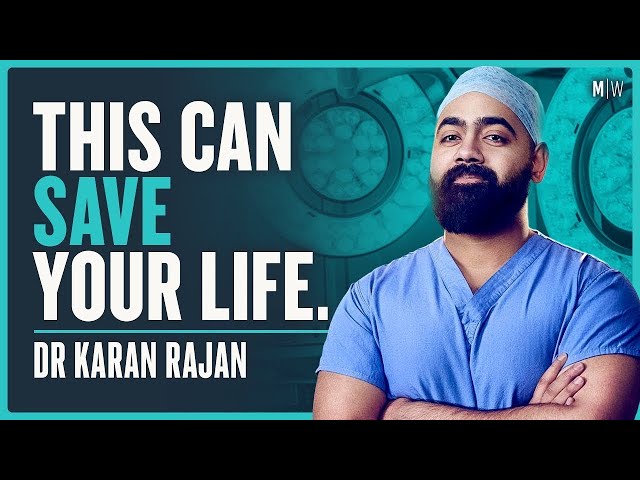
Dr. Karan Rajan begins his discussion on digestive health by debunking common myths, starting with the idea that holding in a fart is harmful; he explains physiologically that trapped gas diffuses through intestinal walls into the bloodstream and is eventually exhaled via the lungs, meaning one literally breathes out fumes if they do not pass them. He further explores burping as a result of swallowed air from gum or carbonated drinks, acid reflux caused by a floppy sphincter, and hormonal responses to diet. Specifically, he notes that cholecystokinin (CCK), released in response to fatty or spicy foods like those containing capsaicin, delays gastric emptying and increases the likelihood of burping because the body perceives heat as damage rather than flavor due to a lack of specific spice receptors. Rajan emphasizes that digestion is not merely a stomach function but an interconnected process involving organs like the liver, gallbladder, and pancreas within the small intestine, where most actual digestion occurs alongside crucial roles for bacteria and enzymes. Addressing the rising prevalence of Irritable Bowel Syndrome (IBS), Dr. Rajan clarifies that it is an umbrella term with various subtypes triggered by different foods influenced heavily by the gut microbiome. He advises caution regarding over-the-counter probiotic supplements, describing them as often ineffective for average consumers due to low bacterial concentrations and inability to survive stomach acid; instead, he recommends obtaining beneficial microbes through natural sources like kefir, kombucha, Greek yogurt, sauerkraut, and pickled vegetables. The conversation also touches on fecal microbiota transplants (FMT), a medical procedure used in the NHS for inflammatory bowel disease where screened donors provide stool to restore gut flora, highlighting that while this is lucrative and effective for specific conditions like antibiotic-associated diarrhea, it involves rigorous genetic testing and lifestyle scrutiny of the donor. The dialogue shifts significantly to sleep science, challenging the "eight-hour sleep myth" by explaining that individual DNA dictates personal sleep needs via clock genes, making a one-size-fits-all approach incorrect. Rajan discusses the concept of polyphasic sleep patterns historically used by figures like Margaret Thatcher and Nikola Tesla, noting that modern naps should ideally be around 20 minutes to avoid "sleep inertia," or longer periods of about 90 minutes for memory consolidation if taking substantial breaks after a post-prandial energy dip. He also addresses hearing preservation, warning against loud environments that damage the finite hair cells in the ear which cannot regenerate once destroyed, and suggests custom-molded earplugs as a protective measure. Additionally, he warns against plucking nose hairs within the "danger triangle" of the face due to risks of microabrasions allowing bacteria like Staphylococcus species into the bloodstream and potentially causing severe infections in the cavernous sinus near the brain. Finally, Dr. Rajan covers pain perception, eye health, cognitive decline, and stress management through a lens of physiological understanding rather than fear. He explains that explaining the mechanism behind pain can raise one's pain threshold via placebo or nocebo effects, citing cases where perceived damage caused agony despite minimal physical injury. For eye strain from screen addiction causing myopia, he advocates for the 20-20-20 rule and utilizing "optic flow" by looking at broad vistas to activate the parasympathetic nervous system. Regarding cognitive decline like Alzheimer's, he stresses that seeds are planted in youth through poor sleep habits which prevent cerebral spinal fluid from washing away toxic proteins like amyloid-beta plaques; therefore, keystone decisions such as getting a dog or maintaining strong social connections (preventing "broken heart syndrome") are vital for longevity and brain health. He concludes by framing stress not just as psychological but physiological, noting that while acute stress can provide superhuman strength via adrenaline, chronic stress suppresses the immune system, making understanding these biological mechanisms essential for managing well-being.
Read the full video transcript
why should you never hold in a
fart you know what uh a patient did once
ask me this and this was an inspiration
for me to make a statement or an
explanation about this and you know fart
is a gas you know it's a chemical it's a
bunch of chemicals and when you hold in
a fart there's a percentage of that fart
Vapor which will diffuse through the
walls of the colon through the walls of
the intestine and eventually it will go
to your blood bloodstream and all the
blood circulates and eventually goes to
the lungs where the waste products are
then exhaled out so there's a tiny
percentage of your fart which if you
hold it in will go to your bloodstream
go to the lungs and then be exhaled out
so you will have breathe it you're going
to breathe it instead of farting it if
you don't fart it you will exhale fart
so you will literally breathe out fart
fumes if you hold it
in it's physiology it's science science
baby this is what we're here for uh I've
always thought this where does the gas
from burps come from and why does it
never go away you know like you keep
needing to burp over and over again so
what if I'm not adding any gas in there
is that gas that you breathe in that
somehow uh a lot of the burps are a
byproduct well there's a couple of ways
uh a byproduct of air swallowing so if
you chew a lot of gum you are swallowing
lot of air you drink a lot of sodas and
fizzy drinks you're again swallowing a
lot of air and the sort of
carbonated gas that you're in sort of
ingesting and lastly there will be a
percentage of gas that your bacteria or
the various microbes in your gut
microbiome will produce and they can May
their make their way Upstream as it were
and they could also be a result of acid
reflux as well so if you have acid
reflux there's basically a floppy
sphincter between where your stomach
attaches to the first bit of your small
intestine and you get reflux of some of
the gases and juices and you get sort of
excessive burping yeah it does seem you
know if you've eaten a little bit too
much or a little bit too quickly and
you're a little bit full it's like it
this is just not stopping I just keep on
burping over and over again it's just
going to happen until I guess I've my
stomach levels finally settle down yeah
and there's actually a couple of
hormones uh one hormone in particular
called kyin we can call it cckk for
short and cckk actually delays gastric
emptying and slows down how much your
stomach empties into your small
intestine so that hormone is increased
if you eat foods that are high in fat or
spicy foods so if you eat spicy foods
the chemical capsacin in spicy foods or
chilies actually increases the
production of cck chosy ainin so there's
more stomach content and there's more
likelihood that you can burp or have
reflux same with fatty foods that
stimulate cck production more burping
more reflux presumably with the spicy
food that is because your body doesn't
want to transport too much of a very
spicy thing through your digestive
system too quickly and with fat
something similar yeah so it's just the
nature of the fat molecules which slow
down digestion so it has more time for
your body to digest it but the case with
chili is different capsacin our body
reacts so weirdly to capsacin in so many
different ways so capsacin is processed
by our bodies essentially as sometimes a
toxin because it irritates the cells and
your body doesn't realize it's just
spicy food it doesn't have a spicy
receptor you only have receptors for you
know sweet sour Umami and Savory Spice
is not a receptor so it actually
interprets that as heat because capsacin
triggers and stimulates the heat
receptors so it thinks something is
burning inside so it wants to say like
oh hang on I'm not going to let you
digest and it stays up there and so our
body is a bit of a flawed machine you
know yeah that's interesting what do you
think or what do you wish that more
people knew about how digestion
works so if you think about digestion
most people just think about the stomach
people would assume that the stomach
digests everything like a big blender or
a washing machine and then that's it
it's done right and the sof the food
pipe is just like a a big waste pipe
everything goes down but actually the
stomach doesn't really have much to say
in digestion the digestion mostly occurs
in the small intestine and you've got a
number of organs inside your abdomen
from the gallbladder to the pancreas to
the liver and all of these various
organs actually interplay and
interconnect with each other and each
step in that factory line of digestion
is as crucial as as the last one so it's
not just the stomach in fact the stomach
is essentially a mixing bow where things
are mixed together and it's later on the
enzymes and the bacteria and everything
kick in to really have a role to play in
your digestion so actually digestive
health or gut health as people love to
talk about gut health these days is more
than just one part you know the sum of
the parts is the real thing
here what's I'm I keep reading about IBS
being on the rise is gluten intolerance
being on the ride food food intolerance
is increasing what do you think is going
on from your perspective so IBS
irritable bowel syndrome it's
surprisingly quite common and a lot of
people think IBS is one thing it's an
umbrella term IBS has lots of different
subtypes people can have things called
ibsc ibsd where actually they're
triggered by different foods and one
person's IBS trigger for example a type
of fermented food can be non triggering
for someone else and we don't really
100% understand the causes of IBS
because we don't really understand the
human body to its fullest potential and
certainly there is an interplay between
the microbiome and what are the symptoms
and manifestations of IBS and with that
in mind the rise for IBS why is that
happening certainly there is a huge role
to play in the microbiome we know that
the microbiome is influenced by the
diets we in so certainly we are having
increased number of ultrapress foods
which can influence the microbiome
negatively maybe a more sedentary
lifestyle we know that lower exercise
more stress less sleep again these
factors can have a role to play in
negatively influencing the microbiome
and all of these things can trigger a
number of digestive issues and IBS
irritable bowel syndrome is one of them
what's your thoughts on probiotics and
colostrum supplements prebiotics all of
that stuff so I think there's a lot of
these buzzword thrown out these days
prebiotics postbiotics probiotics and as
a surgeon who deals with bowel cancers
and a lot of intestinal issues I have
perhaps prescribed probiotics medical
grade probiotics two or three times in
my entire career probiotics the ones you
can go to the supermarket pick up off
the shelf you know Yule Dan on whatever
it is for the average person it's not
going to make a huge difference because
the strains contained within
these mostly unregulated off-the counter
or off the refrigerator section
supplements they're not going to be
present in high enough concentrations or
bacteria units to actually have a
significant role to play it's just like
pissing in the wind and they're not
going to be effective enough in
colonizing your gut which is what you
want them to do they will be wiped out
by your digestive processes the stomach
acids and they won't be able to
compete or integrate with the existing
bacteria that are in your gut actually
you can get more of a benefit from
probiotic rich foods foods that have
natural live microorganisms cafir
kombucha Greek yogurt live yogurt which
has strains um things like that you know
or sauerkraut pickled vegetables these
are more effective than supplements
supplements do work for a narrow range
of conditions types of pediatric um
gastrointestinal issues someone's had
antibiotic Associated diarrhea post uh
bowel surgery sometimes so it does work
for a very limited scope of things yeah
it's interesting I um I went to a place
called Fountain life in Dallas here in
Texas about four months ago and they are
a preventative medicine clinic and it is
full body MRI heart angiogram brain CT
scan I had an hour and 20 minute MRI of
everything a Balan scan good microbiome
analysis full body Dexter scan
everything everything everything
everything then they run all of that
through a ton of AI to try and work out
predictive factors when all of this data
is put together and that is a training
set that trains everybody else's etc etc
and um I found it really instructive
thankfully there was nothing dangerous
or whatever in there um but they did
find for me a little bit of leaky gut
syndrome and um that was something that
again like another like that didn't
exist 10 years ago I'd never even heard
anyone say that 10 years ago uh so since
then I think I've been using a a
colostrum product uh armor which is I
actually really like uh and just trying
to change up the diet but dude kefia is
like just upgraded yogurt drink it's for
the people that don't know it's kind of
like a milk like a thick milkshake I
guess yeah like a fermented Shake but it
doesn't taste fermented like fermented
makes you think it's going to be kind of
sour like gone off milk but it's not you
can get some really really nice ones and
I'm massive fan so I'm team cafia as
well for the digestive system and you
can make it at home it's relatively easy
to make it home if you've got some Cafe
that you've bought over the councel or
you've bought from the supermarket if
you save some of the cafair you can use
some of the old cafair to make a new
batch from home where you get a bit of
milk or something like that and you add
the old cafir to that and leave it to
ferment overnight and you've got a new
batch of cafir M how funny yeah that's
like a pineapple like chop the head off
it turn it upside down you grow yourself
another pineapple yeah do you mentioned
there the fact that you're a a surgeon I
think most people's understandings of
what a surgeon does will be from some
combination of doctor strange and like a
I don't
know 24 hours in A&E what is the reality
of a typical day as a surgeon
like reality of a typical day so I would
wait wake up around 5:30 uh and I'm in
work by around you know 7 7:15 because
the work starts probably 45 minutes to
an hour before the actual surgery
happens I need to go and see the
patients review their scans consent the
patients so take them through what the
operation will entail tell them about
the risks of the operation and then you
know that's not counting the night
before or the day before me reviewing
all of their information their medical
charts their records to make sure I know
the exact steps of what I'm going to do
for that patient specifically they may
have some complicating factors and it's
also essentially running simulations
about the surgery the next day before
surgery just like an athlete would plan
whatever route they're going to take or
how they're going to combat an opponent
it's sort of running through how am I
going to combat that strange Anatomy for
this patient and on the day of the
surgery as well it's again sort of
briefly before knife to skin thinking
exactly what I'm going to do and I see
it as a sort of
uh algorithm in my head a tree of
different consequences if this happens I
do this if that happens I do this and
you know have you seen the Queen's
Gambit no I haven't but I know that I
should watch it so there's this weird
scene in the Queen's Gambit where she
essentially this prod prodigious chess
player sees all the outcomes she
hallucinates the outcomes on the wall of
all the chess pieces moving in different
ways in a somewhat slightly less
genius way than that I'm envisaging
what's going to happen if I do that if I
cut that there and it goes wrong what
can happen how do I avoid that so I'm
running all these stimulations and
algorithms at a very basic level in my
head and you know you just keep doing
that rinse and repeat again and again
and again and the surgery doesn't really
end once you've closed off the skin the
surgery only ends once the patient goes
home and is well for a few days because
complications can happen you know
anywhere from
during the surgery to 10 days posttop so
there's never really rest bite where
you're like okay everything's gone well
wow yeah what are the most intense and
long surgeries that you do what's the
thing where it's on the docket you go
right okay I need a couple of extra
caffeine pills before I get started with
this uh probably um when you have to do
bowel surgery when someone's got bowel
blockage or bowel obstruction and
they've had multiple previous surgeries
when I read someone's surgical history
and they've had lots of previous
abdominal surgery that basically means
it's going to be several hours of
operating because they're very likely to
have lots of scar tissue what we call
adhesions and these adhesions are
cobwebs of scar tissue that line the
abdomen and it's a forest in there and
you have to slowly unpick all the scar
tissue and that is quite fraught with
danger because you can accidentally Nick
a bit of intestine and then you need to
fix that and it can take literally 10 12
hours sometimes and that is okay this is
a big deal wow is that the longest that
you've done 12 hours uh the longest
surgery I've ever done was probably
closer to 15 hours and it was probably
one of the worst days of my life as well
I missed my birthday missed my birthday
dinner with my parents from essent
around 9 a.m. till midnight is when I
operated and it was when I was assisting
my boss years ago uh we essentially
removed everything inside the person's
pelvis we remove their bladder their
ovaries their rectum their
uterus there's some tissue in their
pelvic lining and it just took forever
15 hours it was brutal what a fantastic
way to spend your birthday I know right
and I couldn't even unscrub to tell my
parents I'm not going to be there oh of
course yeah you don't even what I mean
there's got to be I need a a bathroom
break do you just you've got to hold it
in for 15 hours I need you've got to be
HDR someone come over with a little
squirty water bottle like you're a rugby
yeah they do they uh they'll come over
under your surgical mask and they'll put
a straw under there and you drink it and
occasionally they will lift your mask
down and maybe pop a Haribo or something
in there just to keep your energy level
Elite nutrition for the exactly yeah how
funny man yeah we had a when we were
flying from Dubai to Vancouver when I
was on tour with James the videographer
that James brought with us ET his
birthday began when we departed Dubai so
he had a 36-hour
birthday which was the opposite of you
but he also spent 17 of those 36 hours
flying on a plane so you know swings and
roundabouts yeah exactly what's the
truth about your gut having more
serotonin in it more feel-good chemicals
being more determinant of your mood than
your brain is what's sort of real and
what's BS there uh there there's a lot
of new Nuance behind the gut brain Axis
or the gut microbiota brain axis your
gut has you know produces lots of
Serotonin you know 80% or more serotonin
is produced in your gut but that
serotonin doesn't cross the bloodb brain
barrier so that serotonin produced in
the gut doesn't directly influence your
mood so there aren't certain foods that
you eat which will produce serotonin
which will then improve your mood
however that serotonin which is produced
in the G has a role to play in how well
you digest food its peristalsis and
contract ability so it sort of
coordinates the contraction of the
intestines but the food you eat can
influence either positively or
negatively your microbiome and those gut
microbes and those gut microbes can as a
byproduct of whatever you do to them can
then release certain
neurotransmitters which can then induce
neurochemical signals via the vagus
nerve the information Highway between
your gut and brain which can then
influence your mood so in the future my
prediction is that we will come up with
specific medications called
psychobiotics which will you can eat or
you can supplement which will directly
influence your mood because of their
impact on the microbiome it's called
MDMA
Karen uh if the NHS is listening or
watching I canot condone that but yes
you know uh there will be I think for
Consumer grade for the average person I
think we're probably around 10 15 years
away from that I remember a very
traumatic New Year's Eve when I was
working at one of our events in
Manchester so I was at the bird cage
we'd sold this thing out and it's about
two and a half hours to drive back home
and I noticed about an hour into the
event maybe half N I was being really
short with everyone super Snappy very
agitated and I took myself to one side
and had a word with myself I like what's
wrong with you like what what's going on
as I was doing that I got a text from my
business partner saying mate I'm trapped
in the toilet in our other event which
was in Riverside in Newcastle and he
says I like it's not good things aren't
pretty for me right now and uh it turned
out that there was Nora virus going
around at his son's first birthday party
that we both attended the day before and
I thought oh no this isn't good so I'm
two and a half hours from home only one
hour into a 6-h hour event that I'm
event managing and my business partner
is away he's in Newcastle strapped to a
toilet so he he's definitely can't he
can't even help the people in Newcastle
let alone the guy that's in Manchester
so I'm like right okay I'm going to be
in for the Long Haul here and then other
stuff happened dude when I think back to
some of the things that I had to try and
fix in my nlife career we booked this
guy for New Year's Eve to come and play
it's very amongst DJs it's very highly
high demand period obviously they charge
a lot blah blah blah and before he came
through he' asked do you have a
microphone because we needed to make
sure he's got his own PA yeah and he
arrived and I said all right mate did
you bring your own microphone he said
yep yep got it here and I started
talking to him what through my gritted
teeth of not wanting to throw up or [ __ ]
myself I started talking to him about an
hour before and I was like all right
mate can we start to spin up some of the
the what we would call drops so him like
one hour until New Year's Eve it's 30
minutes and he's like oh I don't use the
mic
well hang on I asked could you bring
your own microphone yes I can bring my
own microphone but I'm not a DJ that
uses the mic like well all right so any
that happened and then dude we we the
power thing that set off all of the
pyrate Technics that wasn't working so I
had to connect two 9volt batteries
together like that like sort of one into
the other to get a sufficient volts to
like and I'm shortcutting like trying to
like oh
Jesus yeah to try and set off all of
this stuff at countdown and I'm doing
the countdown and then anyway I drove
home uh and did two and a half hours
like pinned into my seat desperately
trying to not throw up and uh then got
home it was the worst way to start a new
year but my point to that disgusting
story my point is my mood knew that
there was something up way before I did
and I I took myself to one side to say
why are you being so short like what's
up with you and if I ever have a little
bit of sort of indigestion or some sort
of digestive discomfort the first thing
that goes and the last thing that comes
back is my mood oh absolutely you you
know interestingly you'll find this
interesting uh at the University of cork
they did these uh feal microbiota
transplant studies where basically [ __ ]
transplants where they took the
microbiome from someone who is
clinically depressed and transplanted
that into a normal Mouse and that Mouse
after a period of time was observed to
display signs and symptoms of depression
they repeated the same thing with a
human who had autism confirmed autism
transferred the fal microbiome to
another normal mouse that didn't have
any conditions and then that mouse that
rodent study started to display signs
and symptoms of autism uh which is
fantastic so that shows you how well
connected the gut is to our mood and the
Brain that's
incredible that's absolutely wild I I
have a friend here in Austin who is a uh
like poo donor a very highly paid Pooh
donor so he's had to go through I think
four stages of screening uh genetic
testing uh lifestyle diet scrutiny all
this stuff but they he sends off he
literally shits money and yeah he sends
this off and they Recaps sule it and
people use it to help with their uh
digestion and and I'm not I'm don't know
what is it a suppository that they do
would they literally be eating poo
capsules what are they going to do
either the way so you can actually get
um powdered poo capsules that you would
just swallow like a vitamin D capsule or
it can be inserted as an enema or during
a colonoscopy they can actually put that
microbiome in the colon for you which we
do medically uh for inflammatory bowel
disease treatment we use poo transplants
in the NHS you might have used one of my
friends he might have imported it from
Austin Texas and it could have been
inserted by you your friend is a unicorn
because you know that's the point not
one% of people are the golden Poopers
heard and yeah incredibly lucrative I've
heard yeah yeah yeah yeah and he had to
go through all of these these test and
now he makes I mean he's like a
successful business guy I'm not going to
say who it is he's like a guy that like
a lot of my that is the life yeah dude
literally shits money crazy absolutely
crazy all right so he talked about
digestion another Horseman of the health
apocalypse sleep a lot of conversations
on the show about sleep doc Dr Matthew
Walker's book I'm a massive fan of that
and that kind of really redpilled me on
the importance of of focusing on sleep
but what are some of the other things
what are some of the less unknown things
that you wish more people were focused
on or or understood about sleep and its
impact yeah and similar to you I mean I
took a greater interest on sleep because
of the negative consequences of my own
sleep early on in my career as a doctor
so definitely that you know sparked an
interest in looking into the research
and evidence and you know there's this
sort of fallacy that everyone needs to
sleep eight hours the eight hour sleep
myth everyone thinks okay you've got to
sleep this amount of hours and that
drives a certain degree of sleep and
health anxiety when you don't hit eight
hours and we have within every cell in
our body clock genes and clock proteins
which determine how much individual
sleep you need as directed by your
individual DNA so
your required sleep may be seven seven
hours or seven and a half hours mine
maybe 6 and a half or 8 and a half I
think there is a spectrum in which most
of the population lies somewhere
probably between 6 six and a half and
eight eight and a half the mass
concentration will be in there there'll
be some outliers who may get by
physiologically on 5 hours and some may
need nine hours uh but certainly the8
hour one-size fits all sleep Dogma is
incorrect actually and that's been
proven by science the likelihood that
you have that actual gene mutation where
you can survive on I think it's like
closer to four or three three and a half
hours sleep I I remember reading this a
while ago the likelihood that you had
because a lot of people go oh no I'm
sure I haven't had my testing done but
you know I I'm fine 4 hours sleep I'm
sweet man um the likelihood that you
have that mutation is the same
likelihood as you being hit by lightning
twice that's the same that's the same
number of people that have got that
particular gene mutation the deck two
gene mutation very unlik yeah DEC 2 gene
mutation supposedly Margaret Thatcher
had it Nicola Tesla had it Einstein uh
what's it called poly poly poly phasal I
think or basally she slept oh yeah so
sort of in two chunks of sleep y That's
How well H victorians slept as well they
would have a normal sleep during the
night and then they would briefly wake
up in the early hours of the night to do
work and then they would sleep again uh
but the basic sleep pattern is Not
Unusual and the modern version of the
basic sleep pattern is probably what
happens in a lot of Mediterranean
countries where they have cestas because
if you look at our 24-hour cycle there
is a natural dip in energy and fatigue
that arises post prandy so after some
lunch or some food around 12 1:00 there
is a dip in energy level there's also a
slight dip in our temperature levels
because our sleep is very closely linked
to temperature so actually if you do
have a nap around 1212 p.m. that is fine
and that's in keeping with our normal
physiology so naps are science have you
got any idea about why my mood is so
disregulated when I wake up from a nap
and James how long do you nap for uh I
would guess with these ones I'm talking
like more than 15 minutes so I'm
actually getting into a into a proper
sleep cycle um there's been a couple of
times we did it on tour you know when
we're trying to just grab 60 minutes
here or there because we know we've got
to get straight off to this thing but
there was a few times where me and James
would wake up and we didn't want to
speak to anyone we're thinking God I got
to get up on stage and actually be
likable and whatever and you do after a
little bit of time people bring you out
of yourself but I I certainly notice in
myself that if I nap I wake up and my
mood can be very discom ulated so is
that the kind of like groggy slightly
hungover feeling you're describing yeah
and then it it tends to actually impact
kind of my my positivity and my energy
as well and there's a I would say kind
of an electric feeling to my body that
that's sort of anxious in some regards
maybe yeah I think you know whenever
I've experienced that if I've over egged
the nap or underere egg the nap it's
that sleep inertia feeling where perhaps
you've gone into two deep asleep cycle
or asleep phase and when you wake up
you're dredging yourself from the depths
of a deeper asleep cycle so there's not
that gradual gentle Awakening that you'd
have if you naturally woke up and that
sleep inertia where there's still some
sleep hormones percolating slightly
stressy anxiety riddled kind of
emotion what's your protocol for naps
the all that I know is once you push it
past or supposedly once once you push it
past about 20 to 25 minutes you're
really getting into this is actually
sleep and not a nap and if you're going
to do that if you can try and hit 9 so
that you can get yourself into and back
out of a phase have I missed anything
there no that's absolutely spot on I
mean I I'm if I nap on a weekend for
example that's the main time I have to
nap um 90 minutes would be my go-to
because I want something that's
substantial enough that would help me
consolidate my memory make me feel
refreshed at the end of it and I find
it's easier to stick to 90 minutes than
go in and out of 20 minutes because for
me my sleep induction time is longer if
I told if I told myself I was going to
nap for 20 minutes it would take me too
long to actually get into the nap first
of all so 90 minutes is preferable for
me yeah my my sleep latency has been all
over the place this year uh I don't know
what it is I I think a lot of people
feel this as well you know if you're
busy during the day and even if you try
and do the digital detox thing that 321
rule I think is really nice actually if
you're familiar with that 321 uh is that
the 3 hours before bed 2 hours before
bed yeah yeah so 3 hours before bed stop
eating 2 hours before bed stop drinking
1 hour before bed stop using screens
which is funny that screens have been
placed in with food and hydration is
like you know like the the mandatory
bottom of Mao's hierarchy of needs that
people have um I think that's been
really great and it's so funny like I
know that meming healthc care stuff is
kind of a bit cheesy and it it's almost
a little bit Juvenile and simplifying
things down but that's what helps people
retain principles so true yeah 321 rule
I would maybe sometimes if you're really
struggling with sleep add a 10 before
the 321 for the coffee because the
halflife of coffee is upwards of eight
hours so if you were a habitual coffee
drinker you know and you were having
cups of coffee at 2:3 p.m. and your
bedtime is 11:00 p.m. there's still
likely to be a decent percentage and
concentration of coffee in your
bloodstream when you're going to bed
which is going to disregulated your
sleep I'm a fast caffeine metabolizer
that came out from some of the tests
that I did interesting I get stealth
caffeine on an evening time by ordering
a Diet Coke and forgetting ah and
someone will bring a Diet Coke over and
it's I think it's only maybe 45 migs of
caffeine so it's not very much but if
you knock two of those back that's you
know not far off an espresso and you
thinking [ __ ] it's like 700 p.m. at
night and I've just done that but yeah I
can feel it man and here's another thing
right is there any evidence between
phases of the moon and quality of
sleep um I think the evidence there for
that that's published that I I've not
seen any evidence linking the two but
certainly if there are times when the
moon is more luminous and brighter than
usual and you don't have blackout
curtains and the Moon is shining through
your window so there's enough light
getting into your room that's affecting
your sleep potentially you could see
mechanistically where there could be a
way that that would affect your sleep
but if you're in a blackout room you got
blackout curtains which you know I
certainly do I'm not influenced by these
external light sources so no would say
you would think the same thing uh and
yet there's been a few times where it's
everything is normal routine is as
normal and can't get to sleep until 3:00
or 3:30 in the morning and there was a a
day when we were all in Dubai
everybody's sleep was wrecked people
that we'd been with people that we
hadn't been with people who'd gone to
bed at 8:00 people who' G gone to bed at
2: in the morning everyone was [ __ ]
and sure enough full moon so I'm non
conspiratorial when it comes to the
horoscopes thing but I reckon there's I
think there might be something there one
other thing I was having a conversation
with a friend uh this weekend who's a DJ
and we were talking about hearing and
improving and protecting your hearing is
there anything that people should be
aware of when it comes to that yeah the
the hair cells which help us transduce
sound and then in basically translate
the sound waves into electrical signals
which our brain then interprets as sound
those are directed by the hair cells in
our ears and we've got around 16,000
hair cells you are born with all the
hair cells you'll ever have once you
destroy them that is it uh and they
detect various frequencies
so you know that feeling where you go to
I don't know a cricket match or a tennis
match or a concert or a very busy place
where there's this constant hum and then
you go somewhere quiet and there's that
ringing feeling in your ears that is
your hair cells being bent by the sounds
and they are kind of unbending that is
that sound and that's the process you
are experiencing and if you party hard
for long enough you know nightclubs and
loud music all the time if you're in a
band you're singing you're going to
concerts you can long-term damage those
hair cells or those old rockers of the
6070s and 80s they've got a lot of
hearing impairments like Aussie Osborne
is essentially deaf because he never
wore those ear plugs that would protect
his hearing and that is the risk with
these hair cells where you know
unexpected sources can damage those and
once they're gone there is no you know
reprieve at all but wild yeah my old
business partner my former business
partner Dave had a hearing assessment
done and I think he lost 15 DB off the
bottom end and 10 DB off the top end so
he he'd really damaged his hearing from
you know he stood inside or outside
nightclubs for a decade and a half and
he's still going and none of us had
nicely molded earplugs that would not be
a [ __ ] on to take out when we went
outside and whatever and now you can get
get custom molded ones with a tiny
little filter it's like a weeny little
straw that filters through so that it
means that if you do go outside to go
and speak to people you can still quite
easily hear what they're saying without
it sounding like you're underwater um
but yeah yeah I do I mean thinking back
to my nightlife career and some of the
sound boots that we used to be in and
DJs would just want more monitors they
want to hear with full richness what's
happening out in the club and also
they're partying they're with their boys
or they've got like chicks in the booth
of them they don't want it to
be why can't we hear the music out there
why is it only coming through your
headphones oh don't worry about that I'm
actually protecting your hearing like
that's not a big rockar thing to say um
exactly but yeah what was that thing
about uh plucking your nose hairs
speaking of hairs inside your head yeah
so when you you've got different types
of nose hairs uh you've got the deeper
longer vicy um and you've got other
types of nose hairs and they do a lot of
jobs and the main jobs of the nose hairs
uh apart from looking out of place is
that they actually filter microbes dust
particles and potentially infectious
causing agents getting into your
delicate moist inner Linings your
Airways and when you pluck those you
obviously increase the risk of things
getting in and you're removing that
filter system that's there but actually
you can increase the risk of
microabrasions every time you pluck
something just like when you pluck a
hair on your hand or somewhere else you
create a small opening a microabrasion
or a micro cut through which things can
creep in bacteria from your skin you
know Stafa coccus species from your skin
can creep inside the bloodstream and
that region of your face the triangle on
your face from the bridge of your nose
to the tip of your top lip and a
triangle which forms there that's
actually known as the danger triangle
where there's a very close association
between the drainage the Venus the vein
drainage to your brain and the nose as
well and there's something known as the
cavernous sinus and if you get a
bloodstream infection in the cavernous
sinus that can lead to all sorts of very
horrible things like menitis clots um
and in rare cases death although that is
quite rare I mean the average person
plucking their nose is not going to die
but it's not a 0% chance of that
happening I was in Dubai to do that live
show a couple of weeks ago and I needed
a haircut so I spoke to one of my
friends George who lives out there and I
said who who usually does your hair so
he sends this girl over and she was like
you know perfectly like nice and and
cutesy or whatever but also was a boxer
so she was like kind of Hardcore and
she's from Lithuania like interesting
chick interesting chick but she had gone
full Habibi mode with the the so she's
getting the little like the wax putting
the wax on the in on the inside of the
the eyebrows she's got wax in the ears
like doing the wax in the ears and the
wax wax in the nose and she's like
pulling it out and uh yeah that was that
was a real a real experience so maybe
not to be done again and if I do have my
haircut from her I can actually say my
doctor a do not my doctor a doctor told
me I'm not allowed to have this done
because of my my fibres or whatever it
was called vibrasi yeah you got to you
got to protect the vibrasi I am I'm
trying my best what about people who can
deal need to deal with pain more
effectively have you got any tips for
how people can can deal with it you know
a lot of the time in the clinic I see
people with chronic abdominal pain or
other sorts of chronic pain and I've
found anecdotally and actually looked it
up and it's evidence based as well when
you explain something to someone explain
how something works for example in the
case of pain if you explain to a person
why they're getting pain the scientific
physiological reason why they're getting
it that simple Act of them understanding
their pain actually increases their pain
threshold and lowers their pain
perception as well which is almost like
a Jedi mind trick you know you just
almost dampen down their pain and the
interesting thing about pain is
that there isn't a direct correlate just
between tissue trauma and the amounts of
pain that you will perceive because a
lot of the pain it's modulated by what
you think so if someone is getting an
injection or you know a vaccine or
whatever they're getting if you ask them
to look away from the injection that
will elicit less pain than you watching
the injection go into your skin so again
that is visually you're not getting the
signals and that's dampening down your
pain perception because you're not
getting the visual input so there are
lots of things that you can do mentally
to dampen down the pain there was a
interesting case report from many years
ago of some a person who was admitted to
the emergency room like a doctor wrote
this case report Port up he sees a man
in the emergency room and he's he works
in a construction site and he's got a
big nail that's going through his Boot
and presumably skewering his foot so
he's screaming in agony like I've got
this nail in my going through my foot
I'm I'm bleeding I'm going to die and
what they do is they remove the boot
first of all to see you know the damage
and see what's happened and it turns out
the nail is not going anywhere near his
foot it's stopped by the boot itself so
actually his foot is completely fine
just that perception of it was going
through was enough to cause that pain
and it's almost like a placebo and nosbo
effect that you create in your head
about pain so you know similar to cold
water
exposure initially it may be painful
because you're expecting expecting it to
be horrible but if you expect it to be
nice and you're going to enjoy it you
can actually improve that experience
erence there's something interesting
about cold exposure I learned from
huberman that
is you can be relaxed when you get into
the tub and that will make your
experience much more enjoyable than
being stressed about it but what you
actually want to try and elicit is that
stress so his advice is to go in with a
sense of aggression as opposed to a
sense of relaxation so for me my
favorite way to do it is to just slowly
sort of lower myself in get up to my
neck put my hands in and then just very
gently breathe through my nose and count
down from 180 if anyone wants to know
how to actually stay in a b a cold tub
for 3 minutes just count down from 180
it'll be difficult between sort of
150 and 60 and then after the first
bit's fine and then after that you're
fine as well but what he's saying is
that part of the Cascade of responses
that he wants to have happen or that
would be optimal to have happen is
something that's a little bit more
fear-based and and uh sort of activating
I suppose and um we did NAD we did an
NAD drip this week so me James and my
housemate Zach Have you done one do you
know what that feels like I've not done
one I've given um an ad to someone but
not I've not had it myself okay so it's
not very comfortable um anyone that's
had it will say it's not it's not an
enjoyable experience at the time it's a
very unique category of pain so um they
give you is it Fran zran anti an anti-
nausea um so they give you that because
you can sometimes get nausea with it
um it's a unique category of pain
because it's one that you think or know
is making you better and it's one that
is not associated with damage and is
time bounded so you know that as soon as
that bag's finished it's done you know
that you're doing it in service of you
being better and it's not because
something's snapping or breaking or
going to going to be be ruptured or
whatever so your relationship and the
story that you tell yourself about the
pain is very unique there's not many
categories of discomfort that can be
like that you got a pain in your stomach
oh my God like it's it's my appendix
it's going to blow or whatever um but
yeah I just I really enjoy from a
mindfulness perspective I really enjoyed
playing with that sensation what does
this mean to me what's the story I'm
telling myself about this pain like how
can I find more Intrigue in this
sensation it's a very unique opportunity
for me to be able to see this and not
layer it with fear and concern and worry
and stuff like that it's very very
interesting yeah that that will
certainly fear will amplify your pain
perception so you yourself it's hard to
do but and especially people dealing
with chronic pain but you can upregulate
or downregulate your perception of pain
depending on how you put your spin on it
that's interesting what about Eye Health
how can people keep their eye healths
optimized well ey Health now more than
ever there's you could say there's a
myopia epidemic a shortsightedness
epidemic because people are just on
screens constantly all the time and when
you're on screens all the time laptops
mobile phones TVs whatever you've got
watches you know smart watches our eyes
the muscles which help our eyes focus on
nearby objects are constantly activated
and that actually over time changes the
shape of the eyeball uh it you know
becomes less round and more rugby shaped
and this can affect long-term Eye Health
causing eye strain eye fatigue um so I I
genuinely think people do need to look
up from screens a lot more I know it's
pretty ironic us saying this and us
having conversation about ey Health
whilst uh you know being virtually
having a chat but yeah I think we are we
are addicted to smartphones and
constantly craning down and you know
wearing our eyes out what is a good
protocol for people to try and offset
that you know me personally I've spent a
lot of hours reading revising for
surgical exams over the years and
pouring over you know textbooks and
various things and I found that just
breaking it up and doing something
called the 202020 so every 20 minutes
you have a break from whatever you're
doing uh and you you know just 20
minutes and you get up and you look
somewhere 20 feet away and then you go
back into it after another 20 minutes
and just giving yourself a bit of a
break or you know just every 20 minutes
you should have some sort of eye break
uh where you are defocusing your eyes
you're not so intently focused on one
thing and you look into the distance
into a horizon into a broader Vista or a
broader view allow your eyes to almost
you know defocus and defocusing your
eyes and looking at a broader picture
helps to activate the parasympathetic
nervous system where you're sort of you
know downregulating your stress response
because when you are focused on
something whether it's closely looking
at a page on a piece of paper or closely
looking at a moving object that's close
to you that is some sort of stress
response your adrenaline is spiked at
that point and defocusing offsets that
somewhat one of my favorite triggers is
to remember that you have all of this on
the outside of your vision and that if
you're looking at something or anything
and a really easy parasympathetic
activation is to just allow your focus
to kind of ease out onto the sides even
if you're remaining
focused on what's in front of you being
short but allowing the width of your
vision to kind of come into view and to
be a part of your uh like salience
Network I guess you'd say and that's
just so nice it's such a lovely trigger
that and a nice slow breath out is about
as quick of a way to just I'm down
regulated a little yeah and and what
exactly what you describing there is
known as optic flow so you know when
you're cycling uh around and and you're
constantly seeing both what's in front
of you but also all these things passing
you or if you're taking a hike through
nature you've got this broad Vista so
you've got both a combination of a
broader View and it's a moving broader
view as well uh which further stimulates
the parasympathetic nervous system
there's something about lateral eye
movement downregulating a migdala
response isn't there I I think I mean
I'm no expert specifically on the eye
but you know the eye and the retina is
part of the brain so there are a lot of
things to do with the eye that directly
impacts the brain and you know I have no
I wouldn't be surprised if there were
certain triggers or certain types of
movements that did influence your
perception or fear or anything like that
as well I think optic flow is probably
one of the big movers for what I'm
talking about but I seem to remember
learning from hubman again that there's
something specific that occurs as you're
moving through an environment things are
coming past you and you're looking from
left to right and I remember it's so
cool man when you test stuff in your own
life and then science comes along I
guess science was probably already there
you just didn't know about it someone
comes along and informs you about the
science and uh for years and years I was
doing this morning walk thing and
sometimes I'd wake up and I'd feel a
little bit kind of anxious in my body or
in my mind or I'd have thoughts that I
just percolating in a way that I didn't
want and I'd find that after 15 minutes
of a the same loop I used to do in
Newcastle I'd get back and i' just
feel a lot better like the world was
kind of the world was a bit Rosier and
uh I remember just really enjoying that
experience to the point where I think a
morning walk is the most consistent
thing I've I've done from a habitual
perspective over the last maybe 10 years
and uh then yeah I hear optic flow and
this sort of down regulation of the
amigdala and oh wow that was maybe part
of what I was feeling yeah absolutely
and and I think the routine is key as
well I mean it sounds like when you went
on your morning walk in Newcastle there
was a moment where you were by yourself
uh just with your own thoughts and I
think sometimes the act of just doing
nothing helps to spark creativity and
just it's a it's a form of mindfulness
whether you acknowledge it or not just
being with your own thoughts uh you know
is quite calming what about slowing
cognitive decline I know that
Alzheimer's Parkinson's dementia General
cognitive decline is kind of a another
Hot Topic at the moment what's the 820
from that yeah I mean that as a doctor
that is genuinely one of the diseases
that scares me the most I used to think
it was cancer and as someone who deals
with cancer and removes bowel Cancers
and other types of
cancers I think the human race has
gained some sort of foth hold in the
fight against cancer with various trials
and medications that we've got coming
out but Alzheimer's still seems to be
the Outpost that we haven't quite got to
yet and figuring it out although there
are some interesting trials about
monoclonal antibodies which can reverse
potentially Alzheimer's rever you know
our brains are all slowly turning to
Mush whether we like that fact or not
how can we slow down the Decay and for
me it's very basic things that we need
to start setting into our habits now
because the clinical signs of
Alzheimer's they don't start until maybe
you're in your 60s 70s and 80s but the
first seeds are planted in your late
teens 20s and 30s so our sleep habits
notoriously bad when people are in their
teenage years or 20s and sometimes even
30s especially nowadays with Netflix and
various streaming services and you know
endless Tik Tok uh you know scroll holes
so poor sleep and chronic poor sleep can
prevent the amount of brain wash that
happens during those sleep cycles you
know we have this cerebral spinal fluid
which wases the washes the brain of uh
all the toxic protein buildup that
doesn't happen in such an efficient way
if you don't sleep well and those toxic
proteins the amalo beta plaques and the
towel proteins can accumulate and
actually cause neurod degeneration over
time same thing with if you don't
exercise enough you don't get enough
regular blood flow to the brain um again
diet has a role to play as we know the
microbiome its interaction with the
brain and the gut that has a role to
play but also social contacts as well if
you look at these Blue zone areas where
people live to 100 cenarius and
sometimes even longer they have great
social networks and social contacts and
you know we are humans are social
creatures so We crave on a physiological
level some degree of uh Network loyalty
and Community as well
one of my friends Johnny talks about uh
like Keystone decisions he called them
getting a dog is a keystone decision for
him it's a an individual decision
Downstream from that there are a ton of
other things that end up coming along
for the ride so you're going to get more
steps in and your wake sleep and wake
cycle is going to be up and you're going
to have to have an externalized sense of
ego because something else is dependent
on you so on and so forth and um I think
that you know pushing to spend as much
time on an evening trying not to eat on
your own trying not to eat with a screen
you know really relatively Simple Rules
321 rule you know this is something easy
for me to follow Sean Stevenson taught
me about this this year he has a rule
where every meal that he has on an
evening time has to be with someone it
has to be with somebody even if he's
going to like call on the phone uh with
his airpods in or whatever because he's
in the house on his own or he's
traveling or whatever and um yeah you
know it's such a key St decision to
think Downstream from the relationships
that you have what have you got well
you're out of your own head you're
talking a little bit more you're
probably eating more slowly even from a
digestive perspective maybe the person
that you're with says hey why don't we
go for a walk and you go oh yeah why
don't we go for a walk and going for a
walk after you've eaten fantastic for
digestion insulin response etc etc blood
blood uh sugar uh yeah that's that's a
that's a big one finding finding people
that you can eat there's a a meme going
around the internet at the moment that
guys can't eat lunch without YouTube on
so this dude's phone's run out of
battery and he's absolutely starving but
he has to wait for the phone to boot
back up before he can start the lunch
which is already in front of him but
it's true it's it's a meane because it's
true because of how many people can't
choose to eat in front of screens and
I'm you know I in my less disciplined
days I do it
to yeah and if you if you look at a lot
of these Mediterranean cultures and even
uh you know the sort of Asian cultures
African cultures they're all about big
shared meals right whether it's lunch
breakfast or dinner you've got the
Elders of the family the grandparents
you've got the mother and father you've
got the grandchildren you've got uncles
and aunts and it's like a big occasion
where everyone is there with each other
and even in um Japan in Okinawa the
island of Okinawa you know you've got
people you know who are friends with
each other for decades you know they're
friends for over 50 years and they have
the little tribes called the mawai and
you know they help each other when
they're in financial struggles emotional
struggles stress in their lives so that
that support network even something as
simple as just a meal with someone has a
you know significantly huge impact on
your health
and this is you know not just
wishy-washy Bro Science if you actually
look into the evidence of companionship
and heartbreak when someone one loses
someone they
loved they can actually die of a broken
heart and this is called tacot soos's
cardiomyopathy your heart changes in a
way where it causes such a significant
that that huge negative event in your
life so your I don't know wife of 50
years passing away the flood of stress
response chemicals adrenaline cortisol
and various other things has such a huge
impact on your physiology of your heart
that it causes a type of a heart attack
and you die of literally a broken
heart that's wild my mom's my mom and
dad's dog two years ago two years or
three years ago I can't remember um
passed away uh it was super ill and and
there was two dogs one that was Ill
another one that was old
within 5 days I think or 10 days of the
first one dying the second one had died
as well well there you go yeah
companionship and increase in stress and
and all of that what about stress you
know it's kind of a again another
buzzword that people throw around
what well when I think about it it's the
I understand that chronic stress is the
thing that we need to be concerned about
that stress in small doses is that but
how do people know if they are stressed
on a daily basis you after a while
that's just life to you you know yeah I
think you know it's interesting so a lot
of people do think that maybe stress is
just a psychological state that it's
something to do with your mind and you
you'll obviously be stressed if you feel
bad or whatever but actually stress
invokes a physiological response as well
and stress affects so many different
organ systems uh for example stress can
cause breakouts of various skin
conditions it can exacerbate a lot of
skin conditions like eczema dermatitis
rosacea you can get a acne breakouts
with stress it can disrup regulate your
gut as well we know the brain and the
gut are intricately connected and
intertwined so if someone's got certain
types of inflammatory bowel disease like
ulcerative colitis or Crohn's or even
irritable bowel syndrome states of
stress can cause diarrhea or in some
cases the other way and cause
constipation or abdominal pain a lot of
autoimmune conditions like rheumatoid
arthritis stress worsens the symptoms of
that so
actually every organ system you look at
from your immune system when you're
stressed the number of natural killer
cells the type of white cells which help
you fight off cancer and viruses
actually plummets if you're stressed
because stress itself is an
immunosuppressive
response what's that I remember reading
about this that during periods of high
stress it's
often people sometimes don't get ill but
that as soon as the stress finishes as
soon as they have hand in the
dissertation as soon as they complete
the project for work they rebound and
find that they get incredibly ill have
you got any idea about what the
mechanism is that's working there if I
had to have an educated guess it would
probably be some sort of compensatory
response by your body that just needs to
survive you it's on survival mode where
you know um you hear these reports of
people being in accidents and somehow
they've managed to lift a car so
someone's leg can be pulled off from the
car they display superhuman strength for
that particular scenario and that can be
explained by increased amounts of stress
response chemicals I suspect it would be
something similar in the case of you
know you're facing a deadline or chasing
a deadline and that stress response
keeps you afloat but actually you're
about to break and as soon as that event
is over you are broken and those cracks
they start to appear That's what I would
yeah hypothesize I I think it's not I
seem to remember that it wasn't far off
you know it's kind of like a protracted
hesis response thing that you've got
going on um with regards to the lifting
cars off of children and legs and and
stuff like that another interesting
thing that it sounds like science
fiction but we have a um like a rate
limiter on what our brain will allow our
muscles to do because if our brain just
allowed our muscles to do whatever they
wanted you would snap your [ __ ]
significantly more fre
we and I ruptured in Achilles 3 years
ago so I know how how frequently we snap
our [ __ ] um but yes and if you think
Eddie Hall tells this really cool story
have you heard him tell the story about
when he first lifted 500 kilos so he's
going for the deadlift world record and
he talks about the fact that he for
however long before in his warm-up
routine envisioned a car on his daughter
and he walks out and you know does this
thing but he gets he does this one lift
it takes 10 seconds I guess to do this
thing and he's immediately put on a a
ventilator his blood pressure is off the
chart his heart rate's through the roof
his eyes turn blue people can go and
look at the video of him he's got he
hasn't got blue eyes but if you go and
watch the video of him his eyes turn
blue it's crazy so yeah those single
formative extreme sort of stress driven
adrenaline controlled instances of
people doing stuff wild [ __ ] comes out
of them yeah I think you know you're
right I mean there is a certain degree
of stress that we need and that hormesis
that you mentioned it's the same as when
you're eating vegetables right um a lot
of people talk
about there are various bizarre people
online who talk about how vegetables are
bad for you and you should cut them out
because they contain antinutrients or
defense chemicals in the plants and yes
they do and technically at a very
microscopic level they are poisonous for
us because those defense
chemicals do poison us but actually it's
such a small amount that it's actually
beneficial for us because it is that
process of hormesis just like cold
exposure that small amount of stress is
beneficial for us and allows the body to
respond to that and eventually grow over
time and improve talk to me about the
role of awe in
well-being oh yeah so I mean this is
another thing which can help to offset
or delay neurod degeneration and brain
atrophy and it's just that profound
sense of potentially doing something new
seeing something new and just
experiencing new things and that is all
it doesn't have to be always you need to
go and see a wonder of the world it can
literally be you going out into nature
and being exposed to awe and being
inspired by something by someone
something an act uh either yourself or
seeing something else and you know these
are all positive emotions which
ultimately are good for you it's so
strange to think about all as an emotion
no one talks about it people talk about
all manner of emotions but all dread
even dread which is kind of the I guess
in some ways the opposite of all
um people talk about that I think it's
kind of been repurposed as anxiety or
fear or or whatever um but yeah all's
just it needs a like we need to make all
great again it's it needs it needs a
brand um there's a a part of my garden
in between we have two houses here and
in between the main house and the the
other house when I'm walking through
there's this really clear view of the
night sky and it was so clear in in
Austin here last night even just that
tiny little bit of looking up at the sky
so lovely it's it just again the same as
the I went on a morning walk and it made
me feel better I can't explain the
mechanism I don't know why is this just
woo like look ultim Ely if it makes you
feel good and you know that it's not
destructive it's not making you feel
good because it's crack or because it's
processed
foods I I I reckon just like rinse and
repeat yeah all of these things if you
really look into it and you boil it down
to something and you want something
tangible to label it as it's a
meditative experience it's it's a form
of mindfulness or bringing calm to your
body right uh whether you're just
walking like you know your your uh
walking routine your morning walk and
Newcastle or looking at that night sky
it is a form of not focusing on nothing
but also focusing on everything at the
same time that is the art of mindfulness
and that is what you're doing sometimes
unintentionally when you're AED by
something nothing else is in your field
of focus except that one or inspiring
act H yeah Karen let's bring this one
home where should people go they want to
keep up to date with you and check out
all of the stuff that you've got uh you
can check me out I'm like a virus I'm
everywhere I'm on YouTube Instagram Tik
Tok Facebook wherever you want to find
me new book as well yeah this book May
save your life we you know we cover a
lot of the things we talk about here and
hopefully more to hopefully save your
life amazing Karen I appreciate you
thank you man thank you Chris if you
enjoyed that episode then press here for
a selection of the best clips from the
podcast over the last few weeks and
don't forget to subscribe