Death of the Pastor’s Wife: Does Adultery Disqualify a Pastor?
Watch on YouTubeVideo summary
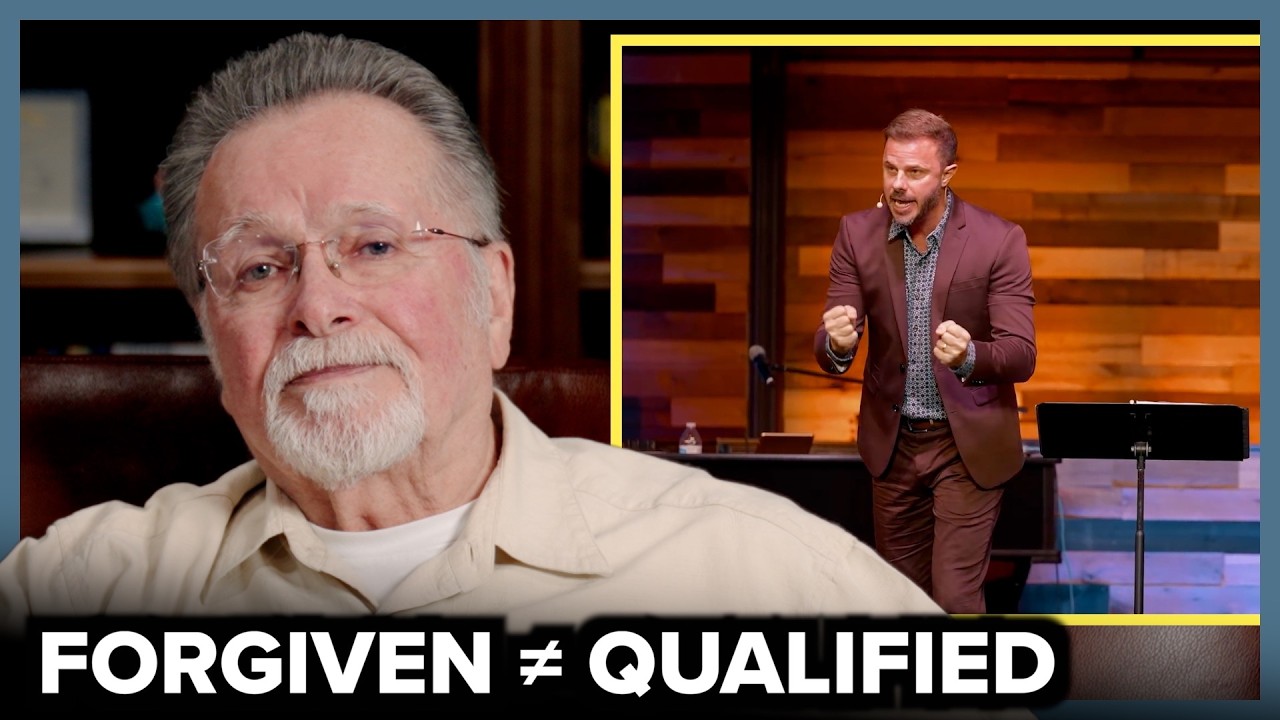
Pastor David Rosales addresses the serious question of whether a pastor who has committed adultery and subsequently divorced his wife to remarry should continue to lead a church, citing the biblical requirement in 1 Timothy 3 and Titus 1 that elders must be "above reproach." He argues that sexual sin brings lasting shame, using the example of King David, whose reputation was forever tarnished by his relationship with Bathsheba despite his other victories. The core argument is that a pastor must not only teach God's word but also live it out as a moral example; if a leader fails in this area, they bring reproach upon Jesus and the church, which disqualifies them from holding a position of authority where they are expected to model faithfulness for the congregation.
While the speaker acknowledges that restoration is possible through repentance, he distinguishes between immediate reconciliation with God and the longer process of restoring relationships with people. True repentance requires not just confession but a sustained period of time demonstrating fruitage and a return to right behavior before one can be considered restored in the eyes of others. However, even if a person has genuinely repented and been restored over many years, they cannot serve as a senior pastor or moral leader because their history remains part of their record. The standard for a pastoral role demands a life of ongoing faithfulness that allows the community to look at them and say, "This man teaches me how to love my wife and walk in holiness," a standard that someone with a history of sexual sin can no longer meet.
Consequently, the video concludes that while such an individual is not necessarily lost or without value, they are disqualified from leading a congregation as a senior pastor. They may still serve in other capacities within the church community, perhaps speaking with humility to warn others against similar pitfalls, but they cannot hold a leadership position where their credibility and reputation are paramount. The speaker emphasizes that building a reputation takes decades while losing it can happen in an instant, urging believers to be careful about who they follow and to avoid making excuses for sin. Ultimately, the call is for leaders to imitate Christ without fail, and anyone who has fallen into such sin must accept that they have failed the specific qualification required to lead a church, regardless of their personal feelings or desire to continue in ministry.
Read the full video transcript
You can work 40 years to build a
reputation and you can lose that
reputation in one minute. If somebody
commits adultery, somebody commits
sexual sin, should he be continuing as a
pastor to be a moral leader to be an
example to the body of Christ, to be
somebody that they look at and they say,
"This man can teach me how to love my
wife. This man can teach me how to love
my children. This man can teach me how
to walk in holiness, godliness. This is
a man that has remained faithful. Hi,
this is Pastor David Rosales. I'm pastor
of Calvary Chapel of the Chino Valley in
Chino, California. Recently, there was a
series in Netflix, The Death of a
Pastor's Wife or something of that
nature. That was uh a show that a quote
unquote pastor who had an affair with a
uh a younger member of the church and
ended up divorcing his wife and things
like that. And so the question has come
up,
you know, because the church didn't
disappear. There were people who
remained behind. Um the question was
asked if a pastor has had an affair and
has um
divorced his wife to remarry somebody,
is it is it proper? And the Bible tells
us in 1 Timothy chapter 3 that the
pastor, the bishop, the elder, the lead,
whatever you want to refer to him as,
the pastor is to have uh a character
that is without reproach. And so the
fact that the man has done these things
and has brought reproach on on Jesus, on
the church, his own life and his own
family, uh that disqualifies him. When
you look in the book of Proverbs, the
Bible speaks of the one who uh a man who
has uh a an improper relationship with
another man's wife, the scripture says
ne never loses his reproach. So that's a
disqualifier because when you think of
this pastor, if you know anything of his
history, you're not going to be thinking
of him as a godly man. You're not going
to see him as somebody who is not only
teaching the word, but keeping the word
himself like Paul commanded Timothy to
make sure that he not only was somebody
who gave the word, but somebody who
lives out the word. No, you're not going
to think of him that way. You're going
to think of him in the same way that you
would think of King David. When I speak
of King David, for example, not that he
was a pastor, of course he wasn't. He
was a king. But when you think of King
David and I bring him up, there are only
two names that come up with King David.
There's only two names that people will
normally and quickly respond. The first
name is always going to be Goliath. We
all know the famous story of David and
Goliath, and people remember Goliath.
But the other name is Basheba. Bath
Sheba was the wife of one of his key
men, one of his bodyguards, if you will.
And David committed sexual sin with his
his friend's wife. And so when you think
of King David, you think of two names.
You think of Goliath and you think of Ba
Sheba. And he was told by the prophet
that his his shame would be forever
remembered. There'd never be a time that
his name was not associated with the
shame of what he had done. And so you do
not lose even if you go on 15 or 20 or
30 more years, you never lose your
reproach. It's always something that's
going to be part of your history. And so
if somebody commits adultery, somebody
commits sexual sin,
should he be continuing as a pastor?
There are there are forms of
restoration.
You need to understand that there are
two basic things. One, in restoration,
you are being restored to right
relationship with man. You're also being
restored to right relationship with God.
So when I have a a a sin that I confess,
my restoration to fellowship with God
is immediate.
But restoration in terms of relationship
with others is a process and it takes
time. And because as a pastor I have uh
I have the to pass the qualification of
being without reproach I have
disqualified myself from pastoral
ministry. Now my my repentance can be
very loud like Spurgeon once said
quoting uh another uh by the name of
McNeel he said and I'm paraphrasing that
a man's repentance should be as
widespread and well known as his sin. Um
sometimes people people will will say
I'm repentant but they don't bring forth
fruit of repentance. And I've also
discovered that in repentance there's
usually a time period that shows a
sustainability. In other words, I really
did repent because I did not return to
what I was. And so that's a
demonstration that takes time. So a
process of restoration in forms of
ministry is that if somebody were to to
commit sexual sin and they really did
repent and there was a process of
restoration that took place between him
and elders and and all the things that
go into and over a time period that
person I believe can be once again
placed in a certain place to to to
minister to a certain capacity but to be
a pastor, to be a moral leader, to be an
example to the body of Christ, to be
somebody that they look at and they say,
"This man can teach me how to love my
wife. This man can teach me how to love
my children. This man can teach me how
to walk in holiness, godliness. This is
a man that has remained faithful uh for
all of these years. It shows me it can
be done. He shows me how it can be
done." That's a pastor. But a pastor
who's out there saying, "Well, I'm just
a little bit different than you. I'm
pretty much the same as you. You know, I
have my impulses and my desires like
you. Show me compassion. Show me pity.
No, you are not called to that. You are
called to a place where you should be a
leader and a model. You should be
someone who, like Paul says, imitate me
as I imitate Christ. And so, if you are
a failure in that, I'm not saying that
you're not saved. And I'm certainly not
saying that you uh have no place to be
able to show the fruit of repentance and
concern and love and care and all of
that. I'm not saying that at all. What
I'm saying is the qualification for a
pastor in 1 Timothy 3 and Titus 1 will
preclude you, preclude that man from
leading a church. He has failed and
finds another place to serve, repentant,
restored, but not as the senior pastor
leading the congregation. That would
never happen here. Uh if I ever failed
in such a way, I am immediately
disqualified. My my my board already
knows that if I ever were to fail in
such a way, then I I'm removed from the
ministry. My credibility, my reputation,
you know, it's gone. You can work 40
years to build a reputation and you can
lose that reputation in one minute.
Don't forget that. Stay firm, stay fast
and follow Jesus. So should that guy in
this Netflix should he be leading? No.
The people who are following him are
following somebody that is not qualified
to teach them the things of God. He's
not qualified. He's failed. Not as a
pastor. He can't. As a brokenhearted,
repentant sinner who speaks with
humility and warns people against what
happens. I wouldn't put him in a senior
pastorship.
In this fellowship, he may have
opportunities to serve in different
capacities, but he would never be placed
in a pastoral role because he's
disqualified. Titus chapter 1, 1 Timothy
chapter 3, and book of Proverbs.
So,
we have to be careful with who we
follow. We are to be moral examples. We
are to show the power of the Holy
Spirit. We're not perfect, but we
certainly don't make excuses for our
sins.
This is David Rosales. God bless you.