Video summary
The core lesson presented in this discussion is that the heroes we idolize are fundamentally just ordinary people with flaws, lives, and limitations. The speaker argues that when individuals achieve phenomenal success in fields like comedy, athletics, or music, fans often fall into the trap of projecting perfection onto them, assuming that their exceptional talent makes them morally superior or universally likable. This psychological projection is described as a form of mythologizing that simplifies complex human realities into clean, manageable narratives. However, this process can be dangerous because it blinds us to the fact that these figures are merely humans who have complicated lives, sometimes making difficult choices that do not reflect their public personas.
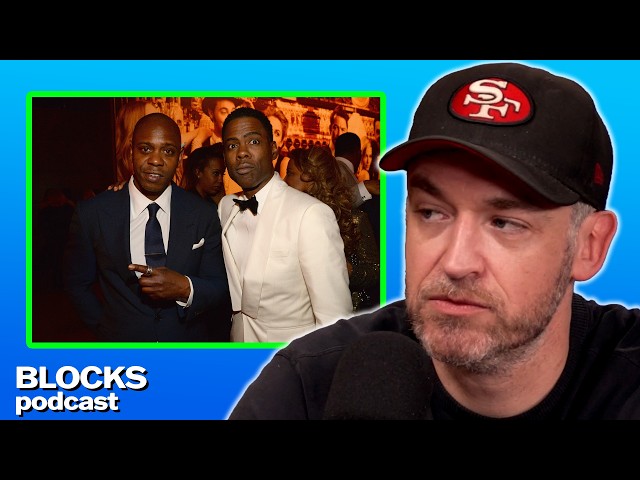
The transcript uses the speaker's personal experience with his father as a powerful case study for why deconstructing these idols is necessary. He explains how he spent years projecting an idealized image onto his father, only to eventually realize that his father was simply a man who did not want to be around or have children, rather than a villainous figure who actively rejected him out of malice. This realization allowed him to stop taking personal offense when public figures like Chris Rock or Dave Chappelle were mean to him, understanding that they do not know him personally and owe him nothing. He draws a parallel between the pain felt when a father abandons a child and the hurt caused by a comedian's indifference, noting that while both are painful, abandonment is objectively worse, yet we often conflate the two due to our emotional projections onto celebrities.
Ultimately, the speaker concludes that therapy is essential for comedians and everyone else to learn how to manage these projections and maintain mental flexibility. He compares a therapist to an athletic trainer who keeps the mind pliable and prevents it from becoming "insane" by helping individuals separate their self-worth from the actions of others. By recognizing that figures like Dave Chappelle, Louis C.K., or Chris Rock are just guys bumping into each other as atoms in space, we can stop expecting them to validate our lives or treat us with special kindness. The final takeaway is a call to let go of the need for approval from these legends and to accept that their behavior toward us is not a reflection of our own value, but simply a result of their own circumstances and lack of personal knowledge about us.
Read the full video transcript
The lesson you should learn is that your
heroes are people. Is that her like the
people you look up to that you like you
can love comedy.
>> Yeah.
>> These are just guys.
>> Yeah.
>> And you're going to see that.
>> How do they become your hero? What's the
thing? Cuz I'm with you. I know. It's
just hard for me personally and I that's
what I'm I think I was getting at is
like
>> it's hard for me personally not to
project.
There's a line in the in that I've never
in a book I've never read. Porch of
Dorian Gray. He looks so good. He must
be good.
>> Yes, it's exactly.
>> He He [laughter]
think about that with athletics. Think
about that with music. Think about that
with uh acting. Yeah. Think about that
with anything. When someone's phenomenal
at something, you just go like,
>> I want you to be phenomenal at
everything. Now, and by the way, say hi
to me and I'm just and I want you to
love me.
>> But there was a moment where like, you
know, and this is why I think every
comedian should be in therapy. I think
every comedian should be in therapy and
not look at it as like
>> BetterHelp.
>> Yeah, betterhelp.com. Um, this sponsored
by BetterHel. Uh,
>> if if you look at it differently, like
if you were a wide receiver in the NFL,
I would assume you have an athletic
trainer. I would assume someone warms up
your legs, you work on your knees,
plyometrics, you keep yourself flexible
so that you can be successful at
football. That's what a therapist does
for your brain. just keeps you pliable,
keeps you not insane, and it keeps you
to where you go like where you start
learning about [ __ ] And what I learned,
one of my most valuable lessons I've
learned in the last five years is that
heroes are just people. You've put the
shadow on them. You've put them up
there. You know what I mean? Like when I
realized that Burr and Louie and
Chappelle and Seinfeld and Rock and all,
they're just guys.
>> Yeah.
>> They're just guys that have lives and
sometimes their exceptionalism has made
their life complicated. Mhm.
>> So people like me who's just like a fan,
they have no I'm not It's what we were
talking about about your friends. They
don't [ __ ] see me. They just go,
"Excuse me, excuse me. I've got a lot of
people that want to talk to me. Everyone
wants to be my best friend."
>> Yeah.
>> And so you go, "Oh, that's you know."
>> Yeah.
>> There's guys.
>> There's something comforting about just
like mythologizing people. Certain
>> You know what it does? It makes it
clean.
>> Yeah. you go and and the only reason I
know this is because that was one of the
that was my relationship with my father
who left and I was like oh this guy is
the man he just had a bad run or
whatever and then you go oh and then I
get older and I go like
>> just put out a bad Netflix special
>> yeah dude whatever man but then you get
older and you go he's a piece of [ __ ] he
didn't want to be in my life I just was
projecting that because it was easier
than dealing with the fact of like this
guy's an [ __ ]
>> that's what a lot of heroes are you this
guy's kind of an [ __ ] you can also
catch a guy on a bad
It's a bad day. You know what I mean?
It's just like
>> or or they're an [ __ ] and they're
great at comedy. That's
>> or they're an [ __ ]
>> More than likely what it is.
>> How did you How did you What do you
think of your dad now? Like, how do you
think of that?
>> I don't uh I don't I It taught me to let
go in a lot of ways. It taught me how to
like let go of like, well, that guy's
never going to be that guy. He sucked.
Deal with it. It was crazy because when
I was working when I was talking about
it in therapy, the the thing that we
kept talking about was like my therapist
was like your father rejected you. Like
your father rejected you and you go like
dude I couldn't even [ __ ] say it. I
couldn't not in a way of like I'm going
to cry in a way of like I couldn't think
of the word when I'd go yeah we I like
talking to Katie about it and I go yeah
he said like my dad um my dad want to be
and then like I was like dude my own
brain is like brother this hurts please
don't let me let this in. And you go,
"Hey, my dad rejected me." And you go,
"That's what he did." And by the way,
then I found out that's what he did to
my sister, too. So, it was like, "Oh, he
this [ __ ] just didn't want to be
around. He just didn't want to have
kids. He just had a kid." I was like,
"Shit, all right, I'll wait a couple
years and I'll dip." And then it's like
you I needed to know that. So, I treated
Louisie accordingly. You know what I
mean? If that makes any sense. Yeah.
where I go, "Oh, my issues with wanting
Louiesie to like me or wanting Chappelle
to like me. I I want my dad to like me.
I don't give a Because once you see that
and the scales from your eyes drop, you
go, I don't give a [ __ ] about this guy
from Boston that did comedy." Well,
yeah. He's a guy. He's just a You know
what I mean? Like, I care about my dad.
I don't care about Chris Rock being a
dick to me. He should be a dick to me. I
don't He doesn't know me a goddamn
thing.
>> But, but it hurt when I still had him
on.
>> Well, there's also that thing of like
if
Yeah. There's so much worse [ __ ] to do
to somebody than be indifferent to them
at at when you see them at the comedy
club.
>> Yeah. Like abandoning your child. It's
way worse.
>> Yeah.
>> Like And you know what's funny is there
was a moment and this is crazy that I'm
telling you the story to you, but I was
at a thing and Chappelle was drunk and I
it like hit me with a wave of like, yo,
this is how it felt when I used to be
around my dad and he'd be drunk. And
then I'm like, why am I feeling this
towards a black dude who's clearly not
my dad and I don't know ever know? And
you just go, "Oh, I got to go clean up
my own shit." And now I see it. I go,
"Yeah, he's a [ __ ] guy. He's just a
guy. He's just a guy." That's
>> He's like two, we just two atoms that
bump into each other.
>> That's [ __ ] it. They don't owe me a
goddamn thing. And I don't owe them a
goddamn thing. So, you're just
>> Okay. I
>> I don't know why I can't relate to any
of this Dave stuff. Um uh the uh but how
this is my whole problem with life now
which is like okay what do I take
personally
>> you take personally everything in life
from people that know you it's like
people that know you if my mom
>> what if it is Dave
>> then take it person by the way you've
known each other since you were 17. No,
but that's what I mean. Like
>> it's different for me and you. He is a
He is a He is a face on Mount Rushmore
for me.
>> That's like me walking up to Mount
Rushmore and being like, "Thomas
Jefferson,
>> why are you mean to me?" Yeah.
>> You stop being mean to me. He's Dave to
you. It's the way that Nate is Nate to
me and Shane is Shane to me.
>> They're both on my Mount Rushmore.
>> Yeah. I mean, they should. They're
[ __ ] two of the best.
>> They're great.
>> But it really is like that's why I'm
seeing it now. Shane's my [ __ ] dog.
No, I get it. If Nate was mean to me,
>> I'm going to take that personally.
>> Yeah.
>> Hey,
>> you should like and subscribe.