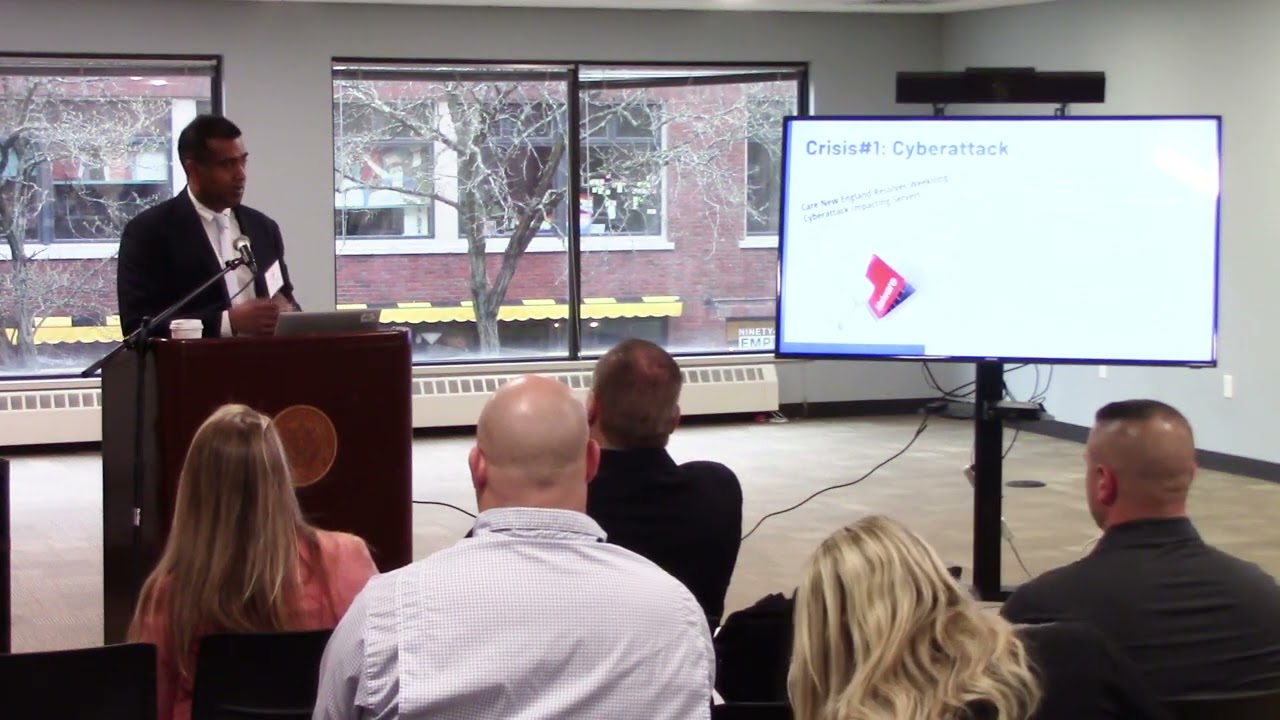
Video summary
The symposium explored diverse strategies for navigating crises across healthcare, automotive distribution, finance, and telecommunications, emphasizing that effective leadership requires balancing emotional intelligence with pragmatic innovation. In the healthcare sector, Dr. Fari Gobalakrishnan shared lessons from managing a cyberattack during the pandemic surge, highlighting the necessity of acknowledging fear, accepting uncertainty, and prioritizing clear communication over perfect data when systems fail. His experience demonstrated how pivoting to paper-based workflows and creative amenities in field hospitals allowed for patient stabilization while preserving surgical capacity, proving that speed often outweighs precision under pressure. Similarly, GE Healthcare faced supply chain interruptions and ethical dilemmas during the Russia-Ukraine war, responding by diversifying markets into untapped regions like India and China and leveraging AI for logistics optimization to mitigate geopolitical risks.
Beyond healthcare, other industries illustrated how structural adaptation and cultural agility are vital for survival. Motor Dynamics survived Greece's financial crisis through downsizing, centralizing decision-making, and shifting toward lean inventory management, while also learning from competitors who diversified globally to offset regional downturns. In the telecommunications sector, OT Group addressed pandemic-era challenges like network congestion and regulatory hurdles by investing in data centers with cooler climates for energy efficiency and adopting Open Radio Access Networks to diversify suppliers. These case studies collectively underscored that resilience is not merely about reacting to disasters but involves proactive measures such as international expansion into markets with opposite seasonal patterns, formal crisis management teams covering risk assessment and recovery, and regular training simulations to build organizational robustness against various threats.
The event concluded by introducing FM Global's unique approach to loss prevention through its Climate Resilience product suite and mutual insurance model, which reinvests approximately 80% of profits back into client projects rather than seeking public trading gains. Unlike traditional insurers relying on actuaries, this organization employs engineers and scientists who use satellite imagery, drones, and internal field assessments to identify vulnerabilities before they lead to catastrophic failures, such as preventing roof destruction during hurricanes or stopping ransomware attacks that exploit weak IT networks. By integrating stress management tools like mindfulness into cybersecurity training and utilizing universal symbols for cross-border communication, the symposium reinforced that true crisis preparedness combines technological safeguards with empathy-driven leadership, ensuring business continuity against natural hazards, human error, and cyber threats alike.
Read the full video transcript
good morning everybody can you hear me
awesome perfect so um welcome everybody
to the crisis management Symposium
that's organized by the MBA program at
uh uh Mario J gelli School of Business
in Roger Williams University uh you know
I just had a moment when we were
discussing ing this with our two amazing
keynote speakers for today um is that
you know we always learn about all the
wonderful things in our MBA program we
learn about how we want to grow our
companies how we want to innovate how we
want to do all the Fantastic things but
the one thing that we never want to
learn about is that your best laate
plans may not work out because of Crisis
right and and we don't want to think
about it so we often don't teach about
it because it's just you know who wants
to plan for a crisis but the truth is is
that there is always crisis right and
there is always going to be something or
the other happening in the world that is
impacting us directly or indirectly and
that requires some real proactive
thinking about what happens when there
is Crisis so with that today I want to
thank a few people and get this
Symposium started first I want to thank
our two keynote speakers Dr fari
gobalakrishnan and Mr Basim Nasim for
their generosity of time time and
knowledge and for being here to share
their experiences with us with us I want
to thank the Department of Education for
the grant that has actually made both
the trip to Greece immersing ourselves
in crisis management as well as you know
this Symposium possible um I also want
to thank Professor Jason Oliver for
working with the students tirelessly on
making sure that they get this concept
and ing greened in them and like I was
talking to the students it seems like
you've got a masters in crisis
management and not in Business
Administration right now um I also want
to thank a whole bunch of people who
have made the event possible today
particularly to Heidi Dagan and the
entire team of events because you know
everything coordination is a real big
thing and we they got us this beautiful
space of a lovely uh breakfast and lunch
um I want to thank uh boil uh Mary Kate
Sandler and Kate brazina from the
advancement team and Dean uh biano of
university college for uh helping and
supporting this event a lot and making
it possible and now it is my pleasure to
introduce and invite our first keynote
speaker um you know if you guys have not
heard about him he's quite the Rockstar
in the world of Crisis management so uh
it's um and and I don't know if that's
like a nice reputation or or but it is
you know he's he's definitely somebody
who's been cited multiple times in uh in
newspapers and and in journals to uh
highlight what one has to do when there
is a crisis and his leadership was most
recognized at the time when he was um
running the covid field hospital and uh
he is uh an MD and MBA and is the
president of and CEO of the Kent
Hospital in Warwick Rhode Island and
he's going to talk to us about crisis
leadership builds character my growth
leading through a Cyber attack and
operating uh field hospital I'm not
going to go into the details of his
biography because it has a lot of
amazing achievements but I do encourage
you to read it it is on your seat and so
uh I without wasting more time I would
like to invite Dr gopal Krishnan for the
first Kino thank
you thank you for having me um so I I
actually really enjoyed um putting this
presentation together cuz I hadn't um
really reflected back on on some time
um and so I want to you know so I'm a
physician by trade and um you know in in
in my world and I don't know if some of
you guys have heard the TV show Scrubs
it all um and if you haven't you should
take a look at it but the main character
JD is after a resident that I trained
with at Brown and um his best friend
wrote it and and so so in one one of the
First episodes um you know JD's heard
saying running to a code code is when
somebody's H heart stops in the hospital
code blue goes goes off and everybody
goes into a room to try to resuscitate
somebody back and he's thinking to
himself as he's running here's how it
works some someone's heart stops they
beep everyone the first doctor in has to
run the room and tell everyone what to
do basically decide if somebody lives or
dies what am I crazy and then he goes
into a closet and one of his
co-residents is there all right and
every physician that's ever trained has
had this kind of experience all right
and so what what happens when you go
into some a Cod
is there's a lot of people in there and
it looks like chaos and you're anxious
and you don't know what to do and and
then as you become more you know in
ingrained and trained you realize
there's a there's a process to handle
that situation there's you know that's
one of the algorithms but there's roles
there's definitions there's times and
it's really slowing down the crisis so
for some reason Dr dos asked me because
I was in one of those closets to give a
talk on crisis so I don't what I know
about crisis but I could tell you I
could reflect back on a a period of time
in my career which was really impactful
for me um and has really um helped me U
grow as a leader and and it was through
the pandemic and you know you're really
you're test we were tested quite a bit
um you know you guys are NBA students
you know supply chain was a huge issue
communication was a huge issue
everything that we had known and studied
was an issue and in healthcare we are we
are are the last to do anything because
we want to make sure everything is is
safe safe safe we're never going to be
the first ones overboard on on a lot of
things but we had to be during this
period so there's three things that I
wanted to kind of show in this and and
then I'm going to talk reflect on two
aspects of this in my career so this is
um what this graph represents is the
admissions to uh of covid to hospitals
in the state of Rhode Island right and
you see kind of two peaks in there and
and the first one you see is um kind of
the first first
uh you see it so uh over here so you see
um the first surge was where the the
world shut down right and the co surge
happened in the state R shut down nobody
left their house the hospitals we
prepared it wasn't actually that bad to
be honest with you the hospital was
empty um you know we had um you know
usually I see about 200 patients in our
emergency room every day we sound like
70 um we usually have about 200 250
patients admitted to our hospital we had
about 80 right they were all covid but
there there wasn't as many patients
right people weren't get and at that
time uh and and we stopped all surgeries
because we were all worried and
everybody shut down everybody went away
and people that needed treatments didn't
come to get treatments so we planned and
we were anxious but to be honest with
you we handled it just fine it wasn't a
big issue um then then as you can see
see there was um a second surge which
happened in you know fall into the
winter of 20 to 2021 it was higher
nobody was going to shut down at that
point if you guys remember nobody you
couldn't tell people to stay in all
right because they they we're humans
we're not used to being confined so
people were living um and what was
happening in the hospitals was we were
we were getting inundated and the thing
about Co what would happened when the
patient gets admitted for Co um is if
they get ad if they're sick enough to
get admitted for Co it takes them a
while to recover right so a typical
patient that gets admitted to hospital
is like four to 5 days that's what our
length of stay is um covid patients
would stay for 10 12 14 15 days all
right so when you have a lot of one
diagnosis in a hospital it's a
throughput issue it's a logistics issue
right all of a sudden a person is
staying two to three times as long as
they're supposed to stay now you're
backed up so now how do you care for
other illnesses there's other illnesses
people still have heart attacks people
still have strokes people still have
pneumonias so how do you care for that
so the field Hospital came out of that
to try to decompress the hospital all
right and then lucky for me we ended up
with a Cyber attack in our health system
right in the middle of that so as I
reflected on a period of time in my life
from you know April March April of 20 to
April of 2021 in that 12 months I had a
uncertainty with uh covid in the first
surge a Cyber attack and a second search
and so so I'm going to try I so putting
this talk together I thought about the
things that I'm going to try to explain
um what we did during those times and
then um some principles that that are my
principles that I kind of reflect on
over that time to see what I learned all
right so um the Cyber attack and I have
to tell you is singlehandedly the worst
week of my professional career ever um
because um you know so I walk into the
hospital I'm early I'm an early bird I'm
in the hospital usually but like 536
6:30 something like that and this is on
my screen all right I'm going to read it
to you all right if for some reason you
read this text before the encryption
ended this can be understood by the fact
that the computer slows down and your
heart rate has increased due to the
ability to turn it off then we recommend
that you move away from the computer and
accept that you have been compromised
rebooting shutdown will cause you to
lose files without possibility of
recovery further down says um for us
this is just the business and prove to
you our seriousness we'll decrypt one of
your files for free all right and so
here you are that's that's on every
computer in our hospital all right and
and and we don't know like I can tell
you right now I know nothing about
computers I know nothing about cyber
security I know nothing about uh how to
manage this needed in most people in our
in our health system so what happened so
our health system got compromised June
16th of 2022
um our internal servers go down um we're
all on everything's computer in the
hospital these days the notes are on a
computer how we give medications are on
a computer how we read x-rays are on a
computer how we know where people are in
the hospital or on a computer all
different programs right so I don't know
enough about it to say exactly how we do
this but what we did our it Department
quickly started forcibly shutting down
all our Pro all of our systems to make
sure that we couldn't get more
compromise um and then we we brought in
external you know this is this is
there's an
industry that we brought in a different
company using our our Mal pra our uh
insurance company and we negotiated and
we you know got the way to come back to
life which took about 7 to 10 days all
right the problem with this though is
patients lives are at risk here right so
so U things as simple as where a patient
is so we have through my building I
probably have about 500 patients go
through my building every day all right
I got to know where they are where
they're moving to when they get a test
where they come back we don't know where
a patient goes if they're on the fourth
floor and need to go get an x-ray how do
we know who's going to get them when
they're going to get them how they're
going to take them to x-ray how are we
going to get them back we have this
thing you know when everybody comes into
the hospital and gets admitted we ask
every patient their wishes if something
should happen so if your heart should
stop want us to bring you back to life
right a lot of 90y olds 80-year-olds
don't want to be resuscitated right and
so every patient that's one of the
regulations we have we have to ask we
have a form it's in the
computer all right um now here we are we
have 200 patients in the hospital we
have no idea those things right now and
so so so that's one we didn't know where
patients were how to give medications we
knew how to get the medications out how
do we track where the who's giving the
medications and a whole host of things
Labs every patient has 10 10 things of
labs you have to handwrite their names
and their medical record numbers so you
can just see the fra how how risky it is
how you can do the give the wrong the P
medication to the wrong patient or do
the wrong test or so really a lot of
safety issues and what was very clear to
us very early was we have downtime we
all have downtime processes meaning
computers are going to go down and
you're going to have backups all our
processes were for like four hours or 10
hours or 12 hours not for 10 days right
so everything was for short and we'
practice our downtime processes so we
were good but we also usually don't have
everything go down right we have this go
down we're on a downtime process or we
have that go down we're on a downtime
process we don't have everything go down
so what that was Pro so that's why it
was so challenging so what we did and
you know what I'm going to do is kind of
reflect on a couple of principles and
I'll share some of the stories as we go
through but we we quickly got everybody
together and it was it was old school I
mean we didn't have we had we had who's
going to take notes who's going to
communicate to who who's who's
responsible to know where the patients
are we were we were really going back
and and what's interesting is most
Physicians that were trained after
20023 they don't know how to do anything
on
paper most nurses that have been trained
after 2002 have no idea had to do
anything on paper so all of that stuff
it became a real reality so what we what
did we do we quickly got a couple of
older uh I'd say experienced Physicians
and experienced nurses and we helped
them they they actually went and quickly
put together this is what you do and
then we went unit to unit and made sure
that people knew how to do things
quickly 7 to 10 days clearly I got to
tell you I've been through a lot in
healthcare worst 7 to 10 days of my
professional career um and the biggest
thing was we didn't want to hurt anybody
right so we didn't want to we didn't
want to do something wrong we were
fortunate we were able we didn't have
any errors we didn't hurt anybody we
continued operations all right so the
next is the co surge 2 that I talked
about in the field hospital and the
field hospital um you know when we when
we we talked about this we had to put
this together and if some of you know
that know Cranston it's on saset across
in Whole Foods that's where Top Golf is
now um and so my son used to always say
Dad Top Golf isn't going up because this
thing's still up so like because we they
wouldn't they they postpone top golf's
construction because of this so we went
in and we looked this is what the it was
an old it was Cranston I mean citizens
bank's uh headquarters they moved to I
think Smithfield uh and um so this is
what it was we went in about a month or
two before this when we started seeing
this Spike go up this is what it looked
like you you know the conjunction with
the state U Rhode Island National Guard
and a whole host of others um
reconstructed did it um this we ended up
with a field hospitals on on Kent's
license so the thing about regulations
is everything in that building had to
comply with everything in a hospital
right that's a so if you do anything on
a hospital license you have to you have
to make sure everything is the same so
but we did plant a flag um we did if you
look here these big units um kind of
here here what we what what we had to
create was a negative pressure situation
in a ra large building right a negative
pressure situation is basically the
pressure is lower inside the space where
we're taking care of the patients
compared to outside meaning if I open
the door so it's negative pressure in
that bit that room and I open the door
air is not going to come this way so
infection is not going to come this way
so we had to do that process there so
those big units were put up um to do
those kind of things we had to bring
oxygen tanks big oxygen tanks which and
other logistics like that so converted
into this about 350 beds because we
didn't know exactly what to expected if
you can do it do it right the first time
and we had this kind of uh done we tried
to get creative each of the each of the
hallways had a beach name from Road
Island and so we we had a good
process and we ran it for about four
months um so some of our nursing staff
um this is we call this the the
honeymoon suite husband and wife um got
to get right next to each other and get
to finish out their Co treatment at this
place if they were in a hospital they'd
be in their private rooms they wouldn't
get to see each other at all
um it was a little bit more liberating
CU we had such a large space that was
negative pressure whereas in our
hospital they were all small rooms
individual rooms so the patient could
never leave that room because nothing
else was negative pressure we had
patients that got to recover because
they get to walk around because the
whole Space is negative pressure um this
would never happen in our would have
never happen in the hospital and so what
was happening as I was mentioning was um
patients were staying longer in a
hospital because they were getting
sicker and they were debilitated they're
old and they weren't recovering as fast
cuz we couldn't actually get them out of
bed and move them around except in their
room and so this allowed them to recover
a little bit
faster um we even had like TV rooms and
we had Arts me we we try really tried to
get them moving and around and just like
any hospital um we had a uh you know
coffee shop uh this is our uh uh VP of
operations she every every checklist
always had coffee coffee coffee so we
named a little after her and and uh what
this did for us though is we were able
to care for about 40% of the patients
that came to Kent Hospital during that
time with covid at the second part of
their of their um of their
hospitalization so they came in we'
stabilized them they'd start getting
better like I said 10 to 15 days was the
length of stay as opposed to five so
around F day five or six we would
transfer them here all right then and
their recovery go a little smoother
because we get their recoveries we were
able to get them out of bed we able to
move them those kind of things so we
were able to continue our normal
operations at the hospital without
having to compromise on on surgeries and
other things and you know from a
business perspective it's really really
important um because um if a patient
stays in a hospital uh how we get
reimbursed for the most part if a
patient stays in the hospital for 4 days
I get an amount all right let's let's
say that's
$15,000 if they stay for five five days
I get $15,000 if they stay for 15 days I
get $115,000 if they stay for 25 days I
get $115,000 so but my cost every day is
the same all right so so my ability to
run a
business is it's compromised if I don't
if I don't have an efficient um
throughput so so it's something that
really um you know so both of those have
really as I thought thought about those
things um they did they have helped me
uh become a better leader and and think
through different things so when I ran
the field hospital I was the chief
medical officer at the at at our
hospital now I'm the president's Co um I
a lot of the people that help me in some
of these crisis are in big leadership
roles as well because it makes you
really um learn who you are as a leader
and learn to trust your
instincts so as I was putting this
together again I'm not a crisis
management expert in any way all right
um so I I was like all right let's look
about think about crisis right so I
crisis at the border financial crisis
opioid Crisis covid-19 crisis kids in
crisis Wall Street crisis energy crisis
U even even the royal families in crisis
everybody's in crisis all right so I was
like what is Crisis really like you know
was thinking about this and and
everybody's got a little bit of a
different definition right CDC says an
acute emotional upset is manifested an
inability to cope emotionally
cognitively or behaviorally and solve
problems as
usual Webster dictionary says a moment
of risk or stress cambrid say a time of
great disagreement confusion and what it
was clear is every definition there's
not really a very clear definition and
there's a lot of emotion associated with
it and it's pretty vague as far as what
who gets to call something a crisis
right and and so so I really was like
trying to figure out what I wanted to
share with you guys from those two
experiences and I kind of came up with
eight eight principles that I learned um
that I think um I find valuable and I
still find valuable every day from an
oper ational
perspective so we're going to talk about
the psychology of a crisis we talk about
uncertainty communication uh what I call
the Mike Tyson principle speed over
Precision share power and delegate adapt
and innovate and engage and and those U
you know I I as I've thought about what
I did during that time um these are a
lot of the principles I use on my
day-to-day so when we talk about
leadership it's day-to-day fires right
it's day-to-day issues that you have to
problem solve while you're thinking
about the long term all right and and if
you just focus on your day-to-day fires
you're not going to succeed long term so
you got to do both and this is this is a
skill you got to have to learn and and
um and part of it is as you do more of
it you trust yourself more and more of
of what you do so psychology of a crisis
so people may experience a wide range of
emotions um people have fear and anxiety
um they they you know U
and our job when they have fear and
anxiety isn't to tell them everything's
going to be okay all right is to
acknowledge some of that there's going
to be hopelessness and helplessness and
there's going feeling like nothing's
going to be nothing can be done and
there's a lot of denial that this isn't
happening so as a leader what I've
learned is when things are going bad um
my job isn't to say it's going to be
okay my job is not to to to dismiss the
feelings the feelings are real is to
acknowledge it and see to be able to
share what we're going to do about it
and try to you know action in in a psych
you know action during this period
really helps quite a bit so this picture
here is um a picture of somebody when
when we put somebody on a ventilator
right U what happens is you open their
mouth you put a tube in a lot of stuff
comes out all right and around the world
what was happening during the co crisis
were where healthcare workers were
getting sick while doing this because
the risk is high right even when you're
protected and so there was a lot of
and and more people were putting people
on ventilators early and people that
don't intubate very often right so
meaning um so I'm an internist I when I
was practicing quite a bit I would
intubate somebody maybe once a month
right um twice a month I can do it but
boy I better do it right I mean I can
get it but it but it could be a little
messy meaning a lot of I could get sick
and so there was a lot of fear from our
clinicians because of that all right
because more people were going on
ventilators and this is a this is a
picture of how many of the air particles
kind of hit even when you're protected
and so we wanted to kind of address that
and so quickly what we did was I said
all right let's take some action here
let's kind of fig we understand
everybody's scared about this so who are
the clinicians and the doctors that do
this the most it's our anesthesiologist
they do it about 30 times a day at our
hospital they do about 40 times a day we
do about 40 surgeries a day so we got
our anesthesiology department and that's
our chief of anesthesia and we created
kind of a intubation SWAT team
all right and and um and so basically
they had a kit and anytime somebody
needed it this this is the person that
would go and do it they do it so well
they're so good at it they're in and out
really quickly so that brought the rest
of the clinician anxiety down all right
the other is we created we tried to say
okay there's spores coming everywhere
what can we do so we quickly worked with
some Plastics companies locally and kind
of built uh things so when they're doing
it it would at least hit that we thought
it was brilliant didn't really help yeah
but but you got to try right but it made
everybody in the hospital in the field
Hospital feel a lot safer all right and
that's important the other U SE
principle to is uncertainty get used to
it all right actually you need to get
used to it as a leader it's every day
nothing about crisis you got to
understand you're making decisions with
not all the information this is a really
um impactful slide for me on the X AIS
you have time on the Y AIS you have
demand all right so the blue dotted line
is the amount the demand for people
wanting more information like your team
your your staff how much information
they want right you see how high it is
early and you as a leader the
availability of information is the
lowest all right so there's a period of
time in in any crisis or any problem
that people want more than you have
actual information to give all right the
real information to give so that's zone
of is you know is is the greatest time
of uncertainty that people want
information you wish you had it you
don't have it right and that's where you
have to make most of the impactful
decisions right so what do you do got to
just get used to it if you dwell on it
you think you need to get everything you
know buttoned down you're never going to
make a decision and you're going to
cause more problems learn to trust your
instincts and you'll hear me say that a
lot because as a leader I've learned
that I I need to do that more um and and
so this is one of the most important
things in my crisis day-to-day problems
you're going to make decisions based on
a risk assessment that you're going to
have to figure
out so that's principle number two for
me principle number three is
communication um it is most important
thing in leadership and more important
in crisis all right you know
communication to me is U if you learn
anything from your MBA learn how to
communicate with your teams um because
uh in in in one size doesn't fit
communication for anybody all right you
send an email it's just that all right
what people that read it have the
information they might interpret it
differently and it's your my my
impression as I've gone through
leadership it's my responsibility as a
leader to make sure the people I'm
trying to communicate understand what I
want to say it's not their
responsibility to understand what I want
to say so that's that's a paradigm
shifted I think through through crisis
you got to really think about that
really set some expectations give some
standard follow you know you got to give
some um structure to how you're going to
do communicate and I I thought
especially during the pandemic and the
field hospital I thought about internal
communication a lot and I thought about
external communication a lot and
internal communication was my team the
people working in the field Hospital the
hospital the state officials the Rhode
Island National Guard all those folks
that's what I called in uh internal
communication and I wanted to have a
plan that was you know consistent timely
predictable that they knew they could
there was a process in which information
was coming and a way for them to respond
back to me um and and the more you do
that the less anxiety there is because
they everybody knows there's a time
that's coming and so only things that
need to be raised quickly will be raised
if there's a predictability about your
internal communication external
Communication in particularly in the
field hospital and the Cyber attack was
challenging because now we're talking
about the community right hysteria in
the community does not help a health
system all right right if somebody was
having a heart attack across the street
from my hospital and they didn't feel
safe to come to my hospital that's a
problem and so so externally we had to
be very you know clear in what we're
trying to do so we you know during the
Cyber attack same thing we're we're yes
but everybody's safe this is what we're
doing no no issues you should still and
through the field hospital we we were
doing a lot of news media because of
that we wanted to make sure that people
didn't feel like it was it was the
pictures that were coming out of Italy
early in Co all right we wanted to make
sure people knew we got this all right
and we just you got to be confident
because if if they're not then it's
going to cause more problems you know
Rudy Jani had this quote and I love it
which is promise only when you're
positive promise only when you're
positive all right this rule sound so
obvious but I I got to and he says that
this s obvious that I wouldn't mention
it unless I saw leaders break it all the
time I see people break it all the time
right when when you know things are the
worst don't overpromise don't say things
are going to be okay acknowledge the
situation right so that's principle
three for
me um so this is communication wise this
is some of the things we did we that's a
picture of the RH Island National Guard
a few of our staff every day we had a
clear Cadence which as I was talking
about it's 7: a.m. every morning I would
do a call with all the leaders in our
health system right at 7: a.m. there be
about 30 leaders and I would say here's
what's happening with Co at the at the
Kent Hospital site here's what's
happening at the field Hospital site
here are the situations at 7:30 I would
communicate that very thing to about 30
physician leaders in our organization so
they via text and a text chain because U
doctors don't read
emails uh so we text everybody all right
at 7:30 every day for really most a
pandemic these two things were happening
from March of 2020 till April 2021 7
days a week all right we were doing this
um when I say we mean um at 9:00 we
brought the field Hospital staff
together the leaders in the field
hospital and we did a we did a huddle
this was our huddle board and we had
very consistent themes of what we're
going to do we had a checklist of the
things each department would have to say
and go through and then we would pivot
and and do what we needed to and at the
end of the day I had to call with those
30 physician leaders to say how's the
day what's going because what was
happening was Physicians get sick too
families get sick what are we going to
do in those situations so we really
wanted to stay connected during that
time and these are the checkpoint that
early we would get a lot of phone calls
a lot of Hysteria as we set these things
up it would became predictable for
everybody of how we're going to do
things it's only things that got raised
in the bidd needed to be
raised so then principal four my
favorite um that's the Tyson principle
all right as a leader everyone has a
plan everyone has a plan until they get
in the face then there's then you got to
Pivot all right and and I can tell you
you know this was um so preparing to
start our field hospital we met daily I
mean I had you know probably about 20
leaders meeting daily on Logistics who's
going to feed who who's going to clean
who's going to do this we had all these
companies we're going through this
checklist my Human Resources team had
been working on the Staffing we had to
get contingency Staffing crisis Staffing
from out of state you know there's
companies that do crisis Staffing um and
so we're going through these checklists
daily all right we tell the state we
tell the governor that we're going to
start admitting patients the Monday
after Thanksgiving all right we're ready
so Friday after Thanksgiving on the five
o' call with I was doing two two day two
twice a day calls to get ready for this
to go live Friday afternoon the company
that had uh given us staff pulled out
which basically means there happened a
lot in Co they got a better deal
somewhere else so the Friday before
we're supposed to take patients I had no
nursing staff right so um
so everybody knows this is what we're
doing so this is the thing around you
know making sure the community
understands that we we we got to be we
got to be confident we got to make sure
we're consistent we can't cause any more
you know hysteria and I can't um you
know fail my boss my boss has told
everybody we're taking patience Monday
right so the CEO of our system it would
not look good we said we've been
planning towards this so didn't had to
assess right so um by Saturday we I'd
found another company it would take
about a week to get them to bring staff
um so I had a week I had to do something
and
so I'm a doctor there's three other
doctors there there's three other nurse
leaders there that were were setting us
up so I said I was like you know what I
didn't say we're going to take 30
patients one day I said we going take a
patient one day so we took a patient we
took another one the next day we the six
of us stayed there for a week and we
took care of about five patients and
made sure our Kinks were worked out and
by Friday we had staff and we started
able to ramp up but what I'm what my
point is every crisis you go through you
can plan for all you want to something's
going to be different and you got to be
ready to kind of understand that you got
to make some
changes principle five speed over
Precision you guys are NBA students I
hear your 4 plus one so pretty ambitious
NBA students
you know you guys are go-getters um you
want to make sure you make the right
decision you don't have time speed some
you got to decide you got to make that
balance speed is sometimes better than
being exactly right all right so you got
to assess that Define your priorities
ensure your leadership is aligned with
that you um you know understand you're
going to make some tradeoffs right and I
I tell you during the Cyber attack so
the morning of that that happened um
everybody was freaked out cu we didn't
know exactly what we're going to do and
and so quick It's Quickly we you know we
got our leaders in a room and and said
basically we got three different leaders
with three white boards and we said all
right all we're going to talk about for
the next 30 minutes are the dangers that
we're worried about that we can't Comm
just and then we quickly as quick as we
could we wrote them down then we quickly
circled about four things and said let's
get this solved by noon all right and
that's so we we and and and then what we
decided half of it we didn't use two
days later but we wanted to make sure we
wanted to make sure we knew where
patients were we wanted to make sure
patients didn't get the wrong medication
and we wanted to make sure that if some
something should happen to somebody that
we you know knew their wishes those were
three things that were really important
to us and so we wanted to make sure that
that got done right away all right um
and and when you make quick decisions
you're going to make wrong decisions all
right so recognize when you make wrong
decisions don't stick to your guns
change like be very adaptable to that
fact understand your feedback loops and
change so make decisions quick but be
prepared to to
Pivot all right principle six um share
the power and
delegate um again as you know ambitious
4 plus1 MBA students you could probably
do this as well as everything you're
going to want to control all right you
you can't control everything the the
further you get along in your leadership
career the less ability you have to do
that you have to trust people right so
that's why when you hear put people you
trust in place that's why because you
there's not minutes in the day for you
to do everything all right and you lose
that pretty quickly if you're going down
a leadership so you know when I was
prior to my chief medical officer role
um I I ran a hospitalist group I had 150
Physicians I didn't see half for the
most of the time right so I don't you
can't so you know when you go through
leadership you go through with
relationships as you get more and more
people under you those relationships go
away because you don't know them and so
you really have to understand who you
put in leadership and delegate so this
was my team at the field hospital um
couple of doctors and a couple of nurses
and I and what I want to say about that
is and and most of them are in different
leadership roles now a lot of them
weren't leaders when we put them here
right so I have one of my acnos
assistant nurse um uh one of our VPS of
nursing is is on here um our new Ed
Chief is on here so people you you learn
about people and their leadership skills
through crisis and so look at that but
when I put this team together I thought
about who I wanted to bring right I
didn't go to Every Chief and say hey
come join me I went and I picked a very
diverse strategic what I needed from
everybody all right so my nurses I had
two nurse leaders there one was a o
nurse leader very much a go-getter
problem solve problem solve problem
solve all right the other one was a deep
thinker about policy and procedure so
we're in a bank building trying to do
healthc care safely I needed somebody to
move quickly but I needed somebody to
stay safe also so putting the two of
them together they fought a little bit
but people were safer because of that
all right same thing with the Physicians
we picked Physicians that way as
well um delegate Authority you can't
control everything you got to trust your
people that you put in place and then um
and create a culture that it's you know
and try to leave by example it's okay to
make mistakes communicate and and and
delegate Authority so that's principle
six for me that I learned principle
seven is adapt and innovate innovate
innovate innovate and innovate doesn't
mean you're doing the most Cutting Edge
thing innovate means do things
differently that you usually do all
right and and for us in the the in the
in the Cyber attack space um I'll give
you two examples that I have up here
just for my reminder um one is you see
these x-ray boxes so so all of a sudden
so right now in my Hospital you can go
to any terminal and any any floor or I
can do it at my laptop pull up the EMR
go to your your file pull up your X-ray
that was done about 30 minutes ago or
your cap scan and I can look at it I can
see what the radi stop at any place all
right we've all gotten accustomed to
that when I was a resident which was 25
years ago well that wasn't the case you
couldn't Build It Up on it every every
place you had to go to the radiology
department which was usually on a first
or base first floor of the basement you
had to get the file room to get you this
big stack with about 20 x-rays in it you
had to go to a wall that had a light box
that's what that is you had to put it up
and then you had to look at it all right
well here we are we don't have x-rays we
don't know what to you know in this
situation so we decide all right that
makes sense let's just start printing
them we can print them still so we start
printing them so it was the first hour
we print them and everybody's like we
don't have light boxes we took all the
light boxes off of in the entire
Hospital we don't need it and so then we
had to kind of say what do we do now and
so we then were able to get a single
connection to each of our Diagnostic
Imaging and it was it was it was
literally a monitor and the radiologist
would sit there and read it and the
radiologist would have to sit there and
read it and you'd have to go down and
talk to the radiologist to do it so we
had to we had to make some changes the
medication list here um we had to create
it again because what we had was for the
day and we needed something for seven
days and we had to have nurses create
this for us and then teach the other
nurses and the pharmacists how to do it
so we just had and there's example after
example of those kind of things that we
had to do for both the Cyber attack and
the field Hospital like in the field
hospital for example we had planned so
that big building that I showed you um
there's there's actually only one on and
off switch for
lights so at night time if we turned it
off like the entire hospital was dark so
we didn't know that until after the
first patient
because we didn't have to when we left
every day when we're planning we turned
the lights off we didn't think about you
know so you're going to have to
understand that you can plan all you
want but you're going to make some
mistakes and you got to learn and pivot
from them um all right La last so engage
engage um through a crisis you know you
got to you have to connect with whoever
you're trying to lead um you got to
connect with the individual team members
you got to see how they're doing and how
they're feeling um you got to don't
minimize that so if some somebody is
anxious it's okay like don't minimize
their feelings engage them ask for a lot
of help and and and I'm during this um
the most um stressful times that's when
you want to appear the
comist all right that's why you want to
encourage don't overpromise but always
always make people feel engaged this is
an example of for our patients we had
you know the staff wanted to do
something and they were so we we put
some of our I would say more anxious
staff at the Hospital on a mission to
create a card program with schools all
right so that's what they spent their
energy instead of on worried about how
we're going to do this they spent their
energy on connecting with local schools
to give have them make cards that it was
great for the patients it it was a nice
thing to do but it really gave some
tasks to people that needed that were
having some
struggles and then we did you know these
kind of things where we had a big banner
up and anyone that worked at the Spiel
Hospital got were signing in within two
weeks we had it completely
um so it's in my office now we haven't
put it up yet but there's not actually
one white space on it and so we'll at
some point come back and you know do
that so those are some of the eight
principles that I kind of learned during
my crisis again I'm not a crisis
management expert in any way um but but
I think I I learned a lot as a leader
and about myself as I went through this
happy to take any questions
so like in a postco environment in the
healthcare industry do you see that a
lot of these processes have still been
affecting your day-to-day operations or
maybe contributing to like cont
continuous improvements something like
that yeah I mean uh you know there's a
lot of things that we do differently no
question our our safety Protocols are
different particular for Co um and so
what that did was um you know um we're
like any other
Factory in the sense that like they're
people but how we care for them and how
long they stay in each section is really
important right and so when you do
safety protocols around covid around
infection prevention protocols they
haven't changed now during Co they
changed quite a bit and and so we still
have to put that in and so it has caused
our our ability to do things smoother
more challenging right so we we've had
to really U we've gotten more precise on
understanding each of those things than
we did before Co so I know my pressure
points a lot more than I did prior to co
so thank you
yeah so did did you pay the ransom or
did you recover from SC um I'm not
allowed to say anything about that but U
let's say it could it could have been 3
months it was 10
days when you gave me that time frame I
was when you um were supposed to open up
that day yeah and you brought your
employees together and and went that
full week did the media find out or did
you cover that's great good job well
done we're working through the logistics
right yeah um how did these crisises
crisises influence your onboarding
process for new
employees yeah um our onboarding process
um during the crisis period um you know
uh in healthcare in particular
everybody's like you got to do this you
got to do this you got to do this you
got to do this and it's going to take
you know two months to get somebody in
and we we we certainly said this is
crisis situation and we would we not cut
corners but we would put some emphasis
to improve it so for Physicians for
example is a good example um if you a
physician you want to come practice at
my hospital and you you applied for it
today I couldn't realistically get you
on for about 3 months because I'm
obligated from my licensure and
something called a joint commission that
oversees our our hospital that I got to
do a background check on you I got to do
what we call a National Practitioner
Data Bank check on you which is to make
sure you've had no lawsuits in the past
I got to make sure that I get three
references from you from from people
that that you've worked with in
healthcare I have to make sure that
you've done what you say you did I got
to make sure that um you went to
undergrad where you said you did where
you went to med school where you said
you did where you know all all those
things and and you know all those things
have to come together and then I have a
a credentialing committee that looks at
all those things say is this doctor safe
to practice at our hospital all right
all that takes about three months and I
can't wait three months for some of this
stuff and so what we had to do was get
some um within our bylaws we have waste
emergency situations how we do those
things but it has impacted our our our
ability to onload people
quickly the other thing that's really
done to be honest with and I think
that's more just Society related people
will take a job with
us and may not show
up even though like you know that
happens you would think that would only
happen in in you know lower paying jobs
it happens in everything it didn't
before or people will a nurse or a
doctor not doesn't happen often but once
they start usually wouldn't just not
come back that's happened in healthcare
in the last couple years
other questions yeah I had a question
about like you know this was a obviously
a huge crisis a lot of anxiety um it
also impacted a lot of healthcare
workers and like serious mental health
you know to watch not only Co patients
get better but not get better and like
you know kind of you know dying in
isolation and all of those kinds of
things did you see you know that really
impacting your entire team and how would
you kind of help them to get you know
get out of the really kind of bad places
because and they were obviously over you
know all of those kinds of things so you
know the fortunate is by the time we
brought people to this field Hospital
we're very um clear on patient selection
because there's only so much we could do
right so so we didn't out of all the
patients we took care of only one we had
to send back to the hospital the main
hospital but but what we saw through the
pandemic was a couple of things and we
struggle with it there's a lot of
burnout people people quit people cut
back people still do people haven't come
back and and you know we we would do
things you know a lot of things in the
pandemic um weren't really about science
um and and I think we've kind of seen
that unfold as the times come by the the
cdc's recommendations weren't completely
like factual like there's a lot of
nuances right so vaccine was another one
it was all about your political stance
and and and um it's not my place to tell
you what your political stance is but
people would come in and it would be
heartbreaking to my ICU staff on older
patients that should have gotten
vaccinated and then they didn't and now
they're at the they're really sick and
they're like can can you vaccinate me
and it doesn't help at this point like
that kind of stuff so that really that
that was actually one of what our ICU
staff struggled the most with um and
then and a lot of you know we didn't
have enough staff and so so you know and
when you look at our Healthcare
Workforce there's a large portion of
nurses that are 58 to 6 65 right as this
went they're like you know what I don't
need to work anymore they cut back CU
it's you know they'd rather be with
their families or and now you've got
this large portion of your Workforce
that you don't have and then you have um
you know younger nurses uh and and staff
that haven't experienced a lot of this
stuff so they've struggled to burn out a
real thing for us that to me that's
probably my single biggest issue is uh
work force and and and and
burnout U um you talked about with the
field hospital that you guys had it for
about what was it a four month period
cor right yeah we had it open for about
four month period okay um question for
you there was that like logistically and
financially did that pan out as a
benefit for you guys I know with you
saying obviously the patients are there
for a longer period which is a harder
thing for you guys as a business to deal
with um plus the decrease in healthcare
workers how much of a struggle actually
was that for you guys to do it was it U
so you know 20 2020 and 2021 was prob
some of the worst years in healthcare
Finance if you look the thing but um
there was a lot of dollars that came
from the federal government right all
over the place so so to me so we were
able to get through because of that
because if you think about how a
hospital makes money and I you know I
gave you an example of late the stay
before 4 days to 15 days we don't make
money on patients getting admitted to
the hospital we get we make money on um
patients getting voluntary surgery we
make money on outpatient testing all
that kind of kind of stuff all right and
so those go away in Co so we struggled
with that but the worst Financial year
in healthcare wasn't any of these things
it was the year after all right the year
after there was no money coming from the
federal government we had the same
Workforce challenges we had uh you know
uh premium pay was through the roof um
so we struggled so in in fiscal
22 and um over I think 50% of the health
systems in the country had a negative
margin um and and and that's tough when
you
uh that's so so we we've been and we're
everybody's slowly starting to recover
so like for my healthare system for the
last 12 months we've been in the black
um prior 24 months we were not right
thank
you so just a comment um because when
you were looking at crisis you did the
academic approach of looking at the
dictionar globally we have two
certification bodies the disaster
recovery Institute International and out
of UK the BCI business continuity
Institute they provide certifications in
this space yeah and you know what what
you did on your Ro many people as you as
you set up front you know I'm not a
crisis manager I'm not a professional
but you know people study this and you
successfully you know sort of learned as
exactly great job
thanks thank you guys thank you all
right good morning everyone uh my group
and I are going to present our
presentation on motor Dynamics uh before
I get into a quick background on the
company I just want to explain a little
bit of what we did over in GRE so we
were presented with the opportunity to
go over there and we attended ala
business school graduate school I should
say in Athens uh where we attended
lectures daily where we gained knowledge
on crisis management as well as other
topics I'm
Ari I'm Eddie I'm Isabelle I'm orando
I'm naan I'm
Kevin all right so just a brief company
background so motor Dynamics was
established in 1969 they are a
distributor of distributor of Automotive
Products this includes Vehicles as well
as those car parts um their um overseas
actions began in the 9s and if we take a
quick look at this map you can see um
where their locations vary uh Greece is
where they're specifically located and
then other balcon countries around them
um their main divisions include Porsche
6 and Yamaha and that's where these
locations also represent um this uh
structure um that they have is um
completed with support divisions um of
Finance it and human resources and they
have a team of about 350
employees so building off of that uh
Moto Dynamics like Orlando said is
broken up into three different divisions
uh we made this diagram kind of give you
just a visual to see uh What markets
they're in um if you're not familiar
with them the left side's Yamaha they
deal with motorcycles and scooters uh
the middle Porsche uh cars and then six
is rental and then different Market
participants below each division so
Honda and Suzuki and the motorcycles AI
mercedesbenz BMW then six Herz Davis
Enterprise I'm sure you guys have seen
them uh this was just kind of a
background for you
guys and before we go into how Moto
Dynamics handled the crisis we're going
to talk about the crisis in the whole a
little bit just give a little background
so the Greek financial crisis started
kind of as an indirect result of the US
financial crisis Greece is a culture
that relies heavily on tourism and
exports and when the worldwide crisis
hit people had a lot less discretionary
income to spend on things like tourism
so grief took a big hit from this and
the worldwide financial crisis also
froze credit markets which made it more
expensive for Greece to borrow money and
try and get out of this hole so Greece
had already already had high levels of
debt before this in 2009 Greece's budget
deficit was over 15% of its GDP which
was the highest in Europe at the time
and this caused Greece's bond market to
collapse Greece eventually was loaned
over 320 billion EUR from banks in
Germany and France and they're set to be
paying this off until 2060
so like many companies uh Moto Dynamics
was significantly affected by the
financial crisis and first uh division
kind of their overall organizational
structure and culture was the first
thing that really needed to be reworked
uh these were the steps below that they
kind of took and we analyzed all these
first and foremost they downsized staff
and salaries proportionately and
reduceed sale networks by 30% and while
this was really unfortunate for them it
was needed to cut cost
and then by prioritizing their healthy
dealerships and fostering Innovation and
Entrepreneurship um they were able to
benefit the company in the long run and
then the goal was to centralize the
decision- making in their uh smaller
dealerships and help maintain focus on
the end customers and be able to
reorganize strategically if needed in
the drastically changing
market so like most companies uh the
crisis financial management strategies
had to be adjusted uh the big emphasis
was on cutting costs and they regular re
renegotiated credit lines and work to
extend credit policies um they overall
just work to eliminate um costs that
they didn't necessarily need such as
various benefits as well as reviewing
contracts to minimize
expenses in addition to um financial and
organizational strategies they took
efforts to better their Pro product and
marketing strategies um they shifted
Focus towards efficient product lines
ones with high future potential and and
dropped various product lines that
weren't doing as well um they switched
to a lean uh Inventory management
approach and began focusing on exports
for products that the Greek market
couldn't
absorb so in trying to understand Moto
Dynamics better we thought it would be
very beneficial to take a look at one of
their competitors that perhaps recovered
uh at a higher rate during the crisis
itself so we took a look at Germany
Volkswagen group so Germany was the
subsidary of Volkswagen as a larger
company and part of the reason it
succeeded financially during the crisis
was completely out of the control of
Volkswagen uh Porsche had actually been
secretly buying shares of stock and this
led to a short squeeze in the stock
price but more importantly what we took
a look at and what we thought would be
very um insightful in terms of taking a
closer look at motor Dynamics as well
was their Diversified positioning around
the world so take for example they had
strong markets in Latin America and
China and they actually had a rather
weak position in the United States so if
you imagine um it as an animal with
different legs in different countries
when the United States suffered
financially and it got its leg chopped
off off um it was still standing so this
helped uh Volkswagen to make sure that
even though it had a strong presence in
the United States it it didn't have all
its eggs in one basket and not to
mention as we'll talk about more uh
thoroughly later there was an
implementation of a crisis management
team uh as early as
2015 so mono Dynamics currently has a
relatively informal crisis management
protocol in place which is helpful when
a crisis arises but implementing an
internal crisis management team is
essential in the overall prevention of
financial downturn before a crisis
arises so this team would consist of
experts that know how to deal with
crises and how to react to them and the
five areas that this team would focus on
are risk assessment and planning so this
is the first step where the team kind of
identifies potential risks and provides
plans to deal with those risks the
second is in um crisis communication
this is a vital aspect where
stakeholders employers and the media are
all informed about the crisis through
various methods such as email press
releases and social media the third is
Crisis incident
crisis uh this is the immediate action
phase where the team needs to make
decisions very quickly and effectively
ly the fourth area is Crisis uh business
continuity this is to ensure that the
company can continue operating during
the crisis as well as after through
alternative work plans and then the last
area is Crisis recovery and this is a
post action um post crisis action where
the team identifies damages to the
company as well as Implement steps to
repair those
damages and then along with the crisis
management team there are team
operations so there's crisis management
plan this is just a list of procedures
and protocols for the company employee
crisis management trainings this is for
all level employees and they would Happ
them quarterly there's also crisis
management simulations these simulations
would represent real life crisis
scenarios and a controlled environment
where companies can get the opportunity
to practice their
um procedures and allows them to have
time to make any changes uh there's also
cyber security trainings and monit
monitoring Trends and
indicators so try not to jump out of
your seats we got some research articles
that we took a look at um so
implementing an organizational strategy
and a team dedicated to crisis
management is not simple and in fact we
thought it would be beneficial to take a
look at some scholarly sources to help
show the different dimensions that uh is
involved in creating a crisis management
team uh we took a look at a couple
different articles but one quote which
stuck out to us um is approaches to
crisis management strategy consider the
internal and external environment so now
what does this remind us all of is a
SWAT analysis so we have to constantly
not just be concerned about what's going
on outside in crisis but how are dealing
with it internally um and this is
something that's extremely important
with a crisis management team obviously
you're working within the
organization um and then another quote
that I wanted to point out uh is from an
article written in 2019 but the
responsibilities protocols actions
Communications and more must all be
spelled out clearly for the time of
Crisis developing a crisis plan takes
time and resources so not only is uh a
crisis management team something which
it can be financially burdensome but you
have to dedicate uh resources throughout
an entire organization to make sure that
it's as effective as possible this is um
something that takes time A lot of money
um and a lot of commitment from all
employees so along with shortterm
opportunities we looked at some
long-term opportunities for Moto
Dynamics to move into the main one being
internationalization and this is
essentially when a company spreads out
across different countries that way
they're not is subjective to risk from
one nation if what say if Greece were to
going to another financial crisis or got
involved in a war mic would take a huge
hit because that's where most of the
locations are so we suggested to them
that they spread out across uh More
Country they already have subsidiaries
in five other countries but haven't
really spread out too much so we
suggested they move into different
countries throughout different regions
and not only for the
internationalization region but in
talking to George levitis who is the
director of six he was our main contact
there in Greece um he explained to us
how in with six they see a lot of
seasonality they actually only make
profits in the summer between October
and may they take losses each month so
we suggested that they move into
countries with high winter tourism rates
such as uh northern European countries
where people go to visit and go skiing
in the winter and we also suggested they
move into Egypt Egypt is such a hot
country that their Peak uh tourism
season is in the winter so if they were
to move the expand the six division into
these other countries with high winter
tourism rates it would help the losses
they incur during the winter as well as
the internationalization in case a
national crisis were to
recur now it's it's also important to
remember um this this is what we wanted
to talk to our contact about uh most
during our uh final presentation but at
the same time while it's important to
look at uh crises from a global scale we
wanted to provide George our contact at
6th um with some recommendations based
on insights from the United States in
specific so dealers and uh are also
facing threats from players such as
carbon and fair now these are newer
platforms which are actually steering
customers away from brick and mortar
dealerships this could be uh considered
a threat to a company like Moto Dynamics
where dealerships are very important um
at the same time if you keep in mind the
fact that there are these platforms
that's already giving you um an
advantage these might not be as relevant
in Greece today but we felt like by
recommending this to motive Dynamics
they would be more aware for it in the
future um however at the same time we
took a look at McKenzie and Company
which argue that there are four key
elements to creating organizational
resiliency during any crisis now keeping
these in mind for your organization your
crisis management team can be extremely
beneficial uh McKenzie company identify
them as agility Empower teams adaptable
leaders and talent in culture now uh
making sure you're incorporating this
not just in your crisis man management
team but in your entire organization can
help to make you uh much stronger much
more resilient during times of financial
or national
recession so thank you very much for
your
time everyone we wanted to start off by
saying thank you for joining us today we
all had the amazing opportunity to
travel to Athens Greece to consult a
highly successful Financial technology
company called qualco and during our
time we conducted a cyber security
analysis and we are here today to
present with you our findings my name is
Christine chassis I'm Brandon s I'm Noah
I'm Tiana I'm Roman and I'm
Chris so who is qualco group in the
words of qualco we offer holistic end to
end in ative Tech enabled Solutions and
services for the financial well-being of
our economy businesses communities and
individuals and throughout this
presentation our objective has been to
um identify opportunities to prevent
cyber security attacks within qualco and
their
clients so a little bit of the quantum
data qualo has about a thousand
employees right now 400 of which are
remote which is especially really
important think about cyber security
having remote workers can be kind of a
threat um about 1300 hours of training
that they have done so there's a lot of
training going on we'll get a little bit
more to that later um as for their
assets right now they have about 35
billion in assets that they're managing
so there is a lot of value that they
have to protect there uh some of their
largest clients are going to be in
Target um intrum cabit not the cheese
finan yeah now just uh another brief
overview of qualco Services qualco Group
is is made up of many different
subsidary companies that adapt their
Technology Solutions to many different
Industries such as credit management
digital transformation real estate asset
management and applied intelligence and
this picture document on the left here
just shows how they really just offer
Technology Solutions but it's accessible
across many different areas and
industries cyber security what is
it so I really begin to show the
importance of why it's important to have
like data security and understand its
impacts on an organization we first took
a look at the cyber attacks that have
occurred domestically within the United
States from 2009 to
2019 and as you can see these are
reported a $1 million plus of reported
losses each year and back in 2018 and 19
those 104 and 105 different instances of
this so here we have some more cyber
security statistics that are really
notable and just show how frequent it is
in today's society so there are 2,200
cyber attacks that happen per day a
Cyber attack happens every 39 seconds on
average and in 2020 cyber security
attacks increase by
358 compared to the previous year in
2019 and has been on track to increase
every year since and cyber crime is
predicted to cost the world 9.5 trillion
Us in 2024 so this just shows that it is
really crucial to have a cyber security
plan in place because of how frequent it
happens and we know many of you are
experts in cyber security already but
just to give you a brief background
cyber security is utilization of
different Technologies laws rules and
regulations to safeguard any systems
data and networks from any cyber attacks
so this basically mitigates the
likelihood of cyber threats and prevents
unauthorized utilization of any
sensitive systems in order to have an
effective cyber security plan put into
place there does need to be a crisis
management plan as well this is anything
that happens from before and after a
crisis so reactive and proactive
elements to fix any disruptions and get
the company moving smoothly back on
track an adequate measures could expose
data to harmful threats which Chris and
Roman will be going to be talking about
in later slides as
well then we also begin to take a look
at it from a global standpoint um this
is a study done by uh McKinley and as
you can see from 2009 to present Global
cyber security attacks have happen much
more um whether it's within emails or um
different Financial corporations there's
a lot that can occur when it comes to
our data and since data is becoming more
and more like the new oil it's important
that there's plans in places plan in
place in order to protect that
assets yeah and here I just just want to
point out some uh recent cyber attacks
in Greece um these are relevant because
these attacks were on Greek public
administration um some notable points
from these attacks that it can have
these attacks can involve computers from
over 114 different countries they can
attack gree's critical infrastructure
such as gas and they can even be
politically motivated so cyber security
is very uh prevalent um issue in today's
society so when looking at what we
should do to approach qualo strategy we
want to look at what some other big
players in cyber security space were
doing um and that L us to Intel so
Intel's kind of a global leader right
now on the cyber security front they do
a lot of work not just for US Government
but governments abroad as well and they
have all these amazing processes in
place right and you can kind of pick and
choose what might fit for qualo from
Intel and maybe imp Implement a few of
these things into quo's current strategy
to update a little bit
problem
overview so how does this affect quaco
so this affects qualo because they are a
fintech service they have a lot of
private data that is vulnerable to cyber
security threats these threats are ever
changing and there are a lot of
detrimental consequences if it's not
treated properly such as Financial loss
legal difficulties losing clients and a
bad reputation um and we think that
proper training can make this problem
preventable for qualco and our
clients research
methods so this is this split framework
this is um a framework we learned about
in our Global business class taught by
Kate Hall here the province campus um
the split framework is used as a guide
to better manage Global teams and we
thought this would be applicable to
qualco because they are multinational
organization um overall the split
framework helps reduce power distance
and increases better cohesion with um
organizational uh structure and uh
communication um the split framework is
made up of five components structure
process language identity and technology
and we use this framework to help
structure our recommendations going
forward now here are recommendations
that we use using the SPL framework so
to better understand what we were
working with um quco is a multinational
company that is across 35 different uh
different countries involved with 150
different clients within multiple
different Industries and when we sat
down with uh the lead risk manager for
qualo group it was clear that she had a
lot of um confidence in her plan and
also a lot of background like she has 15
years of experience in cyber security
management she shared with us her
business continu their business
continuity plan and their disaster
policy and it's both of those Pro both
of these processes like they're
proactive and there's preparation for
continued levels of operation um for if
a if a crisis occurs we also begin to
look at their crisis management plan
which is reactive and more of a response
to what's going on and to get the impact
under control we had the opportunity to
sit with one of the leaders from Sev
Federation and when talking to him about
quaco in their crisis management plan he
said that they were actually at the
Leading Edge of uh creating a plan
moving forward since there hasn't been a
lot of policy within the EU around how
to handle cyber security
attacks and now for the p in the split
framework which stands for process one
thing we noticed about qualco is they
undergo um quite a lot of um employee
risk management trainings and they don't
have a key performance indicator for
employee risk management comprehension
only the amount of time spent so as we
said before is around like less than
14,000 um and want to make sure that
these employees when they're doing these
programs are actually understanding and
comprehending these programs instead of
just doing them as like a corporate bur
in or task um we recommend maybe just
having some simple questions to answer
answer at the end of these um
trainings and also we began to look at
um like training specific objectives uh
considering that crisis can be a lot of
stress we talked with Katarina who was
the lead risk manager and some of the
other leaders ship at qualco about their
Stress Management tools and it became
apparent that there was opportunities
for them to share these so we
recommended mindfulness-based stress
reduction and also an energy leadership
development system which better which
helps individuals to better understand
how stress influences their day-to-day
decisions um Studies have shown that
when you are when you are under less
stress you can see more options see more
clearly and um have awareness to what's
happening so the importance of empathy
is to better understand that each of us
will experience stress differently and
when we understand we each under when we
understand we each experience stress
differently we can take a step back and
think a little bit more clearly and
empathize with one another on how to
move
forward and then we also begin to look
at the language used within this uh
crisis management plan uh considering
that they are are communicating to 35
different countries not every country
has the same uh the same language they
use English as a means to communicate
this across every country though not
every employee knows English so we begin
to we shared that they should use
symbols and colors to help highlight how
to enact on the crisis management plan
and we also encourage them to have
protocols in multiple languages that are
Universal into symbols to help with the
translation
uh the execution of the plan is the
communication across all team members
and example is Crisis management team
actually we going talk about this the
crisis management team we talked about
having a more horizontal approach which
Roman will go into the next slide
y so for identity we found that um
employees within qualco kind of had
mismatching perceptions and we aim to
create an organizational culture that
promotes cohesion within the company um
we identified that employees were having
trouble seeing the difference between
audit and risk um this is a quote from
Olga a corporate leader there and she
said it it feels like the police are
coming when they come into your office
to perform these risk management
trainings this is not ideal this is not
a company P to we want to promote so for
that we recommend um internal marketing
where you're promoting Education and
Training around these risk management
trainings and you want employees to
really feel like these trainings are
part of their DNA uh we want employees
to feel excited and proud of these
trainings and not have them again feel
like a burden um we also want to create
trust with employees and this can be
better done with horizontal
communication currently quco operates
from a top down communication approach
where the Risk Managers um are
communicating with other managers and
then then down to lower level employees
where each individual employee has their
own protocol and we feel that would be
better with horizontal communication
where these Risk Managers are
communicating with every um level of
employee Um this can be done just
through check-ins and this would help
exposure across um different team
members and overall this would increase
trust and transparency in the
organization all right so the last
aspect of the split framework that we
looked at was technology when analyzing
qu CO's crisis management plan obviously
they're a leader in cyber security in
Greece already they have plenty of
technology in place already like um they
have secure VPN connection they have
fishing emails they regularly send out
their devices autolock and they're
always EMP emphasizing you know using
trusted networks and not looking at
suspicious links but as we talked about
earlier 50% of them do the work online
and 50% of the work is uh in office so
we thought maybe focusing more on the
remot workers would be beneficial to
them since there's a lot more risk to
cyber risks when you know working at
home and we decided that maybe a wired
connection from a straight Internet
modem instead of just using a VPN
network would be more secure and more
reliable and then also uh we wanted to
add a webcam monitor to ensure that no
one is in the room or being able to look
at the screen because this is financial
data that no one is allowed to see so
just even having people walk by or just
having people look at the computer is
just not allowed and is not acceptable
so having computer camera that would
monitor whoever is in the background
just could uh help reduce more
risk and just to conclude uh we were
able to gain a lot of professional
experience working with qualco in the
ftech industry and also were're able to
learn a lot about cyber security as well
um not only did we gain all this
professional experience but everybody in
Greece also brought back a lot of new
cultural experience as well uh regarding
working internationally so I think
that's something that we'll be able to
bring back with us um and lastly you
know cyber security is a really
important thing whether it's personally
for us um the businesses we work at the
organizations that we work for and the
people that we're in charge of
protecting um it's kind of all of our
responsibilities to make sure that we're
accountable and on top of uh protecting
people's data and information in SE
security industry so I think that
concludes what we've got closing
statements but thank you all for your
time
any questions for this
group I did have a comment and if I've
taught you anything this year it is that
uh you can't manage what you can't
measure and I I just really liked your
recommendation on uh so many companies
are just saying hey we made our
employees watch a cyber security video
we're you know we're in compliance we're
good but actually it was such a powerful
recommendation to say make sure you're
not just showing them or having gone
through through that but you're actually
testing that that knowledge and I think
that that that brings a level of
correction that can provide Appliance to
just a whole another level so I thought
that was it was really good really good
to
see um good morning everyone um our
group is a little bit different from the
others we had the privilege of working
with GE Healthcare um who is an
international company who has actually
never worked with r
um in the past we were really lucky to
give them a good first impression um my
name is Haley Pereira my name is f Moro
I'm Emma mlan I'm Emily I'm Lea Hy
all right and we're just going to get
into a brief company
background so GE Healthcare um is a
medical technology organization that
spreads across the globe um as you can
see here they have over 50,000 employees
spread across over 160 companies so they
are very very vastly distributed um with
a lot of their revenues coming from all
over the world but most importantly um
their biggest revenues in the US and
Canada even though they are um an
organization based
grece okay so then we also made this pie
chart it shows the company revenues by
the different divisions um from their
last fiscal year so as you can see U
Medical Imaging is the highest revenue
um we were focused in pharmaceutical
sales we were working with the directors
of that um division so we were in the
pharmaceutical
Diagnostics um and then they also
operate in ultrasound and Patient Care
Solutions um to look at a previous
crisis with the covid-19 pandemic U much
like our key speaker was saying earlier
if you look at the chart you can see a
significant drop in the amount of people
going to hospitals and illness rates um
this is due to people opting out of non
non-emergency elective surgeries um in
order to avoid the virus
um another big thing that they had to
deal with were supply chain challenges
with um timely deliveries due to border
closures um and Workforce shortages such
as like all the uh requirements with the
pandemic and
stuff so now to talk about some of the
responding strategies that Co um that GE
Healthcare um responded with Co was uh
prioritizing safety so one thing that we
noticed was that they were already very
well accustomed to the work from home um
lifestyle so it was actually a pretty
seamless transition um when everything
started shutting down um our two
representatives from the organization
told us that um a lot of people were
already out of the office at that point
anyway so when the shutdown happened it
was very easy for them um they also were
very communicative with the authorities
um being a hospital it's very
detrimental to be constantly talking um
with the government and making sure that
everyone was on the same page and um
another thing that they had emphasized
to us was their ability to communicate
very well with them during this
process okay so the first crisis that
they talked to us about was the Russia
Ukraine war um so GE Healthcare was um
exporting Health um pharmaceutical stuff
to Ukraine um and just so you can see
this is a chart um that shows all of the
recent attacks on Healthcare facilities
in Ukraine so they were having trouble
contacting their Ukraine suppliers and
getting supplies there this led to
supply chain disruption and we kind of
figured that there was an ethical
dilemma here of if GE Healthcare should
wait and see kind of like how they can
help Ukraine and how they can get stuff
there or kind of take business elsewhere
and focus on the sales and the money um
so we're going to be talking about our
recommendations for this crisis in the
next
slide um and then really quickly this is
just a really interesting um visual that
we found um from GE Healthcare that show
was just how many uh medical facilities
have been affected throughout uh the
Ukraine and Russia crisis happening
right now so not to dive too deep into
it about 181 documented attacks um on
non-hospitals so this was really
interesting evenes Blood Centers dental
clinics things that you wouldn't imagine
um were being immediately targeted but
they are in situations like these and
this data is from 2022 so we can only
imagine how much the um attacks have
increased and one in 10 hospitals have
actually been completely destroyed um
since the War Began so that number is
definitely growing since 2022 as
well okay so now to talk about our
recommendations we decided that they
should try various Transportation
options um we thought exporting Goods to
like neighboring countries and then just
figuring out smaller ways to get them
actually into Ukraine would be a good
idea we did find that other companies
were doing this to get things into
Ukraine and Russia was kind of
intercepting so we don't know how
effective this would be so then we also
thought that they could um collaborate
with shipping experts and utilize AI to
find kind of the best ways to do this
and we also thought that if they um
paired up with the United Nations um
they could like send the supplies and
they might have an easier time of
getting things into Ukraine um another
way they can help is by adapting their
Supply Chain by implementing stronger
security protocols to Safeguard the
shipments against interference or
interception during Transit through
conflict affected
areas uh our second recommendation would
be to expand to New Markets by exploring
new customer bases and seeking sales
opportunities elsewhere and also
diversifying markets to mitigate risk
which Haley will get more into um so
then we looked up the markets that they
operate in with the highest populations
and we found that there India China the
United States and Indonesia so we
thought if they kind of took the goods
that they're supposed to be exporting to
Ukraine and kind of like split them up
and sent them to the countries with the
highest populations they would still be
making the sales and still like
retaining the money and then we also
found that they're not really operating
in Pakistan so we thought maybe while
they can't really get in contact with
Ukraine they can make a new focus in
Pakistan and open a new
market and next we're going to be
talking about um AI so we were asked to
look at G healthc a existing systems and
then also their competitors so GE
healthare has two systems the first one
is Edison without going into too much
detail to confuse all of you Edison is
pretty much all of your your ultrasound
your scans CT scans all that other stuff
they help patients um kind of understand
what's going on with their scans they
help um healthcare workers say this is
exactly what's happening this AI
programming systems helping a various
all various scans and very complicated
things that I have no idea about really
but they help um clinicians just figure
out what's going on and takes like the
medial labor out of um the diagnostic
process and the second system they use
is Sky cyber security like it says in
the names this looks for cyber Security
Solutions uh they look to protect
medical devices as well as patients
information from never ending as quico
has let us know cyber threats and
vulnerabilities as we are looking at
different AI systems we're also asked to
look at competitors specifically Sean
health and and bears Pharmaceutical V
Les with AI we found that these
competitors were using it in a similar
way although they were taking it one
step forward by using it to be more
proactive for example Sean Health Anders
uses AI systems to identify Trends over
the different countries they operate in
that can actually let them know where
medical supplies and assistance is
needed the most in able to avoid
potential crises that may arise with
Bayer they were using it a lot in their
drug Discovery and their drug
developments within their clinical
trials so they're using AI systems to
say this drug working within their
clinical trials is it not why is it not
working is there a potential new virus
or something that we can start meing a
drug for now so they really using it for
predictive Solutions um and trying to
find innovative solutions ahead of the
game and so for our recommendation we
recommended proactive and predictive AI
systems for GE Healthcare we have two
systems the first is SAS it's
statistical analysis or analytical
systems it's mainly for and designed for
healthcare companies so none of the
other companies here today would be able
to to access the system it's called the
sis Institute actually um it's mainly
for insurance and healthcare companies
so they can look ahead and see you know
is a region having um problems with some
virus or some disease or um is there a
new virus like Co coming up um that we
need to be prepared for yeah another
system they could use is epic Solutions
this is actually used by a lot of
healthcare companies as well um one
includes like Harvard Pilgrim they use
this through this you can actually
improve efficiency of different
processes including clinical trials you
can also Benchmark yourselves against
competitors in terms of operational and
financial
metrics um and now just a brief
conclusion to wrap this all up uh we
really wanted to focus on strong um
proactive capabilities rather than
reactive capabilities so one thing that
we noticed was that GE Healthcare had a
really good system for adapting um when
things arise but they really didn't have
um preventative measures of things they
could do to um mitigate the the the um
conflicts that arise when crises start
um so with the seamless remote work
transition and the cyber security
measures in the Edison technology that
em uh spoke about um we saw those
reactive measures in place however there
is a need for um ProActive Management
measures with their adaptable supply
chain um deepening ties within existing
markets with predictive Ai and with our
transportation Alternatives um and with
this all we hope that they can um
Implement some of these measures and we
hope that we really help them um and
that's our presentation thank you guys
for all right just a note um I think
everyone has done a really good job of
talking about both the Hawkeye long-term
View and short-term view I really like
to you broke it out into proactive and
reactive strategies as well so I think
it'd be a great pitch to G if you ever
did that so thank you they actually did
that
Executives and all of these students
have been presenting you can these
students have presented to their clients
and uh you know like really worked with
them throughout the semester and and
provided solutions that they were
looking for so congratulations these are
much condensed
presentations I'm much more conducive
presentation all right next
groupk you
um we uh were lucky enough to work with
OT and um I am will I'm Jack I'm Justin
I'm Nick I'm Ben and I'm
Dylan so our first uh topic is uh the
influence of OT on Greece um although we
were only there for a week we really got
to see the influence um OT had on Greece
really couldn't walk too far without
seeing their logo on the crosswalks and
such and uh we even went to a penth
soccer game while we were there and um
we were able to see that they were the
uh the former sponsor of the team so uh
it was really cool um being able to work
with such a great
company so some background in OT um it's
a Greek telecommunications company was
established in 2008 it's a subsidiary of
OT group the largest integrated
telecommunications gree and began with
helenic t telecommunications organ
ganization was founded in
1949 and they offer a wide range of
services such as internet data hosting
and cloud services to its customers and
OT globe invests in Cutting Edge
technology and infrastructure and
they're the market leader in t
Communications industry
groups so moving on on top of just a
little bit of company backgrounds to get
to know a little bit more about the
Telecommunications sector itself uh
obviously it's a rapid developing and
competitive market across the world
uh ranging main services within this
industry would be things like fixed and
mobile line telephone as well as
broadband internet and television
broadcasting um like Ben just stated OT
is the largest telecommunications
company within Greece uh and to look at
some of the mobile operations that
happen there as well one of their
subsidiaries is Cosmo um and a couple of
competitors would be vone gree and
L um a couple of main services that OT
focuses on and provides would be voice
and data communication
as well as through their broadband
internet obviously internet access and
then past that would be bundled service
packages across their own different
disciplines um moving forward a trend
that the telecommunication industry
especially in Greece is looking to do is
to move fully to uh fiber cables instead
of copper 100% and right now they are
90% of their goal has been reached um
all these regulations and future
implementations in the industry are all
regulated by the national
telecommunications and
posts all right how can we do a business
presentation without going over some
moreing numbers I'll do a little bit of
ot's financials this is from 2022 that
was the latest available information we
could receive so some big kpis that I
thought were important at least to note
about OT their net debt was down 7% from
2021 their revenues increased year over
by 3.6% and then their adjusted evaa
increase by 3.5% which suggests that
they have smaller operating expenses
relative to their revenues um we'll talk
about this more in our recommendations
but we just thought it was essential to
at least understand their Financial
Health before recommending some of these
giant projects that uh we think could
benefit them in the future and then as a
from customer acquisition standpoint
they've been doing a pretty decent job
we have said that they are the majority
uh Market shareholder increas I'm pretty
sure they are responsible for something
like over 90% of all of gre's um phone
and telephone industry and with those
stats you see TV subscribers increased
by 3% year over as well as mobile
subscribers increased by 3.8% so we
didn't have much recommendations for the
company when it comes to um customer
acquisition marketing I think they do a
fairly well job clearly dominating
grease and then with these diagrams I
just thought it was interesting to note
that
you know typically you would expect that
GDP in the Telecom industry to um
correlate pretty directly honestly as
your uh country does better you expect
you know more money to be spent on phone
and the connectivity of your uh culture
but during Co this was actually not the
case and GDP inversely correlated with
the performance of the Telecom industry
obviously people were forced home but
that demand for uh telephone and
internet usage can you continue to
increase and I just thought that this
was important to add I don't know if
anybody's businesses or anywhere they've
worked has experienced this I know I
have with my last summer at Rhode Island
energy but often when your company's
doing well and maybe your consumers are
doing not so well maybe struggling
financially or maybe just need more help
paying off their phone bill you're going
to have a disconnect with your customers
you as a company may be striving your
customers or the other hand it's going
to be a lot of bad blood in that you
know they'll be out your throat habit
all the time people continue to call you
complain that stuff so some of our other
recommendations are also geared towards
customer
satisfaction then this is just a map map
of their um service areas in Greece or
in actually all of Europe as you can see
it expands way past Greece clearly they
have a lot in Athens in that area but
they spread into Europe as well which is
strategically beneficial they're kind of
a center point between like Northern
Africa Europe as well as South Asia this
geographical you know strategic
Advantage we also talk about later in
some of our recommendations as
well so moving on to the focal point of
what our project was about was to look
at how they handled the co pandemic and
their experience with it uh obviously
here are a couple of quick bullet points
is many things uh everyone probably can
relate with across companies and
industries uh we all dealt with a lot of
the same struggles for them one of the
big things was the consistency within
the Digital Society in Greece then being
able to secure that for them was a tough
thing to do uh with a lot of
communication problems going on and
other things that were of more
importance at times uh the help to keep
a consistent um internet and
communication network was a hard thing
for them to do uh as we all know
increased Network trafficking congestion
was a tough thing with many people
starting to work from home from their
own private or going to places for
public network was a lot different
businesses weren't operating solely at
their brick and Border residences
anymore everyone was working from home
um also supply chain distributions for
just regular maintenance calls and
things you know getting supplies and
materials and cables for them was a hard
thing to do and you can't help your
people if you don't have the materials
to do so uh remote work challenges is
kind of something I just talked about as
well as the customer service demands uh
increase Demand with everyone working
from home everyone wanted better options
and better connection and better
networks and uh that's something that
they couldn't do also with not having uh
the staff to do it you know not having
regulations to let people go out and do
service calls plus people didn't want to
go out to new service calls anymore um
so that really stunted uh their growth
in that time uh the last two things I
wanted to touch on would be then also
the decrease in revenue from business
customers this is one thing they talked
to us about even before we went to
Greece in our initial phone call with
them um was one thing they noticed is
that certain businesses obviously didn't
come back from the pandemic but certain
businesses stopped using their main
headquarter locations and some companies
went completely remote so taking out a
whole business and network that they
used to provide now just didn't exist um
people don't realize and think yes some
of the companies still go on but that
was a big market share loss uh for them
especially Revenue wise and lastly with
the whole thing with the pandemic
obviously Regulatory and compliance
challenges were in effect where you
couldn't go to work and if you had
trouble you know getting connections you
guys couldn't all meet at their main
headquarters anymore in Athens um as
well as you know communication to U be
able to do these service calls wasn't
allowed so just jumping into some areas
of focus for ot's crisis management team
um so some recommendation we have to
just Define clear roles and
responsibilities within the crisis
management team um they should also
Implement adequate communication systems
and
protocols um significant training or
experience in crisis
management um and then regularly update
uh review and test company's crisis
management plan can understand that that
can be um quite a difficult thing to do
during a crisis but it is pretty
important to make sure you're on the
correct path um with your plan um and
then acquisition of resources uh
efficiently um regarding um Staffing and
technology and then um support from
Senior Management and other
stakeholders um it's pretty important to
kind of lean on some people that have
had more experience than others um
during a crisis
so yeah so during our tour with OT we
actually learned about some of the apps
and their communication styles that they
use so one of their most important apps
right now is paisy so this would be like
an Apple pay or a Veno account uh so
they use this to carry out transactions
different types of bill payments and
just other everyday
transactions um so they they have over 7
million oyal subscribers where they
provide customer services and help them
carry their Banks over uh and so they
also collaborate with other companies
that provide similar services and other
apps um so what they also do is food
delivery uh they use B eat food and
delivery gr and these are very popular
in these areas um and so they also
connect with Amazon Microsoft and other
schools and universities um and so just
looking at some of their reviews looking
at it you might think oh maybe this
isn't a good app or it doesn't function
right but most of their batter reviews
actually come from from their video
registration process which people say
tends to be very difficult or it's a
long process pushing people away and
then the good ones say they provide
great Services the app works well and um
it's easy to link Banks to
this so um on our tour with OT we got um
um a view of the network monitoring
Center however is a very private and
secure we wanted to take photos but we
weren't allowed to um but OT Globe
basically has a network monitoring
Center to help ensure the performance of
their Network's infrastructure and this
is equipped with state-ofthe-art tools
and Technology they even had like a like
a movie theater viewing room that we
went into and we got to overview it so
they have hundreds of screens and
basically what they're in there to
assess is the network traffic itself um
they're trying to detect anomalies
within the data that they're viewing and
to also troubleshoot any issues that
might arise at the time um and this is
also staffed by a highly skilled team of
Engineers and technicians um that are
monitoring it and this is staffed 24/7
365 um there's never a day where there's
not multiple people inside that room at
all times and it also just you know
helps Network monitor performance um
identify potential problems so
essentially they're trying to react as
fast as possible to what's going on
they're watching the news they're
watching the usage of their systems
they're watching um po itical anything
political going on they're constantly
viewing what's going on because they
have to make Split Second decisions um
like the keynote speaker was saying
earlier sometimes you just have to act
fast um sometimes acting fast is better
um and it again it ensures network
security um you're just constantly
searching for any signs of Suspicion um
or any sort of security
threat so one thing you looked at was
the telecommunication global leaders um
so they top Global competitors based on
market share are AT&T with a market cap
of 138 billion um Verizon with 176
billion in Comcast with 167 billion so
how OT compares to that and their Cent
company Dutch Telecom um OT has a market
cap of 6.3 billion and Dutch Telecom has
a market cap of 111 billion so OT makes
up a pretty significant portion of Dutch
telecoms that market cap and it's also
important to note that um the revenues
for OT in gree that that is very
significant to them so the people there
look as look at them as one of the
industry leaders um and their
subsidaries like Ben was just saying
Dutch Telecom um that also brings in
having multiple of these subsidary
companies brings in lots of their uh
profit and revenue over be
years uh and so some of the common
crisises that OT has to deal with uh
from just like two or three months ago
um someone was set to go drilling uh for
one of their cables um and he was
actually at the wrong location it was a
miscommunication and he ended up hitting
one of the main power cables taking out
the internet for the day um and they
told this this would be an example of
something that's a minor problem only
because it only takes about 2 to 6 hours
for them to go and fix this um and then
just a few weeks ago they had a Mobile
station that had a small explosion um so
the fire had taken out a lot of their
equipment um and the problem with this
is is that these mobile stations are so
far away that it cost so much money even
just to get there or set up everything
there um so this is why it would be a
major um crisis to them which they would
also deal with
immediately all right so obviously we
talked quickly about kind of a more
customer focused recommendation with um
trying to continuously improve their app
you know that was mostly based off of
their customers now switching to a
recommendation that's more
infrastructure based um we were lucky
enough to be connected by dos to an
industry professional in the United
States that actually works in the
Telecom industry and he discussed some
potential um opportunities in this
industry that their company in the
United States has been looking into
so the most interesting to us was the
data center data center industry
specifically made notorious from its use
in like the Scandinavian countries
during Co they set up these big Embassy
almost like towns of data centers where
they've had a ton of different buildings
obviously it's a little bit colder over
there so it's better for um you know
energy bills and stuff like that but
they set up these big towns of data
center storage facilities and they'd
sell them off to different companies and
not only companies governments as well
took a great interest in buying these
products so that was very lucrative for
the Scandinavia telecom companies that
set these up they were selling um their
facilities to major companies like
Amazon Google Microsoft stuff like that
and as well as big
governments and just with that data
storage Market general in general it's
projected to grow from
28.3 billion in 2024 to 774 billion in
2032 so obviously that's not you know a
small amount of money this industry is
grabbing the attention of not only
governments but big companies like
Microsoft and Amazon we did recommend
that it is something that at least OT
looks into obviously it is very
expensive Athens specifically would
probably be too warm to set this up but
in northern Greece the temperature can
still be um suitable for these for these
facilities and then also like I showed
with that map Greece is pretty centrally
located to the point where they could
offer this product to a wide variety of
different governments corporations and
organizations kind of ac across the
globe so we recommended you know with
this rise and demand for cloud and
Quantum Computing you know I think it'd
be a great at least starting point for
um ot to at least consider setting
something up similar in
Greece and then additionally some other
Tech trends that we saw within the
industry that we uh recommended to them
were open and virtualized rants as well
as the intelligent Edge let me let me
start with the intelligent Edge I think
I'm more interested in the virtualized
Rands but the intelligent Edge would
just be focused on you know like I was
saying with Quantum and cloud computing
staying at the edge of that you know
Innovative processes so the analysis of
data and development of solutions at the
site where the data is generated
basically the whole um investment into
this would be to reduce latency costs
and security risk this stuff all will be
passed on to the consumer which goes
along with our previous recommendations
you want to keep your consumer happy you
want to offer the best product that you
possibly can therefore they will uh send
it in return and give your company some
better sentiment but then as for open
and virtualized Rands this was like a
really cool idea that is kind of hitting
the Telecom industry right now um I want
to say was like ernston young that I
looked at their research on it they
called it a disruptive technology which
is always cool for a company to hear but
basically the whole gist of it is like
Dyan was talking supply chain and
Logistics became a huge problem in Co
especially with the Telecom industry you
got some of these you know telephone po
some of these under underground pipes
where you know one little thing breaks
you got to go through the whole system
go back to square one replace everything
down the line could turn a $10,000
project into a million doll project but
with the incorporation of these open and
virtualized BRS which are radio access
networks it would allow for a variety of
suppliers to produce like a similar
product that can be um meshed together
with other suppliers so practically you
can have one little part from one
supplier one from another supplier one
from another and all those um
technological equipment will still mesch
together perfectly and still work so
this can save a lot of money by
diversifying suppliers and not having to
worry about you know oh it's going to
take 3 months to get this part
we got to wait 3 months now before we
can fix this you know crucial problem so
like we said obviously it's not the
healthcare industry but with the Telecom
industry it's still important to get
your uh Services up and running you
don't want people without phones without
internet could be life or debt for some
obviously not as important as Healthcare
but but still
important so our our recommendations to
OT um for how they could have better
managed during Co or taken some
opportunities even during Co because
they did such a great job in the first
place um would be to enter the data
center Embassy industry in northern
Greece um the second would be to supply
cloud and Quantum Computing
Services and then the third would be
invest in future Tech Trends such as um
Rand or intelligent Edge and then um for
their app paisy it would be really
important if they were to enhance uh
their customer support and cost
efficiency um try to get the uh video
setup figured out for the ver ation that
would really help their customer reviews
and just really help their consumer base
and then also flexible flexible payment
options so we all know during covid um
people lost jobs people were laid off um
people had reduced hours and during this
time um OT didn't offer any deferred
payments or flexible payment options um
for their customers and they have such a
large parent company they can lean on we
thought it would be very important um
for them to um offer these such things
to keep their custom customers happy
which is very important and then lastly
um an increased focus on cyber security
um they have had cyber security P like
threats in the past and they will
continue to have them as they Thrive so
it's very important that they keep
focusing on that and that's our
presentation so it is uh my absolute
pleasure to introduce our second keynote
speaker for today and uh you know uh Mr
Basim Nasim is going to be giving us a
talk the title of which is leveraging
science engineering data analytics and
Technology to create a more resilient
world now could you have asked for a
better talk to end all the presentations
that you guys have been talking about
but you know what's more important is
that uh uh bzim works as the chief
digital officer of FM Global and for the
last 25 years he has been a leader in
the field of thinking about digital
solutions to crisis management and uh
all different kinds of things and FM
Global is is a company in Rhode Island I
don't know how many of you I'm sure a
lot of you know about it it's a it's a
Rhode Island company but this is a a
company that leads the world in
Insurance of uh crisis and it's a very
interesting space to be in and bazim is
one of the biggest leaders in that
company to think about the future uh in
that organization he has worked very
closely with MIT and at Harvard and he's
worked at other universities to work on
this idea of digital Solutions so I
think it is going to be a really
exciting way for us to close what has
been a wonderful day uh not just hearing
our first keynote speaker but also all
your presentations and now I feel like
this is all going to come together and
and then we can continue a lot of
discussions about all of this in our
lunch and maybe even in a Q&A so thank
you so much bazim he has an amazing uh
uh biography which I'm not reading right
now but all of you have that in your
program so you will understand the depth
of his experience thank you very
much thank you everyone so I was told
you're graduating in a couple of weeks
right yeah woohoo right they final exam
no no no final exam you think you're
done right I'm here to tell you we are
about to start the real the real world
the real envir so thank you again for
the opportunity to be here with you b
nine Chief digital officer at FM Global
I've been working for this company for
21 years um and it's a you know a lot of
the content I have today I borrowed from
uh content that we would normally share
with our clients there a little bit
marketing you know in there but I'm here
to actually reveal to you the the
content not necessarily the the
marketing piece of this but that was my
disclaimer before we get started so um
some of you may be familiar with fing
globals other may not be familiar with
FM Global so this is a quick kind of
overview of what who is FM Global and
what they do so like uh who mentioned
already uh this is a company who's
really it's an insurance company but
it's a very unorthodox insurance company
because the majority of the employees
are actually Engineers scientists and
technologists so we have very little uh
Underwriters and very we have no
actuaries so the makeup of this
insurance company is completely
different than your traditional
insurance company so it's a mutual
insurance company that makes them even
more unique that means this company is
owned by its clients and that's it so
that's a really good arrangement because
you know if you a publicly traded
company um you're under a lot of
pressure depending on what's happening
in the market and who holds your shares
to kind of respond to your shareholders
that pressure doesn't exist within this
organization it's a simple the policy
holders the clients are the owners of
the organization that means we don't
have to worry about anything other than
serving our clients and doing great
things for them that's the only kind of
source of pressure company was founded
in
1835 so it's a very very old
organization believe it or not the
founder this company was the guy that
invented the sprinkler and he kind of
came with that um loss prevention
philosophy and he started with kind of
looking at biggest risks to kind of
secure and make more resilient and that
concept is embedded this concept of
resiliency that's embedded in in the
culture of the company and everything
they do and that will become very uh
apparent very quickly um so it's it the
the clients are think of the Fortune 500
or the Fortune 1,000 uh in addition to
that we do a lot of work to strengthen
and make Community resilient so that
includes including um ensuring key
high-profile universities key
high-profile um hospitals and healthc
Care institutions and and and um 500
5,500 employees worldwide uh 50 offices
worldwide the the financials is one year
old so the Surplus now is over 20
billion our premium revenue is over10
billion and um assets is even greater
than this number now here's the the pink
uh box 68% of clients have been with the
company for more more than 10 years and
that's kind of very unique in the
insurance industry and that has to do
with the topic of your Symposium today
how will this organization does in
handling crisis management and handling
crisis in general as you could imagine
based on your experience with insurance
whether it be car or home or whatever it
is that you have insurance policy for
the number one reason a customer or a
client would leave an insurance company
is when a loss takes place and that loss
was not handled appropriately so the
reason why the clients are very loyal
and stay with the organization for a
long time is this theme of effective
risk management and effective crisis
management um and um I'm going to move
on to kind of talk about the secret
recipe behind the success of this
organization for years is that
integration or that Fusion between the
science the engineering the technology
and analytics so there's a lot of
practices there's a lot of good process
in place but what's really fueling that
is that sense of innovation and the
attitude of like we're here to solve
problems and we here to make our clients
in the world more and more resilient so
you see that as a theme so um the
company has few subsidiaries
organizations one of the subsidiaries
organizations and organizations
headquarters in Norwood Massachusetts
called FM approvals and this is a unique
entity that is its mission is to improve
the engineering standards globally
worldwide so they would deal directly
with Regulators in India and China in
Asia in Europe focused on kind of
raising the bar when it comes to
engineering standards and um you know
guidelines to kind of build facilities
that are more protected uh more you know
uh secure more resilient from that
perspective so um one the center of this
Innovation is a facility in gler R
Island uh called the FM Global Research
camps some of you if you probably went
on YouTube and you Googled or or you
searched FM Global Research camps you'll
come a lot a lot you come across a lot
of content I'll share with you just an
overview you but this is really a center
for Innovation and it's very very uh
unique for an insurance company to own
anything like that and because in these
centers in these Labs we really design
and innovate when it comes to how we
problem solve around this concept of
Crisis management so each organization
each client is unique what they do is
unique every client will bring their own
challenge in terms of what potential
crisis they could to come across from
natural hazards and disasters to fires
if you're in a manufacturing facility
where you're dealing with a lot of
plastic and paper and things like that
to pandemic to cyber uh mining sites
explosion uh sites and all of that
that's kind of the headquarter where
that research that science that
technology is all taken place this
facility has around 300 um employees
that are phds you know in the various
disciplines and that's kind of the
beginning of all the solutioning for how
you address and how you address uh and
manage crisis for our various situations
now I have a little video just to give
you a flavor of what happens at this
facility that I'm going to play for
here fire explosion hurricane force
winds and earthquake are all in a days
work at the FN Global Research campus
the world's Premier Center devoted to
preventing physical for threats from
turning into real life catastrophes the
simulations conducted here help clients
prepare and protect their facilities
before disaster strikes the campus is
comprised of state-of-the-art
Laboratories each focused on a specific
hazard Fire Technology natural hazards
electrical hazards and hydraulics as
well as a dust explosion bunker testing
conducted here helps clients understand
the risk and to visualize it in a safe
and controlled Environ
so this is kind of quick uh one minute
video to kind of make this real and to
kind of show show some visuals of what
really happens at that research facility
and that's every day to-day kind of
activities or actions so I really liked
your presentations I love the the
keynote speaker this morning and uh
there were a lot of good themes that I
could take away from your presentations
from your learning when it comes to kind
of principles to how you um would kind
of approach a crisis um the top three
for me was communication you know
communication is really essential the
second one um this concept of I'll say
in my language planning the work and
then working the plan or being ready to
Pivot when the plan does not get you to
a place where you are are ready to reach
your final destination so that ability
to Pivot in a structured you know
calculated manner is really key to your
ability to manage that crisis and then
there's the preparation or what happens
during the peace times now in leadership
there's two schools of thought you know
some people are referred to as peace
time leaders and some people are War
times leaders I happen to believe all
the war times leaders are really good
good at crisis management because how
they invested in peace times how they
were prepared for the wars and that's
kind of the the at the heart of what we
do and what you're about to see so the
rest of the presentation is really
talking about different solutions for
different type of risks and different
type of re uh of crises that you will
come across and it's all about how can
you be prepared to address and some part
of this preparation is to be prepared
for what you don't know because these
things will be dealt with during the
crisis as well so let's walk through
some of these examples our virtual fire
scenar in direct collaboration with our
Engineers can help you visualize the
potential severity of a fire hazard and
the impact of completing our various
engineering
recommendations the fire tool leverages
FM Global's Advanced computational fluid
dynamics modeling supercomputing
resources worldclass fire testing
capabilities at the research campus and
our extensive experience in fire
protection science and
engineering by exploring common storage
in manufacturing configurations you'll
see the impact of different fire
protection and storage arrays in side
by-side fire simulations the fire tool
provides the ability to build a fire
scenario that most closely represents
your storage array and commodity at your
facility as a result you can see how
various storage methods and sprinkler
arrays would respond in the event of a
fire helping you optimize your fire
protection here we'll show an example of
a fire loss simulation without automatic
sprinklers you can see that this
warehouse and its contents are severely
damaged within the typical response time
for fire departments what if the
recommended automatic sprinklers were
installed you can see that the fire is
quickly controlled by the automatic
sprinklers only a few Commodities are
burned with customized insights and data
enriched with our loss prevention
expertise we can work together to
strengthen your business
resilience the capabilities we offer
today will continue to grow to meet your
business needs of tomorrow and provide
the proactive partnership you deserve to
help your organization build resilience
and be prepared for the future we're
looking forward to helping you and your
teams along the
way let's get started okay so this is a
solution that is built to kind of help
clients understand their fire risk so
think about manufacturing facility that
is full of plastic or paper or something
that if a fire takes place that will be
the reason why this will be a total loss
right so when when some scenario like
this emerges you know naturally we all
gravitate towards what can we do to be
prepared if this scenario does emerge
without actually lighting a place on
fire there's an ele of you don't know
how plastic will behave you don't know
how everything will behave so we take on
that research that signs and then we
have the ability to simulate that same
exact facility with the dimensions you
know with the characteristics of that
facility and kind of really understand
before a fire take place if a fire
happens at this specific location that's
exactly what you will see and this is
based on uh tests that run over and over
and over again why is that critical it's
critical because once you know you could
convince um an organization to kind of
sprinklers are really important you know
but it's hard to comprehend because of
the cost associated with inst stallen
sprinker once they see this their
facility and how everything would
actually respond to that scenario they
say oh sprinklers are you know are not
expensive at all and then you know
visualizing that risk and communicating
the risk is kind of really really
important to kind of preparing everybody
else to responding to that crisis so um
I'm going to move on to climate and um I
know there's a a lot of stuff going on
in this space right now but eing Global
including science data research
engineering have developed a really
unique Suite of products to help clim be
PR prepared for climate risks and
climate kind of catch trophic uh event
so um think of an organization where uh
we could send our Engineers out to the
various facilities that this
organization owns and has where the
engineers would walk the facilities kind
of document what they see the
characteristics of the location what
it's capable of what is uh what it does
exist and what doesn't exist when it
comes to protection of this facility and
then at the end of these visits the
engineers kind of issue a list of
recommendations similar to what you all
did on your project to kind of make
those facilities and those locations
more resilient so that would be one
aspect of this um those reports or that
product of a climate risk report that
would have to that would address what
happens to my Marriot chain of hotels
that is right in front of the ocean if a
hurricane hits today then we move on and
we say okay well let's understand
science a little bit more if the trends
in science and in climate change
continue to evolve at the same Pace what
would be the risk of not doing anything
about that risk now 5 10 20 30 years
from today understanding that will help
also the client to kind of formulate
their perspective U and then we have
something one of the projects talks
about uh talked about recommendations to
kind of change certain sites or expand
in different geographic regions we have
something called the resiliency index
that kind of studies the globe uh and
depending on the business that you're in
it would kind of have a resiliency score
is that a good place to do business in
and it's looking at a a lot of things
including uh climate factors including
uh political factors including uh a
whole to of different risks and then
presenting recommendations about where
should I go to expand my facility if
there's a problem in supply chain or
things like that and on top of all of
this and that's the strength of that
Mutual concept uh the mutuality aspect
of the business model means that if we
are if we make profit if we make profit
margins the only beneficiary of this is
our clients so part of this effort is we
take out of our profit and we give back
to our clients to implement key
recommendations that will help them to
strength their climate uh risk exposure
and you'll see a quick video that kind
of tells that story um a lot better than
I just it is changing we see it in the
increased severity of windstorms floods
wildfires and other natural perils that
strike the places where we live and work
now is the time to take decisive action
to protect your properties and business
operations against the impact of climate
change to protect your assets profits
reputation and market share While others
talk about the problems of climate risk
FM Global has Solutions today we have a
suite of climate resilience products
that can keep your business going strong
here's a closer look at the
suite the climate risk report allows you
to focus on your location risks it's
customized to help you understand your
current climate risk based on location
specific data collected by our visiting
engineers at your facilities the data
collected is converted into an
actionable and prioritized set of
recommendations the climate change
impact report gives you the power to
look into the future and understand how
perils such as extreme precipitation
wind temperature drought and sea level
rise could affect your locations working
with your client service team you can
use this report to help take action now
to manage future
risks the information you get from the
climate risk report and the climate
change impact report will not only help
you assess and prioritize action to
mitigate climate risk but they will also
help you with reporting such risks and
actions to your investors employees and
communities the climate reporting age
shows you how to use the risk profile
information for your climate related
Financial disclosure
report the resilience index ranks 130
countries and territories based on the
resilience of their business environment
providing you with high level insights
into how climate risk and other key
drivers could impact your entire supply
chain in the regions of the world where
your business operates in combination
with our natural Hazard Maps the
resilience index identifies potential
risks to your suppliers and helps you
evaluate the risk of Acquisitions or
expansion finally we understand climate
risk mitigation often means significant
capital investment to help offset the
financial implications of implementing a
climate resilience strategy in 2022 FM
Global issued a first of its kind
resilience credit a premium return
designed to help you complete climate
related risk Improvement this unique
credit reflects our mutual structure and
is a demonstration of our commitment to
help our clients combat climate risk
used together this product Suite
provides you with a high level view of
climate risk around the world helping
evaluate the current climate risk at
your facilities measure potential future
impacts of climate change on your
facilities support your ability to
manage manage and mitigate these risks
and assist you with public disclosures
as you progress on your journey to
achieving climate resilience while the
world around us continues to change FM
Global still believes that most loss is
preventable and climate resilience is
your path to competitive Advantage the
FM Global Climate resilience product
Suite tools you can use today to help
you invest for a more resilient tomorrow
we can change the future we can show you
now so again that convention that
philosophy that we can change the
outcomes of a crisis is really something
that is at the heart of everything that
motivates and Inspire every employee uh
in this organization so obviously this
Suite of climate products have won many
Innovations this is one of them in the
industry that was high-profile and then
we entered the area of cyber there's a
lot of discussions on Cyber today one of
the major risks that you would ever have
to deal with today and we also have a
very um engineering scientific oriented
set of solutions and assessments that
will help our clients mitigate their
cyber risk uh similar to the other risks
and the other type of prices I have a
little video that kind of communicates
what this uh specific solution will do
safe from cyber attacks are the systems
that run your
facility it may seem like these systems
are completely isol ated from the
outside world but in reality the
networks you use to run your business
can provide direct access to your
industrial control
systems and because these systems often
run critical equipment they can severely
impact production if
compromised email remote access and
other services can provide a pathway
into your most critical
equipment our analysis of client losses
shows that the majority of cyber attacks
originated in the it network from here
they move throughout the networks to
eventually impact the operational
technology Network commonly referred to
as
OT and this is where an attack on your
industrial Control Systems can lead to
physical damage to equipment or
product FM Global's new information
security assessment is designed to
evaluate it as a vector in to OT in
other words it identifies
vulnerabilities in your it Network that
could be an entrance into your
operations
facilities and just like with other
threats to your business FM Global
provides recommendations to mitigate
those risks and better protect your most
vital pieces of
equipment threat actors are constantly
probing networks at organizations just
like yours and cyber attacks are
increasing in their frequent quency and
sophistication let's look at a real
Cyber attack that impacted one of our
clients take note of how our information
security assessment or Isa follows the
same path the attacker takes to
compromise
networks this cyber incident began with
attackers using a stolen account to log
in remotely through the organization's
virtual private Network or
VPN the client did not require
multiactor authentication for this
access so the attackers were able to
gain access into the IT network with
this compromised
account once inside the attackers
identified an older version of software
that stored passwords without
encryption they were able to access
those systems and download hundreds of
accounts to be used in later phases of
the
attack at least one of the accounts had
administrator privileges which allowed
them to easily move move from system to
system from there it was very easy to
identify and impact the OT environment
this client did not have a firewall to
protect the production facilities so the
attacker had a wide open path into their
most critical
environments both it and OT systems were
targeted with ransomware and the results
were
devastating recovery efforts spanned
across 4 months and impacted nine
Manufacturing in
locations the inprocess product had to
be destroyed this resulting physical
damage cost the organization
approximately $1.2 million
us when coupled with the loss of sales
cost to rebuild systems legal fees and
cleanup efforts the overall damage was
much
greater this realworld example
highlights how FM Global's information
security assessment could have
identified vulnerabilities these
attackers used to disrupt
operations the actionable
recommendations resulting from our
assessment will help build resilience
against attacks like
these and unlike other cyber risk
assessments FM Global's Isa is designed
to align with our industrial Control
Systems evaluation to give you a view of
cyber risk across your entire
organization each assess
focuses on protecting the equipment
critical to your business and reducing
the risk of damage caused by a cyber
intrusion protecting your property has
always been the number one priority for
FM Global whether the threat comes from
fire natural hazards or cyber attacks we
are constantly working to understand and
reduce your risk with FM Global's
information security assessment you can
prepare for constantly evolving C risk
for more information please contact your
client service
team so this is it um um the a lot of
these Solutions you know again the
result of direct collaboration with
clients with individuals that are
accountable for managing and maintaining
crisis if these risks emerge and uh
really they exemplify that mindset of
like there's a lot we could do to be
prepared for crisis and there's a lot we
could do once a crisis is here to kind
of be ready to respond to do these
crisis and um the the last thing all of
this is our we talked about the the vast
majority of the employees are Engineers
so this is just the the the result of
this model works of focusing on
resiliency and focusing on engineering
and prevention and you could take this
from the insurance industry to apply it
to healthare or other Concepts but to to
the best way to mitigate the risk of a
priceis really focus on prevention and
building res resiliency from the Geto um
with that we have a suite of data
analytics that makes use of all the data
the test data the engineering data that
is gathered in the field that guides and
uh our clients to kind of make the right
uh decision at the right time for their
business and the final kind of uh
believe is we're here to kind of protect
today for a better tomorrow so we start
by kind of believe that the majority of
losses are preventable and we end by
saying and if a loss didn't happen we
are protecting today for a better
tomorrow so that's kind of in a nutshell
you know a quick drivethru uh view of
various Solutions uh in the space of uh
crisis management and risk management
I'm happy to take any questions you may
have I can start with a question what's
the percentage breakdown of Crisis like
where do you guys see most crisis like
is it natural disasters is it is it like
or is there like is it a normal curve
like it's everything is or cyber like
what's the big things that you guys are
seeing in terms of distribution of
what's the big crisis that companies are
are preparing themselves for great
question so I'll answer this in two ways
there's kind of the the frequency of
these crisis and losses and then there's
the severity of those crisis and losses
so in terms of frequency of losses
probably the losses related to Cyber
attack there's high frequency now
there's uh so that's that's one uh fires
anything is related to human error you
know those those are kind of the high
frequency losses the the natural hazards
even though they're fewer in between the
magnetude and the severity of those
losses when a hurricane kind of hits an
entire region is a lot greater than
these individual high frequency losses
so that's kind of how I answer that
question what else please um you
mentioned that you guys had field
Engineers that would go out to different
sites do you typically are those timely
from FM Global in house or do you guys
contract with third parties for that
type of work yeah there's no Contracting
whatsoever all of these are FM Global
employee that have to kind of believe in
that philosophy that we here to protect
these facilities and these are our
partners and our owners so we have that
Mutual partnership um and we do that not
only by sending these Engineers to these
facilities but we do that through uh
deployment of technology so we have
access to uh aial imagery and satellite
imagery and these field Engineers are
licensed uh drone Pilots where we could
actually uh depending on where is the
facility where is the region we have
different ways and means to gather these
engineering data to help us collaborate
with the client on how can we best
protect that facility and make it more
resilient over
time please for your 10-year clients how
do you approach the crisis management
risk management conversation as this
changes year to year even in 10 years 20
years yeah it's a it's a it's a great
very insightful questions um unlike most
of insurance company uh FM Global
wouldn't just insure anyone so there's a
lot of there's a lot of organizations
that would love to have us as kind of
you know their insurance company if we
don't demonstrate this philosophical
alignment when it comes to the
philosophy of loss prevention and the
the follow s alignment that we're here
to work together to kind of implement
changes today before a crisis take place
for the purpose of having a better
tomorrow that we will not work with you
we will not ensure you so that's kind of
what differentiates so again because
we're not you know the profit goes back
to the client uh can you imagine the
risk of including a client there's now
an owner of the company that is behaving
in less responsible way and the end
result is having an impact on all the
other clients or all the other policy
holders so that's why it's a very
insightful questions we are very careful
um who uh would come in to kind of be a
partner or an owner or a client and
that's kind of what makes us more
resilient over time the company's been
profitable been around for a long time
and that's kind of the key ingredient um
we don't have a lot of CLI so the the
number of clients is like close to, 1500
clients and and that's why um so I
appreciate the
question please I I think to say FM
Global is an insurance company is an
understatement because essentially I
mean at least from the finance
perspective you have a you take the risk
as given and you pay a price for the
risk to ensure it now you are actually
fundamentally changing the landscape
reducing the risk preventing yeah that
you you got it you you absolutely got it
so it works completely different than
the insurance model so the insurance
comp company is profitable when it gives
its client as much of a hard time as
possible when it comes to handling
losses so they're not paying out as much
money this company the reason why you
know I'm there for 21 years is you know
that tension goes away the the reason
why we're in insurance is to kind of
help you mitigate that risk before that
risk emerges and if you really buy into
that you know hopefully you'll never pay
any losses or you know when mother
nature hits and it's outside of our
control you will prepare it for a kind
of losses there's an example that I
could reside um the last hurricane that
hit Florida uh there were two hospitals
that were serving uh one community and
one of these hospitals were an FM Global
10year client and the other was not and
our Engineers the the hospital did some
work in terms of Renovations and stol in
some new cooling units on top of the
hospital uh so like we always do when
when something like this structurally
significant they will reach out uh to us
and they say hey it would be good to
have your engineers come in and just
make sure everything is good that was
one week before the hurricane hits you
know the engineers get on top of the
roof they look at the cooling units they
said oh there is a problem with these
cool cooling units and how they were
installed we need to secure them but
also the roof is um getting old and we
need to have another engineering
recommendations that you should really
consider respond to sooner than later to
kind of do something called tightening
the roof which is without bombarding you
in a lot of details let's say a roof has
a nail um you know the uh every like
certain amount of distance after the
roof gets a little more deteriorated
it'll be a lot easier depending on what
pressure and the outside what pressure
in the inside wind speed science other
factors to kind of lift up the roof and
toss it away the more the roof is
deterior rating so the engineers made a
recommendation that is easily to
implement but just go on top of the roof
and tighten the roof mean inserting more
Nails between the distances uh of the
nail they did that the recommendation
was implemented uh two days before the
hurricane and then uh the hurricane
takes place and it was one of these
these moments where we really kind of
you wouldn't comprehend the impact of
Science and Engineering until you see
that you we have the images of the two
hospitals before and there's two parking
lot in front of the two hospitals that
were kind of equally populated and then
we obtain the images of the two
hospitals the two locations after and
you see the first hospital was not
insured by FM Global the roof is
completely gone all the windows are gone
the parking lot is empty you'll see the
the the second Hospital everything is
intact the parking lot is full because
now this hospital is open for business
to serve the needs of that specific
community so that's kind of that puts at
heart what we do and how we do it
because it's not necessarily just about
profit and anything like that it's about
these moments where you are building
resiliency in the community for all of
us to be successful so from that
perspective going back to your initial
question it's really a very unorthodox
insurance
organization when it comes to that
philosopy from the revenues perspective
what is the split between let's say pay
this consulting fee versus actually
receiving from so 80% of the profit that
was made was given back to the clients
so that's kind of so you know think
about this for a second 80% of the
profit margin is going back to the
client that will motivate the clients to
kind of especially if they buy in that
philosophy to implement recommend
commendations and move forward on this
concept of building resiliency all
around so that that's why it works if if
you it doesn't work to the earlier
questions if you now have clients that
are coming into that portfolio that are
not behaving in the same responsible
manner um and to some extent the more
they behave responsibly the less profit
that creates for FM Global because the
reality is the premium you pay for risk
that is uh very unlik to experience
damage is different than the risk that
is oh if a if a if a crisis took place
here you're going to have to pay a lot
of money to kind of get this facility up
and running so it kind of works the
complete opposite from what an insurance
what a typical Insurance
Company please um considering there's
like 1500 different clients and there's
a profit share you find that there's
collaboration amongst the clients
alongside with global absolutely so
again our board of directors are made of
the leaders of these clients so that
means um whether it be Financial
challenges for us whether it be a new
opportunity for all of us that
collaboration is at the heart of kind of
decision making and the governance of
this specific organization uh you don't
see you know from my perspective I think
we need more Mutual organizations and
less publicly traded companies but uh it
works when you have that collaboration
and partnership for the mutual benefit
of all parties it doesn't work or breaks
down when somebody is really a big
winner and somebody else is a is a big
loser awesome well thank you again for
the opportunity I love the engagement
and the question good luck with
everything from now till uh the end of
the semester and wish you the best on
your new Journey remember you're not
done you're about to start thank you
again