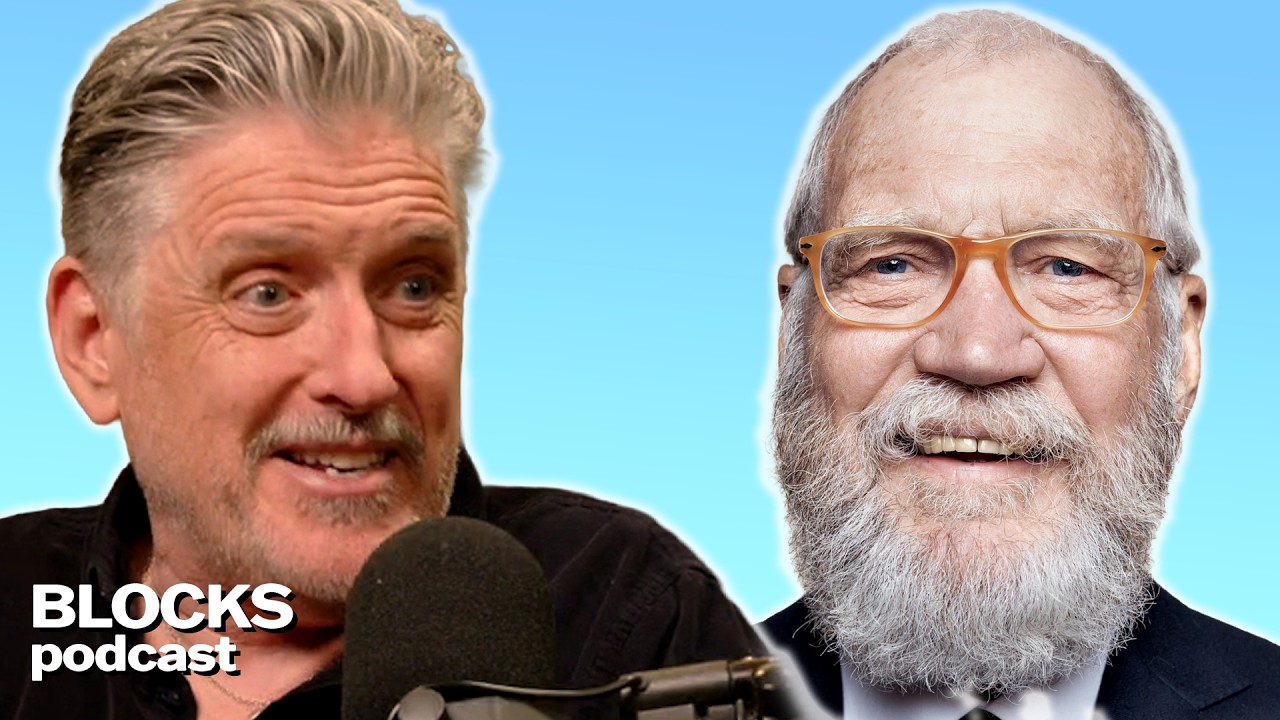
Video summary
Craig Ferguson reflects on his decade-long tenure hosting the late-night show following David Letterman's departure from CBS, describing a unique period where he felt protected by Letterman's dominance of the time slot. He explains that because Letterman effectively "owned" the schedule and had exclusive control over who appeared after him, other networks paid little attention to Ferguson's programming choices or content direction during those years. This arrangement allowed Ferguson creative freedom without constant interference from executives, creating a sort of peaceful no-man's-land where he could experiment with his style while working alongside an exceptional producer team that made the experience feel like a rare gift in television history.
However, this era came to an end when Letterman eventually left, and Ferguson realized immediately that the protective shield would vanish once the deal expired. He admits that after eight years on the show, he initially tried to leave but was offered financially difficult terms by CBS, forcing him to stay for another two years until a new agreement allowed his exit just as Letterman departed six months later. Ferguson acknowledges that while he could have survived under new management, it would likely have required compromising on creative decisions and enduring unwanted changes, so he chose to step away before the environment shifted into something he no longer wanted to do after ten long years of work.
Beyond the specifics of his career trajectory, Ferguson uses this experience to discuss broader realizations about fame, human relationships, and the nature of show business itself. He notes that with age came a demystification of success, realizing that people in the industry are primarily focused on advancing their own careers rather than actively trying to harm others or sabotage one another's work. Although he admits there is still some fear associated with money and fame, he emphasizes that the illusion of deep, lasting bonds within the entertainment world was often a trick played by his imagination, as reality showed that relationships in this field are frequently transient and self-serving rather than familial or deeply communal.
Ultimately, Ferguson concludes that while late-night television provided him with an incredible opportunity to test material on himself alone without needing openers or warm-up acts, it also taught him valuable lessons about the limitations of fame and the true dynamics of professional relationships. He suggests that jealousy exists but is often a result of misunderstanding how competitive environments function, comparing life in show business to playing golf where everyone plays their own course regardless of what others achieve. His journey from feeling protected by Letterman's shadow to facing the realities of independence highlights both the gratitude he feels for his specific moment in time and the necessary acceptance that such unique circumstances will never happen again.
Read the full video transcript
You were on against Conan?
>> Uh, yeah. We were on against Conan for
like four or five three four five years.
I can't remember cuz I was like Conan
>> and when you were left yeah.
>> And then Jimmy came on and he was doing
that and then Jimmy moved up when Conan
moved out and Jay and all that mess and
then
Uh, and then I think I was still there
when Seth moved in as well.
>> I mean I then they came and I I I did it
for 10 years.
>> Yeah. And and did you like doing it?
>> I did. I liked it for a long time.
And then I
didn't I I liked it because I was I was
I was it was possible for me to hide.
And what I mean by that is where was is
this is like
David Letterman owned the time slot.
>> Mhm.
>> For like
>> For like not physically but like he
owned the rights to the
>> physically owned the time slot.
>> I know but it's you can't own time.
>> No, he he did own time. Dave [laughter]
can. Dave can own That's why he's got to
>> Wow, what a deal.
>> Cuz I'll bet he owns time.
>> [ __ ]
>> Yeah, no he's amazing. No, Dave owned
the time slot because of the deal that
he had made.
>> got to decide who would go on after him.
>> Right. So, CBS didn't pay any attention.
>> He owns part of the sea as well.
>> Right. He owns He owns time.
>> And the wind. He has a small piece of
wind.
>> and and the and your mind. Some of our
conversation about 40% of what we are
talking about is owned by Dave.
>> Fine.
>> And he thought it up.
>> Have it.
>> Now,
but
>> [snorts]
>> he
uh
he wasn't paying any attention to me. He
was doing his own show.
>> Yeah.
>> Uh, so nobody was paying any attention.
When I figured that out like CBS weren't
really giving me notes and
and Dave wasn't giving me any notes and
I thought the only people that are
watching this are people
>> It's a bit of like a foreign embassy in
like a peaceful country like
>> It was just a weird piece of no man's
land and and so I knew that
my tenure of being able to do whatever
the [ __ ] I wanted ended when Dave left.
As soon as Dave went the [ __ ] the
wall comes down and those [ __ ] are
coming for me.
>> So, how long was it 7 years or something
that you've been doing it?
>> years.
>> But you'd been doing it. When did Dave
leave? How many years?
>> Dave left He left 6 months after me.
See, I tried to leave after 8 years
uh
cuz I thought Dave's not going to do
this much longer. And then they came
back to me with a deal that was
financially very difficult to know to
even So, I I stayed for another year and
then there was another year and I said,
"I really have to go." And we made a
deal and then Dave decided to go and so
it all kind of slotted in just like
that.
>> Got it. So, it actually you So, once he
was leaving you knew like, "Oh, they're
getting Let me leave while the getting's
good."
>> me. I'm never going to survive once
Dave's out of the way because he's
>> Well, you would have survived but it
would have been like under somebody. It
would have been like a lot of
>> of things I didn't want to do.
>> Yeah.
>> Uh and whereas I had gotten a good
10-year run at that show working with
the greatest producer who'd ever worked
in
uh late-night television and nobody else
giving a [ __ ]
>> Yeah.
>> You know, and which was fantastic.
>> Yeah.
>> It was just a gift. It'll never happen
again. And and I realized it was a
moment in time, which of course Dave
Owens, but the the
it was just a moment and it and it was
over and I had to get out before they
turned it into something that that I
didn't want to do.
Uh and also I was tired. 10 10 years.
>> Well, does it feel like Groundhog Day
though, Seth?
>> Yeah.
>> Cuz I I
I'm friends with some people who have
shows like that and I'll have dinner
with them and I'll go, "Who's on the
show tonight?" and they'll be like, "Oh,
I have no I have no idea who it is."
>> all the time. I I watched Do you know
that there's a documentary about Leonard
Nimoy
called Becoming Spock. It's a beautiful
>> watched it.
>> It was beautiful. You should watch it
sometime. It's It's more of a tribute
kind of thing. It's It's a gorgeous
thing. It's just very very nice. And I
watched it and after I said to my wife,
"God, a lovely man. I should have had
him on late night." We looked up and he
was on twice.
>> [laughter]
>> If only I'd met him. Yeah, if only I'd
met him. If only And it's so weird
because,
you know, things will come up from that
show. I mean, I I was at the upfronts
last week in New York, and there was a
lot of famous people around, and I kept
having to Google them to see if they'd
been on the show and so that I didn't
say
>> did like hold still so you could do the
Google image search?
>> I knew who they were, but I had to know
if I'd met them before, so I had to
Google their name and my name together
and see if they had been on the late
night show. And some of them had, and
some
>> Okay, well, this leads into what we're
talking about, which is So, how do you
feel about human relationships? Meaning,
cuz I realized something about myself
recently is like, I read into I think
all these relationships should be deep
and long-lasting. And I I've come to the
conclusion like, nope, they're not even
supposed to be that.
Like, you know, work-wise, I'd always
want to like, "Let's all get bunk beds,
and we're going to hang out, and we're
going to and it's going to be like I
watched the Martin Short documentary on
Netflix.
>> seen it yet.
>> And it's just all home videos.
And it's all the cast of SCTV, and Tom
Hanks, and Steven Spielberg, and they're
all like jet skiing and or not or
they're water skiing and then Steve
Martin, and it's like really sweet, and
I'm like, "That's what I thought it was
going to be," and it's not It's never
been that.
>> It was never that for them, either. I
mean,
>> Well, I know. I didn't want to be that
cynical.
>> You Well, it's No, I mean, you've run
into enough of these guys to know that
>> Yeah.
>> You know, it looks like that, and it is
like that sometimes. I mean,
what I think is interesting is You know,
that's why the green rooms and the
comedy festivals are always quite
interesting because it gets to be like
that for a minute. You get to But I
didn't I didn't go on a stage on my own
cuz I wanted to hang out with other
people. You know, I I went on stage on
my own cuz I was I'd been a drummer in
bands, and I [ __ ] hated guitar
players and drummers and
Well, I I didn't meet I didn't meet any
drummers, but I hated guitar players and
bass players and singers cuz you have to
deal with these [ __ ] all the time.
And then when you were when you were
working on your own, it's just you.
>> Yeah.
>> And that's I mean, I don't even have a
warm-up. I go I do it myself.
>> Yeah.
>> I don't have an opener. I I'd go out and
do it myself.
>> And you would do more you would do the
lights and the sound and the
>> I would I'm the audience some nights as
well. I will be honest. It's just me and
an amp.
>> It was inevitable ultimately.
>> Well, but you know what? You you find
out a lot of stuff.
>> [laughter]
>> You find out what material works.
>> Yeah, well yeah, what what who are you
testing comedy
>> Well, as it turns out, myself. Um
But it I think that it is like that. It
is collegiate sometimes, but ultimately
I think it's a
>> I didn't have I had the experience of
being from a big family. So I thought
like
oh, it'll be like a big family and it's
not it's not supposed to be a family,
but I just trick myself into thinking
that it would be.
>> Do you think sometimes this is some a
product of age? I used to think people
were you know, people were out to get me
sometimes in the competitive world of
show business and then I it was only
fairly recently. I'm talking in the past
10 years or so
that I realized nobody's out to get you.
They're out to forward themselves. They
don't think about you at all.
>> I think there are people who momentarily
will be jealous of you.
>> Oh, sure.
>> But like it's anyone who doesn't realize
that it's golf.
>> Yeah.
>> is is is like a you're playing the
course. It's not like I don't if I think
of a joke, it doesn't somebody doesn't
not think of a joke.
>> But you know that thing Gore Vidal said
he's
it's not enough that I succeed it's that
my friends should fail.
>> Yes.
>> Um
there is a little bit of that.
>> There's a little bit of that, but I'd
say I would argue with age it
>> That goes away.
>> It goes away cuz
>> For sure.
>> cuz you just it's you realize like it
there's no correlation.
>> Yeah, and and also
what it the demystification of of what
it is is one of the things I'm very
grateful for that late night did for me
is it demystified fame and success and
and to a large extent money. Look, I'm
not against money. Money's great. If if
you're not got it, it's just the worst,
but it's limited in what really it can
do. And and success and and fame kind of
the same, I think. That it's great to
have them, but
you know,
that lump still a lump.
>> Yeah.
>> You you know, it's like oh,
fear still fear. Everything's still
>> So, you know about my lump?
>> You have a lump?
>> A lump. [laughter]
>> I I I'm actually I didn't want to bring
it up, but
>> You're aware of my lump?
>> kind of obvious.
>> Hey.
You should like and subscribe.
Mhm. [laughter]