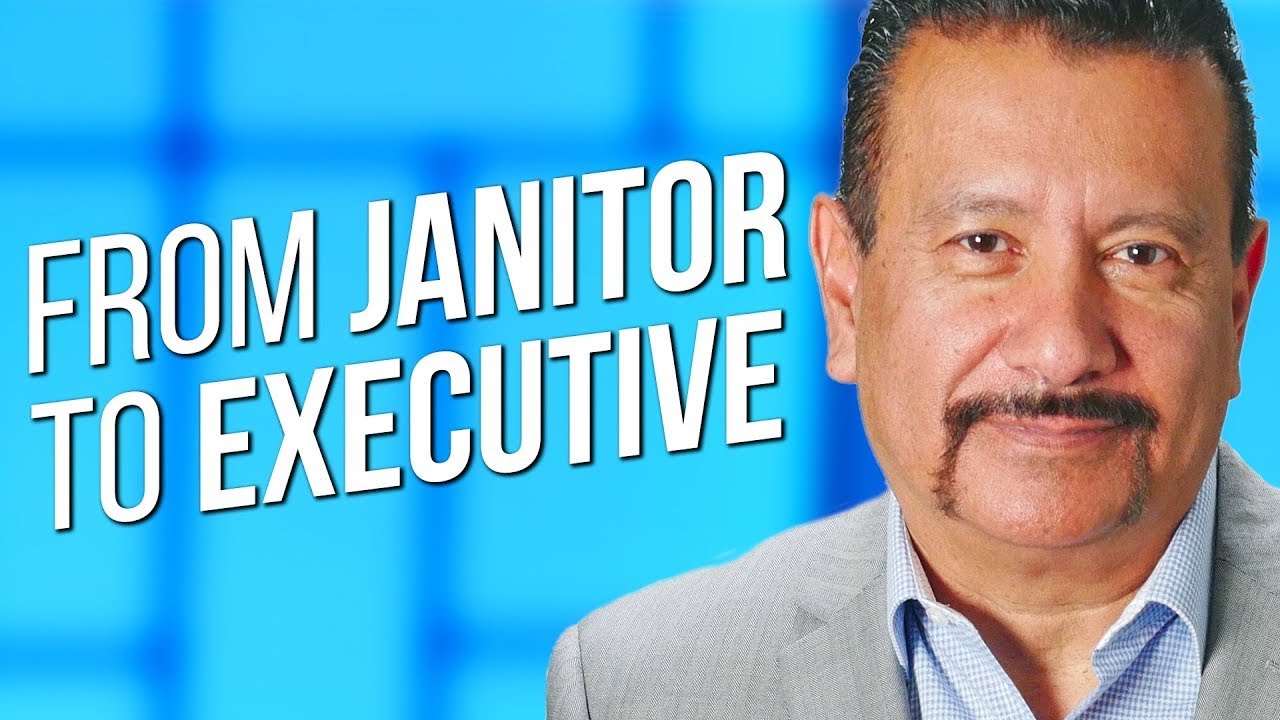
Video summary
Richard Montañez, a former janitor at Frito-Lay who went on to create Flamin' Hot Cheetos and become an executive, recounts his journey from poverty in Guasti, California, to corporate leadership as a testament to the power of initiative and mindset. Born into a migrant labor family where everyone picked grapes by the box rather than the hour, Montañez worked multiple jobs starting at age ten but faced significant barriers due to his lack of formal education and racial discrimination prevalent in the 1970s. Despite being told he lacked "initiative" because he finished tasks too quickly and had nothing left to do within his eight-hour shift, he refused to quit or become a victim. Instead, he used that extra time to learn about production lines, help operators with their breaks, and understand the mechanics of making chips, proving himself indispensable through sheer work ethic rather than just following orders in a "command and control" corporate culture. The turning point for Montañez came when his new CEO invited all employees to "act like owners," prompting him to break ranks by learning sales techniques directly from field representatives without permission or pay. While walking the neighborhood, he observed street vendors selling elotes with chili powder and realized that consumers were buying spicy flavors while Frito-Lay offered only plain chips; this revelation led him to propose putting his wife Judy's homemade salsa on a chip. When corporate protocol prevented a janitor from calling the CEO directly, Montañez leveraged the support of an administrative assistant who recognized the potential in his idea and connected him with leadership. The resulting meeting was tense, as executives doubted an uneducated Latino could innovate against their team of PhD food scientists, but Montanzey's presentation on maximizing market share using a simple visual aid captivated the room and secured approval for the new product line. Montañez emphasizes that his success was not merely about career advancement but fulfilling a "calling" driven by hunger—a metaphorical drive to overcome fear rather than just physical need. He shares an anecdote from childhood where he chose to enter an English-speaking reading program despite being told it wasn't for him, illustrating the importance of breaking out of assigned lines and seeking opportunities that others overlook. His wife Judy played a pivotal role in his life by inspiring him with her intelligence, encouraging his courage, and reminding him of his identity when faced with adversity. This support system allowed him to endure ridicule from colleagues who felt threatened by his success and eventually led to the creation of Flamin' Hot Cheetos, which generated billions in revenue for PepsiCo while Montañez remained humble about his origins. Ultimately, Montañez's story serves as a powerful lesson on redefining intelligence beyond traditional metrics like degrees or IQ tests, arguing that true smarts involve getting things done and solving real-world problems regardless of background. He challenges young people to stop passing the ball in teamwork dynamics and instead take shots themselves, leveraging their unique perspectives to create value where others see none. Today, he uses his platform to mentor entrepreneurs from all walks of life, emphasizing self-love as essential for standing out rather than fitting into societal molds defined by race or education level. Through initiatives like feeding thousands annually and donating shoes to children in need, Montañez continues to honor his grandfather's legacy of making things shine while proving that destiny is controlled not by circumstances but by the determination to keep pushing forward despite obstacles.
Read the full video transcript
One time I was teaching a an MBA class
and
I remember one of the students said,
"Mr. Montanez, you know, all my
professors have degrees.
Where did you get yours?"
And remember, I'm from the hood, so I I
I don't have a problem with
confrontation, right? So, I walked up to
him and I just said, uh
"University of Cucamonga."
Not such a cool right? It's just my
hometown and he said, uh
"Where's that at?" And I said,
"Private school, never mind. You
couldn't get in."
And then I walked away and then all the
other students were like, "Ooh." You
know how that goes, right? He said,
"Okay, I'll give you that, but the truth
is all my
professors have PhDs." And I I had had
it by this time. I turned around and
said, "Look, I've got a PhD. I've been
poor, hungry, and determined."
Everyone, this episode is brought to you
by our sponsor BetterHelp, an online
counseling company with a mission to
make professional counseling accessible,
affordable, and convenient. I hope you
enjoy.
Everybody, welcome to another episode of
Impact Theory. I am here with somebody
that I think is going to blow your mind,
the one the only Richard Montañez.
Welcome to the show. Thank you. Pleasure
to be here with you. Dude, so good to
have you. Your story is insane. Your new
book, Flamin' Hot,
uh is
it may be my all-time favorite success
story. It is so amazing the number of
obstacles that you've had to overcome uh
to get where you are today and just the
sheer breadth of your career is really
awe-inspiring. And I would love to just
start at the beginning, man. What's
What's the background? Why is the book
called Flamin' Hot? Like, walk us
through that extraordinary narrative.
Well, thank you. You know, I I
appreciate that you read it and you you
understood it, you know, cuz people uh
find out everything that I went through,
uh the first thing they they say is, you
know, why did you why did you stay there
so long?
It's hard to explain to people, you
know, that's what pioneers do.
They map out new territories and they
come back and they bring settlers. So,
that was one of the reasons I stayed
because I knew that I was a pioneer.
I was doing something new that a lot of
people didn't understand. And the other
thing
people a tiny bit of context so they
understand what you mean by pioneers.
So, you your family, two generations,
picking grapes. You guys are basically
in a
work camp. And whole family's picking
grapes. You're sort of the first one
that's going to have a career beyond
that, go to Pepsico, get a job as a
janitor.
And
end up, just to give people like the
punchline so they see how powerful this
is, you end up as an executive. From
janitor to exec. It and it's it's really
a pretty radical story. So, all right.
So, now backing up to being a pioneer,
when did you begin to see yourself as a
pioneer? Was that right from the jump or
was that something that occurred later?
I I
right from the very beginning. Now, I I
didn't know what a pioneer was.
But I look back on my on my childhood,
even as a child I was a pioneer because
you're right. Where where we grew up was
a small town called Guasti, California.
It was a farm a farm
migrant labor camp. Everybody picked
grapes.
About 2,000 families lived there. My
grandpa, my my my dad, my mom, my aunt,
my everybody picked grapes and we would
pick grapes as a family for one reason.
Because we got paid by the box.
So, the more a family
went, the more they made. You know, it
wasn't it wasn't by the hour in those
days and so so it wasn't I wasn't
picking full-time.
You know, maybe on the weekends or maybe
in the summer or you know, where there
was no school or whatever. And it wasn't
it wasn't as bad as as some of the other
migrant communities.
Because the the guy who built the the
city, Guasti
Segundo Guasti,
uh he was in the town that came from
Italy.
Uh he migrated himself. So, he built he
built this uh he built housing for us,
he built the church, and he built the
school.
So,
it was bad at first, but then, you know,
as he was building it and building it,
it got a a little better.
And, you know, as where I started off,
there was, you know, 10 children. I'm
the second oldest.
Um so, you know, we were we were really
poor, but it was I tell people it was a
fun kind of poor.
What made it fun? I've heard you say
that, and there's something super um
beautiful about why you say that it was
fun. Why what made it fun?
Yeah, because uh
first thing is, you know, there was a
lot of a lot of children, and we had no
toys,
and we had no bikes.
Um so, I remember one time we found uh
one of the plow tractors, you know, they
they changed the tire, and they threw
the tires off. So,
uh
we would get inside the tire and roll
each other, you know, like a Ferris
wheel down
down the vineyard. So, it was it was,
you know, stuff like that. You had to
make up your own imagination. We made
our own uh we made our own, you know,
go-carts and things like that. And and
then the the
the the
rooms were like a more like a motel.
There was no kitchen, there was no
bathroom, just the one room.
And it was a community kitchen, like a
big restaurant. There was big stalls,
and it was refrigerated. So, every
morning,
I had breakfast with, you know, eight,
10, 12 families.
You know, and and for dinner, I was the
same thing. So, it was the the community
is just like I I sense to see him
that again. A community where everybody,
you know, one grandma here ran out of
whatever eggs, and the other grandma
would be right here. You had your own
refrigerator, and you had your name on
it. And no and nobody stole from each
other. It was just like, you know,
everybody made sure everybody had enough
to eat. So, that's what I'm saying that
it was kind of it was just so fun. I
didn't know I was poor. We just, you
know,
there was a there was an old an old
reservoir tank that they would
fill it up for
the watering the
the vineyard. And we used to go swimming
in there, you know. And and the owner
never said anything cuz, you know, he
knew he he was like, you know, these are
my kids. So, that's why my dad and my
grandfather
were were very thankful.
You know, for the start that uh
you know, that family gave us.
Yeah, that's one of the things about
your story that I am so in love with is,
you know, the the sort of classic
American dream is that my kids will do
better than we did. And when you first
get the opportunity to go apply
at I think at the time it was just
Frito-Lay. I don't know if it was owned
by Pepsi at that time or not, but
and you go and you get the job and then
they give you a pretty key piece of
advice that ends up setting you up. When
you got the job as the janitor, what did
they tell you? Well, you know, that was
an experience in itself. It was it was a
dream come true because
you know, after uh
you know, picking grapes I
I worked at a car wash and I was a
gardener. I was pretty much working
full-time when I was 10, 12 years old.
Um
I even had a fake birth certificate that
my mom got me saying that I was 18 years
old
so I could work at the car wash and
one day my neighbor said, "Hey, they're
hiring at Frito-Lay." This is exactly
what I thought. I said, "Oh my god,
Frito-Lay." And it was owned by Pepsi. I
thought,
"If I could get a job at Frito-Lay,
I could change the legacy for the
Montanez family. I can go from the
fields into the factories." And people
like, "It's a factory job." No, no, no,
it's an opportunity to change my legacy.
They have benefits, you know. I
I went from
$2 an hour to
$4.50 an hour. Double the pay with you
know, with benefits. You know, I could I
could start my family. I was just so
excited and
you know, and and at the time I could
barely read and write. It was true. You
know, I don't I don't have any school.
But yet, you know,
I need to remind people I didn't stay
there.
I educated myself. Um so anyways, uh
my wife actually filled out the
application for me.
And I and I took it back the next day
and I and I was really nervous cuz he
the
the manager looked at the application
and he looked at me kind of funny like
questioning me. He goes, "Did you
fill this out?" And I
scared, I said, "Yes."
And he goes, "You have nice
handwriting." You know, I've been taking
Judy's credit ever since. So I I got the
job. He says, "You're hired. You know,
the janitor. Can you start tonight?" I
said, "Absolutely."
So it it was it's interesting that the
plant uh the Frito-Lay plant was
maybe about a quarter of a mile away
from uh
the labor camp. And in those days,
Frito-Lay used to build plants out in
nowhere. And that's where Guasti was.
You know, it's kind of like industrial
built around it. Um it's not the same
anymore. So
I was able to you know, catch my
my my grandfather and and my dad and
and my grandfather said something to me
that uh I I say it's the reason I'm
successful. And I love to
tell young people this. You know, we've
spoken at at Harvard, Notre Dame, some
of the top schools in the country. And
I always say this. And and he asked me,
"What are you going to do?" I said, uh
"I'm the janitor. I have to mop the
floors."
And he looked at me and he said, "When
you mop that floor,
you make sure that it shines. So when
people see it, they know that a Montaño
has mopped it."
And my dad said, "Listen to your
grandpa." You know, I actually took that
on.
And this is what I tell people. And and
you know, maybe some people will get it
and some won't. I said, "As much as I
love the compensation, the promotions,
Frito-Lay, Hot Cheetos, Pepsi. The truth
is, it was never about them.
It was always about my last name.
You know, it was always about that, you
know, and uh
I'm mopping the best I could, and I saw
that I was having an influence.
And people say, "How can you have an
influence when you're just a janitor?"
And I told people, "There's no such
thing as just a janitor. When you
believe in your heart you're going to be
the best. No such thing as a waiter, a
bus driver."
And what was happening was
my job was to clean the bathrooms, the
lunch room, and all the uh
managers' uh offices before they came in
in the morning.
So, the workers would go into the
bathroom, and the bathroom was spotless,
and it smelled good, and they'd come out
with a smile like, "Hey,
who who cleaned that?" And then they'd
go into the lunch room, and it was, you
know, spotless. And I, you know, I
wasn't complaining like, "Throw your own
trash." I was just cleaning and it
smelled good. And then in the morning
the managers were
opening up their offices and saying,
"Wow, who
my office is spotless. Who, you know,
who did this?" And everybody pointed
to that janitor and said, "Richard
Montañez." And that's when I learned
that I had a at a very young age that I
had an influence.
I could influence people without saying
one word
by my work ethics. I I influenced I put
a smile on their face and never even
said anything. And then I realized too,
you know, some of these quotes quote
that are ancient, exactly that are
ancient. Somebody said,
"You get promoted by who you know."
I said, "That's not true. You get
promoted by who knows you. You can say
you know the CEO or the manager all you
want, but if they don't know" And that's
what was happening
as a janitor, people were knowing who I
was just because of my work ethic. I
hadn't even spoken a word yet. One of
the coolest things about your story to
me is that 2 weeks after you get the
job, even though you're doing a good
job, they go to fire you.
And one, why did they go to fire you?
And then how did you turn it around cuz
that that this to me is where you go
from like a cool story to like woah,
this guy really has another gear.
That broke me.
Uh
you know, 2 weeks my my
that time manager called me up. You
know, the probation period was was
was uh
was actually 30 days.
And 15 days had gone by and he said uh
I got to let you go.
Uh I can't tell I mean I didn't even
have a hard time talking about it
because it was so long ago, but what it
did to me
I was just totally devastated like
you know, I I blew the only shot that I
would somebody like myself. Cuz you have
to understand you know, people say you
don't make right choices when you're in
the hood. Well, there ain't too many
good choices coming through the hood.
You know,
I I don't frown on anybody who's from
that area cuz that's where I come from,
you know, I come from the ghetto. My
leadership is from the hood.
So, I just thought man, it ain't going
to come again and I blew it.
You know, so I begged him like man, you
know, please, you know, let me let me
you know, what did I do?
Then he said, well, you know, you don't
show any initiative.
I didn't know what the word meant. And
and here here's what he was saying is
uh he told me to mop this this this.
And I did it so fast and so good that I
was finishing too early.
So, I didn't know what to do.
So, guess what I did? Is I mopped it
again.
So, I just I just kept cleaning the same
stuff within those 8 hours knowing
that I'd done it in 4 hours, but listen
to this, no one had ever done it in 4
hours.
So, he said, you show no initiative and
I was I didn't know what that
meant. So, I went I I begged him. I
said, just give me 2 more weeks. I will
be the most initiative person you ever
see. Please, please." And
and uh
you know, it's part of my destiny. He
said, "Okay, you got 2 weeks." So, I
went home
and Judy's been my teacher, my
inspiration, you know.
I said, "Judy, I almost got fired." She
said, "What happened?" And uh I said,
"He said I didn't have any initiative."
And I said, "What is that?" And then she
began to explain to me and it it hurt.
I mean, it hurt inside and it hurt so
much that it took me over the edge.
I'm never going to hear that word again.
No one's ever going to say that Richard
has no initiative. So, what I started to
Why didn't you get angry and say, "What
does this guy know?"
Like so many people their response is at
that point they're like, you know, "F
this guy. I'm out of here."
Because I didn't have any other choices.
You know, I I I knew where I where I was
at at that time. I knew
there was racial discrimination
everywhere.
You know, not to point any fingers, but
you know, that that was the '70s, you
know, we just came out of the '60s.
So, I didn't have a whole lot of
choices, you know, I couldn't go I
didn't have a high school diploma.
You know, I just saw that, you know, I
was I'm a visionary.
You know, and the problem with being a
visionary is we're 5 to 10 years ahead
of everyone else. You got to have
patience to let everybody else catch up.
So, I knew
uh
you know, I wasn't going to get mad. I I
was hurt and broken because
uh it was the truth.
It was the truth. I didn't have any
initiative. And that's why I I teach
young people sometimes when somebody
tells you the truth, you've got to learn
not to be offended and use that because
it is the truth. Even there's a
scripture in the Bible that Paul even
wrote that I love. He said, "Am I your
enemy because I tell you the truth?"
You know, and today people can't take
that. Well, I'm quitting. I'm getting
the hell out of here, you know, he can't
talk to me like that. You know,
sometimes I say, you know, don't get
abused,
but hang in there.
You know, um
build something. And that's how I felt
like I didn't have any I wanted that job
real bad. I I wasn't going to quit just
cuz
you know, it was true. I didn't have any
initiative. So, he didn't lie to me. You
know, he wasn't picking on me. You know,
he probably one of the best things that
anybody could ever said to me.
So, how did you end up responding?
Well, uh, I turned it around, you know,
I
I did my job in 4 hours and I was on
There was a wall that separated
production from the offices and the
lunchroom.
Cuz in production there was, you know,
quality control. You couldn't go in
there unless you had hairnets and, you
know, the protective equipment.
Um, so what I did I and I borrowed some
protective equipment and I went in there
and I started hanging out with the
operators. The people that were running
the lines and I started taking their
trash outside.
Uh, and then, uh,
if they wanted This is cool. This is
true. I don't know, you know, people
will like it, but if they wanted a a
cigarette break,
you know, to go outside and smoke cuz,
you know, this is this is 70s, right?
You know, everybody smokes. Uh,
so I would say, "Well, just show me what
to do, you know, you're just be gone for
5 minutes." And they're like, "Uh, I
don't know." I go, "Come on. Just I'm
I'm a mechanic, you know, and I really
am."
You know, and, uh, so they would teach
me, you know, uh, how to watch the line
and they would go outside.
You know, and I'd do that for a couple
weeks and so so the other managers were
were telling my manager like, "Hey, uh,
the guy on your crew that mops in the
night, man, hey, uh, I just want to
thank you for letting him take my trash
out. My guy is helping him." And then he
would be like, "What? Who did that?"
You know, and he was like he like,
"Okay." He was like, "No one had ever
done that."
You know, you heard the old statement,
"That's not my job."
Okay. Well, after he told after he told
me that I I I never said I said, "I'm
employed here. That is my job."
You know, that that is my job and
and little by little I learned how to
run the the Dorito lines.
You know, how to and And is it is like
being a pilot. It's not, you know,
people say you just make chips. Oh, no,
no, no, man. You It's like you got to go
to pilot school to learn how to make
Doritos and potato chips and Fritos.
Believe me, it takes a couple years to
be a master. Like it is just so
extraordinary the way that you think.
And the fact you had to go learn the
word initiative. And then we're like,
okay, cool. Yeah, I got it. Boom. And
then I have the chills. Ah. It's such a
cool story. Yeah. Well, that's how, you
know, it happened is I I learned all the
equipment.
Uh you know, even I'm I'm proud, you
know,
many years later my CEO said, you know,
you're the only person in the company
who can peel a potato, put it in a bag,
load the truck, make a marketing
strategy and sell it in the store. No
one else can do that. And that separated
me as an executive because And you know
that because we knew what the front line
was going through.
We knew what what downtime was. Like,
hey, we got to get that going. I knew
what safety was. We knew you know, all
that stuff, you know, and it gave me an
advantage. So, I learned all the
equipment. And then one day, you know,
um
one day
um
one the
uh
the operators, one of the operators
didn't come in.
So, that meant that what they would do
is they would double up
the two shifts to cover the one shift
for 4 hours. So, that meant that the guy
on graveyard,
that was my shift,
he was going to have to stay
till 11:00 in the morning.
And the guy on swing shift was going to
have to come in 4 hours early and then
do his 8 hours. So, it was, you know,
12-hour, 14-hour day.
And this guy had been doing, you know,
the whole week and he he was kind of
tired cuz this guy was off for a few
days and
And I remember I begged the uh
the supervisor. I said, let let me have
those four you know, 4 hours of
overtime. Wow, that would be,
you know, we'd be going to Disneyland
that weekend, you know, and
so I said, let me Let me uh Let me run
that machine, you know?" And they're
like, "You're crazy. What's the matter?
You're not an operator." No, no, I've
you know, Ruben's been showing me, you
know, when he goes on breaks, I'm I'm
giving him the break. And what? He goes,
"Yeah."
And uh And I had And at the time, I was
writing everything down. I I I did
terrible in school.
But, putting in being put in my realm
right? Yeah, yeah, right. You know, but
being in my realm
all that was It made me as though I was
brilliant.
I could I could solve math problems
by saying, "Well, you know, we need
30,000 lb of corn,
you know, 20,000 gallons of oil. I need
uh you know, six people to pack." You
know that, right? I was able to
calculate where it's very efficient
where we were making money.
So, I
I begged him to, you know, let me do it.
And
and sure enough, you know, I I did it.
And by this time, I had I had been
tweaking stuff to
you know, see how this all turns out.
Um
That day, the next day, the the the the
the main boss of production said uh
"Who ran, you know, line number one in
Doritos?" Because uh that 8 hours, you
set a record for most pounds produced.
And they told him, they said, "What? A
janitor?" Said, "Use him anytime." I
didn't have that official job, but I was
you know,
I was filling in for vacations. I was
doing more of that than I was you know,
mopping. They could get anybody to mop.
You know, and then uh
I really started uh tweaking things and
writing things down because when I
started there,
uh they told you how to
uh how to make a Dorito.
Okay. And then, I started saying, "Well,
you know, how do you make the best
Dorito possible?"
So, I was tweaking things and I was
writing things. It's like a laboratory.
I was writing things down like a pilot
would. And I said, you know, I I
presented it to my I took it home to
Judy.
And Judy wrote it up like a presentation
and I gave it to one of the supervisors.
And he said, you know, again, you did
this? I said, yeah.
And
he shared it with
the production manager who shared it
with the plant manager. Next thing you
know, they're using those specs
for the whole plant. And later on it
grew into the into the into the nation.
You know, but the only thing that I that
I'd like to tell young people is this is
make sure that you write your history
down.
Because
no one was recording it because of who
it was coming from.
Because I wasn't an engineer. I wasn't a
PhD, you know, research and development
person.
So a lot of that history
was never celebrated the way it should
should have been. So I'm teaching young
people. I made it That's why I wrote the
book. I wanted people to know the true
story
how I overcame certain things, but not
to make the same mistakes I made. Get
yours. So that's why I said, you know,
young people say, well, I I I want to
I want a career just like yours, Mr.
Montana. I said, no, time out. I never
had a career. I had a calling.
You know, um
the stuff that I went through, I don't
want you to go through it. You know, but
you know, I'm telling people you know,
that now, you know, write down your
history.
Make sure, you know, cuz the people say
it's about
Not too many people will understand
this.
Uh
you know, we're always told that it's
about the team.
And yes, but sometimes
it's about you.
You know, don't don't pass the ball.
You know, Michael Jordan would never
been Michael Jordan if he would have
continued to pass the ball. Kobe Bryant,
my hero,
I'm taking the shot. So I learned, you
know what?
The ball's in my court. I'm not going to
pass it. I'm going to take the shot. So,
I tell young people, don't pass that
ball. Take the shot.
And then they say this, too.
You know, I'm an old corporate guy,
okay? You know, I got years of, you
know, in the boardroom and all that.
It's just I
I'm looking back now and some things
were incorrect, you know? I need I'm
trying to change the culture. I changed
the culture in corporate America once.
I'm trying to change it again.
You know, um so, I'm saying, you know,
there's an old quote. I don't know if it
was Winston Churchill or somebody famous
said,
"You'd be surprised at how much you can
get done
when no one gets the credit."
And I'd quote that like, "Wow, that's so
true." But then I said, "You know what?
That ain't true.
Somebody's going to get the credit.
And it's probably going to be your
boss."
You know, it's a really interesting
concept though. So, um and look, you
leveraged it and you're you're right
to say, you know, for people to be
really shrewd about how they play the
game.
But the way that you played it is also
quite brilliant in the sense that what
I'm always trying to convey to people is
if you're indispensable and somebody's
stealing your ideas, they still know
they're stealing your ideas. So, you
still have leverage. Right. The fact
that you were able to keep climbing,
obviously you, you know, learned how to
use your leverage extraordinarily well.
But I want to go back to this idea of I
didn't have a career, I had a calling.
Talk to me about your PhD.
Okay. Well, you know, I actually
you know,
earned my PhD is one time I was teaching
a an MBA class
at a real pres- prestigious university.
I can't give you the name because, you
know, I don't think they want anybody to
know that one of their teachers doesn't
have a high school diploma.
But we were teaching and um I remember
one of the students said, cuz I would
say, "I don't care what room you're in,
there's always somebody in that room
going to try to steal your destiny. Your
job is to be ready not to allow it."
So, he said, "Uh Mr. Montaner, you know,
all my professors have degrees. Uh where
did you get yours?"
And remember, I'm from the hood, so I I
I don't have a problem with
confrontation, right? So, I walked up to
him and and I just said, "Uh
University of Cucamonga."
No such school, right? It's just my
hometown. And he said, "Uh
where's that at?" And I said,
"Private school, never mind. You
couldn't get in."
And then I walked away and there all the
other students were like, "Woo!" You
know how that goes, right? He said,
"Okay, I'll give you that, but the truth
is all my
professors have PhDs." And I I had had
it by this time. I turned around and
said, "Look, I've got a PhD. I've been
poor, hungry, and determined,
you know?" And that's how I earned my
PhD off off the streets, you know? So,
um but then I realized, you know, as uh
things were happening in my career, as
as you said, you know, I found a way
Uh and here's here's how I did it, you
know? People say, you know, I'm trying
to influence.
And I said, "That's true." And but I
realized this, I made it specific.
I'm not trying to influence everyone,
only the right ones. Who are the right
ones? Those who come into your life that
can help you and you can help them. So,
I recognized that. I mean, it was this
was before, you know, Tony Robbins and
all that. So, I was just
I was just doing it because I knew that
I had a calling. So, I was leveraging
uh some of the managers that I saw were
were different, were visionaries,
to help me learn, you know, the
computer, to help me learn this. And
they were they were so happy to to be
able to teach cuz
you know, this this is during when
corporate America
is in command and control.
And what is in command and control? It's
well, exactly that. I command and
control. I didn't hire you to think. I
hired you to do what I tell you to do.
So, these new these new generation of
managers coming out of college in the
'80s
were a different breed. They wanted to
teach. You know, they weren't uh you
know, from the old school where, you
know, it was it was to manage it. So,
when somebody like me would come up to a
person say,
"Can you teach me how to use the
computer?" They'd like, "Yeah,
absolutely." So, that's what I'm saying.
I didn't have to influence everyone,
only the right ones. And I concentrated
on who are the right ones in my life.
And the other thing that I never did and
I teach this,
I never let anybody know what I was
thinking.
I was smiling all the time, even when I
was upset. You know, cuz they would hold
it against you. So, it's just like,
never let them know what you're
thinking, you know, if they give you a
dirty job, smile, you know, if they're
whatever. And And that's what I did and
it worked for me.
Everybody, it's time to talk about all
of our favorite subjects, mental health.
Is there something holding you back or
preventing you from achieving your goals
or even just interfering with your
happiness? Do any of you suffer from
depression or anxiety? As a lot of you
guys know, I've suffered from anxiety
for years and trying to tackle something
like that on your own is not always the
optimal strategy. But a lot of people
are super nervous to try out therapy or
they don't really know where to start or
they're just plain embarrassed. But now
there's a service called BetterHelp that
makes therapy more accessible and
affordable. BetterHelp is professional
counseling done securely online using
your computer, tablet, or mobile phone
through video calls, phone calls, or
text messaging with licensed therapists
who are certified by their state's board
to provide therapy and counseling. It is
not self-help and it's not a crisis
line. It's an online service available
worldwide and it has a massive network
of counselors who have a broad and
diverse range of specialties. So, you
can get a counselor with the sort of
expertise that might not even be
available in your local area. BetterHelp
assesses your needs and matches you with
a licensed professional therapist within
24 hours. You can log in to your account
anytime to message your counselor, and
BetterHelp also has group and our
sessions every week where members can
learn in groups directly from licensed
counselors on multiple topics like
relationships and ways to overcome
anxiety. Especially if the thought of
seeking help makes you nervous or
embarrassed, be sure to check out the
over 60,000
positive reviews posted on the
BetterHelp site. And that's BetterHelp.
h e l p BetterHelp is committed to
making it easy for you to access the
therapeutic help you need, even if you
have never gone to counseling before.
It's free to switch therapist, it's more
affordable than local therapy, and they
even have financial aid available if you
need it. BetterHelp wants you to start
living a happier life today. Visit
betterhelp.com/impact, and again, that's
spelled
better h e l p, and join over 500,000
people taking charge of their mental
health with the help of an experienced
professional. BetterHelp costs just $65
per week, and financial aid is available
for those who qualify during the sign-up
process.
As an Impact Theory viewer, you can get
10% off your first month. So, visit
betterhelp.com/impact
and get the help you need today. All
right, guys, if you need this one,
please give it a shot. Take care and be
legendary.
Yeah, it's It is so amazing the way that
you never let anybody slow you down,
stop you, no matter what obstacle they
put in your way. So, this idea of
command and control, you get this new
CEO, he comes in, he plays a video for
you guys, and he says, "I want you all
to act like owners." Now, it's a speech
I've given myself a bazillion times.
It's a speech I was once on the
receiving end, and when I heard it, it
changed everything for me. And I was
always startled that it didn't seem to
change anything for other people.
What did you hear, and then what did you
do? Cuz that moment really becomes sort
of the pivotal moment in your
trajectory.
Life life life changing. And again, it
was a video because that was the
communication. There was no email. Uh it
was either a fax or somebody would send
out a video. Uh
but I I say this to you tonight, and I
need to say this that, you know, uh I'm
a firm believer in
revelations.
And people say, "What if What's a
revelation?" A revelation is something
that was always there, and it's been
revealed or unveiled to you.
You know, revelations are always there.
They should be
unveiled to you.
So,
when Mr. Enrico came on and he said,
"Hey, I want you to act like an owner."
I got a revelation.
And here's the beauty of revelations.
What do they do?
They lead to revolutions.
One revelation will lead to a
revolution. And that's exactly what
happened. I got a revelation.
And led to a revolution in my life. And
what was that? Act like an owner. Now,
every everyone in there didn't take it
seriously.
Uh but again, you know, I'm trying to
tell them,
"Did you just hear what he said? This is
the CEO inviting us."
You know, so I looked at it like this.
"What am I going to get an opportunity
to act like a CEO?
What am I going to act, you know? I'm a
janitor with no education."
You know, during a time when we're we're
trying to get diverse. It's just, you
know, my skin color just blows it away,
you know? Tells you a mile away who I
am. So, when am I going to get another
opportunity? I said So, I tried to
convince and I gave up. And I tell
people, sometimes you just got to let go
and just break ranks. I've been breaking
ranks my whole life.
You know, so I went home and I told Judy
uh
"Hey, the CEO said, you know, hey,
company's in trouble. Uh we're losing
market share and he wants us all to act
like an owner cuz he can't do it by
himself."
And she said, "Great, act like an
owner." And I said, "Okay, but I didn't
know what that meant."
You know, um
So, uh right next to the plant was the
uh the sales office. I just randomly
went up to a salesman
and I said, "Hey, uh will you teach me
your job?" I said, "I'll go with you.
I'll load up the truck. I'll do the
work. You don't have to pay me. I'll
I'll come on my on my day off." He
looked at me like,
"Man, you can come on your vacation?
Free labor?"
So, he said, "Uh meet me at 5:00 in the
morning."
So, my first day off came and uh
you know, he taught me how to how to
uh write up an order.
He taught me how to uh
fill up the trucks so that we could
maximize the space.
And then when we went to the store, he
taught me how to maximize the time in
the store so we could get, you know, you
want to do as many stores as possible.
Then about the third store, I was
racking it,
I I just took a a glance
and there it was. What What was it? It
was a revelation. What's a revelation?
Something that was always there but been
revealed, unveiled to you. I saw and I
looked at him.
He couldn't see it. You know why he
couldn't see it? Because he was an
expert. Been doing that job for 15
years. So, I tell people, don't become
such an expert that you can't see things
anymore. People that work for me, I say,
"Don't bring me ideas everyone can see.
Tap into the unseen and together let's
pull it out into the seen and make it a
reality." So, what did I see?
I saw people buying spices.
I saw people buying bags of chilies. And
then I looked at our products and
remember, this is a long time ago.
I can send you a picture. I have a one
the original picture, it was uh Lay's,
Ruffles,
Fritos.
Lay's, Ruffles, Fritos.
Everybody over there is buying chilies,
and I look,
we don't have
any spices.
That's a revelation. It was always
there, but it was revealed to me. So, I
went home excited, and I told Judy.
Judy's that road dog, that partner, that
she'll line up with me wherever we got
to go.
And uh I said, "I got it." I said,
"She's a great cook."
I said, "We're going to put your salsa
on a chip." And she said, "Great. Let's
do it. Which chip?" And I go, "I don't
know."
I really didn't know. So, uh on Fridays,
on the weekend, we would go shopping at
the neighborhood grocery store. And we
would go there because I didn't have a
bank account. I didn't know how to write
checks or anything like that. So, he
would he would cash our check and let us
buy groceries.
That's why I love neighborhood
stores.
You know, that's you know, they helped
each other. You know, things like that.
So, you know, we'd buy he knew us, you
know, and cash my check and buy our
groceries and
uh Friday, Saturday, and Sunday, there
was a a young man, his wife, and two
kids. He was street food vendor.
And he'd be selling elotes, corn on the
cob.
And for a buck, he would put whatever
you want, mayonnaise, butter, chili,
lime, lemon, cheese, however you he had
everything.
And he used to inspire me because I I'd
look at him, and he'd be standing so
proud.
You know, nobody ever told him he was a
street vendor.
He acted as though he had a five-star
restaurant.
He was a visionary. He was an
entrepreneur.
And that inspired me. I saw that, you
know, I was like, "Wow, check him out.
He
he really thinks this is a business."
You know, and it was, you know.
So, I grabbed two, one for me and my
oldest son, and
you know, uh took a bite.
And then I took a second bite.
Revelation. What's that? Something that
was always there. I looked at it and I
go,
"Oh my god.
That looks like a Cheeto."
And I said something that I believe
every entrepreneur, leader, great
inventor
says at one time in their life, and that
is, "What if?"
What if I put chili
on this Cheeto?
What if I go to that meeting? What if I
do try to launch a
a new company? What if?
So, I went and told Judy, I said, "I got
it, Judy. We're We're going to put your
song on on Cheetos." And she's like,
"Okay, go do it. Um
you know, go to the plant and bring some
Cheetos with no cheese, you know, just
plain."
So, I remember I got a trash bag
and I filled it with a Cheetos and
you know, I put it over my shoulder and
I walked out the plant. And And you
know,
people know me by by now, and you know,
they kind of like, you know,
"Richard, you are so ghetto."
And I tell people, "You know what? I'm
ghetto, but I am ghetto rich."
You know, so
we get home, and after, you know, a few
tries, we get it right.
And she takes some to her her work.
She's working at Target warehouse at the
time.
And you know, by the way,
the Target CEO, Brian Cornell, is a good
friend of mine. Um
he used to be part of the PepsiCo
family. And
he just a wonderful leader. Um and
so,
they liked it. And I took some Doritos,
they liked it. So, everybody was saying,
"Tell Richard to call the CEO."
So, Judy said,
"You have to call the CEO." Now,
remember, command and control,
vice presidents don't call the CEO. A
president does.
And at the time, we were we were in
every country that the government would
allow us.
So, there was a you know, there was a
president of Frito-Lay in Russia, a
president of
of of Pepsi in China, you know, Mexico,
you know,
where wherever, right? So, you know, it
might have been a couple hundred
presidents. They would call the CEO.
Not a vice president, so
you know, I uh I went and I found the uh
uh
corporate directory cuz there was no
email.
Every company had a little phone book.
You know, I I'm sure they still have it.
I'd look and you could find whoever you
wanted anywhere. So, of course, first
one was CEO.
So, I went into the
the office where all the uh secretaries
were at and I picked the main one,
you know, the head, and I said, "Can I
use your phone?" And she started yelling
at me.
She said, "No, you No, this is not for
private use cuz after all, what would
the janitor be using it for, right?"
Company time, you know, so I said, "No,
I
I'm going to call the CEO."
Her attitude switched.
And I found out later that she had an
audience.
Because in her mind, I was going to get
fired on the spot and she never saw
that. That's terrible. She's like, "Hey,
look at Richard. He's calling the CEO.
Oh my god, he's going to explode, you
know, and uh
So, I called and you know, I was really
nervous and
um his executive
admin
answered and she was just that. She was
an executive admin.
She was a visionary.
And uh
the conversation went like this. I said,
"Hi, I'm Richard Montanus. Can I talk to
um the CEO?" And she said, "Well, I
don't recognize the name. What area do
you run?" And I said, "I work in
California." She said, "Okay, you're the
president of California?"
I said, "No, I work in Southern
California." She said, "Okay, you're the
vice president of Southern California?"
I said, "No, I I I work in the plant."
She said, "Oh, you're the vice president
of operations?"
"No, I really work inside and side." And
she said, "Are you the director? No,
you're the plant manager. No, what are
you?" I said, "I'm the janitor."
And I began to tell her I saw this video
and and you know and said act like an
owner and I just like
well
she said um
hang on Richard. I love how she said
that. Hang on Richard.
Let me see if I can hunt him down.
And this is where I say that you don't
have to influence everyone. Only the
right ones. She was one of the right one
because
when Mr. Enrico got on the line
he was pumped up.
I didn't do that.
She did that.
I'll always be thankful to Patty.
She did that. Like I I don't know the
conversation. She must have been saying
you got this janitor on here with this
idea. You need to pick this phone up.
You said act like an owner and guess
what? You got an owner on the You Yeah,
so it's like we found out later we
needed each other.
He needed me as much as I needed him.
Mhm. You know, and uh so he got on the
phone. He's pumped up like and then he
says something that just shook my world.
He said, "I'll be there in 2 weeks. I
want to hear it."
So I'm like, "Wow." Hung up the phone
and
I'm floating. I did it. He's coming to
see me.
Uh by this time protocol goes into
action, right?
You know, they call the president.
President calls the senior vice
president. Calls the area vice
president. Calls the director. Calls the
plant manager.
Conversation was all the same.
Who let the janitor call the CEO?
Who's this Richard guy?
So by the time the plant manager got it,
he was on fire. Now, keep in mind
this is during a time when managers
could cuss workers out. Okay, you know,
you can see that in the old movies and
stuff like that. But that was a reality.
You're not going to get away with it
today.
But in those days
it was normal.
Um so he came and he cussed me out. He
says, "What do you think you are? You
realize what you've done? Everybody's
coming." You know, he's all weird and
telling me, "Now I got to paint the
place cuz everybody's going to see it."
And so I And then he said he walked away
and goes, "You're doing the
presentation."
My heart sunk. I said, "I'm doing a
presentation?
I've never even done homework."
You know, so I go home and again Judy
could see that I was uh
disappointed.
And she said, um "What's the matter?"
I said, "I'm going to get fired."
And she said, "Why?" And I said,
"Because you told me to call the CEO.
Now I'm in trouble."
That typical leadership of a woman, she
says this,
"Calm down.
It's not that bad. We're going to go to
the library and check out a book on
marketing." You know, there was no
Google, we had to work. But I I've
always been amazed at the leadership of
a woman because of my grandma, my mom,
and my wife.
That uh
you know, yeah,
I consider it to be the best.
You know, my leadership is because of
the leadership of a woman, you know, and
Judy calmed me down when I was panicking
and
she took me to the library and we found
a book and we literally copied uh
three paragraphs of something that just
sounded good. You know, I didn't know
what
the truth that is. I mean, of course I
know what marketing is. I don't think
there's anybody better than me, but I
didn't know what it was.
Wrote it down and and I I I don't know
if you can see this, but just just for
your own eyes, but I have some of the
original bags that I Wow. that I
created. You know, um That's so cool.
Did you make the logos yourself? Yeah, I
I drew all these uh logos.
But this is why your story is so nuts.
Like the number of people that complain
that they're not getting where they want
to go in life, but you go get the the
unseasoned Cheeto, take it home, create
your own seasoning, create your own
bags, your own logos,
when to try and get you fed to the
wolves, they tell you you have to do the
presentation, you go get a book on
marketing from the library and put
together a marketing presentation. I
mean this is great this this is like
in in a one person's life exactly what I
want for everybody to figure out that at
the end of the day
boos don't block dunks. You said you
love Kobe Bryant. That's his famous
quote. I love that quote so much that
you can get so good at something that
people can't stop you.
And they try
Oh, absolutely.
can't.
Absolutely. So, you know, that was the
these were the presentations that I used
during a and and you know
any any sixth grader could have done
them.
Um you know, so it's hard for an
intellectual
you know, executive to come down to
sixth grade level, but a lot of time
there's a lot of imagination at sixth
grade level and the things that you
could
you know, if you could think like a
child again without being afraid, but I
didn't know any better.
This is just what I was you know, I was
just going to go for it.
So, we made we made a 100 bags like this
you know, and I went I went to the
Goodwill and I bought me a suit.
That day came, you know, we we put this
on transparencies.
You know, put my tie on. We made 100
bags. I mean you couldn't tell
that it wasn't going to the market, you
know, it was that's how good it was. A
little bit of an artist not much enough
and and again all all the tricks that I
used
you know, was by watching people the
survival tactics that I that I was like
how did you do this man? I was I was
cutting
pictures out and you know, like third
grade all over again, you know, and but
but as as an executive as an adult.
And what I used to do before this when
I'd get off work I'd I'd put on my old
suit and I'd go into
you know, a makeshift office at home and
I would practice being an executive and
my wife would never say anything. She's
like yep, someday and I would I would I
picture that literally be drawing things
and writing strategy, you know, I
couldn't even spell strategy and you
know, writing it out and
but here comes the day and I'm walking
out the door and I and I've got to say
this part because it's the leadership of
a woman.
There's three things that Judy did in my
life and these are three things that,
you know, I speak all over the world
that I will always concentrate on doing
in three. She inspired me, she
encouraged me, she reminded me.
The word inspires that comes from the
Greeks and simply means to breathe life
into someone.
To encourage someone comes from the
Greeks also. It means to place courage
in somebody's deepest being that they
stand up and they're never the same
again.
And the last thing she did was she
reminded me.
So she inspired me by saying, "I don't
know anybody smarter than you."
I'm like, "What?" I don't know anybody
smarter than you. Then she
she encouraged me and she said,
"You're the most courageous person I
know."
And then she reminded me, she said,
"Don't forget what your grandma told
you.
Don't forget who you are."
I walked out with the inspired,
encouraged, and reminded and I used that
with my team and I realized, man, when
somebody's inspired, encouraged, and
reminded of their value,
they'll conquer the world.
So I got to the plant
and uh
sure enough, anybody who was anybody was
there. You had to be there. You know,
it's like the president coming in,
right? So every everybody's got his
senior vice president, chief marketing
officer, chief financial, everybody was
there for
you know, even even executives from a
500 mile radius needed to be there.
One of the biggest meetings of the year
and I walked in
and everybody's mad.
You know, and uh
they're letting me know that they're
mad. You know, the the thing was to let
me produce
my own presentation and hang myself,
you know, and stop what Mr. Enrico was
trying to accomplish.
But they're wondering, why did he bring
us to small little town in Guasti,
California
to hear an uneducated Latino talk to me
about marketing,
talk to me about building
new products when I have 300 food
scientists that work for me,
you know?
So, I had the stairs and you know, and
that whole thing and
so, I got up there and nervous and then
it's the first time I ever did a
presentation. I remember doing the I
don't know if you've ever done
transparencies.
If you're not an expert, they they will
they'll make you look ridiculous. So, I
put it on there and it was upside down.
I'm like, "Oh, man."
Turn it around and it's still upside
down. I finally got it. I was so happy.
And I started doing the presentation and
and guess what?
I had their attention.
You know, I even I even had one of the
original elotes that I had bought the
night before and kept it in a bag and I
said, "This
This is a uh uh
I told him, "This is a a meal.
I found a way to take this meal
and turn it into a snack. Never been
done before." You know, and they were
like, "Wow." So, I had enough just
speaking from my heart, you know, no big
words whatever.
And then uh one of the marketing
executives, the vice president, raised
up his hand.
And I intentionally, this is the truth,
I intentionally turned around and looked
the other way
cuz I thought, you know,
Judy didn't get me ready for questions.
She just said, "Do this do that." And
you know, he's like, "Well, I got a
question." I said, "I'm sorry, sir.
Um we don't have time for questions."
And he said, "It's just a simple." You
know, I didn't realize you don't say
that to executives, right? I mean,
that's that's you know, I've never done
that. So, I'm like, "Well, we don't have
time for questions.
Let's go home now, you know?" And he
said, "It's just a simple one." So, I
just
I thought about it and then uh
I said, "Okay, sir."
You know, I said, "I'm I'm really
nervous, you know." Um
He said, "Well, how much market share
we're talking about?"
I almost fainted.
The first thing I thought, market share,
we haven't read that chapter yet.
What the heck they're talking about? So,
there was a door that I thought, you
know what? I'm just going to run out
that door.
After all, I shouldn't even be up here
anyways. You know, that's it. You know,
I'm I'm I'm done. You know, I
I made a fool of myself.
You know, so my entire life, you know,
I'm going to continue to look
ridiculous. I just I
I was really done.
But then something happened that
it's inside of me that I tell young
people, you know, as as scared as I was
there's a there was something inside of
me that was greater than the fear that
was outside of me.
So, let's let let's go to the '60s to my
childhood cuz many times I say,
sometimes in order to find your future,
you got to revisit your past.
Well, my English was really bad. So,
they
In those days they brought in
after-school reading program. Two
trailers. One trailer for
Spanish, next trailer for
English.
So, every Tuesday
uh listen to me. Every Tuesday
I got into the line I was told to get
into. It wasn't my choice. They said,
"That's your line. You belong in this
line." Well, what do you think I did
in the third grade?
is
I broke ranks.
And I got in the English-speaking line
where everybody just so happened to be
white.
The two teachers were two beautiful
blondes.
And as dark as I am, I'm thinking, man,
can they tell I'm not white?
You know, and and my friends were over
there saying, "Ricardo, you're loco.
You're in the wrong line. You're going
to get in trouble. Come back."
But there was something inside that
trailer
that I wanted.
And I looked at my friends and I said
this,
"They have cookies inside.
I'm going to get us some cookies."
So, I got closer and closer and scared.
Remember, I I I'm really scared. I'm I'm
not exaggerating.
Those two white ladies
greeted me
and filled my pockets with cookies.
Now, when people hear that story, they
say, "What's the moral of that story?"
There's two parts, and it goes along
with the end of my story here.
It's um
There's a cookie
that's been baked for everyone.
Young people need to understand this.
There's a cookie been baked for you.
Your job to get out of that line they
told you to get into and get into the
cookie line. The line is your choice.
How dare we tell a young person, "That's
your line. That's your line."
Get into the line of your Get out Get
out of the poverty line, get into the
prosperity line. Get out of the job
line, get into the career line.
Uneducated, educated. Every child should
know it is their choice. No one should
ever say, "That's why I I teach parents
never let
a test score determine which line your
child should be in."
Because I flunked every single test.
You know, but yet I came out here. So,
that's the first part. The last part is
what I say, "This is the antidote to
fear." I I know that you have it, you
know, and some people don't have it.
When you get this, you'll never be
afraid again.
So, what is the antidote to fear? Why
did I break ranks as scared as I was?
I was hungry.
Hunger is the antidote to fear.
When you're hungry to start a new
business, fear will leave. When you're
hungry to oh you know, run for a
political office, fear will leave. So,
back to that question,
as scared as I was, how much market
share? Scared as I was, I was hungry.
I was hungry for more in my life. I was
hungry for something different. So, I
got a hold of myself, and I remembered
the the racks,
how big they were, you know, and I I got
it. Market share. And I
most ridiculous thing you can imagine. I
stuck my hands out to the sides of the
racks, and I said, "This much market
share."
And I could hear the executive,
you know, kind of gasping. Like, "Ish.
Oh, did he just say market share?"
But, my CEO was a visionary.
And he stood up and he addressed his
team and he said, "Ladies and gentlemen,
do you realize that Richard just showed
us how to go get that much market
share?"
And there was a young man who later
became
the president of Pepsi.
Good friend of mine, Al Carey. He was
leading us and did the same thing. He
told his sales team, "You guys think we
can go get that market share?" Now,
here's what I have to say, you know, in
the end of the story that
many times greatness will come in a
ridiculous form. And if you're not
willing to look ridiculous, you will
never achieve your greatness. That
ridiculous statement made me a legend in
my company. As I got older,
young executives, "Mr. Montanez, will
you tell me that story?" It It was a
game changer. It was, you know, So, I
So, I realized I was not
any longer going to be worried about
looking ridiculous or worrying about if
I said something right or if I spelled
something
right. I was just going to go with me.
And too, you know, there was a lot of
a lot of uh adversity
uh coming from everywhere because
the uneducated janitor just introduced
a billion-dollar, actually
two-billion-dollar a year product
for pennies. And guess what? They were
pennies out of his pocket.
But, I never So, that was very offensive
to a lot of people. I was very offensive
to a lot of people. Even though I
wasn't, you know, doing anything wrong,
it was it was just I just offended you
because
you went to college and I got more done.
So, when I realized when, you know,
very few people All of the great ideas
and then I I shook that company all of
the great ideas very few people ever
said,
that's a great idea.
And I finally realized this is what
young people need to understand.
It wasn't that it wasn't a great idea.
The idea was great. The problem was
where the idea was coming from.
Because again, I was
told this is the line I been you know,
you're not an inventor. You're not
a PhD that's this is our line and and
the PhDs would would you know, would
meet with me and say, you know, you
can't be doing it. We went to school for
10 years.
You know,
but I was able to do it. So that's how I
was able to overcome
so much adversity and two I I knew
that I never wanted to be a victim. And
I also had three boys at home
and I wanted my boys to know that pops
took care of business. I was there if I
was going to mentor anybody, it was
going to be them. And I knew too that at
some point
we would be where we're at today. I knew
that I would be writing books. I knew
that there would be a movie about me. I
knew that I would be influencing the
world. I knew that and some people say
calm down. You just created hot cheetos,
but if you got to put hot cheetos out of
the way.
You know, it's opened up these doors.
That's why young people need to
understand.
Fall in love with yourself because when
you fall in love with yourself, there's
a freedom to be yourself. As as a kid I
hated myself. I hated living so poor. I
hated my color. I hated my language. I
hated my food cuz I wanted to fit in
and be like everybody else, but I I
realized at a young age that none of us
were ever created to fit in. We were all
created to stand out. That's why you I
I'm sure you went through a lot of it
mayor cuz you know, you're pretty
brilliant guy and
you probably didn't fit the mold and you
know, and you probably have a lot of
friends that just didn't fit the mold
and you know, but I think we're seeing
that more and more. You know, you know,
I have I have tattoos, you know, and I
was always told hide my tattoos and I
was always told to shave my I never once
shaved my mustache. I did it my way.
But today you're seeing that becoming a
form of art now. Everybody has a beard,
everybody has tattoos.
Well, you know, somebody had to pioneer
all that stuff.
You know, it's got to be in somebody's
history book. Well, it's in my history
book.
You know, I was the first vice president
with tattoos. I was the first vice
president with a beard. I was the first
vice president with hair slicked back.
You know, that that was me, you know, um
I was just going to say that, you know,
where you've done such an extraordinary
job of walking people through your
story, but you know, in an hour there's
so many other things, you know, the fact
that the food scientist tried to shut
you down. So, you fight you get the yes
from the CEO, but then the food
scientist do everything they can to kill
the project and you had to fight through
all of that. And honestly, I think one
of my favorite things about your story,
because courage is not the absence of
fear, right? The the famous quote. It's
rising up in the face of fear. And the
story of you flying on the corporate jet
for the first time and sitting in the
CEO's seat, and you know, everybody has
a chuckle about it. And then you're
crying on the
you know, the commercial flight home,
like when am I going to stop
embarrassing myself?
And the fact that you had to struggle,
the fact that you had this inner
conviction to even though you were sick
and tired of embarrassing yourself, even
though you still don't like to talk
about where you dropped out of school,
like that you still kept going. And you
know, your work ethic, your refusal to
be a victim, your willingness to just
keep pushing to break ranks, to get out
of line, to just outperform people.
That to me is is what makes you so
extraordinary.
Thank you. And and and again, it goes to
what I said at the beginning. I I
realized that I had a calling and I
don't think we teach that enough to
young entrepreneurs.
Is this a career or is this a calling?
Because I believe your calling will take
you further than
a career. And so, I I teach that. You
know, figure it out. You know, you'll do
more in your calling, but there's more
pain, but you'll have more strength and
courage to endure. That's why I was able
to you know, people would tell me today
like, "Why did you do that? Why don't
you just sue? Why don't you know,
everybody was hating on you?"
Cuz it was a I knew that someday I was
going to be right here.
I knew that someday, guess what? Guess
who's flying the
plane?
Yeah, that's him. You know, I knew it
would just like and if again, a
visionary.
You know, it wasn't going to happen
overnight. You know, it's going to
happen years and years and years down
the road, but here we are.
And now now in a position to give back.
You know, we have a nonprofit where we
feed hundreds of thousands of people
every year. We buy 50,000 pairs of new
shoes and give them to kids that can't
afford them. And and we don't collect a
dime from anybody. It comes off of our
dime. That's our way of giving back. I
knew that someday I was going to be in
that position and so again, it's part of
a you know, your legacy as I said, you
know, my grandpa said, "Your legacy is
in how much that thing shines."
You know, it's not about it's not about
anything it's not about
how smart you are.
It's about how are you smart? There's a
big difference. You know, some people
are smart this way and then other
people, but yet the people that are
giving the test, they're giving the test
and define it on their smart.
So, people like me will be mislabeled
because no, he didn't you know, he
didn't do the IQ test. I you know, high
IQ just means you have a good memory.
That's it. It It mean you you know, you
can get things done. So, uh you know, I
know I know so many people that, you
know, they're so smart at building cars,
you know, at putting stereos in. And we
don't give them enough credit, you know,
they have businesses, you know, the
these entrepreneurs, you know, they
built America and they stimulate our
economy. Small business
Small business does more to stimulate
the economy than big business. You know,
and all these millions of little shops,
you know, uh the person, you know,
having a dress shop, a shoe shop,
whatever they may be. We have to look at
them like,
you know, how are they smart? Well,
they're smart in this. And that's what
an entrep- entrepreneur is.
And you know, and and and uh those are
the things that I learned it as a young
man and now I carry them as, you know,
as an older man. I'm able I'm able to
share that. I used to say that, you
know, I'm going to be a professor one
day.
You know, I'm going to I'm going to
teach. And you know, I I don't have an
official title anyways as a professor,
but you know, I knew I could if I
wanted, but you know, I'm having so much
fun just speaking all over the world
that
um
Yeah, it's so crazy to me. And I'm sure,
look, the vast majority of people that
you've taught drink in your knowledge
and recognize it for the brilliant map
to success that it is, but it does make
me
laugh and cry sort of at the same time
that, you know, somebody would worry
about whether or not you actually have a
PhD. It's like, I've done it. Uh that to
me is the the hallmark of somebody who
um
has done what I think is important in
life. And that's to take your potential
and turn it into actual usable skill
set, um which you've clearly done an
extraordinary job of. Richard, where can
people find the book? Where can they
keep up with you? You have so much to
offer. Um how do people stay in
connection with you? Well, I mean, they
they can, you know, I I use uh social
media, you know, and uh
you know, I post uh I post some crazy
stuff on Instagram, you know, it's
What's your username? Hot Cheetos RPM.
Nice.
Hot Cheetos RPM. And RPM is my initials.
It's Hot Cheetos RPM. And I'll show a
lot of where I came from.
Cuz I'm speaking to everybody. I'm not
speaking to
a certain
you know,
group of people. I'm speaking to
everybody.
I'm trying to find ways to speak in your
language.
You know, to educate you and
to give you something
that could help change your life. It's a
great place to end. Richard, thank you
so much for your time and for sharing
that absolutely extraordinary story.
Guys, dive into his world. Read the
book. The book is phenomenal. It's
called Flaming Hot. Check him out on
social. You won't regret it. And
speaking of things that you won't
regret, if you haven't already, be sure
to subscribe. And until next time, my
friends, be legendary. Take care.
There's this thing people think that
like I'll be happy when.
Once I get like this big amazing home or
once I get this car or once I get this
relationship or an amount of money, then
I'll allow myself some happiness. The
problem is the the finish line always
moves. You never arrive there, right?