Video summary
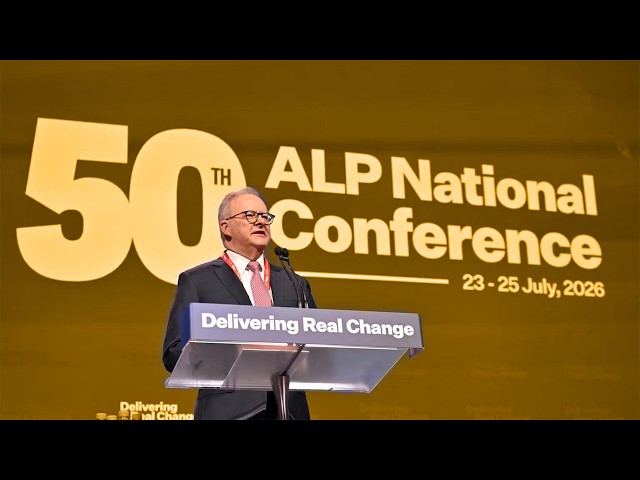
The video examines the current landscape of Australian politics under Prime Minister Anthony Albanese, characterizing his leadership style as a rigid "command and control" approach that prioritizes discipline over ideological purity. This method has created an opaque political environment reminiscent of Pyongyang, effectively suppressing dissent from both left-wing idealists like Ed Husic and right-wingers such as Richard Marles to maintain unity within the Labor Party's slim parliamentary majority. The hosts draw parallels between this strict governance style and John Howard's long tenure, suggesting that while it fosters conformity, it may also stem more from defensiveness than genuine consensus. Simultaneously, attention turns to the rising influence of One Nation leader Pauline Hanson and her strategic alliance with billionaire Gina Rinehart, which challenges traditional norms regarding money in politics by blending an anti-elite persona with significant private wealth funded through luxury interests claimed to represent the working class.
This partnership between Hanson and Rinehart is further complicated by shared advisers like John McRobert and allegations of taxpayer-funded hospitality for political figures, raising questions about how populist principles are asserted against perceived elite control. The upcoming High Court appeal regarding a racial discrimination ruling involving Marine Farooqi is viewed as a dual-purpose vehicle designed to both raise funds and assert these populist stances on the national stage. Meanwhile, in Victoria following Justinta Allen's resignation, One Nation has surged to approximately 25% polling support despite lacking a formal leader or specific state policies, creating a unique dynamic where federal Labor fears voters might purge their anger at the state level before returning that dissatisfaction to Canberra later. Some within the Labor party hope for an alternative outcome if One Nation enters government as an untested "rookie" party devoid of experience and established structures, though experts warn that Hanson's focus on cultural grievances poses a significant challenge in a jurisdiction often viewed as progressive where service delivery issues must also be addressed.
The political stakes are particularly high given the specific electoral risks identified for federal Labor in regional Victoria, such as Bendigo, and across South Australia, where lifelong supporters have already shifted toward One Nation. As these parties gain traction before 2028, there is a potential for dramatic realignment that could reshape the national map if Hanson's campaign continues to capitalize on cultural grievances while Liberals pivot toward budget balancing and corruption inquiries. Labor faces the difficult task of countering this momentum without appearing patronizing or ineffective, especially as they navigate a political climate where One Nation's success allows them to test their appeal in regions previously considered safe for traditional parties. Ultimately, the video concludes that the convergence of strict federal discipline at home and an unpredictable rise of populist forces like Hanson represents a complex challenge that could redefine Australian democracy if these trends continue unchecked into future elections.
Read the full video transcript
In the spirit of A&U's motto, first to
know the nature of things, we
acknowledge the traditional custodians
of country throughout Australia and
their connections to land, sea, and
waterways which were never seated. We
pay our respects to their elders, past
and present, and extend our respect to
Aboriginal and toouristrate islander
peoples listening today.
>> Oh, can I tell you, democracy sausages
are my favorite [music] meal. They are
dulu with no salu.
>> Forget about what you've been told by
the hate media.
>> I'm optimistic. They [music] have the
right idea.
>> Google it, mate. You're
>> such a sick fan.
>> This is democracy manifest.
>> Hello there and welcome to Democracy
Sausage from the A&U. I'm Mark Kenny,
director of the Australian Studies
Institute
>> and I'm Dr. Maria Tlaga from the School
of Politics and International Relations.
And it's a very well warm welcome this
week to the Saturday papers chief
political correspondent Karen Barlow.
Karen, welcome to Democracy Sausage.
>> Fantastic to be here.
>> It's been too long since uh we we we to
get you on here. Um you've been writing
some really fabulous stuff um in the
Saturday paper uh very very much weekly
uh revelation after revelation. Uh so I
thought it'd be really great to talk to
you today. There's so much happening in
politics at the moment. It's happening
at the state level. it's happening at
the national level and of course it's
happening internationally as well. Uh
it's it's it's bewildering and tiring in
some ways. Um we've just come from uh a
week where Labour had its national
conference. There's of course you know
tumult going on in Victoria which we can
come to as well. Um but let's just start
with national conference I suppose in
terms of what it showed us about uh the
the the current Labor party uh how it is
run by the prime minister Anthony
Albanesi. Um there were fights that
could have happened, discussions,
divisions that could have occurred which
presumably the whole point of national
conference is to in fact resolve these
kinds of issues and arrive at agreed
positions. But, you know, things like
Israel Gaza, um the the push for a a gas
tax, an export tax, um Orcus, of course,
an ongoing matter of friction. Um most
of the well, everything really was
avoided in in terms of uh being
discussed out in the open. Uh and the
prime minister was pretty defensive
about that toward the end. uh everyone
was lording the kind of unity of it and
unity is a great thing in a political
party but Labour has also always argued
[snorts] that its unity is arrived at
through the necessarily sort of messy
process of passionate people idealistic
people with social conscience coming
together and thrashing it out and
national conferences in the past and I
can remember them back to the 80s were
often highly kind of theatrical and and
and and entertaining but productive in
that regard as well. You know, there
were some big divisions and big issues
that were played out. Didn't really see
much of that at this one, did we?
>> No. The poor journalists, they go there
all the way over to Adelaide from the
press gallery and they don't really get
a story. Most of it appear to be
stitched up well before anyone arrived
in Adelaide. Um, but I I looked to how
uh Albanesey described the event, the
most purposeful and united national
conference he'd ever been to in his long
career. So that's quite a statement from
him and really that uh that is due to
him and the way he controls everything
about Labor.
>> Well, I mean there's those jokes, right,
about how you never want to have like a
really leftwing boss because they'll go
all like, you know, Stalinist on you. Um
what's a joke that you can hear often in
um social science circles? Yeah, they're
they're a riot those people in social
sciences.
>> Yeah, that's right. That's right.
Exactly. There's an inside baseball
there for you folks. But um I think
what's kind of interesting about this is
to reflect on some of Albanesey's more
storyried performances at national
conference perhaps most famously in the
early '9s where you know his um very
strategic and deliberate agitating and
brokering is actually what delivered the
gender quota to which several people on
the right like you know gave very
off-color remarks to about um the types
of people who might have won that fight.
So I think this is sort of um an
interesting trajectory to to reflect on
given what you've sort of um said Karen
and I think the other thing that is I
suppose interesting about this is to
think about it in the broader political
context like on one level you can kind
of say well isn't it great that the
government is able to resolve um all of
these um conflicts in in what I assume
are a set of elaborate preconference
processes which keep being alluded to um
in the press.
>> It's all very opaque, isn't it?
>> Yeah. I mean, I think that I think the
opaque the opacity we you know, you can
argue the toss on that one, I think. But
um uh you know, I think it's funny that
they like to have a go at the greens for
being completely opaque. And all they're
really showing us is the last bit at the
at the end. And I I wonder if the the
Greens would actually be okay with
showing the last bit at the end if if if
people would actually go, right? you
know, the media would come um in the
first place. So, so there's there's
there's that dimension and then the
other is, you know, the political
landscape is so um like the the right is
in such disarray that it doesn't it the
cost of um Albanesei imposing this level
of discipline on his colleagues is is a
different equation. And I wonder if the
right rallies um or if uh One Nation u
is able to gather enough momentum and to
really threaten the possibility of a
Labor government like how how people
will then react to that level of um
organization and and dominance. I think
you know more about this than I do Karen
in terms of what's going on inside the
ability PMO and how that all works.
>> Yeah. Well, um, the prime minister, some
of his colleagues point to, you know,
his upbringing as a, uh, as a, uh, only
child of a oneperson family and then his
time in Sussex Street as the sole sort
of, uh, left, uh, operative in a overly
right uh, Labor appar apparatus there.
And then you've got how it it has been
brought through as leader now of the
Labor Party and you know I've spoken to
uh quite a few members of the caucus and
in his ministry about how he's been
operating and you know one of them came
back with the the line that he's his
prime minister's office is Pyongyang.
It's it's North Korea [laughter] it's so
uh fierce and command and control. Now,
I know there's a bristling around
command and control as a term, but
essentially it is that and it really
goes to how uh Albanese has set himself
up as a left faction leader and he's
doing it governing as a centrist and
he's well supported by these individuals
of the right. We're talking here of
course the deputy prime minister Richard
Mars, uh Don Farrell, the right power
broker from Adelaide. uh and he they're
all getting what they need and they're
primarily working for each other and
this uh is something that uh emanates
and spreads across the entire very large
now caucus those 94 members.
>> Yeah, it's well 94 in the lower house.
Yeah. Um it's uh it's it's interesting
the um the dynamics of all of this
because were this a were Richard Miles
say and I don't mean actually Richard
Miles because I don't think he's um well
personally I'm not entirely convinced
that he would you know be able to
command the numbers or run a government
but that's that's another question but
but just thinking had Alan Easy for
example come from the right-wing of the
party would he be able to get away with
some of the messaging and some of the
positioning that the government has done
when we think about things like Orcus or
we think about um you know opposition
basically shutting down the debate on on
the gas tax these sorts of things. It's
the it's the function of being a a
leftwing no nominally left-wing leader
that allows him the discipline to and
the authority to control that more kind
of policy and idealistically ambitious
wing of the party.
The phrase is [clears throat] he's
factionally entrenched and I think that
really describes how he has managed to
to sort out his leadership for the
Labour party at the moment and it also
harks back to uh the amazing win.
Everyone thought he was going to go
south. It was going to be perhaps a hung
parliament and he is a labor a modern
labor hero and that is still
>> in 2025
>> in 2025 that means that there is no talk
of shifting him at the moment. It's all
about if you're talking about the
future, it's about succession planning.
It's there is no move within the Labour
Party to to get him out unlike what
we've just seen right now in Victoria.
>> Yeah. Well, I guess what I was getting
at though is that if we think back to uh
Howard with guns or we think even before
that to Labor with enterprise bargaining
in the federal labor government uh
presiding over enterprise bargaining,
the authority that you have uh with what
is essentially naturally your own
constituency to enact changes that they
would otherwise be, you know, deeply and
profoundly opposed to uh is is greater.
And you know, it's a Nixon goes to
Washington, a Nixon goes to China sort
of thing, right? Um, and so here we have
a nominally left-wing prime minister
leading a very centrist, even
right-leaning government in some
respects. Um, but not seeing anything
like the upwelling, Maria, of the kind
of um, you know, friction that you'd
expect from the left faction. This is
the first majority left faction Labor
government federally that we've seen.
>> Yes.
>> And yet, you wouldn't know it.
Well, yeah. I think um I think this is
really kind of interesting because I was
listening to you both talk and I was
thinking about, you know, Alan Ezy likes
to compare himself to John Howard and
lots of comparisons are made to John
Howard.
>> I'm not sure he likes to compare himself
to John in terms of his mind command of
the center and his electoral success and
the strategic winess and the ability to
see through the play to the long term,
but not necessarily all the policies.
>> Yeah, I think he I think he's sort of a
bit careful about it. But I noticed the
other day, for example, he talked, which
was interesting to your point, right? He
talked about sort of respecting Howard
for putting together 11 years of
government and and I think there is a
respect there, but I think he's careful
about I think he likes the comparison
being made, but he doesn't want to make
it himself for the same reasons that I
was just talking about. It's all
political messaging.
>> Yeah. Yeah, that's a fair point. That's
a fair point. And I think that that is
that is interesting in the sense that so
I think John Howard is like John Howard
like absolutely had a sort of set of
ideas that we all kind of associate with
him you know how it is blah blah blah
the howard government it evokes mental
images or in your mind and and and
definite policy stances but I wonder if
if Albanese has the same kind of aura
like you know like when you when you say
like there is no Albanese like it's
actually really difficult to say
Albaneseism, but there is like what what
is that? What is the content of that?
So, he's factionally entrenched. We all
accept this. His ability to um grind out
results from um this political party
that has a history of behaving in a
certain way, I think, is untraled and
untraded. His ability to construct
coalitions in a fragmented political
system, like he's been able to do that
twice now. He's been a bit lucky. All
political leaders are lucky that keep
winning elections. Howard was lucky,
right? You know, it's not just all
genius.
>> And he took a while to to acquire the
kind of status that you're talking about
as well. He didn't have it in 98 when he
went to his first election.
>> He probably only started to get it after
2000 in between 2001 2004.
>> That's right. That's right. And then,
you know, and then and then this kind of
cultic thinking about John How that he
could pull a rabbit out of a hat and
then he famously said in ' 07, I don't
have a rabbit to pull out of this hat.
Right. But it made me think like there's
been this sort of talk about like the
cult of Albo in um in in the Labour
party, but what is it the cult about?
Like what are the tenants of this cult?
If you go to that farm, what do you
believe in? Like I think we all kind of
know winning, isn't it?
>> Yeah. What I mean like how is that how
is that a sustainable
um for a for a a so-called progressive
party, a party of social democracy and
change, you know? Well, I just would
make the point that remember 2025 was on
a very uh what's the word? Deep uh
electoral victory in the sense that some
of the margins are still quite uh
>> quite shallow. So um
>> still a low primary vote.
>> So it's still a low primary vote. It
still happened. There was a collapse in
the conservative vote. So hence the risk
in 2028. So you know how big is this um
for Labor going forward? A win is a win
obviously, but um the reform stuff is
happening finally now and but really
it's only just begun and the promise is
there, but you know, we're all waiting
and there was nothing that was really
really new uh that was outlaid at the
national conference. It was all about
framing and letting us know that they're
going to do something. We're still
waiting. Does does the avoidance of any
of these fights on policy does that
reflect I mean at a superficial level
obviously reflects unity obviously
reflects sort of obedience or conformity
it reflects
professionalization in politics it's
very consistent with a trend of
professionalization that we've seen
going on for a long time about which
I've certainly been quite critical
because I think it does um have negative
effects on our politics as well Um but I
wonder does it also Karen do you think
reflect some level of you know
vulnerability and and and sense of
defensiveness about that very slim you
know it's a big numerical margin as we
all know in the House of Representatives
>> but a lot of seats held by relatively
small margins a very pale primary vote
by historical standards a bit better
than 22 but 2022 but not that much um so
I wonder is it is it does it also tell
us something about the kind of mindset
uh of Labor which is yeah we got a big
majority but we could lose it quite
easily.
>> Uh I think uh that labor strategists are
looking at 2028 with trepidation. Uh
it's going to be a election coming up
where it's going to be seat by seat.
It's volatile. They imagine it is that
but it's also looking back uh at trauma
the trauma that Labour experienced with
the RD Gillard RD years as well absolute
trauma.
>> So this is almost like an overreaction
Maria perhaps to that trauma isn't it?
It's it's it's almost well we've seen
this before from political parties but
you know you have this kind of the kind
of regicide that that occurred on both
sides of politics through the 2010s and
then this kind of almost pathological
loyalty that we saw with Dutton for
example sticking with Dutton when his
strategy was plainly crazy like don't go
for the teal don't try and recover your
urban seats just try and win it outside
on the outsides you know outskirts of
the cities in the regions it was never
going to work um and and yet there was
no disscent and we see this no disscent
attitude [clears throat] here in Labor
as well. So you can take the loyalty
thing to the point of it being kind of
pathological.
>> Well yeah no I agree and I think um I'm
on a John Howard role today because I
want to make two more points to compare
to him and one is directly related to
what you've just said which is John
Howard the Liberal Party went through 13
years of trauma under Hawk and Keading.
uh you know it was a tough time for
them. Uh but the lesson they took out of
it wasn't uh don't do anything. It it
was it was actually to to moderate a bit
to pick battles but to still argue for
national change and to still argue for
the national interest which is what the
GST
campaign was about. You know you're
doing this for the country. um if they
if they really um had taken the the
lessons of those 13 years to heart, they
they would have never done anything
because every time they tried to float a
big idea, the result was calamity and
disaster, right? And leadership uh
change. And I suppose the other sort of
interesting sort of thought that's
popped into my mind about John How we
and we making that point around the
comparison between that's often made
between Albanzy and John Howard, which I
think is interesting that it's not
Albanese and Hawk or Alan and Kading.
>> Well, I think it is to be fair Al
that's the the benchmark he measures
himself by. Um and
>> no one else is making that benchmark. No
one else is. They're comparing him to
Howard. I look there's some comparisons
to Howard now and indeed I did so in
2023. Um but uh yeah I mean look I I I
think he's outwardly and within the
labor labour loves telling its story to
itself right and I think the story that
he was telling through his uh through
his time in opposition and through the
first term was really this is about a
hawk style government competent
ministers given their autonomy proper
cabinet style government respect for the
public service an orderly process
>> debates real cabinet
>> real debates on the conference floor
famously being voted down on was it
nuclear uh you know proliferation or
disarmament and so on and so forth. Um
you know like I'm I'm going to be mean
there. But I suppose like a nice way of
thinking about Albanzy in comparison to
John Howard is both of these leaders
were seen by their opponents as very
slowly and methodically chipping away at
and changing the country brick by brick.
not necessarily into many big um
sweeping moves. So that sort of changes
after 04 for for Howard.
>> Don't frighten the horses.
>> Yeah. Don't frighten the horses. Keep
building that wall. And you turn around
and suddenly the neighborhood's in very
different like it's different to move
around it.
>> Although you say after 2004 when they
snagged that 39th vote in the Senate to
give them
>> they did a lot of building and people
didn't like it and turfed them out.
>> Suddenly you had work choices and all
that. Well, not just suddenly you had
work choices, but you had the, you know,
the the the elements of work choices
that made it very difficult politically
for Howard then.
>> I mean, I think the other legit
comparison between Albo and Hawk is um
well, like the left was constantly
winging about Hawk betraying the labor
movement. And you can that's that's the
meta narrative of this government.
>> Yeah. That sort of goes back to my
original point. I think that, you know,
as a right-wing prime minister who was
popular and everything else, but he had
a very kind of fractious relationship
with his left, you know, with the left
faction and he sort of tried to manage
that in a range of ways. I remember
people put Brian How in Social Security
who was a, you know, one of the senior
most left ministers and stuff. So, so,
you know, there's there's kind of ways
in which you can you can do those
things. Um, but I just think Albanesey's
position as nominally leftwing
uh means that his own faction is
basically going to sort of go along like
a pelaton and problem solved.
>> Well, he also knows exactly where all
the problems going to be.
>> Now we have this uh figure of the New
South Wales right Ed Husk trying to
introduce uh populist things like the
gas tax as well. So
>> well if I mean that's yeah I I agree
although I don't know that I'd call it
populist it's popular. Well, yeah,
Hansen wants to do it in her in her way
as well.
>> Sure. But it doesn't mean it's a I mean,
sorry, I'm I'm maybe being a bit
sensitive there, but it's just that I
think, you know, populism is generally
deployed as a pjorative term.
>> Sure. I just uh I can I know that uh Ed
is uh believing that he's riding high on
what uh the public is telling him, what
his constituency is telling him, and
that is popular across the board. So, I
guess I I agree with you about the term,
but he's it is a popular move. Um, but
it's not something that Albanese is
entertaining
>> and and and we learn something, don't
we, from the reaction, I I would say
overreaction against Huskick because it
goes to what we've just been talking
about. So, you learn a lot about what
they won't talk about. And then you also
learn a fair bit from them about how
they react when someone does when
someone appears to be an apostate
basically you know speaking outside the
the agreed talking points or the
doctrine. Uh so Husix had
quite a high profile but quite a lot of
friction coming his way. Uh people even
surprised me actually Peter Malinoscus
uh I thought he was
>> surprisingly aggressive uh in his
comments about Ed Husk suggesting that
it was all about or he was hoping that
it wasn't all about just grabbing
attention um and the question put to
Husk on I think radio national breakfast
you know would you leave the party and
he didn't he wasn't uh you know specific
about he didn't he didn't
didn't rule that out.
>> Yeah. And he says uh he said that he
didn't give a [ __ ] about what was
happening, those words, but he clearly
does. Um I know it's uh it's uh it was
interesting the way that all that
support fell away for him. So he was
very much isolated. He does seem to be
in a worse position than going into the
conference.
>> Yeah. And I wonder again this this
psychology thing uh Maria in terms of
when you've got a you used the term cult
before when you've got a very tight
culture of of of conformity of staying
together and you get someone who gets
axed from cabinet which is what happened
to Husk and Mark Drafus the only Muslim
minister or the first Muslim minister of
cabinet in Husk the openly Jewish
minister of uh attorney general in in
Mark Drafus. Both of them acted from
cabinet after the last election in a
Richard Milesled factional move. And
there's a sense in which uh in which
Husk's complaints now are seen as sour
grapes and almost like you know yes he's
saying this but you know he wouldn't
have said it if he was still there or he
wouldn't have been arguing these
positions if he's still there and that
gives us comfort as a as a as a group.
>> Yeah. I mean, I think I mean, look, I
think two things can be true at once.
And I'm from what I understand, I think
Ed Husk has a reputation for being quite
a contrarian. And I suppose I mean,
Karen, I suppose it's actually really
interesting to know what do what do
insiders think about um Husk like is
there any kind of complexity in how they
see his positioning? I assume there'd be
people who are kind of grateful to him
for saying what he is saying even though
they might not be able to say that
publicly themselves because you know
[clears throat] they're worried about
their career, they're not brave enough,
whatever. Right.
>> Uh you're very right. There are people
that can't speak out and uh they do see
in obviously in Ed uh someone who can
and has the confidence to do so as a
former cabinet minister. Uh but yeah,
it's it's very complicated. I think
publicly you'll see people say, "Oh,
Ed's just being Ed." But it is far more
complicated than that. Um, he's one of
the very few that can put his voice to
things. But there are others that are
standing out uh not so um abrasively I
guess. Um uh Jerome Lal for example has
uh taken positions
uh not radical but uh you know very
interesting positions. Uh we've got this
um I guess many layers of this huge
caucus. We've got people that are go
back to the Rod Gillard years. We've got
people are second termers. What are they
doing now? They they see this topheavy
government and how are they going to get
their chance to stand out and then we've
got this whole new cohort who are still
finding their feet. So um it is very
complicated. Um there is something in uh
you know coming to the next election
many of these people that have just been
elected and they have got these
threadbear um uh margins and they need
to get elected. They need to reelected.
They need to stand out. They need to
stand for something and they can't just
be seen as labor drones. Uh, so we'll
start to see more personality, I think,
soon. And I I don't think we'll see
people go so far as being as going Ed,
but um, you know, as we get close to the
election, it'll be very interesting.
>> Perhaps Ed rather than leaving the party
should join the left. I mean, he's
operating on a number of policy heads
that would be quite at home with the
left rank and file. And it would be
interesting if the left was sort of
wanting to say, "Oh, no, you can't join
us. You're too, you know, because you're
not in tune with the prime minister."
Maybe if he was in a different state
because, you know, it's the same state
as Albania.
>> Well, it was his own faction that axed
him. I mean, Miles's maneuver there,
>> you know. I I wonder if the the left
will, you know, will add him to their
column, if you know what I mean, given
the way these things are formalized, you
know.
>> Yeah. But it's very hard to change
factions.
>> Yeah.
>> Oh, it's been done though. Yeah. I mean,
I can think is Steve Georgianis, for
example, did it. South Australian MP
went from the left to the right.
>> He was about to be demolished.
[laughter]
>> Yeah.
>> Well, yeah. I mean, often there's often
there's a backstory. That's true. Um,
let's uh let's take a quick break and
come back and just talk about, I
suppose, the other elephant or the
elephant that was in that room and which
is in the broader political room. Uh,
the One Nation threat. Back in a moment.
Welcome back. We're talking to Karen
Barlow and of course Dr. Maria Tlaga. Um
the what we were talking about
beforehand was the government and the
national conference and a range of
issues around that. One of the
interesting things Karen about the
messaging that came from that was that
uh it was it was One Nation featured
very heavily in a lot of the rhetoric
either by name or by uh by by sort of
more oblique reference. um you know the
the populists, the right-wing
insurgency, the right-wing parties, a
variety of different ways of of covering
it off, but clearly going back to
something we were discussing in the
first half, the the political landscape
has changed so dramatically that um you
made the point about 2028 being a matter
of some anxiety for a lot of MPs. And
one of the reasons, of course, is that
we don't know one how to poll some of
this stuff. it makes it harder to do
two-party preferred, you know, to get
that kind of 2P estimate happening
because it's going to be seat by seat
quite difficult to calculate. Um, uh,
but also just the sort of nature of the
political debate. Uh, and of course the
story here we're talking about is the
rise of one nation, the sort of what
I've called the flatulent rise of one
nation, which may be un unfair. Um, but
there it is. Um and uh it's happened
sort of pretty much it's almost like a
2026 phenomenon. Um so you've been
looking at at looking at One Nation and
looking at uh Pauline Hansen's
relationship with Gina Reinhardt for
example as a great uh sort of friend and
and and benefactor of One Nation. Um
tell us a bit about what you've been
learning. So I did uh want to look at
how uh far back they went. Uh it is a
this is Pauline.
>> This is Pauline and Gina Reinhardt. Uh
obviously we know that Gina Reinhardt
has a very long-term friendship with
Barnaby Joyce and a few others in the
coalition. That would be Keith Pit who
is the current ambassador to the Holy
Sea and a former Nationals cabinet
minister and also the current nationals
leader Matt Canavan.
Uh for Paul in Hansen, obviously it was
very interesting the pictures of them
poolside at the five-star Sicilian uh
resort hotel.
>> White Lotus.
>> White Lotus. [laughter] Yes. Uh and you
know the questions about who paid for
it, but in making inquiries um and I
will get to how far back I found they
did go as far as we're understanding.
But uh I did find that there was um word
circulating in coalition circles that
Gina Reinhardt uh apparently had stayed
with Keith Pit at his official taxpayer
funded residence. So I hunted this down.
I uh tried to find out exactly what the
situation was. It got down to well when
I put it to Reinhardt's people at
Hancock Prospecting that uh she didn't
stay this year on her trip to Italy, but
in fact they imparted and I don't know
if they really had to. They just went to
well she uh did go to Rome last year for
Keith Pit's birthday at her own expense
and they said uh that she had because
the chef was away uh bought the food,
made the food and cleaned after up after
some party at this uh residence. I was
like, "Oh, okay. That's really
interesting." And a lot of information,
but that then implied that she had then
stayed there. Now this is all very
interesting because as I understand it
from foreign affairs officials uh it's
it's uh people that um have been in that
space that um it's very unusual highly
unusual for anyone outside government
like a minister or staff to stay at such
a residence. So um did she well then
they didn't answer and they didn't
answer another time after I inquired. Uh
so it is just sort of left hanging there
and very interesting very interesting.
It is fascinating, isn't it? I mean, I
don't know what you do when your chef's
away, but I I tend to um put a hold on
parties myself during that period.
>> Uh just because I don't want to be doing
the washing up myself, but obviously if
Gina is available, that's may may alter
my plans next time.
>> Um I can [laughter] see you smiling.
[clears throat]
>> Just I'm just fantasizing about um
having someone to do my dishes. That'd
be so good. Yeah.
>> Yeah. Very interesting. But uh what I
found was that uh they have shared an
adviser over the years uh a gentleman
called John McRobert who has been
advising Gina Reinhart on her plans for
a tax-free zone in Northern Australia.
He was also uh the architect of uh One
Nation's 1998 easy tax, this 2% tax on
uh to cover everything other than the
other taxes um which has been blasted
quite a few times including uh 2017. Uh
they uh have been uh seen uh in the
Sunshine Co, sorry, yeah, the Sunshine
Coast area. Um Gina Reinhardt has a
couple of very luxury um
>> land holdings.
>> Yeah, land holdings on the beach. Um and
Pauline Hansen's been going there since
the co years. Um but um Pauline Hansen's
language is that this is a friendship
that has uh really blossomed of late.
Actually, it isn't something that um has
been going um way back as tight as it is
now. Uh, I'm told by Michael Gabsley,
the former New South Wales Liberal
Minister and uh, employee of Gender
Reinhardt from 77 right through into the
'9s that um, she she hasn't really uh,
uh, been overwhelmed by uh, the Liberal
Party over the years. She regards them
as wet and wishy-washy. Uh, she's more
like a Joby Peterson uh, fan and
obviously Donald Trump as we know. This
is something of convenience really. But
um, populist, right? I mean, when we
think about we didn't necessarily used
to use that term as much, but that whole
Joe for PM campaign and and and his his
general approach was much more kind of
populist um as we would describe it now.
So, in a sense, what we've had and what
we get from your reporting is that
>> Gene has kind of, you know, put up with
the the coalition, regarded the Liberal
Party, as just say, as sort of wet and
wishy-washy. Um,
>> well, she's like
>> seem to have seem to have closer
relationships with the more populistn
gnats, a number of them, and still does.
But Pauline Hansen, well, she's the real
deal, right? She's not even encumbered
by the gnats having to sort of
compromise with the libs. She's she's
out and proud.
>> Yeah. And uh you know in dealing with
the the coalition government when it
existed, she employed a lot of prominent
um liberal uh people like Sophie
Mirabella, uh Tina McQueen. Uh so you
know she she dealt with them as she
could.
>> There's a couple's there's a couple of
not outspoken people.
>> Uh but then yeah um Pauline Hansen um
presents as a winner and Gina Reinhardt.
You just look at her with the pool
poolside in Glasgow. She loves a winner
and she will back a winner. And so
resources have been going in and you
know now we're at the stage of the the
sexy plane, the sexy very expensive.
>> Um Adam has donated the car.
>> Um and there have been lots of flights.
She's backing a winner.
>> This is this is really interesting. Um
I'm interested in both your thoughts on
this actually because you know the the
the great trick that Trump does right is
being the kind of tribune of bluecollar
America at the same time as being
completely unreservedly enriching
himself and be and associating using
that very term you just used. you know,
very only likes winners, um, you know,
um, and is just
disgracefully rich, right? Uh, and, uh,
and and and sort of flaunting it. There
was always a question whether that kind
of thing, that kind of contradiction
could exist in in Australia, whether you
would to be a genuine representative of
uh you know the outsiders of working
people of people doing it tough in the
regions, real Australians as they would
like to say, you had to sort of
essentially model those values yourself
and and the lifestyle, right? But um
Pauline Hansen is showing no negative
results in her polling at the moment
from this close relationship with the
world's I think Australia's richest
person.
>> Australia's richest person. Uh she
Hansen has uh admitted that she takes
policy advice from Gina Reinhardt and
the example she gave was over uh
pensioners being allowed to work and
have that not affect what they receive.
Uh but we are yet to see whether uh
Hansen One Nation uh will take on board
what Gina really wants to do which is
that Northern Australia tax-free zone.
>> And she was big in favor a while ago,
several years ago uh of of lowering the
minimum wage in in certain sectors,
wasn't she? I mean, she talked about how
mines in Africa and other places, people
were on $2 a day and that this was who
the Australian sort of resources sector
was competing with. Mhm.
>> Um, now I'm not saying she was
advocating, although the reporting at
the time suggested she was advocating $2
a day or $2 an hour. Now, maybe she
wasn't, but she was certainly advocating
a lot less than than Australia was
paying its resource sector workers.
>> Yeah. I look it it raises the question
of well what does she expect um to get
out of these um relationships because
she is you know a strategic actor and
has been around politics for a very long
time and I don't think we can say that
she's a naive player and I I think I saw
on the weekend I forgotten which
newspaper but the editorial was
basically sort of saying well Gina's a
billionaire and she should be able to
build influence if she wants and they
also had a story about Alany going to
that
uh from the with that billionaire's son
and that this was terrible which I
thought was funny. um same newspaper are
these two different these two different
lines but they both underscore the fact
that um we are talking about big money
in politics um it does need to be uh
scrutinized the fact that this is a a
very recently blossing relationship
that's great that's you know glad people
[clears throat] are forming friendships
beautiful but but very kind of you know
um these are friendships on um on the um
you know that that are adjacent um
particularly and specifically ically um
to politics. We have rules uh
regulations and norms around these
things for the very good reason that the
public needs to be assured uh that
people are making decisions based on
what they think is actually good for the
country or has some merit. Um not
necessarily because it's an exchange
someone of favors. someone's effectively
sort of skewering influence in their
favor with the you know the outsized
resources that they have.
>> Yeah. And it goes it goes to efficacy
and I mean given that I think um I think
the numbers have improved a bit but at
one point only uh one in five so 20% of
Australians felt that Australia was run
in the interests of everyday people and
not big interests. Right? So this that's
a devastating sentiment to have about
your polity,
>> an egalitarian democracy as it tells
itself it is.
>> Precisely. Um and and it goes to it goes
to a lot of the reasons why um voters
who are disaffected um are looking at at
Pauline Hansen. But of course, look, it
is more kind of complicated because the
relationship between um worrying about
big money and politics doesn't
necessarily translate into you moving to
to One Nation. But she does have this
sort of um like aura where people aren't
marking her on the same scorecard as
they're marking Angus Taylor or Barnaby
or uh you know, Alan Ezy. And I wonder
um how long that political gravity can
last. I mean, for some politicians, it
lasts their entire careers. Tony Abbott
was like that for a very long time. For
example,
>> that's right. But it does turn out,
Karen, that there's something I think we
can now describe as kind of populist
exceptionalism, which is to say that
what we imagine would be the the the
constraints on orthodox institutional
politicians tend not to apply to these
new populists that we see around. I mean
Nigel Farage is perhaps getting a a
lesson in Interesting.
>> Yeah. In uh and and but he may still yet
prevail. I mean he may come through this
bi-election that he's caused himself
which as I've said on this podcast
before you just would not be able to do
what he has done in Australia. You would
not be able to do that if you caused
your own bi-election for the purposes of
some sort of political stunt. I think
that would pretty much rule you out. I
can't imagine a circumstance where it
wouldn't. Um but nonetheless leaving him
his his frictions aside at the moment um
that up until now for him and for Trump
and for Bolsinaro and a whole range of
others that we've seen around the world
is sort of riding this populist wave
they the contradictions of them being
filthy rich and communing with the the
the filthy rich have not affected their
ability to speak as if they are you know
connected in some organic way to
ordinary folk who have almost nothing.
>> Pauline Hansen hates questions about
money and I guess our job as journalists
is to follow the money and it is where
it's interesting. Uh you but she's also
got this conundrum like she um the the
taxpayer what the taxpayer is paying for
versus the private money. None of it um
sits really well. None of it.
>> She thought it was great saying this
trip has not cost the taxpayer a dime. I
mean to me it raised instantly hang on
who's funding it? It's even sound that
sounds even worse.
>> Yeah.
>> Exactly. Uh and uh she is uh riding high
in regional areas and it is very
expensive to get around uh to so you do
need a plane. Susan Lee had her own
plane. Uh but not many other people have
that luxury. So you know the money has
to come from somewhere and then it goes
to influence. But uh she barks at any
question about about money. It would not
be raised. it is raised by journalists
and the scrutiny is now uh starting to
really uh churn through what she's doing
and we are all waiting to see um when
she hits the um the register of
senator's interests shortly on the Italy
trip.
>> Indeed. Luckily, we don't need to worry
about litigation on her part because
she's a fundamentalist when it comes to
free speech. We learned this just
yesterday when she railed against the
federal court full bench which upheld a
uh a racial discrimination decision by
the federal court previously in relation
to Marine Farooqi where she'd uttered
some outrageous words. Um piss off back
to Pakistan I think were the words that
she said via the social media platform
ex Twitter. Um and um she's uh you know
instantly put out a statement saying
that that uh you can't say anything in
this country just because some people
are offended. So I you know I think that
>> you can't say anything in one nation
either. She has to have total total
control. You know remember those rules
for for her party members and branch
members.
>> Yes. It's not a beacon of internal
democracy. But I think she's at least
now established publicly that uh you
know it's okay to talk. we can say what
we think because if we think it that
should be defense enough anyway it's
going to be interesting to see whether
she takes this to the high court. What
do you think her she has sort of you
know suggested that she might appeal to
the high court. Um what do you think of
the dynamics of that? I mean at one
level you've got the money that's been
flowing into one nation and uh I'd
[clears throat] be surprised if people
paying for that money would like it to
be going into the hands of lawyers to
fund a a case. On the other hand, she
might decide that an ongoing application
to the high high court through this
period uh and you know it becomes a
vehicle for her prosecuting this whole
you know rights of the ordinary people
to be able to speak plainly rather than
be controlled by elites or whatever it
is that she's going to argue.
>> I think uh I think entirely that uh it
is a vehicle for fundraising. Uh I think
that I think that's that's the way she's
acted. Do you think she'll even try and
people will be quite happy to support
her because she's a victim in this
circumstance even though she started in
the first place by having a go at um
Marine Farooqi. I think entirely she can
twist this if she would like to towards
crowdfunding.
>> Absolutely. There's like there's a type
of um logic um in that disjuncture like
where she's got this tribune of the
people status but then there's all the
money you know and it's and the thing
that knots it together is her personal
martyrdom for you know the right to say
the thing you are thinking that
redistribution of cultural goods and
that's why she hates the money question
cuz it takes her into material politics
takes her to you you know what she
really believes about industrial
relations which is that employers should
have the upper hand. She's she's always
been really explicit about
>> also perhaps one of the rudiments of her
friendship with Gina because because she
obviously
>> they both like to see wages go down and
and I don't know about um Miss Reinhardt
but Pauline has said she'd liked it to
be easier to sack you.
>> Yeah. Just final uh final thing. Um
let's go back to uh Justinta Allen. Um
she's now just before we've recorded
this podcast announced that she's gone.
She's relinquished the position as
premier. We have this ext this sort of
ties what we've been talking about
together here. We have this
extraordinary situation where One Nation
is polling at I think about 25% in the
state. That's without any MPs, without
any candidates, without any leader,
without any policies to speak of other
than those that are sort of maybe known
about at a at a general uh national
level. Um, and we have the lexicon of
politics being sort of u drawn into into
her um on onto Pauline Hansen's turf.
uh Labour obviously really deeply
worried about what One Nation's going to
do. Um and some in Labor thinking it
wouldn't be so bad for them if One
Nation were to be successful in this
election either as the majority or the
minority party in a coalition government
because it would one allow Victorian
voters to purge their anger about you
know things in Victoria uh and and thus
allow them to then look at the federal
government you know a year or two later
in um in in with a with a sort of a
cleaner gaze. Um uh but also because one
nation in government is almost certain
to become I think the technical term is
[ __ ] show um you know no experience no
structures people who would be by
definition first term MPs I mean this is
the other thing you people miss about
the federal scene as well when they talk
about Pauline Hansen becoming prime
minister you know a person who's never
been a minister never sat in a cabinet
never balanced a budget never done
anything being prime minister leading a
team of all rookie MPs virtually except
for a few senators that exist at the
moment.
>> Don't worry, the public service will be
there.
>> The public service that [laughter]
>> left public service that you hate
because you know they're elitists or
whatever.
>> Yeah, just an extraordinary circumstance
set of dynamics Karen playing out in
Victoria now.
>> It's it was put to me by a liberal that
um this is the first real test for One
Nation because the previous goes um uh
South Australia and Farah
>> consequence free.
>> Yeah.
>> So cuz cuz you knew that Malinowskis was
going to get back in. So you can park
your vote whenever. It's a bi-election
in Farah. It's not going to change the
government. But this
>> but they did win it nonetheless.
>> Yes. So there's that. But that but
Victoria there are consequences.
>> Yeah. Big consequences.
>> Big consequences. And how will people
get and it's it's so close. It's just
what 4 months away. So, you know,
whatever Labor is doing federally to
wear One Nation down ahead of 2028,
well, it's not going to work for
Victoria and it's a separate sphere,
separate thing going on with Justinta.
Um, you know, people have this is going
to take time to for uh you know, the
major parties to try and win back voters
federally, but then we have this
situation in Victoria. Yeah. It's just
going to be uh fascinating to look uh
look at as it as it happens over the
next couple months. They got to find
their line and length here really in
terms of one nation as well in terms of
what arguments work, what arguments
don't, what how to calibrate your
message so that you're not talking down
to people flirting with the idea of one
nation. Uh that you're not in in some
way sort of you know patronizing them uh
but at the same time being robust and
attacking the you know the the the
political arguments and weaknesses that
you that you see. It's um it it it it's
potentially going to be quite difficult,
I think, for for labor to do.
>> I think it's going to be interesting as
well because in a state jurisdiction,
it's all about service delivery and
Pauline Hansen's narratives aren't about
that at all.
>> No, they're No, they're not. They're
about grievance, really.
>> Yeah, that's right. And I and I I think
that will be that will be a really
interesting three-way pull between, you
know, a very damaged um and unpopular
Labor government, the Liberal Party, who
is not necessarily constructs their
arguments around social service and
delivery. Um
>> but they'll be constructing a very
strong argument about balancing the
budget and so forth,
>> royal commissions, corruption, and all
of that. Yeah. and then One Nation. um
you know um so it will actually it will
be really interesting if the One Nation
campaign actually pivots into like
questions of government and service
delivery as opposed to this sort of
cultural grievance um politics which
>> when voters particularly for state
government which voters do understand
broadly are the the ones that do that
job like how they will actually look at
that perhaps perhaps um uh you know the
liberal party will be the net
beneficiary
um of that and it will be interesting to
see how Pauline chooses to campaign like
if she actually changes anything about
how she operates.
>> Yeah. And how she resonates with
Victorians because it doesn't really
seem like an obvious fit. I mean for
Labour it's a big it's a big thing too
because I mean this is a very second
most populous state. Um it it therefore
you know like federally Labor needs not
to be going bad in Victoria. I think
currently they hold Labour holds I think
it's 26 of the 38 seats uh that are
federal seats that are in Victoria. So
it's a pretty solid whack of of um of
labor support there and it is a
jurisdiction that is often talked about
as being you know the the sort of
Massachusetts of Australia or you know
more progressive than the rest of the
country and so forth. So yeah really
just so fascinating. I suppose the other
thing that will be interesting is that
you know One Nation is targeting um and
has been has put um just into Allen's
seat like the Bendigo area on their on
their target.
>> And what does she do as well? I mean she
she presumably she's going to pull the
pin.
>> Well, I I I mean I don't know. I mean
and and perhaps as an potent that
potentially might be of benefit to
Labor. I don't I don't understand the
dynamics um on the ground. Um but yet
you might see a very strong urban uh
regional split in that um state and what
will happen to the national party like
will they survive the process? Yeah.
>> Yeah. Karen you mentioned the uh South
Australian example. I mean it was in
northern out in northern suburbs of
Adelaide that the one nation vote. So
among habitual lifelong labor supporters
you know bluecollar workers and the like
who uh were switching to one nation.
Now, it didn't happen in enough numbers
to deliver a uh very many electoral
gains, but this is obviously a a
developing story and their numbers, One
Nation's numbers have in have increased
since. So, you know, there's there's we
we may see something quite dramatic
happen in this state election.
>> Yeah. And uh you mentioned Bendigo, of
course, uh federally that's seen as a
prime one nation target federally. uh uh
and uh
>> Belleratu nearby. Uh yeah, you've it's
the regions is I think uh federally
particularly vulnerable for labor
especially with the Liberal vote
tanking. They could rise one nation
could just rise above the pack and take
over in that regard. But you know again
we're well out from 2028 but they Labour
sees a particular risk in the regions.
>> Yeah. which they've held since Bra won
them. You know, it's an important part
of their voter coalition. So, losing
them would would be significant cuz
there's no guarantee that they'd
actually easily win them back cuz it's
not a natural constituency for them.
>> Yeah. Yeah. Fascinating time to be
watching politics. Uh Karen, thanks so
much for uh joining us on Democracy
Sausage.
>> Fantastic to be here.
>> Uh and um Maria, I guess that's us for
this week. Did you there were no notices
we need to give or anything that
>> not that I recall.
>> We got a couple of interesting things
coming up, but I'll just ask uh
listeners to um to wait on for them cuz
I think we've got uh we're doing some
interesting things in the next few
weeks.
>> Oh, I'm I'm excited to find out, too.
What are we doing? [laughter]
>> I'll I'll tell you later. That's us for
now. Bye.
>> [music]