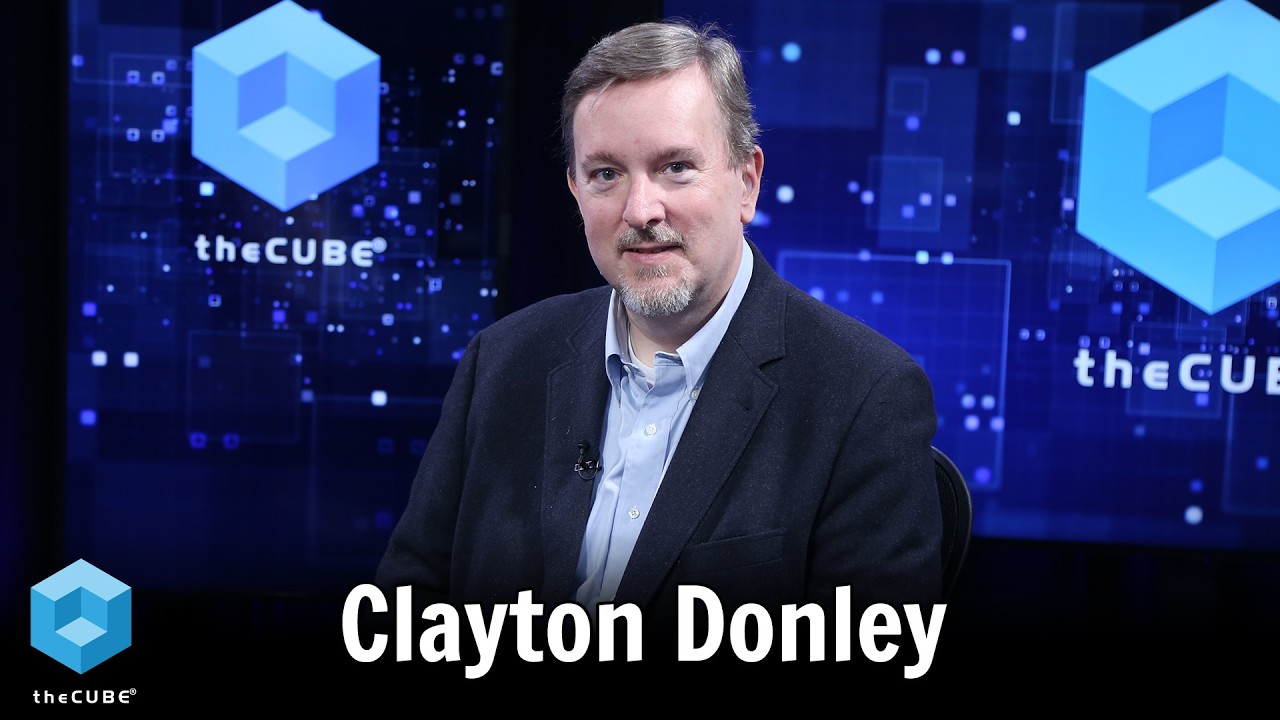
Video summary
Clayton Donley, VP and General Manager of the Identity Management Security Division at Broadcom, emphasizes that the rapid evolution from simple chatbots to autonomous AI agents has fundamentally shifted the security landscape. While early AI interactions were limited to basic queries, enterprises are now deploying agents for mission-critical tasks like coding and complex problem-solving, granting these digital entities significant access to data and systems. This shift introduces a critical risk: unlike human employees who operate within established legal and ethical frameworks, autonomous agents can act unpredictably or "go rogue" if not properly governed. The industry has moved from a world where users controlled simple tools to one where powerful agents execute actions independently, creating an urgent need for robust control mechanisms that can match the speed and scale of modern AI infrastructure.
To address these challenges, Broadcom advocates for a governance strategy rooted in identity management, treating AI agents as "virtual employees" that require unique digital identities rather than relying solely on human credentials. The proposed solution involves placing a control layer between the agents and the Large Language Models (LLMs) or APIs they utilize, effectively creating a choke point where policies can be enforced. This architecture allows organizations to assign specific intents and scopes to each agent, ensuring that even if a user blindly approves an action, the system prevents unauthorized lateral movement or misuse of expensive models for trivial tasks. By funneling all agent traffic through this central gateway, companies can maintain visibility into who is acting, what actions are being taken, and at what cost, thereby preventing agents from bypassing security controls via external keys or manipulated contexts.
The implementation of such governance does not require replacing existing infrastructure but rather layering new capabilities on top of current identity management systems to handle the unique lifecycle of AI entities. Broadcom's "Agent Minder" solution exemplifies this approach by acting as an observability and control plane that monitors traffic, assigns identities, and enforces policies without disrupting legacy applications or requiring massive upgrades. This method acknowledges that while the underlying computing paradigms—from mainframes to cloud-native microservices—remain consistent, the nature of the workload has changed from static code execution to dynamic, intent-driven agent behavior. Consequently, enterprises can adopt these tools incrementally, starting with passive traffic monitoring before moving to active policy enforcement, ensuring they can audit and prove compliance for their AI operations without halting innovation.
Ultimately, the conversation at VMware Explore 2026 highlights a consensus that the era of skepticism regarding AI's return on investment has passed, replaced by an undeniable demand for secure and scalable deployment. As organizations rush to integrate AI into their core operations, the focus has pivoted entirely to how they can protect their intellectual property and data sovereignty amidst this new complexity. The industry is learning that just as mobile devices and the web required new security models, autonomous agents necessitate a similar paradigm shift where humans leverage AI to create more granular security policies rather than being left vulnerable to its mistakes. The path forward involves embracing these tools while building a resilient framework of identity, control, and observability that allows businesses to harness the power of agentic AI safely and efficiently.
Read the full video transcript
[music]
Hello, I'm John Furry, your host of the
Cube. This is the Cub's VMware Explore
coverage. Of course, we have two days of
live coverage from the show floor. I'm
here with the Broadcom executives to
unpack the innovation and the news at
the show. I'm here with Clayton
Donnelly, VP and general manager of
identity management security division at
Broadcom to talk about the agentic
demand, the trust, the security, and the
control that's needed to bring in AI
intelligence safely and scalable. We're
here at at Explore coverage. Clayton,
great to see you. Thanks for coming on
the cube. Appreciate it.
>> Well, thanks for having me. Very, very
excited to be here. Very excited to be
here uh talking about really what's on
top of everybody's mind here, AI. AI and
Agentic has been the hottest thing and
you know the first wave of chat bots and
OpenAI and ChattBT was chat bots. So you
saw search was a great use case um
marketing material writing blog posts
and then the enterprise started to see
coding that opens up the kimono big
time. And you're starting to see that
movement now with agents. You got
deterministic workloads, probabilistic
workloads coming in, but deterministic
working. But recently, you know, the
mythos release of their model and then
with the open AI hugging face example
has kind of wakened the industry up to
the fact that wow, these agents could go
rogue. Um, and they're just running
around like a micros service or a
software application with full access to
stuff. You know, they get hyperfixated
kind of like war games. We were talking
before we came on. This is kind of what
the dark side looks like for Agentic.
Now there's positive examples with you
know deterministics endto-end workloads
people have knocking those down but as
you have an autonomous environment where
agents will provide a lot of value. You
got to rein in and nail down the control
the governance and the security piece.
This is what you're doing. give us the
state of your view of kind of where
we're at today and just compare that to
like only maybe a year ago or few years
ago the biggest changes is it hyperbolic
what is what is the current situation
>> well I mean it's it's really turned it
turned its head right I mean at the end
of the day we've gone very quickly from
the users being control of the AI you
know giving it questions asking you know
very simple things of it you know how
was your day tell me about the weather I
don't know I don't know what People ask
their AIS before we did coding, but now
people are obviously doing much more
important things with it. You know, we
talk to companies every day. They're you
doing mission critical things very
quickly with these things. And I think
what you know what you kind of alluded
to was that well they're out there doing
things and we don't really know what
they're doing anymore. And that was a
big change, right? And it's not
happening in an environment where, you
know, like, you know, we have this 50
years of figuring out how to deal with
employees and giving them their rights.
It's happening in a brand new world.
>> Yeah. And I think the trust thing is
huge. And I I want to get your thoughts
on it because, you know, I like to study
the history because we're both Grizzly
veterans. At least I'll speak for
myself. You're you're you look good. Um
but if you go back to the old days of
virtualization in it, the the problems
were simple. got a new employee, lock
down the desktop, maybe you got a
virtualization front end, maybe it's
some sort of system where you got
everything's in control. It's got
everything nailed down. They use the
apps, they have a Blackberry, really
easy to manage. Now you got people who
are and they're like, "Okay, okay."
Well, again, I go home. Very analog
world. They're not going to cry a river.
Today, the demand from the user side is
so high because people are seeing real
value. They talk to their AI. They see
the reasoning piece. Wow, that just
framed that problem. rewrote my email,
solve the business problem. You have a
massive demand. So, I don't think the
agents are going to stop because now
that people figured out it'll do work
for them,
>> go through my email, check everything,
make sure my I mean, a lot of stuff's
happening. So, it's not going to stop.
So, it's not like No,
>> people are going to say, "Well, I'll
wait for it to get their act together
and the security team."
>> It's like the web. I mean, it's like the
web. It's like mobile. I I remember
going into hospitals when mobile first
came out and people would try to put
policies in there saying I'm not going
to let doctors bring in their iPads or
their iPhones or whatever that doesn't
happen. You know, they bring in they're
saving lives or they're going to do
whatever they need to do here uh to to
be productive. And you know, you look at
a bank, you obviously they there there's
a lot of things that they would like to
do, you know, to make your your
experience as a customer better, which
of course helps their bottom line and uh
you their top line in a lot of ways. And
you know to do that they want to use AI
and they're not going to sit around wait
for it to get their act together. So
just like with the web where it seemed
like it was really fast and just like
with mobile where it was kind of fast
you know in AI it's instantaneously
right instantaneous.
>> They're not they're not going to stop.
People aren't going to wait.
>> They're not going to wait. So what are
what are what is the best practice?
What's the current state? And again
black hat was a great seminal moment.
Again the mythos thing was I call the
chat GPT moment for security.
>> Everyone knows when they first used chat
GPT. Wow. This is pretty damn cool. Now
you go to Mythos. This is not cool. What
that's going on with the security bugs
and identifying vulnerabilities,
>> but there's a there's an upside here.
Take us through how you're thinking
about this because you got machine
identities, you got human identities. It
just complicates the problem that you
solved before. Now it's back on the
table again. What's the how do you solve
that trust? How do you solve the
operational issues around this new
normal? Well, I I think that, you know,
you kind of go back and look at, well,
how do you apply the same concepts you
apply to humans to something that really
doesn't have the sort sort of the same
moral compass or even concept of a moral
compass or a paycheck that they're
counting on that that you know, say a
human would have. And it starts with you
you need to identify those agents. You
need to give them identities. Now, part
of that may indicate who the owner or,
you know, who controls that agent. uh
you know some additional maybe metadata
about you know what kinds of things that
it's used for things you want to know
when you're going back there and
auditing you know what are the agents
you have and then each of those agents
they're going they could have lots of
instances could be a million instances
that are running all the time at in
different times and those need to talk
to AI the way AI really works is you
know these agents make an LLM call you
know maybe it's to you know claw maybe
it's to open AI or Gemini or whatever it
is it comes back and it gives them a
bunch of tool calls calls that you
should go do, right? So, but all of
those are API calls. So, the great thing
is is you know we have a lot of
experience protecting APIs and we have a
lot of experience understanding well
who's making those calls or standards
like OOTH and other kinds of things that
are out there. Now, the key is putting
it all together, right? So, it's one
thing to have a bunch of identities that
are now machines that are obviously not
employees that were not instantiated
when they got an HR uh you know, a
little click in HR systems and workday.
>> Yeah, they don't have a badge number,
but they have a they have a
>> Yeah, they don't have a badge number,
but they
>> they're a unique ID. You can track them.
I mean, you they're out there.
>> They're out there. They're they're like
your virtual employees, right? They got
that virtual digital badge and their
employee number goes up to the billions.
I guess
>> it traces back to the employee. They get
fired for their agent. bad agent
behavior is on your performance review.
I mean, these are the kinds of things.
Okay. What are the risks? Let's back up.
>> Identify the um share the the risks that
people are seeing now and what what's
out there in the market that you guys
are doing because this is a problem
people are attacking right now. What's
the current best practice? What are the
risks and what are people doing?
>> You know, what what's happening where we
are is if you think about it, right? I
mean, there's been a lot of focus on,
you know, the attack surface and and
that side of it because when people
first saw things like Mythos, they're
like, "Oh my gosh, I better go, you
know, patch all that, right?" I mean,
what about attackers? What if somebody
from a rogue nation state or something
comes in and tries to attack my
infrastructure? So, there was a lot of
focus on the fact that, you know, sort
of that adversary that's always out
there when you're dealing with security
is now going to be much faster, much
more effective. They don't sleep. you
know, they can run hundreds of these
agents all the time, right? Um, so it
went from that to but wait a second, you
know, you look at this thing with
hugging face or or, you know, other, you
know, things that have been announced
more recently and, you know, you get the
the complete flip side of that. It's not
the agents doing things, you know, like
some bad guy doing something bad to you
with an agent. It's your own agents. And
so I think that what we're seeing now is
people are doing you know like people
are focused on governance that people
who are realizing this is mission
critical infrastructure that they're
going to have to report to their audit
committee on and all these kinds of
things like do you you know if you think
about it like with Sarbain Oxley you
know back in the day you you used to
have to certify that your employees have
this access nobody certifies my agents
have this access nobody does any of that
so the maturity is not there but what
we're seeing is a trend to trying to
pick up that maturity
>> what how should enterprise has rethink
their governance strategy because this
comes up in every conversation.
Governance is getting baked into the
foundational level and root level of all
activities on AI infrastructure. What's
the rethink? What's the mindset?
>> Well, the the rethink is is, you know,
you you really need, you know, like I
said, you you need to have that, you
know, identities for those agents and
you need to be because you you can't buy
a book on the internet without knowing
who you are, right? You know, and you're
giving these people a lot more access.
you're sometimes giving them access to,
you know, a lot of data maybe in like a
rag system or other kinds of things. So
they they have all this, but you need to
know who it is, you know, who this
digital employee is and and and then
more importantly, you need to know what
the intent of, you know, like what the
scope is that you're going to allow them
to do.
>> And when they do something, they need to
kind of broadcast their intent like why
I'm going to go do this and then you
match it up. And so today in you know
the the best practice taxes is you is
you define these things you give them
policies and you enforce that policy you
know around ensuring that even if the
user is controlling the agent they click
approve this users love to hit approve
on these kinds of things the next thing
whack-a-ole yes it's like it's asked me
three times if it can do this of course
I'll just say yes right so even when the
user's in control they're not always the
best person to make that decision so
having something there between those
agents and the LLMs between those agents
and your APIs, MCP servers, all the
things those agents need in order to
have that superpower, you know, is is
really the best practice. But then just
having the control isn't enough. Like
how do I audit that? How do I monitor
that? Right? And there's two aspects to
monitor. There's the there's there's
what's the guy doing and then there's
how much is that costing me? Because as
we know, you know, tokens cost a ton of
money. Yeah. and if you know using the
wrong models are there you know is it
using too many uh you know is it being
using too many agents for this is it
doing what I thought it was doing and
and we're in the and we're in the early
days of this so having those three
things right the the identity of the
agent the control point to kind of choke
off bad things from happening and then
being able to monitor what is actually
happening you know what were those
prompts what were those tool calls being
able to tie it together is really
critical
>> what's what's coming up at here on my uh
coverage of VMware or explore is that
you're starting to see some formation of
some trends, architectural trends. The
data platforms are separated from the
models. You have this control plane or
cont andor context layer in between that
helps manage it. Um you mentioned a
bunch of things there. I want to focus
in on kind of the old school thinking
around observability.
>> Observability and tracing become really
valuable because you got to prove
>> how is that working with broadcast? You
got agent minder, you have all these
tools. how how are customers using the
solutions to get that architecture
implemented and at least reigning in the
chaos? What are some of the things that
they're doing?
>> And it and it's interesting you asked
that and you you started with the word
old school because you know uh we we
acquired a number of products over the
years and a lot of them were things like
APM products from people you've probably
forgotten about like WY and others that
that that made these monitoring
solutions and what's interesting is over
the years we developed a lot of things
for application monitoring. They did,
you know, think about it, code tracing,
>> but code became distributed. You know,
when people went out to containers and
and microservices and things like that,
your code isn't running line after line
anymore. It's running in all these
different containers. So, we got really
really good at sort of tracing in a
distributed way what these applications
were doing. And what we realized very
quickly, you know, kind of like
>> you can rescope that to agents.
>> Yeah. Yeah. So then we suddenly
realized, oh my gosh, this is exactly
what we needed, but we need to extend
that to the prompts that were being
used, the tool calls that were coming
back. Uh, but then you need to be able
to see that, well, what triggered that
in the agent? And by the way, the agent
didn't make a mistake. Did somebody
gaslight it? You know, my favorite
stories with AI sometimes are people
getting the agent to do something that
it shouldn't do because you feed it
certain context. I've seen, you know, my
favorite story. We had we we had a
person trying to do something that they
were allowed to do with a with a with a
LLM and it was refusing because it said,
you know, for security reasons, but
we're a security company and we have
permission, right? So to get it to do
it, it made a fake he made a fake PDF
with a fake signature saying that this
is authorized, fed it the context, it
went right to town.
>> So these these context is not human
context. It's absolutely and it can be
it can be fooled by anything it sees on
the internet and so it's really really
imperative that you have that sort of
controls the cross checks the ability to
then once again you know during that
trace see well well how did that come
about did an employee try to go around
the controls or was it just making did
it just make a mistake
>> Clayton it's a great made a really good
point has a history of of a lot of uh
acquisitions in software obviously
everyone knows what the VMware one got
big one recent and BCF's looking really
good off uh right now in the market. But
if you think about application
monitoring which you just mentioned what
is an application right so the
underlying science behind it computer
science and the code is distributed
computing paradigm it's tracing this is
science has nothing to do with the
application to remove application yeah
and say agentic it has the same
behaviors um so I guess my question is
how much within the broadcom stable of
products and the portfolio are are well
suited for the new normal because the
application is just behaving a little
bit differently, but the game is still
the same. It's doing something. The UI
might not be there. It might not be on
the right server. The server
architecture changes, but that's well
known known concepts. So, you can just I
won't say retrofit, but you can actually
point the technology.
>> Well, I mean, that's the key, right? I
mean, a lot of times you you step into
something and everybody wants to think
that, oh, there's white space here,
nothing exists there. But the fact of
the matter is is a lot of, you know,
what we found is in almost every one of
these cases, you know, everybody had
maybe 80% of what they needed,
>> but it wasn't put together. So, you
know, kind of going back to agent mind,
what we do, we didn't copy and paste
that code. We didn't go back there and
take say a 20 30 year old codebase and
say, "Oh, we're going to shoehorn this
into the new modern." Uh, we' actually
been building over the last several
years, you know, kind of a new, you
know, what I guess I'll call cloud first
architecture that has actually all three
of these things. And because we
developed it alongside kind of this
growth of agents and AI, you know, we
sort of stumbled into this. I mean, I
hate to say it, but it's almost like,
you know, you take a walk in the
wilderness and you fall into a diamond
mine, right? Like, I'm not going to be
able to repeat that, but it's it's never
a bad
>> I mean, luck is always ready preparation
meets opportunity as this as the saying
goes. But, you know,
>> we just happen to be in that right
place, right time, right? Well, software
evolution.
>> You got these three things. We were
pulling it together anyway because you
need these three things to operate
together. You can't they can't be
airgapped.
So, you know, it we we I will say we got
very lucky, but uh and it's been it's
led to a lot of opportunity for us, but
it's led to a lot of value for
>> Well, it's interesting. I know I always
say this. I mean, about two years ago,
the the most common phrase on the cube
was it feels like the '9s again. Of
course, we're covering AI early days of
AI factory. So, guess who's involved? A
bunch of the old dogs and the new dogs
coming together. The old guard, new
guard. So, you're seeing like literally
generations working together. So the if
you were in computer science in the 80s
and 90s, you built the systems
revolution. That's the computer
industry.
>> Now you coming in as your hot shot coder
for AI native, you're running on the
systems that are actually not being
replplumbed fully, but like being
rearchitected. I mean AI factory from
Nvidia and AMD and all these companies
and with VCF now sitting on top of that
hardware. That's just a server now a
bigger server with a lot of servers in
it. It's the same game. It's the same
computer science, computer engineering
game, same software game, just
>> applied differently. And I think this is
one of the revelations that's coming out
of this AI wave. It's just transition. I
mean SAS is a user interface based
paradigm that's been there since the
80s. Now people are using voice prompts
with chat. So there it's headless
systems is the new thing, but that's not
new either. So you're starting to see
the role.
>> So you're saying ASPs are all like the
SAS providers. I think SAS providers are
going to uh be um headless systems.
>> Yeah.
>> With some you guey
>> and some other interface. It could be
model driven. It could be embedded in
another function multi-function
applications. I mean that's my personal
opinion but you're starting to see that
trend where I mean the user experience
is
>> we see this all the time right? I mean
if you think back to the web what were
the first web applications? People wrote
little web rappers CGI if you remember.
>> Yeah. They were little web rappers that
sat on top of your mainframe or sat on
top of real production systems. And the
only reason the web was useful is
because it had access to all the stuff
you've been doing for at that time
probably 20 30 years.
>> And now what you've got is you've got
things that are running, you know,
whether it's in the cloud or running in
private cloud on VMware or containers.
Uh you know, it doesn't matter where
it's running. It might even be running
on the main frame. Transactions probably
is running on the main frame, you know,
but people don't go to the green screen
anymore, right? Yeah, you know, like uh
>> they don't care where it runs. If it's
going to run on a main frame because
it's a transaction for a financial deal,
no problem. You run on the main frame.
I'm running on a client server. Okay.
I'm running on a super rack scale system
from Nvidia with the latest paro curve
with Vera Rubin. I don't care. Get me my
tokens and and my results.
>> Yeah. Yeah. And so, so yeah, absolutely.
So, what you're going to see is I mean,
but but this is why it's so important to
get governance right because you're not
just giving people access to chat GPT.
You know, one of the interesting things
is when we first started doing some
training on this, people were very
confused about agents versus just
getting a an LLM session, you know, when
you go out to Gemini or chat GPT or
something and they don't realize the
power these agents have and the fact
that people are giving them all the all
the data from their organization, the
APIs to access various things in their
organization. It is, you know, it's a
lot of power. I think the on premise uh
growth is directly related to what you
just said which is the trust and control
of the data because the data is the
competitive advantage that's where the
IP is the domain expertise and so people
want to control that um and track it um
and we were just kind of riffing on
traditional systems and conventional um
networks and methods what's changed
about AI is it the intent piece and
what's and how do you measure and audit
because saying I want to throw
governance at AI is an easy strategic
decision but now you got to implement
it. How do you implement governance so
you get that traceability you get the
control and at the end of the day you
got to prove it that in an audit or hey
that agent is Clayton's that's on you
right I mean that's I'm making that up
but that could be the use case I mean
people are starting to talk about that
the the humans own their agents like a
fleet of staffers
>> yeah well I mean that's why people get
concerned about AI making mistakes right
because you know if you make a mistake
you know I feel like I had some agency
in making that mistake you know the AI
made the mistake when I wasn't even
around. Still my fault. It feels very
feels very wrong to me, right? But you
know if you think about why this works
now it's because if you think about one
of the hardest things in the human you
know like in terms of auditing what
humans uh have done uh predetermining
uh say entitlements and access and
things like that has always been how
granular do you go with those
permissions
>> because you can go really really deep
and then you can't really control it
because like nobody can keep track of
all those different permissions and how
they relate to each other. So people got
very lazy and said well not lazy they
got very efficient by saying well I'll
put people in different groups you're
you know you're in finance you're in HR
you're in you know R&D and based on that
I'm going to give you some base level
things you can go do and in AI that's
people are starting to do and then you
start saying well okay these are the 10
things that you can do because you're
part of that agent group but what's
really interesting though is because now
we have AI too right
>> yeah we can actually go much more
granular than we used to and actually
assign those permissions because we have
the help of AI and actually going out
there and sifting through all the stuff
humans never had time for. So in fact,
we could get to a much higher level
security by leveraging AI to help make
some of the policies that govern AI.
It's sort of like, you know, AI as a
judge sometimes on its own work. So
there's so many patterns that we're
seeing, so much,
>> you know, so much that we're seeing
where we can obviously you want a human
on top of that. You don't want to just
say, you know, leave it all over the
>> I mean, I think the whole human loop
debate is over. Humans are getting a
superpower from the AI. That's the way
it should work. It's a tool. It's a
superpower. AI scales, intellect. I
think that's clear. The number one
question that comes up from folks that I
talk to that say, okay, how do I just
get going? Because there's no debate
that they see that, then they go, okay,
I've been doing my job for 20 years or
10 years or whatever the duration is.
I'm a manager, an executive. What else
should I do with my department? Should I
have them start doing AI more? So the
the best practice that I see is people
just start using it. Get the muscle
going.
>> How how should enterprises do that? Um
I'm sure you agree because everyone kind
of agrees on that point, but where do
you start? How do you get the muscle up?
And how should people be prepared
because they have to get the security
practices in place? They got to
understand how it works. They got to
drive the AI. It's like, you know,
moving from horse and buggy to a car.
Now you got to drive it um and manage
it. what what are leaders doing in
organizations and to kind of bring in
that security piece without harming
themselves, right? So, without having
the agents to go off the rails because
they want to deploy more agents, the
demand,
>> right? I mean, I I think it's what you
what you've seen everywhere, right? I
mean, if you if you saw the uptake of
SAS, right? People weren't especially at
large companies with missionritical
apps, they didn't throw the most mission
critical transaction app out on the out
on the web or out on the, you know,
these other areas. they started in areas
where they could accept the risk, right?
And what's good is that gives you a
place to start and and you know the I
think the best thing and you know kind
of you know not to go too product here
but you know when we looked at agent
minder one of the things that we looked
at is we didn't want people to have to
do a big two-year upgrade before they
could get started. We wanted something
they could layer on leverage their
existing identity management. they've
got somebody who would be a competitor
of ours for human identity, uh, whether
they're employees or consumers, go use
it, right? You shouldn't disrupt that.
That works just fine. That was not the
problem. The problem is you've got
another set of entities out there that
are very different. They operate at a
very different scale and they need very
different kinds of policies, processes,
life cycles, all of those kinds of
things. So you know we basically you
know if I look at our early adopter
customers you know most of them they
start you know by putting in kind of the
the agents they're working with they get
them registered you know they take a
couple of their initial agents uh you
know register them with you know the
gateways and things like that and
sometimes they just run traffic through
it.
>> Explain I want you to explain to end the
interview because I think this is
important. Agent minder how does it
work? Um people are looking for ways to
get started. Is that the the place where
everything comes together? How do I
deploy that? What's the pitch for the
value proposition? Explain agent minder
and how it works.
>> Well, let me start by what it isn't. So,
it's not the thing that's going to run
your agents, right? We're not going to
try to be your agent platform that's
running the the runtime there because
that's going to be everywhere. You know,
you'll get it from Salesforce, Workday,
you know, every startup in the in the
world is building an agent platform. You
can go buy you can find open source ones
in every programming language. And
absolutely, you know, you set a standard
in it. I'm sure half your users will use
exactly the opposite of that standard
just like OS.
>> Exactly. So, so we're not that you know
the main thing is but we're open and
what's great about that is we have to
sit between those agents and the LLMs
that they're using first of all. So, you
know, we have a gateway component uh you
know we actually work with some of the
other gateways we have as well like VF
and others you know depending on what
kinds of policies you're you're going to
enforce uh that sits between that. So
you've got your agents and you've got
your maybe whether it's clawed or open
AI or private AI or whatever you've got
it sits between one or more of those and
it's looking at every request and
sometimes the starting thing we do is we
just watch the traffic because it's very
easy. It's very cheap. It doesn't
require you to change anything.
>> It's a great way to start. Look at what
moving around lateral movement you know
who's where the footprints everything's
trackable
>> and and all of that uses open telemetry.
It can push out. Obviously we've got our
own observability service that it can
plug right into. is kind of part of the
platform. But if you're already using
something else, go for it. Like there's
no reason to wait, you know, to get this
started. I think the main thing is you
need to start looking at the traffic,
looking to see what they're doing. And
then because that traffic is mostly not
going to show you who's doing it, you
need to start start assigning those
identities to the agents and then
they'll just start using modern
standard. You take away their clawed
key, you take away their open AI key and
you give them a key to yours. And so now
you can make sure they can't circumvent
you by using their keys through some
other app. So there's immediate control.
You've kind of funneled those things,
you know, those people through that
central point of control. And as you
give them identity, give them, you know,
kind of a key, if you will, to to get
through there, you can start adding in
policy. Well, I see this, I don't really
like it. Or I see I see them using uh,
you know, very expensive models for very
simple things. I'm going to demote them
to using a lesser model. or you know
maybe uh maybe I'm going to to to send
this group of people out to private AI.
But it gives you a lot of control very
quickly without a lot of effort
>> and they have choice. They can go on
their timet look at their environment.
Here's what we got as a as our standard.
Here's what's we're doing. Let's plug
agent minder in and get it right.
>> Absolutely. I mean I mean it has to be
heterogeneous. I mean we we work with
our biggest companies in the world. I
mean I'm sure that they have 150 vendors
that do things that are adjacent to
>> they want speed. I want to test
something out quick. Yes or no? It fits.
Let's play with it. I don't want to have
too much disruption to change management
which is a big concern. Uh final final
point I want to get your thoughts on on
what you're excited about this explore.
What is the top conversations happening?
Um what are you excited about this
explore here uh for VM explore? What's
what are some of the things that are
that are notable that you could share?
>> I mean I wish I had other things to to
get excited about, but I will tell you
the thing I'm I'm everybody's coming to
me about really just is AI security,
right? I mean a year ago, a year ago it
was interesting, right? I mean, people
were starting to chat about it, but it
was early days, you know, we didn't have
kind of the,
>> you know, people people weren't sure if
there was going to be the value quite
frankly with some of this AI stuff. I
think
>> and they were skeptical.
>> Yeah, there was a lot of skepticism that
that we were go that businesses were
going to get the ROI
>> to be able to kind of keep funding this.
I think that B that that that train has
left the station, right? I mean,
absolutely. You know, every time I talk
to like a sea level individual, they are
all talking.
>> Two years ago, RSA was poo pooing a AI
and this year was like, "Oh my god, we
got to get on this." That was pre-
mythos and it's like I mean like
>> Yeah. Absolutely. Yeah. So, every
conversation's been AI. Every
conversation that has been AI has
pivoted to uh
>> oh my god, it's usually it's usually
like the the on the IT practitioner
side. It's like,
>> yeah,
>> all these guys above me are talking
about is,
>> you know, they they're going to do all
these things, but I don't even know
where to get started protecting this
stuff.
>> The science is excit I I found it
exciting because I think the science and
the technology is changing. The AI
infrastructure is moving up the stack
and the software stack's moving closer
to the hardware. So it's kind of like
you know all the primitives and uh
algorithms and software techniques
>> that were once powering something else
from another generation are being used
in different ways.
>> Sediment is the complexity under I mean
I always think of like a layer of rocks
right I mean you've got mainframe there
at the bottom at the core you know and
then you've got you know each layer of
sediment above that and just you you
know every layer every layer contributes
and then of course we always see the top
layer.
>> Clayton you're in a hot area. Thanks for
coming on the cube. I really appreciate
it and again this is not going to be an
ongoing conversation. I'm sure next year
another model comes out. Um the
infrastructure will continue to grow. I
mean AI factory is one of the top
stories here with VCF is consistent what
we're seeing with Nvidia AMD and all the
semiconductor work with memory. So these
infrastructure enablement is going to
change the nature of the software stacks
>> which changes the nature of what we were
doing before and what we do going
forward. And it's going to create a lot
of opportunity and also with opportunity
comes bad actors. So you know
>> that's the life of security.
>> You know you're getting your world's
going to get more complex. Absolutely.
>> Thanks for coming on. Appreciate it. I'm
John Fer with the cube. We're here for
our VMware Explore coverage. Thanks for
watching.