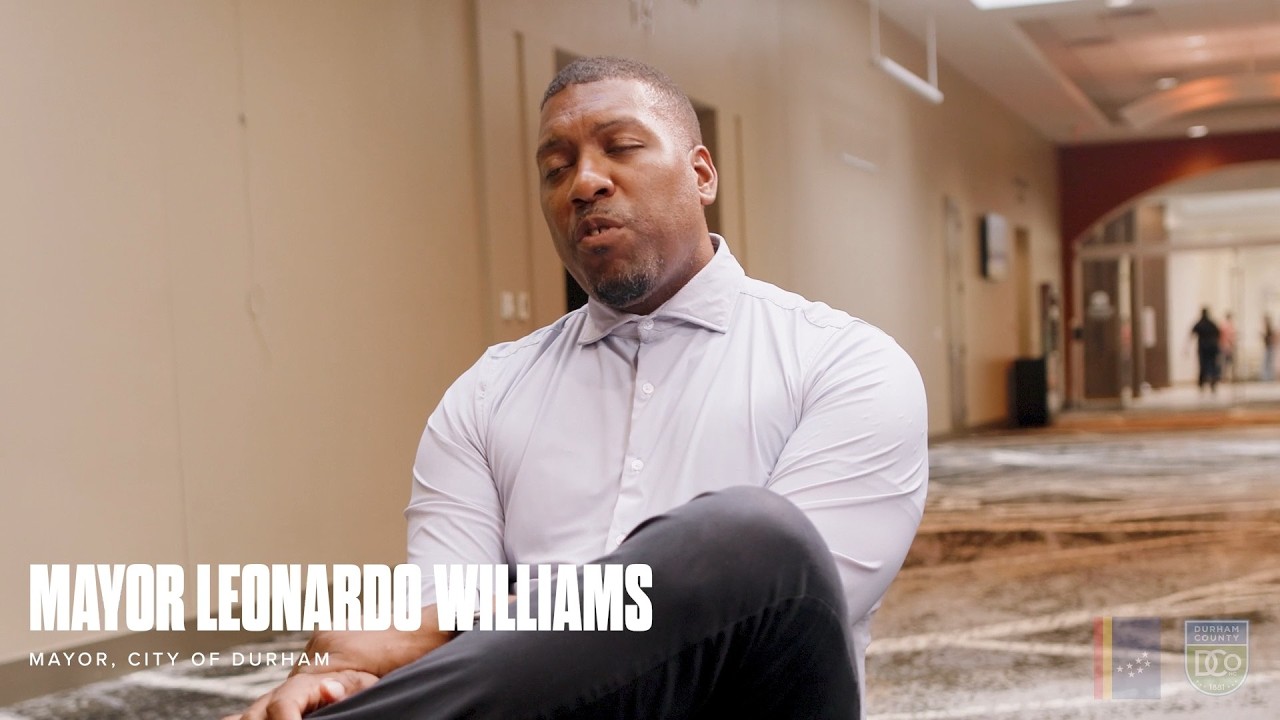
Video summary
The 2026 City-County Violence Reduction Summit in Durham emphasizes collaboration as the cornerstone for addressing gun violence, aiming to bridge national best practices with local lived experiences to create a unique regional strategy. The summit brings together diverse stakeholders including city and county officials, department heads, nonprofit organizations, law enforcement agencies, court system representatives, and community residents to discuss how they can collectively reduce violence. A central theme is that no single entity, whether the government alone or individual nonprofits, possesses the capacity to solve this crisis independently; instead, success requires integrating different expertise from various parts of the community to reach shared goals like saving lives.
Beyond mere assessment of existing data, a primary objective of the gathering was to develop an operational strategy that aligns national frameworks with local realities while ensuring accountability and transparency. The speakers highlight that the most challenging aspect is not formulating the plan itself but rather figuring out how to make collaboration function effectively in practice. This involves building trust among groups who may have historically struggled to work together, transforming a simple concept of cooperation into actionable steps where every partner plays a critical role without relying on any one group to carry the entire burden alone.
The summit has achieved an initial victory by securing attendance from individuals and organizations that typically do not collaborate, fostering a unified environment focused on saving lives despite potential disagreements on specific methods. Participants express optimism driven by the commitment shown at the event and the establishment of clear timeframes with targeted deadlines rather than vague future promises. This structured approach ensures that progress is measurable and urgent, setting expectations for when work must begin to deliver tangible results.
Ultimately, there is a strong belief that adhering to these strict timelines will lead to visible changes in the community and satisfy public hopes for safety. The consensus among attendees is that while full agreement on every detail may not always be possible, maintaining focus on the common goal of reducing gun violence represents a significant win for both Durham City and County governments. By combining high-level strategic planning with grassroots involvement and enforced accountability measures, the summit aims to turn collaborative ideals into concrete actions that will eventually lower crime rates and improve community well-being across Durham.
Read the full video transcript
Collaboration is definitely pivotal.
There's nothing wrong with learning from
one another.
And this summit
is to create, not only assessing and
evaluating the data that we received,
but now create a strategy
that national framework versus the local
practices and frameworks. Create our own
strategy to respond to our own issues.
>> I like [music] the idea of having
national program and national best
practices
combined with lived experience here in
Durham to make it unique.
>> We are
>> [music]
>> bringing together our local county and
city officials, some of the department
heads, we have [music] nonprofits, we
have law enforcement, some of our court
system, and we have community residents,
community voices [music] here bringing
to the table to discuss gun violence and
how we can reduce gun violence in
[music] Durham.
>> It's going to take different partners
positioned different parts of our
community that come with different
expertise [music]
to come together and work together. If
we're going to reach the North Star that
we play at, or if we're going to reach
these [music] goals, the only way no one
of those groups could do it alone. The
government can't do it alone, even city
and county. No city agency [music] could
do it alone. No community nonprofit on
its own could do it. It really does take
these [music] groups figuring out to do
the I mean, the hardest work of this is
honestly less the strategy and more not
just throwing out the word
collaboration, [music]
but really figuring out how we're going
to operationalize and really make that
work with the kind of accountability,
transparency, and trust
that's going to [music] make this thing
work.
>> We got people to come to the table.
People that normally would not work
together. We have them at this table.
And so, being able to do that was a win
for me. And so, I feel like out of this,
we will [music] have some wins. We may
not always agree, but if we can come
together and with this common goal in
mind, which is saving lives, I think
that's a win for the city and the
county.
>> I am optimistic because of how [music]
people are showing up here at the
summit. And I'm also excited and
optimistic because we have put time
[music] frames on it. We didn't say
we're going to do this at some point or
we'll get to it in the next few years.
We have targeted deadlines to start
getting this work done. And so I'm
[music] very optimistic that we will
meet those deadlines and the community
will be happy and we will see a change.