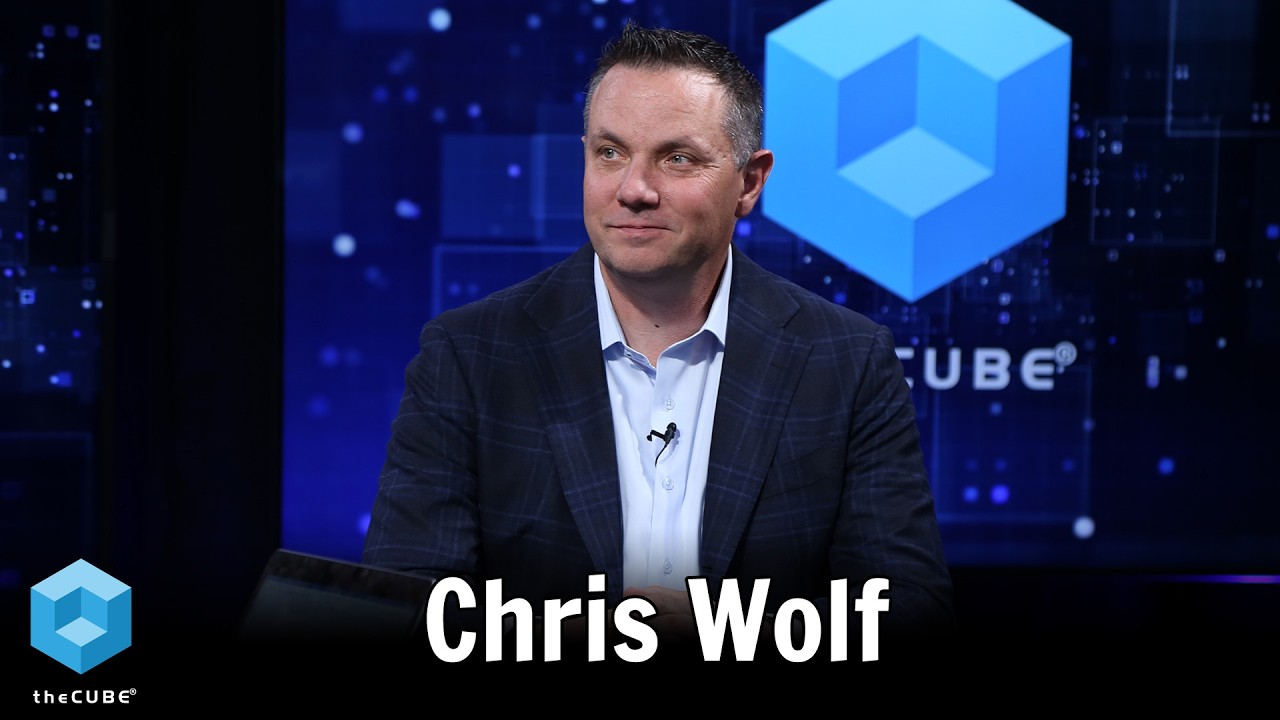
Video summary
Chris Wolf, Global Head of AI and Advanced Services at VMware Cloud Foundation, discusses the critical evolution of enterprise AI as organizations transition from private cloud to private AI cloud. He highlights that while frontier models offer powerful capabilities, enterprises are increasingly concerned about data leakage, sovereignty, and economic efficiency. Consequently, the industry is moving toward a pragmatic approach where companies deploy specialized local models for specific tasks while using cloud-based models only when necessary. This shift creates complex operational challenges regarding security, resource management, and the need to maintain control over both on-premises and cloud resources without falling victim to vendor lock-in or inefficient hardware utilization.
To address these complexities, Broadcom is introducing the VCF AI Factory, a comprehensive solution designed to simplify the deployment and management of AI infrastructure from bare metal to software stack. This innovation allows organizations to rapidly provision capacity, manage model runtimes, and handle essential operations like patching and updates with minimal friction. The solution leverages partnerships with major hardware OEMs such as Dell, Cisco, and Lenovo to provide a unified, automated appliance that integrates compute, networking, storage, and memory management. By automating the configuration and lifecycle management of these environments, Broadcom helps customers avoid the common pitfalls of buyer remorse associated with fragmented AI solutions, ensuring that organizations can scale their AI initiatives efficiently while maintaining full visibility and control.
Sovereignty and security are central to this strategy, particularly as governments and enterprises seek to keep sensitive data and AI processing within specific geographic boundaries. Broadcom's platform enables customers to localize their data planes and control planes, ensuring that no external entity can disrupt their private AI operations. This capability is crucial for meeting regulatory requirements in regions like Canada, Europe, and Australia, where keeping "AI dollars" and data local is a priority. Furthermore, the ecosystem supports a wide variety of model providers, including Google's Gemma models and others from Alibaba and Anthropic, allowing businesses to build their own "company brain" using open weights or proprietary models while maintaining an air-gapped control plane for maximum security.
Looking ahead, Chris Wolf advises customers to architect their AI strategies with the expectation of rapid change rather than optimizing for current trends alone. As the threat landscape evolves and new models emerge, organizations must prioritize flexible, modular software solutions that can adapt quickly without requiring costly hardware overhauls. The focus is shifting from viewing AI as merely an IT project to recognizing it as a core business initiative that requires robust governance, end-to-end tracing, and the ability to balance workloads across hybrid environments. By placing advanced software at the forefront of their architecture, enterprises can navigate the fast-paced AI landscape, optimize resource usage amidst rising energy and hardware costs, and fully leverage the potential of agentic AI while maintaining strict security and sovereignty standards.
Read the full video transcript
[music]
Hello, I'm John Furry, your host of the
Cube here with VMware Explore coverage.
We have two days of Cube live coverage
from the show floor. I'm here with the
Broadcom executives to unpack the
innovation and news at the show. Here
now is Chris Wolf, cube alumni, global
head of AI and advanced services at
VMware Cloud Foundation division to talk
about the evolution of AI in the
enterprise as we market continues to
move from private cloud to private AI to
private AI cloud and the impact on
operations teams as AI transitions into
the enterprise. Intelligence is going
there and we're going to talk about
Broadcom's unique position to help make
that transition complete. Chris, great
to see you. Thanks for coming in.
>> Yeah, always a pleasure, John. You know,
we talked I mean years ago when when uh
private AI was coming onto the scene,
you were kind of calling it AI is coming
into the enterprise. Cloud AI, private
AI was just started to get going. Now,
three three plus years later,
>> yeah,
>> it's not only happened, it's happening
inside the enterprise as everyone
realizes that I have to inject
intelligence into the enterprise. So,
guess what? Cloud native really brought
in the AI era and private cloud is what
everyone's kind of doing if you look at
the vertical integrations the domain
expertise give us a state of the union
on enterprise AI where is it today from
VMware perspective and how how's
Broadcom look at it
>> yeah I think it's exciting I mean as far
as we've come we're still in the early
days if you really think about it so you
know you've seen this experimentation
you've seen now these use cases emerge
with some of the frontier models in the
clouds right so that that's one, but
then the the counterbalance to that is
like, hey, wait a minute. I'm concerned
about data leakage. I'm concerned about,
you know, somebody else leveraging an AI
model's expertise to disrupt my
business. So, you have this pressure
about bringing models to your data,
making sure you have control of your
data. That's one. You have sovereignty
considerations. You have tokconomics
considerations as well. So, this doesn't
mean don't use frontier models. It means
be practical, right? So use frontier
models where it makes sense, where I
need deep reasoning, use specialized
models, local SLMs where where they make
sense as well. So you really seeing this
breath of coverage happening in the
industry and now it operations is caught
in the middle of all of this.
>> You know, we uh been following the cloud
obviously go back to go say 2013 AWS
rises up, they get all the startups,
then they start crossing over the
enterprise. Security was the one of the
main reasons they saw the enterprise
adoption. Then I never thought you'd see
a another hyperscaler. But with the rise
of on premises and now hybrid, you're
starting to see cloud scale hit with new
entrance come in. We see corewave out
there, these neoclouds and the
enterprises are now moving that way. So
private cloud, okay, is what people are
doing as I mentioned, but AI is
involved. What's different between kind
of the private cloud of old if you want
to say cloud native only and then as AI
comes in how does that change what
private cloud is and what is private AI
cloud so because that convergence is
happening what is it how do you describe
it
>> yeah it's it's a good point the
convergence is happening so you you have
a mix of workloads right so you do have
in the modern app space you do have
containerbased workloads that are
CPUbound that are also driving AI
forward you start to look at the the
rise of AI agents and these these
agentic loops happening right uh and
then also uh ephemeral workloads like
we've seen for a long time now in the
container space so that's on one side of
it and it creates a new set of
challenges right like um how do I have a
pool of sandbox ready infrastructure
available so that I can uh bring up
these AI agents but do it securely and
prevent any type of escapes right or
privilege escalations and things of that
nature and then you have the GPU side as
well where I'm bringing in a a range of
frontier models you have uh gateways
that are emerging where I need to start
to make decisions between do I uh route
traffic a particular prompt to a
cloud-based model can I use onrem
there's there's a new set of governance
challenge that's coming around it but at
the end of the day when you have a
modular IAS layer that can scale that
can make the most efficient use of your
resources right you're setting yourself
up for success uh hardware costs are
continuing to rise you have energy costs
that are concerns so What's exciting for
us is this is creating new uh workloads
and new use cases for virtualization
because I need to pull and consolidate
my capacity and we have the best
technology to do it.
>> You mentioned uh the prices but also the
nature of the infrastructure AI
infrastructure is changing. If you look
at um how AI has disrupted the stack
we're hearing even things like you know
I got GPUs here I'm using more compute
for prefill decode and prefill starting
to be unbundled. So that's happening
because they want to be efficient use of
the resource. Y
>> um you're hearing words like control
plane, resource management. I mean a lot
of the cloudnative things like
Kubernetes and containers, these things
are in the infrastructure, but the
nature of the infrastructure has changed
and people are now get visibility onto
this and so they want full control of
the resources up and down the stack.
That's going to require software. Talk
about that dynamic because that makes to
me private cloud the use case of the
hybrid environment. So you got hybrid
cloud but the private is I need
security. I need to know the resources.
I got to make efficient use of the
compute XPUs and GPUs. So people are
starting to line up behind this. What's
your view on this as AI is a big part of
it?
>> Yeah and and this it's a it's a great
astute point John because
if we go back you know 2030 years the
complaint around IT and IT operations
was well hey wait a minute security is
the afterthought right? And that doesn't
happen anymore. Security is really
ingrained into our processes and it's
really at the forefront. But what we see
time and time again from the
organizations we work with is what
they're being told is either a, you
know, go to cloud and then they run into
budget and economic issues or control
issues with that or b, hey, it's a
hardware problem. Buy your hardware
first, figure out the software later.
No, that's a horrible idea because you
have to make sure that your software
choices are compatible, right, with the
hardware you bought. So you have to
bring software to the forefront.
software is what's giving you the
ability to have autonomy in terms of the
accelerators you use to have the
flexibility to ensure that I can use uh
cloud models when I need to use local
models when I need to do all of this in
aggregate and then also give you the
ability to schedule and balance your
workloads right across your private
cloud so you need a secure modular by
design software solution to do all this
and I just want to make one other point
it's not just about grab all of your
software pieces and parts
We we can't operate that way anymore
because what uh new models like Mythos
have shown us
>> is that the threat landscape is
continually evolving. You need to have
vendors that have the capability to be
able to keep up with this pace of change
to be able to help you to patch rapidly,
stay on top of these things. So my view
is you're going to have modular designs,
right, that give you this high degree of
flexibility, but then you still have
these open interfaces above it. So from
a customer perspective, they're not
concerned about lock in. We can still
engage with the ecosystem and things of
that nature.
>> You mentioned virtualization earlier
about, you know, how that's going to be
a potential benefit. What is Broadcom's
um innovation around helping around
memory for example, memory shortages are
clear. Um I think last year we talked
about taring that was a big thing and I
think we were coming, hey, that's a
pretty big deal. That seems like it's an
opportunity. So as you have this kind of
virtualization like dynamic in the
market, innovation is going to come from
managing the constraint, supply
scarcity, memory scarcity, but how
memory is configured. How do you guys
look at this? Because this is kind of in
your wheelhouse because AI needs to have
these resources up and running, but from
an IT shop, I want to make sure I'm
running it because I got to stand up
agent sandboxes. I got to let agents get
going, but I don't want to see things
like the open AAI hugging face problem
that happened that was detailed in black
hat. So, you got a security issue around
agents.
>> Again, it's kind of like microservices
meets AI because you got to see
everything. You need telemetry.
>> You you you need Yeah, there's a lot to
a lot to unpack here. So, if you go back
like and this is going to date us a
little bit. So think about 15 years ago
we were talking about virtual desktops
and boottorms like Monday morning people
come in right financial trading firm and
all of a sudden you got 600 concurrent
loginins trying to grab virtual
desktops. So then it it was a new
approach to things like prefill right
where we're saying hey I need to have a
warm pool of desktops that's ready so I
can just turn them on at a moment's
notice. Now with AI agents it's a
similar type of problem. So these IT
infrastructure teams, they know they
need to keep a warm capacity of VMs that
can start to isolate agents, prevent
escapes. Like that's part of the reality
there. Then you have to start thinking
about well, how do I manage memory? How
do I manage the KV cache across my
different GPU memory uh seg uh you know
availability and then how do I start to
segment that out between different
classes of storage. So there's a lot to
to manage in this and this is where you
need to look at solutions that have the
capability to really simplify all of
this and then work with folks like us
that have the expertise to really help
you navigate this space.
>> You know one observation I would say
from this year at explore is the um
activation and engagement of the
ecosystem. give us an update on the AI
ecosystem for Broadcom and VMware
because you're starting I guess I guess
said people starting to see visibility
into what the tech is going to be some
of the architecture and unit economics
start to re rear their head because
revenues now involved this is not just
IT projects this is business model money
is on the table this is a change a
little bit so what's going on in the
ecosystem
>> um like like you saw my reaction I'm
really excited about this uh we'll we'll
start from the bottom and kind of move
our way up. So you start to look uh at
the base layer. You know, the the
struggle that organizations often have
is how do I start to piece all the all
of the hardware together and then be
able to bring time to value really
quickly, right, to these different AI
initiatives that I have. So starting
with AI factory, we're able to give you
from bare metal top to bottom provision
across all of these different uh
hardware OEMs so that I can uh support
uh not just from day zero and getting
stood up but ongoing operations in terms
of patching and management. So that's
big and we're working with lots of folks
whether it's Dell or Cisco or uh Lenovo
Super Micro to really bring this to
market. As you start to go further up
the stack, there's a lot more
innovations we're doing here as well in
the ecosystem. So uh around model
providers like one of the the things I'm
really proud of is we talk about how we
have more than 150 different models just
ready to go on VCF. When you extend that
even further into the cloud there's
another 40 model providers that we
support as cloud-based resources. And
now from end to end I can support this
from IT operations perspective uh
through VCF through our AI gateway. And
this is everything from uh Alibaba to
Google to open AI to Anthropic uh you
name it. We have this great amount of
coverage now for whether it's cloud
whether it's on prem and a huge
ecosystem around everything we're doing.
>> You know I was um I noticed looking at
some of OpenAI's numbers 50% is
enterprise revenues that's up. Um
they're obviously growing anthropic as
is as well as those models come in.
There's a big discussion around uh
enterprise unlock of the data that's
specific to the enterprise again
securely data but like most of the
public general intelligence from the
frontier models is is the internet they
got a lot of general intelligence but
there's a there's a move towards
specialized intelligence where I want to
have my data specialize on workloads I
might not need the big models I might
want to use the open weights I might
want to use open source there it's a
good use case we're seeing great reviews
there but as people start to realize I
have domain expertise
I need to build my company brain for my
company as a competitive advantage. This
is where the private cloud works and
we're seeing this right in real time
play out that I want to protect my data.
I don't need I want an on-prem. I I'll
buy an AI factory but this is now a
focus. How does that change u some of
the things that you're looking at and
and your relationships like with Google
for instance and other other big
partners because they're moving super
fast. they want that long tail or mid
torso of the of the market.
>> Yeah, it's it's it's been interesting. I
think first of all, there's this uh
reconciliation of uh expertise in the
space.
>> So when you look at some of the frontier
model providers, if they want to get
access to on premises and edge
environments, there's no better partner
than Broadcom for for all of this. So
they're coming to us because it provides
rapid access. they they can't work on
building their own hardened appliances
and take years to develop something and
then try to bring it into enterprise IT,
right, when we're already here. So
that's been a I think a key space for us
where we have the ecosystem now coming
to us like some of the names that I've
mentioned because they want access to
the customer base and it's an
opportunity for us to really work
closely together to solve these common
problems
>> and you have a relation with Google and
share what's happening with Google
specifically. Yeah. So, Google's one of
the we have a uh session this week on
the different model providers we're
working with. I'm really excited to
moderate that and Google's one of the
participants. So, we've been doing a lot
with Google initially around some of
their Gemma models because what they're
seeing is even for these sovereign AI
use cases. It's not just about a local
model, but it's about having an
airgapped control plane. It's about the
customer being in complete control of
that environment top to bottom. And
Google's done a phenomenal job in terms
of to your point, you know, not just
releasing models, but really working to
customize these to provide this the
right solution for the customer. And
when you look at these edge
environments, most of these models I can
run on a single node today.
>> So that's exciting. Even some of these
more complex mixture of experts models,
I can get to a single node. It's not
every use case, but for a lot of them
that the businesses need, we have that.
So you're looking at model support and
growing that part of the relationship
with Google. And then you're looking at
the other side of this which is I we
talked a little bit about agent
sandboxes. Google's done a nice job with
agent executor and starting to help you
with these hybrid architectures as well.
So you have some local models, you have
agent exeutor and then through our
gateway we can bring all of this
together. So you can have local agents,
local models as well as Gemini models in
the cloud as well. All working as a
unified solution. And we're not just
testing this in terms of what we bring
to customers, but we're also embedding
these solutions into VCF itself. I want
to get into the news here. Um, you guys,
uh, just put out a release. I want to
get your reaction because this is super
cool. Um, Broadcom introduces VMware
private AI cloud. Okay. Essentially,
this is an AI factory announcement. So,
you guys have an AI factory. So, talk
about the AI factory uh, solution from
Broadcom because this is what people
want are building now and standing up
and operating and investing in right now
is AI factories. They want more tokens.
time token to revenue is starting to see
a metric. You're starting to see
outcomes be directly related to these
factories. It's a new infrastructure
node in a hybrid environment. Kind of
sits perfectly into the private AI and
private AI cloud focus. Talk about the
Broadcom AI factory. Yeah, I think this
is a coming together of the ecosystem
because
I I certainly give credit to our server
OEM partners for the work that they've
done in shipping their AI factories
where there's been the opportunity for
us to engage with them has really been
around completing the vision of AI
factory through software which we're the
best at right given our customers a
common lens where I can just hit a
button and I can go soup the nuts from
bare metal to uh standing up uh all of
my software components
So that in a matter of minutes I'm going
from again I've laid everything down and
now I'm serving models right I can stand
up this capacity uh from a day two
perspective I can patch and update all
of those components end to end and be
able to maintain all of that and this is
really complex you're talking about uh
you know VMs container environments
you're talking about model runtimes
you're talking about the AI software
stack you're talking about frameworks
you're talking about GPU operators
there's a whole lot that goes into this
and when you start to uh even step back,
I'm starting to have to look at how do I
distribute models across my capacity,
right? How do I uh deliver more
efficient capacity for these models? How
do I decide uh you know what model to
place where? How do I intelligently pack
models across a pool of GPU resources?
So, I'm using all of the available
memory. These are really hard problems
to solve. And when done wrong, you wind
up needing a lot more servers than you
really need to to solve the problem. uh
that drives up costs and it's not just
people focus on the server and the
energy costs but it's there's
incremental software licensing for all
your software components right that's
additional cores you're paying for that
maybe you didn't need
>> so this is what we're able to do end to
end with partners such as Cisco and Dell
uh giving you these AI ready nodes right
from the OEMs we could then stand up our
software stack get going and then you
can start to layer these other pieces on
top
>> so the VCF AI factory is an interesting
approach and I want to find out what's
different because if I go back and look
at VCF from last year and the year
before we were talking about as it was
coming together and being you know
mobilized around as one private cloud
opportunity adding AI into it is going
to have a lot of new things what's new
about the VCF AI factory specifically is
it the agent piece is it the software
stack is it is it the is it the
configuration because people want the
software stack in these AI factors not
just buy a Rex scale set of hardware I
mean I got to run something on. It's not
like you're loading Linux on a server.
This is like you have to purpose-built
rack scale
>> um intelligence.
>> This is end to end everything from
compute, networking, storage, memory uh
to your uh your AI software stack to our
model runtime giving you all of that as
an integrated automated appliance is
just tremendous value for our customers.
And you're saying what's different about
it? Well, the way we've been able to
build this thing is you can go through
and set all of your configuration
parameters, get your first factory set
up. Once you're done with that, we're
going to output a YAML file. So now from
that YAML file, you can make whatever
edits you need to and then boom, boom,
boom, boom, boom, you can spin up
additional uh appliances, additional
clusters, right, as your needs require.
And this is fully automated and
supported end to end by us. So you have
one source for your from your AI
infrastructure software all the way up
the stack for when you run into any kind
of issues. We're here for you and it's
you know obviously our our customer
support and service has been
worldrenowned uh from our our customers.
We continue to hear great feedback.
>> What are they excited about? What's the
big excitement from the customers?
Because we know people want to run fast
with the factories. They want to stand
them up. The edge is coming to around
the corner. What is the customer
reaction to this at VCF AI factory? the
the the customers are really excited
about this because what we've seen a lot
over the past like probably since you
and I last talked I don't know how
long's it been John a year or whatever
>> about a year ago.
>> Okay. So when we last talked a year ago
uh one of the things I wasn't talking
about enough was people were running
into buyer remorse. They bought what
they thought was this full turnkey
solution and as it turns out it wasn't
because they have to figure out how do I
do agent tracing? How do I do
observability? How am I doing high
availability? How am I managing and
optimizing storage? Can I uh tar my
memory? Uh how am I doing configuration
and change management? How am I doing
disaster recovery? For production
inference, you have a huge set of
problems that you have to navigate. So
with us, with our AI factory solution,
you get all of this out of the box. You
don't have to be like, let me stand up
the factory and then peacemeal the
things that are missing, right? And then
have to navigate change management
across that. It's the most common
question I've asked these data science
teams and chief AI officers when they've
when they've deployed these other
factory solutions. I first thing I ask
them is how's change management working
out for you? And then they'll go on a
rant about how difficult it is.
>> It's a major hassle. Change management
is the number one thing with AI right
now we're seeing.
>> So life cycle management for us getting
all of that out of the box and making it
simple for customers is a huge huge
deal.
>> Yeah, I love I mean I think this is what
the demand is. Okay, it's got to stand
up and I got to run. I got the software
stack. Um, another thing I want to get
to is sovereignty because sovereign
cloud we've heard and discussed many
times. Now you got sovereign AI.
Sovereignty is many issues. It's an on
premises. It's also a geography issue.
Uh, it's also a money thing too because
if I'm going to run it in a country
that's I want to keep those AI dollars
inside inside my factory uh environment
or the country. So what is the latest uh
update on the innovation around
sovereignty? How are you guys thinking
about it? What are some of the
conversations? Yeah, it's been uh a huge
area for us. And now I do remember the
last time we talked because uh we were
talking about one of our customers which
was shared services Canada and and how
the Canadian government is running their
canhat app on VCF today. Uh we see this
in the US, we see this in Europe, we see
this in Australia and other parts of a
the APJ region where the benefit that
they see from us is the fact that I can
localize models. I can localize my data
plane. I can localize my control plane.
You have full ownership of everything
end to end. identity, your encryption
keys. There's no way that an external
entity can shut off your private AI
cloud with our solution. We're one of
the only vendors in the world that can
make that claim. And that's been huge
for us. It's been huge for business. So
when organizations are looking at like,
well, how do I handle these sovereign
issues? How do I make sure that some uh
foreign government isn't disrupting AI?
>> We're the partner for that. So it's nice
guardrails, too. They they get the
quality, get the security, and also the
control plane, resource management, all
kind of turnkey. All right. Uh to close
out, how should customers think about
their AI strategy in the next 12 to 18
months as this is moving super fast,
we're going to see new changes? Again,
mentioned some of the the stats we're
seeing like with OpenAI and Enthropic,
50% market share in the enterprise for
OpenAI. Enthropic is doing really well.
You're starting to see AI and
integrating into these environments.
What's on the mind of the customer now
for the next 12 to 18 months? How should
they be thinking about it?
>> More than ever, they have to architect
for the expectation of change. They
can't architect based on what looks good
today because the space is moving too
fast. That should be first and foremost.
How can I have common governance for
agentic AI? How can I have endto-end
tracing? How can I have the flexibility
to onboard all of these different models
or even different AI path services as my
needs change? So, talk to us. Have a
conversation first. We all don't know
what we don't know, right? So, level set
yourself. Make informed decisions. Don't
just start running at something because
you know you need to make a decision.
Take a step back. Make sure software is
at the forefront of of your architecture
and decision-m and then go from there.
And we're here to help.
>> Well, there's no doubt that it is now
infiltrated all aspects of the business.
It's not an IT project anymore. It's a
business project and the world is
getting waking up to the AI intelligence
value. Chris, great to have you back on
the cube here at Explore Coverage.
Thanks for coming on.
>> Always a pleasure, John. Thank you.
>> I'm John Furry with the Cube VMware
Explore coverage. We have two days of
live coverage. Look out for the Cube.
Thanks for watching.